
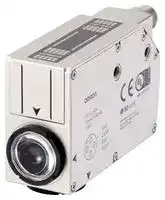


E3S-DCP21-IL2
Photoelectric Sensor, Push Pull, 13 mm, 300 mA, 10 V to 30 V
- Manufacturer: OMRON INDUSTRIAL AUTOMATION
- Product type:
- SVHC: To Be Advised
- Product Range: E3S-DC Series
- Sensing Range Max: 13mm
- Sensor Output Type: Push Pull
- Supply Voltage DC Max: 30V
- Supply Voltage DC Min: 10V
| Delivery and price | |
|---|---|
| Units per pack | 1 |
| Price | 246.63 € |
| Current stock | 10+ |
| Lead time | 30 days |

## Color Mark Sensors E3S-DC/E3NX-CA Series
## Color Mark Detection
## **on Any Type of Packaging**
Color Mark Photoelectric Sensor Color Fiber Amplifier Unit E3S-DC E3NX-CA
. Able to handle glossy materials
- . Able to detect
- subtle color differences
. Stable even when lots change
2 | Color Mark Sensors
**==> picture [47 x 39] intentionally omitted <==**
**----- Start of picture text -----**<br>
Food/<br>Beverage/<br>Personal Care<br>Industries<br>**----- End of picture text -----**<br>
## **Packaging Comes in a Variety of Designs and Materials**
Recently, packaging materials and designs have grown much more diverse, such as aluminum vapor deposition material to prevent oxidation, or very colorful packages to attract the attention of consumers.
**==> picture [405 x 112] intentionally omitted <==**
**----- Start of picture text -----**<br>
; ty) =<br>~_ {coo > etme Cookie<br>. ><br>be 4 a” WIGk ee — =<br>eee Ww Pye S<br>Highly-reflective glossy packaging, Colorful packaging where there is little difference Low-reflection packaging,<br>such as aluminum vapor deposition material in color between the mark and background such as film with fine asperities<br>**----- End of picture text -----**<br>
[
Business Challenge
**If we respond to packaging trends, the number of false detection with color mark sensors will increase, reducing productivity...**
More and more people working with color mark detection in the field are calling for the following:
“I want stable detection of aluminum va **material por deposition** and other glossy packaging.”
“I want stable detection of colorful packaging with little color difference.”
“I want stable detection of packaging even if the lot changes.”
| 3
| NEW Color Mark Photoelectric Sensor E3S-DC
## OMRON’s New Color Mark Sensors
## **Offer Stable Detection**
## **of Both Glossy and Colorful Packaging.**
## It therefore does not reduce the operation rates of production facilities.
The Sensors can accurately detect color marks on glossy and colorful packaging, which have been troublesome for conventional systems.
They also help reduce the number of troubleshooting requests made to packaging machine manufacturers—without any decrease in the operation rate due to equipment stoppages caused by false detection.
## NEW
Color Fiber Amplifier Unit E3NX-CA
## 4 | Color Mark Sensors
“I want stable detection of aluminum vapor deposition material and other glossy packaging.”
The intensity of the light received by the sensor from highly-reflective glossy packaging is too strong, so there is not enough difference in incident levels to perform color mark detection (i.e. saturation, Fig. 1).
The angle needs to be finely adjusted to avoid saturation and allow the sensor to detect the mark. However, if the sensor is tilted too much, detection will become unstable as the incident level decreases (Fig. 2).
**==> picture [192 x 186] intentionally omitted <==**
**----- Start of picture text -----**<br>
Saturated; unable to detect<br>Incident level<br>(Fig. 1) Sensor<br>Threshold<br>Glossy packaging<br>Background Mark<br>Insufficient; unstable to detect<br>(Fine adjustment of light intensity (tilt) required)<br>(Fig. 2) Incident level<br>Threshold<br>Glossy packaging<br>Background Mark<br>S ensor<br>**----- End of picture text -----**<br>
E3S-DC/E3NX-CA
## **Light Is Received over a Wide Range: Enough Even for Glossy Packaging** UlIUSSy ra ng This allows for the stable detection of glossy aluminum vapor ible detection of glossy alur deposition packaging—simply install the Sensor directly abov —simply install the Sensor **e**
Follow along to see how the technology works.
| 5
No Saturation Even with 99% Reflective Optical Mirrors
## **High Dynamic Range (Wide Incident Light Range)**
## **Color Mark Photoelectric Sensor (E3S-DC):**
The incident light range in which no saturation occurs—no adjustment required
The included high luminance RGB three-color LED light emitting element drastically improves the light intensity. Meanwhile, Smart Noise Reduction technology in the Fiber Sensor is applied to reduce the amount of noise, resulting in a high dynamic range where the Sensor is not saturated even when detecting a mirror surface—without having to make any light intensity adjustments.
## **Color Fiber Amplifier Unit (E3NX-CA):**
The optimal light intensity—with just two button presses
The high luminance white LED and Smart Noise Reduction technology work together to increase the light intensity and reduce the amount of noise. These have made it possible to expand the light intensity adjustment range for the emitter and receiver to 1/100x and 1/3x respectively, resulting in a high dynamic range four times that of conventional products. You can automatically adjust the optimal intensity by just
pressing a button once with a mark and once without it.
**==> picture [424 x 200] intentionally omitted <==**
**----- Start of picture text -----**<br>
Optical mirror<br>(99% reflectance) Intensity<br>Approx. 1.3x decreases<br>Aluminum vapor<br>4x<br>deposition<br>Constant<br>material<br>intensity<br>(67% reflectance)<br>Intensity<br>Grayscale increases<br>(1 0.1% reflectance)<br>(4.5% reflectance) Tae<br>Conventional Conventional<br>product E3ZM-V NEW E3S-DC product E3X-DAC-S NEW E3NX-CA<br>L || || ||<br>* Optical mirror and aluminum vapor deposition material measured at the distance with maximum incident level (13 mm); grayscale measured at the<br> distance with minimum incident level (7 mm or 13 mm).<br>**----- End of picture text -----**<br>
**Further Information Stable Detection Even of Tilted Workpieces** a Thin and soft wrapping paper tends to be difficult to detect stably due to shifting angles. E3S-DC that has OMRON's original narrow beam and large optical system and E3NX-CA used with the coaxial Fiber Unit make stable detection possible.
**==> picture [397 x 141] intentionally omitted <==**
**----- Start of picture text -----**<br>
Coaxial fiber<br>Color Mark Photoelectric Sensor: Color Fiber Amplifier Unit:<br>Receiver<br>Conventional Lens Reflected light tends to go<br>product outside the lens due to the angle<br>E3ZM-V Emitted Reflected light of the workpiece, which reduces 60°<br>light Workpiece an incident level. Emitter<br>Specular<br>NEW Lens The large lens easily gathers E32-C91N reflected light<br>reflected light of the narrow<br>Reflected light<br>E3S-DC Emitted beam even if the workpiece is The coaxial Fiber Unit E32-C91N has an emission beam that covers a 60° area. Even if the<br>m light S Workpiece ET tilted, resulting in no incident workpiece is tilted, the Fiber Unit does not receive much of the specular reflected light and<br>level fluctuation.<br>mainly receives diffusion light that carries color information. Therefore it stably detects color<br>information even if the workpiece has a glossy surface.<br>Receiver Emitter Receiver<br>**----- End of picture text -----**<br>
6 | Color Mark Sensors
“I want stable detection of colorful packaging with little color difference.”
**==> picture [10 x 74] intentionally omitted <==**
**----- Start of picture text -----**<br>
Existing challenges<br>**----- End of picture text -----**<br>
With designs becoming more colorful, there are times where there is little difference in color between the color mark and the design elements (background). When color differences are subtle, the S/N ratio*1 required for detection cannot be obtained, and the color mark cannot be detected (Fig. 1).
- *1 The ratio of incident levels at which a workpiece is and is not detected. For example, if this is 1,000 when detecting the workpiece and 100 when not detecting the workpiece, the S/N ratio is 10:1. The higher the S/N ratio is, the more stable the detection becomes.
**==> picture [174 x 125] intentionally omitted <==**
**----- Start of picture text -----**<br>
(Fig. 1)<br>Incident level Incident level<br>Background Mark<br>**----- End of picture text -----**<br>
E3S-DC/E3NX-CA
## **Provides a High S/N Ratio to Detect Subtle Color Differences**
Stable detection even of similar colo **rs with only minor differences**
Follow along to see how the technology works.
| 7
Identifies Even Minor Color Differences
**==> picture [234 x 149] intentionally omitted <==**
**----- Start of picture text -----**<br>
High Power to Achieve<br>Stable Detection<br>High-luminance Light<br>Low Noise for Emitting Element<br>High-Luminance<br> Accurately Capturing Device<br> Small Signals<br>Light Reception<br>Smart Noise Algorithm o-<br> Reduction High-speed, High-precision<br>Signal Processing<br>High-speed,<br>High-precision IC<br>N-Core<br>**----- End of picture text -----**<br>
## **High S/N Ratio System Design**
Three N-Smart Technologies Work Togethe **r to** Obtain a High S/N Ratio
The high luminance white LED of the Fiber Amplifier Unit, **and** the high luminance RGB three-color LEDs and high efficie **ncy** optical system design of the Photoelectric Sensor deliver **high** power. "Smart Noise Reduction" (a light reception algorit **hm)** and "N-Core" (a high-speed, high-precision IC) work toge **ther** to dramatically reduce the effect of noise. Increasing the **incident level** and decreasing noise make it possible to obtain a high S **/N ratio even** when color differences are subtle.
**==> picture [182 x 137] intentionally omitted <==**
**----- Start of picture text -----**<br>
Conventional<br>product E3ZM-V NEW E3S-DC<br>np Ft<br>S/N ratio<br> improved<br> nine times<br>Noise<br>Noise Incident level<br>Incident level<br>Background Mark Background Mark<br>**----- End of picture text -----**<br>
**==> picture [201 x 274] intentionally omitted <==**
**----- Start of picture text -----**<br>
Conventional<br>product E3X-DAC-S NEW E3NX-CA<br>SS<br>S/N ratio<br> improved<br> four times<br>Noise<br>Noise<br>Incident level<br>Incident level<br>Background Mark Background Mark<br>(Fig. 2)<br>Spectral Sensitivity Characteristics for Red, Green, Blue and White<br>Red single color light source sensors cannot<br>B G R detect combinations of blue with green.<br>White *2. Based on degree to which brightness is felt for<br> each wavelength when detecting light<br>Ultraviolet light Infr ared light Wavelength<br>*2<br>Spectral sensitivity<br>**----- End of picture text -----**<br>
**==> picture [59 x 5] intentionally omitted <==**
**----- Start of picture text -----**<br>
Further Information<br>**----- End of picture text -----**<br>
## **From Single Wavelengths to Color Sensing**
The wavelength ranges for red, green, and blue are narrow, and combinations with other colors cannot be detected with RGB single-color light source sensors (Fig. 2). For the new Color Mark Sensors, the Photoelectric Sensor uses RGB three-color LEDs as the light source, and the Fiber Sensor uses a white LED that has a broad wavelength range. Color sensing makes stable detection possible—even for those color combinations that would be difficult using single wavelengths.
**Color Mark Photoelectric Sensor (E3S-DC):**
~~—————————~~ **Color Fiber Amplifier Unit (E3NX-CA):** White LED light e **mitting element & RGB** matrix light r **eceiving element**
Three light sources (R, G, and B) in a single device
**==> picture [119 x 8] intentionally omitted <==**
**----- Start of picture text -----**<br>
High lumin ance white LED light emitting element<br>**----- End of picture text -----**<br>
**==> picture [201 x 125] intentionally omitted <==**
**----- Start of picture text -----**<br>
Light receiving element<br>Two large optical lenses are<br>strong against<br>Red light source rattling<br>Blue light source<br>Green light source<br>Half mirror<br>Lens attachment<br>**----- End of picture text -----**<br>
**==> picture [159 x 111] intentionally omitted <==**
**----- Start of picture text -----**<br>
LEDs with na rrow light Fiber Light emission power: 2x<br>emitting reg ions<br>improve the efficiency LED power: 1.1x<br>of optical co upling with<br>fber.<br>LED<br>Patented Highly sensitive RGB matri x light receiving element<br>Detects all RGB wavelengths<br>included in light reflected from the<br>workpiece.<br>**----- End of picture text -----**<br>
8 | Color Mark Sensors
## “I want stable detection of packaging even if the lot changes.”
There are cases where colors of packaging materials vary from lot to lot. If the parameters are not changed, this could result in equipment stoppage caused by false detection. In such a case it can be difficult to determine the cause of the problem—resulting in time lost due to troubleshooting and a notable decrease in productivity.
**==> picture [23 x 7] intentionally omitted <==**
**----- Start of picture text -----**<br>
Lot C<br>**----- End of picture text -----**<br>
**==> picture [178 x 175] intentionally omitted <==**
**----- Start of picture text -----**<br>
Lot A<br>Incident level<br>False detection by<br>exceeding set threshold<br>Set threshold<br>Background Mark Background Mark Background Mark<br>Lot A Lot B Lot C<br>**----- End of picture text -----**<br>
**E3S-DC/E3NX-CA**
## **Visualization of Variation in Colors Printed on Packaging** A _ **Makes Troubleshooting** R: 1780: 1780 **Easier**
R: 1780: 1780 G: 1570 B: 580
Allowing support of packaging printing color variation, and helping to reduce downtime
R: 2350 G: 2080 B: 830
**==> picture [108 x 35] intentionally omitted <==**
**----- Start of picture text -----**<br>
Follow along to see how<br>the technology works.<br>sensennesnenneessenesss D><br>**----- End of picture text -----**<br>
| 9
## Visualization of Color Variation
## **RGB Data Transmission Function**
RGB information for color marks and backgrounds for each lot is transmitted to a host and quantified. This information is then managed in a database, making it possible to set optimal thresholds and identify causes quickly if a problem occurs.
Until now, setting the threshold during commissioning required the knowledge of an expert. Now it is During commissioning [Ld possible to get the optimal setting just by registering the RGB ratio of the packaging.
When the Sensor makes false detection, values can be checked to determine whether color variation from During maintenance [ lot to lot in packaging material has occurred, making it easy to identify what has caused a problem and to then resolve it.
**==> picture [363 x 267] intentionally omitted <==**
**----- Start of picture text -----**<br>
Database HMI<br>ra<br>Computer network<br>Controller (PLC) Fieldbus network<br>EthercaT = pi]<br>I/O data: 0.2 ms<br>Present value data: 1 ms<br>| SenUnit sor Communications<br>NX Series E3N W-ECT<br>IO-Link<br>| "<br>@ IO-Link Master Unit<br>Meets COM3 NX-ILM400 I/O data and<br>(230.4 kbps) present value data: 5 ms<br>IO-Link standards<br>Transmits RGB Transmits RGB<br>information Ng Distribut ed : information<br>(from 0 to 4,095) Sensor Unit (from 0 to 9,999)<br>to the host E3NW- DS to the host<br>Color Mark Photoelectric Sensor E3S-DC Color Fiber Amplifier Unit E3NX-CA<br>Color Mark Photoelectric Sensor (E3S-DC): Color Fiber Amplifier Unit (E3NX-CA):<br>**----- End of picture text -----**<br>
**==> picture [174 x 10] intentionally omitted <==**
**----- Start of picture text -----**<br>
Color Mark Photoelectric Sensor (E3S-DC):<br>**----- End of picture text -----**<br>
**==> picture [158 x 10] intentionally omitted <==**
**----- Start of picture text -----**<br>
Data transmission via IO-Link<br>**----- End of picture text -----**<br>
Data transmission via EtherCAT
## **Further Information**
## **Test Parameter Support Function**[*1]
The test parameter support function allows users to determine whether or not detection is possible for designs in the prototyping stage. Package designers and production engineers use quantified RGB digital data to discuss the designs, which allows them to reach a quick decision on which design to use—and helps shorten lead times from design to production line commissioning.
## **Examine values that can be detected based on RGB data, then provide feedback on the design.**
**==> picture [414 x 121] intentionally omitted <==**
**----- Start of picture text -----**<br>
RGB quantitative<br>The mark can be detected value database<br>if the G value is 1970, right?<br>~ e Quantify RGB data !' C6 Changing this color Modify by changing the G value |<br>R: 2040 will be okay, since the R: 2040<br>G: 2040 design won't suffer! G: 1970<br>B: 1930 B: 1930<br>Production<br>engineer<br>Designer<br>=) @goe [Joie]<br>*1 Made possible through using a function that transmits RGB data via IO-Link (for E3S-DS) or EtherCAT (for E3NX-CA)<br> to build a system that covers everything from Sensors to the computer network.<br>**----- End of picture text -----**<br>
**MEMO**
**10**
**Color Mark Photoelectric Sensor E3S-DC**
## **Color Mark Detection on Any Type of Packaging.**
## **Narrow Beam and Large Lens for Stable Detection of Workpieces Tilted at Various Angles.**
- Detects subtle color differences.
High luminance, three-element (RGB) LED light source for greater light intensity. Highly efficient optics technology provides high power and enables stable detection even of subtle color differences.
- Handles glossy workpieces.
- Thorough noise reduction.
High dynamic range covers everything from black to mirror surfaces.
- IoT compatible.
For the most recent information on models that have been certified for safety standards, refer to your OMRON website.
Models that support IO-Link also available.
- Sends RGB information to host with high-speed IO-Link communications.
Optimum threshold set to reduce false detection.
**Refer to** _**Safety Precautions**_ **on page 16.**
## **Ordering Information**
**Sensors (Refer to** _**Dimensions**_ **on page 17.)**
|**Sensing method**|**Appearance**<br>~~pl)~~|**Connection method**<br>~~pl)~~|**Sensing distance**<br>~~pl)me~~<br>~~|~~|**Sensing distance**<br>~~pl)me~~<br>~~|~~|**Sensing distance**<br>~~pl)me~~<br>~~|~~|**Sensing distance**<br>~~pl)me~~<br>~~|~~|**Output**|**Model**|**IO-Link**<br>**baud rate***|
|---|---|---|---|---|---|---|---|---|---|
|Diffuse-reflective<br>(mark detection)|~~pl)~~|M12 connector<br>~~pl)~~|10±3 mm<br>~~pl)me~~|10±3 mm<br>~~me~~|10±3 mm<br>~~me~~|~~|~~|Push-pull|**E3S-DCP21-IL2**|COM2<br>(38.4 kbps)|
|||||||||**E3S-DCP21-IL3**|COM3<br>(230.4 kbps)|
||||||||NPN|**E3S-DCN21**|(230.4 kbps)<br>Not supported|
**Note:** Please contact your OMRON sales representative regarding the IO-Link setup file (IODD file).
- Refer to _Ratings and Specifications_ on page 12 for the baud rate.
## **Accessories (Sold Separately)**
**Sensor I/O Connectors (Required for a Sensor with a connector.) Connectors are not provided with the Sensors. Be sure to order a Connector separately.**
|**Size**|**Type**|**Appearance**<br>~~eT~~|**Cable length**<br>~~eT~~|**Model**|
|---|---|---|---|---|
|M12|Socket on one<br>cable end|Straight<br>~~a~~|2 m|**XS2F-D421-D80-F**|
||||5 m<br>~~a~~|**XS2F-D421-G80-F**|
|||***2**<br>L-shape<br>~~a~~|2 m<br>~~a~~|**XS2F-D422-D80-F**|
||||5 m<br>~~a~~|**XS2F-D422-G80-F**|
||Socket and plug on<br>cable ends*****1|Smartclick connector<br>Straight/straight<br>~~a~~|2 m|**XS5W-D421-D81-F**|
||||5 m<br>~~a~~|**XS5W-D421-G81-F**|
|||***2**<br>Smartclick connector<br>L-shape/L-shape<br>~~a~~|2 m<br>~~a~~|**XS5W-D422-D81-F**|
||||5 m<br>~~a~~|**XS5W-D422-G81-F**|
**Note: 1.** Refer to _Sensor I/O Connectors/Sensor Controllers_ on your OMRON website for details. The XS2W (Socket and Plug on Cable Ends) and XS5F (Socket on One Cable End) are also available.
**2.** The connectors will not rotate after they are connected.
- *1. There are also straight type/L-shape type combinations available.
- *2. The cable is fixed at an angle of 180° from the sensor emitter/receiver surface.
**11**
**E3S-DC**
## **Ratings and Specifications**
|**Sensing method**|**Sensing method**|**Diffuse-reflective (mark detection)**|**Diffuse-reflective (mark detection)**|**Diffuse-reflective (mark detection)**|
|---|---|---|---|---|
|**Output**||**Push-pull**||**NPN**|
|**Item**<br>**Model**||**E3S-DCP21-IL2**|**E3S-DCP21-IL3**|**E3S-DCN21**|
|**Sensing distance**||10±3 mm (White paper 10×10 mm)|||
|**Spot size (reference value)**||1 × 4 mm|||
|**Light source (wavelength)**||Red LED (635 nm), Green LED (525 nm), Blue LED (465 nm)|||
|**Power supply voltage**||10 to 30 VDC±10% (Ripple (p-p) 10% max.)|||
|**Power consumption**||960 mW max. (Reference: Power supply voltage 24 V, Current consumption 40 mA max.)|||
|**Control output**||Load current: 100 mA max. (30 VDC max.)|||
|**Indications**||Operation indicator (orange), RUN indicator (green),<br>7-segment indicator (white), Key lock indicator (white),<br>Timer indicator (white), 1-point teachingmode indicator (white)|||
|**Operation mode**||High when mark is detected.||ON when mark is detected.|
|**Protection circuits**||Power supply reverse polarity protection, output short-circuit protection and output incorrect<br>connection protection|||
|**Response time**||Operate or reset: 50μs max. for each (2-point teaching mode)<br>Operate or reset: 150μs max. for each (1-point teachingmode)|||
|**Sensitivity adjustment**||Teachingmethod|||
|**Ambient illumination**||Incandescent lamp: 3,000 lx max.|||
|**Ambient temperature range**||Operating:−10 to 55°C; Storage:−25 to 70°C (with no icingor condensation)|||
|**Ambient humidity range**||Operation: 35% to 85%, Storage: 35% to 95% (with no condensation)|||
|**Insulation resistance**||20 MΩmin. (at 500 VDC)|||
|**Dielectric strength**||1,000 VAC, 50/60 Hz for 1 min|||
|**Vibration resistance**||Destruction: 10 to 55 Hz with double amplitude of 1.5 mm for 2 hours each in X, Y, and Z directions|||
|**Shock resistance**||Destruction: 500 m/s23 times each in X, Y, and Z directions|||
|**Degree of protection**||IEC 60529 IP67|||
|**Connection method**||M12, 4-pin connector|||
|**Weight (packed**<br>**state/Sensor only)**|**Model with connector**|Approx. 370 g/approx. 320 g|||
|**Materials**|**Case**|Diecast zinc (nickel-plated brass)|||
||**Lens**|Methacrylic resin (PMMA)|||
||**Indicators**|ABS|||
||**Buttons**|Elastomers|||
||**Connector**|Diecast zinc (nickel-plated brass)|||
|**Main IO-Link functions**||• Operation mode switching between NO and NC<br>• Timer function of the control output and timer time selecting<br>function (Select a function from disabled, ON delay, OFF delay,<br>one-shot or ON/OFF delay.) (Select a timer time of 1-5000 ms.)<br>• Selecting function of ON delay timer time for instability<br>(0 (disabled)-1000 ms)<br>• Monitor output function (PD output indicating a relative detection<br>quantity)<br>• Energizing time read-out function (unit: h)<br>• Initialize the settings function “Restore the factorysettings”||---|
|**Communication**<br>**specifications**|**IO-Link specification**|Version 1.1||---|
||**Baud rate**|E3S-DCP21-IL3: COM3 (230.4 kbps), E3S-DCP21-IL2: COM2<br>(38.4 kbps)||---|
||**Data length**|PD size: 8 bytes, OD size: 1 byte (M-sequence type: TYPE_2_2)||---|
||**Minimum cycle time**|E3S-DCP21-IL3 (COM3): 1.5 ms, E3S-DCP21-IL2 (COM2): 4.8 ms||---|
|**Accessories**||Instruction manual|||
* Standard Sensing Object for the Mark Sensor
|**Color**|**Munsell code**|
|---|---|
|**White**|N9.5|
|**Red**|4R 4.5/12.0|
|**Yellow-red**|4YR 6.0/11.5|
|**Yellow**|5Y 8.5/11.0|
|**Yellow-green**|3GY 6.5/10.0|
|**Green**|3G 6.5/9.0|
|**Blue-green**|5BG 4.5/10.0|
|**Blue**|3PB 5.0/10.0|
|**Blue-purple**|9PB 5.0/10.0|
|**Purple**|7P 5.0/10.0|
|**Red-purple**|6RP 4.5/12.5|
|**(Black)**|(N2.0)|
**12**
**E3S-DC**
**Engineering Data (Reference Value)**
## **Color vs. Detection Capability**
## **E3S-DC**
## Teaching Capabilities
**==> picture [492 x 682] intentionally omitted <==**
**----- Start of picture text -----**<br>
White Red [Yellow] -red [Yellow] -Yellowgreen Green -gBluereen Blue -pBlueurple [Purple] -p [Red] urple [Black]<br>White<br>Red<br>Yellow<br>-red<br>Yellow<br>Yellow<br>-green<br>Green<br>Blue<br>-green<br>Blue<br>Blue<br>-purple<br>Purple<br>Red<br>-purple<br>Black<br>Note: The above chart shows the combinations of colors for which teaching is possible at a sensing distance of 10 mm.<br>Detectable Ranges<br>E3S-DC<br>Background color: White Background color: Red Background color: Yellow-red<br>Teaching distance: 10 mm Teaching distance: 10 mm Teaching distance: 10 mm<br>15.0 15.0 15.0<br>14.0 14.0 14.0<br>13.0 13.0 13.0<br>12.0 12.0 12.0<br>11.0 11.0 11.0<br>10.0 10.0 10.0<br>9.0 9.0 9.0<br>8.0 8.0 8.0<br>7.0 7.0 7.0<br>6.0 6.0 6.0<br>5.0 5.0 5.0<br>Background color: Yellow Background color: Yellow-green Background color: Green<br>Teaching distance: 10 mm Teaching distance: 10 mm Teaching distance: 10 mm<br>15.0 15.0 15.0<br>14.0 14.0 14.0<br>13.0 13.0 13.0<br>12.0 12.0 12.0<br>11.0 11.0 11.0<br>10.0 10.0 10.0<br>9.0 9.0 9.0<br>8.0 8.0 8.0<br>7.0 7.0 7.0<br>6.0 6.0 6.0<br>5.0 5.0 5.0<br>o<br>Background color: Blue-green Background color: Blue Background color: Blue-purple<br>Teaching distance: 10 mm Teaching distance: 10 mm Teaching distance: 10 mm<br>15.0 15.0 15.0<br>14.0 14.0 14.0<br>13.0 13.0 13.0<br>12.0 12.0 12.0<br>11.0 11.0 11.0<br>10.0 10.0 10.0<br>9.0 9.0 9.0<br>8.0 8.0 8.0<br>7.0 7.0 7.0<br>6.0 6.0 6.0<br>5.0 5.0 5.0<br>Detectable range (mm) Detectable range (mm) Detectable range (mm)<br>Red Yellow-red Yellow Yellow-green Green Blue-green Blue Blue-purple Purple Red-purple Black White Yellow-red Yellow Yellow-green Green Blue-green Blue Blue-purple Purple Red-purple Black White Red Yellow Yellow-green Green Blue-green Blue Blue-purple Purple Red-purple Black<br>Detectable range (mm) Detectable range (mm) Detectable range (mm)<br>White Red Yellow-red Yellow-green Green Blue-green Blue Blue-purple Purple Red-purple Black White Red Yellow-red Yellow Green Blue-green Blue Blue-purple Purple Red-purple Black White Red Yellow-red Yellow Yellow-green Blue-green Blue Blue-purple Purple Red-purple Black<br>Detectable range (mm) Detectable range (mm) Detectable range (mm)<br>White Red Yellow-red Yellow Yellow-green Green Blue Blue-purple Purple Red-purple Black White Red Yellow-red Yellow Yellow-green Green Blue-green Blue-purple Purple Red-purple Black White Red Yellow-red Yellow Yellow-green Green Blue-green Blue Purple Red-purple Black<br>**----- End of picture text -----**<br>
**Note:** The above chart shows the combinations of colors for which teaching is possible at a sensing distance of 10 mm.
## **Detectable Ranges**
## **E3S-DC**
**13**
**E3S-DC**
**==> picture [494 x 534] intentionally omitted <==**
**----- Start of picture text -----**<br>
Background color: Purple Background color: Red-purple Background color: Black<br>Teaching distance: 10 mm Teaching distance: 10 mm Teaching distance: 10 mm<br>15.0 15.0 15.0<br>14.0 14.0 14.0<br>13.0 13.0 13.0<br>12.0 12.0 12.0<br>11.0 11.0 11.0<br>10.0 10.0 10.0<br>9.0 9.0 9.0<br>8.0 8.0 8.0<br>7.0 7.0 7.0<br>6.0 6.0 6.0<br>5.0 5.0 5.0<br>Excess Gain vs. Distance<br>E3S-DC<br>20 10<br>Sensing object: White paper Red Sensing object: Red<br>10 GreenBlue 0 Aluminum vapor deposition film GreenBlue<br>0<br>10<br>10<br>−20<br>−20<br>−30<br>−30<br>−40 −40<br>−50 −50<br>4 7 10 13 16 4 7 10 13 16<br>Distance (mm) Distance (mm)<br>Angle vs. Incident Characteristics<br>E3S-DC<br>15 0<br>Sensing object: White paper Red Red<br>Green −10 Green<br>10 Blue Blue<br>−20<br>5 −30<br>0 −40<br>−50<br>−5<br>−60<br>−10 −70<br>Sensing object:<br>−15 −15 −10 −5 0 5 10 15 −80 −15 −10 Aluminum vapor deposition film−5 0 5 10 15<br>Angle (°) Angle (°)<br>Detectable range (mm) Detectable range (mm) Detectable range (mm)<br>White Red Yellow-red Yellow Yellow-green Green Blue-green Blue Blue-purple Red-purple Black White Red Yellow-red Yellow Yellow-green Green Blue-green Blue Blue-purple Purple Black White Red Yellow-red Yellow Yellow-green Green Blue-green Blue Blue-purple Purple Red-purple<br>Incident light (%) Incident light (%)<br>Incident light (%) Incident light (%)<br>**----- End of picture text -----**<br>
**14**
**E3S-DC**
## **I/O Circuit Diagrams**
## **Push-Pull Output**
|**Model**|**Output mode**|**NO/NC**<br>**setting *4**|**Timing ch**|**art**|**Output circuit**|**Output circuit**|**Output circuit**|**Output circuit**|**Output circuit**|
|---|---|---|---|---|---|---|---|---|---|
|E3S-DCP21-IL2<br>E3S-DCP21-IL3|Standard I/O<br>mode<br>(SIO mode)<br>(Pin 2 Output<br>Settings)|NO*****5|Sensing object<br>Background<br>RUN indicator<br>(Green)<br>Lighting<br>Operation indicator<br>(Orange)<br>Not Lighting<br>Pin 4 output (NO)<br>LOW<br>Pin 2 output (NO)<br>LOW<br>Load current<br>(PNP connection)<br>OFF<br>Load current<br>(NPN connection)<br>ON|Mark<br>Lighting<br>HIGH<br>HIGH<br>ON<br>OFF|Brown<br>Black<br>Blue<br>Load<br>+V<br>1<br>4<br>2<br>3<br>10 to<br>30 VDC<br>PNP*3<br>NPN<br>*2<br>C/Q<br>White<br>EXT/<br>OUT2<br>0 V<br>External<br>input<br>Load<br>Brown<br>Black<br>Blue<br>Load<br>+V<br>1<br>4<br>~~2~~<br>3<br>10 to<br>30 VDC<br>PNP<br>*3<br>NPN<br>*2<br>C/Q<br>White<br>EXT/<br>OUT2<br>0 V<br>Load<br>Load<br>~~Load~~<br>Using Pin 2 as an external input*1<br>(enabled by default)<br>Using Pin 2 with a control output*1<br>(set for IO-Link)|||||
|||NC|Sensing object<br>Background<br>RUN indicator<br>(Green)<br>Lighting<br>Operation indicator<br>(Orange)<br>Lighting<br>Pin 4 output (NC)<br>HIGH<br>Pin 2 output (NC)<br>HIGH<br>Load current<br>(PNP connection)<br>ON<br>OFF<br>Load current<br>(NPN connection)|Mark<br>Not Lighting<br>LOW<br>LOW<br>OFF<br>ON||||||
||IO-Link mode<br>(Pin 2 Output<br>Settings)|NO*****5|Sensing object<br>Background<br>Operation indicator<br>(Orange)<br>Not Lighting<br>Pin 2 output (NO)<br>LOW<br>RUN indicator<br>(Green) (1 sec<br>cycles Flashing)<br>Pin 4 output (NO)<br>(IO-Link<br>communications)|Mark<br>Lighting<br>HIGH|||IO-Link<br>Master<br>Brown<br>Black<br>Blue<br>+V<br>~~1~~<br>~~4~~<br>~~2~~<br>3<br>C/Q<br>White<br>EXT/<br>OUT2<br>0V<br>Brown<br>Black<br>Blue<br>+V<br>~~1~~<br>~~4~~<br>~~2~~<br>~~3~~<br>C/Q<br>White<br>DI/DO<br>0 V|||
||||||||||Black<br><br>~~1~~<br>~~4~~<br>C/Q<br>Black<br><br>|
||||||||||EXT/<br><br><br>|
|||NC|Sensing object<br>Background<br>Operation indicator<br>(Orange)<br>Pin 2 output (NC)<br>HIGH<br>Lighting<br>RUN indicator<br>(Green) (1 sec<br>cycles Flashing)<br>Pin 4 output (NC)<br>(IO-Link<br>communications)|Mark<br>LOW<br>Not Lighting|||||Blue<br>~~2~~<br>White<br>OUT2<br>0V<br>Blue<br><br>White|
|||||||||||
|||||||||||
- *1. Pin 2 input/output can be switched with the IO-Link communication command “Switchpoint Pin 2”.
- *2. In case of NPN connection, please connect the load between Pin 1 and Pin 4.
- *3. In case of PNP connection, please connect the load between Pin 3 and Pin 4.
- *4. It can be switched in IO-Link.
- *5. Factory default
**Note: 1.** You can use IO-Link communications to reverse the operation logic, set an output delay, and change between an input and output.
**2.** Please contact your OMRON sales representative regarding assignment of data.
## **NPN Output**
**==> picture [511 x 111] intentionally omitted <==**
**----- Start of picture text -----**<br>
Model Timing chart Output circuit<br>Brown 1 +V<br>Sensing object Background Mark<br>RUN indicator Lighting Black 4 Q<br>(Green) 10 to<br>E3S-DCN21 Operation indicator Not Lighting Lighting 30 VDC<br>(Orange)Pin 4 output (NO) OFF ON White 2 EXT<br>Load current OFF ON Externalinput<br>Blue 0 V<br>3<br>Load<br>**----- End of picture text -----**<br>
## **Plugs (Sensor I/O Connectors)**
## **M12, 4-pin Connector**
|Brown<br>Blue<br>White<br>Black<br>minal number<br>Wire color|**Classification**<br> <br>|**Wire**<br>**color**<br>**Connector**<br>**pin No.**|**Application**|**Application**|
|---|---|---|---|---|
||||**E3S-DCP21-IL2**<br>**E3S-DCP21-IL3**|**E3S-DCN21**|
||DC<br>B<br><br><br>|rown<br>�|Power supply (+V)|Power supply (+V)|
|||White<br>�|External input*|External input|
|||Blue<br>�|Power supply (0 V)|Power supply (0 V)|
|||Black<br>�|Output C/Q|Control output|
- It can be set as the control output with IO-Link.
**15**
**E3S-DC Nomenclature**
Operation indicator (Orange) Turns ON when the mark is detected. (when Pin 4 is set as NO) 7-segment indicator (White) Displays the BANK No. being selected. Key lock indicator (White) Turns ON when key locksetting is activated. Timer indicator (White) Turns ON when timersetting is activated. 1-point teaching mode indicator (White) Turns ON when 1-point teaching mode.
RUN indicator (Green) Turns ON while power is supplied. Blinks during IO-Link communication.
Setup change [BANK] button Changes the BANK setting. (BANK NO.) Sensitivity setting (Background) [BKGD] button Executes the background teaching.
Sensitivity setting (Mark) [MARK] button Executes the mark teaching.
## **Safety Precautions**
**Be sure to read the precautions for all models in the website at: http://www.ia.omron.com/. Warning Indications**
**Warning level** Indicates a potentially hazardous situation which, if not avoided, will result in minor or **WARNING** moderate injury, or may result in serious injury or death. Additionally, there may be significant property damage.
**Precautions** Supplementary comments on what to do or **for Safe Use** avoid doing, to use the product safely. **Precautions** Supplementary comments on what to do or **for Correct** avoid doing, to prevent failure to operate, malfunction or undesirable effect on product **Use** performance.
## **Meaning of Product Safety Symbols**
**General prohibition** Indicates the instructions of unspecified prohibited action. **Caution, explosion** Indicates the possibility of explosion under specific conditions. ~~ee~~ **Caution, fire** Indicates the possibility of fire under specific conditions.
**General caution** Indicates unspecified general alert.
## **WARNING**
**This product is not designed or rated for ensuring safety of persons either directly or indirectly. Do not use it for such purpose.**
**Precautions for Safe Use** The following precautions must be observed to ensure safe operation of the product.
1. Do not install the product in the following locations. • Locations subject to direct sunlight
- Locations subject to condensation due to high humidity
- Locations subject to corrosive gas
- In the place where vibration or shock is directly transmitted to the product.
2. Do not use the product in environments subject to flammable or explosive gases.
3. Do not use the product in any atmosphere or environment that exceeds the ratings.
4. Do not pull on the cable with excessive strength.
5. Do not attempt to disassemble, repair, or modify the product in any way.
6. Do not use the product with the main unit damaged.
7. Be sure that before making supply the supply voltage is less than the maximum rated supply voltage (30 VDC).
8. Do not apply any load exceeding the ratings.
9. Do not short the load. Otherwise damage or fire may result. 10. Connect the load correctly.
11. Do not use the product under a chemical or an oil environment without prior evaluation.
12. Though this is type IP67, do not use in the water, rain or outdoors.
13. Do not use thinner, alcohol, or other organic solvents. Otherwise, the optical properties and degree of protection may be degraded.
14. When disposing of the product, treat it as industrial waste.
15. These Sensors are certificated for the UL standard on the assumption of usage in a Class 2 circuit. Use them with Class 2 power supplies in the United States or Canada. Use the OMRON XS2F-D4-series or XS5F-D4-series Cables. Cables that have wires less than AWG24 (0.2 mm[2] ) are for connection to terminal blocks and are not for field splicing. External overcurrent protection of 1 A for AWG26, 2 A for AWG24, or 3 A for AWG22 wire must be provided for cable protection.
**Never use the product with an AC power supply. Otherwise, explosion may result.**
**Do not use the product with voltage in excess of the rated voltage. Excess voltage may result in malfunction or fire.**
**Be sure to tighten the external lens until it reaches the chassis.**
**16**
**E3S-DC**
## ~~PT~~ **Precautions for Correct Use**
1. Note that the water-resistant function is impaired if installing the Photoelectric Sensor by hitting it with a hammer and so on.
2. Be sure to tighten the external lens until it reaches the chassis.
3. If the Sensor wiring is placed in the same conduits or ducts as high-voltage or high-power lines, inductive noise may cause malfunction or damage. Wire the cables separately or use a shielded cable.
4. To extend a cable in the standard I/O mode, use a cable of 0.3 mm[2] or more and keep the length 100 m or less. Keep the length 20 m or less if using the Sensor in the IO-Link mode.
6. If a commercial switching regulator is used, ground the FG (frame ground) terminal.
7. The Sensor will be able to detect objects 100 ms after the power supply is tuned ON. Start using the Sensor 100 ms or more after turning ON the power supply. If the load and the Sensor are connected to separate power supplies, be sure to turn ON the Sensor first.
8. Do not press the button with anything sharp such as a screwdriver because it might be damaged.
9. Output pulses may occur when the power supply is turned OFF. We recommend that you turn OFF the power supply to the load or load line first.
5. Apply a screw tightening torque of 2.0 N·m or less.
## **Dimensions**
**(Unit: mm)**
Tolerance class IT16 applies to dimensions in this data sheet unless otherwise specified.
## **Sensors**
**==> picture [491 x 240] intentionally omitted <==**
**----- Start of picture text -----**<br>
Diffuse-reflective Models<br>E3S-DCP21-IL2 The connector section can be<br>The optical axis can be changed by<br>E3S-DCP21-IL3 swapping the lens and cover. revolved in a range of 90°.<br>Two, M5; Depth: 5.5 (Both sides)<br>E3S-DCN21<br>25 16.3 0.5 M12 connector When Lens or Cover Is Replaced<br>Optical axis<br>53.7 25<br>15 15<br>3.2 28 0.2 15 3.2 3.2<br>15.2<br>52<br>Optical axis 16.8<br>3.2 80.4<br>24.8 dia. (Outer diameter) Four, M5; Depth: 5.5 0.2<br>21 30<br>15<br>28 4.5 0.2<br>17.7 dia. (lens diameter)<br>56<br>**----- End of picture text -----**<br>
**Note: 1.** Apply a screw tightening torque of 2.0 N·m or less.
**2.** Be sure to tighten the external lens or cover until it reaches the chassis.
**17**
**MEMO**
**18**
**Color Fiber Amplifier Unit E3NX-CA**
## **Smart Fiber Amplifier Units with White LEDs. High Color Discrimination Capability with the Same Easy Operation as Previous Fiber Amplifier Units. Existing General-purpose Fiber Units Can Be Connected.**
- Detects subtle color differences.
The new white LED optic system increases the light intensity and the low-noise circuit in the Smart Fiber Amplifier Unit provides a surprising detection capability.
- Handles glossy workpieces.
- Smart Tuning lets you set the optimum sensitivity for detection with one simple operation.
- IoT compatible.
The detected RGB data can be displayed on the Amplifier Unit, and the Amplifier Unit for communications can transfer this data to the host in realtime.
For the most recent information on models that have been certified for safety standards, refer to your OMRON website.
**Refer to** _**Safety Precautions**_ **on page 30.**
## **Ordering Information**
**Fiber Amplifier Units (Refer to** _**Dimensions**_ **on pages 31 and 32.)**
|**Type**|**Appearance**|**Connecting method**|**Inputs/outputs**|**Inputs/outputs**|
|---|---|---|---|---|
|||||**NPN output**|
|Standard models||Pre-wired (2 m)|1 output|**E3NX-CA11 2M**|
|||Wire-saving Connector|1 output|**E3NX-CA6**|
|Advanced models||Pre-wired (2 m)|2 outputs + 1<br>input|**E3NX-CA21 2M**|
|Model for Sensor<br>Communications<br>Unit*||Connector for Sensor<br>Communications Unit|---||
* A Sensor Communications Unit is required if you want to use the Fiber Amplifier Unit on a network. **Note:** Refer to your OMRON website for details on models with wire-saving connectors.
**Fiber Units (Refer to** _**Dimensions**_ **on page 32.)**
|**Sensing method**|**Appearance**<br>~~t..~~|**Sensing direction**<br>~~t..~~|**Size**|**Model**|
|---|---|---|---|---|
|Reflective|~~t..~~|Right-angle<br>~~t..~~|M6|**E32-C91N 2M**|
|Through-beam<br>(Grooved type)|~~t..~~|Array<br>~~t..~~|10 mm|**E32-G16 2M**|
**Note:** Refer to _Fiber Units_ on your OMRON website or to the _Fiber Sensor Best Selection Catalog_ (Cat. No. E418-E1) for details on Fiber Units.
**19** omron ~~_~~
**E3NX-CA**
## **Accessories (Sold Separately)**
|**Accessories (Sold Separately)**||
|---|---|
|**Wire-saving Connectors (Required for models for Wire-saving Connectors.) (Refer to****_Dimensions_ on page 33.)**||
|**Connectors are not provided with the Fiber Amplifier Unit and must be ordered separately. *Protective stickers are provided.**||
|**Type**<br>**Appearance**<br>**Cable length**<br>**No. of**<br>**conductors**<br>**Model**<br>**Applicable Fiber Amplifier**<br>**Units**<br>Master<br>Connector<br>2 m<br>3<br>**E3X-CN11**<br>E3NX-CA6<br>E3NX-CA8<br>Slave<br>Connector<br>1<br>**E3X-CN12**<br>~~—]—>~~<br>~~===~~<br>~~oo~~||
|**Note:**Models are also available with a 5-m cable. The model names have the suffix 5M. Ask your OMRON representative for delivery times.||
|**Mounting Bracket (Refer to****_Dimensions_ on page 33.)**||
|**A Mounting Bracket is not provided with the Fiber Amplifier Unit. It must be ordered separately as required.**||
|**Appearance**<br>**Model**<br>**Quantity**||
|**E39-L143**<br>1||
**DIN Tracks (Refer to** _**Dimensions**_ **on page 34.)**
**A DIN Track is not provided with the Fiber Amplifier Unit. It must be ordered separately as required.**
|**Appearance**|**Type**|**Model**|**Quantity**|
|---|---|---|---|
||Shallow type, total length: 1 m|**PFP-100N**|1|
||Shallow type, total length: 0.5 m|**PFP-50N**||
||Deep type, total length: 1 m|**PFP-100N2**||
**Note:** Refer to _PFP-_ on your OMRON website for details.
**End Plate (Refer to** _**Dimensions**_ **on page 34.)**
**Two End Plates are provided with the Sensor Communications Unit. End Plates are not provided with the Fiber Amplifier Unit. They must be ordered separately as required.**
|**Appearance**||**Model**|**Quantity**|
|---|---|---|---|
||**PFP-M**||1|
**Note:** Refer to _PFP-M_ on your OMRON website for details.
## **Related Products**
## **Sensor Communications Units**
|**Type**|**Appearance**<br>~~oe~~|**Model**<br>~~oe~~|
|---|---|---|
|Sensor Communications<br>Unit for EtherCAT||**E3NW-ECT**|
|Distributed Sensor Unit||**E3NW-DS**|
**Note:** Refer to your OMRON website for details.
EtherCAT[®] is a registered trademark and patented technology, licensed by Beckhoff Automation GmbH, Germany.
**20**
**E3NX-CA**
## **Ratings and Specifications**
|||**Type**|**Standard models**|**Standard models**|**Advanced models**|**Model for Sensor**<br>**Communications Unit*1**|
|---|---|---|---|---|---|---|
|||**NPN output**|**E3NX-CA11**|**E3NX-CA6**|**E3NX-CA21**|**E3NX-CA0**|
|||**PNP output**|**E3NX-CA41**|**E3NX-CA8**|**E3NX-CA51**||
|**Item**||**Connecting**<br>**method**|**Pre-wired**|**Wire-saving**<br>**Connector**|**Pre-wired**|**Connector for Sensor**<br>**Communications Unit**|
|**I/O**|**Outputs**||1 output||2 outputs|---*3|
||**External input**||---||1 input*2||
|**Light source**|**(wavelength)**||White LED (420 to 700 nm)||||
|**Supply voltage**|||10 to 30 VDC, including 10% ripple (p-p)|||Supplied from the connector<br>through the Sensor<br>Communications Unit.|
|**Power consumption*4**|||At Power Supply Voltage of 24 VDC<br>Normal mode: 960 mW max. (Current consumption: 40 mA max.)<br>Eco function ON: 720 mW max. (Current consumption: 30 mA max.)<br>Eco function LO: 800 mW max. (Current consumption: 33 mA max.)||||
|**Control output**|||Load power supply voltage: 30 VDC max., open-collector<br>output<br>Load current: Groups of 1 to 3 Amplifiers: 100 mA max.,<br>Groups of 4 to 30 Amplifiers: 20 mA max.<br>Residual voltage: At load current of less than 10 mA: 1 V max.<br>At load current of 10 to 100 mA: 2 V max.<br>OFF current: 0.1 mA max.<br>(<br>)|||---|
|**Indications**|||7-segment displays (Sub digital display: green, Main digital display: white)<br>Display direction: Switchable between normal and reversed.<br>OUT indicator (orange), NO/NC indicator (orange), Smart Tuning indicator (blue), and<br>OUT selection indicator (orange, only on models with 2 outputs)||||
|**Protection circuits**|||Power supply reverse polarity protection, output short-circuit<br>protection, and output reverse polarity protection|||Power supply reverse polarity<br>protection|
|**Sensing method**|||Contrast Mode: Light intensity discrimination for RGB (initial state/after 2-point tuning)<br>(R+G+B light intensity discrimination for 1-point tuning)<br>Color Mode:<br>RGB ratio discrimination||||
|**Response**<br>**time**|**Super-high-speed Mode (SHS)*5**||Operate or reset: 50μs (only in Contrast Mode)||||
||**High-speed Mode (HS)**||Operate or reset: 250μs||||
||**Standard Mode (Stnd)**||Operate or reset: 1 ms||||
||**Giga-power Mode (GIGA)**||Operate or reset: 16 ms||||
|**Sensitivity adjustment**|||Smart Tuning (2-point tuning, full autotuning, or 1-point tuning (1% to 99%)) or manual adjustment||||
|**Maximum connectable Units**|||30 Units|||30 Units (When connected to<br>OMRON NJ-series Unit)|
|**No. of Units**<br>**for mutual**<br>**interference**<br>**prevention**<br>***6**|**Super-high-speed Mode (SHS)*5**||---||||
||<br>**High-speed Mode (HS)**||10 Units||||
||<br>**Standard Mode (Stnd)**||10 Units||||
||**Giga-power Mode (GIGA)**||10 Units||||
- *1. The E3NW-ECT Sensor Communications Unit can be used, but the E3NW-CRT/CCL, E3X-DRT21-S, and E3X-CRT/ECT Sensor Communications Units cannot be used.
- *2. The following details apply to the input.
||**Contact input (relay or switch)**|**Non-contact input (transistor)**|
|---|---|---|
|**NPN**|ON: Shorted to 0 V (Sourcing current: 2 mA max.).<br>OFF: Open or shorted to Vcc.|ON: 1.5 V max. (Sourcing current: 2 mA max.)<br>OFF: Vcc - 1.5 V to Vcc (Leakage current: 0.1 mA max.)|
|**PNP**|ON: Shorted to Vcc (Sinking current: 3 mA max.).<br>OFF: Open or shorted to 0 V.|ON: Vcc - 1.5 V to Vcc (sinking current: 3 mA max.)<br>OFF: 1.5 V max. (Leakage current: 0.1 mA max.)|
- *3. Two sensor outputs are allocated in the programmable logic controller (PLC) I/O table. PLC operation via Communications Unit enables reading detected values and changing settings.
- *4. Power consumption
At Power Supply Voltage of 10 to 30 VDC
Normal mode: 1,080 mW max. (Current consumption: 36 mA max. at 30 VDC, 74 mA max. at 10 VDC) Eco function ON: 840 mW max. (Current consumption: 28 mA max. at 30 VDC, 50mA max. at 10 VDC) Eco function LO: 930 mW max. (Current consumption: 31 mA max. at 30 VDC, 55 mA max. at 10 VDC)
- *5. The mutual interference prevention function is disabled if the detection mode is set to Super-high-speed Mode.
- *6. The tuning will not change the number of units.
The least unit count among the mutual interference prevention units of E3NX and E3NC.
Check the mutual interference prevention unit count and response speed of each model.
**21**
**E3NX-CA**
|||**Type**|**Standard models**|**Standard models**|**Advanced models**|**Model for Sensor Communications**<br>**Unit*1**|
|---|---|---|---|---|---|---|
|||**NPN output**|**E3NX-CA11**|**E3NX-CA6**|**E3NX-CA21**|**E3NX-CA0**|
|||**PNP output**|**E3NX-CA41**|**E3NX-CA8**|**E3NX-CA51**||
|**Item**||**Connecting**<br>**method**|**Pre-wired**|**Wire-saving**<br>**Connector**|**Pre-wired**|**Connector for Sensor**<br>**Communications Unit**|
|**Functions**|**Operation mode**||Contrast Mode: NO (Light-ON) or NC (Dark-ON)<br>Color Mode: NO (ON for match: ON for same color as registered color) or NC (ON for mismatch: ON for<br>different color from registered color)||||
||**Timer**||Select from timer disabled, OFF-delay, ON-delay, one-shot, or ON-delay + OFF-delay timer (Counted<br>by 0.1 s in a range of 0.1 to 0.5 ms, by 0.5 ms for 0.5 to 5 ms, and by 1 ms for 5 to 9999 ms. Default: 10<br>ms, Error: 0.1 ms)||||
||**Zero reset**||Contrast Mode only<br>Negative values can be displayed. (Threshold level is shifted.)||||
||**Resetting settings*7**||Select from initial reset (factory defaults), user reset (saved settings), or bank reset.||||
||**Eco mode**||Select from OFF (digital display lit), Eco ON (digital display not lit), and Eco LO (digital display dimmed).||||
||**Bank switching**||Select from banks 1 to 8.||||
||**Power tuning level**||Set from 100 to 9,999. (The RGB maximum incident level at Smart Tuning is adjusted to the power tuning<br>level.)||||
||**Output 2**||---||Normal, error output, AND<br>output, or OR output|---|
||**External input**||---||Select from input OFF, tuning, full-<br>auto tuning, emission OFF, bank 1<br>and 2 switching, bank 1 through 8<br>switching, or zero reset.|---|
||**Changing the displays**||Threshold level and incident level, channel number and incident level, RGB display and incident level,<br>or bank display and incident level||||
|**Ambient illumination**<br>**(Receiver side)**|||Incandescent lamp: 20,000 lx max., Sunlight: 30,000 lx max.||||
|**Ambient temperature range**|||Operating:<br>Groups of 1 or 2 Amplifier Units:−25 to 55°C,<br>Groups of 3 to 10 Amplifier Units:−25 to 50°C,<br>Groups of 11 to 16 Amplifier Units:−25 to 45°C,<br>Groups of 17 to 30 Amplifier Units:−25 to 40°C<br>Storage:−30 to 70°C (with no icing or condensation)|||Operating:<br>Groups of 1 or 2 Amplifier Units:<br>0 to 55°C, Groups of 3 to 10<br>Amplifier Units: 0 to 50°C,<br>Groups of 11 to 16 Amplifier<br>Units: 0 to 45°C, Groups of 17 to<br>30 Amplifier Units: 0 to 40°C<br>Storage:−30 to 70°C (with no<br>icing or condensation)|
|**Ambient humidity range**|||Operating and storage: 35% to 85% (with no condensation) within the surrounding air temperature range<br>shown above||||
|**Installation environment**|||Pollution degree 3 (as per IEC 60947-1)||||
|**Insulation resistance**|||20 MΩmin. (at 500 VDC)||||
|**Dielectric strength**|||1,000 VAC at 50/60 Hz for 1 minute||||
|**Vibration resistance**|||10 to 55 Hz with a 1.5-mm double amplitude for 2 hours each in X, Y, and Z directions||||
|**Shock resistance (destruction)**|||500 m/s2for 3 times each in X, Y, and Z directions|||150 m/s2for 3 times each in X, Y,<br>and Z directions|
|**Weight (packed state/Sensor only)**|||Approx. 115 g/<br>approx. 75 g|Approx. 60g/<br>approx. 20g|Approx. 115 g/approx. 75 g|Approx. 65 g/approx. 25 g|
|**Materials**|**Case**||Polycarbonate (PC)||||
||**Cover**||Polycarbonate (PC)||||
||**Cable covering**||Polyvinyl chloride (PVC)|||---|
|**Accessories**|||Instruction manual||||
*7. The bank is not reset by the user reset function or saved by the user save function.
**22**
**E3NX-CA**
## **Sensing Distances**
## **Specifications**
|**Sensing Distancesg Distances Distances**<br>**Specifications**|**Sensing Distancesg Distances Distances**<br>**Specifications**||||||||
|---|---|---|---|---|---|---|---|---|
|**Hex-shaped Models**|||||||||
|**Sensing**<br>**method**|**Type**<br>**Appearance (mm)**<br>**Size**<br>**Aperture**<br>**angle**<br>~~ee~~||**Bending radius**<br>**of cable (mm)**|**Sensing distance (mm)**<br>**White paper**<br>**12-color discrimination**<br>**GIGA**<br>**ST**<br>**HS**<br>**SHS**<br>**GIGA**<br>**ST**<br>**HS**<br>**SHS**<br>~~PO~~<br>~~ee~~|**Model**||||
||24||||||||
|Reflective|M6<br>60°||Flexible, R4|90<br>45<br>30<br>13<br>18<br>9<br>6<br>4|**E32-C91N 2M**||||
||M6||||||||
|**Through-beam Models (Grooved Type)**|||||||||
|**Type**|**Sensing**<br>**width**<br>**Appearance (mm)**<br>**Bending radius**<br>**of cable (mm)**<br>**Sensing distance (mm)**<br>**Opaque object**<br>**Translucent object**<br>**GIGA**<br>**ST**<br>**HS**<br>**SHS**<br>**GIGA**<br>**ST**<br>**HS**<br>**SHS**<br>~~pO~~<br>~~ee~~<br>~~==~~||||**Model**||||
||32<br>a||||||||
|Array|10 mm||R5|10|**E32-G16 2M**||**E32-G16 2M**||
||7||||||||
||20||||||||
|**Installation Information**|||||||||
||**Installation**|||**Cable**|||||
|**Model**<br>**Ambient**<br>**temperature**<br>**Tightening**<br>**torque**||**Mounting**<br>**hole**<br>**Bending**<br>**radius (mm)**<br>**Unbendable**<br>**length (mm)**<br>**Tensile**<br>**strength**<br>**Sheath**<br>**material**<br>**Core**<br>**material**||||**Emitter/**<br>**receiver**<br>**differentiation**||**Weight**<br>**(packed**<br>**state)**|
|**E32-C91N 2M**<br>–40 to 70°C<br>0.98 N·m||6.2<br>dia.<br>+0.5<br>0||R4<br>0<br>29.4 N<br>Polyethylene<br>Plastic||White line on<br>emitter cable||36 g|
|**E32-G16 2M**|**E32-G16 2M**<br>–40 to 70°C<br>0.53 N·m||---|R5<br>0*<br>29.4 N<br>Polyethylene<br>Plastic|||---|51 g|
- The bending radius of the protective cover (PVC, 25 mm) is 10 mm min.
## **Hex-shaped Models**
|**Sensing**<br>**method**|**Size**<br>~~—————————————~~|**Aperture**<br>**angle**<br>~~—————————————~~|**Model**<br>~~—————————————~~|**Sensing distance (mm)**|**Sensing distance (mm)**|**Sensing distance (mm)**|**Sensing distance (mm)**|**Sensing distance (mm)**|**Sensing distance (mm)**|**Sensing distance (mm)**|**Sensing distance (mm)**|
|---|---|---|---|---|---|---|---|---|---|---|---|
|||||**Reflective: White paper,**<br>**Through-beam: Opaque object**||||**Reflective: 12-color discrimination,**<br>**Through-beam: Translucent object*1**||||
|||||**GIGA**<br>~~—————————————~~|**Standard**<br>~~—————————————~~|**High-**<br>**speed**<br>~~—————————————~~|**Super-**<br>**high-**<br>**speed**<br>~~—————————————~~|**GIGA**|**Standard**|**High-**<br>**speed**|**Super-**<br>**high-**<br>**speed**<br>***2**|
|Through-<br>beam|M4<br>~~—————————————~~<br>~~a~~|15°<br>~~—————————————~~|E32-LT11N 2M (Built-in Lens)<br>~~—————————————~~|980<br>~~—————————————~~|510<br>~~—————————————~~|350<br>~~—————————————~~|140<br>~~—————————————~~|190|100|70|44|
|||60°<br>~~—————————————~~<br>~~en~~<br>~~a~~<br>~~ee~~|E32-T11N 2M<br>~~—————————————~~<br>~~en~~<br>~~a~~|300<br>~~—————————————~~<br>~~en~~<br>~~a~~|150<br>~~—————————————~~<br>~~en~~<br>~~a~~|100<br>~~—————————————~~<br>~~en~~<br>~~a~~|45<br>~~—————————————~~<br>~~en~~|60<br>~~en~~|31<br>~~en~~|21<br>~~en~~|13|
|Reflective<br>~~|~~|M3<br>~~—————————————~~<br>~~a~~<br>~~|~~||E32-C21N 2M<br>~~—————————————~~<br>~~a~~<br>~~ee~~|54<br>~~—————————————~~<br>~~a~~<br>~~ee~~|27<br>~~—————————————~~<br>~~a~~<br>~~ee~~|18<br>~~—————————————~~<br>~~a~~<br>~~ee~~|7<br>~~—————————————~~<br>~~ee~~|10<br>~~ee~~|5<br>~~ee~~|3.6<br>~~ee~~|2.6|
||M4<br>~~a~~<br>~~|~~||E32-D21N 2M<br>~~a~~<br>~~ee~~|90<br>~~a~~<br>~~ee~~|45<br>~~a~~<br>~~ee~~|30<br>~~a~~<br>~~ee~~|13<br>~~ee~~|18<br>~~ee~~|9<br>~~ee~~|6<br>~~ee~~|4|
||M6<br>~~|~~<br>~~eG~~<br>~~——————————~~|15°<br>~~ee~~<br>~~eG~~<br>~~——————————~~|E32-LD11N 2M (Built-in Lens)<br>~~ee~~<br>~~eG~~<br>~~——————————~~|88<br>~~ee~~<br>~~OG~~<br>~~——————————~~|44<br>~~ee~~<br>~~OG~~<br>~~——————————~~|29<br>~~ee~~<br>~~OG~~<br>~~——————————~~|13<br>~~ee~~<br>~~OG~~<br>~~——————————~~|17<br>~~ee~~<br>~~OG~~<br>~~——————————~~|8<br>~~ee~~|5<br>~~ee~~|4|
||M3<br>~~——————————~~|60°<br>~~——————————~~|E32-C31N 2M<br>~~——————————~~|12<br>~~——————————~~|6<br>~~——————————~~|4<br>~~——————————~~|1.8<br>~~——————————~~|2.4<br>~~——————————~~|1.2|0.8|0.6|
||M6<br>~~——————————~~||E32-C11N 2M<br>~~——————————~~|90<br>~~——————————~~|45<br>~~——————————~~|30<br>~~——————————~~|13<br>~~——————————~~|18<br>~~——————————~~|9|6|4|
|Retro-<br>reflective for<br>transparent<br>object<br>detection||15°<br>~~——————————~~|E32-LR11NP 2M (Built-in<br>Lens) + E39-RP1 (Reflector,<br>sold separately)<br>~~——————————~~|370<br>~~——————————~~|180<br>~~——————————~~|120<br>~~——————————~~|55<br>~~——————————~~|75<br>~~——————————~~|37|25|16|
- *1. These sensing distances are recommended to make the most of the detection capabilities of the Sensor.
- *2. The Super-high-speed Mode for 12-color discrimination with a Reflective Sensor or for detection of translucent objects with a Through-beam Sensor can be set only in Contrast Mode. The Super-high-speed Mode can not be set in Color Mode.
**23**
**E3NX-CA**
## **Threaded Models**
|**Sensing**<br>**method**|**Size**|**Aperture**<br>**angle**|**Model**|**Sensing distance (mm)**|**Sensing distance (mm)**|**Sensing distance (mm)**|**Sensing distance (mm)**|**Sensing distance (mm)**|**Sensing distance (mm)**|**Sensing distance (mm)**|**Sensing distance (mm)**|
|---|---|---|---|---|---|---|---|---|---|---|---|
|||||**Reflective: White paper,**<br>**Through-beam: Opaque object**||||**Reflective: 12-color discrimination,**<br>**Through-beam: Translucent object*1**||||
|||||**GIGA**|**Standard**|**High-**<br>**speed**|**Super-**<br>**high-**<br>**speed**|**GIGA**|**Standard**|**High-**<br>**speed**|**Super-**<br>**high-**<br>**speed**<br>***2**|
|Through-<br>beam|M4|60°|E32-T11R 2M|300|150|100|45|60|31|21|13|
|||15°|E32-LT11 2M (Built-in Lens)|1,150|600|410|170|230|120|82|52|
||||E32-LT11R 2M (Built-in Lens)|980|510|350|140|190|100|70|44|
|Reflective|M6||E32-LD11 2M (Built-in Lens)|92|46|30|13|18|9|6|4|
||||E32-LD11R 2M (Built-in Lens)|88|44|29|13|17|8|5|4|
||M3|60°|E32-C31 2M|37|18|12|5|7|3.8|2.5|1.8|
||M6||E32-D11R 2M|90|45|30|13|18|9|6|4|
||||E32-CC200 2M|150|75|50|22|30|15|10|7|
## **Cylindrical Models**
|**Sensing**<br>**method**|**Sensing**<br>**direction**|**Size**|**Model**|**Sensing distance (mm)**|**Sensing distance (mm)**|**Sensing distance (mm)**|**Sensing distance (mm)**|**Sensing distance (mm)**|**Sensing distance (mm)**|**Sensing distance (mm)**|**Sensing distance (mm)**|
|---|---|---|---|---|---|---|---|---|---|---|---|
|||||**Reflective: White paper,**<br>**Through-beam: Opaque object**||||**Reflective: 12-color discrimination,**<br>**Through-beam: Translucent object*1**||||
|||||**GIGA**|**Standard**|**High-**<br>**speed**|**Super-**<br>**high-**<br>**speed**|**GIGA**|**Standard**|**High-**<br>**speed**|**Super-**<br>**high-**<br>**speed*2**|
|Through-<br>beam|Top-view|1.5 dia.|E32-T22B 2M|110|64|37|16|22|12|7|5|
|||3 dia.|E32-T12R 2M|300|150|100|45|60|31|21|13|
||Side-view||E32-T14LR 2M|190|100|68|29|38|20|13|8|
|Reflective|Top-view|1.5 dia.|E32-D22B 2M|17|8|6|2.4|3|2|1.2|0.7|
|||3 dia.|E32-D221B 2M|38|20|13|5|7|4|3|1.7|
||||E32-D32L 2M|85|44|30|12|17|8|6|3.7|
## **Flat Models**
|**Sensing**<br>**method**|**Sensing**<br>**direction**|**Model**|**Sensing distance (mm)**|**Sensing distance (mm)**|**Sensing distance (mm)**|**Sensing distance (mm)**|**Sensing distance (mm)**|**Sensing distance (mm)**|**Sensing distance (mm)**|**Sensing distance (mm)**|
|---|---|---|---|---|---|---|---|---|---|---|
||||**Reflective: White paper,**<br>**Through-beam: Opaque object**||||**Reflective: 12-color discrimination,**<br>**Through-beam: Translucent object*1**||||
||||**GIGA**|**Standard**|**High-**<br>**speed**|**Super-**<br>**high-**<br>**speed**|**GIGA**|**Standard**|**High-**<br>**speed**|**Super-**<br>**high-**<br>**speed*2**|
|Through-<br>beam|Flat-view|E32-LT35Z 2M (Built-in Lens)|360|190|130|55|73|38|26|16|
||Top-view|E32-T15XR 2M|300|150|100|45|60|31|21|13|
||Side-view|E32-T15YR 2M|190|100|68|29|38|20|13|8|
||Flat-view|E32-T15ZR 2M|190|100|68|29|38|20|13|8|
|Reflective|Top-view|E32-D15XR 2M|90|45|30|13|18|9|6|4|
||Side-view|E32-D15YR 2M|21|10|7|3.1|4.2|2.1|1.4|1|
||Flat-view|E32-D15ZR 2M|21|10|7|3.1|4.2|2.1|1.4|1|
## **Sleeve Models**
|**Sensing**<br>**method**|**Sensing**<br>**direction**|**Model**|**Sensing distance (mm)**|**Sensing distance (mm)**|**Sensing distance (mm)**|**Sensing distance (mm)**|**Sensing distance (mm)**|**Sensing distance (mm)**|**Sensing distance (mm)**|**Sensing distance (mm)**|
|---|---|---|---|---|---|---|---|---|---|---|
||||**Reflective: White paper,**<br>**Through-beam: Opaque object**||||**Reflective: 12-color discrimination,**<br>**Through-beam: Translucent object*1**||||
||||**GIGA**|**Standard**|**High-**<br>**speed**|**Super-**<br>**high-**<br>**speed**|**GIGA**|**Standard**|**High-**<br>**speed**|**Super-**<br>**high-**<br>**speed*2**|
|Through-<br>beam|Top-view|E32-TC200BR 2M|300|150|100|45|60|31|21|13|
|Reflective||E32-DC200BR 2M|90|45|30|13|18|9|6|4|
- *1. These sensing distances are recommended to make the most of the detection capabilities of the Sensor.
- *2. The Super-high-speed Mode for 12-color discrimination with a Reflective Sensor or for detection of translucent objects with a Through-beam Sensor can be set only in Contrast Mode. The Super-high-speed Mode can not be set in Color Mode.
**24**
**E3NX-CA**
## **Small-spot, Reflective Models**
|**Sensing**<br>**method**|**Type**|**Spot**<br>**diameter**|**Center**<br>**distance**<br>**(mm)**|**Model**|**Sensing distance (mm)**|**Sensing distance (mm)**|**Sensing distance (mm)**|**Sensing distance (mm)**|**Sensing distance (mm)**|**Sensing distance (mm)**|**Sensing distance (mm)**|**Sensing distance (mm)**|
|---|---|---|---|---|---|---|---|---|---|---|---|---|
||||||**Reflective: White paper,**<br>**Through-beam: Opaque object**||||**Reflective: 12-color discrimination,**<br>**Through-beam: Translucent object*1**||||
||||||**GIGA**|**Standard**|**High-**<br>**speed**|**Super-**<br>**high-**<br>**speed**|**GIGA**|**Standard**|**High-**<br>**speed**|**Super-**<br>**high-speed**<br>***2**|
|Reflective|Integrated lens,<br>long-distance,<br>small-spot|6 dia.|50|E32-L15 2M|Spot diameter of 6 mm at 50 mm.<br>Sensing distance of 40 to 100 mm.||||Spot diameter of 6 mm at 50 mm.<br>Sensing distance of 40 to 85 mm.|||Spot diameter of<br>6 mm at 50 mm.<br>Sensing distance<br>of 40 to 60 mm.|
||Parallel light|4 dia.|0 to 20|E32-C31 2M<br>+ E39-F3C|Spot diameter of 4 mm at 0 to 20 mm.||||Spot diameter of 4 mm at 1 to 9<br>mm.*3|||---|
||Small-spot|0.5 dia.|7|E32-C31 2M<br>+ E39-F3A-5|Spot diameter of 0.5 mm at 7<br>mm.|||---|Spot diameter of 0.5<br>mm at 7 mm.*3||---||
||||17|E32-C31 2M<br>+ E39-F3B|Spot diameter of 0.5 mm at 17<br>mm.|||---|---||||
|||3 dia.|50|E32-CC200 2M<br>+ E39-F18|Spot diameter of 3 mm at 50 mm.|||---|Spot diameter of 3<br>mm at 50 mm.*3||---||
## **High-power Beam Models**
|**Sensing**<br>**method**|**Sensing**<br>**direction**|**Aperture**<br>**angle**|**Model**|**Sensing distance (mm)**|**Sensing distance (mm)**|**Sensing distance (mm)**|**Sensing distance (mm)**|**Sensing distance (mm)**|**Sensing distance (mm)**|**Sensing distance (mm)**|**Sensing distance (mm)**|
|---|---|---|---|---|---|---|---|---|---|---|---|
|||||**Reflective: White paper,**<br>**Through-beam: Opaque object**||||**Reflective: 12-color discrimination,**<br>**Through-beam: Translucent object*1**||||
|||||**GIGA**|**Standard**|**High-**<br>**speed**|**Super-**<br>**high-**<br>**speed**|**GIGA**|**Standard**|**High-**<br>**speed**|**Super-**<br>**high-**<br>**speed*2**|
|Through-<br>beam|Top-view|10°|E32-T17L 10M|8,570|200|130|59|1,710|40|27|17|
||Side-view|30°|E32-T14 2M|1,910|990|680|290|380|190|130|87|
||Right-angle|12°|E32-T11N 2M<br>+E39-F1|1,470|760|520|220|290|150|100|66|
||Top-view|12°|E32-T11R 2M<br>+E39-F1|1,470|760|520|220|290|150|100|66|
||Side-view|60°|E32-T11R 2M<br>+E39-F2|180|98|67|28|37|19|13|8|
||Top-view|12°|E32-T11 2M<br>+E39-F1|2,430|1,260|860|360|480|250|170|110|
||Side-view|60°|E32-T11 2M<br>+E39-F2|310|160|110|47|62|32|22|14|
||Top-view|12°|E32-T61-S 2M<br>+E39-F1|1,080|560|380|160|210|110|76|49|
||Side-view|60°|E32-T61-S 2M<br>+E39-F2|130|72|49|21|27|14|9|6|
## **Narrow View Models**
|**Sensing**<br>**method**|**Sensing**<br>**direction**|**Aperture**<br>**angle**|**Model**|**Sensing distance (mm)**|**Sensing distance (mm)**|**Sensing distance (mm)**|**Sensing distance (mm)**|**Sensing distance (mm)**|**Sensing distance (mm)**|**Sensing distance (mm)**|**Sensing distance (mm)**|
|---|---|---|---|---|---|---|---|---|---|---|---|
|||||**Reflective: White paper,**<br>**Through-beam: Opaque object**||||**Reflective: 12-color discrimination,**<br>**Through-beam: Translucent object*1**||||
|||||**GIGA**|**Standard**|**High-**<br>**speed**|**Super-**<br>**high-**<br>**speed**|**GIGA**|**Standard**|**High-**<br>**speed**|**Super-**<br>**high-**<br>**speed*2**|
|Through-<br>beam|Side-view|4°|E32-T24S 2M|750|380|260|110|150|77|53|34|
||||E32-T22S 2M|1,070|550|380|160|210|110|76|48|
## **Chemical-resistant, Oil-resistant Models**
|**Sensing**<br>**method**|**Type**|**Sensing**<br>**direction**|**Model**|**Sensing distance (mm)**|**Sensing distance (mm)**|**Sensing distance (mm)**|**Sensing distance (mm)**|**Sensing distance (mm)**|**Sensing distance (mm)**|**Sensing distance (mm)**|**Sensing distance (mm)**|
|---|---|---|---|---|---|---|---|---|---|---|---|
|||||**Reflective: White paper,**<br>**Through-beam: Opaque object**||||**Reflective: 12-color discrimination,**<br>**Through-beam: Translucent object*1**||||
|||||**GIGA**|**Standard**|**High-**<br>**speed**|**Super-**<br>**high-**<br>**speed**|**GIGA**|**Standard**|**High-**<br>**speed**|**Super-**<br>**high-**<br>**speed*2**|
|Through-<br>beam|Chemical/oil<br>resistant|Top-view|E32-T12F 2M|1,710|880|600|260|340|170|120|78|
||||E32-T11F 2M|250|130|91|39|51|26|18|11|
|||Side-view|E32-T14F 2M|210|110|76|32|42|22|15|9|
||Chemical/oil-<br>resistant at 150°C|Top-view|E32-T51F 2M|770|400|270|110|150|80|54|35|
|Reflective|Chemical/oil<br>resistant|Top-view|E32-D12F 2M|49|24|16|7|9|5|3|2.4|
||Chemical-resistant<br>cable||E32-D11U 2M|90|45|30|13|18|9|6|4|
- *1. These sensing distances are recommended to make the most of the detection capabilities of the Sensor.
- *2. The Super-high-speed Mode for 12-color discrimination with a Reflective Sensor or for detection of translucent objects with a Through-beam Sensor can be set only in Contrast Mode. The Super-high-speed Mode can not be set in Color Mode.
- *3. The sensing distances are given for Contrast Mode. The sensing distance cannot be set in Color Mode.
**25**
**E3NX-CA**
## **Bending-resistant Models**
|**Sensing**<br>**method**|**Size**|**Model**|**Sensing distance (mm)**|**Sensing distance (mm)**|**Sensing distance (mm)**|**Sensing distance (mm)**|**Sensing distance (mm)**|**Sensing distance (mm)**|**Sensing distance (mm)**|**Sensing distance (mm)**|
|---|---|---|---|---|---|---|---|---|---|---|
||||**Reflective: White paper,**<br>**Through-beam: Opaque object**||||**Reflective: 12-color discrimination,**<br>**Through-beam: Translucent object*1**||||
||||**GIGA**|**Standard**|**High-**<br>**speed**|**Super-**<br>**high-**<br>**speed**|**GIGA**|**Standard**|**High-**<br>**speed**|**Super-**<br>**high-**<br>**speed*2**|
|Through-<br>beam|1.5 dia.|E32-T22B 2M|110|64|37|16|22|12|7|5|
||M3|E32-T21 2M|100|57|33|14|20|11|6|4|
||M4|E32-T11 2M|380|200|130|58|77|40|27|17|
||Square|E32-T25XB 2M|77|43|25|10|15|8|5|3.3|
|Reflective|1.5 dia.|E32-D22B 2M|17|8|6|2.4|3|2|1.2|0.7|
||M3|E32-D21 2M|17|8|6|2.4|3.4|1.8|1.2|0.7|
||3 dia.|E32-D221B 2M|38|20|13|5|7|4|3|1.7|
||M4|E32-D21B 2M|38|20|13|5|7|4|2.7|1.7|
||M6|E32-D11 2M|90|45|30|13|18|9|6|4|
||Square|E32-D25XB 2M|27|14|9|3.9|5|3|2|1.2|
## **Heat-resistant Models**
|**Sensing**<br>**method**|**Heat-resistant**<br>**temperature**|**Model**|**Sensing distance (mm)**|**Sensing distance (mm)**|**Sensing distance (mm)**|**Sensing distance (mm)**|**Sensing distance (mm)**|**Sensing distance (mm)**|**Sensing distance (mm)**|**Sensing distance (mm)**|
|---|---|---|---|---|---|---|---|---|---|---|
||||**Reflective: White paper,**<br>**Through-beam: Opaque object**||||**Reflective: 12-color discrimination,**<br>**Through-beam: Translucent object*1**||||
||||**GIGA**|**Standard**|**High-**<br>**speed**|**Super-**<br>**high-**<br>**speed**|**GIGA**|**Standard**|**High-**<br>**speed**|**Super-**<br>**high-**<br>**speed*2**|
|Through-<br>beam|150°|E32-T51 2M|420|220|150|65|85|44|30|19|
||200°|E32-T81R-S 2M|150|80|54|23|30|16|10|7|
||350°|E32-T61-S 2M|250|130|91|39|51|26|18|11|
|Reflective|150°|E32-D51 2M|120|60|40|17|24|12|8|5|
||200°|E32-D81R-S 2M|42|21|14|6|8|4.3|2.9|1.9|
||350°|E32-D61-S 2M|42|21|14|6|8|4|2.9|1.9|
||400°|E32-D73-S 2M|28|14|9|4|5|2.9|1.9|1.3|
## **Area Detection Models**
|**Sensing**<br>**method**|**Type**|**Sensing**<br>**width**|**Model**|**Sensing distance (mm)**|**Sensing distance (mm)**|**Sensing distance (mm)**|**Sensing distance (mm)**|**Sensing distance (mm)**|**Sensing distance (mm)**|**Sensing distance (mm)**|**Sensing distance (mm)**|
|---|---|---|---|---|---|---|---|---|---|---|---|
|||||**Reflective: White paper,**<br>**Through-beam: Opaque object**||||**Reflective: 12-color discrimination,**<br>**Through-beam: Translucent object*1**||||
|||||**GIGA**|**Standard**|**High-**<br>**speed**|**Super-**<br>**high-**<br>**speed**|**GIGA**|**Standard**|**High-**<br>**speed**|**Super-**<br>**high-**<br>**speed*2**|
|Through-<br>beam|Area|11 mm|E32-T16PR 2M|480|250|170|73|96|50|34|21|
||||E32-T16JR 2M|410|210|140|63|83|43|29|19|
|||30 mm|E32-T16WR 2M|730|210|140|63|140|43|29|19|
|Reflective|Array|11 mm|E32-D36P1 2M|75|37|25|11|15|7|5|3.3|
## **Vacuum-resistant Models**
|**Sensing**<br>**method**|**Type**|**Heat-resistant**<br>**temperature**|**Model**|**Sensing distance (mm)**|**Sensing distance (mm)**|**Sensing distance (mm)**|**Sensing distance (mm)**|**Sensing distance (mm)**|**Sensing distance (mm)**|**Sensing distance (mm)**|**Sensing distance (mm)**|
|---|---|---|---|---|---|---|---|---|---|---|---|
|||||**Reflective: White paper,**<br>**Through-beam: Opaque object**||||**Reflective: 12-color discrimination,**<br>**Through-beam: Translucent object*1**||||
|||||**GIGA**|**Standard**|**High-**<br>**speed**|**Super-**<br>**high-**<br>**speed**|**GIGA**|**Standard**|**High-**<br>**speed**|**Super-**<br>**high-**<br>**speed*2**|
|Through-<br>beam|Vacuum<br>side|120°|E32-T51V 1M|110|57|39|16|22|11|7|5|
||||E32-T51V 1M+E39-F1V|170|90|61|26|34|18|12|7|
|||200°|E32-T84SV 1M|270|140|97|41|54|28|19|12|
- *1. These sensing distances are recommended to make the most of the detection capabilities of the Sensor.
- *2. The Super-high-speed Mode for 12-color discrimination with a Reflective Sensor or for detection of translucent objects with a Through-beam Sensor can be set only in Contrast Mode. The Super-high-speed Mode can not be set in Color Mode.
**26**
**E3NX-CA**
## **Engineering Data (Reference Value)**
## **Color vs. Detection Capability**
**E3NX-CA** **+ E32-CC200**
|~~SE~~<br>~~Nero~~|**White**<br>~~SE LLLLLLLLLLL~~<br>~~Nero~~|**Red**<br>~~LLLLLLLLLLL~~<br>~~Nero~~|**Yellow/**<br>**red**<br>~~LLLLLLLLLLL~~<br>~~Nero~~|**Yellow/**<br>**Yellow**<br>~~LLLLLLLLLLL~~<br>~~efelelel=feoloo,~~|**Yellow**<br>**Yellow/**<br>**green**<br>~~LLLLLLLLLLL~~<br>~~efelelel=feoloo,~~|**Yellow/**<br>**green**<br>**Green**<br>~~LLLLLLLLLLL~~<br>~~efelelel=feoloo,~~|**Blue/**<br>**green**<br>~~LLLLLLLLLLL~~<br>~~efelelel=feoloo,~~|**Blue**<br>~~LLLLLLLLLLL~~<br>~~efelelel=feoloo,~~|**Blue/**<br>**purple**<br>~~LLLLLLLLLLL~~<br>~~efelelel=feoloo,~~|**Purple**<br>~~LLLLLLLLLLL~~<br>~~efelelel=feoloo,~~|**Red/**<br>**purple**<br>~~LLLLLLLLLLL~~<br>~~efelelel=feoloo,~~|**Black***<br>~~LLLLLLLLLLL~~<br>~~efelelel=feoloo,~~|
|---|---|---|---|---|---|---|---|---|---|---|---|---|
|**White**<br>~~Nero~~|~~Nero~~|~~Nero~~|~~Nero~~|~~efelelel=feoloo,~~|~~efelelel=feoloo,~~|~~efelelel=feoloo,~~|~~efelelel=feoloo,~~|~~efelelel=feoloo,~~|~~efelelel=feoloo,~~|~~efelelel=feoloo,~~|~~efelelel=feoloo,~~|(<br>)<br>~~efelelel=feoloo,~~|
|**Red**<br>~~Nero~~<br>FfeNferefelelefefelololo,|~~Nero~~<br>FfeNferefelelefefelololo,|~~Nero~~<br>FfeNferefelelefefelololo,|~~Nero ~~<br>FfeNferefelelefefelololo,|~~efelelel=feoloo,~~<br>FfeNferefelelefefelololo,|~~efelelel=feoloo,~~<br>FfeNferefelelefefelololo,|~~efelelel=feoloo,~~<br>FfeNferefelelefefelololo,|~~efelelel=feoloo,~~<br>FfeNferefelelefefelololo,|~~efelelel=feoloo,~~<br>FfeNferefelelefefelololo,|~~efelelel=feoloo,~~<br>FfeNferefelelefefelololo,|~~efelelel=feoloo,~~<br>FfeNferefelelefefelololo,|~~efelelel=feoloo,~~<br>FfeNferefelelefefelololo,|~~efelelel=feoloo,~~<br>FfeNferefelelefefelololo,|
|**Yellow/**<br>**red**<br>~~FfefeNelelelefefelololo~~<br>~~Ffefefe~~|~~FfefeNelelelefefelololo~~<br>~~Ffefefe~~|~~FfefeNelelelefefelololo~~<br>~~Ffefefe~~|~~FfefeNelelelefefelololo~~<br>~~Ffefefe~~|~~FfefeNelelelefefelololo~~<br>~~Nfelelefefelololo,~~|~~FfefeNelelelefefelololo~~<br>~~Nfelelefefelololo,~~|~~FfefeNelelelefefelololo~~<br>~~Nfelelefefelololo,~~|~~FfefeNelelelefefelololo~~<br>~~Nfelelefefelololo,~~|~~FfefeNelelelefefelololo~~<br>~~Nfelelefefelololo,~~|~~FfefeNelelelefefelololo~~<br>~~Nfelelefefelololo,~~|~~FfefeNelelelefefelololo~~<br>~~Nfelelefefelololo,~~|~~FfefeNelelelefefelololo~~<br>~~Nfelelefefelololo,~~|~~FfefeNelelelefefelololo~~<br>~~Nfelelefefelololo,~~|
|**Yellow**<br>~~FfefeNelelelefefelololo~~<br>~~Ffefefe~~|~~FfefeNelelelefefelololo~~<br>~~Ffefefe~~|~~FfefeNelelelefefelololo~~<br>~~Ffefefe~~|~~FfefeNelelelefefelololo~~<br>~~Ffefefe~~|~~FfefeNelelelefefelololo~~<br>~~Nfelelefefelololo,~~|~~FfefeNelelelefefelololo~~<br>~~Nfelelefefelololo,~~|~~FfefeNelelelefefelololo~~<br>~~Nfelelefefelololo,~~|~~FfefeNelelelefefelololo~~<br>~~Nfelelefefelololo,~~|~~FfefeNelelelefefelololo~~<br>~~Nfelelefefelololo,~~|~~FfefeNelelelefefelololo~~<br>~~Nfelelefefelololo,~~|~~FfefeNelelelefefelololo~~<br>~~Nfelelefefelololo,~~|~~FfefeNelelelefefelololo~~<br>~~Nfelelefefelololo,~~|~~FfefeNelelelefefelololo~~<br>~~Nfelelefefelololo,~~|
|**Yellow/**<br>**green**<br>~~Ffefefe~~<br>~~fefefe\[elelelelololo,~~|~~Ffefefe~~<br>~~fefefe\[elelelelololo,~~|~~Ffefefe~~<br>~~fefefe\[elelelelololo,~~|~~Ffefefe ~~<br>~~fefefe\[elelelelololo,~~|~~Nfelelefefelololo,~~<br>~~fefefe\[elelelelololo,~~|~~Nfelelefefelololo,~~<br>~~fefefe\[elelelelololo,~~|~~Nfelelefefelololo,~~<br>~~fefefe\[elelelelololo,~~|~~Nfelelefefelololo,~~<br>~~fefefe\[elelelelololo,~~|~~Nfelelefefelololo,~~<br>~~fefefe\[elelelelololo,~~|~~Nfelelefefelololo,~~<br>~~fefefe\[elelelelololo,~~|~~Nfelelefefelololo,~~<br>~~fefefe\[elelelelololo,~~|~~Nfelelefefelololo,~~<br>~~fefefe\[elelelelololo,~~|~~Nfelelefefelololo,~~<br>~~fefefe\[elelelelololo,~~|
|**Green**<br>~~fefefe\[elelelelololo,~~<br>~~fefefefo\jelelelololo,~~<br>~~fefefeefofe~~|~~fefefe\[elelelelololo,~~<br>~~fefefefo\jelelelololo,~~<br>~~fefefeefofe~~|~~fefefe\[elelelelololo,~~<br>~~fefefefo\jelelelololo,~~<br>~~fefefeefofe~~|~~fefefe\[elelelelololo,~~<br>~~fefefefo\jelelelololo,~~<br>~~fefefeefofe~~|~~fefefe\[elelelelololo,~~<br>~~fefefefo\jelelelololo,~~<br>~~fefefeefofe~~|~~fefefe\[elelelelololo,~~<br>~~fefefefo\jelelelololo,~~<br>~~fefefeefofe~~|~~fefefe\[elelelelololo,~~<br>~~fefefefo\jelelelololo,~~<br>~~fefefeefofe~~|~~fefefe\[elelelelololo,~~<br>~~fefefefo\jelelelololo,~~<br>~~\jelelololo~~|~~fefefe\[elelelelololo,~~<br>~~fefefefo\jelelelololo,~~<br>~~\jelelololo~~|~~fefefe\[elelelelololo,~~<br>~~fefefefo\jelelelololo,~~<br>~~\jelelololo~~|~~fefefe\[elelelelololo,~~<br>~~fefefefo\jelelelololo,~~<br>~~\jelelololo~~|~~fefefe\[elelelelololo,~~<br>~~fefefefo\jelelelololo,~~<br>~~\jelelololo~~|~~fefefe\[elelelelololo,~~<br>~~fefefefo\jelelelololo,~~<br>~~\jelelololo~~|
|**Blue/**<br>**green**<br>~~fefefefo\jelelelololo,~~<br>~~fefefeefofe~~|~~fefefefo\jelelelololo,~~<br>~~fefefeefofe~~|~~fefefefo\jelelelololo,~~<br>~~fefefeefofe~~|~~fefefefo\jelelelololo,~~<br>~~fefefeefofe~~|~~fefefefo\jelelelololo,~~<br>~~fefefeefofe~~|~~fefefefo\jelelelololo,~~<br>~~fefefeefofe~~|~~fefefefo\jelelelololo,~~<br>~~fefefeefofe~~|~~fefefefo\jelelelololo,~~<br>~~\jelelololo~~|~~fefefefo\jelelelololo,~~<br>~~\jelelololo~~|~~fefefefo\jelelelololo,~~<br>~~\jelelololo~~|~~fefefefo\jelelelololo,~~<br>~~\jelelololo~~|~~fefefefo\jelelelololo,~~<br>~~\jelelololo~~|~~fefefefo\jelelelololo,~~<br>~~\jelelololo~~|
|**Blue**<br>~~fefefeefofe~~<br>~~fefefeefofoleNfelololo,~~|~~fefefeefofe~~<br>~~fefefeefofoleNfelololo,~~|~~fefefeefofe~~<br>~~fefefeefofoleNfelololo,~~|~~fefefeefofe~~<br>~~fefefeefofoleNfelololo,~~|~~fefefeefofe~~<br>~~fefefeefofoleNfelololo,~~|~~fefefeefofe~~<br>~~fefefeefofoleNfelololo,~~|~~fefefeefofe ~~<br>~~fefefeefofoleNfelololo,~~|~~\jelelololo~~<br>~~fefefeefofoleNfelololo,~~|~~\jelelololo~~<br>~~fefefeefofoleNfelololo,~~|~~\jelelololo~~<br>~~fefefeefofoleNfelololo,~~|~~\jelelololo~~<br>~~fefefeefofoleNfelololo,~~|~~\jelelololo~~<br>~~fefefeefofoleNfelololo,~~|~~\jelelololo~~<br>~~fefefeefofoleNfelololo,~~|
|**Blue/**<br>**purple**<br>~~fefefeefofoleNfelololo,~~<br>fefefeofofolofeNjololo,|~~fefefeefofoleNfelololo,~~<br>fefefeofofolofeNjololo,|~~fefefeefofoleNfelololo,~~<br>fefefeofofolofeNjololo,|~~fefefeefofoleNfelololo,~~<br>fefefeofofolofeNjololo,|~~fefefeefofoleNfelololo,~~<br>fefefeofofolofeNjololo,|~~fefefeefofoleNfelololo,~~<br>fefefeofofolofeNjololo,|~~fefefeefofoleNfelololo,~~<br>fefefeofofolofeNjololo,|~~fefefeefofoleNfelololo,~~<br>fefefeofofolofeNjololo,|~~fefefeefofoleNfelololo,~~<br>fefefeofofolofeNjololo,|~~fefefeefofoleNfelololo,~~<br>fefefeofofolofeNjololo,|~~fefefeefofoleNfelololo,~~<br>fefefeofofolofeNjololo,|~~fefefeefofoleNfelololo,~~<br>fefefeofofolofeNjololo,|~~fefefeefofoleNfelololo,~~<br>fefefeofofolofeNjololo,|
|**Purple**<br>FfefefeofofelofejeNjolo|FfefefeofofelofejeNjolo|FfefefeofofelofejeNjolo|FfefefeofofelofejeNjolo|FfefefeofofelofejeNjolo|FfefefeofofelofejeNjolo|FfefefeofofelofejeNjolo|FfefefeofofelofejeNjolo|FfefefeofofelofejeNjolo|FfefefeofofelofejeNjolo|FfefefeofofelofejeNjolo|FfefefeofofelofejeNjolo|FfefefeofofelofejeNjolo|
|**Red/**<br>**purple**<br>fefefeofolelolelelol\fo,|fefefeofolelolelelol\fo,|fefefeofolelolelelol\fo,|fefefeofolelolelelol\fo,|fefefeofolelolelelol\fo,|fefefeofolelolelelol\fo,|fefefeofolelolelelol\fo,|fefefeofolelolelelol\fo,|fefefeofolelolelelol\fo,|fefefeofolelolelelol\fo,|fefefeofolelolelelol\fo,|fefefeofolelolelelol\fo,|fefefeofolelolelelol\fo,|
|**Black***<br>Ffefefelofefololefelolol\|(<br>)<br>Ffefefelofefololefelolol\|Ffefefelofefololefelolol\|Ffefefelofefololefelolol\|Ffefefelofefololefelolol\|Ffefefelofefololefelolol\|Ffefefelofefololefelolol\|Ffefefelofefololefelolol\|Ffefefelofefololefelolol\|Ffefefelofefololefelolol\|Ffefefelofefololefelolol\|Ffefefelofefololefelolol\|Ffefefelofefololefelolol\|
High-speed Mode
- Sensing distance: 10 mm (i.e., tuning distance) : Detection possible, ×: Detection not possible.
- Use Contrast Mode to distinguish between white and black.
## **Correlation vs. Distance**
## **E3NX-CA + E32-CC200**
## **Correlation vs. Angle**
## **E3NX-CA + E32-CC200**
**==> picture [479 x 114] intentionally omitted <==**
**----- Start of picture text -----**<br>
5 5<br>Sensing distance: 10 mm<br>0 Coo (= tuning distance) 0 TOCCOCEo$Ee Sensing distance: 10 mm (= tuning distance)<br>−5 = −5 BOS<br>−10 PCCREE Eo −10 ATELEEN<br>X<br>−15 −15<br>Sensing Object Color Sensing Object Color<br>−−2025−40 aaypoe −30 −20 −10 0 Sensing 10object20 AE 30 40 RedGreenBlue −−2025−20 poopop −15 −10 Sensing object−5 0 es 5 10 15 + −θ θ 20 I E RedGreenBlue<br>Change in distance X (%) Angle of incline θ (°)<br>Change in correlation (%) Change in correlation (%)<br>**----- End of picture text -----**<br>
## **Spot Diameter vs. Sensing Distance E3NX-CA + E32-L15**
**==> picture [145 x 115] intentionally omitted <==**
**----- Start of picture text -----**<br>
252015 LEELEELA<br>10<br>CCA TT<br>5 LTLAL<br>0 LLELEEELLLLE<br>0 10 20 30 40 50 60 70 80 90 100 110 120 130 140 150<br>Distance (mm)<br>Spot Diameter (mm)<br>**----- End of picture text -----**<br>
**27**
**E3NX-CA**
## **I/O Circuit Diagrams**
## **NPN Output**
|**Model**|**Operation**<br>**mode**|**Timing chart**|**Timing chart**|**Timing chart**|**NO/NC**<br>**indicator**|||**Output circuit**|**Output circuit**|**Output circuit**|**Output circuit**|
|---|---|---|---|---|---|---|---|---|---|---|---|
|E3NX-CA11<br>E3NX-CA21<br>E3NX-CA6|NO<br>(Light-ON)|Incident light<br>No incident light<br>ON<br>OFF<br>ON<br>OFF<br>Operate<br>Reset<br>Operation indicator<br>(orange)<br>(Between<br>Load<br>(e.g., relay)<br>Output<br>transistor||brown and black)|ON|||Control output 1<br>Control output 2*<br>Load<br>Load<br>OUT2 indicator (orange)<br>Brown<br>Black<br>External<br>input<br>Orange<br>Blue<br>Pink<br>10 to<br>30 VDC<br>ec-<br>sor||||
|||||||<br>OUT1 indicator<br>(orange)<br>Displays<br>Photoel<br>tric Sen<br>main<br>circuits||OUT2 indicator (orange)<br>ec-<br>||||
||NC<br>(Dark-ON)|<br>Incident light<br>No incident light<br>ON<br>OFF<br>ON<br>OFF<br>Operate<br>Reset<br>Operation indicator<br>(orange)<br>(Between<br>Load<br>(e.g., relay)<br>Output<br>transistor||<br>brown and black)|ON|||sor|||Control output 2*<br>External<br>input<br>Orange<br>Blue<br>Pink|
|||||||||||||
|||||||||||||
|||||||||||||
|||||||||||||
* The CA11 and CA6 have only control output 1. These models do not have control output 2 or an external input, so they do not have the OUT2 indicator.
## **PNP Output**
**==> picture [506 x 153] intentionally omitted <==**
**----- Start of picture text -----**<br>
Model Operation mode Timing chart indicatorNO/NC Output circuit<br>Incident light<br>No incident light<br>Operation indicator ON<br>(Light-ON)NO (orange)Output transistor OFFOFFON ON Displays OUT1 indicator (orange) OUT2 indicator (orange) Brown<br>E3NX-CA41E3NX-CA51 Load (e.g., relay)OperateReset(Between blue and black) Photoelec-tric Sensor PinkBlack Control output 1External input 10 to<br>E3NX-CA8 No incident lightIncident light main circuits Orange Control output 2* Load 30 VDC<br>Operation indicator ON Load<br>NC (orange) OFF Blue<br>(Dark-ON) Output transistor OFFON ON<br>Load Operate<br>(e.g., relay) Reset<br>(Between blue and black)<br>**----- End of picture text -----**<br>
- The CA41 and CA8 have only control output 1. These models do not have control output 2 or an external input, so they do not have the OUT2 indicator.
**Note: 1.** Timing Charts for Timer Function Settings (T: Set Time)
|**ON-delay Timer**|**ON-delay Timer**|**ON-delay Timer**|**ON-delay Timer**|**ON-delay Timer**|**OFF-delay Timer**|**OFF-delay Timer**|**OFF-delay Timer**|**OFF-delay Timer**|**OFF-delay Timer**|**OFF-delay Timer**|**One-shot Timer**|**One-shot Timer**|**One-shot Timer**|**ON/OFF-delay Timer**|**ON/OFF-delay Timer**|**ON/OFF-delay Timer**|**ON/OFF-delay Timer**|
|---|---|---|---|---|---|---|---|---|---|---|---|---|---|---|---|---|---|
|Delays the output ON after detection.|||||Holds the output ON for detection by<br>PLC when the detection time is too<br>short.||||||Keeps the output ON for a specified<br>time regardless of the workpiece size<br>variations.|||Sets both OFF-delay Timer and ON-<br>delay Timer.||||
|Incident light<br>No incident light<br>ON<br>OFF<br>ON<br>OFF<br>L-ON<br>D-ON||||||||||||||||~~T~~b<br>~~T~~b||
||||||Incident light<br>No incident liht||||||Incident light<br>No incident liht|||Incident light<br>No incident liht||||
||<br><br>|~~T~~|||g<br>ON|<br>|||~~T~~||g<br>ON|T||<br>|<br>N<br>Ta|||
|||||||||||||||||||
||||||OFF<br>L-ON||||||OFF<br>L-ON|||O<br>L-ON|FF|||
||||T||ON||~~T~~||||ON||~~T~~||N<br>Ta|||
|||||||||||||||||||
||||||OFF<br>D-ON||||||OFF<br>D-ON|||O<br>D-ON|FF|||
|||||||||||||||||||
**2.** Timing Chart for Control Output (AND or OR) (T: Set Time)
|ch1|ON|
|---|---|
||OFF|
|ch2|ON|
||OFF|
|OUT|ON|
|(AND)|OFF|
|OUT|ON|
|(OR)|OFF|
**28**
**E3NX-CA**
## **Nomenclature**
## **Standard Models**
## **E3NX-CA11/CA41/CA6/CA8**
△ NO/NC Button Used to set the external output polarity. When NO (normally open) is set, the output is ON when NO/NC Indicator (Orange) a workpiece is in the sensing area. Indicates the current NO/NC setting status. When NC (normally closed) is set, the output is ON when a workpiece is not in the sensing area. OUT Indicator (Orange) ST Indicator (Blue) Turns ON when the output is ON. Turns ON when Smart Tuning is in progress. So oy CO @tune att ttt Ot UP | DOWN MQDE NO/NC } Threshold level Incident level □MODE Button (green digital display) (white digital display) Hold down for at least 3 seconds to change between Detection Mode and Setting Mode. @ TUNE Button Executes Smart Tuning. +-UP/DOWN Button Used to fine-tune the threshold or change set values.
## **Advanced Models and Model for Sensor Communications Unit**
## **E3NX-CA21/CA51/CA0**
△ NO/NC Button Used to set the external output polarity. When NO (normally open) is set, the output is ON when a NO/NC Indicator (Orange) workpiece is in the sensing area. Indicates the current NO/NC setting status. When NC (normally closed) is set, the output is ON when OUT1 Indicator/OUT2 Indicator (Orange) ST Indicator (Blue) a workpiece is not in the sensing area. Turns ON when OUT1 or OUT2 is ON. Turns ON when Smart Tuning is in progress.
TUNE Button Executes Smart Tuning. Threshold level Incident level □MODE Button (green digital display) (white digital Hold down for at least 3 seconds to change between Detection Mode and display) Setting Mode. Hold down for 1 second to change between OUT1 and OUT2. OUT1 Selection Indicator/OUT2 Selection Indicator The indicator for the selected output channel is lit. +-UP/DOWN Button Used to fine-tune the threshold or change set values.
**29**
**E3NX-CA**
## **Safety Precautions**
**Be sure to read the precautions for all models in the website at: http://www.ia.omron.com/.**
## **Warning Indications**
## **Warning level**
Indicates a potentially hazardous situation which, if not avoided, will result in minor or **WARNING** moderate injury, or may result in serious injury or death. Additionally, there may be significant property damage.
**Precautions** Supplementary comments on what to do or **for Safe Use** avoid doing, to use the product safely. **Precautions** Supplementary comments on what to do or **for Correct** avoid doing, to prevent failure to operate, malfunction or undesirable effect on product **Use** performance.
10. To use this device as connecting with each other, be sure to connect with the same power supply and turn ON the power simultaneously. Using a separate power supply will influence the functions when connecting the devices to use them.
11. Do not use the product if the case is damaged.
12. Burn injury may occur. The product surface temperature rises depending on application conditions, such as the ambient temperature and the power supply voltage. Attention must be paid during operation or cleaning.
13. When setting the sensor, be sure to check safety such as by stopping the equipment.
14. Be sure to turn off the power supply before connecting or disconnecting wires.
15. Do not attempt to disassemble, repair, or modify the product in any way.
16. When disposing of the product, treat it as industrial waste.
## **Meaning of Product Safety Symbols**
**General prohibition** Indicates the instructions of unspecified prohibited action.
**==> picture [34 x 64] intentionally omitted <==**
**Caution, explosion** Indicates the possibility of explosion under specific conditions.
**Caution, fire** Indicates the possibility of fire under specific conditions.
## **WARNING**
**This product is not designed or rated for ensuring safety of persons either directly or indirectly. Do not use it for such purposes.**
**Do not use the product with voltage in excess of the rated voltage. Excess voltage may result in malfunction or fire.**
**Never use the product with an AC power supply. Otherwise, explosion may result.**
## **Precautions for Safe Use**
The following precautions must be observed to ensure safe operation of the product. Doing so may cause damage or fire.
1. Do not install the product in the following locations.
- Locations subject to direct sunlight
- Locations subject to condensation due to high humidity
- Locations subject to corrosive gas
- Locations subject to vibration or mechanical shocks exceeding the rated values
- Locations subject to exposure to water, oil, chemicals
- Locations subject to steam
- Locations subject to strong magnetic field or electric field
2. Do not use the product in environments subject to flammable or explosive gases.
3. Do not use the product in any atmosphere or environment that exceeds the ratings.
4. To secure the safety of operation and maintenance, do not install the product close to high-voltage devices and power devices.
5. High-Voltage lines and power lines must be wired separately from this product. Wiring them together or placing them in the same duct may cause induction, resulting in malfunction or damage.
6. Do not apply any load exceeding the ratings. Otherwise damage or fire may result.
7. Do not short the load. Otherwise damage or fire may result.
8. Connect the load correctly.
9. Do not miswire such as the polarity of the power supply.
17. Do not use the Sensor in water, rain, or outdoors.
18. UL Standard Certification
Only the Sensors with the Enhanced UL Certification Mark are certified by UL. They are intended to be supplied by a "Class 2 circuit". When used in United States and Canada, please use the same Class 2 source for input and output. The overcurrent protection current rating is 2 A max. They were evaluated as Open type and shall be installed within a enclosure.
## **Precautions for Correct Use**
1. Be sure to mount the unit to the DIN track until it clicks.
2. When using the Amplifier Units with Wire-saving Connectors, attach the protective stickers (provided with E3X-CN-series Connectors) on the unused power pins to prevent electrical shock and short circuiting. When using Amplifier Units with Connectors for Communications Units, attach the protective caps (provided with E3NW-series Sensor Communications Units).
**==> picture [225 x 87] intentionally omitted <==**
**----- Start of picture text -----**<br>
Amplifier Unit with Wire-saving Amplifier Unit with Connector for<br>Connector Communications Unit<br>Protective sticker<br>Power supply Protective cap<br>connecting terminals<br>**----- End of picture text -----**<br>
3. Use an extension cable with a maximum length of 30 m. Be sure to use a cable of at least 0.3 mm[2] for extension. The power voltage must be 24 to 30 V when connecting Amplifier Units with extension cable and wire-saving connector.
4. Do not apply the forces on the cable exceeding the following limits:
- Pull: 40 N; torque: 0.1 N·m; pressure: 20 N; bending: 29.4 N
- 5. Use the E32-�� Fiber Unit.
6. Do not apply excessive force such as tension, compression or torsion to the Fiber Amplifier Unit with the Fiber Unit fixed to the Fiber Amplifier Unit.
7. Always keep the protective cover in place when using the product. Not doing so may cause malfunction.
8. It may take time until the incident level and measurement value become stable immediately after the power is turned on depending on use environment.
9. The product is ready to operate 200 ms after the power supply is turned ON.
10. The Mobile Console E3X-MC11, E3X-MC11-SV2 and E3XMC11-S cannot be connected.
11. The mutual interference prevention function does not work when in combination with E3C/E2C/E3X.
12. Excessive incident light cannot be sufficiently handled by the mutual interference prevention function and may cause malfunction. To prevent this, set a higher threshold level.
13. The Communication Unit E3X-DRT21-S, E3X-CRT, E3X-ECT and E3NW cannot be connected.
14. If you notice an abnormal condition such as a strange odor, extreme heating of the unit, or smoke, immediately stop using the product, turn off the power, and consult your dealer.
15. Do not use thinner, benzine, acetone, and lamp oil for cleaning.
**30**
**E3NX-CA**
**(Unit: mm)**
Tolerance class IT16 applies to dimensions in this data sheet unless otherwise specified.
## **Dimensions**
## **Fiber Amplifier Units**
**==> picture [503 x 322] intentionally omitted <==**
**----- Start of picture text -----**<br>
Pre-wired Amplifier Units<br>E3NX-CA11<br>E3NX-CA41<br>E3NX-CA11/CA41 E3NX-CA21/CA51<br>E3NX-CA21 Co) Co) *1. The Mounting Bracket can also be used on side A.<br>OUT2 *2. Cable Specifications<br>E3NX-CA51 NO/NC indicator selection indicator NO/NC indicator<br>Outer No. of<br>21.7 27.1 ST indicator OUT2 indicator ST indicator Model diameter conductors Others<br>4.2 (A) *1 EE33NX-NX-CCA41A11 3 Conductor cross-section:<br>4.0 dia. 0.2 mm [2]<br>E3NX-CA21<br>10 6.9 5 Insulator dia.: 0.9 mm<br>E3NX-CA51<br>OUT1 indicator<br>OUT indicator 5.2 Incident level (white, digital)<br>Incident level OUT1<br>Threshold level (green, digital) (white, digital) selection indicator Threshold level (green, digital)<br>10 With Mounting Bracket Attached Standalone Product Diagram<br>5.1<br>147.1 (max. value with cover open)<br>170° (max. value with cover open)<br>A<br>104.8<br>(max. value<br>with Two,<br>cover open) 2.4 dia.<br>fiber unit<br>4.5 holes (37) 33.5 (5.7) 3.4 (16.5) 4.9<br>12.7<br>*2<br>5.7 4.8 Fiber Attachment 20.5 (9.4) 16 4.3 3.4 1.5 0.25<br>(E39-F9) attached 20.5<br>or (37.9) 71.8 (20.5) Optical communications = 46.1<br>Two, 3.2 dia. (mounting holes) Mounting Bracket (E39-L143) (sold separately) 71.8<br>[SUS304 stainless steel]<br>4.4<br>Mounting Holes 3.4<br>Two, M3 holes<br>16 (29.9) 16<br>**----- End of picture text -----**<br>
## **Amplifier Units with Wire-saving Connectors E3NX-CA6 E3NX-CA8**
**==> picture [483 x 300] intentionally omitted <==**
**----- Start of picture text -----**<br>
NO/NC indicator *1. The Mounting Bracket can also be used on side A.<br>*2. Cable Specifications<br>ST indicator<br>21.7 27.1 Model Outer diameter No. of conductors<br>4.2 (A) *1 E3X-CN12 2.6 dia. 1<br>10 6.9 E3X-CN22 4.0 dia. 2<br>E3X-CN11 3<br>5.2<br>OUT indicator<br>Incident level (white, digital)<br>Threshold level (green, digital)<br>13<br>10 With Mounting Bracket Attached Standalone Product Diagram<br>5.1<br>147.1 (max. value with cover open)<br>170° (max. value with cover open)<br>104.8<br>(max. value Two,<br>with cover 2.4 dia.<br>open) fiber unit<br>4.5 holes (37) 33.5 (5.7) 3.4 (16.5) 4.9<br>+ =Serco *2 (13) Ge<br>Wire-saving Connector 1.5 0.25<br>5.7 4.8 Fiber Attachment 20.5 (9.4) 16 4.3 (sold separately) 3.4<br>(E39-F9) attached 20.5<br>(37.9) (24) Optical communications 46.1<br>| ore -<br>Two, 3.2 dia. (mounting holes) (75.3) Mounting Bracket (E39-L143) (sold separately) 71.8<br>[SUS304 stainless steel]<br>4.4<br>2 pach pe 3.4<br>Mounting Holes qo Tzah=<br>Two, M3 holes<br>(29.9) 16<br>AF 16<br>**----- End of picture text -----**<br>
**31**
**E3NX-CA**
**Amplifier Unit with Connector for Sensor Communications Unit**
**E3NX-CA0**
**==> picture [492 x 658] intentionally omitted <==**
**----- Start of picture text -----**<br>
OUT2 selection indicator NO/NC indicator<br>ST indicator<br>21 27.8<br>OUT2 indicator<br>5.2<br>fF 10 m2 6.9<br>4.2<br>OUT1 indicator Incident level (white, digital)<br>OUT1 selection indicator Threshold level (green, digital)<br>13.8 Mounted to DIN Track Standalone Product Diagram<br>11.5 5.1<br>10 140 (max. value with cover open)<br>152° (max. value with cover open)<br>104.8<br>i | 2<br>(max. value Two, Connector (E3NX-CN30)<br>with cover 2.4 dia.<br>open) 4.5 fiber unit holes (37) 33.5 (5.7) 3.4 (16.5) 26 (29.9) 4.9<br>1.5 0.25<br>3.4<br>5.7 4.8 20.5 20.5<br>Fiber Attachment (E39-F9) attached (37.9) 90.8 (39.3) 46.1<br>PPE- N DIN Track ar Optical = 71.8<br>(Sold separately.) communications<br>Fiber Units<br>Reflective Models<br>9.75<br>E32-C91N (5.6)<br>9.75<br>9.75<br>2,000 (standard length)<br>(45)<br>6<br>Toothed washer (nickel-plated iron)<br>18 3 Hexagonal nut, Opposite side:10, Thickness: 2.4 (Nickel-plated brass)<br>Sensing head, M6 × 0.75 (Nickel-plated brass)<br>T og<n 2.5 dia.<br>1 dia. emitter fiber Model display<br>(PMMA) tube Optical fibers: Two, 2.2 dia.<br>Sixteen 0.265-dia. receiver fibers<br>Through-beam Models 10 15.9<br>(Grooved Type)<br>E32-G16<br>Sensing surface,<br>Sixteen, 0.265 dia. Cross-section A-A<br>32 2,000 (standard length)<br>28.4 Two, 3.2 dia. Mounting Holes<br>8.4<br>10 12 Model display tube Two, M3 holes<br>, PZ a A A ee<br>20 12±0.1<br>ae}$—_ (45) . A<br>Sensing head (ABS)<br>Protective cover (PVC) Optical fiber: 2.2 dia.<br>7<br>**----- End of picture text -----**<br>
**32**
**E3NX-CA**
## **Accessories (Sold Separately)**
## **Wire-saving Connectors**
**==> picture [77 x 8] intentionally omitted <==**
**----- Start of picture text -----**<br>
Master Connector<br>**----- End of picture text -----**<br>
**==> picture [273 x 61] intentionally omitted <==**
**----- Start of picture text -----**<br>
E3X-CN11<br>Edge of Amplifier Unit 2,000 [+50] 0<br>(7)<br>*<br>**----- End of picture text -----**<br>
* 4-dia. cable with 3 conductors, Standard cable length: 2 m (Conductor cross-section: 0.2 mm[2] (AWG24), Insulator diameter: 1.1 mm)
## **Slave Connector**
**==> picture [451 x 286] intentionally omitted <==**
**----- Start of picture text -----**<br>
E3X-CN12<br>Edge of Amplifier Unit 2,000 [+50] 0<br>(7)<br>*<br>* 2.6-dia. cable with 1 conductor, Standard cable length: 2 m (Conductor cross-section: 0.2 mm2.6-dia. cable with 1 conductor, Standard cable length: 2 m (Conductor cross-section: 0.2 mm [[2]]<br>Mounting Bracket<br>E39-L143 [aa] [n] 34.8<br>22<br>(10.3) 2.5 1 6 3<br>Mounting Holes<br>5.3 7.3 Two, M3 holes<br>cs ES 26.8 7<br>Two, 3.2 dia. holes 16 [±0.1]<br>3 16 3<br>Four, Radius: 1.7<br>10.3 10 max.7 3.4<br>Material: Stainless steel (SUS304) 1<br>3.4 1<br>**----- End of picture text -----**<br>
* 2.6-dia. cable with 1 conductor, Standard cable length: 2 m (Conductor cross-section: 0.2 mm2.6-dia. cable with 1 conductor, Standard cable length: 2 m (Conductor cross-section: 0.2 mm[[2]] (AWG24), Insulator diameter: 1.1 mm)
**33** omron ~~_~~
**E3NX-CA**
**DIN Tracks PFP-100N PFP-50N** 7.3[±0.15] 4.5 35[±0.3] 27[±0.15] ~~1~~ 5 25 10 25 25 10 25 15 (5) * 1 eS ~~Sea~~ 1,000 (500) * * Dimensions in parentheses are for the PFP-50N. ~~1~~ Material: Aluminum **PFP-100N2**
**==> picture [392 x 237] intentionally omitted <==**
**----- Start of picture text -----**<br>
16<br>4.5<br>35 [±0.3] 27 24 29.2<br>= === ae<br>1 5 25 25 25 25 1 5 1 1.5<br>10 10<br>1,000<br>Material: Aluminum<br>End Plate<br>PFP-M M4×8 50<br>a 11.5 panhead screw<br>10<br>=<br>M4 spring washer<br>4.8 6.2<br>10<br>1<br>1.3<br>1.8<br>35.5 1.8<br>35.3<br>Materials: Iron, zinc plating<br>**----- End of picture text -----**<br>
**34** ~~i~~
## **Terms and Conditions Agreement**
## **Read and understand this catalog.**
Please read and understand this catalog before purchasing the products. Please consult your OMRON representative if you have any questions or comments.
## **Warranties.**
(a) Exclusive Warranty. Omron’s exclusive warranty is that the Products will be free from defects in materials and workmanship for a period of twelve months from the date of sale by Omron (or such other period expressed in writing by Omron). Omron disclaims all other warranties, express or implied.
(b) Limitations. OMRON MAKES NO WARRANTY OR REPRESENTATION, EXPRESS OR IMPLIED, ABOUT NON-INFRINGEMENT, MERCHANTABILITY OR FITNESS FOR A PARTICULAR PURPOSE OF THE PRODUCTS. BUYER ACKNOWLEDGES THAT IT ALONE HAS DETERMINED THAT THE PRODUCTS WILL SUITABLY MEET THE REQUIREMENTS OF THEIR INTENDED USE.
Omron further disclaims all warranties and responsibility of any type for claims or expenses based on infringement by the Products or otherwise of any intellectual property right. (c) Buyer Remedy. Omron’s sole obligation hereunder shall be, at Omron’s election, to (i) replace (in the form originally shipped with Buyer responsible for labor charges for removal or replacement thereof) the non-complying Product, (ii) repair the non-complying Product, or (iii) repay or credit Buyer an amount equal to the purchase price of the non-complying Product; provided that in no event shall Omron be responsible for warranty, repair, indemnity or any other claims or expenses regarding the Products unless Omron’s analysis confirms that the Products were properly handled, stored, installed and maintained and not subject to contamination, abuse, misuse or inappropriate modification. Return of any Products by Buyer must be approved in writing by Omron before shipment. Omron Companies shall not be liable for the suitability or unsuitability or the results from the use of Products in combination with any electrical or electronic components, circuits, system assemblies or any other materials or substances or environments. Any advice, recommendations or information given orally or in writing, are not to be construed as an amendment or addition to the above warranty.
See http://www.omron.com/global/ or contact your Omron representative for published information.
## **Limitation on Liability; Etc.**
OMRON COMPANIES SHALL NOT BE LIABLE FOR SPECIAL, INDIRECT, INCIDENTAL, OR CONSEQUENTIAL DAMAGES, LOSS OF PROFITS OR PRODUCTION OR COMMERCIAL LOSS IN ANY WAY CONNECTED WITH THE PRODUCTS, WHETHER SUCH CLAIM IS BASED IN CONTRACT, WARRANTY, NEGLIGENCE OR STRICT LIABILITY.
Further, in no event shall liability of Omron Companies exceed the individual price of the Product on which liability is asserted.
## **Suitability of Use.**
Omron Companies shall not be responsible for conformity with any standards, codes or regulations which apply to the combination of the Product in the Buyer’s application or use of the Product. At Buyer’s request, Omron will provide applicable third party certification documents identifying ratings and limitations of use which apply to the Product. This information by itself is not sufficient for a complete determination of the suitability of the Product in combination with the end product, machine, system, or other application or use. Buyer shall be solely responsible for determining appropriateness of the particular Product with respect to Buyer’s application, product or system. Buyer shall take application responsibility in all cases.
NEVER USE THE PRODUCT FOR AN APPLICATION INVOLVING SERIOUS RISK TO LIFE OR PROPERTY OR IN LARGE QUANTITIES WITHOUT ENSURING THAT THE SYSTEM AS A WHOLE HAS BEEN DESIGNED TO ADDRESS THE RISKS, AND THAT THE OMRON PRODUCT(S) IS PROPERLY RATED AND INSTALLED FOR THE INTENDED USE WITHIN THE OVERALL EQUIPMENT OR SYSTEM.
## **Programmable Products.**
Omron Companies shall not be responsible for the user’s programming of a programmable Product, or any consequence thereof.
## **Performance Data.**
Data presented in Omron Company websites, catalogs and other materials is provided as a guide for the user in determining suitability and does not constitute a warranty. It may represent the result of Omron’s test conditions, and the user must correlate it to actual application requirements. Actual performance is subject to the Omron’s Warranty and Limitations of Liability.
## **Change in Specifications.**
Product specifications and accessories may be changed at any time based on improvements and other reasons. It is our practice to change part numbers when published ratings or features are changed, or when significant construction changes are made. However, some specifications of the Product may be changed without any notice. When in doubt, special part numbers may be assigned to fix or establish key specifications for your application. Please consult with your Omron’s representative at any time to confirm actual specifications of purchased Product.
## **Errors and Omissions.**
Information presented by Omron Companies has been checked and is believed to be accurate; however, no responsibility is assumed for clerical, typographical or proofreading errors or omissions.
**==> picture [512 x 61] intentionally omitted <==**
EtherCAT[®] is a registered trademark and patented technology, licensed by Beckhoff Automation GmbH, Germany.
The product photographs and figures that are used in this catalog may vary somewhat from the actual products.
**OMRON Corporation Industrial Automation Company Authorized Distributor: Kyoto, JAPAN**
**Contact: www.ia.omron.com**
## _**Regional Headquarters**_
**OMRON EUROPE B.V. OMRON ELECTRONICS LLC**
**Sensor Business Unit** 2895 Greenspoint Parkway, Suite 200 Carl-Benz-Str. 4, D-71154 Nufringen, Germany Hoffman Estates, IL 60169 U.S.A. Tel: (49) 7032-811-0/Fax: (49) 7032-811-199 Tel: (1) 847-843-7900/Fax: (1) 847-843-7787
**OMRON ASIA PACIFIC PTE. LTD.**
No. 438A Alexandra Road # 05-05/08 (Lobby 2), Alexandra Technopark, Singapore 119967 Tel: (65) 6835-3011/Fax: (65) 6835-2711
© OMRON Corporation 2016 All Rights Reserved. In the interest of product improvement, specifications are subject to change without notice.
**OMRON (CHINA) CO., LTD.**
Room 2211, Bank of China Tower, 200 Yin Cheng Zhong Road, PuDong New Area, Shanghai, 200120, China **CSM_1_7_0519** Tel: (86) 21-5037-2222/Fax: (86) 21-5037-2200
**Cat. No. Y216-E1-01**
0516 (0516)
Updated at April 23, 2026
With a legacy spanning over 80 years, Omron Industrial Automation is a globally recognized leader in the manufacture of advanced industrial control and automation components. Renowned for their reliability and engineering excellence, Omron delivers comprehensive solutions that enhance efficiency, machine safety, and precision across a wide range of manufacturing environments. Our extensive portfolio of Omron products is heavily focused on their industry-leading sensing and switching technologies. We offer a vast selection of sensors, excelling specifically in high-performance proximity sensors, light sensors, and temperature sensors. Complementing this range are robust switching solutions, featuring a deep inventory of power relays, solid-state relays, safety relays, and essential relay accessories designed for demanding operational requirements. Beyond sensing and switching, Omron is highly regarded for its precision automation and process control equipment. Our selection features highly accurate temperature controllers, versatile process controllers, and sophisticated panel displays and instrumentation. To support these fundamental systems, we also supply dependable Omron power supplies, notably AC/DC converters, alongside vital connectivity components like DIN rail terminal blocks to ensure secure, efficient, and complete industrial setups.
About Novapart
Novapart is a B2B electronic component broker specialising in stock shortages and cost reduction. We source hard-to-find parts and identify compliant alternatives across a catalogue of 410,000+ components from 500+ manufacturers.
Learn more →Stock Shortage Specialist
When a component is unavailable, discontinued or has an unacceptable lead time, we tap into our network of vetted European and Asian distributors to source what you need — without compromising on quality or traceability.
Request a quote →Compliant Alternatives
We identify pin-to-pin, electrically equivalent substitutes that meet the same certifications (RoHS, AEC-Q100, REACH) as your original specification — validated against datasheets, not just part numbers. Often at a lower cost.
BOM Analysis service →