
Image not available
Illustrative purposes only

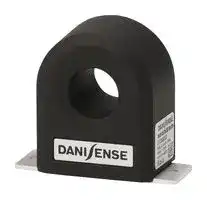
DT50ID
Current Sensor, Current Output, 50A AC, -50A DC to 50A DC, 14.25 V to 15.75 V, DT Series
⚠️ Reference pricing provided. In case of supply shortages, we will connect you with our trusted procurement partners to ensure your project's continuity.
- Manufacturer: DANISENSE
- Product type: Current Sensors
- SVHC: No SVHC (23-Jan-2024)
- Accuracy: -
- Product Range: DT Series
- Response Time: 1µs
- Primary Current: 50A, 50A
- Sensor Mounting: Screw Mount
- Measured Current: AC / DC
- Sensor Output Type: Current
- Supply Voltage Range: ± 14.25V to ± 15.75V
- Secondary Signal Type: -
- Supply Voltage DC Max: 15.75V
- Supply Voltage DC Min: 14.25V
- Current Sensor Technology: Closed Loop Flux Gate
- Operating Temperature Max: 85°C
- Operating Temperature Min: -40°C
- Current Measuring Range AC: 50A
- Current Measuring Range DC: -50A to 50A
| Delivery and price | |
|---|---|
| Units per pack | 1 |
| Price | 514.22 € |
| Current stock | 10+ |
| Lead time | 30 days |
Datasheet

**DT50ID**

High precision fluxgate AC/DC current transducer for galvanically isolated measurement up to 75 A

## **Features**

- 50 A rms nominal current

- 500:1 primary/secondary current ratio

- Current output

- Ø20.7 mm aperture

- 102 ppm total accuracy

- 1.5 ppm linearity

- 100 ppm offset

- 2 MHz bandwidth

- Status signal and LED

**RoHS** 2011/65/EU v

## **Description**

High precision DC current transducer (DCCT) measuring up to 75 A currents and continuously measuring 50 A currents with a linearity error less than 1.5 ppm. With a compact size and lightweight design, the DT50ID allows precision current sensing in tight spaces.

## **Applications**

- Space constrained applications

- Power measurement and power analysis

- Particles accelerators

- MRI devices and medical scanners

Based on the ultra stable Danisense closed loop flux gate technology, the DT50ID has very low offset and ultra low drift. The 2 MHz bandwidth allows high frequency and high precision measurements combined in a convenient package.

- Batteriy testing and evaluation systems

- Current calibration purposes

- Precision current sensing

It provides high resolution for precise monitoring, reliable and consistent performance, and a compact and rugged design for easy installation and durability.

All information subject to change without notice

9111100004 rev. 4

Page 1 of 8

www.danisense.com

2023-12-15

**DT50ID**

## **Electrical specifications at 23 °C,** Vs = _±_ **15 V supply voltage**

|**Electrical specifcations at 23 °C,**Vs =|_±_**15 V supply voltag**|**e**||
|---|---|---|---|
|**Parameter**|**Symbol**<br>**Unit**|**Min**<br>**Typ.**<br>**Max**|**Comment**|
|Nominal primary AC current<br>Nominal primary DC current<br>Measuring range<br>Overload capacity<br>Nominal secondary current<br>Primary / secondary ratio|IPN AC<br>Arms<br>IPN DC<br>A<br>IPM<br>A<br>IOL<br>A<br>ISN<br>mA<br>k<br>A/V<br>Ω|50<br>-50<br>50<br>-75<br>75<br>-250<br>250<br>-100<br>100<br>500<br>500<br>0<br>50|Refer toFig. 3for derating<br>Refer toFig. 2for derating<br>Refer toFig. 3for derating<br>Non-measured 100ms<br>At nominal primary DC current<br>Iprimary/Isecondary<br>Refer toFig. 2for details|
|Measuring resistance||||
|Linearity error|_ϵ_L<br>ppm|-1.5<br>0.7<br>1.5|ppm refers to reading|
|Offset current (including earth feld)<br>Offset temperature coeffcient<br>Offset stability over time|ppm<br>ppm/K<br>ppm/month|-130<br>130<br>-0.8<br>0.4<br>0.8<br>-0.1<br>0.1|ppm refers to nominal current<br>ppm refers to nominal current<br>ppm refers to nominal current|
|Bandwidth<br>Response time to a step current IPN|f(_±_3dB)<br>MHz<br>tr<br>µs|2<br>1|Small signal. SeeFig. 4<br>To 90% of step current|
|Total accuracy without offset<br><10 Hz<br><100 Hz<br><1 kHz<br><10 kHz<br><100 kHz<br><1MHz<br><2MHz|_ϵ_tot|_% of reading + % of full scale_<br>0.00015 + 0.00001<br>0.0003 + 0.00012<br>0.02 + 0.0002<br>0.3 + 0.0003<br>3 + 0.003<br>10 + 0.01<br>30 + 0.01|Full scale refers to IPN DC.<br>For details, seeReading and full<br>scale.<br>SeeFig. 4for more.|
|Phase shift<br><10 Hz<br><100 Hz<br><1 kHz<br><10 kHz<br><100 kHz<br><1MHz<br><2MHz||0.01°<br>0.01°<br>0.06°<br>0.5°<br>2°<br>15°<br>30°||
|RMS noise<br><10 Hz<br><100 Hz<br><1 kHz<br><10 kHz<br><100 kHz|ppm rms|0.04<br>0.07<br>0.4<br>1.2<br>0.6<br>1.2<br>1.1<br>3<br>9.3<br>27|ppm refers to nominal current|
|Peak-to-peak noise<br><10 Hz<br><100 Hz<br><1 kHz<br><10 kHz<br><100 kHz|ppm p-p|0.4<br>0.7<br>1.6<br>4<br>3.1<br>7<br>4.9<br>12<br>50<br>150|ppm refers to nominal current|
|Fluxgate excitation frequency|fexc<br>kHz|15.6||
|Power supply voltages<br>Idle current consumption<br>Current consumption at nominal current<br>Current consumption at max current<br>Operating temperature range|Vdc<br>mA<br>mA<br>mA<br>Ta<br>°C|_±_14.25<br>_±_15.75<br>_±_40<br>-140<br>140<br>-190<br>190<br>-40<br>85|Primary current = 0 A<br>At IPN DC<br>At IPM|
|Offset change with external magnetic feld<br>Offset change with power supply voltage changes|ppm/mT<br>ppm/V|-16<br>4<br>16<br>5.2|ppm refers to nominal current<br>ppm refers to nominal current|


1 ppm nominal = 0.1 _µ_ A secondary current.

All information subject to change without notice

9111100004 rev. 4

Page 2 of 8

www.danisense.com

2023-12-15

**DT50ID**

## **Linearity error**

Linearity error is defined as the deviation from a straight line. The straight line is a linear regression trend line based on the least squares method of the measurement points from 0 to positive max current and another trendline is calculated from 0 to negative max current. The difference between each measured point and the linear trend line is the linearity error. The linearity error _ϵ_ L can be expressed as (1), where Ireading is the measurement result and Ifitted is the regression value.

**==> picture [168 x 12] intentionally omitted <==**

**==> picture [251 x 113] intentionally omitted <==**

**----- Start of picture text -----**<br>
0<br>Measurement<br>Trendline<br>0<br>Reference Reference<br>Reading<br>Linearity error<br>**----- End of picture text -----**<br>


Figure 1: Linearity error definition

## **Reading and full scale**

Reading is the actual value measured at a given time. Full scale is the rated nominal value of the device. If a given current Ireading is measured, the total accuracy is calculated as (2). Example: A 500 A rated device has a specification of 0.005% + 0.0015% (reading + full scale) at < 10 Hz, plus an offset of 0.001 % (of full scale). The device is measuring (reading) 10 A dc, and the accuracy is calculated as (3).

_ϵ_ tot = _ϵ_ reading _·_ Ireading + ( _ϵ_ fullscale + _ϵ_ offset) _·_ IPNDC (2) _ϵ_ tot = 0.005% _·_ 10A + (0.0015% + 0.001%) _·_ 500A = 13mA (3)

## **Primary and secondary current/voltage**

The secondary current IS or voltage VS is calculated by using the transfer ratio k, as in (4).

**==> picture [524 x 222] intentionally omitted <==**

If the accuracy at a specific frequency is required, it is possible to use linear interpolation between known points. If the frequency f is f1 < f < f2 and the accuracy at the frequency _ϵ_ (f) is _ϵ_ (f1) < _ϵ_ (f) < _ϵ_ (f2), then the accuracy at f is found as (8).

All information subject to change without notice

9111100004 rev. 4

Page 3 of 8

www.danisense.com

2023-12-15

**DT50ID**

**==> picture [336 x 143] intentionally omitted <==**

**----- Start of picture text -----**<br>
300<br>280 25 °<br>260<br>240 45 °<br>220 65 °<br>200<br>180 85 °<br>160<br>140<br>120<br>100<br>80<br>60<br>40<br>20<br>0<br>10 20 30 40 50 60 70 80 90 100<br>Continuous or peak primary current (A)<br>)Ω<br>Resistance (<br>**----- End of picture text -----**<br>


Figure 2: Maximum measurement resistor RM vs. current and ambient temperature

**==> picture [359 x 344] intentionally omitted <==**

**----- Start of picture text -----**<br>
100<br>10<br>45 °<br>65 °<br>85 °<br>1<br>10 Hz 100 Hz 1 kHz 10 kHz 100 kHz 1 MHz<br>Frequency (Hz)<br>Figure 3: Maximum continuous primary current vs. frequency<br>6 60°<br>Gain<br>4 Phase 40°<br>2 20°<br>0 0°<br>-2 -20°<br>-4 -40°<br>-6 -60°<br>10 Hz 100 Hz 1 kHz 10 kHz 100 kHz 1 MHz<br>Frequency (Hz)<br>Primary current (Arms)<br>Phase<br>Magnitude (dB )<br>**----- End of picture text -----**<br>


Figure 4: Frequency characteristics. For high frequency measurement, see https://danisense.com/wp-content/uploads/Current-Measurements-at-High-Frequencies.pdf

All information subject to change without notice

9111100004 rev. 4

Page 4 of 8

www.danisense.com

2023-12-15

**DT50ID**

## **Isolation specifications according to IEC 61010-1**

- When using _REINFORCED insulated_ wire, all wiring must be insulated for the highest voltage used. When using _BASIC insulated_ or _uninsulated_ wire, follow the specified voltages in the table below:

|**Parameter**|**Parameter**|**Unit**|**Value**|
|---|---|---|---|
|Clearance<br>Creepage distance<br>||mm<br>mm<br>|8.5<br>11.5<br>|
|Comparative tracking index (CTI)||V|> 600|
|Continuous working voltage according to IEC 61010-1 with:<br>_Uninsulated_wire:<br>Non mains<br>CAT II (dc and rms)<br>CAT III (dc and rms<br>_BASIC insulated_wire:<br>Non mains<br>CAT II (dc and rms)<br>CAT III (dc and rms||V|1000<br>600<br>300<br>2000<br>1000<br>1000|
|Transient voltage according to IEC 61010-1 with:<br>_Uninsulated_wire:<br>Non mains<br>CAT II<br>CAT III<br>_BASIC insulated_wire:<br>Non mains<br>CAT II<br>CAT III||V|4000<br>6000<br>6000<br>3500<br>6000<br>8000|


- Do not connect the transducer to signals or use for measurements within Measurement Category IV, or for measurements on MAINs circuits or on circuits derived from Overvoltage Category IV which may have transient overvoltages above what the product can withstand. The product must not be connected to circuits that have a maximum voltage above the continuous working voltage, relative to earth or to other channels, or this could damage and defeat the insulation.

## **Environmental and mechanical characteristics**

|**Parameter**|**Unit**|**Min**|**Typ**|**Max**|**Comment**|
|---|---|---|---|---|---|
|Altitude<br>Usage<br>Pollution degree<br>Operating temperature range<br>Storage temperature range<br>Relative humidity<br>Ingress protection rating<br>Mass|m<br>°C<br>°C<br>%<br>kg|-40<br>-40<br>20|0.15|2000<br>2<br>85<br>85<br>80<br>IP20|Designed for indoor use<br>Non-condensing|


Connections: DSUB-9 EMC: EN 61326-1:2013-2021 Safety: IEC 61010-2-030:2021/A11:2021 and IEC 61010-1:2010/A1:2019 Random vibration test: IEC 60068-2-64:2008

All information subject to change without notice

9111100004 rev. 4

Page 5 of 8

www.danisense.com

2023-12-15

**DT50ID**

Shock test: IEC 60068-2-27:2009 External devices: External devices connected to current transducers must comply with the standards IEC61010-1 and IEC62368-1 and be energy-limited circuitry Cleaning: The transducer should only be cleaned with a damp cloth. No detergent or chemicals should be used. Temperature: When multiple primary turns are used or high primary currents are applied the temperature around the transducer will increase. Please monitor to ensure that the maximum ratings are not exceeded. It is recommended to have minimum 1 mm[2] per ampere in the primary bus bar.

## **Intended use**

The DT50ID is designed to measure current up to 75 A, and be powered by a DSSIU-4-1U or DSSIU-6-1U or similar power supplies. Please see the product manual: https://danisense.com/user-manual.

## **Instruction for use**

- Make sure to follow the polarity of the voltage supply to avoid damaging the device. See Fig. 6.

1. Do not power up the device before all cables are connected.

2. Place the primary conductor through the aperture of the transducer.

3. Connect a DSUB cable between DSSIU-4/6-1U and each sensor.

4. Connect a low impedance amperemeter, measuring resistor or power analyzer on the secondary output (4mm red and black connectors on the DSSIU-4/6-1U).

5. When all connection are secured - connect mains power.

6. Apply primary current.

- There is a risk of electrical shock if an uninsulated busbar with high voltages is touching the metal en- closure of the transducer. Please ensure, before powering up the system, that no uninsulated wire can touch the metal enclosure.

- Do not disassemble the unit. If the green status LED is not operating with all cables connected and the system powered up, disconnect power and contact Danisense for further instruction. If the equipment is used in a manner not specified by the manufacturer, the protection provided by the equipment may be impaired.

All information subject to change without notice

9111100004 rev. 4

Page 6 of 8

www.danisense.com

2023-12-15

**DT50ID**

**==> picture [415 x 329] intentionally omitted <==**

**----- Start of picture text -----**<br>
ee  35  @<br> 29,7  1<br> 54,5  Out+ 6<br>2<br>NC 7<br>3<br>Status+ 8<br>4<br>Vs+ 9<br>5<br>— | |<br>Figure 6:<br>(oy<br>ofaJe.<br>—<br>2x M4 - slotted hole<br>Figure 7:<br>Ne<br>Out+<br> 65  RM<br> 76  Out-<br>20,7<br> R2,25<br> 64,5<br> 37<br> 6,8<br>direc current Positive<br>**----- End of picture text -----**<br>


**==> picture [109 x 42] intentionally omitted <==**

**----- Start of picture text -----**<br>
1 Out-<br>Out+ 6<br>2 NC<br>NC 7<br>3 Status-<br>Status+ 8<br>4 0 V<br>Vs+ 9<br>5 Vs-<br>**----- End of picture text -----**<br>


Figure 6: DSUB-9 connection pinout

**==> picture [28 x 46] intentionally omitted <==**

**----- Start of picture text -----**<br>
Status+<br>Status-<br>**----- End of picture text -----**<br>


Figure 7: Status signal optocoupler

Figure 5: Dimensions of transducer. 0.3 mm Tolerance

Figure 8: External measurement resistor connection, see Fig. 2

## **Mounting**

## **Positive current direction**

Base plate mounting: 2 slotted holes Ø6 mm Back plate mounting: 4 slotted holes Ø6 mm Fastening torque: 5.5 Nm

## **Pin out description**

- 1 OutMeasurement output negative terminal 2 NC No connection 3 StatusStatus signal negative terminal 4 0 V 0 V connection for supply voltage 5 VsNegative supply voltage 6 Out+ Measurement output positive terminal 7 NC No connection 8 Status+ Status signal positive terminal 9 Vs+ Positive supply voltage

Is identified by an arrow on the label.

## **Status signal and LED**

When the sensor is operating in normal condition the status pins (Status+ and Status-) are shorted by an optocoupler and the green status LED is ON, see Fig. 7. When a fault is detected, or the power is off, the status pins are opened and the green status LED is OFF. Status signal optocoupler ratings found below:

Forward direction: Status+ to Status- (Pin 8 to pin 3) Maximum forward current: 10 mA Maximum forward voltage: 60 V Maximum reverse voltage: 5 V

All information subject to change without notice

9111100004 rev. 4

Page 7 of 8

www.danisense.com

2023-12-15

**DT50ID**

## **Declaration of Conformity**

Danisense A/S Malervej 10 DK-2630 Taastrup

Denmark

Declares that under our sole responsibility that this product is in conformity with the provisions of the following EC Directives, including all amendments, and with national legislation implementing these directives:

Directive 2014/30/EU

Directive 2014/35/EU

And that the following harmonized standards have been applied

EEN 61010-1 (Third Edition):2010, EN 61010-1:2010/A1:2019 EN 61010-2-030:2021/A11:2021 EN 61326-1:2013

All DANISENSE products are manufactured in accordance with RoHS directive 2011/65/EU. Annex II of the RoHS directive was amended by directive 2015/863 in force since 2015, expanding the list of 6 restricted substances (Lead, Hexavalent Chromium, PBB, PBDE and Cadmium)

Danisense follows the provision in EN 63000:2018

Place Taastrup, Denmark

Date Henrik Elbæk 2022-03-15

All information subject to change without notice

9111100004 rev. 4

Page 8 of 8

www.danisense.com

2023-12-15
Updated at April 10, 2026
About Novapart
Novapart is a B2B electronic component broker specialising in stock shortages and cost reduction. We source hard-to-find parts and identify compliant alternatives across a catalogue of 410,000+ components from 500+ manufacturers.
Learn more →Stock Shortage Specialist
When a component is unavailable, discontinued or has an unacceptable lead time, we tap into our network of vetted European and Asian distributors to source what you need — without compromising on quality or traceability.
Request a quote →Compliant Alternatives
We identify pin-to-pin, electrically equivalent substitutes that meet the same certifications (RoHS, AEC-Q100, REACH) as your original specification — validated against datasheets, not just part numbers. Often at a lower cost.
BOM Analysis service →