
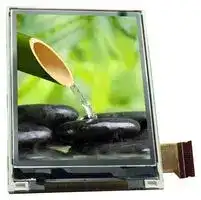
Image not available
Illustrative purposes only

DMT024QVNUNT0-2C
TFT LCD, 2.4
⚠️ Reference pricing provided. In case of supply shortages, we will connect you with our trusted procurement partners to ensure your project's continuity.
- Manufacturer: DENSITRON
- Product type: TFT LCD Displays
- Resolution: 240 x 320 Pixels
- Module Size: 42.7mm x 60.3mm
- Touchscreen: No Touchscreen
- Display Size: 2.4"
- Logic Voltage: 2.8V
- Interface Type: Parallel
- Display Appearance: RGB
- Display Brightness: 500cd/m²
- Display Orientation: Portrait
- Operating Temperature Max: 70°C
- Operating Temperature Min: -20°C
| Delivery and price | |
|---|---|
| Units per pack | 1 |
| Price | 19.19 € |
| Current stock | 10+ |
| Lead time | 30 days |
Datasheet

## **TFT DISPLAY MODULE** _Product Specification_
|Customer|Customer|Standard||
|---|---|---|---|
|Product<br>Number||DMT024QVNUNT0‐2C||
|Customer Part|Customer Part|||
|Number||||
|Customer<br>Approval|Customer||**Date:**|
|Internal Approvals|Internal Approvals|Internal Approvals|
|---|---|---|
|Product Mgr|Doc. Control|Electr. Eng|
|Luo Luo|Luo Luo|David Hardman|
|**Date: 07/01/18**|**Date: 07/01/18**|**Date: 07/01/18**|
## Revision Record
|Rev.|Date|Page|Chapt.|Comment|ECR no.|
|---|---|---|---|---|---|
|1.0|19‐Dec‐17|All|All|Initial Release<br>An upgrade version of ex‐<br>DET024QVF1H‐C|ECN8025|
|||||||
|||||||
|||||||
|||||||
|||||||
|||||||
|||||||
**Product N[o] : DMT024QVNUNT0‐2C REV.1.0** ©2018 Densitron Technologies Limited. All rights reserved. Proprietary data
2 of 23
## Table of Contents
|**1.0**|**MAIN FEATURES .................................................................................................... 5**|
|---|---|
|**2.0**|**MECHANICAL SPECIFICATION ................................................................................. 6**|
|**2.1 Mechanical Characteristics .................................................................................................................... 6**||
|**2.2 Mechanical Drawing .............................................................................................................................. 7**||
|**3.0**|**ELECTRICAL SPECIFICATION .................................................................................... 8**|
|**3.1 Absolute Maximum Ratings ................................................................................................................... 8**||
|**3.2 Electrical Characteristics ........................................................................................................................ 8**||
|**3.3 Interface Pin Assignment ....................................................................................................................... 9**||
|3.3.1|TFT Pin Assignment ................................................................................................................................. 9|
|**3.4 Timing Characteristics .......................................................................................................................... 10**||
|3.4.1|Display 8080 Series MPU Parallel Interface Timing Characteristics ...................................................... 10|
|3.4.2|Reset Timing Characteristics ................................................................................................................. 12|
|**4.0**|**OPTICAL SPECIFICATION ....................................................................................... 13**|
|**4.1 Optical Characteristics ......................................................................................................................... 13**||
|4.1.1|Test Method .......................................................................................................................................... 14|
|**5.0**|**BACKLIGHT SPECIFICATION .................................................................................. 15**|
|**5.1 LED**|**Driving Conditions ......................................................................................................................... 15**|
|**5.2 LED**|**Circuit ........................................................................................................................................... 15**|
|**6.0**|**QUALITY ASSURANCE SPECIFICATION .................................................................. 16**|
|**6.1 Delivery Inspection Standards .............................................................................................................. 16**||
|6.1.1|Inspection Conditions ........................................................................................................................... 16|
|6.1.2|Environmental Conditions .................................................................................................................... 16|
|6.1.3|Sampling Conditions ............................................................................................................................. 16|
|6.1.4|Definition of Area .................................................................................................................................. 17|
|6.1.5|Basic Principle ....................................................................................................................................... 17|
|6.1.6|Inspection Criteria ................................................................................................................................. 18|
|6.1.7|Classification of Defects ........................................................................................................................ 21|
|6.1.8|Identification / marking criteria ............................................................................................................ 21|
|**6.2 Dealing with Customer Complaints ...................................................................................................... 21**||
|6.2.1|Non‐conforming analysis ...................................................................................................................... 21|
## **Product N[o] : DMT024QVNUNT0‐2C REV.1.0**
3 of 23
©2018 Densitron Technologies Limited. All rights reserved. Proprietary data
|6.2.2|Handling of non‐conforming displays ................................................................................................... 21|
|---|---|
|**7.0**|**RELIABILITY SPECIFICATION.................................................................................. 22**|
|**7.1 Reliability Tests ................................................................................................................................... 22**||
|**8.0**|**HANDLING PRECAUTIONS .................................................................................... 23**|
**Product N[o] : DMT024QVNUNT0‐2C REV.1.0**
4 of 23
©2018 Densitron Technologies Limited. All rights reserved. Proprietary data
## 1.0 Main Features
|Item|Contents|
|---|---|
|Screen Size|2.4” Diagonal|
|Display Format|240 x RGB x 320 Dots|
|N° of Colour|262K|
|Active Area|36.72 mm (H) x 48.96 mm (V)|
|LCD Type|TFT|
|Mode|IPS Transmissive / Normally Black|
|Viewing Direction|Full view|
|Interface|80‐series CPU 8/9/16/18 bit selectable|
|Driver IC|ST7789V|
|Backlight Type|LED|
|Operating Temperature|‐20°C ~ +70°C|
|Storage Temperature|‐30°C ~ +80°C|
|RoHS compliant|Yes|
**Product N[o] : DMT024QVNUNT0‐2C REV.1.0** ©2018 Densitron Technologies Limited. All rights reserved. Proprietary data
5 of 23
## 2.0 Mechanical Specification
## **2.1 Mechanical Characteristics**
|Item|Characteristic|Unit|
|---|---|---|
|Display Format|240 x RGB x 320 Dots|Dots|
|Overall Dimensions|42.72 mm (H) x 60.4 mm (V) x 1.93 mm (D)|mm|
|Active Area|36.72 mm (H) x 48.96 mm (V)|mm|
|pixel Pitch|153 (H) x 153 (V)|µm|
|Weight|9|g|
**Product N[o] : DMT024QVNUNT0‐2C REV.1.0** ©2018 Densitron Technologies Limited. All rights reserved. Proprietary data
6 of 23
## **2.2 Mechanical Drawing**
**Product N[o] : DMT024QVNUNT0‐2C REV.1.0**
7 of 23
©2018 Densitron Technologies Limited. All rights reserved. Proprietary data
## 3.0 Electrical Specification
## **3.1 Absolute Maximum Ratings**
|Item|Symbol|Condition|Min|Max|Unit|Note|
|---|---|---|---|---|---|---|
|Power Supply Voltage|VCI||‐0.3|4.6|V||
|Digital Interface Supply<br>Voltage|IOVCC||‐0.3|4.6|V||
|Operating Temperature|TOP||‐20|70|°C|1|
|Storage Temperature|TST||‐30|80|°C|1,2,3|
**Note 1.** 90 % RH Max for Ta<50 °C, and 60% RH for Ta≥50°C.
- **Note 2.** In case of below 0°C, the response time of liquid crystal (LC) becomes slower and
the colour of panel becomes darker than normal one. Level of retardation depends on temperature, because of LC's characteristic.
- **Note 3.** Only operation is guaranteed at operating temperature. Contrast, response time, another display quality are evaluated at +25°C.
## **3.2 Electrical Characteristics**
|Item|Symbol|Condition|Min|Typ|Max|Unit|Note|
|---|---|---|---|---|---|---|---|
|Supply Voltage|VCI|Ta=25˚C|2.4|2.8|3.3|V||
|Digital Interface Supply<br>Voltage|IOVCC|Ta=25˚C|1.65|1.8|3.3|V||
|Input Voltage for Logic|VIH||0.7<br>IOVCC|‐|IOVCC|V||
||VIL||GND|‐|0.3<br>IOVCC|V||
|Output Voltage for Logic|VOH||0.8<br>IOVCC|‐|IOVCC|V||
||VOL||GND|‐|0.2<br>IOVCC|V||
|Current Consumption|IDD||‐|8.5|‐|mA|1|
**Note 1:** The specified power consumption is under the conditions of VCI=2.8V, FV=60Hz.
**Product N[o] : DMT024QVNUNT0‐2C REV.1.0** ©2018 Densitron Technologies Limited. All rights reserved. Proprietary data
8 of 23
## **3.3 Interface Pin Assignment**
## 3.3.1 TFT Pin Assignment
Recommended connector: MOLEX 51296‐5093
|No.|Symbol||||||||
|---|---|---|---|---|---|---|---|---|
||||||Function||||
||||||||||
|1|GND||Ground||||||
|2|IM0||||Interface mode<br>80‐series|DB Pin in use|||
|3|IM1||IM1|IM0||Register/Content|GRAM||
||||0|0|CPU 16‐bit<br>Interface II|D[8:1]|D[17:10]<br>D[8:1]||
||||0|1|CPU 8‐bit I/F II|D[17:10]|D[17:10]||
||||1|0|CPU 18‐bit I/F II|D[8:1]|D[17‐0]||
||||1|1|CPU 9 bit I/F II|D[17:10]|D[17:9]||
|4|FMARK(TE)||Frame headpulse signal|||_(leave it Open if not used)_|||
|5|GND||Ground||||||
|6|DB17||||||||
|7|DB16||||||||
|8|DB15||||||||
|9|DB14||||||||
|10|DB13||Data bus||||||
|11|DB12||||||||
|12|DB11||||||||
|13|DB10||||||||
|14|DB9||_(connect unused pin(s) to VSS)_||||||
|15|DB8||||||||
|16|IOVCC||Digitalpower supply||||||
|17|DB7||||||||
|18|DB6||||||||
||||Data bus||||||
|19|DB5||||||||
||||||||||
|20|DB4||||||||
||||||||||
|21|DB3||||||||
||||||||||
|22|DB2||||||||
||||_(connect unused pin(s) to VSS)_||||||
|23|DB1||||||||
||||||||||
|24|DB0||||||||
|25|/CS(CSX)||Chipselect signal active low||||||
|26|RS(DCX)||Displaydata(RS=H) /Command selection(RS=L)||||||
|27|/WR(WRX)||Write signal active low||||||
|28|/RD(RDX)||Read signal active low||||||
|29|/RESET(RESX)||Reset signal active low||||||
|30|VCI||Analoguepower supply||||||
|31|GND||Ground||||||
|32|LED+||LEDpower supply (+)||||||
|33|GND||Ground||||||
|34|LED‐||LEDpower supply (‐)||||||
|35|GND||Ground||||||
**Product N[o] : DMT024QVNUNT0‐2C REV.1.0**
9 of 23
©2018 Densitron Technologies Limited. All rights reserved. Proprietary data
## **3.4 Timing Characteristics**
Please refer to ST7789V datasheet for more information
## 3.4.1 Display 8080 Series MPU Parallel Interface Timing Characteristics
**Product N[o] : DMT024QVNUNT0‐2C REV.1.0**
10 of 23
©2018 Densitron Technologies Limited. All rights reserved. Proprietary data
**Product N[o] : DMT024QVNUNT0‐2C REV.1.0**
11 of 23
©2018 Densitron Technologies Limited. All rights reserved. Proprietary data
## 3.4.2 Reset Timing Characteristics
**Product N[o] : DMT024QVNUNT0‐2C REV.1.0** ©2018 Densitron Technologies Limited. All rights reserved. Proprietary data
12 of 23
## 4.0 Optical Specification
## **4.1 Optical Characteristics**
Measuring instruments: Driving condition: Backlight: Measured temperature:
LCD‐5100, Eldim, Topcon BM‐7 IOVCC = VCI = 2.8V, VSS = 0V IF=20mA Ta = 25 ゜ C
|Item|Item|Symbol|Condition|Min|Typ|Max|Unit|Note|
|---|---|---|---|---|---|---|---|---|
|Response Time||TR+TF|θ=Ф=0°<br>Normal Viewing<br>Angle|||||2|
|||||‐|35|45|ms||
||||||||||
|Contrast Ratio||CR||640|800|‐||3|
|Viewing Angle|Left|θL|CR ≥ 10|‐|80|‐|deg|4|
||Right|θR||‐|80|‐|deg||
||Up|φU||‐|80|‐|deg||
||Down|φD||‐|80|‐|deg||
|Colour Chromaticity|Red|Rx||0.613|||‐|5|
||||||0.633|0.653|||
||||||||||
|||Ry||0.316|||‐||
||||||0.336|0.356|||
||||||||||
||Green|Gx||0.302|0.322|0.342|‐||
|||Gy||0.585|0.605|0.625|‐||
||||||||||
||||CR ≥ 10||||||
||Blue|Bx||0.126|0.146|0.166|‐||
|||By||0.028|0.048|0.068|‐||
||White|Wx||0.270|0.310|0.350|‐||
|||Wy||0.291|0.331|0.371|‐||
|Centre Brightness||||420|500|‐|cd/m²|6|
|Brightness Distribution||||80|‐|‐|%|7|
**Product N[o] : DMT024QVNUNT0‐2C REV.1.0** ©2018 Densitron Technologies Limited. All rights reserved. Proprietary data
13 of 23
## 4.1.1 Test Method
|Note|Item|Test Method|
|---|---|---|
|1|Setup|The display should be stabilised at a given temperature for 30 minutes to avoid abrupt<br>temperature change during measuring. In order to stabilise the luminance, measurements<br>should be executed after lighting the backlight for 30 minutes in a windless room.<br>Olsphay<br>UCD Panel<br>Pholtomeber<br>Center ofthe Screen<br>(TOPCON<br>84-7 Fast)<br>&<br>AelddView=22<br>Light Shield Room<br>300 mm<br>{Ambient Leminance « 1.ben)|
|2|Response time|Measure output signal waveform by the luminance meter when raster of window pattern is<br>changed from white to black and from black to white.<br>White<br>Black<br>White<br>White<br>100%<br>20%<br>10%<br>0%<br>Black<br>TON<br>TOFF|
|3|Contrast ratio|Measure maximum brightness and minimum brightness at the centre of the screen by<br>displaying raster or window pattern. Then calculate the ratio between these two values.<br>Brightness of unselected position (white)<br>Contrast Ratio (CR) =<br>Brightness of selectedposition(black)|
|4|Viewing angle<br>Horizontal θ<br>Vertical Ø|Move the luminance meter from right to left and up and down and determinate the angles<br>where contrast ratio is 10<br>a=<br>=0°<br>oo<br>pu<br>-_—<br>nN<br>Qo’clock<br>Me<br>ts<br>12? n’rlark<br>><br>:<br>OL<br>“s-25<br>2 St<br>aea<br>oa<br>4 ><br>*erste<br>yo<br>NN<br>“xt<br>3 0’clock<br>~~a~~<br>~~ae~~|
|5|Colour<br>chromaticity|Measure chromaticity coordinates x and y of CIE1931 colorimetric system<br>~~a~~<br>~~ae~~|
|6|Centre<br>brightness|Measure the brightness at the centre of the screen|
|7|Brightness<br>distribution|(Brightness distribution) = 100 x B/A %<br>A: max. brightness of the 9 points<br>B: min. brightness of the 9points|
**Product N[o] : DMT024QVNUNT0‐2C REV.1.0**
14 of 23
©2018 Densitron Technologies Limited. All rights reserved. Proprietary data
## 5.0 Backlight Specification
## **5.1 LED Driving Conditions**
|Item|Symbol|Condition|Min|Typ|Max|Unit|
|---|---|---|---|---|---|---|
|Forward Current|IF|Ta=25 °C|‐|20|‐|mA|
|Forward Voltage|VF|Ta= 25°C|3.0*4|3.2*4|3.4*4|V|
|Reverse Voltage|VR|Ta= 25°C|‐||30|V|
|Power Consumption|PBL|Ta= 25°C|‐|256|‐|mW|
|LED life time|Hr||‐|50k|‐|hour|
Note:
- The lifetime of the LED is defined as a period till the brightness of the LED decreases to the half of its initial value.
- This figure is given as a reference purpose only, and not a guarantee.
- This figure is estimated for an LED operating alone. The performance of an LED may differ when assembled as a monitor together with a TFT panel due to different environmental temperature.
- Estimated lifetime could vary on a different temperature and usually higher temperature could reduce the life significantly.
## **5.2 LED Circuit**
**Product N[o] : DMT024QVNUNT0‐2C REV.1.0**
15 of 23
©2018 Densitron Technologies Limited. All rights reserved. Proprietary data
## 6.0 Quality Assurance Specification
## **6.1 Delivery Inspection Standards**
## 6.1.1 Inspection Conditions
Inspection distance: 30 cm ± 2 cm Viewing angle: ±45°
## 6.1.2 Environmental Conditions
Ambient temperature: 25°C ±5°C Ambient humidity: 65±10% RH Ambient illumination: 300~700 lux
## 6.1.3 Sampling Conditions
1. Lot size: quantity of shipment lot per model
2. Sampling method:
|Sampling Plan|Sampling Plan|GB/T 2828‐2003|
|---|---|---|
|||Normal inspection, Class II|
|AQL|Major Defect|0.65%|
||Minor Defect|1.5%|
|No|Items to be<br>inspected|Criteria|Classification<br>of defects|
|---|---|---|---|
|1|Functional<br>defects|1) No display, Open or miss line<br>2) Display abnormally, Short<br>3) Backlight no lighting, abnormal lighting.<br>4)TP no function|Major|
|2|Missing|Missingcomponent||
|3|Outline<br>dimension|Overall outline dimension beyond the<br>drawingis not allowed||
|4|Colour tone|Colour unevenness, refer to limited<br>sample|Minor|
|5|Spot Line defect|Light dot,Dim spot, Polarizer Bubble;<br>Polarizer accidented spot.||
|6|Soldering<br>appearance|Good soldering, peeling off is not allowed.||
**Product N[o] : DMT024QVNUNT0‐2C REV.1.0**
16 of 23
©2018 Densitron Technologies Limited. All rights reserved. Proprietary data
## 6.1.4 Definition of Area
A zone: active area B zone: viewing area
## 6.1.5 Basic Principle
A set of samples to indicate the limit of acceptable quality level shall be discussed should a dispute occur.
**Product N[o] : DMT024QVNUNT0‐2C REV.1.0**
17 of 23
©2018 Densitron Technologies Limited. All rights reserved. Proprietary data
## 6.1.6 Inspection Criteria
**Product N[o] : DMT024QVNUNT0‐2C REV.1.0**
18 of 23
©2018 Densitron Technologies Limited. All rights reserved. Proprietary data
**Product N[o] : DMT024QVNUNT0‐2C REV.1.0**
19 of 23
©2018 Densitron Technologies Limited. All rights reserved. Proprietary data
**Product N[o] : DMT024QVNUNT0‐2C REV.1.0**
20 of 23 ©2018 Densitron Technologies Limited. All rights reserved. Proprietary data
## 6.1.7 Classification of Defects
Visual defects (except no or wrong label) are treated as minor defects, while electrical defects are treated as major defects.
Two minor defects are equal to one major defect in lot sampling inspection.
## 6.1.8 Identification / marking criteria
Any unit with illegible / wrong / double or no marking / label shall be rejected.
## **6.2 Dealing with Customer Complaints**
## 6.2.1 Non‐conforming analysis
Purchaser should supply Densitron with detailed data of non‐conforming sample. After accepting it, Densitron should complete the analysis in two weeks from receiving the sample.
If the analysis cannot be completed on time, Densitron must inform the purchaser.
## 6.2.2 Handling of non‐conforming displays
If any non‐conforming displays are found during customer acceptance inspection which Densitron is clearly responsible for, return them to Densitron.
Both Densitron and customer should analyse the reason and discuss the handling of non‐ conforming displays when the reason is not clear.
Equally, both sides should discuss and come to agreement for issues pertaining to modification of Densitron quality assurance standard.
**Product N[o] : DMT024QVNUNT0‐2C REV.1.0**
21 of 23
©2018 Densitron Technologies Limited. All rights reserved. Proprietary data
## 7.0 Reliability Specification
## **7.1 Reliability Tests**
||Test Item|Test Condition|Test Condition|Sample Size|
|---|---|---|---|---|
||High Temperature<br>Operation|Ta= 70˚C|96h|3pcs|
||Low Temperature<br>Operation|Ta=‐20˚C|96h|3pcs|
||Temperature Cycle<br>Operation|‐20°C70°C ON/OFF, 20 cycles.<br>ON time over 10 seconds, OFF time<br>over 10 seconds||3pcs|
||High Temperature<br>Storage|Tp= 80°C|96h|3pcs|
|Test|Low Temperature<br>Storage|Tp= ‐30°C|96h|3pcs|
|Durability|ESD Test|150pF, 330Ω, ±6KV (Contact)/±8KV<br>(Air),5 Points/panel,10 times/point||3pcs|
||Thermal Shock<br>Resistance|The sample should be allowed to<br>stand the following 5 cycles of<br>operation: LTS for 30 minutes ‐><br>normal temperature for 5 minutes ‐><br>HTS for 30 minutes ‐> normal<br>temperature for 5 minutes, as one<br>cycle, then taking it out and drying it<br>at normal temperature, and allowing<br>it stand for 24 hours||3pcs|
||Box Drop Test|1 Corner 3 Edges 6 faces, 66 cm<br>(Medium Box)||1 box|
Note: Ta=ambient temperature Tp= Panel temperature
Notes:
1. No dew condensation to be observed.
2. The function test shall be conducted after 4 hours storage at the normal temperature and humidity after removed from the test chamber.
3. No cosmetic or functional defects should be allowed.
4. Total current consumption should be less than twice the initial value.
**Product N[o] : DMT024QVNUNT0‐2C REV.1.0**
22 of 23
©2018 Densitron Technologies Limited. All rights reserved. Proprietary data
## 8.0 Handling Precautions
## _**Safety**_
If the LCD panel breaks, be careful not to get the liquid crystal fluid in your mouth or in your eyes. If the liquid crystal touches your skin or clothes, wash it off immediately using soap and plenty of water.
## _**Mounting and Design**_
Place a transparent plate (e.g. acrylic, polycarbonate or glass) on the display surface to protect the display from external pressure. Leave a small gap between the transparent plate and the display surface.
When assembling with a zebra connector, clean the surface of the pads with alcohol and keep the surrounding air very clean.
Design the system so that no input signal is given unless the power supply voltage is applied.
## _**Caution during LCD cleaning**_
Lightly wipe the display surface with a soft cloth soaked with Isopropyl alcohol, Ethyl alcohol or Trichlorotriflorothane.
Do not wipe the display surface with dry or hard materials that will damage the polariser surface. Do not use aromatic solvents (toluene and xylene), or ketonic solvents (ketone and acetone).
## _**Caution against static charge**_
As the display uses C‐MOS LSI drivers, connect any unused input terminal to VDD or VSS. Do not input any signals before power is turned on. Also, ground your body, work/assembly table and assembly equipment to protect against static electricity.
## _**Packaging**_
Displays use LCD elements, and must be treated as such. Avoid strong shock and drop from a height. To prevent displays from degradation, do not operate or store them exposed directly to sunshine or high temperature/humidity.
## _**Caution during operation**_
It is indispensable to drive the display within the specified voltage limit since excessive voltage shortens its life. Direct current causes an electrochemical reaction with remarkable deterioration of the display quality. Give careful consideration to prevent direct current during ON/OFF timing and during operation. Response time is extremely delayed at temperatures lower than the operating temperature range while, at high temperatures, displays become dark. However, this phenomenon is reversible and does not mean a malfunction or a display that has been permanently damaged. If the display area is pushed on hard during operation, some graphics will be abnormally displayed but returns to a normal condition after turning off the display once. Even a small amount of condensation on the contact pads (terminals) can cause an electro‐chemical reaction which causes missing rows and columns. Give careful attention to avoid condensation.
## _**Storage**_
Store the display in a dark place where the temperature is 25°C ± 10°C and the humidity below 50%RH. Store the display in a clean environment, free from dust, organic solvents and corrosive gases. Do not crash, shake or jolt the display (including accessories).
**Product N[o] : DMT024QVNUNT0‐2C REV.1.0**
23 of 23
©2018 Densitron Technologies Limited. All rights reserved. Proprietary data
Updated at February 9, 2023
About Novapart
Novapart is a B2B electronic component broker specialising in stock shortages and cost reduction. We source hard-to-find parts and identify compliant alternatives across a catalogue of 410,000+ components from 500+ manufacturers.
Learn more →Stock Shortage Specialist
When a component is unavailable, discontinued or has an unacceptable lead time, we tap into our network of vetted European and Asian distributors to source what you need — without compromising on quality or traceability.
Request a quote →Compliant Alternatives
We identify pin-to-pin, electrically equivalent substitutes that meet the same certifications (RoHS, AEC-Q100, REACH) as your original specification — validated against datasheets, not just part numbers. Often at a lower cost.
BOM Analysis service →