
Image not available
Illustrative purposes only

D2E146-HT59-02
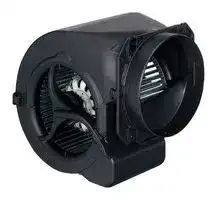
Fan Blower, Centrifugal, 230 VAC, AC, 146 mm, 220 mm, 535 CFM
⚠️ Reference pricing provided. In case of supply shortages, we will connect you with our trusted procurement partners to ensure your project's continuity.
- Manufacturer: EBM-PAPST
- Product type: Blowers
- Blower Type:Centrifugal; Supply Voltage:230V; Current Type:AC; Fan Frame Size:146mm; External Depth:220mm; Flow Rate - Metric:910m³/h; Flow Rate - Imperial:535cu.ft/min; Noise Rating:-; B
- SVHC: No SVHC (25-Jun-2020)
- IP Rating: -
- Blower Type: Centrifugal
- Bearing Type: Ball Bearing
- Noise Rating: -
- Power Rating: 200W
- Voltage Type: AC
- Product Range: -
- Air Flow - CFM: 535CFM
- External Depth: 220mm
- Fan Frame Size: 146mm
- Supply Voltage: 230VAC
- Air Flow - m3/min: 15.17m³/min
- Flow Rate - Metric: 910m³/h
- Flow Rate - Imperial: 535CFM
- Power Connection Type: Terminal Block
| Delivery and price | |
|---|---|
| Units per pack | 50 |
| Price | 200.17 € |
| Current stock | 10+ |
| Lead time | 30 days |
Datasheet

**D2E146-HT59-02**

## Operating instructions

## **ebm-papst Mulfingen GmbH & Co. KG**

Bachmühle 2 D-74673 Mulfingen Phone +49 (0) 7938 81-0 Fax +49 (0) 7938 81-110 info1@de.ebmpapst.com www.ebmpapst.com

## **CONTENTS**

## **1. SAFETY REGULATIONS AND INFORMATION**

## **1**

1.1 Hazard levels for warnings

1 1 1

1.2 Staff qualifications

1.3 Basic safety rules

1.4 Voltage 1 1.5 Safety and protective features 2 1.6 Mechanical movement 2 1.7 Emissions 2

1.7 Emissions

1.8 Hot surface

1.8 Hot surface 2 1.9 Transport 2 2

1.10 Storage

## **2. INTENDED USE**

## **3**

## **3. TECHNICAL DATA**

## **4**

3.1 Product drawing

3.1 Product drawing 4 3.2 Nominal data 5 3.3 Data according to Commission Regulation (EU) 327/2011 5 3.4 Technical description 5 3.5 Mounting data 5 6

3.6 Transport and storage conditions

## **4. CONNECTION AND STARTUP**

**4. CONNECTION AND STARTUP 6** 4.1 Mechanical connection 6 4.2 Electrical connection 6 4.3 Plug connection 7 4.4 Connection diagram 8 4.5 Checking connections 9 4.6 Switching on the device 9 4.7 Switching off the device 9

## **5. MAINTENANCE, MALFUNCTIONS, POSSIBLE CAUSES AND REMEDIES**

|**5. MAINTENANCE, MALFUNCTIONS, POSSIBLE**||
|---|---|
|**5. MAINTENANCE, MALFUNCTIONS, POSSIBLE**|**9**|
|**CAUSES AND REMEDIES**||
|5.1 Cleaning<br>5.2 Safety inspection<br>5.3 Disposal|10<br>10<br>10|


## **1. SAFETY REGULATIONS AND INFORMATION**

Read these operating instructions carefully before starting work on the device. Observe the following warnings to prevent malfunctions or danger to persons.

These operating instructions are to be regarded as part of the device. The device is only to be sold or passed on together with the operating instructions.

These operating instructions may be duplicated and distributed to inform about potential dangers and their prevention.

## **1.1 Hazard levels for warnings**

These operating instructions use the following hazard levels to indicate potentially hazardous situations and important safety regulations:

## **DANGER**

- Indicates an imminently hazardous situation which will result in death or serious injury if the specified actions are not taken. Compliance with the instructions is imperative.

## **WARNING**

Indicates a potentially hazardous situation which can result in death or serious injury if the specified actions are not taken. Exercise extreme caution while working.

## **CAUTION**

Indicates a potentially hazardous situation which can result in minor or moderate injury or damage to property if the specified actions are not taken.

## **NOTE**

A potentially harmful situation can occur and, if not avoided, can lead to property damage.

## **1.2 Staff qualifications**

The device may only be transported, unpacked, installed, operated, maintained and otherwise used by suitably qualified, trained and authorized technical staff.

Only authorized specialists are permitted to install the device, to carry out a test run and to perform work on the electrical installation.

## **1.3 Basic safety rules**

The safety hazards associated with the device must be assessed again following installation in the final product. Note the following when working on the device:

- ; Do not perform any modifications, additions or conversions on the device without the approval of ebm-papst.

## **1.4 Voltage**

- ; Check the device's electrical equipment at regular intervals; see Chapter 5.2 Safety inspection.

- ; Replace loose connections and defective cables immediately.

## **DANGER**

## **Electrically charged device**

- Risk of electric shock

- →When working on an electrically charged device, stand on a rubber mat.

## **WARNING Live terminals and connections even with device switched off**

Electric shock

Item no. 13481-5-9970 · ENU · Change 89168 · Approved 2016-08-25 · Page 1 / 10

ebm-papst Mulfingen GmbH & Co. KG · Bachmühle 2 · D-74673 Mulfingen · Phone +49 (0) 7938 81-0 · Fax +49 (0) 7938 81-110 · info1@de.ebmpapst.com · www.ebmpapst.com

**D2E146-HT59-02**

## Operating instructions

- →Wait five minutes after disconnecting the voltage at all poles before opening the device.

## **1.7 Emissions**

## **WARNING**

## **CAUTION**

## **In the event of a fault, the rotor and the impeller will be energized**

The rotor and the impeller have basic insulation.

→Do not touch the rotor and impeller once installed.

## **CAUTION**

## **The motor restarts automatically when operating voltage**

**is applied, e.g. after a power failure.**

- Risk of injury

- →Keep out of the device's danger zone.

- →When working on the device, switch off the line voltage and ensure that it cannot be switched back on.

- →Wait until the device comes to a stop.

## **1.5 Safety and protective features**

## **DANGER**

## **Protective device missing and protective device not functioning**

Without a protective device there is a risk of serious injury, for instance when reaching into the device during operation.

- →Operate the device only with a fixed protective device and guard grille.

- →The fixed protective device must be able to withstand the kinetic energy of a fan blade that becomes detached at maximum speed. There must not be any gaps which it is possible to reach into with the fingers, for example.

- →The device is a built-in component. As the operator, you are responsible for ensuring that the device is secured adequately.

- →Stop the device immediately if you notice a missing or ineffective protective device.

## **1.6 Mechanical movement**

## **DANGER**

## **Rotating device**

**Depending on the installation and operating conditions, the sound pressure level may exceed 70 dB(A).**

Risk of noise-induced hearing loss

- →Take appropriate technical safety measures.

- →Protect operating personnel with appropriate safety equipment such as hearing protection.

- →Also observe the requirements of local agencies.

## **1.8 Hot surface**

## **CAUTION**

- **High temperature on motor housing** Risk of burns

- →Ensure sufficient protection against accidental contact.

## **1.9 Transport**

## **NOTE**

## **Transporting the device**

- →Transport the device in its original packaging only.

- →Secure the device so it cannot slip, e.g. by using a lashing strip.

## **1.10 Storage**

- ; Store the device, partially or fully assembled, in a dry place, protected against the weather and free from vibration, in the original packaging in a clean environment.

- ; Protect the device against environmental effects and dirt until final installation.

- ; We recommend storing the device for no longer than one year in order to guarantee trouble-free operation and the longest possible service life.

- ; Even devices explicitly intended for outdoor use are to be stored as described prior to commissioning.

- ; Maintain the storage temperature, see Chapter 3.6 Transport and storage conditions.

Risk of injury to body parts coming into contact with the rotor or the impeller.

- →Secure the device against accidental contact.

- →Before working on the system/machine, wait until all parts have come to a standstill.

## **WARNING**

## **Rotating device**

Long hair and dangling items of clothing, jewelry and the like can become entangled and be pulled into the device. Injuries can result.

- →Do not wear any loose-fitting or dangling clothing or jewelry while working on rotating parts.

- →Protect long hair with a cap.

Item no. 13481-5-9970 · ENU · Change 89168 · Approved 2016-08-25 · Page 2 / 10

ebm-papst Mulfingen GmbH & Co. KG · Bachmühle 2 · D-74673 Mulfingen · Phone +49 (0) 7938 81-0 · Fax +49 (0) 7938 81-110 · info1@de.ebmpapst.com · www.ebmpapst.com

**D2E146-HT59-02**

## Operating instructions

## **2. INTENDED USE**

The device is exclusively designed as a built-in device for conveying air according to its technical data.

Any other usage above and beyond this does not conform with the intended purpose and constitutes misuse of the device.

Customer equipment must be capable of withstanding the mechanical and thermal stresses that can arise from this product. This applies for the entire service life of the equipment in which this product is installed.

## **Intended use also includes**

- Conveying air at an ambient air pressure between 800 mbar and 1050 mbar.

- Using the device within the permitted ambient temperature range; see Chapter 3.6 Transport and storage conditions and Chapter 3.2 Nominal data.

- Operating the device with all protective devices.

- Following the operating instructions.

## **Improper use**

In particular, operating the device in the following ways is prohibited and could be hazardous:

- Operating the device in an unbalanced state, e.g. due to dirt deposits or ice formation.

- Resonant operation, operation with severe vibration. This also includes vibration transmitted to the fan from the customer installation.

- Conveying air that contains abrasive particles.

- Conveying highly corrosive air, e.g. salt spray. Exception: devices designed for salt spray and correspondingly protected.

- Conveying air with high dust content, e.g. suctioning off sawdust.

- Operating the device close to flammable materials or components.

- Operating the device in an explosive atmosphere.

- Using the device as a safety component or to perform safety-related functions.

- Operation with completely or partially disassembled or manipulated protective devices.

- In addition, all applications not listed among the intended uses.

> Item no. 13481-5-9970 · ENU · Change 89168 · Approved 2016-08-25 · Page 3 / 10 ) ebmpapst ~~2~~ ebm-papst Mulfingen GmbH & Co. KG · Bachmühle 2 · D-74673 Mulfingen · Phone +49 (0) 7938 81-0 · Fax +49 (0) 7938 81-110 · info1@de.ebmpapst.com · www.ebmpapst.com

**D2E146-HT59-02**

## Operating instructions

## **3. TECHNICAL DATA**

## **3.1 Product drawing**

All dimensions in mm.

||Codedplugsystem AMP Universal Mate-N-Lok;connector housing: AMP 926 682-3;6xplug pin AMP 926 886-1|
|---|---|
|**1.1**|L = step1|
|**1.2**|L = step2|
|**1.3**|L = step3|
|**1.4**|L = step4|
|**1.5**|N|
|**1.6**|Protective earth|
||4x sheet metal nut for thread EN ISO 1478-ST4.8(min. screw length 14.5 mmplus material thickness of mounting)|


Item no. 13481-5-9970 · ENU · Change 89168 · Approved 2016-08-25 · Page 4 / 10

ebm-papst Mulfingen GmbH & Co. KG · Bachmühle 2 · D-74673 Mulfingen · Phone +49 (0) 7938 81-0 · Fax +49 (0) 7938 81-110 · info1@de.ebmpapst.com · www.ebmpapst.com

**D2E146-HT59-02**

## Operating instructions

## **3.2 Nominal data**

## **3.4 Technical description**

**Motor** M2E068-EC **Weight** 3.4 kg **Fan size** 146 mm **Phase** 1~ 1~ **Rotor surface** Partly cast in aluminum **Nominal voltage / VAC** 230 230 **Terminal box material** PP plastic ~~————~~ **Frequency / Hz** 50 60 ~~————————~~ **Impeller material** Sheet steel, galvanized **Method of obtaining** fa fa **Housing material** PP plastic **data Motor suspension** Motor vibration-damped on both sides **Valid for approval/** CE CE **Direction of rotation** Counterclockwise, viewed toward rotor **standard Degree of protection** IP20 **Speed (rpm) / min[-1]** 1600 1500 **Insulation class** "F" **Power consumption / W** 290 320 **Moisture (F) /** H0 - dry environment **Current draw / A** 1.28 1.4 **Environmental (H) Capacitor / µF** 6 6 **protection class Capacitor voltage / VDB** 400 400 **Installation position** Any **Capacitor standard** S2 (CE) S2 (CE) **Condensation** None, open rotor **Min. back pressure / Pa** 0 0 **drainage holes Min. ambient** -25 -25 ~~Be~~ **Mode** S1 **temperature / °C Motor bearing** Ball bearing **Max. ambient** 50 40 **Speed levels** 4 **temperature / °C Touch current** < 0.75 mA ~~===~~ **Starting current / A** 1.48 1.5 ~~—~~ **according to IEC** ml = Max. load · me = Max. efficiency · fa = Free air **60990 (measuring** cs = Customer specification · ce = Customer equipment **circuit Fig. 4, TN** Subject to change **system) Electrical hookup** With plug; Via terminal box, capacitor **3.3 Data according to Commission Regulation (EU) 327/** ~~|~~ integrated and connected **2011 Motor protection** Thermal overload protector (TOP) internally connected Actual Req. 2015 ~~ee~~ **with cable** ~~ee~~ Variable **01 Overall efficiency ηes / %** 33.3 33.3 **Protection class** I (with customer connection of protective **02 Measurement category** A ~~re~~ earth) **03 Efficiency category** Static **Motor capacitor** S2 **04 Efficiency grade N** 44 44 **according to EN 6025205 Variable speed drive** No **1 in safety protection 06 Year of manufacture** The year of manufacture is specified on theproduct's rating label. ~~PP~~ **class 07 Manufacturer** ebm-papst Mulfingen GmbH & Co. KG **Conformity with** EN 60335-1; EN 60335-2-31; CE Amtsgericht (court of registration) Stuttgart **standards** · HRA 590344 ~~se~~ **Approval** VDE

|**2011**|||
|---|---|---|
||Actual|Req. 2015q. 2015. 2015|
|**01 Overall efficiencyy ηes / %es / % / %**|33.3|33.3|
|**02 Measurement categorygoryoryy**|A||
|**03 Efficiency categoryy category categorygoryoryy**|Static||
|**04 Efficiencyy grade Nrade N**|44|44|
|**05 Variable speed drivepeed driveeed drive**|No||
|**06 Year of manufacture**|The year of manufacture is specified on theproduct's rating label.<br>product's rating label.roduct's rating label.g label.label.||
|**07 Manufacturer**|ebm-papst Mulfingen GmbH & Co. KG<br>Amtsgericht (court of registration) Stuttgart<br>· HRA 590344<br>D-74673 Mulfingen||
|**08 Type**|D2E146-HT59-02||
|**09 Power consumption Pe / kW**|0.2||
|**09 Air flowqv / m³/h**|630||
|**09 Pressure increase total psf /**<br>**Pa**|379||
|**10 Speed(rpm) n / min-1**|2410||
|**11 Specific ratio***|1.00||
|**12 Recycling/disposal**|Information on recycling and disposal is<br>provided in the operatinginstructions.||
|**13 Maintenance**|Information on installation, operation and<br>maintenance is provided in the operating<br>instructions.||
|**14 Additional components**|Components used to calculate the energy<br>efficiency that are not apparent from the<br>measurement category are detailed in the<br>CE declaration.||


With regard to cyclic speed loads, note that the rotating parts of the device are designed for a maximum of one million load cycles. If you have special questions, consult ebm-papst for support.

## **3.5 Mounting data**

For screw clearance, see Chapter 3.1 Product drawing

; Secure the screws against unintentional loosening (e.g. use selflocking screws). **Strength class of** 8.8 **screws** ~~ee~~

~~ee~~

Any further mounting data required can be taken from the product drawing.

* Specific ratio = 1 + pfs / 100 000 Pa

Data obtained at optimum efficiency level. The ErP data is determined using a motor-impeller combination in a standardized measurement setup.

Item no. 13481-5-9970 · ENU · Change 89168 · Approved 2016-08-25 · Page 5 / 10

ebm-papst Mulfingen GmbH & Co. KG · Bachmühle 2 · D-74673 Mulfingen · Phone +49 (0) 7938 81-0 · Fax +49 (0) 7938 81-110 · info1@de.ebmpapst.com · www.ebmpapst.com

**D2E146-HT59-02**

## Operating instructions

## **3.6 Transport and storage conditions**

## ; Use the device in accordance with its degree of protection.

|**Max. permitted**|+ 80 °C|
|---|---|
|**ambient temp. for**||
|**motor (transport/**||
|**storage)**<br>**Min. permitted**<br>**ambient temp. for**<br>**motor (transport/**|- 40 °C|
|**storage)**||


## **CAUTION**

## **Voltage**

The device is a built-in component and has no disconnecting switch.

- →Only connect the device to circuits that can be switched off with an all-pole disconnection switch.

- →When working on the device, secure the system/ machine in which the device is installed so as to prevent it from being switched back on.

## **NOTE**

## **Water ingress into wires or cables**

Water ingress at the customer end of the cable can damage the device.

## **4. CONNECTION AND STARTUP**

- →Make sure the end of the cable is connected in a dry environment.

**4.1 Mechanical connection**

Only connect the device to circuits that can be switched off with an all-pole disconnection switch.

## **CAUTION**

- **Cutting and crushing hazard when removing blower from packaging** →Carefully remove the blower from its packaging, touching

- A only the housing. Strictly avoid shocks. ;

## **4.2.1 Requirements**

   - ; Check whether the information on the nameplate matches the connection data.

- →Wear safety shoes and cut-resistant safety gloves.

- ; If the motor run capacitor was not installed by ebm-papst, check whether the information on the motor run capacitor matches the information on the nameplate.

## **NOTE**

## **Damage to the device from vibration**

Bearing damage, shorter service life

   - ; Before connecting the device, make sure the power supply matches the device voltage.

- →The fan must not be subjected to force or excessive vibration from sections of the installation. #If the fan is connected to air ducts, the connection should be isolated from vibration, e.g. using compensators or similar elements. #Ensure stress-free attachment of the fan to the substructure.

   - ; Only use cables designed for the current level indicated on the nameplate.

      - For determining the cross-section, note the sizing criteria according to EN 61800-5-1. The protective earth must have a cross-section equal to or greater than that of the phase conductor.

- ; Check the device for transport damage. Damaged devices are not to be installed.

   - We recommend the use of 105 °C cables. Ensure that the minimum cable cross-section is at least

- ; Install the undamaged device in accordance with your application.

AWG 26 / 0.13 mm².

## **CAUTION**

- **CAUTION Possible damage to the device**

- A

## **Protective earth contact resistance according to EN 60335**

- If the device slips during installation, serious damage can result. →Ensure that the device is securely positioned at its place of installation until all fastening screws have been tightened.

Compliance with the resistance specifications according to EN 60335 for the protective earth connection circuit must be verified in the end application. Depending on the installation situation, it may be necessary to connect an additional protective earth conductor by way of the extra

## **4.2 Electrical connection**

protective earth terminal provided on the device.

## **DANGER**

## **Voltage on the device** Electric shock

→Always connect a protective earth first.

→Check the protective earth.

## **DANGER**

## **Faulty insulation**

## Risk of fatal injury from electric shock

- →Use only cables that meet the specified installation regulations for voltage, current, insulation material, capacity, etc.

- →Route cables so that they cannot be touched by any rotating parts.

## **4.2.2 Voltage control**

- With speed control using transformers or electronic voltage regulators (e.g. phase control), excessive current may occur. In addition, depending on how the device is installed, noises can occur with phase control.

## **4.2.3 Variable frequency drive**

Please use a variable frequency drive only after consultation with ebmpapst.

- For operation with variable frequency drives, install sinusoidal filters that work on all poles (phase-phase and phase-ground) between the drive and the motor.

- During operation with variable frequency drives, an all-pole sine filter protects the motor against high-voltage transients that can destroy the coil insulation system, and against harmful bearing currents.

Item no. 13481-5-9970 · ENU · Change 89168 · Approved 2016-08-25 · Page 6 / 10

ebm-papst Mulfingen GmbH & Co. KG · Bachmühle 2 · D-74673 Mulfingen · Phone +49 (0) 7938 81-0 · Fax +49 (0) 7938 81-110 · info1@de.ebmpapst.com · www.ebmpapst.com

**D2E146-HT59-02**

## Operating instructions

Heating of the motor due to use of a variable frequency drive must be checked in the application by the customer.

## **4.3 Plug connection**

## **4.3.1 Making supply connections**

- ; Check your connector's pin assignment.

- ; Connect the built-in connector with the mating connector.

- ; Ensure that the connector is properly engaged.

> Item no. 13481-5-9970 · ENU · Change 89168 · Approved 2016-08-25 · Page 7 / 10 ) ebmpapst ~~2~~ ebm-papst Mulfingen GmbH & Co. KG · Bachmühle 2 · D-74673 Mulfingen · Phone +49 (0) 7938 81-0 · Fax +49 (0) 7938 81-110 · info1@de.ebmpapst.com · www.ebmpapst.com

**D2E146-HT59-02** ~~rs~~

## Operating instructions

## **4.4 Connection diagram**

The switch must interrupt the circuit when switching.

|**1**|Step1(min.)|
|---|---|
|**2**|Step2|
|**3**|Step3|
|**4**|Step4(max.)|
|**5**|N|
|**6**|PEprotective earth|
|**7**|Speed increasing|


Item no. 13481-5-9970 · ENU · Change 89168 · Approved 2016-08-25 · Page 8 / 10

ebm-papst Mulfingen GmbH & Co. KG · Bachmühle 2 · D-74673 Mulfingen · Phone +49 (0) 7938 81-0 · Fax +49 (0) 7938 81-110 · info1@de.ebmpapst.com · www.ebmpapst.com

**D2E146-HT59-02**

## Operating instructions

## **4.5 Checking connections**

- ; Ensure isolation from supply (all phases).

- ; Make sure a restart is impossible

- ; Check whether the mating connector is properly engaged with the built-in connector.

- ; Check that the mating connector is correctly attached to the cable.

## **4.6 Switching on the device**

The device may only be switched on if it has been installed properly and in accordance with its intended use, including the required safety mechanisms and professional electrical hookup. This also applies for devices which have already been equipped with plugs and terminals or similar connectors by the customer.

- **WARNING Hot motor housing**

- A Risk of fire

   - →Ensure that no combustible or flammable materials are located close to the blower.

- ; Before switching on, check the device for visible external damage and make sure the protective devices are functional.

- ; Check the fan's air flow paths for foreign matter and remove any foreign matter found.

- ; Apply the nominal supply voltage.

## **NOTE**

## **Damage to the device from vibration**

Bearing damage, shorter service life

- →Low-vibration operation of the fan must be ensured over the entire speed control range. #Severe vibration can arise for instance from inexpert handling, transportation damage and resultant imbalance or be caused by component or structural resonance. #Speed ranges with excessively high vibration levels and possibly resonant frequencies must be determined in the course of fan commissioning. #Either run through the resonant range as quickly as possible with speed control or find another remedy.# Operation with excessively high vibration levels can lead to premature failure.

## **4.7 Switching off the device**

- ; Disconnect the device from the power supply at the supply line's main switch.

- ; When disconnecting, be sure to disconnect the ground connection last.

## **5. MAINTENANCE, MALFUNCTIONS, POSSIBLE CAUSES AND REMEDIES**

Do not perform any repairs on your device. Send the device to ebmpapst for repair or replacement.

## **WARNING Live terminals and connections even with device switched off**

Electric shock

- →Wait five minutes after disconnecting the voltage at all poles before opening the device.

## **CAUTION**

**Electric charge on capacitor after device is switched off** Electric shock, risk of injury

- →Discharge the capacitors before working on the device.

## **CAUTION**

**The motor restarts automatically when operating voltage is applied, e.g. after a power failure.** Risk of injury

- →Keep out of the device's danger zone.

- →When working on the device, switch off the line voltage and ensure that it cannot be switched back on.

→Wait until the device comes to a stop.

If the device is out of use for some time, e.g. when in storage, we recommend switching it on for at least two hours to allow any condensation to evaporate and to move the bearings.

|**Malfunction/fault**|**Possible cause**|**Possible remedy**|
|---|---|---|
|**Impeller not**<br>**running smoothly**|Imbalance in rotating<br>parts|**y**<br>Clean the device;<br>replace it if imbalance<br>persists after cleaning.<br>Make sure no<br>weight clips are<br>removed during<br>cleaning.|
|**Motor not turning**|Mechanical blockage|Switch off, isolate<br>from supply and<br>remove mechanical<br>blockage.|
||Line voltage faulty|Check line voltage,<br>restorepower supply.|
||Faulty connection|Isolate from supply,<br>correct connection;<br>see connection<br>diagram.|
||Thermal overload<br>protector activated|Allow motor to cool<br>off, locate and rectify<br>cause of error,<br>release restart lockout<br>if necessary|
||Impermissible point of<br>operation|Check point of<br>operation|
|**Motor**<br>**overtemperature**|Ambient temperature<br>too high|Reduce ambient<br>temperature ifpossible|
||Deficient cooling|Improve cooling|


Item no. 13481-5-9970 · ENU · Change 89168 · Approved 2016-08-25 · Page 9 / 10

ebm-papst Mulfingen GmbH & Co. KG · Bachmühle 2 · D-74673 Mulfingen · Phone +49 (0) 7938 81-0 · Fax +49 (0) 7938 81-110 · info1@de.ebmpapst.com · www.ebmpapst.com

**D2E146-HT59-02**

## Operating instructions

In the event of further malfunctions, contact ebm-papst.

## **5.3.1 Country-specific legal requirements**

## 8

- **5.3.1 Country-specific legal requirements NOTE Country-specific legal requirements**

- o Always observe the applicable country-specific legal regulations with regard to the disposal of products or waste occurring in the various phases of the life cycle. The corresponding disposal standards are also to be heeded.

## **5.1 Cleaning**

## **NOTE Damage to the device during cleaning**

Malfunction possible

## **5.3.2 Disassembly**

- →Do not clean the device using a water jet or high-pressure cleaner.

Disassembly of the product must be performed or supervised by qualified personnel with the appropriate technical knowledge. The product is to be disassembled into suitable components for disposal employing standard procedures for motors.

- →Do not use any acid, alkali or solvent-basedcleaning agents.

→Do not use any pointed or sharp-edged objects for cleaning **5.2 Safety inspection What to check How to check How often What action?** Contact Visual inspection At least every Repair or protection 6 months replacement of cover for device intactness or damage Device for Visual inspection At least every Replacement of damage to 6 months device blades and housing ● Fastening the Visual inspection At least every Fasten cables 6 months ● Fastening the Visual inspection At least every Fasten ● protective earth 6 months ● terminal Insulation of Visual inspection At least every Replace cables ● cables for 6 months damage ● Impeller for Visual inspection At least every Clean or ● wear/deposits/ 6 months replace impeller corrosion and damage ; Abnormal acoustic At least every Replace device bearing noise 6 months ~~HE~~ | **5.3 Disposal** manner. For ebm-papst, environmental protection and resource preservation are top priority corporate goals. ● ebm-papst operates an environmental management system which is ● certified in accordance with ISO 14001 and rigorously implemented around the world on the basis of German standards. ● Right from the development stage, ecological design, technical safety ● and health protection are fixed criteria. The following section contains recommendations for ecological disposal of the product and its components. i

## **WARNING**

- **Heavy parts of the product may drop off. Some of the product components are heavy. These components could drop off during disassembly.**

This can result in fatal or serious injury and material damage.

→Secure components before unfastening to stop them falling.

## **5.3.3 Component disposal**

The products are mostly made of steel, copper, aluminum and plastic. Metallic materials are generally considered to be fully recyclable. Separate the components for recycling into the following categories:

- Steel and iron

- Aluminum

- Non-ferrous metal, e.g. motor windings

- Plastics, particularly with brominated flame retardants, in accordance with marking

- Insulating materials

- Cables and wires

- Electronic scrap, e.g. circuit boards

Only ferrite magnets and not rare earth magnets are used in external

rotor motors from ebm-papst Mulfingen GmbH & Co. KG.

- ; Ferrite magnets can be disposed of in the same way as normal iron and steel.

Electrical insulating materials on the product, in cables and wires are made of similar materials and are therefore to be treated in the same manner. The materials concerned are as follows:

- Miscellaneous insulators used in the terminal box

- Power cables

- Cables for internal wiring

- Electrolytic capacitors

Dispose of electronic components employing the proper procedures for electronic scrap.

→Please contact ebm-papst for any other questions on disposal.

Item no. 13481-5-9970 · ENU · Change 89168 · Approved 2016-08-25 · Page 10 / 10

ebm-papst Mulfingen GmbH & Co. KG · Bachmühle 2 · D-74673 Mulfingen · Phone +49 (0) 7938 81-0 · Fax +49 (0) 7938 81-110 · info1@de.ebmpapst.com · www.ebmpapst.com
Updated at April 29, 2026
About Novapart
Novapart is a B2B electronic component broker specialising in stock shortages and cost reduction. We source hard-to-find parts and identify compliant alternatives across a catalogue of 410,000+ components from 500+ manufacturers.
Learn more →Stock Shortage Specialist
When a component is unavailable, discontinued or has an unacceptable lead time, we tap into our network of vetted European and Asian distributors to source what you need — without compromising on quality or traceability.
Request a quote →Compliant Alternatives
We identify pin-to-pin, electrically equivalent substitutes that meet the same certifications (RoHS, AEC-Q100, REACH) as your original specification — validated against datasheets, not just part numbers. Often at a lower cost.
BOM Analysis service →