
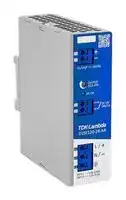


D1SE120-24-A4
AC/DC DIN Rail Power Supply (PSU), ITE, Industrial & Laboratory Equipment, 1 Output, 120 W, 24 V
- Manufacturer: TDK-LAMBDA
- Product type:
- SVHC: No SVHC (21-Jan-2025)
- Product Range: D1SE Series
- No. of Outputs: 1 Output
- Output Power Max: 120W
- Current, Output 4: -
- Input Voltage VAC: 90V AC to 264V AC
- Power Supply Output Type: Fixed
- Output Current - Output 1: 5A
- Output Current - Output 2: -
- Output Current - Output 3: -
- Output Voltage - Output 1: 24V
- Output Voltage - Output 2: -
- Output Voltage - Output 3: -
- Output Voltage - Output 4: -
- Power Supply Applications: ITE, Industrial & Laboratory Equipment
| Delivery and price | |
|---|---|
| Units per pack | 50 |
| Price | 73.85 € |
| Current stock | 10+ |
| Lead time | 30 days |

**D1SE120-24-A3 D1SE120-24-A4 D1SE120-24-A5**

## **Technical Specification**

**DIN-Rail power supply 1 phase / 120W / 24V**

## **Industries & Applications**

**==> picture [196 x 6] intentionally omitted <==**

**----- Start of picture text -----**<br>
Automation Industrial Semi-Fab Renewable Comms Test<br>**----- End of picture text -----**<br>


## **Features & Benefits**

- **AC or DC operation** enables use in a wide range of applications.

- **130% boost power capability** increases design flexibility and enable system retrofits.

- **Efficiencies of up to 92%** contribute to minimised energy consumption and an environmentally friendly energy footprint.

- **A peak inrush energy less than 0.6A²s** prevents input circuit breakers from nuisance tripping.

- **Push-in terminals** for tool-less installation and high vibration resistance.

- **Dedicated models with coated PCBs** to withstand harsh environments.

- **A sophisticated thermal design** for minimal installation clearances.

## **Technical data abstract[1]**

||**Technical data abstract[1]**|**Technical data abstract[1]**|**Technical data abstract[1]**|**Technical data abstract[1]**|
|---|---|---|---|---|
||**Output voltage**<br>_nom._<br>24VDC<br>**Adjustment range**<br>_nom._<br>22.5 .. 29VDC<br>**Output current**<br>_nom._<br>5A<br>~~ee~~||||
||**Boost current**||_max._|6.5A|
||**Hold-up time**||_min._|25ms|
||**Overload behaviour**|||CC + Intermittent mode(Hiccup)|
||**Input voltage AC**||_nom._|100 .. 240VAC|
|**Frequency range**<br>~~SO~~|||_max._<br>_max._|90 .. 264VAC<br>47 .. 63HZ|
||**Inrush current AC2**||_typ._|15 / 19 / 29A <1ms|
||**Inrush energy AC2**||_typ._|0.07 / 0.12 / 0.30A2s|
||**Input voltage DC**||_nom._|110 .. 250VDC|
||||_max._|93 .. 300VDC|
||**Inrush current DC**<br>**Inrush energy DC**||_typ._<br>_typ._|12 / 25VDC<2ms<br>0.07 / 0.25A2s|
|**Outputpower**<br>**Boostpower**<br>**Conversion efficiency2**<br>~~a~~|||_nom._<br>_max._<br>_typ._|120W<br>156W / 80s<br>88.4 / 90.2 / 92.0%|
||**Power losses2**<br>**No-load consumption2**<br>**Power factor**|~~cn~~|_typ._<br>_max._<br>_typ._|15.7 / 13.0 / 10.4W<br>0.8 / 0.8 / 0.8W<br>0.92|
||**Ambient operating temperature** <br>**Service life MTBF3**||_nom._<br>_max._<br>_min._|-25 .. +55°Camb(-13 .. +158°Famb)<br>-25 .. +70°Camb (-13 .. +131°Famb)<br>9.10M / 3.82M hrs|
||**Service lifetime**<br>**Width x Height x Depth**<br>**Weight**<br>1All values refer to STC unless otherwise stated ||_min._<br>131 400hrs<br>38x125x110mm<br>(1.50x4.92x4.33in)<br>_max._<br>460g (1.01lb)<br>All values refer to STC unless otherwise stated |2100 / 120 / 240VAC|350% / 100% Pout_nom<br>~~BO~~|||


## **Certifications & Approvals**

IEC EN 61010-1 IEC EN 61010-2-201 IEC EN 62368-1 (Ed.3) UL CSA 61010-1 UL CSA 61010-2-201 _E356563_

UL CSA 62368-1 (Ed.3) _E511889_

IS 13252-1 _R-41185469_

## **Compliance & Registration**

EU Low Voltage Dir. 2014/35/EU EU EMC Dir. 2014/30/EU EU RoHS Dir. 2011/65/EU

Safety and EMC Reg. 2016 Hazard. Substances Reg. 2012

For China RoHS information refer to the TDK website

## 10

## **CAE catalogues**

www.emea.lambda.tdk.com/d1se-series

## **Commercial information**

|**Commercial information**||
|---|---|
|**Order codes**|D1SE120-24-A3|
||D1SE120-24-A4|
||D1SE120-24-A5|
|**TARIC code**|8504408390|
|**Life-cycle status**|Launch|
|**Product revision**|H01|
|**Single package**||
|Width|155mm (6.10in)|
|Height|78.5mm (3.09in)|
|Depth|145mm (5.71in)|
|Gross weight|550g (1.21lb)|
|**Bulk package**||
|Width|313mm (12.32in)|
|Height|176mm (6.93in)|
|Depth|430mm (16.93in)|
|Quantity|10 units|
|**Pallet**||
|Width|1020mm (40.16in)|
|Length|1090mm (42.91in)|
|Quantity|300 units|
|**Manufacturer warranty**|3 years|


|**Model selector**||||
|---|---|---|---|
|**Model name**|**Output Power**|**Output Voltage**|**Feature**|
|**D1SE120-12-A4**|120W|12VDC|DC OK|
|**D1SE120-12-A5**|120W|12VDC|DC OK,PCB coating|
|**D1SE120-24-A3**|120W|24VDC||
|**D1SE120-24-A4**|120W|24VDC|DC OK|
|**D1SE120-24-A5**|120W|24VDC|DC OK,PCB coating|
|**D1SE240-24-A3**|240W|24VDC||
|**D1SE240-24-A4**|240W|24VDC|DC OK|
|**D1SE240-24-A5**|240W|24VDC|DC OK,PCB coating|
|**D1SE240-48-A4**|240W|48VDC|DC OK|
|**D1SE240-48-A5**|240W|48VDC|DC OK,PCB coating|
|**D1SE480-24-A3**|480W|24VDC||
|**D1SE480-24-A4**|480W|24VDC|DC OK|
|**D1SE480-24-A5**|480W|24VDC|DC OK,PCB coating|
|**D1SE480-48-A4**|480W|48VDC|DC OK|
|**D1SE480-48-A5**|480W|48VDC|DC OK,PCB coating|
|**D1SE480-72-A4**|480W|72VDC|DC OK|
|**D1SE480-72-A5**|480W|72VDC|DC OK, PCB coating|


www.emea.lambda.tdk.com/d1se-series

**Add-ons and accessories**

## **DBM buffer modules**

In order to secure process uptime and reliability in 24V low-voltage systems, DBM buffer modules increase hold-up time or provide a reserve for peak loads.

## **DBM20**

20A input/output, electrolytic capacitors, signalling & control, screw terminals

## **DBM20/E**

20A input/output, electrolytic capacitors, signalling & control, spring clamp terminals

www.emea.lambda.tdk.com/uk/products/dbm20

## **DRM redundancy modules**

For building fault tolerant 12/24V systems, DRM redundancy modules can be used to decouple 1+1 power supplies.

## **DRM40**

40A output, 2x20A input, screw terminals, DC OK and balancing LEDs

**DRM40B** 40A output, 2x20A input, screw terminals

www.emea.lambda.tdk.com/uk/products/drm40

~~=[ee]~~

**DDSM programmable DC/DC converter** Isolated buck-boost converter with a wide input/output voltage range.

## **DDSM120-0555-R0**

5A output at 5..55V, input 11..52V, push-in terminals, display, DC OK, USB

## **DDSM240-0555-R0**

10A output at 5..55V, input 11..52V, push-in terminals, display, DC OK, USB

www.emea.lambda.tdk.com/uk/products/ddsm

## **DDA DC/DC converter**

Non-isolated step-down converter for creating additional DC bus voltages from a single DC input source.

## **DDA250**

Single output 20A at 3.3..15V, input 9..53V, DC OK LED, screw terminals

## **DDA325**

Dual output 14A at 3.3..24V and 8A at -3.3..-24V, input 9..40V, DC OK LEDs, screw terminals

## **DDA500**

Dual output 2x20A at 3.3..15V, input 9..53V, DC OK LEDs, screw terminals

www.emea.lambda.tdk.com/uk/products/dda

## **DUSH DC-UPS**

In mission critical applications, the DUSH serves as a backup solution to deliver power from a battery.

## **DUSH960-1248-0M**

20A input/output/battery, 12..48V programmable, buck-boost converter, battery interface, Modbus/RTU, LCD, 5A AUX output, push-in terminals

## **DUSH960-1248-1M**

20A input/output/battery, 12..48V programmable, buck-boost converter, battery interface, Modbus/RTU, LED indication, push-in terminals

www.emea.lambda.tdk.com/uk/products/dush

www.emea.lambda.tdk.com/d1se-series

## **Index**

|**1.**|**General ..........................................................................................................................................................................................................6**|
|---|---|
|**2.**|**Electrical output ...........................................................................................................................................................................................7**|
|**3.**|**Electrical input AC .......................................................................................................................................................................................8**|
|**4.**|**Electrical input DC .......................................................................................................................................................................................9**|
|**5.**|**Performance ...............................................................................................................................................................................................10**|
|**6.**|**Ambient conditions ....................................................................................................................................................................................11**|
|**7.**|**Reliability and Service lifetime  ................................................................................................................................................................13**|
|**8.**|**Dimensions & Mechanical data ................................................................................................................................................................14**|
|**9.**|**Installation clearances...............................................................................................................................................................................15**|
|**10.**|**Wiring & Connection ..................................................................................................................................................................................15**|
|**11.**|**Signaling & Control ....................................................................................................................................................................................16**|
|**12.**|**Block diagram ............................................................................................................................................................................................16**|
|**13.**|**Device protection .......................................................................................................................................................................................17**|
|**14.**|**Electrical Safety .........................................................................................................................................................................................17**|
|**15.**|**Electromagnetic immunity ........................................................................................................................................................................19**|
|**16.**|**Electromagnetic emission.........................................................................................................................................................................20**|
|**17.**|**Certifcations & Approvals ........................................................................................................................................................................20**|
|**18.**|**Designed to meet .......................................................................................................................................................................................20**|
|**19.**|**Compliance & Registration .......................................................................................................................................................................21**|
|**20.**|**Application notes .......................................................................................................................................................................................21**|


www.emea.lambda.tdk.com/d1se-series

## **List of abbreviations**

|**avg.**|_average_|The arithmetic average calculated from a row of values.|
|---|---|---|
|**CC**||Constant output current|
|**CGD**||Cornergrounded delta(ACpower system)|
|**chap.**||Chapter|
|**Dir.**||Directive|
|**eCap**||Electrolytic capacitor|
|**EMC**||Electromagnetic Compatibility|
|**Iac**||AC input current under aparticular operatingcondition|
|**Iout**||DC output current under aparticular operatingcondition|
|**Iout_boost**||Available current reserve beyond Iout_nom(w/o a dropin Uset)that can be delivered for a limited time.|
|**Iout_nom**||Continuous nominal DC output current under STC.|
|**Iout_ol**||Max. intermittent DC output current in an overload situation and a shortfall of Uset.|
|**Iout_sc**||Max. short circuit DC output current and Uout close to zero.|
|**ITU**||International Telecommunication Union|
|**max.**|_maximum_|The maximum value which aparameter can assume,or which must not be exceeded.|
|**MCB**||Miniature circuit breaker|
|**min.**|_minimum_|The minimum value which aparameter can assume,or must not be fallen below.|
|**MOV**||Metal Oxide Varistor|
|**MTBF**||Mean Time Between Failure|
|**nom.**|_nominal_|The ideal or reference value of a technical parameter which is guaranteed under STC. All nominal values in<br>this document refer to each other and represent thegeneral specification of the device.|
|**OCP**||Overcurrentprotection|
|**OTP**||Overtemperatureprotection|
|**OVP**||Overvoltageprotection|
|**PCB**||Printed Circuit Board|
|**PELV**||Protective Extra Low Voltage|
|**PE**||Protective Earth|
|**PFC**||Power Factor Correction|
|**Pout**||Outputpower under aparticular operatingcondition with reference to Pout_nom|
|**Pout_boost**||Availablepower reserve beyond Pout_nom that can be delivered for a limited time.|
|**Pout_nom**||Nominal outputpower|
|**PSU**||Power supplyunit|
|**Reg.**||Regulation|
|**SELV**||SafetyExtra Low Voltage|
|**STC**||Standard test conditions(see„1. General“ onpage 6)|
|**typ.**|_typical_|The typical value of a parameter is not guaranteed but can be assumed under STC. The min. or max.|
|||value must be determined duringthe engineering process of the end application.|
|**Uout**||DC output voltage under aparticular operatingcondition|
|**Uout_nom**||Nominal DC output voltage|
|**Uset**||Manuallyset output voltage via voltagepotentiometer|
|**UVP**||Undervoltageprotection|
|**Vac**||AC input voltage under aparticular operatingcondition|
|**Vac_nom**||Nominal AC input voltage|
|**/**||Separator between two values. The conditions to which the values refer can be found in the last column of|
|||the table.|
|**..**<br>**<**<br>**>**||Specifies a range of values.<br>Theparameter is less than or equal to the specified value<br>The parameter is greater than or equal to the specified value|


## **Table data structure**

**X.  Technical category** ~~Lo~~ Technical parameter Characteristic Values Condition (optional) (optional)

Unless otherwise stated, all values are specified in normal mounting position, at full load, nominal input and output voltages, 25°C (77°F) ambient temperature and a run-in time of 5 minutes.

D1SE120-24- **□□** 5 / 23

## **1. General** ~~a~~

**Proper handling of the product** The faultless and safe operation of the products requires proper transport, proper storage, set-up, assembly, installation, commissioning, operation and maintenance. The permissible ambient conditions must be observed. Instructions in the associated documentation must be observed.

## **Protection enclosure required**

The device must be installed in a protective housing or control cabinet to which only qualified personnel have access.

## **Humid environments**

Do not operate the device in a damp environment or in an environment where condensation is likely to occur.

## **Switch or circuit-breaker mounting position**

A switch or circuit-breaker must be mounted near the equipment.

## **Observe country-specific regulations**

In addition to the product documentation, the relevant country-specific regulations for the installation of the device must be observed.

## **Prohibited electrical/mechanical modifications**

The product must not be modified in any way electrically or mechanically. Modifications can result in fatal injuries and damage to property.

## **Expiry of the manufacturer’s warranty**

The power supply is maintenance-free. Repairs can only be carried out by the manufacturer. Opening the housing voids the manufacturer’s warranty.

## **Use of third-party products**

If third-party products and components are used for power or voltage increase, buffering (primary or secondary side), EMC filtering, redundancy

or for load protection, it must be approved by TDK-Lambda.

## **Standard test conditions**

Unless otherwise stated, all values are specified in normal mounting position, at full load, nominal input and output voltages, 25°C (131°F) ambient temperature and a run-in time of 5 minutes.

## **1.1 Description of user elements**

**==> picture [239 x 184] intentionally omitted <==**

**----- Start of picture text -----**<br>
1 6 1<br>2<br>2 2.12.2 2.12.2 3<br>OUTPUT  24V/5A OUTPUT  24V/5A 4<br>OUTPUT22.5-29V OUTPUT22.5-29V 5<br>3 DC OK DC OK 6<br>4 + 3.13.2 @ 1314 DC OK24V/1A a<br>l e n , i .<br>D1SE120-24-A3 D1SE120-24-A4<br>1.1 L / 1.1 L /<br>op 1.2 N / 1.2 N / e<br>5 1.3INPUT INPUT  100-240V110-250V 1.3INPUT INPUT  100-240V110-250V |<br>nad<br>=r —<br>-A3 -A4/-A5<br>**----- End of picture text -----**<br>


## Push-in terminal, DC output

Single turn potentiometer for adjusting the output voltage

Green DC-OK status LED

Push-in terminal for signal contacts

- Push-in terminal, AC input

Web link to product documentation

- For more detailed information on the input/ouput wiring and the connection of the signalling contacts, please refer to „10. Wiring & Connection“ on page 15.

**Fig. 1:** Description of user elements

Unless otherwise stated, all values are specified in normal mounting position, at full load, nominal input and output voltages, 25°C (77°F) ambient temperature and a run-in time of 5 minutes.

D1SE120-24- **□□**

6 / 23

## **2. Electrical output** ~~Lo~~

|**Output voltage**|_nom._|24VDC||
|---|---|---|---|
|[Uout_nom]||||
|**Adjustment range**|_nom._|22.5 .. 29VDC||
|[Uset]||||
|**Adjustment tolerance**|_max._|±3%|at upper/lower endposition of voltagepotentiometer|
|**Factory default**||24VDC (±0.5%)||
|**Output current**|_nom._|5A|22.5 .. 29VDC|
|[Iout_nom]||||
|**Boost current**|_max._|6.5A / 80s|< 55°Camb|
|[Iout_boost]||||
|**Overload behaviour**||Constant current + Intermittent mode(Hiccup) see Fig. 3||
|**Short-circuitproof**||Yes,auto-recovery||
|**Instant SC current**|_max._|33A / <1ms||
|[Iout_sc]||||
|**SC hiccup current**|_max._|25A / 50ms||
||_avg._|6A / 10s||
|**Start-up delay**|_typ._|0.5s||
|**Rise time**|_typ._|8ms|0% Pout_nom|
||_typ._|15ms|100% Pout_nom,resistive load|
|**Voltage overshoot**|_typ._|-0.05VDC||
|**Fall time**|_typ._|31ms||
|**Hold-up time**|_min._|25ms|100 .. 240VAC|
|**Output capacitance**|_max._|2870µF||
|**Capacitive load start-up**|_max._|5 000µF|22.5 .. 29VDC|
|**Feedback voltage**|_max._|32VDC||
|**Feedback energy**|_max._|0.643J||
|**Return current**|_max._|4mA|OFF mode|
|**Line regulation**|_max._|0.02%|90 .. 264VAC|
|**Load regulation**|_max._|0.25%|90 .. 264VAC|
|**Dynamic response**|_typ._|200mVpp|90 .. 264VAC, 10 .. 100% Pout_nom,|
||||transient frequency10Hz|
|**Ripple & noise voltage***|_max._|30mVpp|90 .. 264VAC, +25 .. +70°Camb|
||_max._|45mVpp|90 .. 264VAC,-25 .. +25°Camb|


*The measurement was performed with a short twisted pair cable using a 120µF eCap and a 0.1µF cCap connected in parallel. A bandwidth limit of 20MHz is required.

**==> picture [166 x 128] intentionally omitted <==**

**----- Start of picture text -----**<br>
70<br>60<br>50<br>40<br>30<br>20<br>  Iout_3ADC<br>10   Iout_4ADC<br>  Iout_5ADC<br>0<br>90 120 150 180 210 240<br>INPUT VOLTAGE [VAC]<br>MIN. HOLD-UP TIME [ms]<br>**----- End of picture text -----**<br>


**Fig. 2:** Hold-up times under different load conditions as a function of the input voltage

**==> picture [181 x 122] intentionally omitted <==**

**----- Start of picture text -----**<br>
35 < 1ms 28<br>30<br>24<br>50ms 50ms 50ms<br>25<br>20<br>20 16<br>15 12<br>10 8<br>5 4<br>1s 1s 1s 1s<br>0 0<br>Nominal operation Intermittent mode  Nominal<br>(Hiccup) operation<br>OUTPUT CURRENT [A] OUTPUT VOLTAGE [V]<br>**----- End of picture text -----**<br>


**Fig. 3:** Typical short circuit behavior

**==> picture [232 x 145] intentionally omitted <==**

**----- Start of picture text -----**<br>
36<br>30<br>29<br>24<br>18<br>12<br>6<br>Continuous operation  Iout_boost <80s<br>0<br>0 1 2 3 4 5 6 6.5 7<br>OUTPUT CURRENT [A]<br>Fig. 4:  Boost current capability up to 55°Camb<br>]DC Constant current<br>OUTPUT VOLTAGE [V<br>Intermittent mode<br>**----- End of picture text -----**<br>


Unless otherwise stated, all values are specified in normal mounting position, at full load, nominal input and output voltages, 25°C (77°F) ambient temperature and a run-in time of 5 minutes.

D1SE120-24- **□□** 7 / 23

**==> picture [528 x 517] intentionally omitted <==**

**----- Start of picture text -----**<br>
3.  Electrical input AC<br>Lo<br>AC power systems TT, TN, IT, CGD<br>Input voltage nom. 100 .. 240VAC 1AC, N, PE<br>[Uin_nom]<br>Input voltage max. 90 .. 264VAC<br>[Uin_max]<br>Withstand voltage max. 300VAC / 30s<br>Mains frequency nom. 50/60Hz<br>Frequency range max.  47 .. 63Hz<br>Input current max. 1.5A 100 .. 240VAC ±10%<br>Input current RMS typ. 1.5A 100VAC<br>typ. 1.2A 120VAC<br>typ. 0.7A 240VAC<br>Crest factor typ. 1.8 100VAC<br>typ. 1.7 120VAC<br>typ. 2.0 240VAC<br>Turn-ON voltage typ. 80VAC<br>Turn-OFF voltage typ. 80VAC<br>Input capacitance max. 68µF<br>Inrush current typ. 15A <1ms 100VAC, 25°Camb, cold start<br>typ. 19A <1ms 120VAC, 25°Camb, cold start<br>typ. 29A <1ms 240VAC, 25°Camb, cold start<br>Inrush energy typ. 0.07A²s 100VAC, 25°Camb, cold start<br>typ. 0.12A²s 120VAC, 25°Camb, cold start<br>typ. 0.30A²s 240VAC, 25°Camb, cold start<br>1,50<br>1,25 30 Inrush peak at 240VAC<br>20 Inrush peak at 120VAC<br>1,00 Inrush peak at 100VAC<br>10<br>0,75 0<br>< 1ms<br>0,50<br> 100VAC<br>0,25  120VAC AC input voltage<br> 240VAC<br>0,00<br>0,0 0,5 1,0 1,5 2,0 2,5 3,0 3,5 4,0 4,5 5,0 0 10 20 30 40 50 60 70 80<br>OUTPUT CURRENT [A] TIME [ms]<br>]A[ T<br>N<br>E<br>R<br>R<br>U<br>C<br> T<br>U<br>P<br>N<br>I .P<br>Y<br>T<br>INPUT CURRENT (RMS) [A]<br>**----- End of picture text -----**<br>


**Fig. 5:** Typical AC input current as a function of the output current

**Fig. 6:** AC inrush current and energy during start-up phase

Unless otherwise stated, all values are specified in normal mounting position, at full load, nominal input and output voltages, 25°C (77°F) ambient temperature and a run-in time of 5 minutes.

D1SE120-24- **□□** 8 / 23

## **4. Electrical input DC** ~~Lo~~

**==> picture [522 x 313] intentionally omitted <==**

**----- Start of picture text -----**<br>
Input voltage nom. 110 .. 250VDC external DC fuse required, see "Device protection"<br>max. 93 .. 300VDC on page 17<br>Withstand voltage max. 420VDC / 30s<br>Input current max. 1.5A<br>Turn-ON voltage typ. 105VDC<br>Turn-OFF voltage typ. 60VDC<br>Inrush current typ. 12A <2ms 110VDC, 25°Camb, cold start<br>typ. 25A <2ms 250VDC, 25°Camb, cold start<br>Inrush energy typ. 0.07A²s 110VDC, 25°Camb, cold start<br>typ. 0.25A²s 250VDC, 25°Camb, cold start<br>30<br>Inrush peak at 250VDC<br>20<br>10 Inrush peak at 110VDC<br>0<br>DC input voltage<br>0 10 20 30 40 50 60 70 80<br>TIME [ms]<br>]A[ T<br>N<br>E<br>R<br>R<br>U<br>C<br> T<br>U<br>P<br>N<br>I .P<br>Y<br>T<br>**----- End of picture text -----**<br>


**Fig. 7:** DC inrush current and energy during start-up phase

Unless otherwise stated, all values are specified in normal mounting position, at full load, nominal input and output voltages, 25°C (77°F) ambient temperature and a run-in time of 5 minutes.

D1SE120-24- **□□** 9 / 23

## **5. Performance**

|**Output power**|**Output power**|**Output power**|**Output power**|**Output power**||||||||||||_nom._|_nom._|_nom._||120W|120W|||||||||||||||||
|---|---|---|---|---|---|---|---|---|---|---|---|---|---|---|---|---|---|---|---|---|---|---|---|---|---|---|---|---|---|---|---|---|---|---|---|---|---|
|[Pout_nom]||||||||||||||||||||||||||||||||||||||
|**Boost power**|**Boost power**|||||||||||||||_max._||||156W / 80s||||||||||90 .. 264VAC||||||||
|[Pout_boost]||||||||||||||||||||||||||||||||||||||
|**Duty cycle**||||||||||||||||_max._||||0.043||||||||||90 .. 264VAC,55°Camb||||||||
|**Power factor**||||||||||||||||_typ._||||0.92||||||||||||||||||
|**Active input power**||||||||||||||||_typ._||||135.7W||||||||||100VAC||||||||
|||||||||||||||||_typ._||||133.0W||||||||||120VAC||||||||
|||||||||||||||||_typ._||||130.4W||||||||||240VAC||||||||
|**Reactive input power**|||||**Reactive input power**|||||||||||_typ._||||57.8Var||||||||||100VAC||||||||
|||||||||||||||||_typ._||||56.7Var||||||||||120VAC||||||||
|||||||||||||||||_typ._||||55.6Var||||||||||240VAC||||||||
|**Apparent input power**||||||||||||||||_typ._||||147.6VA||||||||||100VAC||||||||
|||||||||||||||||_typ._||||144.6VA||||||||||120VAC||||||||
|**Conversion efficiency**||||**Conversion efficiency**||||||||||||_typ._<br>_typ._<br>_typ._||||141.8VA<br>88.4%<br>90.2%||||||||||240VAC<br>100VAC, 100% Pout_nom<br>120VAC, 100% Pout_nom||||||||
|||||||||||||||||_typ._||||92.0%||||||||||240VAC, 100% Pout_nom||||||||
|||||||||||||||||_avg._||||87.8%||||||||||100VAC, 25 .. 100% Pout_nom||||||||
|||||||||||||||||_avg._||||89.3%||||||||||120VAC, 25 .. 100% Pout_nom||||||||
|||||||||||||||||_avg._||||90.5%||||||||||240VAC,25 .. 100% Pout_nom||||||||
|**Power losses**||||||||||||||||_typ._||||15.7W||||||||||100VAC, 100% Pout_nom||||||||
|||||||||||||||||_typ._||||13.0W||||||||||120VAC, 100% Pout_nom||||||||
|||||||||||||||||_typ._||||10.4W||||||||||240VAC, 100% Pout_nom||||||||
|||||||||||||||||_avg._||||16.7W||||||||||100VAC, 25 .. 100% Pout_nom||||||||
|||||||||||||||||_avg._||||14.4W||||||||||120VAC, 25 .. 100% Pout_nom||||||||
|||||||||||||||||_avg._||||12.6W||||||||||240VAC,25 .. 100% Pout_nom||||||||
|**No-load consumption**||**No-load consumption**||||||||||||||_max._||||0.8W||||||||||100VAC, 0% Pout_nom||||||||
|||||||||||||||||_max._||||0.8W||||||||||120VAC, 0% Pout_nom||||||||
|||||||||||||||||_max._||||0.8W||||||||||240VAC,0% Pout_nom||||||||
|*Average efficiency under 25%, 50%, 75% and 100% load conditions, according to eco-design requirements of EU commission regulation 2019/1782.|||||*Average efficiency under 25%, 50%, 75% and 100% load conditions, according to eco-design requirements of EU commission regulation 2019/1782.||*Average efficiency under 25%, 50%, 75% and 100% load conditions, according to eco-design requirements of EU commission regulation 2019/1782.||||*Average efficiency under 25%, 50%, 75% and 100% load conditions, according to eco-design requirements of EU commission regulation 2019/1782.||||||||*Average efficiency under 25%, 50%, 75% and 100% load conditions, according to eco-design requirements of EU commission regulation 2019/1782.||*Average efficiency under 25%, 50%, 75% and 100% load conditions, according to eco-design requirements of EU commission regulation 2019/1782.|||||||||||||||||
||CONVERSION EFFICIENCY [%]|70<br>75<br>80<br>85<br>90<br>95<br>100VAC<br>120VAC<br>240VAC<br>~~ise~~||||||||||||||||||||||POWER LOSSES [W]|0<br>4<br>8<br>12<br>16<br>20|||||||||100VAC<br>120VAC<br>240VAC||||
|||0|||||20|||40|||60|||80||||100||120|||0||20|||40<br>60<br>80||||100||120||
||||||||||||OUTPUT POWER [W]|||||||||||||||||||OUTPUT POWER [W]||||||||
|**Fig. 8:**|Conversion efficiency as a function of the output power|||||Conversion efficiency as a function of the output power||||||||||Conversion efficiency as a function of the output power|||||||**Fig. 9:**|Power losses as a function of the output power|||||Power losses as a function of the output power|||||||||
|||||||||||||||||||||||||||||||Tbp: Time in boost power mode (max. 80s)|||||: Time in boost power mode (max. 80s)|||
|||1||||||||||||||||||||||||||||Tnom: Time in nominal power mode||||||||
||||||||||||||||||||||||||||||Tbp|||||||||
|||0,9|||||||||||||||||||||||130%|||||||||||||
||0,6<br>0,7<br>0,8<br>POWER FACTOR|||||||||||||||||100VAC<br>120VAC<br>240VAC||||||]<br>%<br>[<br>R<br>E<br>W<br>O<br>P T<br>U<br>P<br>T<br>U<br>O<br>100%||||||Tnom||||||||
|||0,5||||||||||||||||||||||||||||||||||||
|||0,4|||||||||||||||||||||||||Duty Cycle  =|||Duty Cycle  =<br>Tbp<br>Tbp+ Tnom<br>= 0.043<br>Tnom=|Tbp<br>0.043||- T|- Tbp||||
|||0,3||||||||||||||||||||||||||||||||||||
||||0||0,5|||1<br>1,5|||2||2,5||3||3,5||4<br>4,5||5|||||||||||||||||
||||||||||||OUTPUT CURRENT [A]||||OUTPUT CURRENT [A]|||||||||||||||TIME||||||||


**==> picture [230 x 300] intentionally omitted <==**

**----- Start of picture text -----**<br>
95<br>90<br>85<br>  100VAC<br>80   120VAC<br>  240VAC<br>75<br>70 ise<br>0 20 40 60 80 100 120<br>OUTPUT POWER [W]<br>Fig. 8:  Conversion efficiency as a function of the output power<br>1<br>0,9<br>0,8<br>0,7  100VAC<br> 120VAC<br>0,6  240VAC<br>0,5<br>0,4<br>0,3<br>0 0,5 1 1,5 2 2,5 3 3,5 4 4,5 5<br>OUTPUT CURRENT [A]<br>CONVERSION EFFICIENCY [%]<br>POWER FACTOR<br>**----- End of picture text -----**<br>


**Fig. 10:** Power factor as a  function of the output current

**Fig. 11:** Period and frequency of use of boost power at 55°Camb in normal mounting position

Unless otherwise stated, all values are specified in normal mounting position, at full load, nominal input and output voltages, 25°C (77°F) ambient temperature and a run-in time of 5 minutes.

D1SE120-24- **□□** 10 / 23

## **6. Ambient conditions**

|**Ambient operating temperature**|_nom._|-25 .. +55°Camb(-13 .. +131°Famb)|normal mounting position|
|---|---|---|---|
||_max._|-25 .. +70°Camb (-13 .. +158°Famb)||
|**Start-up temperature**|_max._|-40°C(-40°F)||
|**Ambient storage temperature**|_max._|-40 .. +85°Camb (-40 .. +185°Famb)||
|**Power derating***|_min._|1.6W/°Camb(0.89W/°Famb)|120VAC, >55°Camb(131°Famb)|
||_min._|2.4W/°Camb(1.33W/°Famb)|120VAC, >55°Camb(131°Famb), 90° rotated|
||_min._|1.6W/°Camb(2.22W/°Famb)|120VAC, >55°Camb(131°Famb), 180° rotated|
||_min._|0.8W/°Camb(0.44W/°Famb)|240VAC, >55°Camb(131°Famb)|
||_min._|1.6W/°Camb(0.89W/°Famb)|240VAC, >55°Camb(131°Famb), 90° rotated|
||_min._|0.8W/°Camb(0.44W/°Famb)|240VAC,>55°Camb (131°Famb),180° rotated|
|**Cooling concept**||Natural convection||
|**Relative storage humidity**|_max._|95%|non-condensing|
|IEC 60068-2-30||||
|**Relative operation humidity**|_max._|95%|non-condensing|
|IEC 60068-2-30||||
|**Operating altitude**|_nom._|3000mASL (9842ftASL)||
||_max._|6000mASL(19685ftASL)|not UL approved,reduced OVC|
|**Percentage power derating**|_min._|5%per 1000m(3281ft)|>3000mASL(>9842ftASL)|
|**Temperature derating**|_min._|5Kper 1000m(9Kper 2181ft)|>3000mASL(>9842ftASL)|
|**Atmospheric pressure**|_nom._|689hPa||
||_max._|469 .. 1070hPa||
|**Pollution degree**||2||
|**Vibration sinusoidal**||2g / 10 .. 500Hz, 1 hour/direction X,Y,Z|mounted on DIN rail|
|IEC 60068-2-6||||
|**Shock test sinosoidal halfwave**||30g / 11ms ±5ms, 3 bumps/direction, 9|mounted on DIN rail|
|IEC 60068-2-27||bumps total||
|**Audible noise**||Some audible noises may be heard during||
|||no load,overload or short circuit.||


*Not actively controlled

For altitudes above 3000mASL (9842ftASL) the next lower OVC must be considered.

## **Flowing mixed gases**

- The power supplies with conformally coated PC boards have been type tested according to IEC EN 60068-2-60 - Test Ke: Flowing mixed gas corrosion test. During the inspection after the exposure, no signs of corrosion have been detected.

## **Salt mist**

The power supplies with conformally coated PC boards have been type tested according to IEC 60068-2-11 - Test Ka: Salt mist. No functional impairments were detected after the test was carried out.

**==> picture [352 x 241] intentionally omitted <==**

**----- Start of picture text -----**<br>
130 60°C<br>120W<br>55° (131°F)<br>120 50°C<br>55°Camb (131°Famb)<br>110 40°C (104°F)<br>100 30°C<br>90 20°C<br>80 10°C<br>70 °C<br>-1000m m 1000m 2000m 3000m 4000m 5000m 6000m<br>ALTITUDE 9842ft 13123ft 16404ft 19685ft<br>OUTPUT POWER [W] AMBIENT TEMPERATURE<br>**----- End of picture text -----**<br>


**Fig. 12:** Output power and ambient temperature derating at increasing altitudes

Unless otherwise stated, all values are specified in normal mounting position, at full load, nominal input and output voltages, 25°C (77°F) ambient temperature and a run-in time of 5 minutes.

D1SE120-24- **□□**

11 / 23

**==> picture [342 x 239] intentionally omitted <==**

**----- Start of picture text -----**<br>
200<br>180<br>160<br>140 240VAC<br>120VAC<br>120<br>Coos<br>_ 240VAC<br>100<br>120VAC<br>80<br>60  Pout_nom<br>|  Pout_boost<br>40<br>20<br>0<br>-25 -20 -15 -10 -5 0 5 10 15 20 25 30 35 40 45 50 55 60 65 70 75 80<br>AMBIENT TEMPERATURE [°C]<br>OUTPUT POWER [W]<br>**----- End of picture text -----**<br>


**==> picture [54 x 40] intentionally omitted <==**

**----- Start of picture text -----**<br>
H(Z)<br>W(X)<br>D(Y)<br>**----- End of picture text -----**<br>


**Fig. 13:** Available output power as a function of the ambient temperature for nomal and 180° rotated mounting positions

**==> picture [341 x 238] intentionally omitted <==**

**----- Start of picture text -----**<br>
200<br>180<br>160<br>140<br>240VAC<br>120<br>120VAC<br>100<br>240VAC<br>120VAC<br>80<br>60  Pout_nom<br> Pout_boost<br>40<br>20<br>0<br>-25 -20 -15 -10 -5 0 5 10 15 20 25 30 35 40 45 50 55 60 65 70 75 80<br>AMBIENT TEMPERATURE [°C]<br>OUTPUT POWER [W]<br>**----- End of picture text -----**<br>


**Fig. 14:** Available output power as a function of the ambient temperature for 90° rotated mounting position

Unless otherwise stated, all values are specified in normal mounting position, at full load, nominal input and output voltages, 25°C (77°F) ambient temperature and a run-in time of 5 minutes.

D1SE120-24- **□□** 12 / 23

**7. Reliability and Service lifetime** ~~Lo~~

The service lifetime of the power supply is determined primarily by the electrolytic capacitors utilised. The values provided herein are calculated estimates, and as such, do not represent guaranteed lifetimes. The calculation is based on the respective capacitor manufacturer’s method, taking into account ripple current, operating frequency, and capacitor temperature under the herein specified operating conditions. It is important to note that, due to the theoretical nature of the calculation, all capacitor manufacturers specify a maximum expected service lifetime of 15 years.

TDK-Lambda applies strict component selection criteria and utilises electrolytic capacitors exclusively from reputable manufacturers such as Murata, Nippon Chemi-Con, Nichicon, Rubycon, and TDK.

|**Service lifetime**|_min._|131 400hrs|100VAC, 100% Pout_nom, 40°Camb, 24/7|
|---|---|---|---|
||_min._|131 400hrs|120VAC, 100% Pout_nom, 40°Camb, 24/7|
||_min._|131 400hrs|240VAC, 100% Pout_nom, 40°Camb, 24/7|
||_min._|131 400hrs|100VAC, 75% Pout_nom, 40°Camb, 24/7|
||_min._|131 400hrs|120VAC, 75% Pout_nom, 40°Camb, 24/7|
||_min._|131 400hrs|240VAC, 75% Pout_nom, 40°Camb, 24/7|
||_min._|131 400hrs|100VAC, 100% Pout_nom, 25°Camb, 24/7|
||_min._|131 400hrs|120VAC, 100% Pout_nom, 25°Camb, 24/7|
||_min._|131 400hrs|240VAC,100% Pout_nom,25°Camb,24/7|
|**Early life MTBF**|_min._|0.67M hrs|70°Camb, 50% Pout_nom|
|Telcordia SR-332 Issue 4|_min._|1.47M hrs|40°Camb, 50% Pout_nom|
||_min._|1.69M hrs|25°Camb, 50% Pout_nom|
||_min._|0.57M hrs|70°Camb, 100% Pout_nom|
||_min._|1.22M hrs|40°Camb, 100% Pout_nom|
||_min._|1.42M hrs|25°Camb,100% Pout_nom|
|**Service life MTBF**|_min._|1.14M hrs|70°Camb, 50% Pout_nom|
|Telcordia SR-332 Issue 4|_min._|5.88M hrs|40°Camb, 50% Pout_nom|
||_min._|9.10M hrs|25°Camb, 50% Pout_nom|
||_min._|0.82M hrs|70°Camb, 100% Pout_nom|
||_min._|2.80M hrs|40°Camb, 100% Pout_nom|
||_min._|3.82M hrs|25°Camb,100% Pout_nom|


The maximum service lifetime guaranteed by the eCap manufacturer is 131 400hrs (15 years). All values above are theoretically calculated.

**==> picture [282 x 211] intentionally omitted <==**

**----- Start of picture text -----**<br>
180<br>160<br>140<br>15 years<br>120<br>100<br>80<br>60  100VAC, Pout_nom<br> 120VAC, Pout_nom<br>40  240VAC, Pout_nom<br> 100VAC, 75% Pout_nom<br> 120VAC, 75% Pout_nom<br>20  240VAC, 75% Pout_nom<br>0<br>25 30 35 40 45 50 55 60 65 70 75<br>AMBIENT TEMPERATURE [°C]<br>Fig. 15:  Power supply expected service lifetime in dependence of ambient temperature<br>SERVICE LIFETIME [kh]<br>**----- End of picture text -----**<br>


Unless otherwise stated, all values are specified in normal mounting position, at full load, nominal input and output voltages, 25°C (77°F) ambient temperature and a run-in time of 5 minutes.

D1SE120-24- **□□** 13 / 23

## **8. Dimensions & Mechanical data** ~~pT~~

|**Enclosure material**||Aluminum||
|---|---|---|---|
|**Cover material**||Aluminum||
|**Inflammability class**||V0|incl. connection terminals|
|UL 94||||
|**Width**||38mm(1.50in)||
|**Height**||125mm(4.92in)||
|**Depth**||110mm(4.33in)|w/o DIN rail|
|**Built-in width**|_min._|38mm(1.50in)||
|**Built-in height**|_min._|185mm(7.28in)||
|**Weight**|_max._|460g (1.01lb)||
|**Lever arm**|_max._|45mm(1.77in)|into the direction of Y axis|
|**Torsional moment on DIN rail**|_max._|0.2Nm(1.8lb in)||
|**Enclosure openings**|_max._|7mm(0.28in)||
|**DIN rail types**||TH 35-7.5, TH 35-15||
|IEC 60715||||


**==> picture [349 x 508] intentionally omitted <==**

**----- Start of picture text -----**<br>
110.2mm 4.34in  DIN Rail depth  7.05mm 0.28in 14.2mm 0.56in<br>12.3mm 0.48in<br>a _ te<br>2.1<br>2.2<br>OUTPUT  24V/5A<br>OUTPUT<br>22.5-29V<br>| | ee<br>DC OK<br>| T A S oR .<br>D1SE120-24-A3<br>1.1 L /<br>| : 1.2 N / * |<br>1.3<br>INPUT  100-240V<br>12.3mm 0.48in INPUT  110-250V<br>oe 105mm 4.13in e s 7.05mm 0.28in d e<br>| (4 14.2mm | 0.56in<br>38mm 1.5in<br>Fig. 16:  Dimension drawing of D1SE120-24-A3<br>110.2mm 4.34in  DIN Rail depth  7.05mm 0.28in 14.2mm 0.56in<br>12.3mm 0.48in<br>2.1<br>2.2<br>OUTPUT  24V/5A<br>OUTPUT<br>22.5-29V<br>DC OK<br>| | a ce Ee<br>3.13.2 1314 DC OK24V/1A<br>D1SE120-24-A4<br>| D4 S 1.1 e e L / P<br>1.2 N /<br>1.3<br>INPUT  100-240V<br>12.3mm 0.48in INPUT  110-250V<br>ee e ee<br>105mm 4.13in 7.05mm 0.28in<br>|, [1 Tt 14.2mm 0.56in | -<br>38mm 1 5in<br>0.5in<br>12.6mm<br>4.92in<br>125mm<br>0.89in<br>22.6mm<br>0.24in<br>6.2mm<br>2.11in<br>53.6mm 0.5in<br>12.6mm<br>4.92in<br>125mm<br>0.5in<br>12.6mm<br>0.89in<br>22.6mm<br>0.24in<br>.2mm<br>**----- End of picture text -----**<br>


**Fig. 17:** Dimension drawing of D1SE120-24-A4/-A5

Unless otherwise stated, all values are specified in normal mounting position, at full load, nominal input and output voltages, 25°C (77°F) ambient temperature and a run-in time of 5 minutes.

~~TDKLambda—<“‘i—s—s—s—s—S—S—SS~~ D1SE120-24- **□□** 14 / 23

**9. Installation clearances** ~~CT~~

**==> picture [502 x 271] intentionally omitted <==**

**----- Start of picture text -----**<br>
Vertically (Z axis)<br>Top side  a 1 min. 40mm (1.57in)<br>Bottom side   2 min. 20mm (0.79in) installation above heat sources not permitted<br>a<br>Horizontally (X axis)<br>Left side / Right side   | || 3a 4a min. 10mm (0.39in) to heat sources (same power rating)<br>Left side / Right side   | 3b 4b min. 0mm (0in) to passive components<br>YHA YQ<br>| 1 | 1<br>DC DC DC DC<br>3a 4a 3b 4b<br>AC AC AC AC<br>2 2<br>A A t<br>**----- End of picture text -----**<br>


**Fig. 18:** Installation clearances to heat sources

**Fig. 19:** Installation clearances to passive components

## **10. Wiring & Connection**

||**Input**|**Output**|**Signaling**|
|---|---|---|---|
|**Terminal type**|Push-in|Push-in|Push-in|
|**Recommended screw driver**|SL 0.5x3mm|SL 0.5x3mm|SL 0.5x3mm|
||(SL1/64x1/8in)|(SL1/64x1/8in)|(SL1/64x1/8in)|
|**Solid wire**|0.2-4.0mm2 (26-12AWG)|0.2-4.0mm2 (26-12AWG)|0.2-4.0mm2 (26-12AWG)|
|**Flexible wire**|0.2-2.5mm2 (26-12AWG)|0.2-2.5mm2 (26-12AWG)|0.2-2.5mm2 (26-12AWG)|
|**Insulated ferrules***|0.2-1.5mm2|0.2-1.5mm2|0.2-1.5mm2|
|**Uninsulated ferrules***|0.2-2.5mm2(26-14AWG)|0.2-2.5mm2(26-14AWG)|0.2-2.5mm2(26-14AWG)|
|**Stripping length**|9-10mm(0.35 - 0.39in)|9-10mm(0.35 - 0.39in)|9-10mm(0.35 - 0.39in)|


*The ferrules must be selected to match the stripping length.

It is recommended that ferrules are used when working with flexible wires.

In compliance with IEC EN/UL 61010-1, 61010-2-201 appropriate copper wires must be used that withstand operating temperatures of at least 75°C (167°F) in ambients NOT exceeding 40°C (104°F), and 90°C (194°F) in ambients exceeding 40°C (104°F).

Unless otherwise stated, all values are specified in normal mounting position, at full load, nominal input and output voltages, 25°C (77°F) ambient temperature and a run-in time of 5 minutes.

TDKLambda—“‘“‘sSOSOS*~*™*™”™”O”OCSCS!” D1SE120-24- **□□** 15 / 23

D1SE120-24- **□□** 15 / 23

**11. Signaling & Control** ~~Ce~~

**==> picture [471 x 220] intentionally omitted <==**

**----- Start of picture text -----**<br>
DC OK<br>Type Relay contact<br>Characteristic N/O<br>Closing Uout > 90% Uset duration max. 13ms<br>Opening Uout < 80% Uset duration max. 5ms<br>Resistive load nom. 1A 24VDC<br>max. 0.5A  60VDC<br>Trigger hysteresis typ. 0.6V<br>100 USET<br>90 Start-up delay Hold-up time<br>+ +<br>80 relay delay relay delay<br>(< 13ms) (< 5ms)<br>< 13ms < 5ms < 5ms<br>- 7a<br>0 13 14 13 14 13 14 13 14 13 14 13 14 13 14 13 14<br>open closed open closed open closed open closed<br>OUTPUT VOLTAGE [%] INPUT VOLTAGE<br>**----- End of picture text -----**<br>


**Fig. 20:** DC-OK relay status in dependence of output voltage

**Fig. 21:** DC-OK relay status in dependence of input voltage

**==> picture [186 x 58] intentionally omitted <==**

**----- Start of picture text -----**<br>
DC OK<br>PLC V+ 3.1 13 DC OK<br>DI 3.2 14 24V/1A<br>DO<br>GND<br>**----- End of picture text -----**<br>


**Fig. 22:** Generic connection diagram of the DC OK relay contact

**==> picture [528 x 300] intentionally omitted <==**

**----- Start of picture text -----**<br>
12. Block diagram<br>|<br>as Active PFC  1 77 .. 161kHz Dependent on Uin and Iout<br>Power stage   a 2 156 .. 346kHz Dependent on Uout and Iout<br>L 1 2<br>EMI FILTER V+<br>N SURGE PROTECTION ACTIVE POWER RECTIFICATION<br>INRUSH CONTROLRECTIFIER PFC STAGE V-<br>PE<br>POWER<br>FEEDBACK<br>STAGE<br>LOOP<br>CONTROLLER<br>OUT ADJUST<br>Fig. 23:  Block diagram of -A3 models<br>L 1 2<br>EMI FILTER V+<br>N SURGE PROTECTION ACTIVE POWER RECTIFICATION<br>INRUSH CONTROLRECTIFIER PFC STAGE V-<br>PE<br>POWER<br>FEEDBACK<br>STAGE<br>LOOP<br>CONTROLLER<br>OUT ADJUST<br>RELAY DC OK<br>**----- End of picture text -----**<br>


**==> picture [128 x 9] intentionally omitted <==**

**----- Start of picture text -----**<br>
Fig. 24:  Block diagram of -A4/-A5 models<br>**----- End of picture text -----**<br>


Unless otherwise stated, all values are specified in normal mounting position, at full load, nominal input and output voltages, 25°C (77°F) ambient temperature and a run-in time of 5 minutes. ~~iDKLambda~~

D1SE120-24- **□□** 16 / 23

## **13. Device protection** ~~Lo~~

|**13. Device protection**<br>~~Lo~~|~~Lo~~|~~Lo~~|~~Lo~~|
|---|---|---|---|
|**Ingress protection degree**||IP 20||
|IEC 60529||||
|**NEMA classification**||NEMA 1||
|NEMA 250-2018||||
|**Conformal coating**||Humiseal 1B59LU||
|UL 746E||||
|**Output overcurrentprotection(OCP)**|_min._|6.5A,auto-recovery||
|**Output overtemperatureprotection(OTP)**||Yes,auto-recovery||
|**Output overvoltage protection(OVP)**|_max._|32VDC,auto-recovery||
|**Undervoltage protection threshold(UVP)**|_max._|75VAC||
|**Integrated input fuse**||4A at Lpin|not DC capable,not user replaceable|
|**Recommended DC fuse**||4A||
|UL 248-1,UL 248-4||||
|**Recommended MCB types**||B or C characteristic, 6/8/10A||
|IEC 60898-1,UL 1077||||
|**Transient protection**||MOV||


- When installed in an end-product, the maximum branch circuit rating must not exceed 20A (IEC UL 62368-1 Ed.3). If the upstream supply

- @ provides a higher ampacity than 20A, an external protection device is required.

- **14. Electrical Safety**

- ~~Lo~~

|**14. Electrical Safety**<br>~~Lo~~|~~Lo~~|~~Lo~~|~~Lo~~|
|---|---|---|---|
|**Class of protection**||I|PE connection required|
|IEC 61140||||
|**Electrical energy source classification**||ES1||
|IEC 62368-1||||
|**Safety Extra Low Voltage**||SELV||
|IEC 61010-2-201,IEC 60950-1||||
|**Protective Extra Low Voltage**||PELV|Output must be earthed in the end|
|IEC 60204-1|||application|
|**Protectiveground resistance**|_max._|45mΩ||
|**Ground leakage current**|_max._|0.45mA|TN/TT mains, 240VAC, 50Hz|
|IEC 60990|_max._|0.55mA|TN/TT mains,240VAC,60Hz|
|**Touch current**|_max._|100µA|TN/TT mains, 240VAC, 50Hz|
|IEC 60990|_max._|120µA|TN/TT mains,240VAC,60Hz|
|**Overvoltage category**||II|<3000mASL (<9842ftASL)|
|IEC 61010-1, IEC 62368-1 (Ed.3)||||


|**14.1 Overvoltage category design**<br>~~Ce~~|**14.1 Overvoltage category design**<br>~~Ce~~|**14.1 Overvoltage category design**<br>~~Ce~~|**14.1 Overvoltage category design**<br>~~Ce~~|**14.1 Overvoltage category design**<br>~~Ce~~|**14.1 Overvoltage category design**<br>~~Ce~~|**14.1 Overvoltage category design**<br>~~Ce~~|**14.1 Overvoltage category design**<br>~~Ce~~|
|---|---|---|---|---|---|---|---|
|Underlying IEC standard|61010-1|62368-11|60950-1|61558-2-162|62477-1|61204-7|60664-1|
|Mains transient voltage|II|II|III|II|III|III|III|
|Creepage & Clearance|III|II|III|II|III|III|III|
|1Edition 3||||||||


2 not applicable along with IEC 61204-7

Unless otherwise stated, all values are specified in normal mounting position, at full load, nominal input and output voltages, 25°C (77°F) ambient temperature and a run-in time of 5 minutes.

D1SE120-24- **□□** 17 / 23

## ~~CO~~ **14.3 Insulation strength**

**Type test (60s) Routine test (3s) Field test (3s)** IEC 62368-1 IEC 61010-1 IEC 61010-1 InInpput / Outut / PE put =r AB 5000V3100VDCDC 4000V3100VDCDC ~~a~~ 4000V3100VDCDC Input / DC OK ~~r]~~ C 3000VAC ~~aa~~ 4000VDC Output / PE 7 D 750VDC ~~a~~ 750VDC Output / DC OK ~~)~~ E 860VAC 750VDC

**==> picture [273 x 193] intentionally omitted <==**

**----- Start of picture text -----**<br>
Mains ES1 / SELV<br>A<br>C E<br>Input DC OK Output<br>B D<br>PE<br>**----- End of picture text -----**<br>


**Fig. 25:** Schematic of the insulation paths

~~a~~ **14.4 HIPOT test** Apart from routine and type test, the end user might need to check the insulation strength during the final inspection and testing to guarantee the electrical safety of the end application. Therefore, a high-voltage test (HIPOT test) can be performed in the field. The following conditions must be observed:

- As every HIPOT test causes stress on the power supplies safety insulation, avoid frequent HIPOT testing or excessive test voltages

- The test voltages and durations, as indicated under „14.2 Insulation strength“ on page 18, must not be exceeded

► The test voltages rise and fall time should be between 2 and 4 seconds

- According to EN 60204-1 (Safety of machinery - Electrical equipment of machines), an individual HIPOT test of the power supply isn't

- ~~@~~ required. During the HIPOT test of the end application, the power supply can be disconnected and only installed once the test has been completed.

Unless otherwise stated, all values are specified in normal mounting position, at full load, nominal input and output voltages, 25°C (77°F) ambient temperature and a run-in time of 5 minutes.

D1SE120-24- **□□**

18 / 23

## **15. Electromagnetic immunity** ~~Lo~~

Investigated under generic standards IEC EN 61000-6-2 (2019) - Immunity for industrial environments.

|**Electrostatic contact discharge**|4kV|Criterion A|330Ω / 150pF|
|---|---|---|---|
|IEC EN 61000-4-2||||
|**Electrostatic air discharge**|8kV|Criterion A|330Ω / 150pF|
|IEC EN 61000-4-2||||
|**Electromagnetic RF field1**<br>IEC EN 61000-4-3|10V/m<br>3V/m|Criterion A<br>Criterion A|80MHz .. 1GHz<br>1.4GHz .. 6GHz|
|**Fast transients (burst)**||||
|IEC EN 61000-4-4||||
|Input2|4kV|Criterion A|5kHz or 100kHz|
|Output|2kV|Criterion A|5kHz or 100kHz|
|Signal contact2|1kV|Criterion A|5kHz or 100kHz|
|**Surge voltages**||||
|IEC EN 61000-4-5||||
|Input symmetrical (L-L)2|2kV|Criterion A|2Ω+18µF, for Φ = 0°,90°,180°,270°|
|Input asymmetrical (L-PE)2|4kV|Criterion A|12Ω+9µF, for Φ = 0°,90°,180°,270°|
|Output symmetrical (L-L)|2kV|Criterion A|2Ω+18µF|
|Output asymmetrical (L-PE)|4kV|Criterion A|12Ω+9µF|
|Signal line asymmetrical(Signal-PE)|1kV|Criterion A|42Ω+0.5µF|
|**Conducted disturbances**||||
|IEC EN 61000-4-6||||
|Input,signal line,PE3<br>**Power frequency magnetic field**|10V<br>30A/m|Criterion A<br>Criterion A|150kHz .. 80MHz<br>50Hz, 60s each axis (x, y, z)|
|IEC EN 61000-4-8||||
|**Voltage dips/sags and interruptions**||||
|IEC EN 61000-4-11, 61000-4-34|500ms|Criterion A|230VACat 70%, 50Hz|
||200ms|Criterion A|230VACat 40%, 50Hz|
||20ms|Criterion A|230VACat 0%, 50Hz|
||5000ms|Criterion C|230VACat 0%, 50Hz|
|SEMI F47-0706|1000ms|Criterion A|230VACat 80%, 50Hz|
||500ms|Criterion A|230VACat 70%, 50Hz|
||200ms|Criterion A|230VACat 50%, 50Hz|
||20ms|Criterion A|230VACat 0%,50Hz|


1 Except for the ITU broadcast frequency bands 87 .. 107MHz, 174 .. 230MHz and 470 .. 790MHz, where the level shall be 3V/m.

2 Exceeds the requirements of the European Low Voltage Directive 2014/35/EU

3 Except for the ITU broadcast frequency bands 47 .. 68MHz, where the level shall be 3V.

## **Performance level definitions:**

**Criterion A:** The device continues operation as intended during and after the test. The specified performance level accepts a change of ±10% on nominal output voltage and current. There is neither a violation of the performance level, nor a loss of function if the device is used as intended.

**Criterion B:** The device continues operation as intended after the test. The specified performance level accepts a change of ±10% on nominal output voltage and current. There is neither a violation of the performance level, nor a loss of function if the device is used as intended. During the test a violation of the performance level is allowed.

**Criterion C:**

A temporary loss of function is allowed, provided the function is auto-recoverable, or can be restored by the operation of the controls.

Unless otherwise stated, all values are specified in normal mounting position, at full load, nominal input and output voltages, 25°C (77°F) ambient temperature and a run-in time of 5 minutes.

D1SE120-24- **□□**

19 / 23

## **16. Electromagnetic emission** ~~Lo~~

Investigated under generic standards IEC EN 61000-6-3 (2021) - Emission standard for residential, commercial and light-industrial environments.

|Investigated under generic standards IEC EN 61000-6-3 (2021) - Emission standard for residential, commercial and light-industrial<br>environments.|Investigated under generic standards IEC EN 61000-6-3 (2021) - Emission standard for residential, commercial and light-industrial|Investigated under generic standards IEC EN 61000-6-3 (2021) - Emission standard for residential, commercial and light-industrial|
|---|---|---|
|**Conducted noise emission input**|Class B|150kHz .. 30MHz|
|EN 55011,CISPR 11|||
|**Radiated noise emission input**|Class B|30MHz .. 1GHz|
|EN 55011,CISPR 11|||
|**Harmonic currents input**|Class A|0kHz .. 2kHz|
|IEC EN 61000-3-2|||
|**Total harmonic distortion (THD) input**|16.6%|Order 1..40|
|IEC EN 61000-3-2|||
|**Voltage changes, voltage fluctuations and**<br>**flicker input**|PASS|50Hz|
|IEC EN 61000-3-3|||


## **17. Certifications & Approvals** CC

UL 61010-1 Safety requirements for electrical equipment for measurement, CAN/CSA-C22.2 No. 61010-1 control, and laboratory use - Part 1: General requirements Safety requirements for electrical equipment for measurement, UL 61010-2-201 control, and laboratory use - Part 2-201: Particular requirements for CAN/CSA-C22.2 No. 61010-2-201 control equipment UL file: E356563 Safety requirements for electrical equipment for measurement, IEC EN 61010-1 control, and laboratory use - Part 1: General requirements Safety requirements for electrical equipment for measurement, IEC EN 61010-2-201 control, and laboratory use - Part 2-201: Particular requirements for control equipment Audio/video, information and communication IEC EN 62368-1 (Ed.3) technology equipment - Part 1: Safety requirements Audio/video, information and communication technology equipment - UL 62368-1 (Ed. 3) Part 1: Safety requirements UL file: E511889 Information technology equipment - Safety - Part 1: General IS 13252-1 requirements Reg. ID: R-41185469

## **18. Designed to meet** ~~Ce~~

The safety design of the product complies additionally with the following standards.

|UL 508|Industrial Control Equipment|
|---|---|
|IEC 60950-1|Information technologyequipment - Safety- Part 1: General requirements|
|IEC EN 62477-1|Safetyrequirements forpower electronic converter systems and equipment - Part 1: General|
|IEC EN 61204-3|Low-voltage switch modepower supplies - Part 3: Electromagnetic compatibility|
|IEC EN 61204-7|Low-voltage switch modepower supplies - Part 7: Safetyrequirements|
|IEC EN 61558-2-16|Safety of transformers, reactors, power supply units and similar products for supply voltages up to 1100 V - Part|
||2-16: Particular requirements and tests for switch mode power supply units and transformers for switch mode|
||power supplyunits|
|EN 60204-1|Safetyof machinery- Electrical equipment of machines - Part 1: General requirements|
|IEC EN 60068-2-60|Test Ke: Flowingmixedgas corrosion test|
|IEC 60068-2-11|Test Ka: Salt mist|


Unless otherwise stated, all values are specified in normal mounting position, at full load, nominal input and output voltages, 25°C (77°F) ambient temperature and a run-in time of 5 minutes.

D1SE120-24- **□□** 20 / 23

## **19. Compliance & Registration**

Conformity with health, safety, and environmental protection standards for products sold within the European Economic Area (EEA).

UKCA (UK Conformity Assessed) is the product marking that is used for certain goods being placed on the United Kingdom market.

The Waste Electrical and Electronic Equipment Directive (WEEE Directive) is the European Community Directive 2012/19/EU on collection, recycling and recovery targets for all types of electrical goods.

The Restriction of Hazardous Substances Directive 2011/65/EU (RoHS 2) regulates the use of certain hazardous substances in electrical and electronic equipment.

Registration, Evaluation, Authorisation and Restriction of Chemicals (REACH) is a European Union regulation that addresses the production and use of chemical substances, and their potential impacts on both human health and the environment.

## **20. Application notes**

## ~~LLL~~ **20.1 Parallel operation**

The power supplies do not offer a parallel mode for load sharing. Paralleling power supplies to increase power is not recommended.

A 1+1 redundant system can be built by connecting the power supplies in parallel using a decoupling module. The products in the TDK-Lambda DRM series are recommended for this purpose. (refer to chapter "Add-ons and accessories" on page 3)

The following measures must be taken into account when setting up a 1+1 redundant system:

- Only power supplies of the same series and power rating must be paralleled

- Load wiring shall be identical in terms of length and cross section

- The output voltage of the power supplies must be set to the same value

- The output voltage of each power supply should be checked and maintained in regular intervals

- All power supplies must be operated under the same ambient conditions

- The power supplies must not be operated under any condition which requires a power derating (e.g. altitudes above 3000mASL

   - (9842ftASL), temperatures above 55°Camb (131°Famb), mounting orientations others than the normal mounting position, etc.)

- The increased installation distances must be taken into account when installing the power supplies side by side (see "Installation clearances" on page 15)

   - In parallel operations the values of output load regulation, inrush currents, EMI, harmonic and leakage currents will increase.

**==> picture [174 x 128] intentionally omitted <==**

**----- Start of picture text -----**<br>
2.1 2.1<br>2.2 2.2<br>OUTPUT        OUTPUT<br>OUTPUT22.5-29V OUTPUT22.5-29V<br>DC OK DC OK<br>3.13.2 © 1314 DC OK24V/1A | 3.13.2 © 1314 DC OK24V/1A | ot<br>1.1 L / 1.1 L /<br>1.2 N / 1.2 N /<br>1.3 1.3<br>INPUT INPUT  110-250V100-240V INPUT INPUT  110-250V100-240V<br>N 120W<br>OTTCd CO)<br>PE<br>**----- End of picture text -----**<br>


**Fig. 26:** Connection scheme of power supplies in parallel for the purpose of a 1+1 redundancy

Unless otherwise stated, all values are specified in normal mounting position, at full load, nominal input and output voltages, 25°C (77°F) ambient temperature and a run-in time of 5 minutes.

~~TDKLambda—S—~=~—~=—‘_SNOOC”~””OO~~ D1SE120-24- **□□** 21 / 23

## ~~LL~~ **20.2 Series operation**

In order to increase the output voltage, it is possible to connect the power supplies in series.  The following measures must be taken into account:

- The output voltage sum must not exceed 250VDC

- If the output voltage sum exceeds 60VDC, a safeguard against unintended touching must be considered

- Only power supplies of the same series and power rating must be connected in series

- All power supplies in series must be operated under the same ambient conditions

- The power supplies must not be operated under any condition which requires a power derating (e.g. altitudes above 3000mASL (9842ftASL), temperatures above 55°Camb (131°Famb), mounting orientations others than the normal mounting position, etc.)

- The increased installation clearances must be considered (refer to chapter "Installation clearances" on page 15)

In series operations the values of output load regulation, inrush currents, EMI, harmonic and leakage currents will increase.

**==> picture [470 x 143] intentionally omitted <==**

**----- Start of picture text -----**<br>
- -<br>+72VDC -72VDC<br>+ | + |<br>2.12.2 2.12.2 2.12.2 2.12.2 2.12.2 2.12.2<br>OUTPUT        OUTPUT        OUTPUT        OUTPUT        OUTPUT        OUTPUT<br>OUTPUT OUTPUT OUTPUT OUTPUT OUTPUT OUTPUT<br>e DC OK e DC OK c DC OK 7 DC OK ' DC OK ‘ DC OK<br>3.13.2 1314 DC OK24V/1A 3.13.2 1314 DC OK24V/1A 3.13.2 1314 DC OK24V/1A 3.13.2 1314 DC OK24V/1A 3.13.2 1314 DC OK24V/1A 3.13.2 1314 DC OK24V/1A<br>El l | il ? | = El ? | en) 7 il y<br>1.1 i a n eed L / 1.1 | e L / 1.1 fe L / 1.1 f o od L / 1.1 | L / 1.1 — _ L /<br>1.2 N / 1.2 N / 1.2 N / 1.2 N / 1.2 N / 1.2 N /<br>1.3 1.3 1.3 1.3 1.3 1.3<br>INPUT INPUT  110-250V100-240V INPUT INPUT  110-250V100-240V INPUT INPUT  110-250V100-240V INPUT INPUT  110-250V100-240V INPUT INPUT  110-250V100-240V INPUT INPUT  110-250V100-240V<br>2 T=7<br>fe je fF @ j e! 7<br>OT N  Ih oT N T_T<br>PE es PE lt} —___l<br>**----- End of picture text -----**<br>


**==> picture [226 x 9] intentionally omitted <==**

**----- Start of picture text -----**<br>
Fig. 27:  Connection scheme for series operation with positive voltage level<br>**----- End of picture text -----**<br>


**Fig. 28:** Connection scheme for series operation with negative voltage level

**==> picture [154 x 159] intentionally omitted <==**

**----- Start of picture text -----**<br>
+24VDC -24VDC<br>+ -<br>2.1 2.1<br>2.2 2.2<br>OUTPUT        OUTPUT<br>OUTPUT OUTPUT<br>DC OK DC OK<br>3.13.2 e 1314 DC OK24V/1A 3.13.2 © 1314 DC OK24V/1A<br>el] ? Ell ? |<br>1.1 L / 1.1 L /<br>1.2 N / 1.2 N /<br>a 1.3INPUT INPUT  g 110-250V100-240V : 8: 1.3INPUT INPUT  110-250V100-240V<br>OT N<br>PE —<br>**----- End of picture text -----**<br>


**Fig. 29:** Connection scheme for series operation with centre tap

Unless otherwise stated, all values are specified in normal mounting position, at full load, nominal input and output voltages, 25°C (77°F) ambient temperature and a run-in time of 5 minutes.

D1SE120-24- **□□** 22 / 23

## **TDK-Lambda France SAS**

Tel: +33 1 60 12 71 65 tlf.fr-powersolutions@tdk.com www.emea.lambda.tdk.com/fr

## **Italy Sales Office**

Tel +39 02 61 29 38 63 tlf.it-powersolutions@tdk.com www.emea.lambda.tdk.com/it

## **Netherlands**

tlf.nl-powersolutions@tdk.com www.emea.lambda.tdk.com/nl

## **TDK-Lambda Europe GmbH**

Tel: +49 7841 666 0 tlg.powersolutions@tdk.com www.emea.lambda.tdk.com/de

## **Austria Sales Office**

Tel: +43 2256 655 84 tlg.at-powersolutions@tdk.com www.emea.lambda.tdk.com/at

## **Switzerland Sales Office**

Tel: +41 44 850 53 53 tlg.ch-powersolutions@tdk.com www.emea.lambda.tdk.com/ch

## **TDK-Lambda Americas**

Tel:  +1 800-LAMBDA-4 or 1-800-526-2324 tla.powersolutions@tdk.com www.us.lambda.tdk.com

## **TDK Electronics do Brasil Ltda**

Tel: +55 11 3289-9599 sales.br@tdk-electronics.tdk.com www.tdk-electronics.tdk.com/en

## **TDK-Lambda Corporation**

Tel: +81-3-6778-1113 www.jp.lambda.tdk.com

## **TDK-Lambda (China) Electronics Co. Ltd.**

Tel: +86 21 6485-0777 tlc.powersolutions@tdk.com www.lambda.tdk.com.cn

## **TDK-Lambda Singapore Pte Ltd.**

Tel: +65 6251 7211 tls.marketing@tdk.com www.sg.lambda.tdk.com

## **TDK India Private Limited, Power Supply Division**

Tel:   +91 80 4039-0660 mathew.philip@tdk.com www.sg.lambda.tdk.com

## **TDK-Lambda Europe GmbH**

Tel: Tel. +45 3222 8086 tlg.dk-powersolutions@tdk.com www.emea.lambda.tdk.com/dk

## **TDK-Lambda UK Ltd.**

Tel: +44 (0) 12 71 85 66 66 tlu.powersolutions@tdk.com www.emea.lambda.tdk.com/uk

## **TDK-Lambda Ltd.**

For further information please visit: www.emea.lambda.tdk.com/d1se-series

Tel: +9 723 902 4333 tli.powersolutions@tdk.com www.emea.lambda.tdk.com/il-en

DS000054C03_D1SE120-24-Ax | 29-04-26
Updated at June 4, 2026
TDK-Lambda is globally recognized as a premier manufacturer of highly reliable power supply solutions and power management equipment. With a strong engineering heritage, the company is a trusted partner for mission-critical applications across the industrial, medical, telecommunications, and test and measurement sectors, delivering components that meet stringent international performance and safety standards. Our extensive portfolio of TDK-Lambda products is heavily focused on comprehensive power and line protection, highlighted by a vast selection of industry-leading AC/DC converters. Engineered to deliver exceptional efficiency and stable performance in demanding environments, these power supplies form the backbone of our offering and are built to support the rigorous power demands of modern electronic infrastructure. To complement these primary power solutions, we also offer a targeted range of high-performance DC/DC converters designed for precise, board-level voltage regulation. Furthermore, to ensure the optimal performance and longevity of these power systems, our catalog includes specialized cooling and thermal management components, such as natural convection heat sinks, providing complete thermal stability for your most critical designs.
About Novapart
Novapart is a B2B electronic component broker specialising in stock shortages and cost reduction. We source hard-to-find parts and identify compliant alternatives across a catalogue of 410,000+ components from 500+ manufacturers.
Learn more →Stock Shortage Specialist
When a component is unavailable, discontinued or has an unacceptable lead time, we tap into our network of vetted European and Asian distributors to source what you need — without compromising on quality or traceability.
Request a quote →Compliant Alternatives
We identify pin-to-pin, electrically equivalent substitutes that meet the same certifications (RoHS, AEC-Q100, REACH) as your original specification — validated against datasheets, not just part numbers. Often at a lower cost.
BOM Analysis service →