
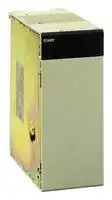


C200HW-PA204
Power Supply, Programmable Controllers, 120 / 240 VAC
- Manufacturer: OMRON INDUSTRIAL AUTOMATION
- Product type:
- SVHC: To Be Advised
- For Use With: Omron CS1 Series Programmable Controller
- Accessory Type: Power Supply Module
| Delivery and price | |
|---|---|
| Units per pack | 1 |
| Price | 420.75 € |
| Current stock | 10+ |
| Lead time | 30 days |

## **CS-series Process Analog I/O Units CS1W-PTS/PDC/PTW/PTR/PPS/PMV**

**==> picture [115 x 7] intentionally omitted <==**

**----- Start of picture text -----**<br>
CSM_CS1W-PROCESS_DS_E_1_1<br>**----- End of picture text -----**<br>


## **Provides the functionality of isolators, power supplies, signal converters, and other devices.**

- The Analog Input Unit converts analog input signals such as 1 to 5 V or 4 to 20 mA into digital values, and takes the values scaled in industrial units, and transfers it to the CPU Unit as the process value. Because of this, no ladder program is required at the CPU Unit for scaling.

- The Analog Output Unit converts analog output set values from the CPU Unit to analog output signals such as 4 to 20 mA or 1 to 5 V, and outputs them.

**==> picture [207 x 7] intentionally omitted <==**

**----- Start of picture text -----**<br>
CS1W-PDC55 CS1W-PTS55 CS1W-PTS56<br>**----- End of picture text -----**<br>


- The built-in functions, such as measurement value

- alarms, rate-of-change calculations, and square roots, have enabled major savings in cost and space compared with previous systems.

- High-resolution Models and 8-point Input Models are also available. By combining the Units, logging/monitoring systems can be constructed, or the Units can be used together with LCBs/LCUs to construct complete process control systems.

- Parameters can be easily displayed and set in an easy-to-understand form without special tools.

## **Features**

## **Process Analog Input:**

- Up to eight analog inputs can be connected for each Unit.

- There is isolation between input channels, so unwanted circuit paths between thermocouple inputs can be prevented. (Except for CS1W-PTR01/ 02)

- Output scaling ( ± 32,000)

- Process value alarms (HH, H, L, LL)

- Input disconnection alarm

- Rate-of-change calculation and alarm

- Top/bottom/valley hold (CS1W-PTS11/PTS12/PDC11 only)

## **Process Analog Output:**

- Up to four analog set values can be output for each Unit.

- All outputs are isolated.

- Output rate-of-change limit

- Output high/low limits

- Output scaling ( ± 32,000)

- Control output answer input (CS1W-PMV01 only)

## **Isolated-type Pulse Input:**

- Provides up to four pulses from a device such as a displacement flowmeter. The accumulated value can also be calculated at the same time and transferred to the CPU Unit at each cycle. (CS1W-PPS01)

**1**

**CS1W-PTS/PDC/PTW/PTR/PPS/PMV**

## **System Configuration**

These Process Analog I/O Units belong to the CS-series Special I/O Unit group.

- They can be mounted to CS-series CPU Racks or Expansion I/O Racks.

- They cannot be mounted to C200H CPU Racks, Expansion I/O Racks, or SYSMAC BUS Remote I/O Slave Racks.

The number of Units that can be mounted to one Rack (either a CPU Rack or Expansion I/O Rack) depends upon the maximum current supplied by the Power Supply Unit and the current consumption by the other Units. There are no restrictions on Rack position.

**Note:** I/O addresses for Special I/O Units are allocated according to the unit number set on the switches on the front panel, and not according to the slot position in which they are mounted.

**==> picture [338 x 297] intentionally omitted <==**

**----- Start of picture text -----**<br>
CS-series CPU Rack<br>CPU Unit<br>I/O Unit<br>Power Supply Unit<br>CS-series Expansion I/O Rack #1 I/O Unit<br>CS-series Expansion I/O Rack #2 I/O Unit<br>A maximum of 7 Expansion<br>I/O Racks can be mounted.<br>CS-series Expansion I/O Rack #7 I/O Unit<br>**----- End of picture text -----**<br>


**2**

**CS1W-PTS/PDC/PTW/PTR/PPS/PMV**

## **Ordering Information**

## **Process Analog I/O Units**

## **Isolated-type Thermocouple Input Units**

|**Unit**<br>**type**|**Product name**|**Input**<br>**points**|**Signal**<br>**range**<br>**selection**|**I/O type**|**Conversion**<br>**speed**|**External**<br>**connection**|**No. of**<br>**unit**<br>**numbers**<br>**allocated**|**Current**<br>**consumption**<br>**(A)**|**Current**<br>**consumption**<br>**(A)**|**Model**|**Standards**|
|---|---|---|---|---|---|---|---|---|---|---|---|
|||||||||**5V**|**24V**|||
|**CS1**<br>**Special**<br>**I/O**<br>**Units**|**Isolated-type**<br>**Thermocouple**<br>**Input Units**|<br>4 inputs|Set<br>separately<br>for each<br>input|B, E, J, K, L, N, R,<br>S, T, U, WRe5-26,<br>PLII,±100 mV|20 ms/4 inputs,<br>10 ms/2 inputs|Removable<br>terminal<br>block|1|0.12|0.08|**CS1W-PTS11**|UC1, N,<br>CE|
|||4 inputs||R, S, K, J, T, L, B|250 ms/4<br>inputs|||0.25|−|**CS1W-PTS51**|UC1,CE|
|||8 inputs||R, S, K, J, T, L, B|250 ms/8<br>inputs|||0.18|0.06|**CS1W-PTS55**||
|||4 inputs||B, E, J, K, N, R, S,<br>T,±80mV|150 ms/4<br>inputs|||0.15|0.15|**CS1W-PTS01-V1**||


## **Isolated-type Resistance Thermometer Input Units**

|**Unit**<br>**type**|**Product name**|**Input**<br>**points**|**Signal**<br>**range**<br>**selection**|**I/O type**|**Conversion**<br>**speed**<br>**(resolution)**|**External**<br>**connection**|**No. of**<br>**unit**<br>**numbers**<br>**allocated**|**Current**<br>**consumption**<br>**(A)**|**Current**<br>**consumption**<br>**(A)**|**Model**|**Standards**|
|---|---|---|---|---|---|---|---|---|---|---|---|
|||||||||**5V**|**26V**|||
|**CS1**<br>**Special**<br>**I/O**<br>**Units**|**Isolated-type**<br>**Resistance**<br>**Thermometer**<br>**Input Units**|4 inputs|Set<br>separately<br>for each<br>input|Pt100, JPt100,<br>Pt50, Ni508.4|20 ms/4 inputs,<br>10 ms/2 inputs|Removable<br>terminal<br>block|1|0.12|0.07|**CS1W-PTS12**|UC1, N,<br>CE|
|||4 inputs||Pt100, JPt100|250 ms/4<br>inputs|||0.25|−|**CS1W-PTS52**|UC1, CE|
|||8 inputs||Pt100, JPt100|250 ms/8<br>inputs|||0.18|0.06|**CS1W-PTS56**||
|||4 inputs||Pt100, JPt100|100 ms/4<br>inputs|||0.15|0.15|**CS1W-PTS02**||
||**Isolated-type**<br>**Resistance**<br>**Thermometer**<br>**Input Units**<br>**(Ni508.4**Ω**)**|4 inputs||Ni508.4|100 ms/4<br>inputs|||0.15|0.15|**CS1W-PTS03**||
|**Isolated-type DC Input Units**||||||||||||
|**Unit**<br>**type**|**Product name**|**Input**<br>**points**|**Signal range**||**Conversion**<br>**speed**<br>**(resolution)**|**External**<br>**connection**|**No. of**<br>**unit**<br>**numbers**<br>**allocated**|**Current**<br>**consumption**<br>**(A)**||**Model**|**Standards**|
|||||||||**5V**|**26V**|||
|**CS1**<br>**Special**<br>**I/O**<br>**Units**|**Isolated-type**<br>**DC Input Unit**|4 inputs|4 to 20 mA, 0 to 20 mA,<br>0 to 10 V,±10 V, 0 to 5 V,±5 V,<br>1 to 5 V, 0 to 1.25 V,±1.25 V||20 ms/4 inputs,<br>10 ms/2 inputs|Removable<br>terminal<br>block|1|0.12|0.12|**CS1W-PDC11**|UC1, N,<br>CE|
|||8 inputs|4 to 20 mA, 0 to 10 V, 0 to 5 V,<br>1 to 5 V||250 ms/8<br>inputs|||0.18|0.06|**CS1W-PDC55**|UC1, CE|
|||4 inputs|4 to 20 mA, 0 to 20 mA,<br>1 to 5 V, 0 to 5 V,±5 V,<br>0 to 10 V,±10 V||100 ms/4<br>inputs|||0.15|0.16|**CS1W-PDC01**||
||**Isolated-type**<br>**2-Wire**<br>**Transmitter**<br>**Input Unit**|4 inputs|4 to 20 mA, 1 to 5 V||100 ms/4<br>inputs|||0.15|0.16|**CS1W-PTW01**||
||**Power**<br>**Transducer**<br>**Input Unit**|8 inputs|0 to 1 mA,±1 mA||200 ms/8<br>inputs|||0.15|0.08|**CS1W-PTR01**||
||**Analog Input**<br>**Unit (100 mV)**|8 inputs|0 to 100 mV,±100 mV||200 ms/8<br>inputs|||0.15|0.08|**CS1W-PTR02**||


**3**

**CS1W-PTS/PDC/PTW/PTR/PPS/PMV**

## **Isolated-type Analog Output Unit**

|**Unit**<br>**type**|**Product name**|**Output**<br>**points**|**Signal**<br>**range**<br>**selection**|**Signal range**|**Conversion**<br>**speed**<br>**(resolution)**|**External**<br>**connection**|**No. of**<br>**unit**<br>**numbers**<br>**allocated**|**Current**<br>**consumption**<br>**(A)**|**Current**<br>**consumption**<br>**(A)**|**Model**|**Standards**|
|---|---|---|---|---|---|---|---|---|---|---|---|
|||||||||**5V**|**26V**|||
|**CS1**<br>**Special**<br>**I/O**<br>**Units**|**Isolated-type**<br>**Analog Output**<br>**Unit**|4 inputs|Set<br>separately<br>for each<br>input|4 to 20 mA, 1 to 5 V|100 ms/4<br>inputs|Removable<br>terminal<br>block|1|0.15|0.16|**CS1W-PMV01**|UC1, CE|
|||4 inputs||0 to 10 V,±10 V,<br>0 to 5 V,±5 V,<br>0 to 1 V,±1 V|40 ms/4<br>inputs|||0.12|0.12|**CS1W-PMV02**||


## **Isolated-type Pulse Input Unit**

|**Unit**<br>**type**|**Product name**|**Input points**|**External**<br>**connection**|**No. of**<br>**unit**<br>**numbers**<br>**allocated**|**Current**<br>**consumption**<br>**(A)**|**Current**<br>**consumption**<br>**(A)**|**Model**|**Standards**|
|---|---|---|---|---|---|---|---|---|
||||||**5V**|**26V**|||
|**CS1**<br>**Special**<br>**I/O**<br>**Units**|**Isolated-type**<br>**Pulse Input**<br>**Unit**|4 pulse inputs|Removable<br>terminal<br>block|1|0.20|0.16|**CS1W-PPS01**|UC1, CE|


## **International Standards**

• The standards indicated in the "Standards" column are those current for UL, CSA, cULus, cUL, NK, and Lloyd standards and EC Directives as of the end of September 2008. The standards are abbreviated as follows: U: UL, U1: UL (Class I Division 2 Products for Hazardous Locations), C: CSA, UC: cULus, UC1: cULus (Class I Division 2 Products for Hazardous Locations), CU: cUL, N: NK, L: Lloyd, and CE: EC Directives.

- Ask your OMRON representative for the conditions under which the standards were met.

**4**

**CS1W-PTS/PDC/PTW/PTR/PPS/PMV**

## **General Specifications**

The specifications shown in the following table apply to all the CS-series Process Analog I/O Units. For specifications specific to each Unit, refer to the explanations of the individual units.

|**Item**|**Specification**|
|---|---|
|**Applicable PLC**|CS-series PLCs|
|**Unit type**|CS-series Special I/O Unit|
|**Structure**|Backplane-mounted, single slot size|
|**Dimensions**|35×130×126 mm (W×H×D)|
|**Weight**|450 g max.|
|**External connection terminals**|• CS1W-PTS55/-PTS56/-PDC55<br>24-point removable terminal block (with lever)<br>(M3 screws, Tightening torque: 0.5 N·m)<br>• Other Units<br>21-point removable terminal block<br>(M3 screws, Tightening torque: 0.5 N·m)|
|**Unit number switch setting**|00 to 95|
|**Self-diagnosis function**|Results of self-diagnosis shown on indicators.|
|**Mountable Racks**|CPU Rack or CS-series Expansion Rack|
|**Maximum number of Units**|80 Units (10 Units×8 Racks)<br>Confirm that the total current consumption of all the Units (including the CPU Unit) mounted to a single CPU Rack or Expansion<br>Rack does not exceed the maximum power supply capacity of the Power Supply Unit.|
|**Ambient operating temperature**|0 to 55°C|
|**Ambient operating humidity**|10% to 90% (with no condensation)|


## **Current consumption**

|**Name**|**Model**|**Current consumption (power)**|**Current consumption (power)**|
|---|---|---|---|
|||**5 V**|**26 V**|
|Isolated-type Thermocouple Input Unit|CS1W-PTS01-V1|0.15 A (0.75 W)|0.15 A (3.9 W)|
||CS1W-PTS11|0.16 A (0.60 W)|0.08 A (2.08 W)|
||CS1W-PTS51|0.25 A (1.25 W)|Not used.|
||CS1W-PTS55|0.18 A (0.90 W)|0.06 A (1.56 W)|
|Isolated-type Resistance Thermometer Input Unit<br>(Pt100, JPt100)|CS1W-PTS02|0.15 A (0.75 W)|0.15 A (3.9 W)|
|Isolated-type Resistance Thermometer Input Unit<br>(Ni508.4)|CS1W-PTS03|0.15 A (0.75 W)|0.15 A (3.9 W)|
|Isolated-type Resistance Thermometer Input Unit<br>(Pt100, JPt100, Pt50, Ni508.4)|CS1W-PTS12|0.12 A (0.60 W)|0.07 A (1.82 W)|
|Isolated-type Resistance Thermometer Input Unit<br>(Pt100, JPt100)|CS1W-PTS52|0.25 A (1.25 W)|Not used.|
||CS1W-PTS56|0.18 A (0.90 W)|0.06 A (1.56 W)|
|Isolated-type 2-Wire Transmitter Input Unit|CS1W-PTW01|0.15 A (0.75 W)|0.16 A (4.2 W)|
|Isolated-type Direct Current Input Unit|CS1W-PDC01|0.15 A (0.75 W)|0.16 A (4.2 W)|
||CS1W-PDC11|0.12 A (0.60 W)|0.12 A (3.12 W)|
||CS1W-PDC55|0.18 A (0.90 W)|0.06 A (1.56 W)|
|Power Transducer Input Unit|CS1W-PTR01|0.15 A (0.75 W)|0.08 A (2.1 W)|
|Analog Input Unit (100 mV)|CS1W-PTR02|0.15 A (0.75 W)|0.08 A (2.1 W)|
|Isolated-type Pulse Input Unit|CS1W-PPS01|0.20 A (1.00 W)|0.16 A (4.2 W)|
|Isolated-type Analog Output Unit|CS1W-PMV01|0.15 A (0.75 W)|0.16 A (4.2 W)|
||CS1W-PMV02|0.12 A (0.60 W)|0.12 A (3.2 W)|


## **(Reference) Maximum current and total power supplied**

|**Power Supply Unit**|**Maximum current supplied (power)**|**Maximum current supplied (power)**|**Maximum current supplied (power)**|**Maximum total power**|
|---|---|---|---|---|
||**5 V**|**26 V**|**24 V**||
|C200HW-PA204|4.6 A (23 W)|0.6 A (15.6 W)|None|30 W|
|C200HW-PA204C|4.6 A (23 W)|0.6 A (15.6 W)|None|30 W|
|C200HW-PA204S|4.6 A (23 W)|0.6 A (15.6 W)|0.8 A (19.2 W)|30 W|
|C200HW-PA204R|4.6 A (23 W)|0.6 A (15.6 W)|None|30 W|
|C200HW-PD024|4.6 A (23 W)|0.6 A (15.6 W)|None|30 W|
|C200HW-PA209R|9 A (45 W)|1.3 A (33.8 W)|None|45 W|
|C200HW-PD025|5.3 A|1.3 A|None|40 W|
|CS1D-PA207R|7 A (35 W)|1.3 A (33.8 W)|None|35 W|
|CS1D-PD024|4.3 A (21.5 W)|0.56 A (14.6 W)|None|28 W|
|CS1D-PD025|5.3 A|1.3 A|None|40 W|


**5**

**CS1W-PTS/PDC/PTW/PTR/PPS/PMV**

## **CS1W-PTS01-V1 Isolated-type Thermocouple Input Unit**

## **Overview**

The CS1W-PTS01-V1 Isolated-type Thermocouple Input Unit provides four direct thermocouple inputs, and sends the data to the CPU Unit each cycle. All inputs are isolated.

## **System Configuration**

CS1W-PTS01-V1 4 thermocouple inputs (K, J, B, E, N, R, S, T, or mV)

**==> picture [48 x 40] intentionally omitted <==**

## **Specifications**

|**Item**|**Item**|**Specifications**|**Specifications**|
|---|---|---|---|
|**Model number**||CS1W-PTS01-V1||
|**Applicable PLC**||CS Series||
|**Unit type**||CS-series Special I/O Unit||
|**Mounting position**||CS-series CPU Rack or CS-series Expansion Rack (Cannot be mounted to C200H Expansion I/O Rack or SYSMAC<br>BUS Remote I/O Slave Rack.)||
|**Maximum number of Units**||80 (within the allowable current consumption and power consumption range)||
|**Unit numbers**||00 to 95 (Cannot duplicate Special I/O Unit numbers.)||
|**Areas for data**<br>**exchange with**<br>**CPU Unit**|**Special I/O Unit Area**|10 words/Unit<br>Thermocouple Input Unit to CPU Unit:<br>All process values, process value alarms (LL, L, H, HH), rate-of-change values, rate-of-change alarms (L, H),<br>disconnection alarms, cold junction sensor errors||
||**DM Area words**<br>**allocated to Special**<br>**I/O Units**|100 words/Unit<br>CPU Unit to Thermocouple Input Unit:<br>Temperature sensor type, input range (user set), scaling of process value data to be stored in allocated words in CIO<br>area, number of items for moving average, process value alarm setting (LL, L, H, HH), rate-of-change alarm setting (L,<br>H), zero/span adjustment value, etc.||
|**Number of temperature sensor inputs**||4||
|**Temperature sensor types**||Thermocouple B, E, J, K, N, R, S, T or<br>−80 to 80 mV. (Set separately for each of four inputs.)|Sensor type, input range, and scaling to industrial units are<br>separate for each of the 4 inputs.<br>**Note:** Sensor type, input range, and scaling to industrial<br>units are set in the DM Area.|
|**Input ranges**||The input range can be set within any of the measurable<br>input ranges shown in Table 1 (below).<br>**Note:** Internally, inputs are processed in five ranges (refer<br>to Table 2 below), so accuracy and resolution<br>accord with these internal ranges.|Example:<br>Thermocouple: K; input range: 0 to 500°C; industrial unit<br>scaling: 0 to 500°C. DM Area settings are as follows:<br>Thermocouple: 3 (0003 hex)<br>Input signal maximum: 5000 (1388 hex)<br>Input signal minimum: 0 (0000 hex)<br>Industrial unit maximum value stored: 500 (01F4 hex)<br>Industrial unit minimum value stored: 0 (0000 hex)|
|**Scaling in industrial units**||Data to be stored in the allocated words in the CIO area<br>must be scaled (with the minimum and maximum values<br>set). Data can be stored at 0% to 100%.||
|**Data storage in the CIO Area**||The value derived from carrying out the following processing in order of the actual process data in the input range is<br>stored in four digits hexadecimal (binary values) in the allocated words in the CIO Area.<br>1) Mean value processing→2) Scaling→3) Zero/span adjustment→4) Output limits||


**6**

**CS1W-PTS/PDC/PTW/PTR/PPS/PMV**

|**Item**|**Item**|**Specifications**|**Specifications**|
|---|---|---|---|
|**Accuracy (25**°**C)**||±0.1% (of internal range full span)<br>As shown in the following equation, the accuracy depends on the ratio of the selected internal range (0 to 4) span to the<br>set input range span.<br>Set input range span (electromotive force conversion)<br>Internal range span(electromotive force conversion)<br>Accuracy =±0.1%×||
|**Temperature coefficient**||±0.015% /°C, for any of internal range numbers 0 to 4.||
|**Resolution**||1/4,096 (of internal range full span)<br>As shown in the following equation, the resolution depends on the ratio of the selected internal range (0 to 4) span to<br>the set input range span.<br>4096<br>1<br>Set input range span (electromotive force conversion)<br>Internal range span (electromotive force conversion)<br>Resolution =<br>×||
|**Cold junction compensation error**||±1°C, at 20±10°C||
|**Warmup time**||45 min||
|**Maximum signal input**||−80 to 80 mV||
|**Input impedance**||20 kΩmin.||
|**Input disconnection detection current**||0.1μA (typical)||
|**Response time**||1 s (travel time from input 0% to 90%, for step input)||
|**Conversion period**||150 ms/4 inputs||
|**Maximum time to store data in CPU Unit**||Conversion period + one CPU Unit cycle||
|**Disconnection detection**||Detects disconnections at each input and turns ON the Disconnection Detection Flag.<br>Hardware detection time: Approx. 5 s<br>The process value overrange direction for when a disconnection occurs can be specified. (High: 115% of set input<br>range; low:−15% of set input range)||
|**Function**|**Mean value**<br>**processing (input**<br>**filter)**|Calculates the moving average for the specified number of process values (1 to 16), and stores that value in the CIO<br>Area as the process value.||
||**Process value alarm**|Process value 4-point alarm (HH, H, LL, L), alarm hysteresis, and ON-delay timer (0 to 60 s) are available.||
||**Rate-of-change**<br>**calculation**|Calculates the amount of change per comparison time interval (1 to 16 s).||
||**Rate-of-change**<br>**alarm**|Rate-of-change 2-point alarm (H, L), alarm hysteresis (shared with process value alarm), and ON-delay timer (0 to 60<br>s, shared with process value alarm) are available.||
|**Isolation**||Between temperature inputs and between input terminals and PLC signals: Isolation by transformer||
|**Insulation resistance**||20 MΩ(at 500 V DC) between inputs||
|**Dielectric strength**||Between inputs: 1,000 V AC, at 50/60 Hz, for 1 min, leakage current 10 mA max.||
|**External connections**||Terminal block (detachable)||
|**Unit number settings**||Set by rotary switches on front panel, from 0 to 95.||
|**Indicators**||Three LED indicators on front panel (for normal operation, errors detected at the Thermocouple Input Unit, and errors<br>related to the CPU Unit).||
|**Front panel connector**||Sensor input connector terminal block (detachable)||
|**Effect on CPU Unit cycle time**||0.3 ms||
|**Current consumption**||5 V DC at 150 mA max., 26 V DC at 150 mA max.||
|**Dimensions**||35×130×126 mm (W×H×D)<br>**Note:** The height including the Backplane is 145 mm.||
|**Weight**||450 g max.||
|**Standard accessories**||Two cold junction sensors (installed in terminal block)||


**7**

**CS1W-PTS/PDC/PTW/PTR/PPS/PMV**

## **Sensor Types and Input Ranges**

The temperature sensor (thermocouple) type and input range are set in the allocated words in the DM Area for every four inputs. The input range can be set anywhere within the measurable input ranges shown in Table 1.

**Table 1: Measurable Input Ranges**

|**Sensor type**|**DM Area setting**|**Measurable input range (See note.)**|
|---|---|---|
|B|0|0 to 1,820°C|
|E|1|−270 to 1,000°C|
|J|2|−210 to 1,200°C|
|K|3|−270 to 1,372°C|
|N|4|−270 to 1,300°C|
|R|5|−50 to 1,768°C|
|S|6|−50 to 1,768°C|
|T|7|−270 to 400°C|
|mV|8|−80 to 80 mV|


**Note:** Set the input range in the DM Area within this range.

Inputs are processed internally in five progressive ranges (numbers 0 to 4), as shown in the following table.

## **Table 2: Internal Ranges**

|**Internal range number**|**Thermocouple**<br>**electromotive force**|**Internal range span**|
|---|---|---|
|0|−80 to 80 mV|160 mV|
|1|−40 to 40 mV|80 mV|
|2|−20 to 20 mV|40 mV|
|3|−10 to 10 mV|20 mV|
|4|−5 to 5 mV|10 mV|


Therefore, the accuracy and resolution are determined by the ratio of the selected internal range (0 to 4) span to the set input range span (electromotive force converted value). For the internal range, a larger number is selected when both the minimum and maximum values of the range fall within that next range.

For example, suppose that the thermocouple type is K and the set input range is 0 to 800 ° C. The electromotive force for K 0 to 800 ° C is 0 to 33.277 − mV. Since both the minimum and maximum values fall within the limits for internal range No. 1 ( 40 to 40 mV), that range will be selected. The following table shows the set input ranges corresponding to the internal range numbers 0 to 4.

## **Table 3: Set Input Ranges Corresponding to Internal Ranges**

|**Sensor**<br>**type**|**Measurable Input**<br>**range**|**Internal range No. 0**|**Internal range No. 1**|**Internal range No. 2**|**Internal range No. 3**|**Internal range No. 4**|
|---|---|---|---|---|---|---|
|||−**80 to 80 mV**|−**40 to 40 mV**|−**20 to 20 mV**|−**10 to 10 mV**|−**5 to 5 mV**|
|B|0 to 1,820°C|Not used.|Not used.|0 to 1,820°C|0 to 1,496°C|0 to 1,030°C|
|E|−270 to 1,000°C|−270 to 1,000°C|−270 to 537°C|−270 to 286°C|−270 to 153°C|−94 to 80°C|
|J|−210 to 1,200°C|−210 to 1,200°C|−210 to 713°C|−210 to 366°C|−210 to 186°C|−100 to 95°C|
|K|−270 to 1,372°C|−270 to 1,372°C|−270 to 967°C|−270 to 484°C|−270 to 246°C|−153 to 121°C|
|N|−270 to 1,300°C|−270 to 1,300°C|−270 to 1,097°C|−270 to 584°C|−270 to 318°C|−270 to 171°C|
|R|−50 to 1,768°C|Not used.|−50 to 1,769°C|−50 to 1,684°C|−50 to 961°C|−50 to 548°C|
|S|−50 to 1,768°C|Not used.|Not used.|−50 to 1,769°C|−50 to 1,035°C|−50 to 576°C|
|T|−270 to 400°C|Not used.|−270 to 400°C|−270 to 385°C|−270 to 213°C|−166 to 115°C|
|mV|−80 to 80 mV|−80 to 80 mV|−40 to 40 mV|−20 to 20 mV|−10 to 10 mV|−5 to 5 mV|


**Note:** With Thermocouple Input Units, process values can be scaled in industrial units for the set input range. It is possible to set the process value scaling higher than the resolution, but it will cause the values to be unstable.

**8**

**CS1W-PTS/PDC/PTW/PTR/PPS/PMV**

## **Terminal Connection Diagram**

**==> picture [319 x 185] intentionally omitted <==**

**----- Start of picture text -----**<br>
CS1W-PTS01-V1 Isolated-type Thermocouple Input Unit<br>A1 N.C. Thermocouple Thermocouple<br>N.C. B1 A2 CJ1+ Input No. 1 Input No. 2<br>N.C. B2<br>A3 CJ1−<br>N.C. B3<br>A4 1−<br>1+ B4<br>A5 2−<br>2+ B5 A6 3−<br>3+ B6<br>A7 4−<br>4+ B7<br>A8 CJ2+ (See<br>N.C. B8 A9 CJ2− note 4.) Thermocouple<br>N.C. B9<br>A10 N.C. Thermocouple Input No. 3<br>N.C. B10<br>A11 N.C. Input No. 4<br>(See note 4.)<br>**----- End of picture text -----**<br>


- **Note: 1.** Cold junction sensors are installed between A2 and A3, and between A8 and A9 when the product is shipped. Do not remove them when using the Unit. If they are removed, temperatures cannot be measured correctly because there will be no compensation.

   **2.** Use the same cold junction sensors that come with the Unit, and leave them just as they are. They are provided specifically for this Unit and its circuitry, and temperatures cannot be measured correctly if they are switched around or if another Unit's sensors are used in their place.

   **3.** For unused input terminals, short-circuit the positive and negative sides (e.g., terminals A4 and B4 for input No. 1) of the thermocouple inputs with the lead wire.

   **4.** When connecting input No. 4, remove the cold junction sensor between CJ2+ and CJ2 − , and then reconnect it after the input is connected. Attempting to connect the input without removing the cold junction sensor may result in damage to the sensor.

## **Terminal Block Diagram**

**==> picture [428 x 351] intentionally omitted <==**

**----- Start of picture text -----**<br>
CS1W-PTS01-V1 Isolated-type Thermocouple Input Unit<br>A2<br>Upper cold junction sensor Amplifier<br>circuit<br>A3<br>Multi-gain<br>amplifier circuit<br>Thermocouples 1+ B4 Amplifier Isolation<br>circuit<br>Input No. 1<br>1− A4<br>A/D converter<br>2+ B5 Amplifier Isolation<br>Input No. 2 circuit Digital computation circuit<br>2− A5<br>3+ B6 Amplifier Isolation<br>circuit<br>Input No. 3<br>3− A6<br>4+ B7 Amplifier Isolation  5 V DC To CPU Unit<br>circuit<br>Input No. 4<br>4− A7 Isolated power supply circuit<br>26 V DC<br>A8<br>Amplifier<br>Lower cold junction sensor circuit<br>A9<br>Multiplexer<br>Connector<br>**----- End of picture text -----**<br>


**9**

**CS1W-PTS/PDC/PTW/PTR/PPS/PMV**

## **CS1W-PTS11 Isolated-type Thermocouple Input Unit**

## **Overview**

The CS1W-PTS11 Isolated-type Thermocouple Input Unit provides four direct thermocouple inputs, and sends the data to the CPU Unit each cycle. All inputs are isolated.

## **System Configuration**

**==> picture [179 x 153] intentionally omitted <==**

**----- Start of picture text -----**<br>
CS1W-PTS11<br>4 thermocouple<br>inputs (B, E, J, K, L,<br>N, R, S, T, U,<br>WRe5-26, PL II, mV)<br>**----- End of picture text -----**<br>


**10**

**CS1W-PTS/PDC/PTW/PTR/PPS/PMV**

## **Specifications**

|**Item**|**Item**|**Specifications**|
|---|---|---|
|**Model**||CS1W-PTS11|
|**Applicable PLC**||CS Series|
|**Unit type**||CS-series Special I/O Unit|
|**Mounting position**||CS-series CPU Rack or CS-series Expansion Rack (Cannot be mounted to C200H Expansion I/O Rack or SYSMAC<br>BUS Remote I/O Slave Rack.)|
|**Maximum number of Units**||80 (within the allowable current consumption and power consumption range)|
|**Unit numbers**||00 to 95 (Cannot duplicate Special I/O Unit numbers.)|
|**Areas for data**<br>**exchange with CPU**<br>**Unit**|**Special I/O Unit Area**|10 words/Unit<br>Thermocouple Input Unit to CPU Unit:<br>All process values, process value alarms (LL, L, H, HH), rate-of-change values, rate-of-change alarms (L, H),<br>disconnection alarms, cold junction sensor errors|
||**DM Area words**<br>**allocated to Special**<br>**I/O Units**|100 words/Unit<br>CPU Unit to Thermocouple Input Unit:<br>Temperature sensor type, input range (user set), scaling of process value data to be stored in allocated words in CIO<br>area, rate-of-change input range, scaling of rate-of-change data, number of items for moving average, process value<br>alarm setting (LL, L, H, HH), rate-of-change alarm setting (L, H), zero/span adjustment value, etc.|
||**Expansion Control/**<br>**Monitor Area**|35 words/Unit<br>CPU Unit to Thermocouple Input Unit:<br>Designations and flags for beginning or resetting the hold function selection, adjustment period control, etc.<br>Thermocouple Input Unit to CPU Unit:<br>Adjustment period notices (with each input), peak and bottom values, top and valley values|
||**Expansion Setting**<br>**Area**|46 words/Unit<br>CPU Unit to Thermocouple Input Unit:<br>Expansion Control/Monitor Area settings, adjustment period control, peak and bottom detection, top and valley<br>detection|
|**Number of temperature sensor inputs**||4|
|**Temperature sensor types**||The sensor type, input range, and scaling can be set individually for each of 4 inputs, which are each selectable from<br>B, E, J, K, L, N, R, S, T, U, WRe5-26, PL II, and mV.|
|**Scaling**||Data to be stored in the allocated words in the CIO area must be scaled (individually for each of the 4 inputs, with the<br>minimum and maximum values set). Data can be stored at 0% to 100%.|
|**Data storage in the CIO Area**||The value derived from carrying out the following processing in order of the actual process data in the input range is<br>stored in four digits hexadecimal (binary values) in the allocated words in the CIO Area.<br>1) Mean value processing→2) Scaling→3) Zero/span adjustment→4) Output limits|
|**Accuracy (25**°**C)**||±0.05% (Depends on the Sensor used and the measured temperature. Refer to_Accuracy by Sensor Type and_<br>_Measured Temperature Range_on page 13 for details.)|
|**Temperature coefficient**||±0.01% /°C (For full scale of electromotive force. See note.)|
|**Resolution**||1/64,000|
|**Cold junction compensation error**||±1°C, at 20°C±10°C|
|**Warmup time**||45 min|
|**Maximum signal input**||±120 mV|
|**Input impedance**||20 kΩmin.|
|**Input disconnection detection current**||0.1μA (typical)|
|**Response time**||100 ms (travel time from input 0% to 90%, for±100 mV step input and with moving average for 4 samples)|
|**Conversion period**||20 ms/4 inputs, 10 ms/2 inputs. Can be switched in DM Area words allocated to the Unit as a Special I/O Unit.|
|**Maximum time to store data in CPU Unit**||Conversion period + one CPU Unit cycle|
|**Disconnection detection**||Detects disconnections at each input and turns ON the Disconnection Detection Flag.<br>Hardware detection time: Approx. 0.5 s max.<br>The process value overrange direction for when a disconnection occurs can be specified. (High: 115% of set input<br>range; low:−15% of set input range)|
|**Function**|**Mean value**<br>**processing (input**<br>**filter)**|Calculates the moving average for the specified number of process values (1 to 128), and stores that value in the CIO<br>Area as the process value.|
||**Process value alarm**|Process value 4-point alarm (HH, H, LL, L), alarm hysteresis, and ON-delay timer (0 to 60 s) are available.|
||**Rate-of-change**<br>**calculation**|Calculates the amount of change per comparison time interval (1 to 16 s).|
||**Rate-of-change**<br>**alarm**|Rate-of-change 2-point alarm (H, L), alarm hysteresis (shared with process value alarm), and ON-delay timer (0 to<br>60 s, shared with process value alarm) are available.|
||**Adjustment period**<br>**control**|When zero/span adjustment is executed, the date is internally recorded at the Unit. When the preset zero/span<br>adjustment period and number of days notice have elapsed, this function turns ON a warning flag to give notice that<br>it is time for readjustment.|
||**Peak and bottom**<br>**detection**|This function detects the maximum (peak) and minimum (bottom) analog input values, from when the Hold Start Bit<br>(output) allocated to the Expansion Control/Monitor Area turns ON until it turns OFF, and stores them in the Expansion<br>Control/Monitor Area.|
||**Top and valley**<br>**detection**|This function detects the top and valley values for analog inputs, from when the Hold Start Bit (output) allocated to<br>the Expansion Control/Monitor Area turns ON until it turns OFF, and stores them in the Expansion Control/Monitor<br>Area.|
|**Isolation**||Between inputs and PLC signals, and between inputs: Isolation by transformer for power supply, and by photocoupler<br>for signals.|
|**Insulation resistance**||20 MΩ(at 500 V DC) between inputs|
|**Dielectric strength**||Between inputs: 1,000 V AC, at 50/60 Hz, for 1 min, leakage current 10 mA max.|


**11**

**CS1W-PTS/PDC/PTW/PTR/PPS/PMV**

|**Item**|**Specifications**|
|---|---|
|**External connections**|Terminal block (detachable)|
|**Unit number settings**|Set by rotary switches on front panel, from 0 to 95.|
|**Indicators**|Three LED indicators on front panel (for normal operation, errors detected at the Thermocouple Input Unit, and errors<br>related to the CPU Unit).|
|**Front panel connector**|Sensor input connector terminal block (detachable)|
|**Effect on CPU Unit cycle time**|0.3 ms|
|**Current consumption (supplied from**<br>**Power Supply Unit)**|5 V DC at 120 mA max., 26 V DC at 80 mA max.|
|**Dimensions**|35×130×126 mm (W×H×D)<br>**Note:** The height including the Backplane is 145 mm.|
|**Weight**|450 g max.|
|**Standard accessories**|Two cold junction sensors (mounted to terminal block)|


**Note:** The method for calculating the error in temperature measurements, including the temperature coefficient, is given below. The "full scale of electromotive force" is the difference between the high limit and low limit converted to electromotive force for each thermocouple.

Example

Ambient temperature: 30 ° C − ° Temperature Sensor: K thermocouple ( 270 to 1,372 C) Measured temperature:500 ° C

From electromotive force table

− 270 ° C: − 6.458 mV 1,372 ° C: 54.86 mV Full scale: 61.344

Electromotive conversion of temperature coefficient: 61.344 mV × ± 0.01%/ ° C = ± 6.13 μ V/ ° C

Error in electromotive force at 30 ° C:

± 6.13 μ V/ ° C × (30 ° C − 25 ° C) = 30.65 μ V/ ° C

Temperature difference between measurement point and terminals on Unit (ambient temperature) (based on ambient temperature of 30 ° C and Measured temperature of 500 ° C):

470 ° C

Electromotive force per ° C at a measured temperature of 470 ° C (from the electromotive force tables for a K thermocouple): 43 μ V/ ° C

Error in temperature coefficient: ± 30.65 μ V ÷ 43 μ V/ ° C = ± 0.7 ° C Error in measured temperature = Accuracy ± Error from temperature coefficient + Error in cold junction compensation = ± 0.8 ° C + ± 0.7 ° C + ± 1.0 ° C = ± 2.5 ° C

## **Sensor Type and Input Range**

The Temperature Sensor type and input range are set in the allocated words in the DM Area for every four inputs. The input range can be set anywhere within the measurable input ranges shown in the following table. Accuracy and resolution, however, are not determined from the set input range, but rather from the measurable input range shown in the following table. Therefore, accuracy and resolution do not change even when a narrow input range is set.

|**Sensor type**|**DM Area setting**|**Measurable input range**|
|---|---|---|
|B|0|0 to 1,820°C|
|E|1|−270 to 1,000°C|
|J|2|−210 to 1,200°C|
|K|3|−270 to 1,372°C|
|N|4|−270 to 1,300°C|
|R|5|−50 to 1,768°C|
|S|6|−50 to 1,768°C|
|T|7|−270 to 400°C|
|mV|8|−100 to 100 mV|
|L|9|−200 to 900°C|
|U|10|−200 to 600°C|
|WRe5-26|11|0 to 2,300°C|
|PLII|12|0 to 1,300°C|


**12**

**CS1W-PTS/PDC/PTW/PTR/PPS/PMV**

## **Accuracy by Sensor Type and Measured Temperature Range**

|**Sensor type**|**Temperature range**|**Standard accuracy**|**Details**|
|---|---|---|---|
|B|0 to 1,820°C|±1.8°C (±0.1%)|400 to 800°C:±3°C<br>Less than 400°C: Accuracy is not specified.|
|E|−270 to 1,000°C|±0.6°C (±0.05%)|−250 to 200°C:±1.2°C<br>Less than−250°C: Accuracy is not specified.|
|J|−210 to 1,200°C|±0.7°C (±0.05%)||
|K|−270 to 1,372°C|±0.8°C (±0.05%)|−250 to 200°C:±2°C<br>Less than−250°C: Accuracy is not specified.|
|N|−270 to 1,300°C|±0.8°C (±0.05%)|−200 to 150°C:±1.6°C<br>Less than−200°C: Accuracy is not specified.|
|R|−50 to 1,769°C|±1.8°C (±0.1%)|0 to 100°C:±2.5°C<br>Less than 0°C: Accuracy is not specified.|
|S|−50 to 1,769°C|±1.8°C (±0.1%)|0 to 100°C:±2.5°C<br>Less than 0°C: 3.2°C|
|T|−270 to 400°C|±0.35°C (±0.05%)|−180 to 0°C:±0.7°C<br>−200 to−180°C:±1.3°C<br>Less than−200°C: Accuracy is not specified.|
|L|−200 to 900°C|±0.5°C (±0.05%)||
|U|−200 to 600°C|±0.4°C (±0.05%)|−100 to 0°C:±0.5°C<br>Less than−100°C:±0.7°C|
|WRe5-26|0 to 2,315°C|±1.2°C (±0.05%)|More than 2,200°C:±1.4°C|
|PLII|0 to 1,395°C|±0.7°C (±0.05%)||


## **Terminal Block Diagram**

**==> picture [504 x 348] intentionally omitted <==**

**----- Start of picture text -----**<br>
Thermocouples Isolated power<br>B4 supply circuit<br>Amplifier  A/D<br>No. 1 input<br>circuit converter<br>A4 Photocoupler<br>Isolated power  26 VDC<br>B5 supply circuit<br>Amplifier  A/D<br>No. 2 input circuit converter 5 VDC<br>A5 Photocoupler<br>Isolated power<br>Digital<br>supply circuit<br>B6 circuits<br>Amplifier  A/D<br>No. 3 input circuit converter<br>A6 Photocoupler<br>Isolated power<br>B7 supply circuit<br>Amplifier  A/D<br>No. 4 input circuit converter<br>A7 Photocoupler<br>Cold junction<br>sensors Isolated<br>power<br>Upper A2 Amplifier  supply circuit<br>A3 circuit<br>Lower A8 Amplifier<br>A9 circuit<br>Connector<br>Input selector<br>Multiplexer<br>A/D converter Photocoupler<br>**----- End of picture text -----**<br>


**13**

**CS1W-PTS/PDC/PTW/PTR/PPS/PMV**

## **CS1W-PTS51 Isolated-type Thermocouple Input Unit**

## **Overview**

The CS1W-PTS51 Isolated-type Thermocouple Input Unit provides four direct thermocouple inputs, and sends the data to the CPU Unit each cycle. All inputs are isolated.

## **System Configuration**

**==> picture [184 x 153] intentionally omitted <==**

**----- Start of picture text -----**<br>
CS1W-PTS51<br>4 thermocouple inputs<br>(K, J, L, R, S, T, B)<br>**----- End of picture text -----**<br>


## **Specifications**

|**Item**|**Item**|**Specifications**|
|---|---|---|
|**Model**||CS1W-PTS51|
|**Applicable PLC**||CS Series|
|**Unit type**||CS-series Special I/O Unit|
|**Mounting position**||CS-series CPU Rack or CS-series Expansion Rack (Cannot be mounted to C200H Expansion I/O Rack or SYSMAC<br>BUS Remote I/O Slave Rack.)|
|**Maximum number of Units**||80 (within the allowable current consumption and power consumption range)|
|**Unit numbers**||00 to 95 (Cannot duplicate Special I/O Unit numbers.)|
|**Areas for data**<br>**exchange with CPU**<br>**Unit**|**Special I/O Unit Area**|10 words/Unit<br>Isolated-type Thermocouple Input Unit to CPU Unit:<br>All process values, process value alarms (L, H), conversion data enabled flags, sensor errors, cold junction sensor<br>errors|
||**DM Area words**<br>**allocated to Special**<br>**I/O Units**|100 words/Unit<br>CPU Unit to Isolated-type Thermocouple Input Unit:<br>Temperature sensor type, input range (user set), process value alarm setting (L, H), zero/span adjustment value.|
|**Number of temperature sensor inputs**||4|
|**Temperature sensor types**||The sensor type be set individually for each of 4 inputs, which are each selectable from K, J, L, R, S, T, B.|
|**Data storage in the CIO Area**||The actual process data in the input range is stored in four digits hexadecimal (binary or BCD values) in the allocated<br>words in the CIO Area.|
|**Accuracy (25**°**C) (See note.)**||With Celsius selected:±0.3% of PV or±1°C, whichever is greater,±1 digit max.<br>With fahrenheit selected:±0.3% of PV or±2°F, whichever is greater,±1 digit max.<br>However, the accuracy of K and T at−100°C or lower and L is±2°C±1 digit max.<br>The accuracy of R and S at 200°C or lower is±3°C±1 digit max.<br>The accuracy of B at 400°C or lower is not specified.<br>PV: Process value data|
|**Temperature characteristic**||Refer to_Temperature Characteristics According to Thermocouple Type_on page 16.|
|**Warmup time**||30 min|
|**Conversion period**||250 ms/4 inputs.|
|**Maximum time to store data in CPU Unit**||Conversion period + one CPU Unit cycle|
|**Sensor error detection**||Detects sensor error at each input and turns ON the Sensor error Flag.<br>Hardware detection time: Approx. 0.5 s max.<br>The process value overrange direction for when a sensor error occurs can be specified. (High: Set input range +20°C<br>or +20°F; low: Set input range−20°C or−20°F)|


**14**

**CS1W-PTS/PDC/PTW/PTR/PPS/PMV**

|**Item**|**Item**|**Specifications**|
|---|---|---|
|**Functions**|**Process value alarm**|Process value 2-point alarm (HH, H, LL, L), alarm hysteresis, and ON-delay timer (0 to 60 s) are available. External<br>alarm outputs: One per input (H or L).|
||**External alarm**<br>**outputs**|NPN outputs (with short-circuit protection)<br>External power supply voltage: 20.4 to 26.4 V DC<br>Max. switching capacity: 100 mA (for one output)<br>Leakage current: 0.3 mA max.<br>Residual voltage: 3 V max.|
|**Isolation**||Between inputs and PLC signals: Transformer for power supply and photocoupler for signals.<br>Between each input: Transformer for power supply and photocoupler for signals.|
|**Insulation resistance**||20 MΩmax. (at 500 V DC).<br>Between all output and NC terminals and external AC terminals (Power Supply Unit)<br>Between all input terminals and external AC terminals (Power Supply Unit)<br>Between all input terminals and all output terminals<br>Between all external DC terminals (input, output, and NC terminals) and FG plate<br>Between all input and output terminals and all NC terminals|
|**Dielectric strength**||Between all output and NC terminals and external AC terminals (Power Supply Unit)<br>2,000 VAC, 50/60 Hz 1 min., detection current: 1 mA<br>Between all input terminals and external AC terminals (Power Supply Unit)<br>Between all input terminals and all output terminals<br>Between all external DC terminals (input, output, and NC terminals) and FG plate<br>1,000 VAC, 50/60 Hz 1 min., detection current: 1 mA<br>Between all channels<br>500 VAC, 50/60 Hz 1 min., detection current: 1 mA|
|**External connections**||Terminal block (detachable)|
|**Unit number settings**||Set by rotary switches on front panel, from 0 to 95.|
|**Indicators**||Seven LED indicators on front panel (for normal operation, errors detected at the Thermocouple Input Unit, errors<br>related to the CPU Unit, and four indicators for external alarm outputs.)|
|**Effect on CPU Unit cycle time**||0.4 ms|
|**Current consumption (supplied from**<br>**Power Supply Unit)**||5 V DC at 250 mA max.|
|**Dimensions**||35×130×126 mm (W×H×D)<br>**Note:** The height including the Backplane is 145 mm.|
|**Weight**||450 g max.|


**Note:** The heat generated by a Unit will dramatically change the accuracy specifications when more than one C200HW-PA209R or CS1W-ID291 Unit is mounted side-by-side.

The following accuracy specifications apply under such conditions. With Celsius selected:

± 0.3% of PV or ± 1.3 ° C, whichever is greater, ± 1 digit max.

With Fahrenheit selected:

± 0.3% of PV or ± 3 ° F, whichever is greater, ± 1 digit max.

However, the accuracy of K and T at − 100 ° C or less and L is ± 3 ° C ± 1 digit max. The accuracy of R and S at 200 ° C or less is ± 4 ° C ± 1 digit max.

The accuracy of B at 400 ° C or less is not specified.

**15**

**CS1W-PTS/PDC/PTW/PTR/PPS/PMV**

## **Sensor Type and Input Range**

The Temperature Sensor type and input range are set in the allocated words in the DM Area for every four inputs. The measurable data range is ± 20 digits wider than the sensor input range.

|**Set-**<br>**ting**|**Input**||°**C**|°**C**||°**F**|°**F**|
|---|---|---|---|---|---|---|---|
|||**16-bit binary**|**BCD**||**16-bit binary**|**BCD**||
||||**F**@@@**indicates**<br>**minus sign.**|**Leftmost bit**<br>**indicates minus**<br>**sign.**||**F**@@@**indicates**<br>**minus sign.**|**Leftmost bit**<br>**indicates minus**<br>**sign.**|
|0|K:−200 to 1300°C<br>(−300 to 2300°F)|FF38 to FFFF to 0514<br>(−200 to−1 to 1300)|F200 to 1300<br>(−200 to 1300)|8200 to 1300<br>(−200 to 1300)|FED4 to FFFF to 08FC<br>(−300 to−1 to 2300)|F300 to 2300<br>(−300 to 2300)|F300 to 2300<br>(−300 to 2300)|
|1|K: 0.0 to 500°C<br>(0.0 to 900.0°F)|0000 to 1388<br>(0.0 to 500.0)|0000 to 5000<br>(0.0 to 500.0)|0000 to 5000<br>(0.0 to 500.0)|0000 to 2328<br>(0.0 to 900.0)|0000 to 9000<br>(0.0 to 900.0)|0000 to 7999<br>(See note 3.)<br>(0.0 to 799.9)|
|2|J:−100 to 850°C<br>(−100 to 1500°F)|FF9C to FFFF to 0352<br>(−100 to−1 to 850)|F100 to 0850<br>(−100 to 850)|8100 to 0850<br>(−100 to 850)|FF9C to FFFF to 05DC<br>(−100 to−1 to 1500)|F100 to 1500<br>(−100 to 1500)|8100 to 1500<br>(−100 to 1500)|
|3|J: 0.0 to 400.0°C<br>(0.0 to 750.0°F)|0000 to 0FA0<br>(0.0 to 400.0)|0000 to 4000<br>(0.0 to 400.0)|0000 to 4000<br>(0.0 to 400.0)|0000 to 1D4C<br>(0.0 to 750.0)|0000 to 7500<br>(0.0 to 750.0)|0000 to 7500<br>(0.0 to 750.0)|
|4|T:−200 to 400°C<br>(−300 to 700.0°F)|F830 to FFFF to 0FA0<br>(−200.0 to−0.1 to 400.0)|F999 to 4000<br>(See note 3.)<br>(−99.9 to 400.0)|A000 to 4000<br>(−200.0 to 400.0)|F448 to FFFF to 1B58<br>(−300.0 to−0.1 to 700.0)|F999 to 7000<br>(See note 3.)<br>(−99.9 to 700.0)|B000 to 7000<br>(−300.0 to 700.0)|
|5|L:−100 to 850°C<br>(−100 to 1500°F)|FF9C to FFFF to 0352<br>(−100 to−1 to 850)|F100 to 0850<br>(−100 to 850)|8100 to 0850<br>(−100 to 850)|FF9C to FFFF to 05DC<br>(−100 to−1 to 1500)|F100 to 1500<br>(−100 to 1500)|8100 to 1500<br>(−100 to 1500)|
|6|L: 0.0 to 400.0°C<br>(0.0 to 750.0°F)|0000 to 0FA0<br>(0.0 to 400.0)|0000 to 4000<br>(0.0 to 400.0)|0000 to 4000<br>(0.0 to 400.0)|0000 to 1D4C<br>(0.0 to 750.0)|0000 to 7500<br>(0.0 to 750.0)|0000 to 7500<br>(0.0 to 750.0)|
|7|R: 0 to 1700°C<br>(0 to 3000°F)|0000 to 06A4<br>(0 to 1700)|0000 to 1700<br>(0 to 1700)|0000 to 1700<br>(0 to 1700)|0000 to 0BB8<br>(0 to 3000)|0000 to 3000<br>(0 to 3000)|0000 to 3000<br>(0 to 3000)|
|8|S: 0 to 1700°C<br>(0 to 3000°F)|0000 to 06A4<br>(0 to 1700)|0000 to 1700<br>(0 to 1700)|0000 to 1700<br>(0 to 1700)|0000 to 0BB8<br>(0 to 3000)|0000 to 3000<br>(0 to 3000)|0000 to 3000<br>(0 to 3000)|
|9|B: 400 to 1800°C<br>(See note 2.)<br>(750 to 3200°F)|0190 to 0708<br>(400 to 1800)|0400 to 1800<br>(400 to 1800)|0400 to 1800<br>(400 to 1800)|02EE to 0C80<br>(750 to 3200)|0750 to 3200<br>(750 to 3200)|0750 to 3200<br>(750 to 3200)|


- **Note: 1.** If the indication range is exceeded, a sensor error will occur and the sensor error bit will turn ON. The process value will be clamped at the lower or upper limit of the indication range, depending on the setting for data direction at sensor error.

   **2.** The lower limit for B thermocouples is 0 ° C/ ° F.

   **3.** The indicator range for BCD display will be clamped at the lower (or upper) limit in the region between the lower (or upper) limit of the setting range and the point where a sensor error occurs.

      - For 0.1 ° C/0.1 ° F indication with minus sign indicated by leftmost 4 bits (bits 12 to 15): Lower limit = − 99.9, Upper limit = 999.9. For 0.1 ° C/0.1 ° F indication with minus sign indicated by leftmost bit (bit 15): Lower limit = − 799.9, Upper limit = 799.9.

## **Temperature Characteristics According to Thermocouple Type**

|**Thermocouple**|**Temperature range**|**Set value error when ambient**<br>**temperature changes by 1**°**C**|
|---|---|---|
|R|0 to 200°C|±0.43°C|
||200 to 1,000°C|±0.29°C|
||1,000 to 1,700°C|±285 ppm of PV|
|S|0 to 200°C|±0.43°C|
||200 to 1,000°C|±0.29°C|
||1,000 to 1,700°C|285 ppm of PV|
|B|400°C or less|Not specified.|
||400 to 800°C|±0.43°C|
||800 to 1,000°C|±0.29°C|
||1,000 to 1,800°C|285 ppm of PV|
|K|−200 to−100°C|±0.29°C|
||−100 to 400°C|±0.11°C|
||400 to 1,300°C|±285 ppm of PV|
|J|−100 to 400°C|±0.11°C|
||400 to 850°C|±285 ppm of PV|
|T|−200 to−100°C|±0.29°C|
||−100 to 400°C|±0.11°C|
|L|−100 to 400°C|±0.11°C|
||400 to 850°C|±285 ppm of PV|


**16**

**CS1W-PTS/PDC/PTW/PTR/PPS/PMV**

The measured temperature error is calculated as shown in the following example.

|**Item**|**Details**|
|---|---|
|Ambient temperature|30°C|
|Thermocouple type|K|
|Measured temperature (PV)|500°C|
|Reference accuracy (25°C)|±0.3°C of PV or±1°C, whichever is greater,±1 digit.<br>In this example,±1.5°C.|
|Temperature characteristics|400 to 1,300°C: 285 ppm of PV.<br>In this example, 285 ppm×500°C = 0.143°C.|
|Change in ambient temperature|5°C (25 to 30°C).|


Overall accuracy =

Reference accuracy + Temperature characteristic × Change in ambient temperature = ± 1.5 ° C + ± 0.143 ° C × 5 = Approx. ± 2.2 ° C ± 1 digit.

## **Terminal Connection Diagram**

**==> picture [387 x 176] intentionally omitted <==**

**----- Start of picture text -----**<br>
A1 N.C<br>No. 2  2− B1<br>thermocouple input A2 1− No. 1<br>2+ B2<br>A3 1+ thermocouple input<br>CJ B3<br>Cold junction sensor A4 N.C.<br>CJ B4<br>A5 N.C.<br>No. 4  4− B5<br>thermocouple input A6 3− No. 3<br>4+ B6<br>A7 3+ thermocouple input<br>External alarm outputs L ALM2 B7  A8 ALM1 L<br>L ALM4 B8  External alarm outputs<br>A9 ALM3 L<br>0V B9<br>A10 24V<br>N.C. B10<br>A11 N.C.<br>**----- End of picture text -----**<br>


**Note:** Action for Unused Input Terminals

- Short-circuit the positive (+) and negative ( − ) sides of the thermocouple input section using a lead wire. For example, short terminals A3 and A2 for No. 1 thermocouple input.

- Cold junction sensors are mounted before shipment. If one of the cold junction sensors is disconnected, cold junction compensation will stop and correct measurement of temperatures cannot be made. Always make sure the cold junction sensors are connected when using the Units.

- Cold junction sensors are calibrated separately for each Unit and connected circuit, so correct temperatures will not be measured if a cold junction sensor from another Unit is used or if the two cold junction sensors in a Unit are swapped. Use the cold junction sensors as they are provided, without making any changes.

- Do not connect anything to NC terminals. Do not use NC terminals as relay terminals.

- Always ground the GR terminal on the Power Supply Unit of the PLC.

- If the input device uses a voltage generator, temperature compensator, or similar device, then ground the input device if it has a ground terminal.

**17**

**CS1W-PTS/PDC/PTW/PTR/PPS/PMV**

## **Terminal Block Diagram**

## **Input Circuits**

**==> picture [398 x 250] intentionally omitted <==**

**----- Start of picture text -----**<br>
A3 Amplifier  Double  Reference power supply<br>No. 1 input circuit integral<br>A2 A/D Photocoupler<br>B2 Amplifier  Double  Reference power supply<br>No. 2 input integral<br>circuit<br>B4 A/D Photocoupler 5 VDC<br>No. 3 inputA7 Amplifier  Double integral   Reference power supply Digitalcircuits<br>circuit<br>A6 A/D Photocoupler<br>B6 Amplifier  Double  Reference power supply<br>No. 4 input circuit integral<br>B5 A/D Photocoupler<br>Cold junction<br>sensors<br>B3 Amplifier  Double  Reference power supply<br>circuit integral<br>B4 A/D Photocoupler<br>Isolation circuit<br>Connector<br>**----- End of picture text -----**<br>


## **Output Circuits**

**==> picture [240 x 351] intentionally omitted <==**

**----- Start of picture text -----**<br>
A10<br>24V<br>A8<br>L<br>ALM1<br>B7<br>L<br>ALM2<br>A9<br>L<br>ALM3<br>B8<br>L ALM4<br>B9<br>0V<br>Output Display<br>LED<br>Internal Circuit<br>**----- End of picture text -----**<br>


**18**

**CS1W-PTS/PDC/PTW/PTR/PPS/PMV**

## **CS1W-PTS55 Isolated-type Thermocouple Input Unit**

## **Overview**

The CS1W-PTS55 Isolated-type Thermocouple Input Unit provides 8 direct thermocouple inputs, and sends the data to the CPU Unit each cycle. All inputs are isolated.

## **System Configuration**

**==> picture [183 x 153] intentionally omitted <==**

**----- Start of picture text -----**<br>
CS1W-PTS55<br>8 thermocouple inputs<br>(K, J, L, R, S, T, B)<br>**----- End of picture text -----**<br>


**19**

**CS1W-PTS/PDC/PTW/PTR/PPS/PMV**

## **Specifications**

|**Item**|**Item**|**Specifications**|
|---|---|---|
|**Model**||CS1W-PTS55|
|**Applicable PLC**||CS Series|
|**Unit type**||CS-series Special I/O Unit|
|**Mounting position**||CS-series CPU Rack or CS-series Expansion Rack (Cannot be mounted to C200H Expansion I/O Rack or SYSMAC<br>BUS Remote I/O Slave Rack.)|
|**Maximum number of Units**||80 (within the allowable current consumption and power consumption range)|
|**Unit numbers**||00 to 95 (Cannot duplicate Special I/O Unit numbers.)|
|**Areas for data**<br>**exchange with CPU**<br>**Unit**|**Special I/O Unit Area**|10 words/Unit<br>Isolated-type Thermocouple Input Unit to CPU Unit:<br>All process values, process value alarms (L, H), conversion data enabled flags, sensor errors, cold junction sensor<br>errors|
||**DM Area words**<br>**allocated to Special**<br>**I/O Units**|100 words/Unit<br>CPU Unit to Isolated-type Thermocouple Input Unit:<br>Temperature sensor type, input range (user set), process value alarm setting (L, H), zero/span adjustment value.|
||**Expansion Setting**<br>**Area**|1 word/Unit<br>CPU Unit to Isolated-type Thermocouple Input Unit:<br>Process Value Alarm|
|**Number of temperature sensor inputs**||8|
|**Temperature sensor types**||The sensor type be set individually for each of 8 inputs, which are each selectable from K, J, L, R, S, T, B (“Not used”<br>can be selected).|
|**Data storage in the CIO Area**||The actual process data in the input range is stored in four digits hexadecimal (binary or BCD values) in the allocated<br>words in the CIO Area.|
|**Accuracy (25**°**C)**||With Celsius selected:±0.3% of PV or±1°C, whichever is greater,±1 digit max.<br>With fahrenheit selected:±0.3% of PV or±2°F, whichever is greater,±1 digit max.<br>However, the accuracy of K and T at−100°C or lower and L is±2°C±1 digit max.<br>The accuracy of R and S at 200°C or lower is±3°C±1 digit max.<br>The accuracy of B at 400°C or lower is not specified.<br>PV: Process value data|
|**Temperature characteristic**||Refer to_Temperature Characteristics According to Thermocouple Type_on page 21.|
|**Warmup time**||30 min|
|**Conversion period**||250 ms/8 inputs.|
|**Maximum time to store data in CPU Unit**||Conversion period + one CPU Unit cycle|
|**Sensor error detection**||Detects sensor error at each input and turns ON the Sensor error Flag.<br>Hardware detection time: Approx. 0.5 s max.<br>The process value overrange direction for when a sensor error occurs can be specified. (High: Set input range +20°C<br>or +20°F; low: Set input range−20°C or−20°F)|
|**Functions**|**Process value alarm**|Process value 2-point alarm (H, L), alarm hysteresis, and ON-delay timer (0 to 60 s) are available.<br>Two alarms per input (H, L) can be output to addresses in the CIO Area specified in the Expansion Setting Area.|
|**Isolation**||Between inputs and PLC signals: Transformer for power supply and photocoupler for signals.<br>Between each input: Transformer for power supply and photocoupler for signals.|
|**Insulation resistance**||20 MΩmax. (at 500 V DC).<br>Between all input terminals and external AC terminals (Power Supply Unit)<br>Between all external DC terminals (input and NC terminals) and FG plate<br>Between all input and all NC terminals|
|**Dielectric strength**||Between NC terminals and external AC terminals (Power Supply Unit)<br>2,000 VAC, 50/60 Hz 1 min., detection current: 1 mA<br>Between all input terminals and external AC terminals (Power Supply Unit)<br>Between all external DC terminals (input and NC terminals) and FG plate<br>1000 VAC, 50/60 Hz 1 min., detection current: 1 mA<br>Between all channels<br>500 VAC, 50/60 Hz 1 min., detection current: 1 mA|
|**External connections**||Terminal block (detachable)|
|**Unit number settings**||Set by rotary switches on front panel, from 0 to 95.|
|**Indicators**||Three LED indicators on front panel (for normal operation, errors detected at the Unit, errors related to the CPU Unit)|
|**Effect on CPU Unit cycle time**||0.4 ms|
|**Current consumption (supplied from**<br>**Power Supply Unit)**||5 V DC at 180 mA max.<br>26 V DC at 60 mA max.|
|**Dimensions**||35×130×126 mm (W×H×D)<br>**Note:** The height including the Backplane is 145 mm.|
|**Weight**||450 g max.|


**20**

**CS1W-PTS/PDC/PTW/PTR/PPS/PMV**

## **Sensor Type and Input Range**

The Temperature Sensor type and input range are set in the allocated words in the DM Area for every four inputs. The measurable data range is ± 20 digits wider than the sensor input range.

|**Set-**<br>**ting**|**Input**||°**C**|°**C**||°**F**|°**F**|
|---|---|---|---|---|---|---|---|
|||**16-bit binary**|**BCD**||**16-bit binary**|**BCD**||
||||**F**@@@**indicates**<br>**minus sign.**|**Leftmost bit**<br>**indicates minus**<br>**sign.**||**F**@@@**indicates**<br>**minus sign.**|**Leftmost bit**<br>**indicates minus**<br>**sign.**|
|0|K:−200 to 1300°C<br>(−300 to 2300°F)|FF38 to FFFF to 0514<br>(−200 to−1 to 1300)|F200 to 1300<br>(−200 to 1300)|8200 to 1300<br>(−200 to 1300)|FED4 to FFFF to 08FC<br>(−300 to−1 to 2300)|F300 to 2300<br>(−300 to 2300)|F300 to 2300<br>(−300 to 2300)|
|1|K: 0.0 to 500°C<br>(0.0 to 900.0°F)|0000 to 1388<br>(0.0 to 500.0)|0000 to 5000<br>(0.0 to 500.0)|0000 to 5000<br>(0.0 to 500.0)|0000 to 2328<br>(0.0 to 900.0)|0000 to 9000<br>(0.0 to 900.0)|0000 to 7999<br>(See note 3.)<br>(0.0 to 799.9)|
|2|J:−100 to 850°C<br>(−100 to 1500°F)|FF9C to FFFF to 0352<br>(−100 to−1 to 850)|F100 to 0850<br>(−100 to 850)|8100 to 0850<br>(−100 to 850)|FF9C to FFFF to 05DC<br>(−100 to−1 to 1500)|F100 to 1500<br>(−100 to 1500)|8100 to 1500<br>(−100 to 1500)|
|3|J: 0.0 to 400.0°C<br>(0.0 to 750.0°F)|0000 to 0FA0<br>(0.0 to 400.0)|0000 to 4000<br>(0.0 to 400.0)|0000 to 4000<br>(0.0 to 400.0)|0000 to 1D4C<br>(0.0 to 750.0)|0000 to 7500<br>(0.0 to 750.0)|0000 to 7500<br>(0.0 to 750.0)|
|4|T:−200 to 400°C<br>(−300 to 700.0°F)|F830 to FFFF to 0FA0<br>(−200.0 to−0.1 to 400.0)|F999 to 4000<br>(See note 3.)<br>(−99.9 to 400.0)|A000 to 4000<br>(−200.0 to 400.0)|F448 to FFFF to 1B58<br>(−300.0 to−0.1 to 700.0)|F999 to 7000<br>(See note 3.)<br>(−99.9 to 700.0)|B000 to 7000<br>(−300.0 to 700.0)|
|5|L:−100 to 850°C<br>(−100 to 1500°F)|FF9C to FFFF to 0352<br>(−100 to−1 to 850)|F100 to 0850<br>(−100 to 850)|8100 to 0850<br>(−100 to 850)|FF9C to FFFF to 05DC<br>(−100 to−1 to 1500)|F100 to 1500<br>(−100 to 1500)|8100 to 1500<br>(−100 to 1500)|
|6|L: 0.0 to 400.0°C<br>(0.0 to 750.0°F)|0000 to 0FA0<br>(0.0 to 400.0)|0000 to 4000<br>(0.0 to 400.0)|0000 to 4000<br>(0.0 to 400.0)|0000 to 1D4C<br>(0.0 to 750.0)|0000 to 7500<br>(0.0 to 750.0)|0000 to 7500<br>(0.0 to 750.0)|
|7|R: 0 to 1700°C<br>(0 to 3000°F)|0000 to 06A4<br>(0 to 1700)|0000 to 1700<br>(0 to 1700)|0000 to 1700<br>(0 to 1700)|0000 to 0BB8<br>(0 to 3000)|0000 to 3000<br>(0 to 3000)|0000 to 3000<br>(0 to 3000)|
|8|S: 0 to 1700°C<br>(0 to 3000°F)|0000 to 06A4<br>(0 to 1700)|0000 to 1700<br>(0 to 1700)|0000 to 1700<br>(0 to 1700)|0000 to 0BB8<br>(0 to 3000)|0000 to 3000<br>(0 to 3000)|0000 to 3000<br>(0 to 3000)|
|9|B: 400 to 1800°C<br>(See note 2.)<br>(750 to 3200°F)|0190 to 0708<br>(400 to 1800)|0400 to 1800<br>(400 to 1800)|0400 to 1800<br>(400 to 1800)|02EE to 0C80<br>(750 to 3200)|0750 to 3200<br>(750 to 3200)|0750 to 3200<br>(750 to 3200)|


- **Note: 1.** If the indication range is exceeded, a sensor error will occur and the sensor error bit will turn ON. The process value will be clamped at the lower or upper limit of the indication range, depending on the setting for data direction at sensor error.

   **2.** The lower limit for B thermocouples is 0 ° C/ ° F.

   **3.** The indicator range for BCD display will be clamped at the lower (or upper) limit in the region between the lower (or upper) limit of the setting range and the point where a sensor error occurs.

      - For 0.1 ° C/0.1 ° F indication with minus sign indicated by leftmost 4 bits (bits 12 to 15): Lower limit = − 99.9, Upper limit = 999.9. For 0.1 ° C/0.1 ° F indication with minus sign indicated by leftmost bit (bit 15): Lower limit = − 799.9, Upper limit = 799.9.

## **Temperature Characteristics According to Thermocouple Type**

|**Thermocouple**|**Temperature range**|**Set value error when ambient**<br>**temperature changes by 1**°**C**|
|---|---|---|
|R|0 to 200°C|±0.43°C|
||200 to 1,000°C|±0.29°C|
||1,000 to 1,700°C|±285 ppm of PV|
|S|0 to 200°C|±0.43°C|
||200 to 1,000°C|±0.29°C|
||1,000 to 1,700°C|285 ppm of PV|
|B|400°C or less|Not specified.|
||400 to 800°C|±0.43°C|
||800 to 1,000°C|±0.29°C|
||1,000 to 1,800°C|285 ppm of PV|
|K|−200 to−100°C|±0.29°C|
||−100 to 400°C|±0.11°C|
||400 to 1,300°C|±285 ppm of PV|
|J|−100 to 400°C|±0.11°C|
||400 to 850°C|±285 ppm of PV|
|T|−200 to−100°C|±0.29°C|
||−100 to 400°C|±0.11°C|
|L|−100 to 400°C|±0.11°C|
||400 to 850°C|±285 ppm of PV|


**21**

**CS1W-PTS/PDC/PTW/PTR/PPS/PMV**

The measured temperature error is calculated as shown in the following example.

|**Item**|**Details**|
|---|---|
|Ambient temperature|30°C|
|Thermocouple type|K|
|Measured temperature (PV)|500°C|
|Reference accuracy (25°C)|±0.3°C of PV or±1°C, whichever is greater,±1 digit.<br>In this example,±1.5°C.|
|Temperature characteristics|400 to 1,300°C: 285 ppm of PV.<br>In this example, 285 ppm×500°C = 0.143°C.|
|Change in ambient temperature|5°C (25 to 30°C).|


Overall accuracy =

Reference accuracy + Temperature characteristic × Change in ambient temperature = ± 1.5 ° C + ± 0.143 ° C × 5 = Approx. ± 2.2 ° C ± 1 digit.

## **Terminal Connection Diagram**

**==> picture [330 x 352] intentionally omitted <==**

**----- Start of picture text -----**<br>
No. 4 thermocouple input<br>No. 3 thermocouple input<br>No. 2 thermocouple input<br>No. 1 thermocouple input<br>A1 CJ1+<br>N.C. B1  Cold junction sensor<br>A2 CJ1−<br>N.C. B2<br>A3 1−<br>1+ B3<br>A4 2−<br>2+ B4<br>A5 3−<br>3+ B5<br>A6 4−<br>4+ B6<br>A7 5−<br>5+ B7<br>A8 6−<br>6+ B8<br>A9 7−<br>7+ B9<br>A10 8−<br>8+ B10<br>A11 CJ2+<br>N.C. B11 Cold junction sensor<br>A12 CJ2−<br>N.C. B12<br>No. 8 thermocouple input<br>No. 7 thermocouple input<br>No. 6 thermocouple input<br>No. 5 thermocouple input<br>**----- End of picture text -----**<br>


**Note:** • Set the _Sensor type_ in Setting Group 2 in the DM Area to "Not used" for any thermocouple inputs that are not used.

- Cold junction sensors are mounted before shipment. If one of the cold junction sensors is disconnected, cold junction compensation will stop and correct measurement of temperatures cannot be made. Always make sure the cold junction sensors are connected when using the Units.

- Cold junction sensors are calibrated separately for each Unit and connected circuit, so correct temperatures will not be measured if a cold junction sensor from another Unit is used or if the two cold junction sensors in a Unit are swapped. Use the cold junction sensors as they are provided, without making any changes.

- Do not connect anything to NC terminals. Do not use NC terminals as relay terminals.

- Always ground the GR terminal on the Power Supply Unit of the PLC.

- If the input device uses a voltage generator, temperature compensator, or similar device, then ground the input device if it has a ground terminal.

**22**

**CS1W-PTS/PDC/PTW/PTR/PPS/PMV**

## **Terminal Block Diagram**

## **Input Circuits**

**==> picture [495 x 373] intentionally omitted <==**

**----- Start of picture text -----**<br>
B3 Double  Reference power supply<br>No. 1 input Amplifier circuit integral   No.2 input Reference power supply 26 VDC<br>A2 A/D Photocoupler No.3 input Reference<br>power supply<br>B6 Double  Reference power supply<br>Amplifier<br>No. 4 input circuit integral<br>A6 A/D Photocoupler 5 VDC<br>Cold junction<br>sensors<br>A1 Amplifier  Double  Reference power supply No.2 input Photocoupler Digital circuits<br>circuit integral   No.3 input<br>A2 A/D Photocoupler Photocoupler<br>No.6 input<br>Photocoupler<br>No.7 input<br>B7 Double  Reference power supply Photocoupler<br>Amplifier<br>No. 5 input circuit integral<br>A7 A/D Photocoupler<br>B10 Double  Reference power supply<br>Amplifier<br>No. 8 input circuit integral<br>A10 A/D Photocoupler<br>Cold junction  No.6 input Reference power supply<br>sensors<br>A11 Double  Reference power supply No.7 input Reference power supply<br>Amplifier<br>circuit integral<br>A12 A/D Photocoupler<br>Isolation circuit<br>Connector<br>Isolation circuit<br>**----- End of picture text -----**<br>


**23**

**CS1W-PTS/PDC/PTW/PTR/PPS/PMV**

## **CS1W-PTS02 Isolated-type Resistance Thermometer Input Unit (Pt100 or JPt100)**

## **Overview**

The CS1W-PTS02 Isolated-type Resistance Thermometer Input Unit provides four direct platinum resistance thermometer inputs, and sends the data to the CPU Unit each cycle. All inputs are isolated.

## **System Configuration**

CS1W-PTS02 Four resistance thermometer inputs (Pt100 or JPt100)

## **Specifications**

|**Item**|**Item**|**Specifications**|**Specifications**|
|---|---|---|---|
|**Model**||CS1W-PTS02||
|**Applicable PLC**||CS Series||
|**Unit type**||CS-series Special I/O Unit||
|**Mounting position**||CS-series CPU Rack or CS-series Expansion Rack (Cannot be mounted to C200H Expansion I/O Rack or SYSMAC<br>BUS Remote I/O Slave Rack.)||
|**Maximum number of Units**||80 (within the allowable current consumption and power consumption range)||
|**Unit numbers**||00 to 95 (Cannot duplicate Special I/O Unit numbers.)||
|**Areas for data**<br>**exchange with CPU**<br>**Unit**|**Special I/O Unit Area**|10 words/Unit<br>Resistance Thermometer Input Unit to CPU Unit:<br>All process values, process value alarms (LL, L, H, HH), rate-of-change values, rate-of-change alarms (L, H),<br>disconnection alarms, cold junction sensor errors||
||**DM Area words**<br>**allocated to Special**<br>**I/O Units**|100 words/Unit<br>CPU Unit to Resistance Thermometer Input Unit:<br>Temperature sensor type, input range (user set), scaling of process value data to be stored in allocated words in CIO<br>area, number of items for moving average, process value alarm setting (LL, L, H, HH), rate-of-change alarm setting<br>(L, H), zero/span adjustment value, etc.||
|**Number of temperature sensor inputs**||4||
|**Temperature sensor types**||Pt100 (JIS, IEC) or JPt100|Sensor type, input range, and scaling to industrial units<br>are separate for each of the 4 inputs.<br>**Note:** Sensor type, input range, and scaling to industrial<br>units are set in the DM Area.|
|**Input ranges**||The input range can be set within any of the measurable<br>input ranges shown in Table 1 (below).<br>**Note:** Internally, inputs are processed in five ranges<br>(refer to Table 2 below), so accuracy and<br>resolution accord with these internal ranges.|Example:<br>Sensor type: Pt100; input range: 0 to 500°C; industrial<br>unit scaling: 0.0 to 500°C. DM Area settings are as<br>follows:<br>Sensor type: 0 (0000 hex)<br>Input signal maximum: 5000 (1388 hex)<br>Input signal minimum: 0 (0000 hex)<br>Industrial unit maximum value stored: 500 (01F4 hex)<br>Industrial unit minimum value stored: 0 (0000 hex)|
|**Scaling in industrial units**||Data to be stored in the allocated words in the CIO area<br>must be scaled (individually for each of 4 inputs, with the<br>minimum and maximum values set). Data can be stored<br>at 0% to 100%.||
|**Data storage in the CIO Area**||The value derived from carrying out the following processing in order of the actual process data in the input range is<br>stored in four digits hexadecimal (binary values) in the allocated words in the CIO Area.<br>1) Mean value processing→2) Scaling→3) Zero/span adjustment→4) Output limits||


**24**

**CS1W-PTS/PDC/PTW/PTR/PPS/PMV**

|**Item**|**Item**|**Specifications**|**Specifications**|
|---|---|---|---|
|**Accuracy (25**°**C)**||The greater of the following:±0.1% (of internal range full span) or 0.1°C<br>As shown in the following equation, the accuracy depends on the ratio of the selected internal range (0 to 4) span to<br>the set input range span.<br>Set input range span<br>Internal range span<br>Accuracy =±0.1%×<br>or 0.1°C, whichever is greater.||
|**Temperature coefficient**||±0.015% /°C, for any of internal range numbers 0 to 4.||
|**Resolution**||1/4,096 (of internal range full span)<br>As shown in the following equation, the resolution depends on the ratio of the selected internal range (0 to 4) span to<br>the set input range span.<br>4096<br>1<br>Set input range span<br>Internal range span<br>Resolution =<br>×||
|**Sensing method**||3-wire method||
|**Allowable lead wire resistance**||20Ωmax. per wire||
|**Input detection current**||0.25 mA||
|**Warmup time**||10 min||
|**Response time**||0.5 s (travel time from input 0% to 90%, for step input)||
|**Conversion period**||100 ms/4 inputs||
|**Maximum time to store data in CPU Unit**||Conversion period + one CPU Unit cycle||
|**Disconnection detection**||Detects disconnections at each input and turns ON the Disconnection Detection Flag.<br>Hardware detection time: Approx. 1 s<br>The process value overrange direction for when a disconnection occurs can be specified. (High: 115% of set input<br>range; low:−15% of set input range)||
|**Function**|**Mean value**<br>**processing (input**<br>**filter)**|Calculates the moving average for the specified number of process values (1 to 16), and stores that value in the CIO<br>Area as the process value.||
||**Process value alarm**|Process value 4-point alarm (HH, H, LL, L), alarm hysteresis, and ON-delay timer (0 to 60 s) are available.||
||**Rate-of-change**<br>**calculation**|Calculates the amount of change per comparison time interval (1 to 16 s).||
||**Rate-of-change**<br>**alarm**|Rate-of-change 2-point alarm (H, L), alarm hysteresis (shared with process value alarm), and ON-delay timer (0 to<br>60 s, shared with process value alarm) are available.||
|**Isolation**||Between temperature inputs and between input terminals and PLC signals: Isolation by transformer||
|**Insulation resistance**||20 MΩ(at 500 V DC) between inputs||
|**Dielectric strength**||Between inputs: 1,000 V AC, at 50/60 Hz, for 1 min, leakage current 10 mA max.||
|**External connections**||Terminal block (detachable)||
|**Unit number settings**||Set by rotary switches on front panel, from 0 to 95.||
|**Indicators**||Three LED indicators on front panel (for normal operation, errors detected at the Resistance Thermometer Input Unit,<br>and errors related to the CPU Unit).||
|**Front panel connector**||Sensor input connector terminal block (detachable)||
|**Effect on CPU Unit cycle time**||0.3 ms||
|**Current consumption**||5 V DC at 150 mA max., 26 V DC at 150 mA max.||
|**Dimensions**||35×130×126 mm (W×H×D)<br>**Note:** The height including the Backplane is 145 mm.||
|**Weight**||450 g max.||
|**Standard accessories**||None||


**25**

**CS1W-PTS/PDC/PTW/PTR/PPS/PMV**

## **Sensor Type and Input Range**

The resistance thermometer type and input range are set in the allocated words in the DM Area for every four inputs. The input range can be set anywhere within the measurable input ranges shown in Table 1.

**Table 1: Measurable Input Ranges**

|**Sensor type**|**DM Area setting**|**Measurable input range (See note.)**|
|---|---|---|
|Pt100|0|−200 to 850°C|
|JPt100|1|−200 to 500°C|


**Note:** Set the input range in the DM Area within this range.

Internally inputs are processed in five progressive ranges (numbers 0 to 4), as shown in the following table.

## **Table 2: Internal Ranges**

|**Internal range number**|**Temperature range**|**Span**|
|---|---|---|
|0|−200 to 850°C|1,050°C|
|1|−200 to 438°C|638°C|
|2|−200 to 211°C|411°C|
|3|−100 to 104°C|204°C|
|4|−51 to 52°C|103°C|


Therefore, the accuracy and resolution are determined by the ratio of the selected internal range (0 to 4) span to the set input range span. For the internal range, a larger number is selected when both the minimum and maximum values of the range fall within that next range.

For example, suppose that the sensor type is Pt100 and the set input range is − 100 to 400 ° C. Since both the minimum and maximum values fall within the limits for internal range No. 1 ( − 200 to 438 ° C), that range will be selected.

**Note:** With Resistance Thermometer Input Units, process values can be scaled (e.g., 0% to 100%) in industrial units for the set input range. It is possible to set the process value scaling higher than the resolution, but it will cause the values to be unstable.

## **Terminal Connection Diagram**

CS1W-PTS02 Isolated-type Resistance Thermometer Unit

|Resistance thermometer<br>No. 2 input|N.C.<br>N.C.<br>N.C.<br>2A<br>2B<br>2b<br>N.C.<br>N.C.<br>N.C.<br>N.C.<br>B1<br>B2<br>B3<br>B4<br>B5<br>B6<br>B7<br>B8<br>B9<br>B10|A1|N.C.||Resistance thermometer<br>No. 1 input<br>Resistance thermometer<br>No. 3 input<br>Resistance thermometer<br>No. 4 input|
|---|---|---|---|---|---|
|||A2|1A|||
|||||||
|||A3|1B|||
|||A4|1b|||
|||||||
|||A5|3A|||
|||||||
|||A6|3B|||
|||A7|3b|||
|||||||
|||A8|N.C.|||
|||A9|4A|||
|||||||
|||A10|4B|||
|||A11|4b|||
|||||||


- **Note: 1.** Wire the same length to A, B, and b, so that the impedance will be the same. In particular, do not short circuit between B and b at the terminal block.

   **2.** For unused input terminals, short-circuit between A-B and B-b (e.g., A2-A3 and A3-A4 for input No. 1) of the resistance thermometer inputs with the lead wire.

**26**

**CS1W-PTS/PDC/PTW/PTR/PPS/PMV**

## **Terminal Block Diagram**

CS1W-PTS02 Isolated-type Resistance Thermometer Input Unit

**==> picture [420 x 363] intentionally omitted <==**

**----- Start of picture text -----**<br>
A 1A A2 Constant current circuit<br>Resistance<br>thermometer Input No. 1<br>Isolation<br>B 470 Ω circuit  Multi-gain<br>1B A3 Amplifier<br>Standard  amplifier<br>1b A4 resistance Constant current circuit circuit<br>A 2A B4 Constant current circuit A/D converter<br>Resistance<br>thermometer Input No. 2<br>Isolation<br>B 470 Ω circuit  Digital computation circuit<br>2B B5 Amplifier<br>Standard<br>2b B6 resistance Constant current circuit<br>Constant<br>3A A5 current circuit<br>A<br>Resistance<br>thermometer Input No. 3<br>Isolation<br>B 470 Ω circuit<br>3B A6 Amplifier 5 V DC To CPU Unit<br>Standard<br>3b A7 resistance Constant current circuit<br>Isolated power supply circuit<br>26 V DC<br>A 4A A9 Constant current circuit<br>Resistance<br>thermometer Input No. 4 Isolation<br>B circuit<br>470 Ω<br>4B A10 Amplifier<br>Standard<br>4b A11 resistance Constant current circuit<br>Multiplexer<br>Connector<br>**----- End of picture text -----**<br>


**27**

**CS1W-PTS/PDC/PTW/PTR/PPS/PMV**

## **CS1W-PTS03 Isolated-type Resistance Thermometer Input Unit (Ni508.4)**

## **Overview**

The CS1W-PTS03 Isolated-type Resistance Thermometer Input Unit provides four direct Ni thermometer inputs, and sends the data to the CPU Unit each cycle. All inputs are isolated.

## **System Configuration**

CS1W-PTS03 Four resistance thermometer inputs (Ni508.4 Ω)

## **Specifications**

|**Item**|**Item**|**Specifications**|**Specifications**|
|---|---|---|---|
|**Model**||CS1W-PTS03||
|**Applicable PLC**||CS Series||
|**Unit type**||CS-series Special I/O Unit||
|**Mounting position**||CS-series CPU Rack or CS-series Expansion Rack (Cannot be mounted to C200H Expansion I/O Rack or SYSMAC<br>BUS Remote I/O Slave Rack.)||
|**Maximum number of Units**||80 (within the allowable current consumption and power consumption range)||
|**Unit numbers**||00 to 95 (Cannot duplicate Special I/O Unit numbers.)||
|**Areas for data**<br>**exchange with CPU**<br>**Unit**|**Special I/O Unit Area**|10 words/Unit<br>Resistance Thermometer Input Unit to CPU Unit:<br>All process values, process value alarms (LL, L, H, HH), rate-of-change values, rate-of-change alarms (L, H),<br>disconnection alarms||
||**DM Area words**<br>**allocated to Special**<br>**I/O Units**|100 words/Unit<br>CPU Unit to Resistance Thermometer Input Unit:<br>Temperature sensor type, input range (user set), scaling of process value data to be stored in allocated words in CIO<br>area, number of items for moving average, process value alarm setting (LL, L, H, HH), rate-of-change alarm setting<br>(L, H), zero/span adjustment value, etc.||
|**Number of temperature sensor inputs**||4||
|**Temperature sensor types**||Ni508.4|Input range and scaling to industrial units are separate for<br>each of the 4 inputs.<br>**Note:** Sensor type, input range, and scaling to industrial<br>units are set in the DM Area.|
|**Input ranges**||The input range can be set within a range of –50 to 150°C<br>(variable setting).<br>**Note:** Internally, inputs are processed in the above<br>range (refer to Table 2 below), so accuracy and<br>resolution accord with this internal range.|Example:<br>Input range:−50 to 100°C; industrial unit scaling:−50.0 to<br>100.0°C. DM Area settings are as follows:<br>Input signal maximum: 1000 (03E8 hex)<br>Input signal minimum:−500 (FE0C hex)<br>Industrial unit maximum value stored: 1000 (03E8 hex)<br>Industrial unit minimum value stored:−500 (FE0C hex)|
|**Scaling in industrial units**||Data to be stored in the allocated words in the CIO area<br>must be scaled (with the minimum and maximum values<br>set). Data can be stored at 0% to 100%.||
|**Data storage in the CIO Area**||The value derived from carrying out the following processing in order of the actual process data in the input range is<br>stored in four digits hexadecimal (binary values) in the allocated words in the CIO Area.<br>1) Mean value processing→2) Scaling→3) Zero/span adjustment→4) Output limits||


**28**

**CS1W-PTS/PDC/PTW/PTR/PPS/PMV**

|**Item**|**Item**|**Specifications**|**Specifications**|
|---|---|---|---|
|**Accuracy (25**°**C)**||The greater of the following:±0.2% (of internal range full span) or 0.2°C<br>As shown in the following equation, the accuracy depends on the ratio of the selected internal range (0 to 4) span to<br>the set input range span.<br>Set input range span<br>Internal range span<br>Accuracy =±0.1%×<br>or 0.2°C, whichever is greater.||
|**Temperature coefficient**||±0.015% /°C, for any of internal range numbers 0 to 4.||
|**Resolution**||1/4,096 (of internal range full span)<br>As shown in the following equation, the resolution depends on the ratio of the internal range span to the set input<br>range span.<br>Set input range span<br>Internal range span<br>Resolution =<br>×<br>4096<br>1||
|**Sensing method**||3-wire method||
|**Allowable lead wire resistance**||20Ωmax. per wire||
|**Input detection current**||0.25 mA||
|**Warmup time**||10 min||
|**Response time**||0.5 s (travel time from input 0% to 90%, for step input)||
|**Conversion period**||100 ms/4 inputs||
|**Maximum time to store data in CPU Unit**||Conversion period + one CPU Unit cycle||
|**Disconnection detection**||Detects disconnections at each input and turns ON the Disconnection Detection Flag.<br>Hardware detection time: Approx. 1 s<br>The process value high/low direction for when a disconnection occurs can be specified. (High: 115% of set input<br>range; low:−15% of set input range)||
|**Function**|**Mean value**<br>**processing (input**<br>**filter)**|Calculates the moving average for the specified number of process values (1 to 16), and stores that value in the CIO<br>Area as the process value.||
||**Process value alarm**|Process value 4-point alarm (HH, H, LL, L), alarm hysteresis, and ON-delay timer (0 to 60 s) are available.||
||**Rate-of-change**<br>**calculation**|Calculates the amount of change per comparison time interval (1 to 16 s).||
||**Rate-of-change**<br>**alarm**|Rate-of-change 2-point alarm (H, L), alarm hysteresis (shared with process value alarm), and ON-delay timer (0 to<br>60 s, shared with process value alarm) are available.||
|**Isolation**||Between temperature inputs and between input terminals and PLC signals: Isolation by transformer||
|**Insulation resistance**||20 MΩ(at 500 V DC) between inputs||
|**Dielectric strength**||Between inputs: 1,000 V AC, at 50/60 Hz, for 1 min, leakage current 10 mA max.||
|**External connections**||Terminal block (detachable)||
|**Unit number settings**||Set by rotary switches on front panel, from 0 to 95.||
|**Indicators**||Three LED indicators on front panel (for normal operation, errors detected at the Resistance Thermometer Input Unit,<br>and errors related to the CPU Unit).||
|**Front panel connector**||Sensor input connector terminal block (detachable)||
|**Effect on CPU Unit cycle time**||0.3 ms||
|**Current consumption**||5 V DC at 150 mA max., 26 V DC at 150 mA max.||
|**Dimensions**||35×130×126 mm (W×H×D)<br>**Note:** The height including the Backplane is 145 mm.||
|**Weight**||450 g max.||
|**Standard accessories**||None||


**29**

**CS1W-PTS/PDC/PTW/PTR/PPS/PMV**

## **Sensor Type and Input Range**

The input range is set in the allocated words in the DM Area for every four inputs. It can be set anywhere within the measurable input range shown in Table 1.

## **Measurable Input Range**

|**Sensor type**|**Measurable Input range (See note.)**|
|---|---|
|Ni508.4|−50 to 150°C|


**Note:** Set the input range in the DM Area within this range.

Even if the input range is set more narrowly than the range of − 50 to 150 ° C, internally inputs will be processed according to the internal range shown in the following table.

## **Internal range**

|**Internal range temperatures**|**Internal range span**|
|---|---|
|−50 to 150°C|200°C|


Therefore, the accuracy and resolution are determined by the ratio of the internal range span to the set input range span.

Example: Even if the set input range is − 50 to 100 ° C, internally inputs will be processed according to the internal range of − 50 to 150 ° C.

- **Note:** With Resistance Thermometer Units (Ni508.4), process values can be scaled (e.g., 0% to 100%) in industrial units for the set input range. Generally, however, set the same values for process value scaling in industrial units as for the set input range. It is possible to set the process value scaling higher than the resolution, but it will cause the values to be unstable.

## **Terminal Connection Diagram**

CS1W-PTS03 Isolated-type Resistance Thermometer Unit

|Resistance thermometer<br>Input No. 2|N.C.<br>N.C.<br>N.C.<br>2A<br>2B<br>2b<br>N.C.<br>N.C.<br>N.C.<br>N.C.<br>B1<br>B2<br>B3<br>B4<br>B5<br>B6<br>B7<br>B8<br>B9<br>B10|A1|N.C.||Resistance thermometer (Ni508.4Ω)<br>Input No. 1<br>Resistance thermometer<br>Input No. 3<br>Resistance thermometer<br>Input No. 4|
|---|---|---|---|---|---|
|||A2|1A|||
|||||||
|||A3|1B|||
|||A4|1b|||
|||||||
|||A5|3A|||
|||||||
|||A6|3B|||
|||A7|3b|||
|||||||
|||A8|N.C.|||
|||A9|4A|||
|||||||
|||A10|4B|||
|||A11|4b|||
|||||||


- **Note: 1.** Wire the same length to A, B, and b, so that the impedance will be the same. In particular, do not short circuit between B and b at the terminal block.

   **2.** For unused input terminals, short-circuit between A-B and B-b (e.g., A2-A3 and A3-A4 for input No. 1) of the resistance thermometer inputs with the lead wire.

**30**

**CS1W-PTS/PDC/PTW/PTR/PPS/PMV**

## **Terminal Block Diagram**

CS1W-PTS03 Isolated-type Resistance Thermometer Input Unit (Ni508.4)

**==> picture [420 x 363] intentionally omitted <==**

**----- Start of picture text -----**<br>
A 1A A2 Constant current circuit<br>Resistance thermometer Input No. 1 Isolation<br>B circuit<br>470 Ω<br>1B A3 Amplifier<br>Standard  Amplifier circuit<br>1b A4 resistance Constant current circuit<br>A 2A B4 Constant current circuit A/D converter<br>Resistance<br>thermometer Input No. 2<br>Isolation<br>B 470 Ω circuit Digital computation circuit<br>2B B5 Amplifier<br>Standard<br>2b B6 resistance Constant current circuit<br>Constant<br>A 3A A5 current circuit<br>Resistance<br>thermometer Input No. 3<br>Isolation<br>B 470 Ω circuit<br>3B A6 Amplifier 5 V DC To CPU Unit<br>Standard<br>3b A7 resistance Constant current circuit<br>Isolated power supply circuit<br>26 V DC<br>A 4A A9 Constant current circuit<br>Resistance<br>thermometer Input No. 4 Isolation<br>B 470 Ω circuit<br>4B A10 Amplifier<br>Standard<br>4b A11 resistance Constant current circuit<br>Multiplexer<br>Connector<br>**----- End of picture text -----**<br>


**31**

**CS1W-PTS/PDC/PTW/PTR/PPS/PMV**

## **CS1W-PTS12 Isolated-type Resistance Thermometer Input Unit (Pt100, JPt100, Pt50, Ni508.4)**

## **Overview**

The CS1W-PTS12 Isolated-type Resistance Thermometer Input Unit provides four direct resistance thermometer inputs, and sends the data to the CPU Unit each cycle. All inputs are isolated.

## **System Configuration**

**==> picture [175 x 153] intentionally omitted <==**

**----- Start of picture text -----**<br>
CS1W-PTS12<br>Four resistance<br>thermometer inputs<br>(Pt100 (JIS, IEC),<br>JPt100, Pt50, or<br>Ni508.4)<br>**----- End of picture text -----**<br>


## **Specifications**

|**Item**|**Item**|**Specifications**|
|---|---|---|
|**Model**||CS1W-PTS12|
|**Applicable PLC**||CS Series|
|**Unit type**||CS-series Special I/O Unit|
|**Mounting position**||CS-series CPU Rack or CS-series Expansion Rack (Cannot be mounted to C200H Expansion I/O Rack or SYSMAC<br>BUS Remote I/O Slave Rack.)|
|**Maximum number of Units**||80 (within the allowable current consumption and power consumption range)|
|**Unit numbers**||00 to 95 (Cannot duplicate Special I/O Unit numbers.)|
|**Areas for data**<br>**exchange with CPU**<br>**Unit**|**Special I/O Unit Area**|10 words/Unit<br>Resistance Thermometer Input Unit to CPU Unit:<br>All process values, process value alarms (LL, L, H, HH), rate-of-change values, rate-of-change alarms (L, H),<br>disconnection alarms, adjustment period end/notices.|
||**DM Area words**<br>**allocated to Special**<br>**I/O Units**|100 words/Unit<br>CPU Unit to Resistance Thermometer Input Unit:<br>Temperature sensor type, input range (user set), scaling of process value data to be stored in allocated words in CIO<br>area, rate-of-change input range, scaling of rate-of-change data, number of items for moving average, process value<br>alarm setting (LL, L, H, HH), rate-of-change alarm setting (L, H), zero/span adjustment value.|
||**Expansion Control/**<br>**Monitor Area words**|35 words/Unit<br>CPU Unit to Resistance Thermometer Input Unit:<br>Hold function selection start/reset, adjustment period control, control bits<br>Resistance Thermometer Input Unit to CPU Unit:<br>Adjustment period warnings/notices, peak and bottom values, top and valley values|
||**Expansion Setting**<br>**Area words**|46 words/Unit<br>CPU Unit to Resistance Thermometer Input Unit:<br>Expansion Setting Area settings, adjustment period control, peak and bottom detection, top and valley detection|
|**Number of temperature sensor inputs**||4|
|**Temperature sensor type**||Pt100 (JIS, IEC), JPt100, Pt50, Ni508.4<br>Sensor type, input range, and scaling to industrial units are separate for each of the 4 inputs.|
|**Scaling**||Data to be stored in the allocated words in the CIO area must be scaled (with the minimum and maximum values set<br>by user) (4 inputs set separately.). Data can be stored at 0% to 100%.|
|**Data storage in the CIO Area**||The value derived from carrying out the following processing in order of the actual process data in the input range is<br>stored in four digits hexadecimal (binary values) in the allocated words in the CIO Area.<br>1) Mean value processing→2) Scaling→3) Zero/span adjustment→4) Output limits|
|**Accuracy (25**°**C)**||The greater of the following:±0.05% or±0.1°C|


**32**

**CS1W-PTS/PDC/PTW/PTR/PPS/PMV**

|**Item**|**Item**|**Specifications**|
|---|---|---|
|**Temperature coefficient**||Pt100:<br>0.009%/°C<br>JPt100: 0.01%/°C<br>Pt50:<br>0.02%/°C<br>Ni508.4: 0.012%/°C|
|**Resolution**||1/64,000|
|**Sensing method**||3-wire method|
|**Allowable lead wire resistance**||20Ωmax. per wire|
|**Input detection current**||0.5 mA|
|**Warmup time**||10 min|
|**Response time**||100 ms (travel time from input 0% to 90%, for step input and with moving average for 4 samples)|
|**Conversion period**||20 ms/4 inputs or 10 ms/2 inputs, selectable in DM Area words allocated to Unit as a Special I/O Unit.|
|**Maximum time to store data in CPU Unit**||Conversion period + one CPU Unit cycle|
|**Disconnection detection**||Detects disconnections at each input and turns ON the Disconnection Detection Flag.<br>Hardware detection time: Approx. 0.5 s max.<br>The process value overrange direction for when a disconnection occurs can be specified. (High: 115% of set input<br>range; low:−15% of set input range)|
|**Function**|**Mean value**<br>**processing (input**<br>**filter)**|Calculates the moving average for the specified number of process values (1 to 128), and stores that value in the CIO<br>Area as the process value.|
||**Process value alarm**|Process value 4-point alarm (HH, H, LL, L), alarm hysteresis, and ON-delay timer (0 to 60 s are available).|
||**Rate-of-change**<br>**calculation**|Calculates the amount of change per comparison time interval (1 to 16 s).|
||**Rate-of-change**<br>**alarm**|Rate-of-change 2-point alarm (H, L), alarm hysteresis, and ON-delay timer (0 to 60 s are available, shared with<br>process value alarm).|
||**Adjustment period**<br>**control**|When zero/span adjustment is executed, the date is internally recorded at the Unit. When the preset zero/span<br>adjustment period and the notice of days remaining have elapsed, this function turns ON a warning flag to give notice<br>that it is time for readjustment.|
||**Peak and bottom**<br>**detection**|Detects the maximum (peak) and minimum (bottom) analog input values, from when the Hold Start Bit (output)<br>allocated to the Expansion Control/Monitor Area turns ON until it turns OFF. These values are stored as the peak and<br>bottom values in the Expansion Control/Monitor Area.|
||**Top and valley**<br>**detection**|This function detects the top and valley values for analog inputs, from when the Hold Start Bit (output) allocated to<br>the Expansion Control/Monitor Area turns ON until it turns OFF. These values are stored as the top and valley values<br>in the Expansion Control/Monitor Area.|
|**Isolation**||Between temperature inputs and between input terminals and PLC signals: Power supply isolated by transformers,<br>signals isolated by photocouplers.|
|**Insulation resistance**||20 MΩ(at 500 V DC) between inputs|
|**Dielectric strength**||Between inputs: 1,000 V AC, at 50/60 Hz, for 1 min, leakage current 10 mA max.|
|**External connections**||Terminal block (detachable)|
|**Unit number settings**||Set by rotary switches on front panel, from 0 to 95.|
|**Indicators**||Three LED indicators on front panel (for normal operation, errors detected at the Resistance Thermometer Input Unit,<br>and errors detected at the CPU Unit).|
|**Front panel connector**||Sensor input connector terminal block (detachable)|
|**Effect on CPU Unit cycle time**||0.3 ms|
|**Current consumption**||5 V DC at 120 mA max., 26 V DC at 70 mA max.|
|**Dimensions**||35×130×126 mm (W×H×D)<br>**Note:** The height including the Backplane is 145 mm.|
|**Weight**||450 g max.|
|**Standard accessories**||None|


## **Sensor Type and Input Range**

The resistance thermometer type and input range are set in the allocated words in the DM Area for every four inputs. The input range can be set anywhere within the measurable input ranges shown in the following table. Accuracy and resolution, however, are not determined from the set input range, but rather from the measurable input range shown in the following table. Therefore, accuracy and resolution do not change even when a narrow input range is set.

|**Sensor type**|**DM Area setting**|**Measurable input range**|
|---|---|---|
|Pt100|0|−200 to 850°C|
|JPt100|1|−200 to 500°C|
|Pt50|2|−200 to 649°C|
|Ni508.4|3|−50 to 150°C|


**33**

**CS1W-PTS/PDC/PTW/PTR/PPS/PMV**

## **Terminal Connection Diagram**

**==> picture [311 x 167] intentionally omitted <==**

**----- Start of picture text -----**<br>
A1 N.C.<br>N.C. B1<br>A2 1A<br>N.C. B2 No. 1 Resistance<br>A3 1B thermometer input<br>N.C. B3<br>A4 1b<br>2A B4<br>No. 2 Resistance  A5 3A<br>thermometer input 2B B5 No. 3 Resistance<br>A6 3B thermometer input<br>2b B6<br>A7 3b<br>N.C. B7<br>A8 N.C.<br>N.C. B8<br>A9 4A<br>N.C. B9 No. 4 Resistance<br>A10 4B<br>N.C. B10 thermometer input<br>A11 4b<br>**----- End of picture text -----**<br>


- **Note:** • Wire the same length to A, B, and b, so that the impedance will be the same. In particular, do not short circuit between B and b at the terminal block.

   - For unused input terminals, short-circuit between A-B and B-b (e.g., A2-A3 and A3-A4 for input No. 1) of the resistance thermometer inputs with the lead wire.

   - Always ground the GR terminal on the Power Supply Unit of the PLC.

   - If the input device uses a voltage generator, temperature compensator, or similar device, then ground the input device if it has a ground terminal.

## **Terminal Block Diagram**

**==> picture [454 x 336] intentionally omitted <==**

**----- Start of picture text -----**<br>
A 1A A2 Constant current circuit Isolation<br>circuit<br>Resistance<br>thermometer 510 Ω Ampli- A/D<br>fier<br>B 1B A3 circuit converter Photocoupler<br>1b A4 Reference resistance<br>26 VDC<br>A 2A B4 Constant current circuit Isolation  5 VDC<br>circuit<br>Resistance<br>thermometer 510 Ω Ampli- A/D<br>fier<br>B 2B B5 circuit converter Photocoupler Digital<br>circuits<br>2b B6 Reference resistance<br>A 3A A5 Constant current circuit Isolation circuit<br>Resistance<br>thermometer 510 Ω Ampli- A/D<br>fier<br>B 3B A6 circuit converter Photocoupler<br>3b A7 Reference resistance<br>A 4A A9 Constant current circuit Isolation<br>circuit<br>Resistance<br>thermometer 510 Ω Ampli- A/D<br>B 4B A10 fier circuit converter Photocoupler<br>4b A11 Reference resistance<br>Connector<br>Input selector<br>**----- End of picture text -----**<br>


**34**

**CS1W-PTS/PDC/PTW/PTR/PPS/PMV**

## **CS1W-PTS52 Isolated-type Resistance Thermometer Input Unit (Pt100, JPt100)**

## **Overview**

The CS1W-PTS52 Isolated-type Resistance Thermometer Input Unit provides four direct platinum resistance thermometer inputs, and sends the data to the CPU Unit each cycle. All inputs are isolated.

## **System Configuration**

**==> picture [176 x 153] intentionally omitted <==**

**----- Start of picture text -----**<br>
CS1W-PTS52<br>Four platinum<br>resistance<br>thermometer inputs<br>(Pt100 (JIS, IEC),<br>JPt100)<br>**----- End of picture text -----**<br>


## **Specifications**

|**Item**|**Item**|**Specifications**|
|---|---|---|
|**Model**||CS1W-PTS52|
|**Applicable PLC**||CS Series|
|**Unit type**||CS-series Special I/O Unit|
|**Mounting position**||CS-series CPU Rack or CS-series Expansion Rack (Cannot be mounted to C200H Expansion I/O Rack or SYSMAC<br>BUS Remote I/O Slave Rack.)|
|**Maximum number of Units**||80 (within the allowable current consumption and power consumption range)|
|**Unit numbers**||00 to 95 (Cannot duplicate Special I/O Unit numbers.)|
|**Areas for data**<br>**exchange with CPU**<br>**Unit**|**Special I/O Unit Area**|10 words/Unit<br>Resistance Thermometer Input Unit to CPU Unit:<br>All process values, process value alarms (L, H), conversion data enabled flag, sensor errors.|
||**DM Area words**<br>**allocated to Special**<br>**I/O Units**|100 words/Unit<br>CPU Unit to Resistance Thermometer Input Unit:<br>Temperature sensor type, input range (user set), process value alarm setting (L, H), zero/span adjustment value.|
|**Number of temperature sensor inputs**||4|
|**Temperature sensor type**||Pt100 (JIS, IEC), JPt100<br>The same sensor type, input range, and scaling to industrial units are used by all inputs.|
|**Data storage in the CIO Area**||The actual process data in the input range is stored in four digits hexadecimal (binary or BCD values) in the allocated<br>words in the CIO Area.|
|**Accuracy (25**°**C)**||±0.3% of PV or±0.8°C, whichever is greater,±1 digit max.<br>(±0.3% of PV or±1.6°F, whichever is greater,±1 digit max.)<br>PV: Process value data|
|**Temperature characteristics**||Refer to_Temperature Characteristics According to Platinum Resistance Thermometer Type_on page 37.|
|**Sensing method**||3-wire method|
|**Input detection current**||1 mA|
|**Influence of conductor resistance**||0.4°C/Ωmax.|
|**Conversion period**||250 ms/4 inputs|
|**Warmup time**||10 min|
|**Maximum time to store data in CPU Unit**||Conversion period + one CPU Unit cycle|
|**Sensor error detection**||Detects sensor error at each input and turns ON the Sensor error Flag.<br>Hardware detection time: Approx. 0.5 s max.<br>The process value overrange direction for when a sensor error occurs can be specified. (High: +20 digit of set input<br>range; low:−20 digit of set input range)|


**35**

**CS1W-PTS/PDC/PTW/PTR/PPS/PMV**

|**Item**|**Item**|**Specifications**|
|---|---|---|
|**Function**|**Process value alarm**|Process value 2-point alarm (H, L), alarm hysteresis, and ON-delay timer (0 to 60 s are available).|
||**External alarm**<br>**outputs**|NPN outputs (with short-circuit protection)<br>External power supply voltage: 20.4 to 26.4 V DC<br>Max. switching capacity: 100 mA (for one output)<br>Leakage current: 0.3 mA max.<br>Residual voltage: 3 V max.|
|**Isolation**||Between inputs and PLC signal: Transformer for power supply and photocoupler for signals<br>Between each input: Transformer for power supply and photocoupler for signals|
|**Insulation resistance**||20 MΩmax. (at 500 V DC).<br>Between all output and NC terminals and external AC terminals (Power Supply Unit)<br>Between all input terminals and external AC terminals (Power Supply Unit)<br>Between all input terminals and all output terminals<br>Between all external DC terminals (input, output, and NC terminals) and FG plate<br>Between all input and output terminals and all NC terminals|
|**Dielectric strength**||Between all output and NC terminals and external AC terminals (Power Supply Unit)<br>2,000 V AC, 50/60 Hz 1 min., detection current: 1 mA<br>Between all input terminals and external AC terminals (Power Supply Unit)<br>Between all input terminals and all output terminals<br>Between all external DC terminals (input, output, and NC terminals) and FG plate<br>1,000 V AC, 50/60 Hz 1 min., detection current: 1 mA<br>Between all channels<br>500 VAC, 50/60 Hz 1 min., detection current: 1 mA|
|**External connections**||Terminal block (detachable)|
|**Unit number settings**||Set by rotary switches on front panel, from 0 to 95.|
|**Indicators**||Seven LED indicators on front panel (for normal operation, errors detected at the Unit, errors detected at the CPU<br>Unit, and four indicators for external alarm outputs.)|
|**Effect on CPU Unit cycle time**||0.4 ms|
|**Current consumption**||5 V DC at 250 mA max|
|**Dimensions**||35×130×126 mm (W×H×D)<br>**Note:** The height including the Backplane is 145 mm.|
|**Weight**||450 g max.|


## **Sensor Type and Input Range**

The Platinum Resistance Thermometer type and input range are set in the allocated words in the DM Area for every four inputs. The measurable data range is ± 20 digits wider than the sensor input range.

|**Set-**<br>**ting**|**Input**||°**C**|°**C**||°**F**|°**F**|
|---|---|---|---|---|---|---|---|
|||**16-bit binary**|**BCD**||**16-bit binary**|**BCD**||
||||**F**@@@**indicates**<br>**minus sign.**|**Leftmost bit**<br>**indicates minus**<br>**sign.**||**Leftmost 4 bits**<br>**(bits 12 to 15)**<br>**indicate minus**<br>**sign.**|**Leftmost bit (bit**<br>**15) indicates**<br>**minus sign.**|
|0|Pt100:<br>−200.0 to 650.0°C<br>(−300.0 to 1200.0°F)|F830 to FFFF to 1964<br>(−200.0 to−0.1 to 650.0)|F999 to 6500<br>(See note 2.)<br>(−99.9 to 650.0)|A000 to 6500<br>(−200.0 to 650.0)|F448 to FFFF to 2EE0<br>(−300.0 to−0.1 to 1200.0)|F999 to 9999<br>(See note 2.)<br>(−99.9 to 999.9)|B000 to 7999<br>(See note 2.)<br>(−300.0 to 799.9)|
|1|JPt100:<br>−200.0 to 650.0°C<br>(−300.0 to 1200.0°F)|F830 to FFFF to 1964<br>(−200.0 to−0.1 to 650.0)|F999 to 6500<br>(See note 2.)<br>(−99.9 to 650.0)|A000 to 6500<br>(−200.0 to 650.0)|F448 to FFFF to 2EE0<br>(−300.0 to−0.1 to 1200.0)|F999 to 9999<br>(See note 2.)<br>(−99.9 to 999.9)|B000 to 7999<br>(See note 2.)<br>(−300.0 to 799.9)|
|2 to 9|Do not set.||||Do not set.|||


**Note: 1.** If the indication range is exceeded, a sensor error will occur and the sensor error bit will turn ON. The process value will be clamped at the lower or upper limit of the indication range, depending on the setting for data direction at sensor error.

**2.** The indicator range for BCD display will be clamped at the lower (or upper) limit in the region between the lower (or upper) limit of the setting range and the point where a sensor error occurs.

For 0.1 ° C/0.1 ° F indication with minus sign indicated by leftmost 4 bits (bits 12 to 15): Lower limit = − 99.9, Upper limit = 999.9. For 0.1 ° C/0.1 ° F indication with minus sign indicated by leftmost bit (bit 15): Lower limit = − 799.9, Upper limit = 799.9.

**36**

**CS1W-PTS/PDC/PTW/PTR/PPS/PMV**

## **Temperature Characteristics According to Platinum Resistance Thermometer Type**

|**Platinum Resistance**<br>**Thermometer**|**Temperature range**|**Temperature range**|**Set value error when ambient**<br>**temperature changes by 1**°**C**|
|---|---|---|---|
|Pt100|−200 to 200°C||±0.06°C|
||200 to 650°C||285 ppm of PV|
|JPt100|−200 to 200°C||±0.06°C|
||200 to 650°C||285 ppm of PV|
|The measured temperature error is calculated as shown in the following example.||||
|**Item**||**Details**||
|Ambient temperature||30°C||
|Platinum Resistance Thermometer||Pt100||
|Measured temperature (PV)||500°C||
|Reference accuracy (25°C)||±0.3°C of PV or±0.8°C, whichever is greater,±1 digit.<br>In this example,±1.5°C.||
|Temperature characteristics||200 to 650°C: 285 ppm of PV.<br>In this example, 285 ppm×500°C = 0.143°C.||
|Change in ambient temperature||5°C (25 to 30°C)||


Overall accuracy =

Reference accuracy + Temperature characteristic × Change in ambient temperature = ± 1.5 ° C + ± 0.143 ° C × 5 = Approx. ± 2.2 ° C ± 1 digit.

## **Terminal Connection Diagram**

**==> picture [387 x 176] intentionally omitted <==**

**----- Start of picture text -----**<br>
A1 N.C<br>No. 2  2b B1<br>Platinum-resistance  2B B2 A2 1b No. 1<br>Thermometer input A3 1B Platinum-resistance<br>2A B3 A4 1A Thermometer input<br>No. 4  4b B4<br>Platinum-resistance  A5 3b No. 3<br>4B B5<br>Thermometer input A6 3B Platinum-resistance<br>4A B6 A7 3A Thermometer input<br>External alarm outputs L ALM2 B7 A8 ALM1 L<br>L ALM4 B8 External alarm outputs<br>A9 ALM3 L<br>0V B9<br>A10 24V<br>N.C. B10<br>A11 N.C.<br>**----- End of picture text -----**<br>


- **Note:** • Wire the same length to A, B, and b, so that the impedance will be the same. In particular, do not short circuit between B and b at the terminal block.

   - For unused input terminals, connect approximately 100 Ω between the platinum-resistance thermometer input terminals A and B and short terminals B and b with a lead wire. If resistance is not connected between terminals A and B and terminals B and b are shorted or if terminals A and B and terminals B and b are left open, the alarm output will turn ON and the ALM indicator will light.

   - Do not connect anything to NC terminals. Do not use NC terminals as relay terminals.

   - Always ground the GR terminal on the Power Supply Unit of the PLC.

   - If the input device uses a voltage generator, temperature compensator, or similar device, then ground the input device if it has a ground terminal.

**37**

**CS1W-PTS/PDC/PTW/PTR/PPS/PMV**

## **Terminal Block Diagram**

## **Input Circuit**

**==> picture [495 x 237] intentionally omitted <==**

**----- Start of picture text -----**<br>
A 1A A4 Reference<br>Double  power supply<br>Resistance thermometer Amplifier<br>B 1B A3 circuit integral<br>1b A2 A/D Photocoupler<br>A 2A B3 Reference<br>Double  power supply<br>Resistance thermometer Amplifier<br>B 2B B2 circuit integral<br>2b B1 A/D Photocoupler 5 V DC<br>A 3A A7 Reference<br>Resistance thermometer Amplifier  Double  power supply Digital circuits<br>B 3B A6 circuit integral<br>3b A5 A/D Photocoupler<br>A 4A B6 Reference<br>Double  power supply<br>Resistance thermometer Amplifier<br>B 4B B5 circuit integral<br>4b B4 A/D Photocoupler<br>Isolation circuit<br>Connector<br>**----- End of picture text -----**<br>


## **Output Circuit**

**==> picture [242 x 356] intentionally omitted <==**

**----- Start of picture text -----**<br>
A10<br>24V<br>A8<br>L ALM1<br>B7<br>L ALM2<br>A9<br>L<br>ALM3<br>B8<br>L<br>ALM4<br>B9<br>0V<br>Output Display<br>LED<br>Internal Circuit<br>**----- End of picture text -----**<br>


**38**

**CS1W-PTS/PDC/PTW/PTR/PPS/PMV**

## **CS1W-PTS56 Isolated-type Resistance Thermometer Input Unit (Pt100, JPt100)**

## **Overview**

The CS1W-PTS56 Isolated-type Resistance Thermometer Input Unit provides 8 direct platinum resistance thermometer inputs, and sends the data to the CPU Unit each cycle. All inputs are isolated.

## **System Configuration**

**==> picture [177 x 153] intentionally omitted <==**

**----- Start of picture text -----**<br>
CS1W-PTS56<br>8 platinum<br>resistance<br>thermometer inputs<br>(Pt100 (JIS, IEC),<br>JPt100)<br>**----- End of picture text -----**<br>


## **Specifications**

|**Item**|**Item**|**Specifications**|
|---|---|---|
|**Model**||CS1W-PTS56|
|**Applicable PLC**||CS Series|
|**Unit type**||CS-series Special I/O Unit|
|**Mounting position**||CS-series CPU Rack or CS-series Expansion Rack (Cannot be mounted to C200H Expansion I/O Rack or SYSMAC<br>BUS Remote I/O Slave Rack.)|
|**Maximum number of Units**||80 (within the allowable current consumption and power consumption range)|
|**Unit numbers**||00 to 95 (Cannot duplicate Special I/O Unit numbers.)|
|**Areas for data**<br>**exchange with CPU**<br>**Unit**|**Special I/O Unit Area**|10 words/Unit<br>Resistance Thermometer Input Unit to CPU Unit:<br>All process values, process value alarms (L, H), conversion data enabled flag, sensor errors.|
||**DM Area words**<br>**allocated to Special**<br>**I/O Units**|100 words/Unit<br>CPU Unit to Resistance Thermometer Input Unit:<br>Temperature sensor type, input range (user set), process value alarm setting (L, H), zero/span adjustment value.|
||**Expansion Setting**<br>**Area**|1 word/Unit<br>CPU Unit to Resistance Thermometer Input Unit:<br>Process Value Alarm|
|**Number of temperature sensor inputs**||8|
|**Temperature sensor type**||Pt100 (JIS, IEC), JPt100<br>The same sensor type, input range, and scaling to industrial units are used by all inputs.|
|**Data storage in the CIO Area**||The actual process data in the input range is stored in four digits hexadecimal (binary or BCD values) in the allocated<br>words in the CIO Area.|
|**Accuracy (25**°**C)**||±0.3% of PV or±0.8°C, whichever is greater,±1 digit max.<br>(±0.3% of PV or±1.6°F, whichever is greater,±1 digit max.)<br>PV: Process value data|
|**Temperature characteristics**||Refer to_Temperature Characteristics According to Platinum Resistance Thermometer Type_on page 41.|
|**Sensing method**||3-wire method|
|**Influence of conductor resistance**||0.4°C/Ωmax.|
|**Input detection current**||0.5 mA|
|**Warmup time**||10 min|
|**Conversion period**||250 ms/8 inputs|
|**Maximum time to store data in CPU Unit**||Conversion period + one CPU Unit cycle|


**39**

**CS1W-PTS/PDC/PTW/PTR/PPS/PMV**

|**Item**|**Item**|**Specifications**|
|---|---|---|
|**Sensor error detection**||Detects sensor error at each input and turns ON the Sensor error Flag.<br>Hardware detection time: Approx. 0.5 s max.<br>The process value overrange direction for when a sensor error occurs can be specified. (High: +20 digit of set input<br>range; low:−20 digit of set input range)|
|**Function**|**Process value alarm**|Process value 2-point alarm (H, L), alarm hysteresis, and ON-delay timer (0 to 60 s are available).<br>Two alarms per input (H, L) can be output to addresses in the CIO Area specified in the Expansion Setting Area.|
|**Isolation**||Between inputs and PLC signal: Transformer for power supply and photocoupler for signals<br>Between each input: Transformer for power supply and photocoupler for signals|
|**Insulation resistance**||20 MΩmax. (at 500 V DC).<br>Between all input terminals and external AC terminals (Power Supply Unit)<br>Between all input terminals and FG plate|
|**Dielectric strength**||Between all input terminals and external AC terminals (Power Supply Unit)<br>Between all input terminals and FG plate<br>1,000 V AC, 50/60 Hz 1 min., detection current: 1 mA<br>Between all channels<br>500 VAC, 50/60 Hz 1 min., detection current: 1 mA|
|**External connections**||Terminal block (detachable)|
|**Unit number settings**||Set by rotary switches on front panel, from 0 to 95.|
|**Indicators**||Three LED indicators on front panel (for normal operation, errors detected at the Unit, errors detected at the CPU Unit)|
|**Effect on CPU Unit cycle time**||0.4 ms|
|**Current consumption**||5 V DC at 180 mA max.<br>26 V DC at 60 mA max.|
|**Dimensions**||35×130×126 mm (W×H×D)<br>**Note:** The height including the Backplane is 145 mm.|
|**Weight**||450 g max.|


## **Sensor Type and Input Range**

The Platinum Resistance Thermometer type and input range are set in the allocated words in the DM Area for every four inputs. The measurable data range is ± 20 digits wider than the sensor input range.

|**Set-**<br>**ting**|**Input**||°**C**|°**C**||°**F**|°**F**|
|---|---|---|---|---|---|---|---|
|||**16-bit binary**|**BCD**||**16-bit binary**|**BCD**||
||||**F**@@@**indicates**<br>**minus sign.**|**Leftmost bit**<br>**indicates minus**<br>**sign.**||**Leftmost 4 bits (bits**<br>**12 to 15) indicate**<br>**minus sign.**|**Leftmost bit (bit**<br>**15) indicates**<br>**minus sign.**|
|0|Pt100:<br>−200.0 to 650.0°C<br>(−300.0 to<br>1200.0°F)|F830 to FFFF to 1964<br>(−200.0 to<br>−0.1 to 650.0)|F999 to 6500<br>(See note 2.)<br>(−99.9 to 650.0)|A000 to 6500<br>(−200.0 to 650.0)|F448 to FFFF to 2EE0<br>(−300.0 to<br>−0.1 to 1200.0)|F999 to 9999<br>(See note 2.)<br>(−99.9 to 999.9)|B000 to 7999<br>(See note 2.)<br>(−300.0 to 799.9)|
|1|JPt100:<br>−200.0 to 650.0°C<br>(−300.0 to<br>1200.0°F)|F830 to FFFF to 1964<br>(−200.0 to<br>−0.1 to 650.0)|F999 to 6500<br>(See note 2.)<br>(−99.9 to 650.0)|A000 to 6500<br>(−200.0 to 650.0)|F448 to FFFF to 2EE0<br>(−300.0 to<br>−0.1 to 1200.0)|F999 to 9999<br>(See note 2.)<br>(−99.9 to 999.9)|B000 to 7999<br>(See note 2.)<br>(−300.0 to 799.9)|
|2 to 9|Do not set.||||Do not set.|||


**Note: 1.** If the indication range is exceeded, a sensor error will occur and the sensor error bit will turn ON. The process value will be clamped at the lower or upper limit of the indication range, depending on the setting for data direction at sensor error.

**2.** The indicator range for BCD display will be clamped at the lower (or upper) limit in the region between the lower (or upper) limit of the setting range and the point where a sensor error occurs.

For 0.1 ° C/0.1 ° F indication with minus sign indicated by leftmost 4 bits (bits 12 to 15): Lower limit = − 99.9, Upper limit = 999.9. For 0.1 ° C/0.1 ° F indication with minus sign indicated by leftmost bit (bit 15): Lower limit = − 799.9, Upper limit = 799.9.

**40**

**CS1W-PTS/PDC/PTW/PTR/PPS/PMV**

## **Temperature Characteristics According to Platinum Resistance Thermometer Type**

|**Platinum Resistance**<br>**Thermometer**|**Temperature range**|**Temperature range**|**Set value error when ambient**<br>**temperature changes by 1**°**C**|
|---|---|---|---|
|Pt100|−200 to 200°C||±0.06°C|
||200 to 650°C||285 ppm of PV|
|JPt100|−200 to 200°C||±0.06°C|
||200 to 650°C||285 ppm of PV|
|The measured temperature error is calculated as shown in the following example.||||
|**Item**||**Details**||
|Ambient temperature||30°C||
|Platinum Resistance Thermometer||Pt100||
|Measured temperature (PV)||500°C||
|Reference accuracy (25°C)||±0.3°C of PV or±0.8°C, whichever is greater,±1 digit.<br>In this example,±1.5°C.||
|Temperature characteristics||200 to 650°C: 285 ppm of PV.<br>In this example, 285 ppm×500°C = 0.143°C.||
|Change in ambient temperature||5°C (25 to 30°C)||


Overall accuracy =

Reference accuracy + Temperature characteristic × Change in ambient temperature = ± 1.5 ° C + ± 0.143 ° C × 5 = Approx. ± 2.2 ° C ± 1 digit.

## **Terminal Connection Diagram**

|No. 1<br>Platinum-resistance<br>Thermometer input<br>No. 3<br>Platinum-resistance<br>Thermometer input<br>No. 5<br>Platinum-resistance<br>Thermometer input<br>No. 7<br>Platinum-resistance<br>Thermometer input||1A|B1|A1<br>A2<br>A3<br>A4<br>A5<br>A6<br>A7<br>A8<br>A9<br>A10<br>A11<br>2A<br>2B<br>2b<br>4A<br>4B<br>4b<br>6A<br>6B<br>6b<br>8A<br>8B<br>A12<br>8b|A1<br>A2<br>A3<br>A4<br>A5<br>A6<br>A7<br>A8<br>A9<br>A10<br>A11<br>2A<br>2B<br>2b<br>4A<br>4B<br>4b<br>6A<br>6B<br>6b<br>8A<br>8B<br>A12<br>8b|A1<br>A2<br>A3<br>A4<br>A5<br>A6<br>A7<br>A8<br>A9<br>A10<br>A11<br>2A<br>2B<br>2b<br>4A<br>4B<br>4b<br>6A<br>6B<br>6b<br>8A<br>8B<br>A12<br>8b|No. 2<br>Platinum-resistance<br>Thermometer input<br>No. 4<br>Platinum-resistance<br>Thermometer input<br>No. 6<br>Platinum-resistance<br>Thermometer input<br>No. 8<br>Platinum-resistance<br>Thermometer input|
|---|---|---|---|---|---|---|---|
|||||A1|2A|||
|||1B|B2|||||
|||||A2|2B|||
|||1b|B3|||||
|||||A3|2b|||
|||3A|B4|||||
|||||A4|4A|||
|||3B|B5|||||
|||||A5|4B|||
|||3b|B6|||||
|||||A6|4b|||
|||5A|B7|||||
|||||A7|6A|||
|||5B|B8|||||
|||||A8|6B|||
|||5b|B9|||||
|||||A9|6b|||
|||7A|B10|||||
|||||A10|8A|||
|||7B|B11|||||
|||||A11|8B|||
|||7b|B12|||||
|||||A12|8b|||
|||||||||


- **Note:** • Wire the same length to A, B, and b, so that the impedance will be the same. In particular, do not short circuit between B and b at the terminal block.

   - Set the _Sensor type_ in Setting Group 2 in the DM Area to "Not used" for any thermocouple inputs that are not used.

   - Always ground the GR terminal on the Power Supply Unit of the PLC.

   - If the input device uses a voltage generator, temperature compensator, or similar device, then ground the input device if it has a ground terminal.

**41**

**CS1W-PTS/PDC/PTW/PTR/PPS/PMV**

## **Terminal Block Diagram**

## **Input Circuit**

**==> picture [495 x 313] intentionally omitted <==**

**----- Start of picture text -----**<br>
A 1A B1 Reference<br>Double  power supply<br>Resistance thermometer Amplifier<br>B 1B B2 circuit integral   No. 2 input<br>1b B3 A/D Photocoupler Reference power supply 24 V DC<br>No. 3 input<br>Reference power supply<br>A 4A A5 Reference<br>Double  power supply<br>Resistance thermometerB 4B A6 Amplifier circuit integral   5 V DC<br>A/D<br>4b A7 Photocoupler<br>No. 2 input<br>Photocoupler<br>No. 3 input<br>A 5A B7 Reference  Photocoupler<br>Double  power supply<br>Resistance thermometer Amplifier  Digital circuits<br>B 5B B8 circuit integral<br>A/D<br>5b B9 Photocoupler No. 6 input<br>Photocoupler<br>No. 7 input<br>A 8A A10 Reference  Photocoupler<br>Double  power supply<br>Resistance thermometer Amplifier<br>B 8B A11 circuit integral<br>A/D<br>8b A12 Photocoupler<br>No. 6 input<br>Reference power supply<br>No. 7 input<br>Reference power supply<br>Isolation circuit<br>Connector<br>Isolation circuit<br>**----- End of picture text -----**<br>


**42**

**CS1W-PTS/PDC/PTW/PTR/PPS/PMV**

## **CS1W-PDC01 Isolated-type Direct Current Input Unit**

## **Overview**

The CS1W-PDC01 Isolated-type Direct Current Input Unit provides four DC signal inputs, and sends the data to the CPU Unit each cycle. All inputs are isolated.

## **System Configuration**

CS1W-PDC01 Four DC inputs (−10 to 10 V, 0 to 10 V, −5 to 5 V, 0 to 5 V, 1 to 5 V, user-set V range, 4 to 20 mA, 0 to 20 mA)

**==> picture [45 x 42] intentionally omitted <==**

## **Specifications**

|**Item**|**Item**|**Specifications**|**Specifications**|
|---|---|---|---|
|**Model**||CS1W-PDC01||
|**Applicable PLC**||CS-series||
|**Unit type**||CS-series Special I/O Unit||
|**Mounting position**||CS-series CPU Rack or CS-series Expansion Rack (Cannot be mounted to C200H Expansion I/O Rack or SYSMAC<br>BUS Remote I/O Slave Rack.)||
|**Maximum number of Units**||80 (within the allowable current consumption and power consumption range)||
|**Unit numbers**||00 to 95 (Cannot duplicate Special I/O Unit numbers.)||
|**Areas for data**<br>**exchange with CPU**<br>**Unit**|**Special I/O Unit Area**|10 words/Unit<br>Isolated-type Direct Current Input Unit to CPU Unit:<br>All process values, process value alarms (LL, L, H, HH), rate-of-change values, rate-of-change alarms (L, H), input<br>errors||
||**DM Area words**<br>**allocated to Special**<br>**I/O Units**|100 words/Unit<br>CPU Unit to Isolated-type Direct Current Input Unit:<br>Input signal type, scaling of process values in industrial units, square root function enable, rate-of-change value<br>range, rate-of-change scaling, number of items for moving average, process value alarm setting (LL, L, H, HH), rate-<br>of-change alarm setting (L, H), zero/span adjustment value, etc.||
|**Number of inputs**||4||
|**Input signal type**||4 to 20 mA, 0 to 20 mA,−10 to 10 V, 0 to 10 V,−5 to 5 V,<br>1 to 5 V, 0 to 5 V, or±10-V user-set range. The±10-V<br>user-set range can be specified within−10.000 to<br>10.000 V.|Input signal type and scaling to industrial units are<br>separate for each of the 4 inputs.<br>**Note:** Input signal type and scaling to industrial units are<br>set in the DM Area.<br>Example:<br>Input signal type: 4 to 20 mA; industrial unit scaling: 0 to<br>500 m3/h (after square root extraction). DM Area settings<br>are as follows:<br>Input signal type: 5 (0005 hex)<br>Industrial unit maximum value stored: 500 (01F4 hex)<br>Industrial unit minimum value stored: 0 (0000 hex)|
|**User-defined scaling in industrial units**||Scaling required for the above input signals, such as 4 to<br>20 mA or 1 to 5 V. (Any minimum and maximum values<br>can be set.) (4 inputs set separately.)||
|**Data storage in the CIO Area**||The value derived from carrying out the following<br>processing in order of the process value data is stored in<br>four digits hexadecimal (binary values) in the allocated<br>words in the CIO Area.<br>1) Mean value processing→2) Scaling→3) Zero/span<br>adjustment→4) Square root extraction→5) Output<br>limits||
|**Accuracy (25**°**C)**||±0.1% of full scale<br>For the±10-V user-set range, however, as shown in the following equation, the accuracy depends on the ratio of the<br>selected internal range (0 to 4) span to the user-set range span.<br>User-set range span<br>Internal range span<br>Accuracy =±0.1%×||


**43**

**CS1W-PTS/PDC/PTW/PTR/PPS/PMV**

|**Item**|**Item**|**Specifications**|
|---|---|---|
|**Temperature coefficient**||±0.015% /°C with respect to full scale.<br>For the±10-V user-set range, however:±0.015% /°C with respect to the internal range.|
|**Resolution**||1/4,096 of full scale<br>For the±10-V user-set range, however, as shown in the following equation, the resolution depends on the ratio of the<br>selected internal range (0 to 4) span to the user-set range span.<br>User-set range span<br>Internal range span<br>Resolution =<br>×<br>4096<br>1|
|**Input signal range**||For inputs of 4 to 20 mA, 0 to 20 mA, 0 to 10 V, 1 to 5 V, 0 to 5 V:−15 to 115%<br>For inputs of−10 to 10 V or−5 to 5 V:−7.5 to 107.5%<br>For±10-V user-set range:−7.5 to 107.5% of internal range|
|**Input impedance**||For current input: 250Ω<br>For voltage input: 1 MΩmin.|
|**Warmup time**||10 min|
|**Response time**||0.5 s (travel time from input 0% to 90%, for step input)|
|**Conversion period**||100 ms/4 inputs|
|**Maximum time to store data in CPU Unit**||Conversion period + one CPU Unit cycle|
|**Input error detection**||Checks are conducted for only 4 to 20 mA and 1 to 5 V.<br>Error detected when under−17.2% (1.25 mA, 0.3125 V) or over 112.5% (22 mA, 5.5 V).|
|**Operation at input disconnection**||4 to 20 mA, 1 to 5 V: Process value of−15% stored.<br>0 to 20 mA, 0 to 5 V, 0 to 10 V,−10 to 10 V: The same value is stored as when 0 V or 0 mA is input.|
|**Input disconnection**|**overrange time**|Approx. 1 s|
|**Function**|**Mean value**<br>**processing (input**<br>**filter)**|Calculates the moving average for the specified number of past process values (1 to 16), and stores that value in the<br>CIO Area as the process value.|
||**Process value alarm**|Process value 4-point alarm (HH, H, L, LL), hysteresis, and ON-delay timer (0 to 60 s) are available.|
||**Rate-of-change**<br>**calculation**|Calculates the amount of change per comparison time interval (1 to 16 s).|
||**Rate-of-change**<br>**alarm**|Rate-of-change 2-point alarm (H, L), alarm hysteresis (shared with process value alarm), and ON-delay timer (0 to<br>60 s, shared with process value alarm) are available.|
||**Square root**|When the process value scaling maximum value is A and the minimum value is B:<br>Dropout: Output approx. 7% maximum linear (output = input) characteristics<br>**Note:** The square root function is only enabled when the maximum scaling value is greater than the minimum value.<br>**Note:** When square root processing is being performed, set the maximum and minimum scaling values to the values<br>required after square root processing of the current or other input values.<br>+ B<br>Output =<br>(A−B)   (Input−B)|
|**Isolation**||Between analog inputs and between input terminals and PLC signals: Isolation by transformer|
|**Insulation resistance**||20 MΩ(at 500 V DC) between inputs|
|**Dielectric strength**||Between inputs: 1,000 V AC, at 50/60 Hz, for 1 min, leakage current 10 mA max.|
|**External connections**||Terminal block (detachable)|
|**Unit number settings**||Set by rotary switches on front panel, from 0 to 95.|
|**Indicators**||Three LED indicators on front panel (for normal operation, errors detected at the Direct Current Input Unit, and errors<br>related to the CPU Unit).|
|**Front panel connector**||Sensor input connector terminal block (detachable)|
|**Effect on CPU Unit cycle time**||0.3 ms|
|**Current consumption**||5 V DC at 150 mA max., 26 V DC at 160 mA max.|
|**Dimensions**||35×130×126 mm (W×H×D)<br>**Note:** The height including the Backplane is 145 mm.|
|**Weight**||450 g max.|
|**Standard accessories**||None|


**44**

**CS1W-PTS/PDC/PTW/PTR/PPS/PMV**

## **Accuracy and Resolution for** ± **10 V User-set Range**

With the ± 10-V user-set range, the input signal zero and span can be set anywhere within the range − 10.000 to 10.000 V. Internally, however, inputs are processed in five progressive ranges (numbers 0 to 4), as shown in the following table.

**Table 1: Internal Ranges**

|**Internal range number**|**Measurable voltage**|**Internal range span**|
|---|---|---|
|0|−10.000 to 10.000 V|20.000 V|
|1|−5.000 to 5.000 V|10.000 V|
|2|−2.500 to 2.500 V|5.000 V|
|3|−1.250 to 1.250 V|2.500 V|
|4|−0.625 to 0.625 V|1.250 V|


Therefore, the accuracy and resolution of the set range span are determined by the ratio of the internal range (0 to 4) span to the set input range span. For the internal range, a larger number is selected when both the minimum and maximum values of the range fall within that next range. For example, suppose that the set input range is 0.000 to 3.000 V. Since both the minimum and maximum values fall within the limits for internal − range No. 1 ( 5.000 to 5.000 V), that range will be selected.

## **Terminal Connection Diagram**

**==> picture [381 x 186] intentionally omitted <==**

**----- Start of picture text -----**<br>
Voltage input Current input<br>+ A1 N.C. A1 N.C.<br>Voltage output device −+ V1COM1 B1B2 A2A3 I1N.C. V1COM1 B1B2 A2A3 I1N.C. ← +− Current output device<br>Voltage output device −+ V2COM2 B3B4 A4A5 I2N.C. V2COM2 B3B4 A4A5 I2N.C. ← +− Current output device<br>Voltage output device −+ V3COM3 B5B6 A6A7 I3N.C. V3COM3 B5B6 A6A7 I3N.C. ← +− Current output device<br>Voltage output device − V4COM4 B7B8 A8A9 I4N.C. V4COM4 B7B8 A8A9 I4N.C. ← +− Current output device<br>N.C. B9 N.C. B9<br>A10 N.C. A10 N.C.<br>N.C. B10 N.C. B10<br>A11 N.C. A11 N.C.<br>**----- End of picture text -----**<br>


**Note:** In both of the above cases, leave all unused inputs open between the positive and negative terminals (e.g., between B1 and B2 for voltage input No. 1).

**45**

**CS1W-PTS/PDC/PTW/PTR/PPS/PMV**

## **Terminal Block Diagram**

**==> picture [398 x 369] intentionally omitted <==**

**----- Start of picture text -----**<br>
1 MΩ<br>I1+ A2 Isolation<br>250 Ω 1 MΩ circuit<br>Input No. 1 V1+ B1 Amplifier Multi-gain amplifier<br>circuit<br>COM1  B2<br>A/D converter<br>1 MΩ<br>I2+ A4 Isolation<br>circuit<br>Input No. 2 V2+ B3 250 Ω 1 MΩ Amplifier Digital computation circuit<br>COM2  B4<br>1 MΩ<br>I3+ A6 Isolation<br>250 Ω 1 MΩ circuit<br>Input No. 3 V3+ B5 Amplifier 5 V DC To CPU Unit<br>COM3 B6<br>Isolated power supply circuit<br>26 V DC<br>1 MΩ<br>I4+ A8 Isolation<br>250 Ω 1 MΩ circuit<br>Input No. 4 V4+ B7 Amplifier<br>COM4 B8<br>Connector<br>Multiplexer<br>**----- End of picture text -----**<br>


## **Current input**

## **Voltage input**

**==> picture [241 x 63] intentionally omitted <==**

**----- Start of picture text -----**<br>
(n: Input Nos. 1 to 4) (n: Input Nos. 1 to 4)<br>In+ In+<br>+<br>Current output Vn+ + Vn+<br>+ Voltage output<br>COMn + COMn<br>**----- End of picture text -----**<br>


**==> picture [41 x 62] intentionally omitted <==**

**46**

**CS1W-PTS/PDC/PTW/PTR/PPS/PMV**

## **CS1W-PDC11 Isolated-type Direct Current Input Unit**

## **Overview**

The CS1W-PDC11 Isolated-type Direct Current Input Unit provides four direct-current inputs, and sends the data to the CPU Unit each cycle. All inputs are isolated.

## **System Configuration**

**==> picture [192 x 153] intentionally omitted <==**

**----- Start of picture text -----**<br>
CS1W-PDC11<br>4 DC inputs<br>(4 to 20 mA, 0 to 20 mA,<br>0 to 10 V, −10 to 10 V,<br>0 to 5 V, −5 to 5 V,<br>1 to 5 V, 0 to 1.25 V,<br>−<br>1.25 to 1.25 V)<br>**----- End of picture text -----**<br>


## **Specifications**

|**Item**|**Item**|**Specifications**|
|---|---|---|
|**Model**||CS1W-PDC11|
|**Applicable PLC**||CS Series|
|**Unit type**||CS-series Special I/O Unit|
|**Mounting position**||CS-series CPU Rack or CS-series Expansion Rack (Cannot be mounted to C200H Expansion I/O Rack or SYSMAC<br>BUS Remote I/O Slave Rack.)|
|**Maximum number of Units**||80 (within the allowable current consumption and power consumption range)|
|**Unit numbers**||00 to 95 (Cannot duplicate Special I/O Unit numbers.)|
|**Areas for data**<br>**exchange with CPU**<br>**Unit**|**Special I/O Unit Area**|10 words/Unit<br>Isolated-type Direct Current Input Unit to CPU Unit:<br>All process values, process value alarms (LL, L, H, HH), rate-of-change values, rate-of-change alarms (L, H),<br>disconnection alarms, cold junction sensor errors, adjustment period end/notice|
||**DM Area words**<br>**allocated to Special**<br>**I/O Units**|100 words/Unit<br>CPU Unit to Isolated-type Direct Current Input Unit:<br>Input signal type, scaling of process value in industrial units, process value alarm setting (L, H), inrush input upper<br>limit, inrush input upper limit time, zero/span adjustment value, Square root function.<br>Temperature input signal type, input range (user set), scaling of process value data to be stored in allocated words<br>in CIO area, rate-of-change input range, scaling of rate-of-change data, number of items for moving average, process<br>value alarm setting (LL, L, H, HH), rate-of-change alarm setting (L, H), zero/span adjustment value|
||**Expansion Control/**<br>**Monitor Area**|35 words/Unit<br>CPU Unit to Isolated-type Direct Current Input Unit:<br>Bits for beginning or resetting the hold function selection, adjustment period control, control bits<br>Isolated-type Direct Current Input Unit to CPU Unit:<br>Adjustment period notices, peak and bottom values, top and valley values, integral values|
||**Expansion Setting**<br>**Area**|46 words/Unit<br>CPU Unit to Isolated-type Direct Current Input Unit:<br>Expansion Setting Area settings, adjustment period control, peak and bottom detection, top and valley detection,<br>integral value calculation|
|**Number of inputs**||4|
|**Input signal type**||4 to 20 mA, 0 to 20 mA, 0 to 10 V,−10 to 10 V, 0 to 5 V,−5 to 5 V, 1 to 5 V, 0 to 1.25 V,−1.25 to 1.25 V (separate for<br>each input), and±10-V user-set range (specified range within−10.000 V to 10.000 V)|
|**Scaling**||Data to be stored in the allocated words in the CIO area must be scaled (Any minimum and maximum values can be<br>set.) (4 inputs set separately.) Data can be converted at 0% to 100%.|
|**Data storage in the CIO Area**||The value derived from carrying out the following processing in order of the actual process data in the input range is<br>stored in four digits hexadecimal (binary values) in the allocated words in the CIO Area.<br>1) Mean value processing→2) Scaling→3) Zero/span adjustment→4) Square root calculation→5) Output limits|
|**Accuracy (25**°**C)**||±0.05%|


**47**

**CS1W-PTS/PDC/PTW/PTR/PPS/PMV**

|**Item**|**Item**|**Specifications**|
|---|---|---|
|**Temperature coefficient**||±0.008%/°C|
|**Resolution**||1/64,000|
|**Input signal range**||For 4 to 20 mA, 0 to 20 mA, 0 to 10 V, 0 to 5 V, 1 to 5 V, 0 to 1.25 V inputs:<br>−15 to 115%<br>For−10 to 10 V,−5 to 5 V,−1.25 to 1.25 V inputs:<br>−7.5 to 107.5%|
|**Input impedance**||For current inputs: 250Ω(typical)<br>For voltage inputs: 1 MΩmin.|
|**Warmup time**||10 min|
|**Response time**||100 ms (travel time from input 0% to 90%, for±10 V step input and with moving average for 4 samples)|
|**Conversion period**||20 ms/4 inputs, 10 ms/2 inputs, selectable in words allocated to the Unit as a Special I/O Unit.|
|**Maximum time to store data in CPU Unit**||Conversion period + one CPU Unit cycle|
|**Input error detection**||Check only for 4 to 20 mA and 1 to 5 V.<br>Error detected for−17.2% (1.25 mA, 0.3125 V) or less and 112.5% (22 mA, 5.5 V) or more.|
|**Operation at input disconnection**||For 4 to 20 mA and 1 to 5 V: Stores−15% process value.<br>For all other ranges: Stores same process value as 0-V or 0-mA inputs.|
|**Input disconnection detection delay time**||Approx. 1 s.|
|**Function**|**Mean value**<br>**processing (input**<br>**filter)**|Calculates the moving average for the past specified number of process values (1 to 128 can be specified), and stores<br>that value in the CIO Area as the process value.|
||**Process value alarm**|Process value 4-point alarm (LL, L H, HH), hysteresis, and ON-delay timer (0 to 60 s) are available.|
||**Rate-of-change**<br>**calculation**|Calculates the amount of change per comparison time interval (1 to 16 s).|
||**Rate-of-change**<br>**alarm**|Rate-of-change 2-point alarm (H, L), alarm hysteresis, and ON-delay timer (0 to 60 s are available, shared with<br>process value alarm).|
||**Square root**<br>**calculation**|When the maximum value for process value scaling is A and the minimum value is B,<br>Drop-out: Output approx. 7% max. linear (output = input) characteristic<br>**Note: 1.** The square root function can only be used when the maximum scaling value is greater than the minimum<br>scaling value. The square root will not be found if the maximum is smaller than the minimum.<br>**2.** When the square root function is used, set the scaling values after square root calculation (e.g., for flow<br>rates or other values) for the process value scaling A and B settings.<br>Output =<br>(A−B)×(input−B)  + B|
||**Adjustment period**<br>**control**|When zero/span adjustment is executed, the date is internally recorded at the Unit. When the preset zero/span<br>adjustment period and the notice of days remaining set in the Expansion Setting Area have elapsed, this function<br>turns ON a warning flag to give notice that it is time for readjustment.|
||**Peak and bottom**<br>**detection**|Detects the maximum (peak) and minimum (bottom) analog input values, from when the Hold Start Bit (output)<br>allocated to the Expansion Control/Monitor Area turns ON until it turns OFF. These values are stored as the peak and<br>bottom values in the Expansion Control/Monitor Area.|
||**Top and valley**<br>**detection**|This function detects the top and valley values for analog inputs, from when the Hold Start Bit (output) allocated to<br>the Expansion Control/Monitor Area turns ON until it turns OFF. These values are stored as the top and valley values<br>in the Expansion Control/Monitor Area.|
||**Integral value**<br>**calculation**|This function calculates the analog input value’s time integral. The integral value is calculated and output to the<br>Expansion Control/Monitor Area when the Integral Value Calculation Start Bit in the Expansion Control/Monitor Area<br>is turned ON.|
|**Isolation**||Between inputs and between inputs and PLC signals: Isolation by transformer and photocoupler.|
|**Insulation resistance**||20 MΩ(at 500 V DC) between all inputs|
|**Dielectric strength**||Between inputs: 1,000 V AC, at 50/60 Hz, for 1 min, leakage current 10 mA max.|
|**External connections**||Terminal block (detachable)|
|**Unit number settings**||Set by rotary switches on front panel, from 0 to 95.|
|**Indicators**||Three LED indicators on front panel (for normal operation, errors detected at the Direct Current Input Unit, and errors<br>detected at the CPU Unit).|
|**Front panel connector**||Sensor input connector terminal block (detachable)|
|**Effect on CPU Unit cycle time**||0.3 ms|
|**Current consumption**||5 V DC at 120 mA max., 26 V DC at 120 mA max.|
|**Dimensions**||35×130×126 mm (W×H×D)<br>**Note:** The height including the Backplane is 145 mm.|
|**Weight**||450 g max.|
|**Standard accessories**||Short bars (for current input)|


**48**

**CS1W-PTS/PDC/PTW/PTR/PPS/PMV**

## **Accuracy and Resolution in** ± **10-V User-set Range**

The ± 10-V user-set range allows the input signal's input range to be set to any range within − 10.000 V to 10.000 V. Accuracy and resolution, − however, are not determined by the input range, but rather by the measurable input range ( 10.000 V to 10.000 V). Therefore, accuracy and resolution do not change even if a narrow input range is set.

## **Terminal Connection Diagram**

**==> picture [376 x 202] intentionally omitted <==**

**----- Start of picture text -----**<br>
Voltage Inputs Current inputs<br>CS1W-PDC11<br>CS1W-PDC11<br>Voltage  + V1 B1 A1 N.C. + A1 N.C.<br>output device − COM1 B2 A2 I1 Current output  − V1 B1 A2 I1<br>Voltage output device +− V2COM2 B3B4 A3A4 N.C.I2 deviceCurrent output device +− COM1V2COM2 B2B3B4 A3A4 N.C.I2<br>Voltage  + V3 B5 A5 N.C. Current  + V3 B5 A5 N.C.<br>output  − A6 I3 output  − A6 I3<br>device COM3 B6 device COM3 B6<br>+ A7 N.C. + A7 N.C.<br>Voltage  V4 B7 Current  V4 B7<br>output  − A8 I4 output  − A8 I4<br>device COM4 B8 device COM4 B8<br>A9 N.C. A9 N.C.<br>N.C. B9 N.C. B9<br>A10 N.C. A10 N.C.<br>N.C. B10 N.C. B10<br>A11 N.C. A11 N.C.<br>**----- End of picture text -----**<br>


- **Note:** • In both of the above cases, leave all unused inputs open between the positive and negative terminals (e.g., between B1 and B2 for voltage input No. 1).

   - Always ground the GR terminal on the Power Supply Unit of the PLC.

   - If the input device uses a voltage generator, temperature compensator, or similar device, then ground the input device if it has a ground terminal.

   - Always short-circuit the V and I terminals when using current input.

   - Be sure to tighten the short bars to a torque of 0.5 N.m. Loose short bars may result in conversion errors.

**==> picture [189 x 188] intentionally omitted <==**

**----- Start of picture text -----**<br>
PDC11 terminal block<br>+ NC<br>Current output  V1 +<br>device  − I1+<br>COM1<br>+ NC<br>Current output  V2 +<br>device  − I2+<br>COM2<br>+ NC<br>Current output  V3+<br>device  − I3+<br>COM3<br>+ NC<br>Current output  V4 +<br>device  − I4+<br>COM4<br>NC Short bars<br>NC<br>NC<br>NC<br>NC<br>**----- End of picture text -----**<br>


**49**

**CS1W-PTS/PDC/PTW/PTR/PPS/PMV**

## **Terminal Block Diagram**

**==> picture [401 x 355] intentionally omitted <==**

**----- Start of picture text -----**<br>
V1+ B1 Isolation circuit<br>250 Ω<br>I1+ A2<br>1 MΩ A/D<br>converter Photocoupler<br>COM1 B2<br>26 VDC<br>1 MΩ<br>5 VDC<br>V2+  B3 Isolation circuit<br>250 Ω<br>I2+ A4 Digital<br>1 MΩ A/D  circuits<br>COM2 B4 converter Photocoupler Input selector<br>1 MΩ<br>V3+  B5 Isolation circuit<br>250 Ω<br>I3+ A6<br>1 MΩ A/D<br>COM3 B6 converter Photocoupler<br>1 MΩ<br>V4+  B7 Isolation circuit<br>250 Ω<br>I4+ A8<br>1 MΩ A/D<br>converter Photocoupler<br>COM4 B8<br>1 MΩ<br>Amplifier  circuit<br>Connector<br>Amplifier  circuit<br>Amplifier  circuit<br>Amplifier  circuit<br>**----- End of picture text -----**<br>


**50**

**CS1W-PTS/PDC/PTW/PTR/PPS/PMV**

## **CS1W-PDC55 Isolated-type Direct Current Input Unit**

## **Overview**

The CS1W-PDC55 Isolated-type Direct Current Input Unit provides 8 direct-current inputs, and sends the data to the CPU Unit each cycle. All inputs are isolated.

## **System Configuration**

**==> picture [176 x 153] intentionally omitted <==**

**----- Start of picture text -----**<br>
CS1W-PDC55<br>8 DC inputs<br>(0 to 10 V, 0 to 5 V,<br>1 to 5 V, 4 to 20 mA)<br>**----- End of picture text -----**<br>


## **Specifications**

|**Item**|**Item**|**Specifications**|**Specifications**|
|---|---|---|---|
|**Model**||CS1W-PDC55||
|**Applicable PLC**||CS Series||
|**Unit type**||CS-series Special I/O Unit||
|**Mounting position**||CS-series CPU Rack or CS-series Expansion Rack (Cannot be mounted to C200H Expansion I/O Rack or SYSMAC<br>BUS Remote I/O Slave Rack.)||
|**Maximum number of Units**||80 (within the allowable current consumption and power consumption range)||
|**Unit numbers**||00 to 95 (Cannot duplicate Special I/O Unit numbers.)||
|**Areas for data**<br>**exchange with CPU**<br>**Unit**|**Special I/O Unit Area**|10 words/Unit<br>Isolated-type Direct Current Input Unit to CPU Unit:<br>All process values, process value alarms (L, H), conversion data enabled flags, input errors||
||**DM Area words**<br>**allocated to Special**<br>**I/O Units**|100 words/Unit<br>CPU Unit to Isolated-type Direct Current Input Unit:<br>Input signal type (separate for each input), process value alarm setting (L, H), zero/span adjustment value, Square<br>root function.||
||**Expansion Control/**<br>**Monitor Area**|1 word/Unit<br>CPU Unit to Isolated-type Direct Current Input Unit:<br>Process value alarms||
|**Number of inputs**||8||
|**Input signal type**||0 to 10 V, 0 to 5 V, 1 to 5 V, 4 to 20 mA (separate for each<br>input). (“Not used” can be selected).|Input signal type and scaling to industrial units are<br>separate for each of the 8 inputs.<br>**Note:** Input signal type and scaling to industrial units are<br>set in the DM Area.<br>Example:<br>Input signal type: 4 to 20 mA; industrial unit scaling: 0 to<br>500 m3/h (after square root extraction). DM Area settings<br>are as follows:<br>Input signal type: 3 (0003 hex)<br>Industrial unit maximum value stored: 500 (01F4 hex)<br>Industrial unit minimum value stored: 0 (0000 hex)|
|**Scaling**||Data to be stored in the allocated words in the CIO area<br>must be scaled (Any minimum and maximum values can<br>be set.) (8 inputs set separately.) Data can be converted<br>at 0% to 100%.||
|**Data storage in the CIO Area**||The value derived from carrying out the following<br>processing in order of the actual process data in the input<br>range is stored in four digits hexadecimal (binary values)<br>in the allocated words in the CIO Area.<br>1) Scaling→2) Zero/span adjustment→3) Square root<br>calculation→4) Output limits||
|**Accuracy (25**°**C)**||±0.3% of full scale||
|**Temperature Characteristics**||For voltage inputs: 100 ppm/°C of full scale.<br>For current inputs: 120 ppm/°C of full scale.||
|**Resolution**||1/16,000 of full scale||
|**Input signal range**||For all inputs:<br>−5 to +105%||


**51**

**CS1W-PTS/PDC/PTW/PTR/PPS/PMV**

|**Item**|**Item**|**Specifications**|
|---|---|---|
|**Input impedance**||For current inputs: 250Ω(typical)<br>For voltage inputs: 1 MΩmin.|
|**Warmup time**||10 min|
|**Conversion period**||250 ms/8 inputs|
|**Maximum time to store data in CPU Unit**||Conversion period + one CPU Unit cycle|
|**Input error detection**||Detects sensor error at each input and turns ON the Sensor error Flag.<br>The process value overrange direction for when a sensor error occurs can be specified. (High: 105% of input range;<br>low:−5% of input range)|
|**Function**|**Process value alarm**|Process value 8-point alarm (L H), hysteresis, and ON-delay timer (0 to 60 s) are available.<br>Two alarms per input (L, H) can be output to addresses in the CIO Area specified in the Expansion Setting Area.|
||**Square root**<br>**calculation**<br>**(Supported only**<br>**when input is 1 to 5 v**<br>**or 4 to 20 mA.)**|When the maximum value for process value scaling is A and the minimum value is B,<br>Drop-out: Output approx. 7% max. linear (output = input) characteristic<br>**Note: 1.** The square root function can only be used when the maximum scaling value is greater than the minimum<br>scaling value. The square root will not be found if the maximum is smaller than the minimum.<br>**2.** When the square root function is used, set the scaling values after square root calculation (e.g., for flow<br>rates or other values) for the process value scaling A and B settings.<br>Output =<br>(A−B)×(input−B)  + B|
|**Isolation**||Between inputs and between inputs and PLC signals: Isolation by transformer and photocoupler.|
|**Insulation resistance**||20 MΩmax. (at 500 V DC).<br>Between all input terminals and external AC terminals (Power Supply Unit)<br>Between all input terminals and FG plate|
|**Dielectric strength**||Between all input terminals and external AC terminals (Power Supply Unit)<br>Between all input terminals and FG plate<br>1,000 VAC, 50/60 Hz 1 min., detection current: 1 mA<br>Between all channels<br>500 VAC, 50/60 Hz 1 min., detection current: 1 mA|
|**External connections**||Terminal block (detachable)|
|**Unit number settings**||Set by rotary switches on front panel, from 0 to 95.|
|**Indicators**||Three LED indicators on front panel (for normal operation, errors detected at the Direct Current Input Unit, and errors<br>detected at the CPU Unit).|
|**Front panel connector**||Sensor input connector terminal block (detachable)|
|**Effect on CPU Unit cycle time**||0.4 ms|
|**Current consumption**||5 V DC at 180 mA max., 26 V DC at 60 mA max.|
|**Dimensions**||35×130×126 mm (W×H×D)<br>**Note:** The height including the Backplane is 145 mm.|
|**Weight**||450 g max.|


**52**

**CS1W-PTS/PDC/PTW/PTR/PPS/PMV**

## **Terminal Connection Diagram**

## **Voltage Inputs**

**==> picture [245 x 152] intentionally omitted <==**

**----- Start of picture text -----**<br>
CS1W-PDC55<br>+<br>V1+ B1<br>Voltage  A1 V2+<br>output device − I1+ B2 A2 I2+ Voltage<br>COM1 B3 output device<br>+ A3 COM2<br>V3+ B4<br>Voltage  A4 V4+<br>output device − I3+ B5 A5 I4+ Voltage<br>COM3 B6 output device<br>+ A6 COM4<br>V5+ B7<br>Voltage  A7 V6+<br>output device − I5+ B8 A8 I6+ Voltage<br>COM5 B9 output device<br>+ V7+ B10 A9 COM6<br>Voltage  A10 V8+<br>output device − I7+ B11 A11 I8+ Voltage<br>COM7 B12 output device<br>A12 COM8<br>+<br>−<br>+<br>−<br>+<br>−<br>+<br>−<br>**----- End of picture text -----**<br>


## **Current inputs**

|||CS1W-PDC55|CS1W-PDC55|CS1W-PDC55|CS1W-PDC55|||
|---|---|---|---|---|---|---|---|
|Current<br>output device <br>Current<br>output device|+<br> −<br>+<br> −|V1+<br>I1+<br>COM1<br>V3+<br>I3+<br>COM3|B1<br>B2<br>B3<br>B4<br>B5<br>B6|A1<br>A2<br>A3<br>A4<br>A5|V2+<br>I2+<br>COM2<br>V4+<br>I4+|+<br>−<br>+<br>−|Current<br>output device<br>Current<br>output device|
|Current<br>output device|+<br> −|V5+<br>I5+<br>COM5|B7<br>B8<br>B9|A6<br>A7<br>A8|COM4<br>V6+<br>I6+|+<br>−|Current<br>output device|
|Current<br>output device|+<br> −|V7+<br>I7+<br>COM7|B10<br>B11<br>B12|A9<br>A10<br>A11|COM6<br>V8+<br>I8+|+<br>−|Current<br>output device|
|||||A12|COM8|||
|||||||||


**Note:** • In both of the above cases, leave all unused inputs open between the positive and negative terminals.

- Always short-circuit the V and I terminals when using current input.

**==> picture [39 x 36] intentionally omitted <==**

- Be sure to tighten the short bars to a torque of 0.5 N.m. Loose short bars may result in conversion errors.

- Always ground the GR terminal on the Power Supply Unit of the PLC.

- If the input device uses a voltage generator, temperature compensator, or similar device, then ground the input device if it has a ground terminal.

**53**

**CS1W-PTS/PDC/PTW/PTR/PPS/PMV**

## **Terminal Block Diagram**

**==> picture [496 x 327] intentionally omitted <==**

**----- Start of picture text -----**<br>
No.1 input B1 Double  Reference power supply<br>Amplifier<br>B2B3 circuit integral  A/D Photocoupler No. 2 inputReference power supply 24 V DC<br>No. 3 input<br>Reference power supply<br>No.4 input A5 Double  Reference power supply<br>A6 Amplifier circuit integral   5 V DC<br>A7 A/D Photocoupler<br>No. 2 input<br>Photocoupler<br>No. 3 input<br>No.5 input B7 Amplifier  Double  Reference power supply Photocoupler Digital circuits<br>B8 circuit integral<br>B9 A/D Photocoupler No. 6 input<br>Photocoupler<br>No. 7 input<br>No.8 input A10 Double  Reference power supply Photocoupler<br>A11 Amplifier circuit integral<br>A12 A/D Photocoupler<br>No. 6 input<br>Reference power supply<br>No. 7 input<br>Reference power supply<br>Isolation circuit<br>Connector<br>Isolation circuit<br>**----- End of picture text -----**<br>


**54**

**CS1W-PTS/PDC/PTW/PTR/PPS/PMV**

## **CS1W-PTW01 2-Wire Transmitter Input Unit**

## **Overview**

The CS1W-PTW01 2-Wire Transmitter Input Unit provides up to four inputs for unified signals (4 to 20 mA) from a transmitter, with no external DC power supply, and sends the data to the CPU Unit each cycle.

## **System Configuration**

**==> picture [205 x 153] intentionally omitted <==**

**----- Start of picture text -----**<br>
CS1W-PTW01<br>Four 2-wire transmitter inputs<br>(4 to 20 mA, 1 to 5 V)<br>**----- End of picture text -----**<br>


## **Specifications**

|**Item**|**Item**|**Specifications**|**Specifications**|
|---|---|---|---|
|**Model**||CS1W-PTW01||
|**Applicable PLC**||CS Series||
|**Unit type**||CS-series Special I/O Unit||
|**Mounting position**||CS-series CPU Rack or CS-series Expansion Rack (Cannot be mounted to C200H Expansion I/O Rack or SYSMAC<br>BUS Remote I/O Slave Rack.)||
|**Maximum number of Units**||80 (within the allowable current consumption and power consumption range)||
|**Unit numbers**||00 to 95 (Cannot duplicate Special I/O Unit numbers.)||
|**Areas for data**<br>**exchange with**<br>**CPU Unit**|**Special I/O Unit Area**|10 words/Unit<br>2-Wire Transmitter Input Unit to CPU Unit:<br>All process values, process value alarms (LL, L, H, HH), rate-of-change values, rate-of-change alarms (L, H), input<br>errors||
||**DM Area words**<br>**allocated to Special**<br>**I/O Units**|100 words/Unit<br>CPU Unit to 2-Wire Transmitter Input Unit:<br>Sensor type, scaling of process value data to be stored in allocated words in CIO area, square root function enable,<br>rate-of-change value range, rate-of-change scaling, number of items for moving average, process value alarm setting<br>(LL, L, H, HH), rate-of-change alarm setting (L, H), zero/span adjustment value, etc.||
|**Number of inputs**||4||
|**Sensor type**||Unified signal from transmitter (4 to 20 mA), 4 to 20 mA, 1<br>to 5 V|Sensor type and scaling to industrial units are separate for<br>each of the 4 inputs.<br>**Note:** Sensor type and scaling to industrial units are set<br>in the DM Area.<br>Example:<br>Input signal type: 4 to 20 mA from 2-wire transmitter;<br>industrial unit scaling: 0 to 500 m3/h (after square root<br>extraction). DM Area settings are as follows:<br>Input signal type: 0 (0000 hex)<br>Industrial unit maximum value stored: 500 (01F4 hex)<br>Industrial unit minimum value stored: 0 (0000 hex)|
|**User-defined scaling in industrial units**||Scaling required for 4 to 20 mA or 1 to 5 V. (Any minimum<br>and maximum values can be set.) (4 inputs set<br>separately.)||
|**Data storage in the CIO Area**||The value derived from carrying out the following<br>processing in order of the process value data is stored in<br>four digits hexadecimal (binary values) in the allocated<br>words in the CIO Area.<br>1) Mean value processing→2) Scaling→3) Zero/span<br>adjustment→4) Square root extraction→5) Output limits||
|**Accuracy (25**°**C)**||±0.2% of full scale||
|**Temperature coefficient**||±0.015%/°C of full scale||
|**Resolution**||1/4,096 of full scale||
|**Input signal range**||−15 to 115%||


**55**

**CS1W-PTS/PDC/PTW/PTR/PPS/PMV**

|**Item**|**Item**|**Specifications**|
|---|---|---|
|**Power supply for 2-wire transmitter**||Output voltage: 24 V DC±15% for each input (without load)<br>Current capacity: 22 mA max. for each input<br>Short-circuit control current: 22 to 27 mA<br>Allowable short-circuit time:<br>Ambient temperature less than 40°C: No limit<br>Ambient temperature 40 to 55°C: 10 min or less|
|**Input impedance**||4 to 20 mA for 2-wire transmitter: 250Ω; 4 to 20 mA: 250Ω; 1 to 5 V: 1 MΩmin.|
|**Warmup time**||10 min|
|**Response time**||0.5 s (travel time from input 0% to 90%, for step input)|
|**Conversion period**||100 ms/4 inputs|
|**Maximum time to store data in CPU Unit**||Conversion period + one CPU Unit cycle|
|**Input error detection**||Error detected when under−17.2% (4 to 20 mA: 1.25 mA; 1 to 5 V: 0.3125 V) or over 112.5% (4 to 20 mA: 22 mA; 1<br>to 5 V: 5.5 V).|
|**Operation at input disconnection**||Process value of−15% stored.|
|**Input disconnection overrange time**||Approx. 1 s|
|**Function**|**Mean value**<br>**processing (input**<br>**filter)**|Calculates the moving average for the specified number of process values (1 to 16), and stores that value in the CIO<br>Area as the process value.|
||**Process value alarm**|Process value 4-point alarm (HH, H, LL, L), alarm hysteresis, and ON-delay timer (0 to 60 s) are available.|
||**Rate-of-change**<br>**calculation**|Calculates the amount of change per comparison time interval (1 to 16 s).|
||**Rate-of-change**<br>**alarm**|Rate-of-change 2-point alarm (H, L), alarm hysteresis (shared with process value alarm), and ON-delay timer (0 to 60<br>s, shared with process value alarm) are available.|
||**Square root**|When the process value scaling maximum value is A and the minimum value is B:<br>Dropout: Output approx. 7% maximum linear (output = input) characteristics<br>**Note: 1.** The square root function is only enabled when the maximum scaling value is greater than the minimum<br>value.<br>**2.** When square root processing is being performed, set the maximum and minimum scaling values to the<br>values required after square root processing of the current or other input values.<br>Output =   (A−B)   (Input−B) + B|
|**Isolation**||Between inputs and between input terminals and PLC signals: Isolation by transformer|
|**Insulation resistance**||20 MΩ(at 500 V DC) between inputs|
|**Dielectric strength**||Between inputs: 1,000 V AC, at 50/60 Hz, for 1 min, leakage current 10 mA max.|
|**External connections**||Terminal block (detachable)|
|**Unit number settings**||Set by rotary switches on front panel, from 0 to 95.|
|**Indicators**||Three LED indicators on front panel (for normal operation, errors detected at the 2-Wire Transmitter Input Unit, and<br>errors related to the CPU Unit).|
|**Front panel connector**||Sensor input connector terminal block (detachable)|
|**Effect on CPU Unit cycle time**||0.3 ms|
|**Current consumption**||5 V DC at 150 mA max., 26 V DC at 160 mA max.|
|**Dimensions**||35×130×126 mm (W×H×D)<br>**Note:** The height including the Backplane is 145 mm.|
|**Weight**||450 g max.|
|**Standard accessories**||None|


**56**

**CS1W-PTS/PDC/PTW/PTR/PPS/PMV**

## **Terminal Connection Diagram**

## **2-Wire Transmitter Input**

CS1W-PTW01 Isolated-type 2-Wire Transmitter Input Unit

**==> picture [219 x 167] intentionally omitted <==**

**----- Start of picture text -----**<br>
+<br>A1 P1+ 2-wire<br>V1 B1 − transmitter No.1<br>A2 I1<br>COM1 B2 +<br>A3 P2+ 2-wire<br>V2 B3 − transmitter No.2<br>A4 I2<br>COM2 B4 +<br>A5 P3+ 2-wire<br>V3 B5 − transmitter No.3<br>A6 I3<br>COM3 B6 +<br>A7 P4+ 2-wire<br>V4 B7 − transmitter No.4<br>A8 I4<br>COM4 B8<br>A9 N.C.<br>N.C. B9<br>A10 N.C.<br>N.C. B10<br>A11 N.C.<br>**----- End of picture text -----**<br>


## **Current Input (No Power Supply Necessary)**

**==> picture [191 x 175] intentionally omitted <==**

**----- Start of picture text -----**<br>
CS1W-PTW01 Isolated-type<br>2-Wire Transmitter Input Unit<br>A1 P1+<br>V1 B1 A2 I1 ← + Current<br>COM1 B2 − output  No.1<br>A3 P2+ device<br>V2 B3 A4 I2 ← + Current<br>COM2 B4 − output  No.2<br>A5 P3+ device<br>V3 B5 A6 I3 ← + Current<br>COM3 B6 − output  No.3<br>A7 P4+ device<br>V4 B7 A8 I4 ← + Current<br>COM4 B8 − output  No.4<br>A9 N.C. device<br>N.C. B9<br>A10 N.C.<br>N.C. B10<br>A11 N.C.<br>**----- End of picture text -----**<br>


## **Voltage Input**

CS1W-PTW01 Isolated-type

|No.1<br>No.2<br>No.3<br>No.4<br>Voltage<br>output<br>device<br>Voltage<br>output<br>device<br>Voltage<br>output<br>device<br>Voltage<br>output<br>device|No.1<br>No.2<br>No.3<br>No.4<br>Voltage<br>output<br>device<br>Voltage<br>output<br>device<br>Voltage<br>output<br>device<br>Voltage<br>output<br>device|V1<br>COM1<br>V2<br>COM2<br>V3<br>COM3<br>V4<br>COM4<br>N.C.<br>N.C.<br>B1<br>B2<br>B3<br>B4<br>B5<br>B6<br>B7<br>B8<br>B9<br>B10<br>A1<br>A2<br>A3<br>A4<br>A5<br>A6<br>A7<br>A8<br>A9<br>A10<br>A11<br>P1+<br>I1<br>P2+<br>I2<br>P3+<br>I3<br>P4+<br>I4<br>N.C.<br>N.C.<br>N.C.<br>2-Wire Transmitter Input Unit<br>+<br>−<br>+<br>−<br>+<br>−<br>+<br>−|V1<br>COM1<br>V2<br>COM2<br>V3<br>COM3<br>V4<br>COM4<br>N.C.<br>N.C.<br>B1<br>B2<br>B3<br>B4<br>B5<br>B6<br>B7<br>B8<br>B9<br>B10<br>A1<br>A2<br>A3<br>A4<br>A5<br>A6<br>A7<br>A8<br>A9<br>A10<br>A11<br>P1+<br>I1<br>P2+<br>I2<br>P3+<br>I3<br>P4+<br>I4<br>N.C.<br>N.C.<br>N.C.<br>2-Wire Transmitter Input Unit<br>+<br>−<br>+<br>−<br>+<br>−<br>+<br>−|V1<br>COM1<br>V2<br>COM2<br>V3<br>COM3<br>V4<br>COM4<br>N.C.<br>N.C.<br>B1<br>B2<br>B3<br>B4<br>B5<br>B6<br>B7<br>B8<br>B9<br>B10<br>A1<br>A2<br>A3<br>A4<br>A5<br>A6<br>A7<br>A8<br>A9<br>A10<br>A11<br>P1+<br>I1<br>P2+<br>I2<br>P3+<br>I3<br>P4+<br>I4<br>N.C.<br>N.C.<br>N.C.<br>2-Wire Transmitter Input Unit<br>+<br>−<br>+<br>−<br>+<br>−<br>+<br>−|
|---|---|---|---|---|
|||V1<br>COM1<br>V2<br>COM2<br>V3<br>COM3<br>V4<br>COM4<br>N.C.<br>N.C.<br>B1<br>B2<br>B3<br>B4<br>B5<br>B6<br>B7<br>B8<br>B9<br>B10<br>+<br>−<br>+<br>−<br>+<br>−<br>+<br>−|A1|P1+|
||Voltage<br>output<br>device||||
||||A2|I1|
||||A3|P2+|
||Voltage<br>output<br>device||||
||||A4|I2|
||||A5|P3+|
||Voltage<br>output<br>device||||
||||A6|I3|
||||A7|P4+|
||Voltage<br>output<br>device||||
||||A8|I4|
||||A9|N.C.|
||||||
||||A10|N.C.|
||||A11|N.C.|


**Note:** In all of the above cases, leave all unused terminals open (e.g., terminals A1, A2, B1, and B2 for input No. 1).

**57**

**CS1W-PTS/PDC/PTW/PTR/PPS/PMV**

## **Terminal Block Diagram**

CS1W-PTW01 Isolated-type 2-Wire Transmitter Input Unit

**==> picture [400 x 463] intentionally omitted <==**

**----- Start of picture text -----**<br>
P1+ A1 +24-V transmitter power supply<br>1 MΩ<br>I1 A2 Isolation<br>Input No. 1 250 Ω circuit<br>V1 B1 1 MΩ Amplifier Amplifier circuit<br>COM1  B2<br>A/D converter<br>P2+ A3 +24-V transmitter power supply<br>1 MΩ<br>I2 A4 Isolation<br>Input No. 2 V2 B3 250 Ω Amplifier circuit Digital computation circuit<br>1 MΩ<br>COM2  B4<br>P3+ A5 +24-V transmitter power supply<br>1 MΩ<br>I3 A6 Isolation<br>Input No. 3 250 Ω circuit<br>V3 B5 Amplifier 5 V DC To CPU Unit<br>1 MΩ<br>COM3 B6<br>Isolated power supply circuit<br>26 V DC<br>P4+ A7 +24-V transmitter power supply<br>1 MΩ<br>I4 A8 Isolation<br>Input No. 4 250 Ω circuit<br>V4 B7 Amplifier<br>1 MΩ<br>COM4 B8<br>2-Wire Transmitter Input 4-mA to 20-mA Input 1-V to 5-V Input<br>+ Pn+ Pn+ Pn+<br>2-wire transmitter (n: Input Nos. 1 to 4) (n: Input Nos. 1 to 4)<br>− In + In In<br>Vn Current output Vn + Vn<br>(n: Input Nos. 1 to 4) − Voltage output<br>COMn  COMn − COMn<br>Multiplexer<br>Connector<br>**----- End of picture text -----**<br>


**58**

**CS1W-PTS/PDC/PTW/PTR/PPS/PMV**

## **CS1W-PTR01 Power Transducer Input Unit**

## **Overview**

The CS1W-PTR01 Power Transducer Input Unit provides up to eight inputs of 0 to 1 mA or − 1 to 1 mA from power transducers, and sends the data to the CPU Unit each cycle.

## **System Configuration**

**==> picture [206 x 153] intentionally omitted <==**

**----- Start of picture text -----**<br>
CS1W-PTR01<br>Eight power transducer inputs<br>−<br>(0 to 1 mA or  1 to 1 mA)<br>**----- End of picture text -----**<br>


## **Specifications**

|**Item**|**Item**|**Specifications**|**Specifications**|
|---|---|---|---|
|**Model**||CS1W-PTR01||
|**Applicable PLC**||CS Series||
|**Unit type**||CS-series Special I/O Unit||
|**Mounting position**||CS-series CPU Rack or CS-series Expansion Rack (Cannot be mounted to C200H Expansion I/O Rack or SYSMAC<br>BUS Remote I/O Slave Rack.)||
|**Maximum number of Units**||80 (within the allowable current consumption and power consumption range)||
|**Unit numbers**||00 to 95 (Cannot duplicate Special I/O Unit numbers.)||
|**Areas for data**<br>**exchange with CPU**<br>**Unit**|**Special I/O Unit**<br>**Area**|10 words/Unit<br>Power Transducer Input Unit to CPU Unit:<br>All process values, process value alarms (L, H)||
||**DM Area words**<br>**allocated to Special**<br>**I/O Units**|100 words/Unit<br>CPU Unit to Power Transducer Input Unit:<br>Input signal type, scaling of process value in industrial units, process value alarm setting (L, H), inrush input upper<br>limit, inrush input upper limit time, zero/span adjustment value, etc.||
|**Number of inputs**||8||
|**Input signal type**||Either 0 to 1 mA or−1 to 1 mA.|Input signal type and scaling to industrial units are<br>separate for each of the 8 inputs.<br>**Note:** Input signal type and scaling to industrial units are<br>set in the DM Area.<br>Example:<br>Input signal type: 0 to 1 mA from power transducer;<br>industrial unit scaling: 0 to 500 W. DM Area settings are<br>as follows:<br>Input signal type: 0 (0000 hex)<br>Industrial unit maximum value stored: 500 (01F4 hex)<br>Industrial unit minimum value stored: 0 (0000 hex)|
|**User-defined scaling in industrial units**||Scaling required for the above input signals. (Any<br>minimum and maximum values can be set.) (8 inputs set<br>separately.)||
|**Data storage in the CIO Area**||The value derived from carrying out the following<br>processing in order of the process value data is stored in<br>four digits hexadecimal (binary values) in the allocated<br>words in the CIO Area.<br>1) Mean value processing→2) Scaling→3) Zero/span<br>adjustment→4) Inrush input limit→5) Output limits||
|**Accuracy (25**°**C)**||±0.2% of full scale||
|**Temperature coefficient**||±0.015%/°C of full scale||
|**Resolution**||1/4,096 of full scale||
|**Input signal range**||For 0 to 1 mA:−15 to 115%; for−1 to 1 mA:−7.5 to 107.5%||
|**Input impedance**||100Ω(typical)||
|**Warmup time**||10 min||
|**Response time**||1.2 s (travel time from input 0% to 90%, for step input)||
|**Conversion period**||200 ms/8 inputs||
|**Maximum time to store data in CPU Unit**||Conversion period + one CPU Unit cycle||


**59**

**CS1W-PTS/PDC/PTW/PTR/PPS/PMV**

|**Item**|**Item**|**Specifications**|
|---|---|---|
|**Input error detection**||None.|
|**Operation at input disconnection**||Process value corresponding to 0 mA stored.|
|**Function**|**Inrush input limit**|When the process value is increased from 2% or less, the inrush input limit function limits the increase for a set time.<br>(It is available only for inputs of 0 to 1 mA.) This function can be used to prevent sudden process value increases due<br>to inrush currents caused by motor startup and so on.<br>Upper limit value:−32,000 to 32,000<br>Upper limit time: 0 to 100 s|
||**Process value alarm**|Process value 2-point alarm (H, L), hysteresis, and ON-delay timer (0 to 60 s) are available.|
||**Mean value**<br>**processing (input**<br>**filter)**|Calculates the moving average for the past four process values (every 200 ms), and stores that value in the CIO Area<br>as the process value.|
|**Isolation**||Between inputs: No isolation<br>Between input terminals and PLC signals: Isolation by transformer and photocoupler|
|**Insulation resistance**||20 MΩ(at 500 V DC) between inputs and internal PLC signals|
|**Dielectric strength**||Between inputs and internal PLC signals: 1,000 V AC, at 50/60 Hz, for 1 min, leakage current 10 mA max.|
|**External connections**||Terminal block (detachable)|
|**Unit number settings**||Set by rotary switches on front panel, from 0 to 95.|
|**Indicators**||Three LED indicators on front panel (for normal operation, errors detected at the Power Transducer Input Unit, and<br>errors related to the CPU Unit).|
|**Front panel connector**||Sensor input connector terminal block (detachable)|
|**Effect on CPU Unit cycle time**||0.3 ms|
|**Current consumption**||5 V DC at 150 mA max., 26 V DC at 80 mA max.|
|**Dimensions**||35×130×126 mm (W×H×D)<br>**Note:** The height including the Backplane is 145 mm.|
|**Weight**||450 g max.|
|**Standard accessories**||None|


**60**

**CS1W-PTS/PDC/PTW/PTR/PPS/PMV**

## **Terminal Block Diagram**

|A2<br>B2<br>Input No. 1<br>Input No. 2<br>Input No. 3<br>Input No. 4<br>Input No. 5<br>Input No. 6<br>Input No. 7<br>Input No. 8<br>A1<br>B1<br>A4<br>B4<br>B3<br>A6<br>B6<br>B5<br>A8<br>B8<br>A3<br>A5<br>A7<br>B7<br>1−<br>1+<br>2−<br>2+<br>3−<br>3+<br>4−<br>4+<br>5−<br>5+<br>6−<br>6+<br>7−<br>7+<br>8−<br>8+|A2<br>B2<br>Input No. 1<br>Input No. 2<br>Input No. 3<br>Input No. 4<br>Input No. 5<br>Input No. 6<br>Input No. 7<br>Input No. 8<br>A1<br>B1<br>A4<br>B4<br>B3<br>A6<br>B6<br>B5<br>A8<br>B8<br>A3<br>A5<br>A7<br>B7<br>1−<br>1+<br>2−<br>2+<br>3−<br>3+<br>4−<br>4+<br>5−<br>5+<br>6−<br>6+<br>7−<br>7+<br>8−<br>8+|A2<br>B2<br>Input No. 1<br>Input No. 2<br>Input No. 3<br>Input No. 4<br>Input No. 5<br>Input No. 6<br>Input No. 7<br>Input No. 8<br>A1<br>B1<br>A4<br>B4<br>B3<br>A6<br>B6<br>B5<br>A8<br>B8<br>A3<br>A5<br>A7<br>B7<br>1−<br>1+<br>2−<br>2+<br>3−<br>3+<br>4−<br>4+<br>5−<br>5+<br>6−<br>6+<br>7−<br>7+<br>8−<br>8+|To CPU Unit<br>CS1W-PRT01 Power Transducer Input Unit<br>Connector<br>Multiplexer<br>Filter<br>circuit<br>Isolation circuit<br>A/D converter<br>Digital computation circuit<br>Isolated power supply circuit<br>5 V DC<br>26 V DC<br>100Ω<br>Filter<br>circuit<br>100Ω<br>Filter<br>circuit<br>100Ω<br>Filter<br>circuit<br>100Ω<br>Filter<br>circuit<br>100Ω<br>Filter<br>circuit<br>100Ω<br>Filter<br>circuit<br>100Ω<br>Filter<br>circuit<br>100Ω|To CPU Unit<br>CS1W-PRT01 Power Transducer Input Unit<br>Connector<br>Multiplexer<br>Filter<br>circuit<br>Isolation circuit<br>A/D converter<br>Digital computation circuit<br>Isolated power supply circuit<br>5 V DC<br>26 V DC<br>100Ω<br>Filter<br>circuit<br>100Ω<br>Filter<br>circuit<br>100Ω<br>Filter<br>circuit<br>100Ω<br>Filter<br>circuit<br>100Ω<br>Filter<br>circuit<br>100Ω<br>Filter<br>circuit<br>100Ω<br>Filter<br>circuit<br>100Ω|To CPU Unit<br>CS1W-PRT01 Power Transducer Input Unit<br>Connector<br>Multiplexer<br>Filter<br>circuit<br>Isolation circuit<br>A/D converter<br>Digital computation circuit<br>Isolated power supply circuit<br>5 V DC<br>26 V DC<br>100Ω<br>Filter<br>circuit<br>100Ω<br>Filter<br>circuit<br>100Ω<br>Filter<br>circuit<br>100Ω<br>Filter<br>circuit<br>100Ω<br>Filter<br>circuit<br>100Ω<br>Filter<br>circuit<br>100Ω<br>Filter<br>circuit<br>100Ω|To CPU Unit<br>CS1W-PRT01 Power Transducer Input Unit<br>Connector<br>Multiplexer<br>Filter<br>circuit<br>Isolation circuit<br>A/D converter<br>Digital computation circuit<br>Isolated power supply circuit<br>5 V DC<br>26 V DC<br>100Ω<br>Filter<br>circuit<br>100Ω<br>Filter<br>circuit<br>100Ω<br>Filter<br>circuit<br>100Ω<br>Filter<br>circuit<br>100Ω<br>Filter<br>circuit<br>100Ω<br>Filter<br>circuit<br>100Ω<br>Filter<br>circuit<br>100Ω|To CPU Unit<br>CS1W-PRT01 Power Transducer Input Unit<br>Connector<br>Multiplexer<br>Filter<br>circuit<br>Isolation circuit<br>A/D converter<br>Digital computation circuit<br>Isolated power supply circuit<br>5 V DC<br>26 V DC<br>100Ω<br>Filter<br>circuit<br>100Ω<br>Filter<br>circuit<br>100Ω<br>Filter<br>circuit<br>100Ω<br>Filter<br>circuit<br>100Ω<br>Filter<br>circuit<br>100Ω<br>Filter<br>circuit<br>100Ω<br>Filter<br>circuit<br>100Ω|
|---|---|---|---|---|---|---|---|
||||||Ct<br>Multiplexer<br>Isolation circuit<br>A/D converter<br>Digital computation circuit<br>Isolated power supply circuit<br>5 V DC<br>26 V DC|||
||A|1|100Ω|Filter<br>circuit||||
|||||||||
||A|2||||||
|||||||||
|||||||||
||B|1||||||
||||100Ω|Filter<br>circuit||||
|||||||||
||B|2||||||
|||||||||
|||||||||
||A|3||||||
||||100Ω|Filter<br>circuit||||
|||||||||
||A|4||||||
|||||||||
|||||||||
||B|3|100Ω|Filter<br>circuit||||
|||||||||
||B|4||||||
|||||||||
||A|5||||||
|||||||Ct|onnecor|
|||||||||
||A|6||||||
|||||||||
||B|5||||||
|||||||||
||B|6||||||
|||||||||
||A|7||||||
|||||||||
||A|8||||||
|||||||||
|||||||||
||B|7||||||
|||||||||
||B|8||||||
|||||||||


**61**

**CS1W-PTS/PDC/PTW/PTR/PPS/PMV**

## **CS1W-PTR02 Analog Input Unit (100 mV)**

## **Overview**

The CS1W-PTR02 Analog Input Unit provides up to eight inputs of 0 to 100 mV or − 100 to 100 mA, and sends the data to the CPU Unit each cycle.

## **System Configuration**

**==> picture [216 x 153] intentionally omitted <==**

**----- Start of picture text -----**<br>
CS1W-PTR02<br>Eight DC inputs<br>−<br>(0 to 100 mV or  100 to 100 mV)<br>**----- End of picture text -----**<br>


**62**

**CS1W-PTS/PDC/PTW/PTR/PPS/PMV**

## **Specifications**

|**Item**|**Item**|**Specifications**|**Specifications**|
|---|---|---|---|
|**Model**||CS1W-PTR02||
|**Applicable PLC**||CS Series||
|**Unit type**||CS-series Special I/O Unit||
|**Mounting position**||CS-series CPU Rack or CS-series Expansion Rack (Cannot be mounted to C200H Expansion I/O Rack or SYSMAC<br>BUS Remote I/O Slave Rack.)||
|**Maximum number of Units**||80 (within the allowable current consumption and power consumption range)||
|**Unit numbers**||00 to 95 (Cannot duplicate Special I/O Unit numbers.)||
|**Areas for data**<br>**exchange with CPU**<br>**Unit**|**Special I/O Unit**<br>**Area**|10 words/Unit<br>Analog Input Unit to CPU Unit:<br>All process values, process value alarms (L, H)||
||**DM Area words**<br>**allocated to Special**<br>**I/O Units**|100 words/Unit<br>CPU Unit to Analog Input Unit:<br>Input signal type, scaling of process value in industrial units, process value alarm setting (L, H), inrush input upper<br>limit, inrush input upper limit time, zero/span adjustment value, etc.||
|**Number of inputs**||8||
|**Input signal type**||Either 0 to 100 mV or –100 to 100 mV.|Input signal type and scaling to industrial units are<br>separate for each of the 8 inputs.<br>**Note:** Input signal type and scaling to industrial units are<br>set in the DM Area.<br>Example:<br>Input signal type: 0 to 100 mV; industrial unit scaling: 0 to<br>500. DM Area settings are as follows:<br>Input signal type: 0 (0000 hex)<br>Industrial unit maximum value stored: 500 (01F4 hex)<br>Industrial unit minimum value stored: 0 (0000 hex)|
|**User-defined scaling in industrial units**||Scaling required for the above input signals. (Any<br>minimum and maximum values can be set.) (8 inputs set<br>separately.)||
|**Data storage in the CIO Area**||The value derived from carrying out the following<br>processing in order of the process value data is stored in<br>four digits hexadecimal (binary values) in the allocated<br>words in the CIO Area.<br>1) Mean value processing→2) Scaling→3) Zero/span<br>adjustment→4) Inrush input limit→5) Output limits||
|**Accuracy (25**°**C)**||±0.2% of full scale||
|**Temperature coefficient**||±0.015%/°C of full scale||
|**Resolution**||1/4,096 of full scale||
|**Input signal range**||For 0 to 100 mV:−15 to 115%; for−100 to 100 mV:−7.5 to 107.5%||
|**Input impedance**||Balanced: 1 MΩmin. (typical); unbalanced: 20 kΩ(typical)||
|**Warmup time**||10 min||
|**Response time**||1.2 s (travel time from input 0% to 90%, for step input)||
|**Conversion period**||200 ms/8 inputs||
|**Maximum time to store data in CPU Unit**||Conversion period + one CPU Unit cycle||
|**Input error detection**||None||
|**Operation at input disconnection**||Undefined||
|**Function**|**Inrush input limit**|When the process value is increased from 2% or less, the inrush input limit function limits the increase for a set time.<br>(It is available only for inputs of 0 to 100 mV.) This function can be used to prevent sudden process value increases<br>due to inrush currents caused by motor startup and so on.<br>Upper limit value:−32,000 to 32,000<br>Upper limit time: 0 to 100 s||
||**Process value alarm**|Process value 2-point alarm (H, L), hysteresis, and ON-delay timer (0 to 60 s) are available.||
||**Mean value**<br>**processing (input**<br>**filter)**|Calculates the moving average for the past four process values (every 200 ms), and stores that value in the CIO Area<br>as the process value.||
|**Isolation**||Between inputs: No isolation<br>Between input terminals and PLC signals: Isolation by transformer and photocoupler.||
|**Insulation resistance**||20 MΩ(at 500 V DC) between inputs and internal PLC signals.||
|**Dielectric strength**||Between inputs and internal PLC signals: 1,000 V AC, at 50/60 Hz, for 1 min, leakage current: 10 mA max.||
|**External connections**||Terminal block (detachable)||
|**Unit number settings**||Set by rotary switches on front panel, from 0 to 95.||
|**Indicators**||Three LED indicators on front panel (for normal operation, errors detected at the Analog Input Unit, and errors related<br>to the CPU Unit).||
|**Front panel connector**||Sensor input connector terminal block (detachable)||
|**Effect on CPU Unit cycle time**||0.3 ms||
|**Current consumption**||5 V DC at 150 mA max., 26 V DC at 80 mA max.||
|**Dimensions**||35×130×126 mm (W×H×D)<br>**Note:** The height including the Backplane is 145 mm.||
|**Weight**||450 g max.||
|**Standard accessories**||None||


**63**

**CS1W-PTS/PDC/PTW/PTR/PPS/PMV**

## **Terminal Block Diagram**

**==> picture [385 x 373] intentionally omitted <==**

**----- Start of picture text -----**<br>
1+ A1<br>Filter<br>Input No. 1 circuit Isolation circuit<br>1− A2<br>2+ B1<br>Filter<br>Input No. 2 circuit<br>2− B2<br>3+ A3 A/D converter<br>Filter<br>Input No. 3 circuit<br>3− A4<br>Digital computation circuit<br>4+ B3<br>Filter<br>Input No. 4 circuit<br>4− B4<br>5+ A5<br>Filter<br>Input No. 5<br>circuit<br>5− A6<br>6+ B5 5 V DC To CPU Unit<br>Filter<br>Input No. 6<br>circuit<br>6− B6<br>Isolated power supply circuit<br>26 V DC<br>7+ A7<br>Filter<br>Input No. 7<br>circuit<br>7− A8<br>8+ B7<br>Filter<br>Input No. 8<br>circuit<br>8− B8<br>Connector<br>Multiplexer<br>**----- End of picture text -----**<br>


**64**

**CS1W-PTS/PDC/PTW/PTR/PPS/PMV**

## **CS1W-PPS01 Isolated-type Pulse Input Unit**

## **Overview**

The CS1W-PPS01 Isolated-type Pulse Input Unit provides up to four pulses from a device such as a displacement flowmeter, and sends scaled instantaneous values (pulses/time unit) to the CPU Unit each cycle. The accumulated value can also be calculated at the same time and transferred to the CPU Unit at each cycle.

## **System Configuration**

CS1W-PPS01 Four pulse inputs from a device such as a displacement flowmeter

**==> picture [45 x 42] intentionally omitted <==**

## **Specifications**

|**Item**|**Item**|**Specifications**|
|---|---|---|
|**Model**||CS1W-PPS01|
|**Applicable PLC**||CS-series|
|**Unit type**||CS-series Special I/O Unit|
|**Mounting position**||CS-series CPU Rack or CS-series Expansion Rack (Cannot be mounted to C200H Expansion I/O Rack or SYSMAC BUS<br>Remote I/O Slave Rack.)|
|**Maximum number of Units**||80 (within the allowable current consumption and power consumption range)|
|**Unit numbers**||00 to 95 (Cannot duplicate Special I/O Unit numbers.)|
|**Areas for data**<br>**exchange with**<br>**CPU Unit**|**Special I/O Unit Area**|10 words/Unit<br>Pulse Input Unit to CPU Unit:<br>All process values, process value alarms (LL, L, H, HH), accumulated values, Accumulation Reset Bit|
||**DM Area words**<br>**allocated to Special**<br>**I/O Units**|100 words/Unit<br>CPU Unit to Pulse Input Unit:<br>Instantaneous value conversion coefficient, instantaneous value scaling, pulse weight, number of values for moving<br>average, instantaneous value alarm settings (LL, L, H, HH), zero/span adjustment, etc.|
|**Number of pulse**|**inputs**|4|
|**Pulse input type**||Voltage input, no-voltage semiconductor input, contact input (selected individually for each of 4 inputs, according to<br>connection terminals)|
|||No-voltage semiconductor input: Connected to voltage input terminals (between Fn+ and COMn).<br>Maximum coefficient speed: 20,000 pulses/s (duty ratio: 50%)<br>Detection voltage: 4 V DC<br>Short-circuit current between terminals: 1.2 mA DC<br>ON resistance: 0.8 kΩmax.<br>OFF resistance: 5.0 kΩmin.|
|||Voltage input: Connected to voltage input terminals (between Fn+ and COMn).<br>Waveform: Square wave<br>Maximum coefficient speed: 20,000 pulses/s (duty ratio: 50%)<br>ON voltage: 0 to 1 V<br>OFF voltage: 3 to 30 V|
|||Contact input: Connected to contact input terminals (between Sn+ and COMn).<br>Maximum coefficient speed: 20 pulses/s (duty ratio: 50%)<br>Detection voltage: 8 V DC<br>Short-circuit current between terminals: 2.4 mA DC<br>ON resistance: 0.8 kΩmax.<br>OFF resistance: 5.0 kΩmin.|


**65**

**CS1W-PTS/PDC/PTW/PTR/PPS/PMV**

|**Item**|**Item**|**Specifications**|**Specifications**|**Specifications**|
|---|---|---|---|---|
|**Sensor power supply**||For no-voltage semiconductor inputs, etc., a 12-V DC power supply can be provided for the sensors that are the pulse<br>sources.<br>Output voltage: 12 V DC±15%<br>Current capacity: 30 mA max.<br>Limit current when short-circuited: 31 to 55 mA<br>Allowable short-circuit time: No limit|||
|**Accumulation conversion period**||100 ms/4 inputs|||
|**Maximum time to store data in CPU Unit**||Conversion period + one CPU Unit cycle|||
|**Function**|**Instantaneous value**<br>**output**|Conversion to<br>instantaneous values|This function can be used to count the number of pulses per time unit, and to convert the values<br>to instantaneous values (pulses x pulse weight / time unit). Any of the following can be selected<br>as the time unit: 1 s, 3 s, 10 s, 30 s, or 60 s. (The time unit is set in the DM Area.)<br>**Note: 1.** Errors and fluctuations will increase when the input signal pulse rate is low, so specify<br>a longer time unit.<br>**2.** The instantaneous value is only refreshed at intervals of the time unit set. Therefore,<br>when the Unit is restarted, the instantaneous value will be 0000 until the time set as<br>the time unit has elapsed.<br>**3.** When pulse weight conversion is used for accumulated values, the number of pulses<br>obtained by multiplying the actual number of input pulses by the pulse weight (0.1000<br>to 3.2000) for one time unit is used.||
|||Instantaneous value<br>scaling|This function can be used for scaling<br>instantaneous values (pulses×pulse weight/time<br>unit), i.e., setting data with respect to a maximum<br>value, and storing them in the allocated words of<br>the CIO Area.<br>• When instantaneous value (pulses×pulse<br>weight/time unit) is 100% input:<br>Can be set from 0.001 pulses/time unit to<br>32,000 pulses/time unit.<br>• Maximum value for Instantaneous value scaling<br>(industrial units):<br>Scaling of the above instantaneous value<br>(100% input) is possible from<br>−32,000 to 32,000 (8300 to FFFF, 0000 to 7D00<br>hex).<br>**Note:** When pulse weight conversion is used for<br>accumulated values, scaling is already<br>performed for each pulse, so an exponent<br>of 10 of the industrial unit is set in the<br>instantaneous value (pulses×pulse<br>weight per time unit) for a 100% input.|Example 1:<br>To obtain a pulse input of 0 to 2,000 pulses/<br>s for a flow of 0 to 300.0 ml/s:<br>Time unit: 1 s<br>Instantaneous value 100% input: 2,000<br>Maximum value for instantaneous value<br>scaling (industrial units): 3,000<br>Example 2:<br>When pulse inputs at 0 to 2,000 pulses/s are<br>obtained for a flowrate of 0 to 300.0 ml/s,<br>and the pulse weight function is used for<br>totaling:<br>There are 0.15 ml per pulse, so the pulse<br>weight = 0.15.<br>For a flowrate of 0 to 300.0 ml/s, 0 to 2,000<br>×0.15 = 300 pulses/s. Therefore,<br>Time unit: 1 s<br>Instantaneous value 100% input: 300<br>Maximum value for instantaneous value<br>scaling (industrial units): 3,000|
|||Data storage in the<br>CIO Area|The value derived from carrying out the following<br>processing in order of the instantaneous value<br>(pulses x pulse weight/time unit) is stored in four<br>digits hexadecimal (binary values) in the allocated<br>words in the CIO Area.<br>1) Mean value processing→2) Instantaneous<br>value scaling→3) Scaling→4) Zero/span<br>adjustment→5) Output limits||
|||Mean value<br>processing (input filter)|Calculates the moving average for the specified number of past instantaneous values (1 to 16),<br>and stores that value in the CIO Area as the instantaneous value.||
|||Instantaneous value<br>alarm|Instantaneous value 4-point alarm (HH, H, L, LL), hysteresis, and ON-delay timer (0 to 60 s) are<br>available.||
|**Function**|**Accumulated output**|Pulse weight<br>conversion|Performs scaling for a single pulse.<br>Use for the accumulated value when the pulse weight (weight/pulse) is a fraction (not an<br>exponent of 10). (See note.)<br>The pulse weight (0.1 to 3.2) is multiplied by the actual number of pulses input. This number of<br>pulses is used as the input for conversion to instantaneous values (pulses×pulse weight per<br>time unit) and the input for totaling prior to stepdown.<br>Example: When the pulse weight from the flowmeter is 0.26 ml/pulse, the pulse weight is set to<br>0.26. When one pulse (0.26 ml) is input, it is treated as a 0.26 pulse, and when two pulses (0.52<br>ml) are input, they are treated as a 0.52 pulse.<br>The weight per pulse becomes 1 ml, so to calculate in the CPU Unit the simple (unscaled) value<br>in industrial units (ml) based on the accumulated value from the Pulse Input Unit (value in words<br>n+5 to n+8), the value can be calculated simply using 1 ml/pulse.<br>**Note:** When the accumulated value from the Pulse Input Unit in the CPU Unit is not used (i.e.,<br>when only the instantaneous value is used), pulse weight conversion is not required. Use<br>instantaneousness value scaling to convert to industrial units.||
|||Accumulated value|The accumulated number of pulses (0 to 9,999 pulses) for each input is stored in the allocated<br>words of the CIO Area. When 9,999 is exceeded, the value returns to 0 and starts counting<br>again.<br>**Note:** When pulse weight conversion is used, the accumulated value for the number of pulses<br>obtained by multiplying the actual number of input pulses by the pulse weight (0.1000 to<br>3.2000) is used.||
|||Stepdown|When the accumulated value is used, this function prevents accumulated value overflow by<br>reducing the number of input pulses. The actual number of input pulses is multiplied by one of<br>four factors (×1,×0.1,×0.01, or×0.001), and the number of input pulses accumulated is then<br>based on that value.<br>**Note:** This stepdown function operates only for accumulated values, and not for instantaneous<br>values. When the pulse weight conversion function is used, it uses for the number of<br>pulses obtained by multiplying the actual number of input pulses by the pulse weight<br>(0.1000 to 3.2000).||
|**Isolation**||Between inputs and between input terminals and PLC signals: Isolation by transformer and photocoupler|||
|**Insulation resistance**||20 MΩ(at 500 V DC) between inputs|||
|**Dielectric strength**||Between inputs: 1,000 V AC, at 50/60 Hz, for 1 min, leakage current 10 mA max.|||


**66**

**CS1W-PTS/PDC/PTW/PTR/PPS/PMV**

|**Item**|**Specifications**|
|---|---|
|**External connections**|Terminal block (detachable)|
|**Unit number settings**|Set by rotary switches on front panel, from 0 to 95.|
|**Indicators**|Three LED indicators on front panel (for normal operation, errors detected at the Pulse Input Unit, and errors related to<br>the CPU Unit).|
|**Front panel connector**|Sensor input connector terminal block (detachable)|
|**Effect on CPU Unit cycle time**|0.3 ms|
|**Current consumption**|5 V DC at 200 mA max., 26 V DC at 160 mA max.|
|**Warmup time**|10 min|
|**Dimensions**|35×130×126 mm (W×H×D)<br>**Note:** The height including the Backplane is 145 mm.|
|**Weight**|450 g max.|
|**Standard accessories**|None|


**67**

**CS1W-PTS/PDC/PTW/PTR/PPS/PMV**

## **Terminal Connection Diagram**

**No-voltage Semiconductor Input**

## **Voltage Input**

**==> picture [372 x 185] intentionally omitted <==**

**----- Start of picture text -----**<br>
CS1W-PPS01 Isolated-type  CS1W-PPS01 Isolated-type<br>Pulse Input Unit Pulse Input Unit<br>Voltage pulse generation<br>No.1 A1 P1+ A1 P1+<br>F1 B1 + F1 B1<br>A2 S1 No.1 A2 S1<br>COM1 B2 − COM1 B2<br>No.2 A3 P2+ A3 P2+<br>F2 B3 + F2 B3<br>A4 S2 No.2 A4 S2<br>COM2 B4 − COM2 B4<br>No.3 A5 P3+ A5 P3+<br>F3 B5 + F3 B5<br>A6 S3 No.3 A6 S3<br>COM3 B6 − COM3 B6<br>No.4 A7 P4+ A7 P4+<br>F4 B7 + F4 B7<br>A8 S4 No.4 A8 S4<br>COM4 B8 − COM4 B8<br>A9 N.C. A9 N.C.<br>N.C. B9 N.C. B9<br>A10 N.C. A10 N.C.<br>N.C. B10 N.C. B10<br>A11 N.C. A11 N.C.<br>**----- End of picture text -----**<br>


**Contact Input 3-wire Sensor Input**

**==> picture [356 x 224] intentionally omitted <==**

**----- Start of picture text -----**<br>
CS1W-PPS01 Isolated-type  CS1W-PPS01 Isolated-type<br>Pulse Input Unit Pulse Input Unit<br>No.2<br>No.1 No.1<br>Internal<br>power  A1 P1+<br>F1 B1 A1 P1+ No.2 supply  F1 B1 A2 S1<br>A2 S1 Internal COM1 B2<br>COM1 B2 power  A3 P2+<br>F2 B3 A3 P2+ supply  F2 B3 A4 S2<br>A4 S2 COM2 B4<br>COM2 B4 A5 P3+<br>A5 P3+ F3 B5<br>F3 B5 A6 S3<br>A6 S3 Internal COM3 B6<br>COM3 B6 power  No.4 A7 P4+<br>A7 P4+ supply  F4 B7<br>F4 B7 A8 S4<br>A8 S4 No.3 Internal COM4 B8<br>COM4 B8 power  A9 N.C.<br>A9 N.C. supply  N.C. B9<br>N.C. B9 A10 N.C.<br>A10 N.C. N.C. B10<br>N.C. B10 A11 N.C.<br>A11 N.C.<br>No.4<br>No.3<br>**----- End of picture text -----**<br>


**Note:** In all of the above cases, leave all unused inputs open between the terminals (e.g., between B1 and B2 for no-voltage semiconductor input No. 1).

**68**

**CS1W-PTS/PDC/PTW/PTR/PPS/PMV**

## **Terminal Block Diagram**

**==> picture [414 x 370] intentionally omitted <==**

**----- Start of picture text -----**<br>
P1+ A1 +12-V sensorpower supply<br>4.7 kΩ<br>S1+ A2<br>Input No. 1 4.7 kΩ<br>F1+ B1 Pulse Isolation<br>circuit<br>4.7 kΩ<br>COM1  B2 Pulse counter<br>+12-V sensor<br>P2+ A3 power supply<br>4.7 kΩ<br>S2+ A4<br>Input No. 2 4.7 kΩ<br>F2+ B3 Pulse Isolation Digital computation circuit<br>circuit<br>4.7 kΩ<br>COM2  B4<br>P3+ A5 +12-V sensorpower supply<br>4.7 kΩ<br>S3+ A6<br>Input No. 3 4.7 kΩ<br>F3+ B5 Pulse Isolationcircuit 5 V DC To CPU Unit<br>4.7 kΩ<br>COM3 B6<br>Isolated power<br>supply circuit<br>26 V DC<br>P4+ A7 +12-V sensorpower supply<br>4.7 kΩ<br>S4+ A8<br>Input No. 4 4.7 kΩ<br>F4+ B7 Pulse Isolation<br>circuit<br>4.7 kΩ<br>COM4 B8<br>Connector<br>**----- End of picture text -----**<br>


**Contact Input (for Metal Contacts)**

**Voltage Pulse Input**

**Sensor Power Supply**

**(Connected to 3-wire Sensor)**

**==> picture [367 x 67] intentionally omitted <==**

**----- Start of picture text -----**<br>
(n: Input Nos. 1 to 4) (n: Input Nos. 1 to 4) (n: Input Nos. 1 to 4)<br>Pn+ Pn+ Pn+<br>Sn+ Sn+ Sn+<br>Contact Fn+ + Fn+ + Fn+<br>Pulse output Pulse output<br>COMn − COMn − COMn<br>**----- End of picture text -----**<br>


**==> picture [41 x 67] intentionally omitted <==**

**69**

**CS1W-PTS/PDC/PTW/PTR/PPS/PMV**

## **CS1W-PMV01 Isolated-type Analog Output Unit**

## **Overview**

Each cycle, the CS1W-PMV01 Isolated-type Analog Output Unit converts up to four analog output set values from the CPU Unit to either 4 to 20 mA or 1 to 5 V, and outputs them. It can also provide answer back for checking actual output values.

## **System Configuration**

**==> picture [183 x 153] intentionally omitted <==**

**----- Start of picture text -----**<br>
CS1W-PMV01<br>Control<br>terminal<br>Control<br>terminal Four analog outputs<br>(4 to 20 mA, 1 to 5 V)<br>Control<br>terminal<br>Control<br>terminal<br>**----- End of picture text -----**<br>


## **Specifications**

|**Item**|**Item**|**Specifications**|
|---|---|---|
|**Model**||CS1W-PMV01|
|**Applicable PLC**||CS Series|
|**Unit type**||CS-series Special I/O Unit|
|**Mounting position**||CS-series CPU Rack or CS-series Expansion Rack (Cannot be mounted to C200H Expansion I/O Rack or SYSMAC<br>BUS Remote I/O Slave Rack.)|
|**Maximum number of Units**||80 (within the allowable current consumption and power consumption range)|
|**Unit numbers**||00 to 95 (Cannot duplicate Special I/O Unit numbers.)|
|**Areas for data**<br>**exchange with CPU**<br>**Unit**|**Special I/O Unit Area**|10 words/Unit<br>CPU Unit to Analog Output Unit:<br>Analog output values for each output<br>Analog Output Unit to CPU Unit:<br>Answer input values for each output, output disconnection|
||**DM Area words**<br>**allocated to Special**<br>**I/O Units**|100 words/Unit<br>CPU Unit to Analog Output Unit:<br>Output hold for when CPU Unit error occurs, high/low limit values, rate-of-change limit values (positive and negative<br>directions), number of values for answer input moving average, zero/span adjustment for control outputs and answer<br>inputs, etc.|
|**Number of outputs**||4|
|**Output signal types**||Either 4 to 20 mA or 1 to 5 V (separate for each of the four outputs).<br>Switched according to the connection terminals.|
|**User-defined scaling in industrial units**||None|
|**Data storage in the CIO Area**||0 to 4,000 (0000 to 0FA0 hex), fixed<br>0: 4 mA or 1 V; 4,000: 20 mA or 5 V<br>The values derived from carrying out the following processing in order of the values in the allocated words in the CIO<br>Area are output in analog.<br>1) Output hold→2) Rate-of-change limit→3) Zero/span adjustment→4) High/low limits<br>Therefore, the values after processing are confirmed by analog inputs.|
|**Accuracy (25**°**C)**||When 4 to 20 mA:±0.1% of full scale<br>When 1 to 5 V:±0.2% of full scale|
|**Temperature coefficient**||±0.015%/°C of full scale|
|**Resolution**||1/4,000 of full scale|
|**Warmup time**||10 min|
|**Output response time**||0.2 s (travel time from output 0% to 100%, for step output)|
|**D/A conversion period**||100 ms/4 outputs|
|**Maximum time to store data in CPU Unit**||Conversion period + one CPU Unit cycle|


**70**

**CS1W-PTS/PDC/PTW/PTR/PPS/PMV**

|**Item**|**Item**|**Specifications**|
|---|---|---|
|**Output signal range**||Approx.−20 to 115%|
|**Allowable load resistance**||When 4 to 20 mA: 404Ωmax. (when output range is−20 to 115%) or 458Ωmax. (when output range is−20 to 100%)<br>(Refer to note.)<br>When 1 to 5 V: 250 kΩmax.|
|**Output impedance**||When 1 to 5 V: 250Ω(typical)|
|**Voltage when open between terminals**||Approx. 15 V|
|**Answer input function**||The actual analog output values (4 to 20 mA or 1 to 5 V) from the Unit’s output terminals can be read.<br>Data stored to allocated words of CIO Area:<br>0 to 4,000 (0000 to 0FA0 hex), fixed. (When 4 mA or 1 V: 0; when 20 mA or 5 V: 4,000)<br>Accuracy:±0.2% of full scale<br>Resolution: 1/2000<br>Temperature coefficient:±0.015%/°C|
|**Current output disconnection detection**<br>**function**||When the actual output of 4 to 20 mA from the Analog Output Unit’s output terminals is 0.5 mA or less, it is regarded<br>as an external output circuit current loop disconnection, and the Output Disconnection Flag turns ON.|
|**Function**|**Rate-of-change limit**|This function can be used to control the speed of up and down changes in analog output values.|
||**Output high/low**<br>**limits**|This function can be used to place high and low limits on analog output values.|
||**Output hold**|This function holds the analog output value to the previous value or to a specified preset value when any of the<br>following CPU Unit errors occurs, and outputs the analog output value in the CIO Area when the error is cleared.<br>• CPU Unit fatal error (including FALS execution)<br>• CPU error in CPU Unit<br>• All outputs turned OFF with Output OFF Bit|
|**Isolation**||Between outputs and between output terminals and PLC signals: Isolation by transformer and photocoupler|
|**Insulation resistance**||20 MΩ(at 500 V DC) between outputs|
|**Dielectric strength**||Between outputs: 1,000 V AC, at 50/60 Hz, for 1 min, leakage current 10 mA max.|
|**External connections**||Terminal block (detachable)|
|**Unit number settings**||Set by rotary switches on front panel, from 0 to 95.|
|**Indicators**||Three LED indicators on front panel (for normal operation, errors detected at the Analog Output Unit, and errors<br>related to the CPU Unit).|
|**Front panel connector**||Output connector terminal block (detachable)|
|**Effect on CPU Unit cycle time**||0.3 ms|
|**Current consumption**||5 V DC at 150 mA max., 26 V DC at 160 mA max.|
|**Dimensions**||35×130×126 mm (W×H×D)<br>**Note:** The height including the Backplane is 145 mm.|
|**Weight**||450 g max.|
|**Standard accessories**||None|


**Note:** The following diagram shows the relationship between the allowable load resistance and the current output.

Current output 22.4 mA (115%) 20 mA (100%) 0.8 mA (−20%) Allowable load resistance (Ω) 404 458

**71**

**CS1W-PTS/PDC/PTW/PTR/PPS/PMV**

## **Output Values According to CPU Unit Status**

Analog output values from the Analog Output Unit will be as shown in the following table, depending on the status of the CPU Unit.

|**CPU Unit status**|**Analog output values from Unit**|**Analog output values from Unit**|
|---|---|---|
|Fatal error (including FALS(007)<br>execution)|The output hold function holds the previous value or a specified preset value.||
|CPU error|||
|All outputs turned OFF with<br>Output OFF Bit|||
|Change of operation mode from<br>RUN or Monitor to Program<br>(See note.)|When the CPU Unit’s I/O Memory Hold<br>Flag (A500.12) is OFF.|The output value in the CIO Area is cleared, and that value<br>(0000 hex) is output refreshed.|
||When the CPU Unit’s I/O Memory Hold<br>Flag (A500.12) is ON.|The output value in the CIO Area is held at the value prior<br>to the operation mode change, and that is output<br>refreshed.|
|Fatal error or CPU standby after<br>turning ON the power supply|Either 0 mA or 0 V is output.||
|Special I/O Unit cyclic refresh<br>disabled|Outputs can be refreshed by means of IORF(097) in the ladder diagram program.||


**Note:** Regardless of the CPU Unit's operation mode (including Program Mode), the analog output value in the allocated words of the CIO Area is always output refreshed. As shown in the above table, however, when the operation mode is changed to Program Mode, the analog output value in the CIO Area is either cleared or held depending on the status of the CPU Unit's I/O Memory Hold Flag (A500.12). In particular, be careful when this flag is ON, because the value prior to the mode change will be held and that value will be output refreshed.

## **Terminal Block Diagram**

**==> picture [355 x 300] intentionally omitted <==**

**----- Start of picture text -----**<br>
Voltage Output Current Output<br>CS1W-PMV01 Isolated-type  CS1W-PMV01 Isolated-type<br>Analog Output Unit Analog Output Unit<br>No.2 No.2<br>Load Load resistance<br>No.1 No.1<br>Load Load resistance<br>+ +<br>− A1 P1+ A1 P1+<br>V1− B1 V1− B1 →<br>COM1 B2 A2 N.C. + − COM1 B2 A2 N.C. +<br>− A3 P2+ A3 P2+<br>V2− B3 V2− B3 →<br>COM2 B4 A4 N.C. + − COM2 B4 A4 N.C. +<br>− A5 P3+ A5 P3+<br>V3− B5 V3− B5 →<br>A6 N.C. − A6 N.C.<br>COM3 B6 + COM3 B6 +<br>− A7 P4+ A7 P4+<br>V4− B7 V4− B7 →<br>A8 N.C. − A8 N.C.<br>COM4 B8 COM4 B8<br>A9 N.C. A9 N.C.<br>N.C. B9 N.C. B9<br>A10 N.C. A10 N.C.<br>N.C. B10 N.C. B10<br>A11 N.C. A11 N.C.<br>No.4 No.4<br>Load Load resistance<br>No.3 No.3<br>Load Load resistance<br>**----- End of picture text -----**<br>


**Note:** In both of the above cases, short-circuit all unused inputs between V@ and COM@ (e.g., between terminals B1 and B2 for output No. 1) with the lead wire.

**72**

**CS1W-PTS/PDC/PTW/PTR/PPS/PMV**

## **Terminal Block Diagram**

**==> picture [402 x 368] intentionally omitted <==**

**----- Start of picture text -----**<br>
CS1W-PMV01 Analog Output Unit<br>A1 P1+<br>Isolated output circuit 250 Ω<br>B1 V1−<br>Isolated input circuit Output No. 1<br>B2 COM1<br>D/A converter A3 P2+<br>Isolated output circuit 250 Ω<br>B3 V2−<br>Isolated input circuit Output No. 2<br>Digital computation circuit B4 COM2<br>A5 P3+<br>Isolated output circuit 250 Ω<br>B5 V3−<br>Isolated input circuit Output No. 3<br>B6 COM3<br>To CPU Unit 5 V DC<br>A7 P4+<br>Isolated output circuit 250 Ω<br>B7 V4−<br>Isolated power supply circuit<br>26 V DC Isolated input circuit Output No. 4<br>B8 COM4<br>Connector<br>Output multiplexer<br>A/D converter<br>Input multiplexer<br>**----- End of picture text -----**<br>


## **4- to 20-mA output**

## **1- to 5-V output**

**==> picture [277 x 89] intentionally omitted <==**

**----- Start of picture text -----**<br>
Short-circuit between terminals Vn− and COMn−.<br>(n: Input Nos. 1 to 4) (n: Input Nos. 1 to 4)<br>Pn+ Pn+<br>+ +<br>Vn− Current input Vn− Voltage input<br>− −<br>COMn COMn<br>Short-circuit wiring<br>**----- End of picture text -----**<br>


**==> picture [41 x 62] intentionally omitted <==**

**73**

**CS1W-PTS/PDC/PTW/PTR/PPS/PMV**

## **CS1W-PMV02 Isolated-type Analog Output Unit**

## **Overview**

Each cycle, the CS1W-PMV02 Isolated-type Analog Output Unit converts up to four analog output set values from the CPU Unit to analog voltage signals and outputs them.

## **System Configuration**

**==> picture [201 x 153] intentionally omitted <==**

**----- Start of picture text -----**<br>
CS1W-PMV02<br>Control<br>terminal<br>Control<br>terminal Four analog outputs<br>Control  (0 to 10 V, ±10 V, 0 to 5 V,<br>terminal ±5 V, 0 to 1 V, ±1 V)<br>Control<br>terminal<br>**----- End of picture text -----**<br>


## **Specifications**

|**Item**|**Item**|**Specifications**|
|---|---|---|
|**Model**||CS1W-PMV02|
|**Applicable PLC**||CS Series|
|**Unit type**||CS-series Special I/O Unit|
|**Mounting position**||CS-series CPU Rack or CS-series Expansion Rack (Cannot be mounted to C200H Expansion I/O Rack or SYSMAC<br>BUS Remote I/O Slave Rack.)|
|**Maximum number of Units**||80 (within the allowable current consumption and power consumption range)|
|**Unit numbers**||00 to 95 (Cannot duplicate Special I/O Unit numbers.)|
|**Areas for data**<br>**exchange with CPU**<br>**Unit**|**Special I/O Unit Area**|10 words/Unit<br>CPU Unit to Analog Output Unit:<br>Analog output values for each output<br>Analog Output Unit to CPU Unit:<br>None|
||**DM Area words**<br>**allocated to Special**<br>**I/O Units**|100 words/Unit<br>CPU Unit to Analog Output Unit:<br>Output hold for when CPU Unit error occurs, high/low limit values, rate-of-change limit values, zero/span adjustment<br>for control outputs, etc.|
|**Number of outputs**||4|
|**Output signal types**||0 to 10 V, 0 to 5 V, 0 to 1 V,−10 to 10 V,−5 to 5 V,−1 to 1 V<br>(Each output point can be set individually.)|
|**User-defined scaling in industrial units**||Scaling is possible for each of the above signal types individually.<br>(The data corresponding to the minimum and maximum output values can be set freely.)|
|**Data storage in the CIO Area**||±32,000 (8300 to FFFF hex, 0000 to 7D00 hex)|
|**Accuracy (25**°**C)**||±0.1% of full scale|
|**Temperature coefficient**||±0.015%/°C of full scale|
|**Resolution**||−10 to 10 V,−1 to 1 V:<br>1/16,000 of full scale<br>0 to 10 V, 0 to 1 V,−5 to 5 V: 1/8,000 of full scale<br>0 to 5 V:<br>1/4,000 of full scale|
|**Warmup time**||10 min|
|**Output response time**||50 ms max. (travel time from output 0% to 90%, for step output)|
|**D/A conversion period**||40 ms/4 outputs|
|**Maximum output delay time**||Output response time + conversion period + one CPU Unit cycle|
|**Output signal range**||−15 to 115% (−7.5 to 107.5% for±10-V and±1-V ranges)|
|**Allowable load resistance**||10 kΩmin.|


**74**

**CS1W-PTS/PDC/PTW/PTR/PPS/PMV**

|**Item**|**Item**|**Specifications**|
|---|---|---|
|**Output impedance**||0.5Ωmax.|
|**Voltage when open between terminals**||−|
|**Answer input function**||None|
|**Current output disconnection detection**<br>**function**||None|
|**Function**|**Rate-of-change limit**|This function can be used to control the speed of up and down changes in analog output values.|
||**Output high/low**<br>**limits**|This function can be used to place high and low limits on analog output values.|
||**Output hold**|This function holds the analog output value to the previous value or to a specified preset value when any of the<br>following CPU Unit errors occurs. Normal operation is restored when the CPU Unit error is cleared.<br>• CPU Unit fatal error (including FALS execution)<br>• CPU error in CPU Unit<br>• CPU Unit’s load interrupted|
|**Isolation**||Between outputs and between output terminals and PLC signals: Isolation by transformer and photocoupler|
|**Insulation resistance**||20 MΩ(at 500 V DC) between outputs|
|**Dielectric strength**||Between outputs: 1,000 V AC, at 50/60 Hz, for 1 min, leakage current 10 mA max.|
|**External connections**||Terminal block (detachable)|
|**Unit number settings**||Set by rotary switches on front panel, from 0 to 95.|
|**Indicators**||Three LED indicators on front panel (for normal operation, errors detected at the Analog Output Unit, and errors<br>related to the CPU Unit).|
|**Front panel connector**||Output connector terminal block (detachable)|
|**Effect on CPU Unit cycle time**||0.3 ms|
|**Current consumption**||5 V DC at 120 mA max., 26 V DC at 120 mA max.|
|**Dimensions**||35×130×126 mm (W×H×D)<br>**Note:** The height including the Backplane is 145 mm.|
|**Weight**||450 g max.|
|**Standard accessories**||None|


## **Output Values According to CPU Unit Status**

Analog output values from the Analog Output Unit will be as shown in the following table, depending on the status of the CPU Unit.

|**CPU Unit status**|**Analog output values from Unit**|**Analog output values from Unit**|
|---|---|---|
|Fatal error (including FALS(007)<br>execution)|The output hold function holds the previous value or a specified preset value.||
|CPU error|||
|All outputs turned OFF with<br>Output OFF Bit|||
|Change of operation mode from<br>RUN or Monitor to Program<br>(See note.)|When the CPU Unit’s I/O Memory Hold Flag<br>(A500.12) is OFF.|The output value in the CIO Area is cleared, and that value<br>(0000 hex) is output refreshed.|
||When the CPU Unit’s I/O Memory Hold Flag<br>(A500.12) is ON.|The output value in the CIO Area is held at the value prior<br>to the operation mode change, and that is output<br>refreshed.|
|Fatal error or CPU standby after<br>turning ON the power supply|0 V is output.||
|Special I/O Unit cyclic refresh<br>disabled|Outputs can be refreshed by means of IORF(097) in the ladder diagram program.||


**Note:** Regardless of the CPU Unit's operation mode (including Program Mode), the analog output value in the allocated words of the CIO Area is always output refreshed. As shown in the above table, however, when the operation mode is changed to Program Mode, the analog output value in the CIO Area is either cleared or held depending on the status of the I/O Memory Hold Flag (A500.12). In particular, be careful when this flag is ON, because the value prior to the mode change will be held and that value will be output refreshed.

**75**

**CS1W-PTS/PDC/PTW/PTR/PPS/PMV**

## **Terminal Connection Diagram**

CS1W-PMV02 Isolated-type Analog Output Unit

|||||||||
|---|---|---|---|---|---|---|---|
||V1L<br>B1<br>COM1<br>B2<br>+|||A1|V1H|+|Load|
|||V1L|B1|||||
|||||A2|COM1|||
|||COM1|B2|||||
|||||A3|V2H|||
|Load||V2L|B3|A4|COM2|||
|||COM2|B4|||||
|||||A5|V3H|||
|||V3L|B5|||||
|||||A6|COM3|||
|||COM3|B6|||||
|||||A7|V4H|||
|||V4L|B7|||||
|||||A8|COM4|||
|||COM4|B8|||||
|||||A9|N.C.|||
|||N.C.|B9|||||
|||||A10|N.C.|||
|||N.C.|B10|||||
|||||A11|N.C.|||


- B terminals: 0 to 1 V, ± 1 V; A terminals: 0 to 10 V, 0 to 5 V, ± 10 V, ± 5 V

- **Note: 1.** Although signals 1/10 of the size of the A-row terminal output signals are output to the B terminals, simultaneous use of A (L) and B (H) terminals of the same number is prohibited.

   **2.** Do not connect V@@ and COM@@ for all unused output numbers.

## **Terminal Block Diagram**

**==> picture [416 x 326] intentionally omitted <==**

**----- Start of picture text -----**<br>
Isolated power  Amplifier  A1 V1H<br>supply circuit circuit A2 COM1<br>Output No. 1<br>Photo- D/A  Amplifier  B1 V1L<br>coupler converter circuit B2 COM1<br>Isolated power  Amplifier  A3 V2H<br>supply circuit circuit A4 COM2<br>Output No. 2<br>Photo- D/A  Amplifier  B3 V2L<br>coupler converter circuit B4 COM2<br>Isolated power  Amplifier  A5 V3H<br>supply circuit circuit A6 COM3<br>Output No. 3<br>Photo- D/A  Amplifier  B5 V3L<br>coupler converter circuit B6 COM3<br>26 V DC Isolated power  Amplifier  A7 V4H<br>5 V DC supply circuit circuit A8 COM4<br>Output No. 4<br>Photo- D/A  Amplifier  B7 V4L<br>Digital  coupler converter circuit B8 COM4<br>computation<br>circuit<br>Connector<br>**----- End of picture text -----**<br>


**76**

**CS1W-PTS/PDC/PTW/PTR/PPS/PMV**

## **Nomenclature and Functions**

## **CS1W-P** @@ **0** @ **/1** @ **/51/52**

**==> picture [395 x 234] intentionally omitted <==**

**----- Start of picture text -----**<br>
With Terminal Block mounted (Side view)<br>Model number<br>Terminal Block<br>Unit number switch<br>Fastening screws<br>(black M3 screws)<br>Terminal Block<br>(M3 screws)<br>Backplane fastening screw<br>Terminal number/symbol<br>(Varies depending on the Analog I/O Unit model.)<br>**----- End of picture text -----**<br>


## **CS1W-PTS55/56, PDC55**

**==> picture [358 x 251] intentionally omitted <==**

**----- Start of picture text -----**<br>
With Terminal Block mounted (Side view)<br>Model number<br>Terminal Block<br>Unit number<br>switch<br>Fastening screws<br>(black M3 screws)<br>Lock lever<br>Terminal number/symbol<br>(Varies depending on the Analog I/O Unit model.)<br>**----- End of picture text -----**<br>


**77**

**CS1W-PTS/PDC/PTW/PTR/PPS/PMV**

## **Front Panel LED Indicators**

## **CS1W-P** @@ **0** @ **/1** @

|**Front Panel LED Indicators**<br>**CS1W-P**@@**0**@**/1**@|**Front Panel LED Indicators**<br>**CS1W-P**@@**0**@**/1**@|||
|---|---|---|---|
|RUN<br>ERC<br>ERH<br>CS||||
|**LED**|**Meaning**|**Indicator**|**Operating status**|
|RUN (green)|Operating|Lit|Operating normally.|
|||Not lit|Unit has stopped exchanging data with the CPU Unit.|
|ERC (red)|Error detected by Unit|Lit|Data setting is out of range in the DM Area.|
|||Not lit|Operating normally.|
|ERH (red)|Error in the CPU Unit|Lit|Error has occurred during data exchange with the CPU Unit,<br>or Analog I/O Unit’s unit number is set incorrectly, or there is<br>a mounting error.|
|||Not lit|Operating normally.|


## **CS1W-PTS55/56, PDC55**

|RUN<br>ERC<br>ERH<br>CS|RUN<br>ERC<br>ERH<br>CS|||
|---|---|---|---|
|**LED**|**Meaning**|**Indicator**|**Operating status**|
|RUN (green)|Operating|Lit|Operating normally.|
|||Not lit|Unit has stopped exchanging data with the CPU Unit.|
|ERC (red)|Error detected by Unit|Lit|Sensor error has occurred or data setting is out of range in the<br>DM Area.|
|||Not lit|Operating normally.|
|ERH (red)|Error in the CPU Unit|Lit|Error has occurred during data exchange with the CPU Unit,<br>or Analog I/O Unit’s unit number is set incorrectly, or there is<br>a mounting error.|
|||Not lit|Operating normally.|


## **CS1W-PTS51/52**

|RUN<br>ERC<br>ALM1<br>ALM2<br>ERH<br>ALM3<br>ALM4<br>CS<br>PTS51|RUN<br>ERC<br>ALM1<br>ALM2<br>ERH<br>ALM3<br>ALM4<br>CS<br>PTS51|||
|---|---|---|---|
|**LED**|**Meaning**|**Indicator**|**Operating status**|
|RUN (green)|Operating|Lit|Operating normally.|
|||Not lit|Unit has stopped exchanging data with the CPU Unit.|
|ERC (red)|Error detected by Unit|Lit|Sensor error has occurred or data setting is out of range in the<br>DM Area.|
|||Not lit|Operating normally.|
|ERH (red)|Error in the CPU Unit|Lit|Error has occurred during data exchange with the CPU Unit,<br>or Analog I/O Unit’s unit number is set incorrectly, or there is<br>a mounting error.|
|||Not lit|Operating normally.|
|ALM1 to<br>ALM4 (yellow)|External alarm outputs|Lit|External alarm output ON|
|||Not lit|External alarm output OFF|


**78**

**CS1W-PTS/PDC/PTW/PTR/PPS/PMV**

## **Unit Number Switches**

The CPU Unit and Analog Input Unit exchange data via words allocated to the Analog Input Unit as a Special I/O Unit. Words are allocated to Special I/O Units in both the CIO Area and the DM Area.

The words that each Analog I/O Unit uses are determined by the setting of the unit number switches on the front panel of the Unit.

## Unit number switches

**==> picture [103 x 47] intentionally omitted <==**

|**Unit No.**|**CIO Area addresses**|**DM Area addresses**|
|---|---|---|
|0|CIO 2000 to CIO 2009|D20000 to D20099|
|1|CIO 2010 to CIO 2019|D20100 to D20199|
|2|CIO 2020 to CIO 2029|D20200 to D20299|
|3|CIO 2030 to CIO 2039|D20300 to D20399|
|4|CIO 2040 to CIO 2049|D20400 to D20499|
|5|CIO 2050 to CIO 2059|D20500 to D20599|
|6|CIO 2060 to CIO 2069|D20600 to D20699|
|7|CIO 2070 to CIO 2079|D20700 to D20799|
|8|CIO 2080 to CIO 2089|D20800 to D20899|
|9|CIO 2090 to CIO 2099|D20900 to D20999|
|10|CIO 2100 to CIO 2109|D21000 to D21099|
|to|to|to|
|n|CIO 2000 + n×10 to CIO 2000 +<br>n×10 + 9|D20000 + n×100 to D20000 +<br>n×100 + 99|
|to|to|to|
|95|CIO 2950 to CIO 2959|D29500 to D29599|


**Note:** If two or more Special I/O Units are assigned the same unit number, a "UNIT No. DPL ERR" error (in the Programming Console) will occur (A401.13 will turn ON) and the PLC will not operate.

**79**

**CS1W-PTS/PDC/PTW/PTR/PPS/PMV**

**(Unit: mm)**

## **Dimensions**

## **CS1W-P** @@ **0** @ **/1** @ **/51/52**

**==> picture [225 x 217] intentionally omitted <==**

**----- Start of picture text -----**<br>
101<br>No.akidkre<br>A<br>PHO<br>130 aaiee<br>aaice<br>| Ory<br>| Ory<br>waite<br>aaice<br>| Ory |<br>Baiee<br>aaice<br>(Coe<br>35 126<br>**----- End of picture text -----**<br>


## **Terminal Block Dimensions**

**==> picture [115 x 231] intentionally omitted <==**

**----- Start of picture text -----**<br>
ies<br>Sees<br>fei<br>ae<br>ee<br>eal<br>igs<br>Neal<br>igi<br>IS<br>Iie<br>eae<br>aan<br>gape<br>aan<br>gee<br>Msg<br>iui<br>aan<br>gape<br>Seal<br>roma<br>NOT<br>4.5 8.4<br>17.8<br>8.23<br>7.62<br>7.62<br>6.4<br>92.66<br>±<br>0.1<br>**----- End of picture text -----**<br>


**80**

**CS1W-PTS/PDC/PTW/PTR/PPS/PMV**

## **CS1W-PTS55/56/PDC55**

**==> picture [222 x 248] intentionally omitted <==**

**----- Start of picture text -----**<br>
125<br>35 101<br>ERC#® m=ERH l<br>RUN® |<br>ie om L) x10”<br>serafae ha "<br>tos eo |<br>RATA<br>isa t! [<br>a ——<br>130<br>6 2.4<br>**----- End of picture text -----**<br>


## **Terminal Block Dimensions**

**==> picture [86 x 209] intentionally omitted <==**

**----- Start of picture text -----**<br>
| [||Reees] Tos is<br>(Sires<br>rosie<br>[Eee<br>(Sires<br>i<br>toi<br>[ESS<br>HLTA<br>(ies<br>fies<br>fl<br>os<br>FLO| 10<br>18.6<br>7.62<br>6.4<br>96.47<br>**----- End of picture text -----**<br>


**81**

**CS1W-PTS/PDC/PTW/PTR/PPS/PMV**

## **Related Manuals**

|**Cat. No.**|**Model**|**Manual name**|**Application**|**Contents**|
|---|---|---|---|---|
|W368|CS1W-PTS@@/<br>PTW@@/PDC@@/<br>PTR@@/PPS@@/<br>PMV@@<br>CJ1W-PTS@@/<br>PDC@@/PH41U|CS/CJ-series<br>Analog I/O Units<br>Operation Manual|Information on using the Analog I/O Units.|Provides information on using the CS/CJ-series<br>Analog Input, Analog Output, and Analog I/O Units.|
|W446|WS02-CXPC1-EV7|CX-Programmer<br>Operation Manual<br>(Version 7.@)|Information on using the CX-Programmer<br>(programming software for a personal<br>computer running Windows).|Describes how to use the CX-Programmer.|
|W341|CQM1H-PRO01<br>CQM1-PRO01<br>C200H-PRO27<br>+ CS1W-KS001|CS/CJ-series<br>Programming Console<br>Operation Manual|Information on using the Programming<br>Console.|Describes how to use the Programming Console.|


**82**

## **Read and Understand This Catalog**

Please read and understand this catalog before purchasing the products. Please consult your OMRON representative if you have any questions or comments.

## **Warranty and Limitations of Liability**

- **WARRANTY** OMRON's exclusive warranty is that the products are free from defects in materials and workmanship for a period of one year (or other period if specified) from date of sale by OMRON.

OMRON MAKES NO WARRANTY OR REPRESENTATION, EXPRESS OR IMPLIED, REGARDING NON-INFRINGEMENT, MERCHANTABILITY, OR FITNESS FOR PARTICULAR PURPOSE OF THE PRODUCTS.  ANY BUYER OR USER ACKNOWLEDGES THAT THE BUYER OR USER ALONE HAS DETERMINED THAT THE PRODUCTS WILL SUITABLY MEET THE REQUIREMENTS OF THEIR INTENDED USE.  OMRON DISCLAIMS ALL OTHER WARRANTIES, EXPRESS OR IMPLIED.

**==> picture [479 x 32] intentionally omitted <==**

**----- Start of picture text -----**<br>
LIMITATIONS OF LIABILITY<br>OMRON SHALL NOT BE RESPONSIBLE FOR SPECIAL, INDIRECT, OR CONSEQUENTIAL DAMAGES, LOSS OF PROFITS OR COMMERCIAL LOSS<br>IN ANY WAY CONNECTED WITH THE PRODUCTS, WHETHER SUCH CLAIM IS BASED ON CONTRACT, WARRANTY, NEGLIGENCE, OR STRICT<br>LIABILITY.<br>**----- End of picture text -----**<br>


In no event shall the responsibility of OMRON for any act exceed the individual price of the product on which liability is asserted. IN NO EVENT SHALL OMRON BE RESPONSIBLE FOR WARRANTY, REPAIR, OR OTHER CLAIMS REGARDING THE PRODUCTS UNLESS OMRON'S ANALYSIS CONFIRMS THAT THE PRODUCTS WERE PROPERLY HANDLED, STORED, INSTALLED, AND MAINTAINED AND NOT SUBJECT TO CONTAMINATION, ABUSE, MISUSE, OR INAPPROPRIATE MODIFICATION OR REPAIR.

## **Application Considerations**

- **SUITABILITY FOR USE** OMRON shall not be responsible for conformity with any standards, codes, or regulations that apply to the combination of products in the customer's application or use of the products. At the customer's request, OMRON will provide applicable third party certification documents identifying ratings and limitations of use that apply to the products.  This information by itself is not sufficient for a complete determination of the suitability of the products in combination with the end product, machine, system, or other application or use.

- The following are some examples of applications for which particular attention must be given.  This is not intended to be an exhaustive list of all possible uses of the products, nor is it intended to imply that the uses listed may be suitable for the products: • Outdoor use, uses involving potential chemical contamination or electrical interference, or conditions or uses not described in this catalog. • Nuclear energy control systems, combustion systems, railroad systems, aviation systems, medical equipment, amusement machines, vehicles, safety equipment, and installations subject to separate industry or government regulations.

   - Systems, machines, and equipment that could present a risk to life or property.

Please know and observe all prohibitions of use applicable to the products. NEVER USE THE PRODUCTS FOR AN APPLICATION INVOLVING SERIOUS RISK TO LIFE OR PROPERTY WITHOUT ENSURING THAT THE SYSTEM AS A WHOLE HAS BEEN DESIGNED TO ADDRESS THE RISKS, AND THAT THE OMRON PRODUCTS ARE PROPERLY RATED AND INSTALLED FOR THE INTENDED USE WITHIN THE OVERALL EQUIPMENT OR SYSTEM.

## **PROGRAMMABLE PRODUCTS**

OMRON shall not be responsible for the user's programming of a programmable product, or any consequence thereof.

## **Disclaimers**

**==> picture [508 x 188] intentionally omitted <==**

**----- Start of picture text -----**<br>
CHANGE IN SPECIFICATIONS<br>Product specifications and accessories may be changed at any time based on improvements and other reasons.<br>It is our practice to change model numbers when published ratings or features are changed, or when significant construction changes are made.<br>However, some specifications of the products may be changed without any notice.  When in doubt, special model numbers may be assigned to fix or<br>establish key specifications for your application on your request.  Please consult with your OMRON representative at any time to confirm actual<br>specifications of purchased products.<br>DIMENSIONS AND WEIGHTS<br>Dimensions and weights are nominal and are not to be used for manufacturing purposes, even when tolerances are shown.<br>PERFORMANCE DATA<br>Performance data given in this catalog is provided as a guide for the user in determining suitability and does not constitute a warranty. It may represent the<br>result of OMRON’s test conditions, and the users must correlate it to actual application requirements. Actual performance is subject to the OMRON<br>Warranty and Limitations of Liability.<br>ERRORS AND OMISSIONS<br>The information in this document has been carefully checked and is believed to be accurate; however, no responsibility is assumed for clerical,<br>typographical, or proofreading errors, or omissions.<br>2008.11<br>**----- End of picture text -----**<br>


**In the interest of product improvement, specifications are subject to change without notice.**

## **OMRON Corporation Industrial Automation Company**

**http://www.ia.omron.com/**

(c)Copyright OMRON Corporation 2008 All Right Reserved.
Updated at June 9, 2026
With a legacy spanning over 80 years, Omron Industrial Automation is a globally recognized leader in the manufacture of advanced industrial control and automation components. Renowned for their reliability and engineering excellence, Omron delivers comprehensive solutions that enhance efficiency, machine safety, and precision across a wide range of manufacturing environments. Our extensive portfolio of Omron products is heavily focused on their industry-leading sensing and switching technologies. We offer a vast selection of sensors, excelling specifically in high-performance proximity sensors, light sensors, and temperature sensors. Complementing this range are robust switching solutions, featuring a deep inventory of power relays, solid-state relays, safety relays, and essential relay accessories designed for demanding operational requirements. Beyond sensing and switching, Omron is highly regarded for its precision automation and process control equipment. Our selection features highly accurate temperature controllers, versatile process controllers, and sophisticated panel displays and instrumentation. To support these fundamental systems, we also supply dependable Omron power supplies, notably AC/DC converters, alongside vital connectivity components like DIN rail terminal blocks to ensure secure, efficient, and complete industrial setups.
About Novapart
Novapart is a B2B electronic component broker specialising in stock shortages and cost reduction. We source hard-to-find parts and identify compliant alternatives across a catalogue of 410,000+ components from 500+ manufacturers.
Learn more →Stock Shortage Specialist
When a component is unavailable, discontinued or has an unacceptable lead time, we tap into our network of vetted European and Asian distributors to source what you need — without compromising on quality or traceability.
Request a quote →Compliant Alternatives
We identify pin-to-pin, electrically equivalent substitutes that meet the same certifications (RoHS, AEC-Q100, REACH) as your original specification — validated against datasheets, not just part numbers. Often at a lower cost.
BOM Analysis service →