
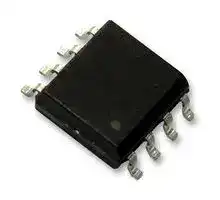


BM521Q25F-GE2
LED Driver AC/DC, 8.9V to 25V Input, 300kHz, 1 Output, SOP-8
- Manufacturer: ROHM
- Product type: AC / DC LED Driver ICs
- Device Topology:-; Input Voltage Min:8.9V; Input Voltage Max:25V; Output Voltage Max:-; Output Current Max:-; Switching Frequency:300kHz; No. of Outputs:1Outputs; IC Mounting:SMD; Driver Case S
- MSL: MSL 1 - Unlimited
- SVHC: No SVHC (25-Jun-2025)
- Topology: -
- IC Mounting: Surface Mount
- No. of Pins: 8Pins
- Product Range: -
- Qualification: -
- No. of Outputs: 1Outputs
- Device Topology: -
- LED Driver Type: Non Isolated
- Driver Case Style: SOP
- IC Case / Package: SOP
- Input Voltage Max: 25V
- Input Voltage Min: 8.9V
- Output Current Max: -
- Output Voltage Max: -
- Switching Frequency: 300kHz
- Switching Frequency Typ: 300kHz
- Operating Temperature Max: 105°C
- Operating Temperature Min: -40°C
- Automotive Qualification Standard: -
| Delivery and price | |
|---|---|
| Units per pack | 50 |
| Price | 0.492 € |
| Current stock | 50+ |
| Lead time | 30 days |

## **AC/DC Drivers AC/DC controller IC for LED lighting Included 650V MOSFET** ## **BM521Q25F** ## **General Description** BM521Q25F is an AC/DC converter for LED lighting, which has a built-in MOSFET with 650V withstand voltage. This IC can be applied to quasi-resonant typed High-side LED driver application, and the high current precision and Low EMI noise can be achieved. Moreover, owing to the built-in PFC (Power Factor Correction) converter, the harmonics is improved. Owing to the start-up circuit with 650V withstand voltage, the low power consumption is achieved. And owing to the external current setting resistance, a power supply design with a high degree of freedom can be achieved. Owing to the built-in start-up circuit and MOSFET with 650V withstand voltage, a compact application can be designed easily, and the low-cost can be achieved with the small BOM size. ## **Features** - Quasi-resonant Switching Mode + PFC Circuit - Non-isolated Application - Built-in 650V Start-up Circuit - Built-in 650V Switching MOSFET - Maximum Frequency 300kHz - VCC Pin: Under Voltage Protection - VCC Pin: Over Voltage Protection (Latch) - SOURCE Pin: Leading-Edge-Blanking Function - SOURCE Pin: OPEN Protection Function - LED Over Current Detection Function ## **Package W(Typ) x D(Typ) x H(Max)** SOP8 5.00mm x 6.20mm x 1.71mm ## **Key Specifications** - Operating Power Supply Voltage Range: VCC: 8.9V to 25.0V DRAIN: to 650V - Operating Current: Normal Operation: 400μA (Typ) Operating Temperature Range: - 40°C to +105°C - MOSFET ON Resistance: 4.0Ω (Typ) ## **Application** LED Bulb, Down-light etc. Electrical Machineries for LED Lighting ## **Typical Application Circuit** **==> picture [418 x 241] intentionally omitted <==** **----- Start of picture text -----**<br> F1<br>DA1 L1<br>Vin<br>R1<br>R3<br>CB CIN C1<br>D2<br>U1<br>DZ<br>R2<br>R4<br>RS<br>C3 C2 L2 LED+<br>SS “all<br>+<br>D1 RO CO<br>L_|<br>LED-<br> Figure 1. Application Circuit<br>DRAIN NC VCC ZT<br>SOURCE COMP GND LPF<br>**----- End of picture text -----**<br> 〇Product structure : Silicon monolithic integrated circuit 〇This product has no designed protection against radioactive rays . www.rohm.com © 2016 ROHM Co., Ltd. All rights reserved. TSZ22111 ・ 14 ・ 001 **TSZ02201-0F4F0C300090-1-2 20.Apr.2016 Rev.002** 1/16 **BM521Q25F** ## **Absolute Maximum Ratings (Ta=25°C)** |**Item **|**Symbol **|**Rating**|**Unit**|**Condition **| |---|---|---|---|---| |Input Voltage Range 1|Vmax1|-0.3 to 30|V|VCC| |Input Voltage Range 2|Vmax2|-0.3 to 6.5|V|SOURCE, COMP, LPF, ZT| |Input Voltage Range 3|Vmax3|650|V|DRAIN| |Drain Current Pulse|IDP|2.60|A|PW=10μs, DutyCycle=1%| |OperatingTemperature Range|Topr|-40 to +105|oC|| |Maximum Junction Temperature|Tjmax|150|oC|| |Storage Temperature Range|Tstg|-55 to +150|oC|| **Caution:** Operating the IC over the absolute maximum ratings may damage the IC. The damage can either be a short circuit between pins or an open circuit between pins and the internal circuitry. Therefore, it is important to consider circuit protection measures, such as adding a fuse, in case the IC is operated over the absolute maximum ratings. ## **Thermal Resistance** _**[(Note 1)]**_ |**Thermal Resistance****_(Note 1)_**||||| |---|---|---|---|---| |Parameter|Symbol|Thermal Resistance(Typ)||Unit| |||1s_(Note 3)_|2s2p(_Note 4)_|| |SOP8||||| |Junction to Ambient|θJA|197.4|109.8|°C/W| |Junction to Top Characterization Parameter_(Note 2)_|ΨJT|21|19|°C/W| _(Note 1)_ Based on JESD51-2A(Still-Air) _(Note 2)_ The thermal characterization parameter to report the difference between junction temperature and the temperature at the top center of the outside surface of the component package. _(Note 3)_ Using a PCB board based on JESD51-3. _(Note 4)_ Using a PCB board based on JESD51-7. |<br>_(Note 4)_Using a PCB board based|<br>on JESD51-7.||||| |---|---|---|---|---|---| |Layer Number of<br>Measurement Board|Material|Board Size|||| |Single|FR-4|114.3mm x 76.2mm x|1.57mmt||| |Top|||||| |Copper Pattern|Thickness||||| |Footprints and Traces|70μm||||| ||||||| |Layer Number of<br>Measurement Board|Material|Board Size|||| |4 Layers|FR-4|114.3mm x 76.2mm x 1.6mmt|||| |Top||2 Internal Layers||Bottom|| |Copper Pattern|Thickness|Copper Pattern|Thickness|Copper Pattern|Thickness| |Footprints and Traces|70μm|74.2mm x 74.2mm|35μm|74.2mm x 74.2mm|70μm| ## **Recommended Operating Conditions (Ta=25°C)** |**Item **|**Symbol **|**Range**|**Unit**|**Condition **| |---|---|---|---|---| |Input Voltage Range 1|VCC|8.9 to 25.0|V|VCC Voltage| |Input Voltage Range 2|VDRAIN|to 650|V|DRAIN Voltage| ## **Electrical Characteristics MOSFET (Unless otherwise specified VCC=15V Ta=25** ° **C)** |||||||| |---|---|---|---|---|---|---| |**Item**|**Symbol**|**Specification**|||**Unit**|**Condition**| |||**Min**|**Typ**|**Max**||| |Drain-Source<br>Breakdown Voltage|V(BR)DDS|650|-|-|V|ID=1mA / VGS=0V| |Drain Leakage Current|IDDS|-|-|100|μA|VDS=650V / VGS=0V| |ON Resistance|RDS(ON)|-|4.0|5.5|Ω|ID=0.25A / VGS=10V| www.rohm.com © 2016 ROHM Co., Ltd. All rights reserved. TSZ22111 ・ 15 ・ 001 **TSZ02201-0F4F0C300090-1-2 20.Apr.2016 Rev.002** 2/16 **BM521Q25F** ## **Electrical Characteristics IC (Unless otherwise specified VCC=15V Ta=25** ° **C)** |**Item**|**Symbol**|**Specification**|**Specification**|**Specification**|**Unit**|**Condition**| |---|---|---|---|---|---|---| |||**Min**|**Typ**|**Max**||| |[**Circuit Current**]||||||| |Circuit Current(ON)|ION|-|400|800|μA|ZT=0V(PULSE Operating)| |Circuit Current(OFF)|IOFF|-|300|600|μA|ZT=1V(PULSE OFF)| |[**VH Pin Start Up Circuit**]||||||| |VH StartingCurrent 1|ISTART1|0.20|0.55|0.90|mA|VCC= 0V| |VH StartingCurrent 2|ISTART2|1|3|6|mA|VCC=10V| |VH OFF Current|ISTART3|-|10|20|μA|VCC UVLO Released<br>VH Pin Sink Current| |VH Starting Current<br>Switching Voltage|VSC|0.4|0.8|1.6|V|VCC Pin| |[**VCC Pin Protection**]||||||| |VCC UVLO Voltage 1|VUVLO1|12.5|13.5|14.5|V|VCC RisingUp| |VCC UVLO Voltage 2|VUVLO2|7.5|8.2|8.9|V|VCC FallingDown| |VCC UVLO Hysteresis|VUVLO3|-|5.3|-|V|VUVLO3= VUVLO1- VUVLO2| |VCC OVP Trigger Voltage|VOVP1|25.0|27.5|30.0|V|VCC RisingUp| |VCC OVP Release Voltage|VOVP2|21.0|23.5|26.0|V|VCC FallingDown| |Latch Released<br>VCC Voltage|VLATCH|-|VUVLO2-0.5|-|V|VCC Falling Down| |VCC Recharge Start Voltage|VCHG1|7.7|8.7|9.7|V|VCC FallingDown| |VCC Recharge End Voltage|VCHG2|12|13|14|V|VCC RisingUp| |Latch Mask Time|TLATCH|75|150|300|μs|| |**[ DC/DC Converter Block(Turn-on) ]**||||||| |ZT Comparator Voltage 1|VZT1|30|110|190|mV|ZT FallingDown| |ZT Comparator Voltage 2|VZT2|100|200|300|mV|ZT RisingUp| |ZT Comparator Hysteresis|VZTHYS|40|90|140|mV|VZTHYS =VZT2- VZT1| |ZT Trigger Timeout|TZTOUT|9|18|36|μs|| |**[ DC/DC Converter Block(Turn-off) ]**||||||| |Current Trigger Voltage|VCS|2.60|2.95|3.30|V|| |Maximum Frequency|FSW|255|300|345|kHz|| |LeadingEdge Blank Time|TLEB|0.1|0.2|0.4|μs|| |Error Amplifier<br>ReferenceVoltage|VREF|0.582|0.600|0.618|V|| www.rohm.com © 2016 ROHM Co., Ltd. All rights reserved. TSZ22111 ・ 15 ・ 001 **TSZ02201-0F4F0C300090-1-2 20.Apr.2016 Rev.002** 3/16 **BM521Q25F** ## **Pin Configuration** (TOP VIEW) **==> picture [206 x 92] intentionally omitted <==** **----- Start of picture text -----**<br> ZT 1 8 LPF<br>VCC 2 7 GND<br>N.C. 3 6 COMP<br>DRAIN 4 5 SOURCE<br>**----- End of picture text -----**<br> Figure 2. Pin Configuration ## **Pin Descriptions** Table 1. PIN Functions |Pi N|Fi| |---|---| |n ame|uncton| |ZT|Zero current detecting pin| |VCC|Power supply pin| |N.C.|Non Connection| |DRAIN|Internal MOSFET DRAINpin| |SOURCE|Internal MOSFET SOURCE pin<br>Inductor current sensing pin| |COMP|Error amplifier outputpin| |GND|GNDpin| |LPF|Error amplifier inputpin| ## **I/O Equivalence Circuits** **==> picture [504 x 294] intentionally omitted <==** **----- Start of picture text -----**<br> 1PIN : ZT 2PIN : VCC / 7PIN : GND 4PIN : DRAIN<br>DRAIN(4) DRAIN(4)<br>JFET<br>MOSFET JFET<br>50Ω 100Ω 10kΩ<br>ZT(1)<br>200kΩ 25kΩ<br>SOURCE(5)<br>VCC(2)<br>300kΩ<br>Block<br>GND(7) VCC(2)<br>5PIN : SOURCE 6PIN : COMP 8PIN : LPF<br>DRAIN(4)<br>MOSFET<br>10kΩ COMP(6) LPF(8)<br>10kΩ 10kΩ<br>VREF4V<br>SOURCE(5) 1MΩ 4kΩ<br>18kΩ<br>25kΩ<br>**----- End of picture text -----**<br> Figure 3. I/O Equivalent Circuits www.rohm.com © 2016 ROHM Co., Ltd. All rights reserved. TSZ22111 ・ 15 ・ 001 **TSZ02201-0F4F0C300090-1-2 20.Apr.2016 Rev.002** 4/16 **BM521Q25F** ## **Block Diagram** **==> picture [512 x 319] intentionally omitted <==** **----- Start of picture text -----**<br> F1<br>DA1 L1<br>Vin<br>CB CIN<br>R1<br>DRAIN (4)<br>Istart1=0.55mA<br>C1 VCC (2) Istart2=3mAIstart3=10uA HV Starter<br>+ STARTCOMP<br>VCCUVLO SupplyPower 0.8V -<br>VREF4V +- VCCRECHG<br>8.7V13V/ + VCCUVLO Clamper12V<br>- NOUT R3<br>13.5V/ DRIVER<br>8.2V +- VCCOVP 150usMask RS Q<br>27.5V/<br>23.5V TSD VREF4V D2<br>LOGIC<br>1MΩ<br>OCP<br>200ns + SOURCE (5)<br>ZT (1) + ZTCOMP L.E.B. -<br>-<br>R2 NOUT 110mV/200mV Freq.Max 2.95V R4<br>DZ<br>+ - EAMP LPF (8)<br>- +<br>0.6V<br>OSC<br>GND (7) COMP (6) RS L2 LED+<br>C3 C2 RO +CO<br>D1 LED-<br>**----- End of picture text -----**<br> Figure 4. Block Diagram www.rohm.com © 2016 ROHM Co., Ltd. All rights reserved. TSZ22111 ・ 15 ・ 001 **TSZ02201-0F4F0C300090-1-2 20.Apr.2016 Rev.002** 5/16 **BM521Q25F** ## **Description of Blocks** ## **(1) Start-up Circuit Block (VCC:2pin, DRAIN : 4pin)** ## **(1.1)Block Description** A start-up circuit with 650V withstand voltage is built in this IC. Owing to this, the low-power standby and high-speed start can be achieved. After the IC was booted up, the power consumption becomes only the idling current ISTART3 (Typ=10μA). **==> picture [489 x 190] intentionally omitted <==** **----- Start of picture text -----**<br> F1<br>DA1 L1<br>Vin<br>CB CIN<br>R1<br>ISTART2<br>DRAIN (4)<br>HV Starter block JFET<br>D2<br>STARTCOMP<br>ON ON<br>0.8V R3<br>VCCRECHG VCC (2) ISTART1<br>8.7V13V/ VCCUVLO Istart2=3mAIstart3=10uAIstart1=0.55mA C1 ISTART3 0 VSC 10V VUVLO1<br>13.5V/8.2V<br>GND (7) VCC Voltage[V]<br>1Itstar Istart2 Istart3<br>Start-up Current [A]<br>**----- End of picture text -----**<br> - Figure 5. Start-up Circuit Block Diagram Figure 6. Start-up Current VCC Voltage Curve www.rohm.com © 2016 ROHM Co., Ltd. All rights reserved. TSZ22111 ・ 15 ・ 001 **TSZ02201-0F4F0C300090-1-2 20.Apr.2016 Rev.002** 6/16 **BM521Q25F** ## **(1.2)Start Sequences** The time chart of the start sequences are showed in Figure 8. **==> picture [332 x 407] intentionally omitted <==** **----- Start of picture text -----**<br> F1<br>DA1<br>L1<br>Vin<br>R1<br>CB CIN R3<br>DRAIN(4) VCC(2)<br>C1 D2<br>SOURCE(5) COMP(6) GND(7)<br>U1<br>DZ<br>C3<br>RS<br>L2 LED+<br>+<br>D1 RO CO<br>LED-<br>Figure 7. DC/DC Schematic<br>(E) (F)<br>VUVLO1<br>(C)<br>VUVLO2<br>(B)<br>VCC(2) (A)<br>COMP(6)<br>(D)<br>Switching<br>I_LED<br>AC power<br>OFF ON OFF<br>supply<br>**----- End of picture text -----**<br> Figure 8. ON/OFF Sequences ## ON/OFF Sequences - A: Input voltage is applied to DRAIN pin while the AC power supply turns to ON. - B: The capacitor connected to the VCC pin is charged by the start-up current from the DRAIN pin, and the VCC rises up. - C: The IC starts operating when VCC > VUVLO1 (Typ=13.5V). - D: By the increasing of the COMP pin voltage, the IC starts up with the soft start operation. - E: The current is supplied to VCC pin from LED+ and D2 by the switching operation. - ※The power is supplied from VLED, and the VCC voltage is determined by the VDZ(the breakdown voltage of DZ). VCC=VLED-VDZ-VfD2 - [(V] LED[: the Vf of LED, V] DZ[: the breakdown voltage of DZ, Vf] D2[: the Vf of D2 ) ] - F: When the power supply turns OFF, VCC voltage falls down due to the drop of the power supply. The IC turns OFF when the VUVLO2 (Typ=8.2V) is triggered. www.rohm.com © 2016 ROHM Co., Ltd. All rights reserved. TSZ22111 ・ 15 ・ 001 **TSZ02201-0F4F0C300090-1-2 20.Apr.2016 Rev.002** 7/16 **BM521Q25F** ## **(1.3) VCC Pin Protection Function** The VCC under voltage protection function VCC UVLO (Under Voltage Lock Out), over voltage protection function VCC OVP (Over Voltage Protection), and a VCC recharge function which operates when a voltage drop occurs at VCC pin are built in this IC. The VCC UVLO and VCC OVP functions are used for preventing the destructions of the switching MOSFET which occurs when the VCC voltage is too high or too low. Owing to the VCC charge function, the VCC pin is charged from high voltage lines by the start circuit when the VCC voltage drops. ## **VCC UVLO / VCC OVP Function** VCC UVLO and VCC OVP are auto recovery comparators which have voltage hysteresis. VCC OVP has a built-in mask time TLATCH(Typ=150μs). When the VCC voltage is over VOVP1(Typ=27.5V),and this state lasts TLATCH, the detection is executed. Owing to this function, the surge which occurs at VCC pin can be masked. ## **VCC Charge Function** When the VCC pin voltage is over VUVLO1(Typ=13.5V), the IC starts up. In this case, if the VCC pin voltage drops below VCHG1(Typ=8.7V), VCC charge function operates. At this time, the VCC pin is charged from the DRAIN pin through the start-up circuit. Owing to this operation, the failure of start-up can be prevented. **==> picture [356 x 351] intentionally omitted <==** **----- Start of picture text -----**<br> DRAIN(4)<br>VOVP1 (Typ=27.5V)<br>VOVP2 (Typ=23.5V)<br>VUVLO1 (Typ=13.5V)<br>VCHG2 (Typ=13V)<br>VCC(2)<br>VCHG1 (Typ=8.7V)<br>VUVLO2 (Typ=8.2V)<br>VLATCH (Typ=7.7V)<br>VSC (Typ=0.8V)<br>ON ON<br>VCC UVLO<br>Function OFF OFF<br>ON ON ON<br>VCC RECHARGE Istart2<br>Function OFF OFF<br>ON ON Istart1<br>VCC OVP Istart1 Istart2<br>Function (Typ=550uA) (Typ=3mA) OFF OFF<br>ON<br>Switching OFF OFF<br>Under TLATCH<br>(Typ=150us)<br>Internal L : Normal<br>Over TLATCH<br>Latch Signal H : Latch<br>(Typ=150us)<br>Time<br>AB CD E F G H G I JK L<br>**----- End of picture text -----**<br> Figure 9. Timing Chart of VCC UVLO/ VCC OVP / VCC Charge Function - A: DRAIN pin voltage is applied, VCC voltage rises by the charging current Istart1 (Typ=550μA). - B: VCC voltage> VSC(Typ=0.8V), the charging current to VCC changes from Istart1 to Istart2(Typ=3mA) - C: VCC voltage> VCHG2(Typ=13V),though VCC charge function reacts, due to VCC UVLO is detected, the charge continues. - D: VCC voltage> VUVLO1, the VCC UVLO is released, and DC/DC operation starts, the charge to VCC stops. - E: VCC voltage< VCHG1, the charge to VCC restarts. - F: VCC voltage> VCHG2, VCC recharge function stops.. - G: VCC voltage> VOVP1, VCC OVP is detected. - H: VCC voltage< VOVP2(Typ=23.5V), if VCC voltage drops below VOVP2 in TLATCH, VCC OVP is released, and the latch will not be activated. - I: VCC voltage > VOVP2, if this state is kept longer than TLATCH, the switching stops by latch. - J: VCC voltage< VUVLO2(Typ=8.2V), VCC UVLO is detected. - K: VCC voltage< VLATCH(Typ=7.7V), the latch state is released. - L: VCC voltage< VSC, the charging current to VCC changes from Istart2 to Istart1. www.rohm.com © 2016 ROHM Co., Ltd. All rights reserved. TSZ22111 ・ 15 ・ 001 **TSZ02201-0F4F0C300090-1-2 20.Apr.2016 Rev.002** 8/16 **BM521Q25F** ## **(2)Error Amplifier Block (SOURCE: 5pin, COMP: 6 pin, LPF: 8pin)** ## **(2.1)Block Description** An error amplifier is built in this IC, the Gate ON time of the built-in MOSFET is changed by controlling the output of the error amplifier. The voltage which occurs on the current sensing resistor RS (SOURCE Pin Voltage) is inputted to the low pass filter circuit which is composed by R4,C2. The output of the low pass filter circuit (LPF Pin Voltage) is used as the input voltage of the error amplifier, and the summation of the current which flows through the inductor L2 while the MOSFET is ON, and the current which flows through the inductor L2 from the flywheel diode D1 while the MOSFET is OFF flows through the RS. **==> picture [286 x 210] intentionally omitted <==** **----- Start of picture text -----**<br> DRAIN(4)<br>Ton<br>control<br>STOP<br>VREF4V<br>VREF<br>1MΩ (Typ=0.6V) -<br>+ +<br>+<br>- - COMP<br>VOCP EAMP<br>SOURCE(5) (Typ=2.95V) LPF(8) COMP(6) GND(7)<br>R4<br>C3<br>C2 L2<br>RS<br>D1<br>**----- End of picture text -----**<br> Figure 10. Diagram of Error Amplifier Block ## **(2.2) SOURCE Pin OCP** OCP (Over Current Protection) function is built-in SOURCE pin. When SOURCE pin voltage reached the detection voltage VOCP (Typ=2.95V), MOSFET switches from ON to OFF. (Automatic Recovery Protection) ## **(2.3) L.E.B Blanking Period** When the internal MOSFET is turned ON, surge current occurs by the capacitive components and drive current. In this case, if the SOURCE pin voltage rises temporarily, false detections may occur in the OCP function. For preventing from the false detections, a L.E.B (Leading Edge Blanking) function which masks the SOURCE voltage during a constant time TLEB (Typ=200ns) after MOSFET switches from OFF to ON is built in. ## **(2.4) SOURCE Pin Open Protection** When the SOURCE pin becomes open, this function stops the switching operation for protection. (Automatic Recovery Protection) www.rohm.com © 2016 ROHM Co., Ltd. All rights reserved. TSZ22111 ・ 15 ・ 001 **TSZ02201-0F4F0C300090-1-2 20.Apr.2016 Rev.002** 9/16 **BM521Q25F** ## **(3)Zero Current Detection Block (ZT : 1pin)** ## **(3.1)Block Description** ZT pin controls the OFF time of the internal MOSFET gate signal. While the MOSFET is OFF, the current flows from the flywheel diode D1 to the inductor L2. While the current IL is close to zero, the voltage of ZT pin falls down. While the voltage becomes lower than VZT1(Typ=110mV), it is detected by the ZT comparator, and the MOSFET turns to ON. **==> picture [331 x 127] intentionally omitted <==** **----- Start of picture text -----**<br> IL<br>IL<br>0A<br>SOURCE (5)<br>ZT (1)<br>VZT1<br>ZT (1) (Typ=110mV)<br>MOSFET MOSFET<br>GATE GATE<br>(internal) (internal)<br>**----- End of picture text -----**<br> Figure 11. Zero-cross Detection by ZT Pin ## **(3.2) ZT Tigger Timeout** In case of the ZT pin is locked at low voltage which is caused by some malfunctions of the components on the application board, and the quasi-resonant switching operation stops, the MOSFET is forced to turn ON after TZTOUT (Typ=18μs). **==> picture [202 x 124] intentionally omitted <==** **----- Start of picture text -----**<br> IL<br>0A<br>SOURCE (5)<br>ZT (1)<br>VZT1<br>MOSFET<br>GATE TOUT_ON TOUT_ON<br>(internal) TZTOUT TZTOUT<br>( A ) ( B ) ( C )<br>**----- End of picture text -----**<br> Figure 12. ZT Trigger Timeout Operation - (A)…When the ON time (TOUT_ON) which is determined by the voltage of COMP pin passed, the MOSFET turns OFF. - (B)…The ZT pin is locked at a low voltage, so the MOSFET does not turns ON. - (C)…When TZTOUT passed after the MOSFET turns OFF, the MOSFET is forced to turn ON. ## **(3.3) Maximum Frequency** The maximum frequency is a function which is designed for preventing the overheating from of the IC, and it limits the IC to operate under the FMAX (Typ=300kHz). **==> picture [214 x 138] intentionally omitted <==** **----- Start of picture text -----**<br> IL<br>0A<br>SOURCE (5)<br>ZT (1)<br>VZT1<br>MOSFET<br>GATE TOUT_ON TZTOUT<br>(internal)<br>TMAX TMAX = 1 / FMAX [s]<br>( A ) ( B ) ( C )<br>**----- End of picture text -----**<br> Figure 13. Maximum Frequency Operation - (A)…When the ON time (TOUT_ON) which is determined by the voltage of COMP pin passed, the MOSFET turns OFF. - (B)…If the switching frequency exceeds the FMAX, the MOSFET cannot turn ON. - (C)…When TZTOUT passed after the MOSFET turns OFF, the MOSFET is forced to turn ON. www.rohm.com © 2016 ROHM Co., Ltd. All rights reserved. TSZ22111 ・ 15 ・ 001 **TSZ02201-0F4F0C300090-1-2 20.Apr.2016 Rev.002** 10/16 **BM521Q25F** ## **Operation Mode of Protection Circuit** Operation mode of protection functions are shown in Table 2. ## Table 2. Operation Mode of Protection Circuit |**Abnormal State**<br>**Detection**|**Abnormal State**<br>**Detection**|**Detection**|**Release**|**Protection Operations**<br>IC Stops<br>(Automatic Recovery)<br>150μs(Typ)<br>Timer Latch<br>Output Stops<br>(Automatic Recovery)<br>150μs(Typ)<br>Timer Latch| |---|---|---|---|---| |VCC|UVLO|<= 8.2V(Typ)|>= 13.5V (Typ)|| ||OVP|>=27.5V(Typ)|Before Latch:<= 23.5V (Typ)<br>Latched:VCC<= 7.7V(Typ)|| |SOURCE|OCP|>=2.95V(Typ)|<2.95V (Typ)|| |TSD||>=175oC (Typ)|Before Latch:<= 155oC (Typ)<br>Latched:VCC<= 7.7V(Typ)|| www.rohm.com © 2016 ROHM Co., Ltd. All rights reserved. TSZ22111 ・ 15 ・ 001 **TSZ02201-0F4F0C300090-1-2 20.Apr.2016 Rev.002** 11/16 **BM521Q25F** ## **Operational Notes** ## **1. Reverse Connection of Power Supply** Connecting the power supply in reverse polarity can damage the IC. Take precautions against reverse polarity when connecting the power supply, such as mounting an external diode between the power supply and the IC’s power supply pins. ## **2. Power Supply Lines** Design the PCB layout pattern to provide low impedance supply lines. Separate the ground and supply lines of the digital and analog blocks to prevent noise in the ground and supply lines of the digital block from affecting the analog block. Furthermore, connect a capacitor to ground at all power supply pins. Consider the effect of temperature and aging on the capacitance value when using electrolytic capacitors **.** ## **3. Ground Voltage** Ensure that no pins are at a voltage below that of the ground pin at any time, even during transient condition. ## **4. Ground Wiring Pattern** When using both small-signal and large-current ground traces, the two ground traces should be routed separately but connected to a single ground at the reference point of the application board to avoid fluctuations in the small-signal ground caused by large currents. Also ensure that the ground traces of external components do not cause variations on the ground voltage. The ground lines must be as short and thick as possible to reduce line impedance. ## **5. Thermal Consideration** Should by any chance the maximum junction temperature rating be exceeded the rise in temperature of the chip may result in deterioration of the properties of the chip. In case of exceeding this absolute maximum rating, increase the board size and copper area to prevent exceeding the maximum junction temperature rating. ## **6. Recommended Operating Conditions** These conditions represent a range within which the expected characteristics of the IC can be approximately obtained. The electrical characteristics are guaranteed under the conditions of each parameter. ## **7. Inrush Current** When power is first supplied to the IC, it is possible that the internal logic may be unstable and inrush current may flow instantaneously due to the internal powering sequence and delays, especially if the IC has more than one power supply. Therefore, give special consideration to power coupling capacitance, power wiring, width of ground wiring, and routing of connections. ## **8. Operation Under Strong Electromagnetic Field** Operating the IC in the presence of a strong electromagnetic field may cause the IC to malfunction. ## **9. Testing on Application Boards** When testing the IC on an application board, connecting a capacitor directly to a low-impedance output pin may subject the IC to stress. Always discharge capacitors completely after each process or step. The IC’s power supply should always be turned off completely before connecting or removing it from the test setup during the inspection process. To prevent damage from static discharge, ground the IC during assembly and use similar precautions during transport and storage. ## **10. Inter-pin Short and Mounting Errors** Ensure that the direction and position are correct when mounting the IC on the PCB. Incorrect mounting may result in damaging the IC. Avoid nearby pins being shorted to each other especially to ground, power supply and output pin. Inter-pin shorts could be due to many reasons such as metal particles, water droplets (in very humid environment) and unintentional solder bridge deposited in between pins during assembly to name a few. www.rohm.com © 2016 ROHM Co., Ltd. All rights reserved. TSZ22111 ・ 15 ・ 001 **TSZ02201-0F4F0C300090-1-2 20.Apr.2016 Rev.002** 12/16 **BM521Q25F** ## **Operational Notes – continued** ## **11. Unused Input Terminals** Input pins of an IC are often connected to the gate of a MOS transistor. The gate has extremely high impedance and extremely low capacitance. If left unconnected, the electric field from the outside can easily charge it. The small charge acquired in this way is enough to produce a significant effect on the conduction through the transistor and cause unexpected operation of the IC. So unless otherwise specified, unused input pins should be connected to the power supply or ground line. ## **12. Regarding the Input Pin of the IC** This monolithic IC contains P+ isolation and P substrate layers between adjacent elements in order to keep them isolated. P-N junctions are formed at the intersection of the P layers with the N layers of other elements, creating a parasitic diode or transistor. For example (refer to figure below): When GND > Pin A and GND > Pin B, the P-N junction operates as a parasitic diode. When GND > Pin B, the P-N junction operates as a parasitic transistor. Parasitic diodes inevitably occur in the structure of the IC. The operation of parasitic diodes can result in mutual interference among circuits, operational faults, or physical damage. Therefore, conditions that cause these diodes to operate, such as applying a voltage lower than the GND voltage to an input pin (and thus to the P substrate) should be avoided. Figure 14. Example of monolithic IC structure ## **13. Ceramic Capacitor** When using a ceramic capacitor, determine the dielectric constant considering the change of capacitance with temperature and the decrease in nominal capacitance due to DC bias and others. ## **14. Area of Safe Operation (ASO)** Operate the IC such that the output voltage, output current, and the maximum junction temperature rating are all within the Area of Safe Operation (ASO). ## **15. Thermal Shutdown Circuit(TSD)** This IC has a built-in thermal shutdown circuit that prevents heat damage to the IC. Normal operation should always be within the IC’s maximum junction temperature rating. If however the rating is exceeded for a continued period, the junction temperature (Tj) will rise which will activate the TSD circuit that will turn OFF all output pins. The IC should be powered down and turned ON again to resume normal operation because the TSD circuit keeps the outputs at the OFF state even if the TJ falls below the TSD threshold. Note that the TSD circuit operates in a situation that exceeds the absolute maximum ratings and therefore, under no circumstances, should the TSD circuit be used in a set design or for any purpose other than protecting the IC from heat damage. ## **16. Over Current Protection Circuit (OCP)** This IC incorporates an integrated overcurrent protection circuit that is activated when the load is shorted. This protection circuit is effective in preventing damage due to sudden and unexpected incidents. However, the IC should not be used in applications characterized by continuous operation or transitioning of the protection circuit. www.rohm.com © 2016 ROHM Co., Ltd. All rights reserved. TSZ22111 ・ 15 ・ 001 **TSZ02201-0F4F0C300090-1-2 20.Apr.2016 Rev.002** 13/16 **BM521Q25F** ## **Ordering Information** **==> picture [418 x 78] intentionally omitted <==** **----- Start of picture text -----**<br> B M 5 2 1 Q 2 5 F - XX<br>Product name Package Packaging and forming specification<br>F: SOP8 XX: Please confirm the formal name<br> with our salesmen.<br>**----- End of picture text -----**<br> ## **Marking Diagram** **==> picture [243 x 118] intentionally omitted <==** **----- Start of picture text -----**<br> SOP8(TOP VIEW)<br>Part Number Marking<br>2 1 Q 2 5<br>LOT Number<br>1PIN MARK<br>**----- End of picture text -----**<br> www.rohm.com © 2016 ROHM Co., Ltd. All rights reserved. TSZ22111 ・ 15 ・ 001 **TSZ02201-0F4F0C300090-1-2 20.Apr.2016 Rev.002** 14/16 **BM521Q25F** ## **Physical Dimension, Tape and Reel Information** **==> picture [86 x 13] intentionally omitted <==** **----- Start of picture text -----**<br> Package Name<br>**----- End of picture text -----**<br> **==> picture [36 x 10] intentionally omitted <==** **----- Start of picture text -----**<br> SOP8<br>**----- End of picture text -----**<br> **==> picture [296 x 379] intentionally omitted <==** **----- Start of picture text -----**<br> (Max 5.35 (include.BURR))<br>o +6°<br>y 4 -a<br>7 6 5<br>ite)<br>al<br>ro)<br>rAlo+1<br>2 3 4 |<br>0.<br>(UNIT : mm)<br>PKG : SOP8<br>Drawing No. : EX112-5001-1<br>**----- End of picture text -----**<br> www.rohm.com © 2016 ROHM Co., Ltd. All rights reserved. TSZ22111 ・ 15 ・ 001 **TSZ02201-0F4F0C300090-1-2** 15/16 **20.Apr.2016 Rev.002** **BM521Q25F** ## **Revision History** |**ision History**||| |---|---|---| |Date|Revision|Changes| |18.Jan.2016|001|New Release| |20.Apr.2016|002|P2 Footprints and Traces<br>Changed the representation of the units.<br>74.2mm2 (Square) ⇒ 74.2mm x 74.2mm| www.rohm.com © 2016 ROHM Co., Ltd. All rights reserved. TSZ22111 ・ 15 ・ 001 **TSZ02201-0F4F0C300090-1-2 20.Apr.2016 Rev.002** 16/16 ## **Notice** ## **Precaution on using ROHM Products** 1. Our Products are designed and manufactured for application in ordinary electronic equipments (such as AV equipment, OA equipment, telecommunication equipment, home electronic appliances, amusement equipment, etc.). If you intend to use our Products in devices requiring extremely high reliability (such as medical equipment[(Note 1)] , transport equipment, traffic equipment, aircraft/spacecraft, nuclear power controllers, fuel controllers, car equipment including car accessories, safety devices, etc.) and whose malfunction or failure may cause loss of human life, bodily injury or serious damage to property (“Specific Applications”), please consult with the ROHM sales representative in advance. Unless otherwise agreed in writing by ROHM in advance, ROHM shall not be in any way responsible or liable for any damages, expenses or losses incurred by you or third parties arising from the use of any ROHM’s Products for Specific Applications. |(Note1) Medical Equipment Classification of the Specific Applications|(Note1) Medical Equipment Classification of the Specific Applications|(Note1) Medical Equipment Classification of the Specific Applications|(Note1) Medical Equipment Classification of the Specific Applications| |---|---|---|---| |JAPAN|USA|EU|CHINA| |CLASS`Ⅲ`|CLASS`Ⅲ`|CLASS`Ⅱ`b|CLASS`Ⅲ`| |CLASS`Ⅳ`||CLASS`Ⅲ`|| 2. ROHM designs and manufactures its Products subject to strict quality control system. However, semiconductor products can fail or malfunction at a certain rate. Please be sure to implement, at your own responsibilities, adequate safety measures including but not limited to fail-safe design against the physical injury, damage to any property, which a failure or malfunction of our Products may cause. The following are examples of safety measures: - [a] Installation of protection circuits or other protective devices to improve system safety - [b] Installation of redundant circuits to reduce the impact of single or multiple circuit failure 3. Our Products are designed and manufactured for use under standard conditions and not under any special or extraordinary environments or conditions, as exemplified below. Accordingly, ROHM shall not be in any way responsible or liable for any damages, expenses or losses arising from the use of any ROHM’s Products under any special or extraordinary environments or conditions. If you intend to use our Products under any special or extraordinary environments or conditions (as exemplified below), your independent verification and confirmation of product performance, reliability, etc, prior to use, must be necessary: - [a] Use of our Products in any types of liquid, including water, oils, chemicals, and organic solvents - [b] Use of our Products outdoors or in places where the Products are exposed to direct sunlight or dust - [c] Use of our Products in places where the Products are exposed to sea wind or corrosive gases, including Cl2, H2S, NH3, SO2, and NO2 - [d] Use of our Products in places where the Products are exposed to static electricity or electromagnetic waves - [e] Use of our Products in proximity to heat-producing components, plastic cords, or other flammable items - [f] Sealing or coating our Products with resin or other coating materials - [g] Use of our Products without cleaning residue of flux (even if you use no-clean type fluxes, cleaning residue of flux is recommended); or Washing our Products by using water or water-soluble cleaning agents for cleaning residue after soldering - [h] Use of the Products in places subject to dew condensation 4. The Products are not subject to radiation-proof design. 5. Please verify and confirm characteristics of the final or mounted products in using the Products. 6. In particular, if a transient load (a large amount of load applied in a short period of time, such as pulse. is applied, confirmation of performance characteristics after on-board mounting is strongly recommended. Avoid applying power exceeding normal rated power; exceeding the power rating under steady-state loading condition may negatively affect product performance and reliability. 7. De-rate Power Dissipation depending on ambient temperature. When used in sealed area, confirm that it is the use in the range that does not exceed the maximum junction temperature. 8. Confirm that operation temperature is within the specified range described in the product specification. 9. ROHM shall not be in any way responsible or liable for failure induced under deviant condition from what is defined in this document. ## **Precaution for Mounting / Circuit board design** 1. When a highly active halogenous (chlorine, bromine, etc.) flux is used, the residue of flux may negatively affect product performance and reliability. 2. In principle, the reflow soldering method must be used on a surface-mount products, the flow soldering method must be used on a through hole mount products. If the flow soldering method is preferred on a surface-mount products, please consult with the ROHM representative in advance. For details, please refer to ROHM Mounting specification > **[Notice-PGA-E ]** © 2015 ROHM Co., Ltd. All rights reserved. **Rev.003** ## **Precautions Regarding Application Examples and External Circuits** 1. If change is made to the constant of an external circuit, please allow a sufficient margin considering variations of the characteristics of the Products and external components, including transient characteristics, as well as static characteristics. 2. You agree that application notes, reference designs, and associated data and information contained in this document are presented only as guidance for Products use. Therefore, in case you use such information, you are solely responsible for it and you must exercise your own independent verification and judgment in the use of such information contained in this document. ROHM shall not be in any way responsible or liable for any damages, expenses or losses incurred by you or third parties arising from the use of such information. ## **Precaution for Electrostatic** This Product is electrostatic sensitive product, which may be damaged due to electrostatic discharge. Please take proper caution in your manufacturing process and storage so that voltage exceeding the Products maximum rating will not be applied to Products. Please take special care under dry condition (e.g. Grounding of human body / equipment / solder iron, isolation from charged objects, setting of Ionizer, friction prevention and temperature / humidity control). ## **Precaution for Storage / Transportation** 1. Product performance and soldered connections may deteriorate if the Products are stored in the places where: [a] the Products are exposed to sea winds or corrosive gases, including Cl2, H2S, NH3, SO2, and NO2 - [b] the temperature or humidity exceeds those recommended by ROHM - [c] the Products are exposed to direct sunshine or condensation - [d] the Products are exposed to high Electrostatic 2. Even under ROHM recommended storage condition, solderability of products out of recommended storage time period may be degraded. It is strongly recommended to confirm solderability before using Products of which storage time is exceeding the recommended storage time period. 3. Store / transport cartons in the correct direction, which is indicated on a carton with a symbol. Otherwise bent leads may occur due to excessive stress applied when dropping of a carton. 4. Use Products within the specified time after opening a humidity barrier bag. Baking is required before using Products of which storage time is exceeding the recommended storage time period. ## **Precaution for Product Label** A two-dimensional barcode printed on ROHM Products label is for ROHM’s internal use only. ## **Precaution for Disposition** When disposing Products please dispose them properly using an authorized industry waste company. ## **Precaution for Foreign Exchange and Foreign Trade act** Since concerned goods might be fallen under listed items of export control prescribed by Foreign exchange and Foreign trade act, please consult with ROHM in case of export. ## **Precaution Regarding Intellectual Property Rights** 1. All information and data including but not limited to application example contained in this document is for reference only. ROHM does not warrant that foregoing information or data will not infringe any intellectual property rights or any other rights of any third party regarding such information or data. 2. ROHM shall not have any obligations where the claims, actions or demands arising from the combination of the Products with other articles such as components, circuits, systems or external equipment (including software). 3. No license, expressly or implied, is granted hereby under any intellectual property rights or other rights of ROHM or any third parties with respect to the Products or the information contained in this document. Provided, however, that ROHM will not assert its intellectual property rights or other rights against you or your customers to the extent necessary to manufacture or sell products containing the Products, subject to the terms and conditions herein. ## **Other Precaution** 1. This document may not be reprinted or reproduced, in whole or in part, without prior written consent of ROHM. 2. The Products may not be disassembled, converted, modified, reproduced or otherwise changed without prior written consent of ROHM. 3. In no event shall you use in any way whatsoever the Products and the related technical information contained in the Products or this document for any military purposes, including but not limited to, the development of mass-destruction weapons. 4. The proper names of companies or products described in this document are trademarks or registered trademarks of ROHM, its affiliated companies or third parties. > **[Notice-PGA-E ]** © 2015 ROHM Co., Ltd. All rights reserved. **Rev.003** Datasheet ## **General Precaution** 1. Before you use our Pro ducts, you are requested to care fully read this document and fully understand its contents. ROHM shall not be in an y way responsible or liable for failure, malfunction or accident arising from the use of a ny ROHM’s Products against warning, caution or note contained in this document. 2. All information contained in this docume nt is current as of the issuing date and subj ect to change without any prior notice. Before purchasing or using ROHM’s Products, please confirm the la test information with a ROHM sale s representative. 3. The information contained in this doc ument is provi ded on an “as is” basis and ROHM does not warrant that all information contained in this document is accurate an d/or error-free. ROHM shall not be in an y way responsible or liable for any damages, expenses or losses incurred by you or third parties resulting from inaccuracy or errors of or concerning such information. > **[Notice – WE ]** © 2015 ROHM Co., Ltd. All rights reserved. **Rev.001**
Updated at April 11, 2026
Founded with a steadfast commitment to a "Quality First" corporate policy, ROHM is a globally recognized leader in the design and manufacture of semiconductors and electronic components. Originally named for its foundational product, resistors, combined with the unit of resistance, the "R" in ROHM has evolved to represent the brand's enduring dedication to reliability. Today, the company is renowned for driving technological advancement and supplying high-performance, dependable solutions to engineers worldwide. The company's engineering excellence is most prominently showcased in its expansive portfolio of discrete semiconductors. ROHM provides an industry-leading selection of bipolar transistors, alongside a massive array of Zener single diodes, Schottky diodes, and small signal diodes. Engineered for rigorous efficiency and compact footprint requirements, these foundational components are critical for modern power management, precise signal processing, and high-speed switching applications. In addition to its core discrete offerings, ROHM delivers advanced power control and circuit protection solutions. This includes a highly trusted lineup of single and dual MOSFETs, single IGBTs, and transient voltage suppressors (TVS diodes) designed to safeguard sensitive circuitry. Complemented by intelligent power modules, precision sensors, and specialized ICs, ROHM equips designers with the premium components necessary to build the next generation of robust electronic infrastructure.
About Novapart
Novapart is a B2B electronic component broker specialising in stock shortages and cost reduction. We source hard-to-find parts and identify compliant alternatives across a catalogue of 410,000+ components from 500+ manufacturers.
Learn more →Stock Shortage Specialist
When a component is unavailable, discontinued or has an unacceptable lead time, we tap into our network of vetted European and Asian distributors to source what you need — without compromising on quality or traceability.
Request a quote →Compliant Alternatives
We identify pin-to-pin, electrically equivalent substitutes that meet the same certifications (RoHS, AEC-Q100, REACH) as your original specification — validated against datasheets, not just part numbers. Often at a lower cost.
BOM Analysis service →