
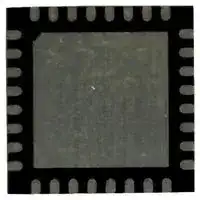


BLUENRG-355AT
RF Transceiver, 2.4 to 2.4835 GHz, 2 Mbps, -97 dBm, QFN-32, -40 °C to 105 °C
- Manufacturer: STMICROELECTRONICS
- Product type: RF Transceivers - Sub 2.4GHz ISM Band
- Data Rate: 2Mbps
- No. of Pins: 32Pins
- Frequency Max: 2.4835GHz
- Frequency Min: 2.4GHz
- Sensitivity dBm: -97dBm
- RF IC Case Style: QFN
- Receiving Current: 3.4mA
- Output Power (dBm): 8dBm
- RF / IF Modulation: GFSK
- Supply Voltage Max: 3.6V
- Supply Voltage Min: 1.7V
- Transmitting Current: 4.3mA
- Operating Temperature Max: 105°C
- Operating Temperature Min: -40°C
- RF Transceiver Applications: Assisted Living, Home & Industrial Automation, Consumer Medical, Remote Control, Sports, Lighting
| Delivery and price | |
|---|---|
| Units per pack | 500 |
| Price | 2.74 € |
| Current stock | 1000+ |
| Lead time | 7 days |

**BlueNRG-LP**

Datasheet

## Programmable Bluetooth® Low Energy wireless SoC

## **Features**

- Bluetooth Low Energy system-on-chip supporting Bluetooth 5.2 specifications

   - 2 Mbps data rate

   - Long range (Coded PHY)

   - Advertising extensions

   - Channel selection algorithm #2

   - GATT caching

- Radio

– RX sensitivity level: -97 dBm @ 1 Mbps, -104 dBm @ 125 kbps (long range)

      - Programmable output power up to +8 dBm (at antenna connector)

      - Data rate supported: 2 Mbps, 1 Mbps, 500 kbps and 125 kbps

      - 128 physical connections

      - Integrated balun

      - Support for external PA

      - BlueNRG core coprocessor (DMA based) for Bluetooth Low Energy timing critical operation

      - 2.4 GHz proprietary radio driver

      - – Suitable for systems requiring compliance with the following radio frequency regulations: ETSI EN 300 328, EN 300 440, FCC CFR47 part 15, ARIB STD-T66

   - Ultra-low power radio performance

- **Product status link** – 10 nA in SHUTDOWN mode (1.8 V)

- BlueNRG-LP – 0.6 uA in DEEPSTOP mode (with external LSE and BLE wake-up sources, 1.8 V)

- **Product summary** – 0.9 uA in DEEPSTOP mode (with internal LSI and BLE wake-up sources,

- Order code BlueNRG-3x5yz 1.8 V)

   - 4.3 mA peak current in TX (@ 0 dBm, 3.3 V)

   - – 3.4 mA peak current in RX (@ sensitivity level, 3.3V)

   - • High performance and ultra-low power Cortex-M0+ 32-bit, running up to 64 MHz • Dynamic current consumption: 18 µA/MHz • Operating supply voltage: from 1.7 to 3.6 V • -40 ºC to 105 ºC temperature range • Supply and reset management – High efficiency embedded SMPS step-down converter with intelligent bypass mode

   - – Ultra-low power power-on-reset (POR) and power-down-reset (PDR)

   - – Programmable voltage detector (PVD)

   - • Clock sources – Fail safe 32 MHz crystal oscillator with integrated trimming capacitors

   - – 32 kHz crystal oscillator

   - – Internal low-power 32 kHz RO

   - • On-chip non-volatile Flash memory of 256 kB • On-chip RAM of 64 kB or 32 kB

**DS13282** - **Rev 3** - **February 2021** For further information contact your local STMicroelectronics sales office.

www.st.com

**BlueNRG-LP**

|•|One-time-programmable (OTP) memory area of 1 kB|One-time-programmable (OTP) memory area of 1 kB|
|---|---|---|
|•|Embedded UART bootloader||
|•|Ultra-low power modes with or without timer and RAM retention||
|•|Quadrature decoder||
|•|Enhanced security mechanisms such as:||
||–|Flash read/write protection|
||–|SWD disabling|
||–|Secure bootloader|
|•|Security features||
||–|True random number generator (RNG)|
||–|Hardware encryption AES maximum 128-bit security co-processor|
||–|HW public key accelerator (PKA)|
||–|CRC calculation unit|
||–|64-bit unique ID|
|•|System peripherals||
||–|1x DMA controller with 8 channels supporting ADC, SPI, I2C, USART and|
|||LPUART|
||–|1x SPI|
||–|2x SPI/I2S|
||–|2x I2C (SMBus/PMBus)|
||–|1x PDM (digital microphone interface)|
||–|1x LPUART|
||–|1x USART (ISO 7816 smartcard mode, IrDA, SPI Master and Modbus)|
||–|1x independent WDG|
||–|1x real time clock (RTC)|
||–|1x independent SysTick|
||–|1x 16-bit, 6 channel advanced timer|
|•|Up|to 32 fast I/Os|
||–|28 of them with wake-up capability|
||–|31 of them 5 V tolerant|
|•|Analog peripherals||
||–|12-bit ADC with 8 input channels, up to 16 bits with a decimation filter|
||–|Battery monitoring|
||–|Analog watchdog|
||–|Analog Mic I/F with PGA|
|•|Development support||
||–|Serial wire debug (SWD)|
||–|4 breakpoints and 2 watchpoints|
|•|All|packages are ECOPACK2 compliant|


- **Applications** • Industrial • Home and industrial automation • Smart lighting • Fitness,wellness and sports • Healthcare, consumer medical • Security/proximity • Remote control • Assisted living

**DS13282** - **Rev 3**

**page 2/71**

**BlueNRG-LP**

- Mobile phone peripherals

- PC peripherals

## **Description**

The BlueNRG-LP is an ultra-low power programmable Bluetooth® Low Energy wireless SoC solution. It embeds STMicroelectronics’s state-of-art 2.4 GHz RF radio IPs combining unparalleled performance with extremely long-battery lifetime. It is compliant with Bluetooth® Low Energy SIG core specification version 5.2 addressing point-to-point connectivity and Bluetooth Mesh networking and allows large-scale device networks to be established in a reliable way. The BlueNRG-LP is also suitable for 2.4 GHz proprietary radio wireless communication to address ultra-low latency applications.

The BlueNRG-LP embeds a Cortex®-M0+ microcontroller that can operate up to 64 MHz and also the BlueNRG core coprocessor (DMA based) for Bluetooth Low Energy timing critical operations.

The main Bluetooth® Low Energy 5.2 specification supported features are:

2 Mbps data rate, long range (Coded PHY), advertising extensions, channel selection algorithm #2, GATT caching, hardware support for simultaneous connection, master/ slave and multiple roles simultaneously, extended packet length support.

In addition, the BlueNRG-LP provides enhanced security hardware support by dedicated hardware functions:

True random number generator (RNG), encryption AES maximum 128-bit security co-processor, public key accelerator (PKA), CRC calculation unit, 64-bit unique ID, Flash memory read and write protection.

The BlueNRG-LP can be configured to support standalone or network processor applications. In the first configuration, the BlueNRG-LP operates as single device in the application for managing both the application code and the Bluetooth Low Energy stack.

The BlueNRG-LP embeds high-speed and flexible memory types:

Flash memory of 256 kB, RAM memory of 64 kB, one-time-programmable (OTP) memory area of 1 kB, ROM memory of 7 kB.

Direct data transfer between memory and peripherals and from memory-to-memory is supported by eight DMA channels with a full flexible channel mapping by the DMAMUX peripheral.

The BlueNRG-LP embeds a 12-bit ADC, allowing measurements of up to eight external sources and up to three internal sources, including battery monitoring and a temperature sensor.

The BlueNRG-LP has a low-power RTC and one advanced 16-bit timer.

The BlueNRG-LP features standard and advanced communication interfaces:

1x SPI, 2x SPI/I2S, 1x LPUART, 1x USART supporting ISO 7816 (smartcard mode), IrDA and Modbus mode, 2x I[2] C supporting SMBus/PMBus, 1x channel PDM.

The BlueNRG-LP operates in the -40 to +105 °C temperature range from a 1.7 V to 3.6 V power supply. A comprehensive set of power-saving modes enables the design of low-power applications.

The BlueNRG-LP integrates a high efficiency SMPS step-down converter and an integrated PDR circuitry with a fixed threshold that generates a device reset when the VDD drops under 1.65 V.

The BlueNRG-LP comes in different package versions supporting up to:

32 I/Os for the QFN48 package, 20 I/Os for the QFN32 package, 30 I/Os for the WCSP49 package.

**DS13282** - **Rev 3**

**page 3/71**

**BlueNRG-LP**

**Figure 1. The BlueNRG-LP block diagram**

**==> picture [341 x 375] intentionally omitted <==**

**----- Start of picture text -----**<br>
256 kB Flash<br>NVIC<br>SRAM0<br>Cortex-M0+<br>SRAM1<br>SRAM2<br>DMA (8 ch)<br>SRAM3<br>DMAMUX<br>PKA + RAM<br>RNG<br>PWRC<br>MR_BLE<br>RCC<br>LSE<br>GPIO0<br>32 kHz<br>LSI GPIO1<br>32 kHz SYSCFG<br>CRC<br>ADC<br>APB<br>HSE<br>32 MHz RTC I2C1<br>SPI1<br>I2C2<br>IWDG<br>RC64MPLL SPI2/I2S2<br>USART<br>TIM1<br>SPI3/I2S3<br>Power supply/POR/<br>PDR/PVD LPUART<br>JTAG/SWD<br>AHB Lite<br>**----- End of picture text -----**<br>


**DS13282** - **Rev 3**

**page 4/71**

**BlueNRG-LP Functional overview**

## **1 Functional overview**

## **1.1 System architecture**

The main system consists of 32-bit multilayer AHB bus matrix that interconnects:

- Three masters:

   - CPU (Cortex®-M0+) core S-bus

   - DMA1

   - Radio system

- Nine slaves:

   - Internal Flash memory on CPU (Cortex®-M0+) S bus

   - Internal SRAM0 (16 kB)

   - Internal SRAM1 (16 kB)

   - Internal SRAM2 (16 kB)

   - Internal SRAM3 (16 kB)

   - APB0 peripherals (through an AHB to APB bridge)

   - APB1 peripherals (through an AHB to APB bridge)

   - AHB0 peripherals

   -

- AHBRF including AHB to APB bridge and radio peripherals (connected to APB2)

The bus matrix provides access from a master to a slave, enabling concurrent access and efficient operation even when several high-speed peripherals work simultaneously.

**Figure 2. Bus matrix**

**DS13282** - **Rev 3**

**page 5/71**

**BlueNRG-LP ARM Cortex–M0+ core with MPU**

## **1.2 ARM Cortex–M0+ core with MPU**

The BlueNRG-LP contains an ARM Cortex-M0+ microcontroller core. The Cortex-M0+ was developed to provide a low-cost platform that meets the needs of CPU implementation, with a reduced pin count and low-power consumption, while delivering outstanding computational performance and an advanced response to interrupts. The Cortex-M0+ can run from 1 MHz up to 64 MHz.

The Cortex-M0+ processor is built on a highly area and power optimized 32-bit processor core, with a 2-stage pipeline Von Neumann architecture. The processor delivers exceptional energy efficiency through a small but powerful instruction set and extensively optimized design, providing high-end processing hardware including a single-cycle multiplier.

The interrupts are handled by the Cortex-M0+ Nested Vector Interrupt Controller (NVIC). The NVIC controls specific Cortex-M0+ interrupts as well as the BlueNRG-LP peripheral interrupts. With its embedded ARM core, the BlueNRG-LP family is compatible with all ARM tools and software.

## **1.3 Memories**

## **1.3.1 Embedded Flash memory**

The Flash controller implements the erase and program Flash memory operation. The flash controller also implements the read and write protection.

The Flash memory features are:

- Memory organization:

   - 1 bank of 256 kB

   - Page size: 2 kB

   - Page number 128

- 32-bit wide data read/write

- Page erase and mass erase

The Flash controller features are:

- Flash memory read operations

- Flash memory write operations: single data write or 4x32-bits burst write

- Flash memory erase operations

- Page write protect mechanism

## **1.3.2**

## **Embedded SRAM**

The BlueNRG-LP has a total of 64 kB of embedded SRAM, split into four banks as shown in the following table:

**Table 1. SRAM overview**

|**SRAM bank**|**Size**|**Address**|**Retained in DEEPSTOP**|
|---|---|---|---|
|SRAM0|16 kB|0x2000 0000|Always|
|SRAM1|16 kB|0x2000 4000|Programmable by the user|
|SRAM2|16 kB|0x2000 8000|Programmable by the user|
|SRAM3|16 kB|0x2000 C000|Programmable by the user|


## **1.3.3 Embedded ROM**

The BlueNRG-LP has a total of 7 kB of embedded ROM. This area is ST reserved and contains:

- The UART bootloader from which the CPU boots after each reset (first 6 kB of ROM memory)

- Some ST reserved values including the ADC trimming values (the last 1 kB of ROM memory)

**DS13282** - **Rev 3**

**page 6/71**

**BlueNRG-LP Security and safety**

## **1.3.4 Embedded OTP**

The one-time-programmable (OTP) is a memory of 1 kB dedicated for user data. The OTP data cannot be erased.

The user can protect the OTP data area by writing the last word at address 0x1000 1BFC and by performing a system reset. This operation freezes the OTP memory from further unwanted write operations.

## **1.3.5 Memory protection unit (MPU)**

The MPU is used to manage accesses to memory to prevent one task from accidentally corrupting the memory or resources used by any other active task. This memory area is organized into up to 8 protected areas. The protection area sizes are between 32 bytes and the whole 4 gigabytes of addressable memory.

The MPU is especially helpful for applications where some critical or certified code has to be protected against the misbehavior of other tasks. It is usually managed by an RTOS (real-time operating system). If a program accesses a memory location that is prohibited by the MPU, the RTOS can detect it and take action. In an RTOS environment, the kernel can dynamically update the MPU area settings, based on the process to be executed. The MPU is optional and can be bypassed for applications that do not need it.

## **1.4**

## **Security and safety**

The BlueNRG-LP contains many security blocks for the BLE and the host application.

It includes:

- Flash read/write protections

- As protection against potential hacker attacks, the SWD access can be disabled

- Secure bootloader (refer to the dedicated BlueNRG-LP UART bootloader protocol application note AN5471)

- Customer storage of the BLE keys

- True random number generator (RNG)

- Private key accelerator (PKA) including:

   - Elliptic curve Diffie-Hellman (ECDH) public-private key pair calculation accelerator

   - Based on the Montgomery method for fast modular multiplications

   - Built-in Montgomery domain inward and outward transformations

      - AMBA AHB lite slave interface with a reduced command set

- Cyclic redundancy check calculation unit (CRC)

## **1.5**

## **RF subsystem**

The BlueNRG-LP embeds an ultra-low power radio, compliant with Bluetooth® Low Energy (BLE) specification. The BLE features 1 Mbps and 2 Mbps transfer rates as well as long range options (125 kbps, 500 kbps), supports multiple roles simultaneously acting at the same time as Bluetooth® Low Energy sensor and hub device. The BLE protocol stack is implemented by an efficient system partitioned as follows:

- Hardware part: BlueCore handling time critical and time consuming BLE protocol parts

- Firmware part: Arm® Cortex®-M0+ core handling non time critical BLE protocol parts

## **1.5.1**

## **RF front-end block diagram**

The RF front-end is based on a direct modulation of the carrier in TX, and uses a low IF architecture in RX mode. Thanks to an internal transformer with RF pins, the circuit directly interfaces the antenna (single ended connection, impedance close to 50 Ω). The natural band pass behavior of the internal transformer simplifies outside circuitry aimed at harmonic filtering and out of band interferer rejection.

In transmit mode, the maximum output power is user selectable through the programmable LDO voltage of the power amplifier. A linearized, smoothed analog control offers a clean power ramp-up.

In receive mode, the automatic gain control (AGC) can reduce the chain gain at both RF and IF locations, for optimized interferer rejections. Thanks to the use of complex filtering and highly accurate I/Q architecture, high sensitivity and excellent linearity can be achieved.

**DS13282** - **Rev 3**

**page 7/71**

**BlueNRG-LP RF subsystem**

## **Figure 3. BlueNRG-LP RF block diagram**

**==> picture [456 x 294] intentionally omitted <==**

**----- Start of picture text -----**<br>
Timer and Power<br>AGC<br>control<br>TX_SEQUENCE<br>RF control<br>RX_SEQUENCE G<br>Interrupt BLE  filterBP LNA<br>Wakeup modulator<br>BLE G RF1<br>controller<br>BLE<br>APB demodulator<br>PLL<br>See<br>notes<br>Adjust Adjust<br>HSE<br>Max PA Trimmed<br>SMPS LDO LDO LDO<br>level bias<br>VDDSD VSSSD VLXSD VFBSD VDDRF<br>AGC<br>control<br>PA<br>AHB<br>ADC<br>ADC<br>PA ramp<br>generator<br>**----- End of picture text -----**<br>


**Notes: QFN42 and QFN48: VSS through exposed pad,**

**and VSSRF pins must be connected to ground plane CSP49: VSSRF pins must be connected to ground plane.**

**DS13282** - **Rev 3**

**page 8/71**

**BlueNRG-LP Power supply management**

## **1.6 Power supply management**

## **1.6.1 SMPS step-down regulator**

The device integrates a step-down converter to improve low power performance when the VDD voltage is high enough. The SMPS output voltage can be programmed from 1.2 V to 1.90 V. It is internally clocked at 4 MHz or 8 MHz.

The device can be operated without the SMPS by just wiring its output to VDD. This is the case for applications where the voltage is low, or where the power consumption is not critical.

Except for the configuration SMPS OFF, an L/C BOM must be present on the board and connected to the VFBSD pad.

**Figure 4. Power supply configuration**

**DS13282** - **Rev 3**

**page 9/71**

**BlueNRG-LP Power supply management**

## **1.6.2 Power supply schemes**

The BlueNRG-LP embeds three power domains:

- VDD33 (VDDIO or VDD):

   - the voltage range is between 1.7 V and 3.6 V

   - it supplies a part of the I/O ring, the embedded regulators and the system analog IPs as power management block and embedded oscillators

- VDD12o:

   - always-on digital power domain

   - this domain is generally supplied at 1.2 V during active phase of the device

   - this domain is supplied at 1.0 V during low power mode (DEEPSTOP)

- VDD12i:

   - interruptible digital power domain

   - this domain is generally supplied at 1.2 V during active phase of the device

   -

- this domain is shut down during low power mode (DEEPSTOP)

## **Figure 5. Power supply domain overview**

**==> picture [346 x 207] intentionally omitted <==**

**----- Start of picture text -----**<br>
VDDIO VFBSD<br>SMPS<br>VREG PAD<br>VGATEN CMDNO CMDNI VGATEP<br>LP-Reg MLDO<br>RFLDOs<br>VDD12O VDD12I VRF<br>V33 Domain  AlwaysOn  Interruptible domain<br>(VDDIO) Domain  (VDD12I)<br>(VDD12O)<br>HSI CPU  Analog<br>HSE, LSI, LSE BLE_wakeup,  RF_FSM  RF<br>PDR, POR, PVD<br>RTC, WDOG,  BLE<br>PWRC33,<br>PWRCo, Peripherals<br>RCC33<br>RCCo RCCi<br>T I Pq EIU<br>**----- End of picture text -----**<br>


## **1.6.3**

## **Linear voltage regulators**

The digital power supplies are provided by different regulators:

- The main LDO (MLDO):

   - it provides 1.2 V from a 1.4-3.3 V input voltage

   - it supplies both VDD12i and VDD12o when the device is active

   - it is disabled during the low power mode (DEEPSTOP)

- Low power LDO (LPREG):

   - it stays enabled during both active and low power phases

   - it provides 1.0 V voltage

   - it is not connected to the digital domain when the device is active

   - it is connected to the VDD12o domain during low power mode (DEEPSTOP)

- A dedicated LDO (RFLDO) to provide a 1.2 V to the analog RF block

An embedded SMPS step-down converter is available (inserted between the external power and the LDOs).

**DS13282** - **Rev 3**

**page 10/71**

**BlueNRG-LP Operating modes**

## **1.6.4 Power supply supervisor**

The BlueNRG-LP device embeds several power voltage monitoring:

- Power-on-reset (POR): during the power-on, the device remains in reset mode if VDDIO is below a VPOR threshold (typically 1.65 V)

- Power-down-reset (PDR): during power-down, the PDR puts the device under reset when the supply voltage (VDD) drops below the VPDR threshold (around 20 mV below VPOR). The PDR feature is always enabled

- Power voltage detector (PVD): can be used to monitor the VDDIO (against a programmed threshold) or an external analog input signal. When the feature is enabled and the PVD measures a voltage below the comparator, an interrupt is generated (if unmasked)

## **1.7**

## **Operating modes**

Several operating modes are defined for the BlueNRG-LP:

- RUN mode

- DEEPSTOP mode

- SHUTDOWN mode

**Table 2. Relationship between the low power modes and functional blocks**

|**Mode**|**SHUTDOWN**|**DEEPSTOP**|**IDLE**|**RUN**|
|---|---|---|---|---|
|CPU|OFF|OFF|OFF|ON|
|Flash|OFF|OFF|ON|ON|
|RAM|OFF|ON/OFF granularity 16 kB|ON/OFF|ON/OFF|
|Radio|OFF|OFF|ON/OFF|ON/OFF|
|Supply system|OFF|OFF|ON ( DC-DC ON/OFF)|ON ( DC-DC ON/OFF)|
|Register retention|OFF|ON|ON|ON|
|HS clock|OFF|OFF|ON|ON|
|LS clock|OFF|ON/OFF|ON|ON|
|Peripherals|OFF|OFF|ON/OFF|ON/OFF|
|Wake-on RTC|OFF|ON/OFF|ON/OFF|NA|
|Wake-on GPIOs|OFF|ON/OFF|ON/OFF|NA|
|Wake-on reset pin|ON|ON|ON|NA|


## **1.7.1**

## **RUN mode**

In RUN mode the BlueNRG-LP is fully operational:

- All interfaces are active

- The internal power supplies are active

- The system clock and the bus clock are running

- The CPU core and the radio can be used

The power consumption may be reduced by gating the clock of the unused peripherals.

## **1.7.2**

## **DEEPSTOP mode**

The DEEPSTOP is the only low power mode of the BlueNRG-LP allowing the restart from a saved context environment and the application at wake-up to go on running.

The conditions to enter the DEEPSTOP mode are:

- The radio is sleeping (no radio activity)

- The CPU is sleeping (WFI with SLEEPDEEP bit activated)

- No unmasked wake-up sources are active

**DS13282** - **Rev 3**

**page 11/71**

**BlueNRG-LP Operating modes**

- The low power mode selection (LPMS) bit of the power controller unit is 0 (default)

In DEEPSTOP mode:

- The system and the bus clocks are stopped

- Only the essential digital power domain is ON and supplied at 1.0 V

- The bank RAM0 is kept in retention

- The other banks of RAM can be in retention or not, depending on the software configuration

- The low speed clock can be running or stopped, depending on the software configuration:

   - ON or OFF

   - Sourced by LSE or by LSI

- The RTC and the IWDG stay active, if enabled and the low speed clock is ON

- The radio wake-up block, including its timer, stay active (if enabled and the low speed clock is ON)

- Eight I/Os (PA4/ PA5/ PA6/ PA7/ PA8/ PA9/ PA10/ PA11) can be in output driving:

   - A static low or high level

   - The low speed clock

   - The RTC output

Possible wake-up sources are:

- The radio block is able to generate two events to wake up the system through its embedded wake-up timer running on low speed clock:

   - Radio wake-up time is reached

   - CPU host wake-up time is reached

- The RTC can generate a wake-up event

- The IWDG can generate a reset event

- Up to 28 GPIOs are able to wake up the system (PA0 to PA15 and PB0 to PB11)

At the wake-up, all the hardware resources located in the digital power domain that are OFF during the DEEPSTOP mode, are reset. The CPU reboots. The wake-up reason is visible in the register of the power controller.

## **1.7.3 SHUTDOWN mode**

The SHUTDOWN mode is the least power consuming mode.

The conditions to enter SHUTDOWN mode are the same conditions needed to enter DEEPSTOP mode except that the LPMS bit of the power controller unit is 1.

In SHUTDOWN mode, the BlueNRG-LP is in ultra-low power consumption: all voltage regulators, clocks and the RF interface are not powered. The BlueNRG-LP can enter shutdown mode by internal software sequence. The only way to exit shutdown mode is by asserting and deasserting the RSTN pin.

In SHUTDOWN mode:

- The system is powered down as both the regulators are OFF

- The VDDIO power domain is ON

- All the clocks are OFF, LSI and LSE are OFF

- The I/Os pull-up and pull-down can be controlled during SHUTDOWN mode, depending on the software configuration

- The only wake-up source is a low pulse on the RSTN pin

The exit from SHUTDOWN is similar to a POR startup. The PDR feature can be enabled or disabled during SHUTDOWN.

**DS13282** - **Rev 3**

**page 12/71**

**BlueNRG-LP Reset management**

## **1.8 Reset management**

The BlueNRG-LP offers two different resets:

- The PORESETn: this reset is provided by the low power management unit (LPMU) analog block and corresponds to a POR or PDR root cause. It is linked to power voltage ramp-up or ramp-down. This reset impacts all resources of the BlueNRG-LP. The exit from SHUTDOWN mode is equivalent to a POR and thus generates a PORESETn. The PORESETn signal is active when the power supply of the device is below a threshold value or when the regulator does not provide the target voltage.

- The PADRESETn (system reset): this reset is built through several sources:

   - PORESETn

   -

   - Reset due to the watchdog

   - The BlueNRG-LP device embeds a watchdog timer, which may be used to recover from software crashes

-

   - Reset due to CPU Lockup

   - The Cortex-M0+ generates a lockup to indicate the core is in the lock-up state resulting from an unrecoverable exception. The lock-up reset is masked if a debugger is connected to the Cortex-M0+

-

- Software system reset

The system reset request is generated by the debug circuitry of the Cortex®-M0+. The debugger sets the SYSRESETREQ bit of the application interrupt and reset control register (AIRCR). This system reset request through the AIRCR can also be done by the embedded software (into the hardfault handler for instance)

- Reset from the RSTN external pin

The RSTN pin toggles to inform that a reset has occurred

This PADRESETn resets all resources of the BlueNRG-LP, except:

- Debug features

- Flash controller key management

- RTC timer

- Power controller unit

- Part of the RCC registers

The pulse generator guarantees a minimum reset pulse duration of 20 μs for each internal reset source. In case of reset from the RSTN external pad, the reset pulse is generated when the pad is asserted low.

## **1.9**

## **Clock management**

Three different clock sources may be used to drive the system clock of the BlueNRG-LP:

- HSI: high speed internal 64 MHz RC oscillator

- PLL64M: 64 MHz PLL clock

- HSE: high speed 32 MHz external crystal

The BlueNRG-LP has also a low speed clock tree used by some timers in the radio, RTC and IWDG.

Four different clock sources can be used for this low speed clock tree:

- Low speed internal (LSI): low speed and low drift internal RC with a fixed frequency between 24 kHz and 49 kHz depending on the sample

- Low speed external (LSE) from:

   - An external crystal 32.768 kHz

   -

   - A single-ended 32.738 kHz input signal

- A 32 kHz clock (CLK_16 MHz/512 in Figure 6. Clock tree) obtained by dividing HSI or HSE. In this case, the slow clock is not available in DEEPSTOP low power mode

- LSI_LPMU: 32 kHz clock used by the low power management unit (LPMU) analog block.

By default, after a system reset, all low speed sources are OFF.

Both the activation and the selection of the slow clock are relevant during the DEEPSTOP mode and at wakeup as slow clock generates a clock for the timers involved in wake-up event generation.

**DS13282** - **Rev 3**

**page 13/71**

**BlueNRG-LP Clock management**

The HSI and the PLL64M clocks are provided by the same analog block called RC64MPLL. The 64 MHz clock output by this block can be:

- A non-accurate clock when no external XO provides an input clock to this block (HSI)

- An accurate clock when the external XO provides the 32 MHz and once its internal PLL is locked (PLL64M)

This fast clock source is used to generate all the fast clock of the device through dividers. After reset, the CLK_SYS is divided by four to provide a 16 MHz to the whole system (CPU, DMA, memories and peripherals). This fast clock source is also used to generate several internal fast clocks in the system:

- Always 32 MHz requested by a few peripherals like the radio

- Always 16 MHz requested by a few peripherals like serial interfaces (to maintain fixed the baud rate while system clock is switching from one frequency to another) or like the Flash controller and radio (to have a fixed reference clock to manage delays)

## **Figure 6. Clock tree**

**==> picture [379 x 433] intentionally omitted <==**

**----- Start of picture text -----**<br>
LSI RCO  LSI_LPMU<br>32kHz RCO 32kHz<br>CLKSLOWSEL<br>LCOSEL<br>LCO CK_RTC,<br>CK_WDG,<br>CK_BLEWKUP<br>CLK_16MHz/512<br>OSC32k_OUT CLK_TIM1<br>LSE OSC<br>32kHz<br>OSC32k_IN SYSCLKDIV<br>OSC_OUT SYSCLK PRE/1, /2, .. , /32 CLK_SYSto CPU,<br>OSC_IN HSE OSC32MHz 10 10 SRAM,AHB0,APB0,APB1,<br>SYSCLK PRE PKA,<br>/1, /2, .. , /64 CLK_SPI1<br>HSESEL<br>HSI<br>RCO+PLL  HSESEL<br>64MHz SYSCLKDIV<br>/4 1<br>CLKANA_ADC CLK_SMPS<br>/2 0<br>CLK_SMPS<br>CLK_SYS SMPSDIV CLKANA_ADC,CLK_USART,<br>/2 1 CLK_I2C,<br>MCO /1, /2, .. , /16 HSE CLK_16MHz CLK_FLASH,CLK_BLE16,<br>/4 0 CLK_PWR,<br>HSI CLK_RNG<br>1 CLK_LPUART<br>CLK_16MHz/512 HSESEL CLKSYS_BLE<br>0<br>MCOSEL<br>1 BLECLKDIV<br>CLK_32MHz CLK_BLE32,<br>CLKDIG_ADC<br>/2 0<br>1<br>HSESEL CLK_16MHz CLK_SPI2/I2S2<br>0<br>SP2CKSEL<br>1<br>CLK_SPI3/I2S3<br>0<br>SP3CKSEL<br>**----- End of picture text -----**<br>


It is possible to output some internal clocks on external pads:

- the low speed clocks can be output on the LCO I/O

**DS13282** - **Rev 3**

**page 14/71**

**BlueNRG-LP Boot mode**

- the high speed clocks can be output on the MCO I/O

This is possible by programming the associated I/O in the correct alternate function. Most of the peripherals only use the system clock except:

- I[2] C, USART, LPUART: they always use a16 MHz clock to have a fixed reference clock for baud rate management. The goal is to allow the CPU to boost or slow down the system clock (depending on on-going activities) without impacting a potential on-going serial interface transfer on external I/Os

- SPI: when the I2S mode is used, the baud rate is always managed through the 16 MHz or 32 MHz clock. When modes other than the I2S run, the baud rate is managed by the system clock. This implies its baud rate is impacted by dynamic system clock frequency changes

- RNG: in parallel to the system clock, the RNG always uses 16 MHz clock to generate at a constant frequency the random number whatever the system clock frequency

- Flash controller: in parallel to the system clock, the Flash controller always uses 16 MHz clock to generate specific delays required by the Flash memory during programming and erase operations for example

- PKA: in parallel to the system clock, the PKA uses a clock at half of the system clock frequency

- Radio: it does not directly use the system clock for its APB/AHB interfaces, but the system clock with a potential divider (1 or 2 or 4). In parallel, the radio always uses 16 MHz and always 32 MHz for modulator, demodulator and to have a fixed reference clock to manage specific delays

- ADC: in parallel to the system clock, ADC uses a 64 MHz prescaled clock running at 16 MHz

## **1.10**

## **Boot mode**

Following CPU boot, the application software can modify the memory map at address 0x0000 0000. This modification is performed by programming the REMAP bit in the Flash controller.

The following memory can be remapped:

- Main Flash memory

- SRAM0 memory

## **1.11**

## **Embedded UART bootloader**

The BlueNRG-LP has a pre-programmed bootloader supporting UART protocol with automatic baud rate detection. The main features of the embedded bootloader are:

- Auto baud rate detection up to 1 Mbps

- Flash mass erase, section erase

- Flash programming

- Flash readout protection enable/disable

The pre-programmed bootloader is an application, which is stored in the BlueNRG-LP internal ROM at manufacturing time by STMicroelectronics. This application allows upgrading the device Flash with a user application using a serial communication channel (UART).

Bootloader is activated by hardware by forcing PA10 high during hardware reset, otherwise, application residing in Flash is launched.

_Note: Bootloader protocol is described in a separate application note (the BlueNRG-LP UART bootloader protocol, AN5471)_

## **1.12**

## **General purpose inputs/outputs (GPIO)**

Each of the GPIO pins can be configured by software as output (push-pull or open-drain), as input (with or without pull-up or pull-down) or as peripheral alternate function. Most of the GPIO pins are shared with digital or analog alternate functions. Fast I/O toggling can be achieved thanks to their mapping on the AHB0 bus.

The I/Os alternate function configuration can be locked if needed following a specific sequence in order to avoid spurious writing to the I/Os registers.

**DS13282** - **Rev 3**

**page 15/71**

**BlueNRG-LP Direct memory access (DMA)**

## **1.13 Direct memory access (DMA)**

The DMA is used in order to provide high-speed data transfer between peripherals and memory as well as memory-to-memory. Data can be quickly moved by DMA without any CPU actions. In this manner, CPU resources are free for other operations.

The DMA controller has eight channels in total. Each has an arbiter to handle the priority among DMA requests.

DMA main features are:

- Eight independently configurable channels (requests)

- Each of the eight channels is connected to dedicated hardware DMA requests, software trigger is also supported on each channel. This configuration is done by software

- Priorities among requests from channels of DMA are software programmable (four levels consisting of very high, high, medium, low) or hardware in case of equality (request 1 has priority over request 2, and so on)

- Independent source and destination transfer size (byte, half word, word), emulating packing and unpacking. Source/destination addresses must be aligned on the data size

- Support for circular buffer management

- Three event flags (DMA half transfer, DMA transfer complete and DMA transfer error) logically ORed together in a single interrupt request for each channel

- Memory-to-memory transfer (RAM only)

- Peripheral-to-memory and memory-to-peripheral, and peripheral-to-peripheral transfers

- Access to SRAMs and APB1 peripherals as source and destination

- Programmable number of data to be transferred: up to 65536

## **1.14 Nested vectored interrupt controller (NVIC)**

The interrupts are handled by the Cortex®-M0+ nested vector interrupt controller (NVIC). NVIC controls specific Cortex®-M0+ interrupts as well as the BlueNRG-LP peripheral interrupts.

The NVIC benefits are the following:

- Nested vectored interrupt controller that is an integral part of the ARM® Cortex®-M0+

- Tightly coupled interrupt controller provides low interrupt latency

- Control system exceptions and peripheral interrupts

- NVIC supports 32 vectored interrupts

- Four programmable interrupt priority levels with hardware priority level masking

- Software interrupt generation using the ARM® exceptions SVCall and PendSV

- Support for NMI

- ARM® Cortex® M0+ vector table offset register VTOR implemented

NVIC hardware block provides flexible interrupt management features with minimal interrupt latency.

## **1.15**

## **Analog digital converter (ADC)**

The BlueNRG-LP embeds a 12-bit ADC. The ADC consists of a 12-bit successive approximation analog-to-digital converter (SAR) with 2 x 8 multiplexed channels allowing measurements of up to eight external sources and up to two internal sources.

It embeds a PDM interface integrating a digital filter for processing PDM stream coming from a digital microphone. It also embeds a dedicated ECM microphone feature with which it is possible to connect an analog microphone directly to the ADC port of the BlueNRG-LP.

The ADC main features are:

- Conversion frequency is up to 1 Msps

- Three input voltage ranges are supported (0 - 1.2 V, 0 - 2.4 V, 0 - 3.6 V)

- Up to eight analog single-ended channels or four analog differential inputs or a mix of both

- One analog microphone supported through two GPIOs configured in analog mode (an input for the analog microphone and a Vbias output for the analog microphone)

- Temperature sensor conversion

- Battery level conversion up to 3.6 V

**DS13282** - **Rev 3**

**page 16/71**

**BlueNRG-LP True random number generator (RNG)**

-

   - Continuous or single acquisition

- Digital decimation filter to process a digital audio PDM stream provided by 2 GPIOs and for ADC postprocessing, especially for analog audio stream

- Five modes of conversion are possible:

   - ADC continuous or single mode

   - Analog continuous audio mode

   - Occasional conversions

   - Digital continuous audio mode

   - Full mode

- ADC down-sampler for multi-purpose applications to improve analog performance while off-loading the CPU (ratio adjustable from 1 to 128)

- A watchdog feature to inform when data is outside thresholds (available for all modes except the digital audio mode)

- DMA capability

- Interrupt sources with flags

## **1.15.1**

## **Digital microphone MEMS interface**

The digital microphone MEMS interface aims to interconnect with an external digital MEMS microphone. The BlueNRG-LP can configure two GPIOs as PDM interface. The PDM_CLK provides the clock output signal, programmable in frequency, to the microphone, while the PDM_DATA receives the PDM output data from the microphone. The decimation filter and the digital control resources are used to handle the PDM data stream.

## **1.15.2**

## **Analog microphone interface**

The analog microphone interface is dedicated to the analog microphone signal. The input audio signal is amplified with a programmable gain amplifier (PGA) from 0 dB to 30 dB, then the data stream is sampled by ADC and processed through the decimation filter.

## **1.15.3**

## **Temperature sensor**

The temperature sensor (TS) generates a voltage that varies linearly with temperature. The temperature sensor is internally connected to the ADC input channel, which is used to convert the sensor output voltage into a digital value.

To improve the accuracy of the temperature sensor measurement, each device is individually factory-calibrated by ST. The temperature sensor factory calibration data are stored by ST in the system memory area, accessible in read-only mode.

## **1.16**

## **True random number generator (RNG)**

RNG is a random number generator based on a continuous analog noise that provides a 16-bit value to the host when read. The minimum period is 1.25 us, corresponding to 20 RNG clock cycles between two consecutive random number.

## **1.17 Timers and watchdog**

The BlueNRG-LP includes one advanced 16-bit timer, one watchdog timer and a SysTick timer.

## **1.17.1 Advanced control timer (TIM1)**

The advanced-control timer can be considered as a three-phase PWM multiplexed on six channels. The six channels have complementary PWM outputs with programmable inserted dead-times.

They can also be used as general-purpose timers for:

- Input capture (except channels 5 and 6)

- Output compare

- PWM generation (edge and center-aligned mode)

- One-pulse mode output

**DS13282** - **Rev 3**

**page 17/71**

**BlueNRG-LP Real-time clock (RTC)**

## **1.17.2 Independent watchdog (IWDG)**

The independent watchdog is based on a 12-bit downcounter and 8-bit prescaler. It is clocked from the LS clock and it can operate in DEEPSTOP mode. It can also be used as a watchdog to reset the device when a problem occurs.

## **1.17.3**

## **SysTick timer**

This timer is dedicated to real-time operating systems, but could also be used as a standard down counter. It features:

- A 24-bit down counter

- Autoreload capability

- Maskable system interrupt generation when the counter reaches 0

## **1.18**

## **Real-time clock (RTC)**

The RTC is an independent BCD timer/counter. The RTC provides a time of day/clock/calendar with programmable alarm interrupt. RTC includes also a periodic programmable wake-up flag with interrupt capability. The RTC provides an automatic wake-up to manage all low power modes.

Two 32-bit registers contain seconds, minutes, hours (12- or 24-hour format), day (day of week), date (day of month), month, and year, expressed in binary coded decimal format (BCD). The sub-second value is also available in binary format. Compensations for 28-, 29- (leap year), 30-, and 31-day months are performed automatically. Daylight saving time compensation can also be performed. Additional 32-bit registers contain the programmable alarm sub seconds, seconds, minutes, hours, day, and date.

A digital calibration circuit with 0.95 ppm resolution is available to compensate for quartz crystal inaccuracy. After power-on reset, all RTC registers are protected against possible parasitic write accesses. As long as the supply voltage remains in the operating range, the RTC never stops, regardless of the device status (RUN mode, low power mode or under system reset). The RTC counter does not freeze when CPU is halted by a debugger.

## **1.19 Inter-integrated circuit interface (I[2] C)**

The BlueNRG-LP embeds two I[2] Cs. The I[2] C bus interface handles communications between the microcontroller and the serial I[2] C bus. It controls all I[2] C bus-specific sequencing, protocol, arbitration and timing. The I[2] C peripheral supports:

- I[2] C bus specification and user manual rev. 5 compatibilities:

   - Slave and master modes

   - Multimaster capability

   - Standard-mode (Sm), with a bitrate up to 100 kbit/s

   - Fast-mode (Fm), with a bitrate up to 400 kbit/s

   - Fast-mode Plus (fm+), with a bitrate up to 1 Mbit/s and 20 mA output driver I/Os

   - 7-bit and 10-bit addressing mode

   - Multiple 7-bit slave addresses (2 addresses, 1 with configurable mask)

   - All 7-bit address acknowledge mode

   - General call

   - Programmable setup and hold times

   - Easy to use event management

   - Optional clock stretching

   -

      - Software reset

- System management Bus (SMBus) specification rev 2.0 compatibility:

   - Hardware PEC (Packet Error Checking) generation and verification with ACK control

   - Address resolution protocol (ARP) support

   - Host and device support

   - SMBus alert

   - Timeouts and idle condition detection

**DS13282** - **Rev 3**

**page 18/71**

**BlueNRG-LP Universal synchronous/asynchronous receiver transmitter (USART)**

-

   - Power system management protocol (PMBus[TM] ) specification rev 1.1 compatibility

- Independent clock: a choice of independent clock sources allowing the I[2] C communication speed to be independent from the PCLK reprogramming

- Programmable analog and digital noise filters

- 1-byte buffer with DMA capability

## **1.20**

## **Universal synchronous/asynchronous receiver transmitter (USART)**

USART offers flexible full-duplex data exchange with external equipment requiring an industry standard NRZ asynchronous serial data format. USART is able to communicate with a speed up to 2 Mbit/s. Furthermore, USART is able to detect and automatically set its own baud rate, based on the reception of a single character. The USART peripheral supports:

- Synchronous one-way communication

- Half-duplex single wire communication

- Local interconnection network (LIN) master/slave capability

- Smart card mode, ISO 7816 compliant protocol

- IrDA (infrared data association) SIR ENDEC specifications

- Modem operations (CTS/RTS)

- RS485 driver enable

- Multiprocessor communications

- SPI-like communication capability

High speed data communication is possible by using DMA (direct memory access) for multibuffer configuration.

## **1.21**

## **LPUART**

LPUART is a UART which allows bidirectional UART communications. It supports half-duplex single wire communications and modem operations (CTS/RTS). It also supports multiprocessor communications. DMA (direct memory access) can be used for data transmission/reception.

## **1.22**

## **Serial peripheral interface (SPI)**

The BlueNRG-LP has three SPI interfaces (SPI1, SPI2, SPI3) allowing communication up to 32 Mbit/s in both master and slave modes. The SPI peripheral supports:

- Master or slave operation

- Multimaster support

- Full-duplex synchronous transfers on three lines

- Half-duplex synchronous transfer on two lines (with bidirectional data line)

- Simplex synchronous transfers on two lines (with unidirectional data line)

- Serial communication with external devices

- NSS management by hardware or software for both master and slave: dynamic change of master/slave operations

- SPI Motorola support

- SPI TI mode support

- Hardware CRC feature for reliable communication

All SPI interfaces can be served by the DMA controller.

**DS13282** - **Rev 3**

**page 19/71**

**BlueNRG-LP Inter-IC sound (I2S)**

## **1.23 Inter-IC sound (I2S)**

The BlueNRG-LP SPI interfaces: SPI2 and SPI3 support the I2S protocol. The I2S interface can operate in slave or master mode with full duplex and half-duplex communication. It can address four different audio standards:

- Philips I2S standard

- MSB-justified standards (left-justified)

- LSB-justified standards (right-justified)

- PCM standard.

The I2S interfaces DMA capability for transmission and reception.

## **1.24**

## **Serial wire debug port**

The BlueNRG-LP embeds an ARM SWD interface that allows interactive debugging and programming of the device. The interface is composed of only two pins: SWDIO and SWCLK. The enhanced debugging features for developers allow up to 4 breakpoints and up to 2 watchpoints.

## **1.25**

## **TX and RX event alert**

The BlueNRG-LP is provided with the TX_SEQUENCE and RX_SEQUENCE signals which alert, respectively, transmission and reception activities.

A signal can be enabled for TX and RX on two pins, through alternate functions:

- TX_SEQUENCE is available on PA10 (AF2) or PB15 (AF1).

- RX_SEQUENCE is available on PA8 (AF2) or PA11 (AF2).

The signal is high when radio is in TX (or RX), low otherwise.

The signals can be used to control external antenna switching and support coexistence with other wireless technologies.

**DS13282** - **Rev 3**

**page 20/71**

**BlueNRG-LP Pinouts and pin description**

## **2**

## **Pinouts and pin description**

The BlueNRG-LP comes in three package versions: QFN48 offering 32 GPIOs, WCSP49 offering 30 GPIOs and QFN32 offering 20 GPIOs.

## **Figure 7. Pinout top view (QFN48 package)**

|**PB3**<br>**PB2**<br>**PB1**<br>**PB0**<br>**PA15**<br>**PA14**<br>**PA13**<br>**PA12**||**PB4**<br>**PB5**|**PB4**<br>**PB5**|**PB6**<br>**PB7**<br>**PB8**<br>**PB9**<br>**PB10 PB11 VDDA VDD1 RSTN VDD3**<br>**46**<br>**45**<br>**44**<br>**43**<br>**42**<br>**41**<br>**40**<br>**39**<br>**38**<br>**37**<br>**36**<br>**VDDSD**<br>**35**<br>**VLXSD**<br>**34**<br>**VSS**<br>**33**<br>**NC**<br>**32**<br>**VFBSD**<br>**31**<br>**VCAP**<br>**30**<br>**PB12/XTAL0**<br>**29**<br>**PB13/XTAL1**<br>**28**<br>**PB14**<br>**27**<br>**PB15**<br>**26**<br>**VDD4**<br>**25**<br>**OSCIN**<br>**15**<br>**16**<br>**17**<br>**18**<br>**19**<br>**20**<br>**21**<br>**22**<br>**23**<br>**24**<br>**PA2**<br>**PA3**<br>**PA4**<br>**PA5**<br>**PA6**<br>**PA7**<br>**VDD2**<br>**RF1 .**<br>**VDDRF**<br>**OSCOUT**<br>**GND**<br>**pad**|**PB6**<br>**PB7**<br>**PB8**<br>**PB9**<br>**PB10 PB11 VDDA VDD1 RSTN VDD3**<br>**46**<br>**45**<br>**44**<br>**43**<br>**42**<br>**41**<br>**40**<br>**39**<br>**38**<br>**37**<br>**36**<br>**VDDSD**<br>**35**<br>**VLXSD**<br>**34**<br>**VSS**<br>**33**<br>**NC**<br>**32**<br>**VFBSD**<br>**31**<br>**VCAP**<br>**30**<br>**PB12/XTAL0**<br>**29**<br>**PB13/XTAL1**<br>**28**<br>**PB14**<br>**27**<br>**PB15**<br>**26**<br>**VDD4**<br>**25**<br>**OSCIN**<br>**15**<br>**16**<br>**17**<br>**18**<br>**19**<br>**20**<br>**21**<br>**22**<br>**23**<br>**24**<br>**PA2**<br>**PA3**<br>**PA4**<br>**PA5**<br>**PA6**<br>**PA7**<br>**VDD2**<br>**RF1 .**<br>**VDDRF**<br>**OSCOUT**<br>**GND**<br>**pad**|**PB6**<br>**PB7**<br>**PB8**<br>**PB9**<br>**PB10 PB11 VDDA VDD1 RSTN VDD3**<br>**46**<br>**45**<br>**44**<br>**43**<br>**42**<br>**41**<br>**40**<br>**39**<br>**38**<br>**37**<br>**36**<br>**VDDSD**<br>**35**<br>**VLXSD**<br>**34**<br>**VSS**<br>**33**<br>**NC**<br>**32**<br>**VFBSD**<br>**31**<br>**VCAP**<br>**30**<br>**PB12/XTAL0**<br>**29**<br>**PB13/XTAL1**<br>**28**<br>**PB14**<br>**27**<br>**PB15**<br>**26**<br>**VDD4**<br>**25**<br>**OSCIN**<br>**15**<br>**16**<br>**17**<br>**18**<br>**19**<br>**20**<br>**21**<br>**22**<br>**23**<br>**24**<br>**PA2**<br>**PA3**<br>**PA4**<br>**PA5**<br>**PA6**<br>**PA7**<br>**VDD2**<br>**RF1 .**<br>**VDDRF**<br>**OSCOUT**<br>**GND**<br>**pad**|**PB6**<br>**PB7**<br>**PB8**<br>**PB9**<br>**PB10 PB11 VDDA VDD1 RSTN VDD3**<br>**46**<br>**45**<br>**44**<br>**43**<br>**42**<br>**41**<br>**40**<br>**39**<br>**38**<br>**37**<br>**36**<br>**VDDSD**<br>**35**<br>**VLXSD**<br>**34**<br>**VSS**<br>**33**<br>**NC**<br>**32**<br>**VFBSD**<br>**31**<br>**VCAP**<br>**30**<br>**PB12/XTAL0**<br>**29**<br>**PB13/XTAL1**<br>**28**<br>**PB14**<br>**27**<br>**PB15**<br>**26**<br>**VDD4**<br>**25**<br>**OSCIN**<br>**15**<br>**16**<br>**17**<br>**18**<br>**19**<br>**20**<br>**21**<br>**22**<br>**23**<br>**24**<br>**PA2**<br>**PA3**<br>**PA4**<br>**PA5**<br>**PA6**<br>**PA7**<br>**VDD2**<br>**RF1 .**<br>**VDDRF**<br>**OSCOUT**<br>**GND**<br>**pad**|**PB6**<br>**PB7**<br>**PB8**<br>**PB9**<br>**PB10 PB11 VDDA VDD1 RSTN VDD3**<br>**46**<br>**45**<br>**44**<br>**43**<br>**42**<br>**41**<br>**40**<br>**39**<br>**38**<br>**37**<br>**36**<br>**VDDSD**<br>**35**<br>**VLXSD**<br>**34**<br>**VSS**<br>**33**<br>**NC**<br>**32**<br>**VFBSD**<br>**31**<br>**VCAP**<br>**30**<br>**PB12/XTAL0**<br>**29**<br>**PB13/XTAL1**<br>**28**<br>**PB14**<br>**27**<br>**PB15**<br>**26**<br>**VDD4**<br>**25**<br>**OSCIN**<br>**15**<br>**16**<br>**17**<br>**18**<br>**19**<br>**20**<br>**21**<br>**22**<br>**23**<br>**24**<br>**PA2**<br>**PA3**<br>**PA4**<br>**PA5**<br>**PA6**<br>**PA7**<br>**VDD2**<br>**RF1 .**<br>**VDDRF**<br>**OSCOUT**<br>**GND**<br>**pad**|**PB6**<br>**PB7**<br>**PB8**<br>**PB9**<br>**PB10 PB11 VDDA VDD1 RSTN VDD3**<br>**46**<br>**45**<br>**44**<br>**43**<br>**42**<br>**41**<br>**40**<br>**39**<br>**38**<br>**37**<br>**36**<br>**VDDSD**<br>**35**<br>**VLXSD**<br>**34**<br>**VSS**<br>**33**<br>**NC**<br>**32**<br>**VFBSD**<br>**31**<br>**VCAP**<br>**30**<br>**PB12/XTAL0**<br>**29**<br>**PB13/XTAL1**<br>**28**<br>**PB14**<br>**27**<br>**PB15**<br>**26**<br>**VDD4**<br>**25**<br>**OSCIN**<br>**15**<br>**16**<br>**17**<br>**18**<br>**19**<br>**20**<br>**21**<br>**22**<br>**23**<br>**24**<br>**PA2**<br>**PA3**<br>**PA4**<br>**PA5**<br>**PA6**<br>**PA7**<br>**VDD2**<br>**RF1 .**<br>**VDDRF**<br>**OSCOUT**<br>**GND**<br>**pad**|**PB6**<br>**PB7**<br>**PB8**<br>**PB9**<br>**PB10 PB11 VDDA VDD1 RSTN VDD3**<br>**46**<br>**45**<br>**44**<br>**43**<br>**42**<br>**41**<br>**40**<br>**39**<br>**38**<br>**37**<br>**36**<br>**VDDSD**<br>**35**<br>**VLXSD**<br>**34**<br>**VSS**<br>**33**<br>**NC**<br>**32**<br>**VFBSD**<br>**31**<br>**VCAP**<br>**30**<br>**PB12/XTAL0**<br>**29**<br>**PB13/XTAL1**<br>**28**<br>**PB14**<br>**27**<br>**PB15**<br>**26**<br>**VDD4**<br>**25**<br>**OSCIN**<br>**15**<br>**16**<br>**17**<br>**18**<br>**19**<br>**20**<br>**21**<br>**22**<br>**23**<br>**24**<br>**PA2**<br>**PA3**<br>**PA4**<br>**PA5**<br>**PA6**<br>**PA7**<br>**VDD2**<br>**RF1 .**<br>**VDDRF**<br>**OSCOUT**<br>**GND**<br>**pad**|**PB6**<br>**PB7**<br>**PB8**<br>**PB9**<br>**PB10 PB11 VDDA VDD1 RSTN VDD3**<br>**46**<br>**45**<br>**44**<br>**43**<br>**42**<br>**41**<br>**40**<br>**39**<br>**38**<br>**37**<br>**36**<br>**VDDSD**<br>**35**<br>**VLXSD**<br>**34**<br>**VSS**<br>**33**<br>**NC**<br>**32**<br>**VFBSD**<br>**31**<br>**VCAP**<br>**30**<br>**PB12/XTAL0**<br>**29**<br>**PB13/XTAL1**<br>**28**<br>**PB14**<br>**27**<br>**PB15**<br>**26**<br>**VDD4**<br>**25**<br>**OSCIN**<br>**15**<br>**16**<br>**17**<br>**18**<br>**19**<br>**20**<br>**21**<br>**22**<br>**23**<br>**24**<br>**PA2**<br>**PA3**<br>**PA4**<br>**PA5**<br>**PA6**<br>**PA7**<br>**VDD2**<br>**RF1 .**<br>**VDDRF**<br>**OSCOUT**<br>**GND**<br>**pad**|**PB6**<br>**PB7**<br>**PB8**<br>**PB9**<br>**PB10 PB11 VDDA VDD1 RSTN VDD3**<br>**46**<br>**45**<br>**44**<br>**43**<br>**42**<br>**41**<br>**40**<br>**39**<br>**38**<br>**37**<br>**36**<br>**VDDSD**<br>**35**<br>**VLXSD**<br>**34**<br>**VSS**<br>**33**<br>**NC**<br>**32**<br>**VFBSD**<br>**31**<br>**VCAP**<br>**30**<br>**PB12/XTAL0**<br>**29**<br>**PB13/XTAL1**<br>**28**<br>**PB14**<br>**27**<br>**PB15**<br>**26**<br>**VDD4**<br>**25**<br>**OSCIN**<br>**15**<br>**16**<br>**17**<br>**18**<br>**19**<br>**20**<br>**21**<br>**22**<br>**23**<br>**24**<br>**PA2**<br>**PA3**<br>**PA4**<br>**PA5**<br>**PA6**<br>**PA7**<br>**VDD2**<br>**RF1 .**<br>**VDDRF**<br>**OSCOUT**<br>**GND**<br>**pad**|**PB6**<br>**PB7**<br>**PB8**<br>**PB9**<br>**PB10 PB11 VDDA VDD1 RSTN VDD3**<br>**46**<br>**45**<br>**44**<br>**43**<br>**42**<br>**41**<br>**40**<br>**39**<br>**38**<br>**37**<br>**36**<br>**VDDSD**<br>**35**<br>**VLXSD**<br>**34**<br>**VSS**<br>**33**<br>**NC**<br>**32**<br>**VFBSD**<br>**31**<br>**VCAP**<br>**30**<br>**PB12/XTAL0**<br>**29**<br>**PB13/XTAL1**<br>**28**<br>**PB14**<br>**27**<br>**PB15**<br>**26**<br>**VDD4**<br>**25**<br>**OSCIN**<br>**15**<br>**16**<br>**17**<br>**18**<br>**19**<br>**20**<br>**21**<br>**22**<br>**23**<br>**24**<br>**PA2**<br>**PA3**<br>**PA4**<br>**PA5**<br>**PA6**<br>**PA7**<br>**VDD2**<br>**RF1 .**<br>**VDDRF**<br>**OSCOUT**<br>**GND**<br>**pad**|**PB6**<br>**PB7**<br>**PB8**<br>**PB9**<br>**PB10 PB11 VDDA VDD1 RSTN VDD3**<br>**46**<br>**45**<br>**44**<br>**43**<br>**42**<br>**41**<br>**40**<br>**39**<br>**38**<br>**37**<br>**36**<br>**VDDSD**<br>**35**<br>**VLXSD**<br>**34**<br>**VSS**<br>**33**<br>**NC**<br>**32**<br>**VFBSD**<br>**31**<br>**VCAP**<br>**30**<br>**PB12/XTAL0**<br>**29**<br>**PB13/XTAL1**<br>**28**<br>**PB14**<br>**27**<br>**PB15**<br>**26**<br>**VDD4**<br>**25**<br>**OSCIN**<br>**15**<br>**16**<br>**17**<br>**18**<br>**19**<br>**20**<br>**21**<br>**22**<br>**23**<br>**24**<br>**PA2**<br>**PA3**<br>**PA4**<br>**PA5**<br>**PA6**<br>**PA7**<br>**VDD2**<br>**RF1 .**<br>**VDDRF**<br>**OSCOUT**<br>**GND**<br>**pad**|
|---|---|---|---|---|---|---|---|---|---|---|---|---|---|---|
|||**48**|**47**|**46**|**45**|**44**|**43**|**42**|**41**|**40**|**39**|**38**|**37**||
||<br>**1**|||**GND**<br>**pad**||||||||||**36**|
||<br>**2**|||||||||||||**35**|
||<br>**3**|||||||||||||**34**|
||<br>**4**|||||||||||||**33**|
||<br>**5**|||||||||||||**32**|
||<br>**6**|||||||||||||**31**|
||<br>**7**|||||||||||||**30**|
||<br>**8**|||||||||||||**29**|
|**PA11**<br>**PA10**|<br>**9**|||||||||||||**28**|
||<br>**10**|||||||||||||**27**|
|**PA9**<br>**PA8**|<br>**11**|||||||||||||**26**|
||<br>**12**|||||||||||||**25**|
|||**13**|**14**|**15**|**16**|**17**|**18**|**19**|**20**|**21**|**22**<br>**.**|**23**|**24**||
|||**PA0**<br>**PA1**|||||||||||||


**DS13282** - **Rev 3**

**page 21/71**

**BlueNRG-LP Pinouts and pin description**

## **Figure 8. Pinout top view (QFN32 package)**

**==> picture [347 x 290] intentionally omitted <==**

**----- Start of picture text -----**<br>
VDD1 PB4 PB5 PB6 PB7 VCAP RSTN VDDSD<br>32 31 30 29 28 27 26 25<br>PB3  1 24  VLXSD<br>PB2  2 23  VSS<br>PB1  3 22  VFBSD<br>PB0  4 21  PB12/XTAL0<br>GND<br>PA11  5 pad 20  PB13/XTAL1<br>PA10  6 19  PB14<br>PA9  7 18  PB15<br>PA8  8 17 OSCIN<br>9 10 11 12 13 14 15 16<br>PA0 PA1 PA2 PA3 VDD2 RF1  VDDRF  OSCOUT<br>**----- End of picture text -----**<br>


**DS13282** - **Rev 3**

**page 22/71**

**BlueNRG-LP Pinouts and pin description**

**Figure 9. Pinout top view (WLCSP49 package)**

**==> picture [341 x 291] intentionally omitted <==**

**----- Start of picture text -----**<br>
1 2 3 4 5 6 7<br>5<br>A VDDSD VLXSD VSSIO VDD3 RSTN VDDA VSSA<br>B VSSSD PB7 PB6 PB5 PB4 PB3 PB2<br>C VFBSD PB12 PB9 PB1 PB0 PA15 PA14<br>D VCAP PB13 PA11 PB8 PA13 PA12 PA9<br>E OSCOUT PB14 PA4 PA3 PA2 PA10 PA8<br>VSS<br>F OSCIN PB15 VSSRF PA5 PA0 VSSIO<br>IFADC<br>VSSRFT<br>G VSSSX VDDRF RF1 PA7 PA1 VDD2<br>RX<br>**----- End of picture text -----**<br>


**Table 3. Pin description**

|**Pin number**|**Pin number**|**Pin number**|**Pin name**<br>|**Pin**|**I/O**|||
|---|---|---|---|---|---|---|---|
|**QFN48**|**QFN32**|**WLCSP49**|**(function**<br>**after reset)**|**type**<br>**s**|**tructure**|**Alternate functions**|**Additional functions**|
|1|1|B6|PB3|I/O|FT_a|USART_CTS,<br>LPUART_TX, TIM1_CH4|ADC_VINP0, wakeup|
|2|2|B7|PB2|I/O|FT_a|USART_RTS_DE,<br>PDM_DATA, TIM1_CH3|ADC_VINM0, wakeup|
|3|3|C4|PB1|I/O|FT_a|SPI1_NSS, PDM_CLK,<br>TIM1_ETR|ADC_VINP1, wakeup|
|4|4|C5|PB0|I/O|FT_a|USART_RX,<br>LPUART_RTS_DE,<br>TIM1_CH2N|ADC_VINM1, wakeup|
|5|-|C6|PA15|I/O|FT_a|I2C2_SMBA, SPI1_MOSI,<br>TIM1_BKIN2|ADC_VINP2, wakeup|
|6|-|C7|PA14|I/O|FT_a|I2C2_SDA, SPI1_MISO,<br>TIM1_BKIN|ADC_VINM2, wakeup|
|7|-|D5|PA13|I/O|FT_a|I2C2_SCL, SPI1_SCK,<br>SPI2_MISO, TIM1_ETR,<br>I2S2_MISO|ADC_VINP3, wakeup|
|8|-|D6|PA12|I/O|FT_a|I2C1_SMBA, SPI1_NSS,<br>SPI2_MOSI,TIM1_CH1,<br>I2S2_SD|ADC_VINM3, wakeup|


**DS13282** - **Rev 3**

**page 23/71**

**BlueNRG-LP Pinouts and pin description**

|**Pin number**|**Pin number**|**Pin number**|**Pin name**<br>|**Pin**|**I/O**|||
|---|---|---|---|---|---|---|---|
|**QFN48**|**QFN32**|**WLCSP49**|**(function**<br>**after reset)**|**type**|**structure**|**Alternate functions**|**Additional functions**|
|9|5|D3|PA11|I/O|FT|MCO, SPI1_NSS,<br>RX_SEQUENCE,<br>SPI3_MOSI, TIM1_CH6,<br>I2S3_SD|Wakeup, GPIO in<br>DEEPSTOP, RTC_OUT|
|10|6|E6|PA10|I/O|FT|LCO, SPI1_MISO,<br>TX_SEQUENCE,<br>SPI3_MCK, TIM1_CH5,<br>I2S3_MCK|BOOT, wakeup, GPIO<br>in DEEPSTOP, LCO|
|11|7|D7|PA9|I/O|FT|USART_TX, SPI1_SCK,<br>RTC_OUT, SPI3_NSS,<br>TIM1_CH4, I2S3_WS|Wakeup, GPIO in<br>DEEPSTOP, LCO|
|12|8|E7|PA8|I/O|FT|USART_RX, SPI1_MOSI,<br>RX_SEQUENCE,<br>SPI3_MISO, TIM1_CH3,<br>I2S3_MISO|Wakeup, GPIO in<br>DEEPSTOP, RTC_OUT|
|13|9|F6|PA0|I/O|FT_f|I2C1_SCL, USART_CTS,<br>SPI2_MCK, TIM1_CH3,<br>I2S2_MCK|Wakeup|
|14|10|G6|PA1|I/O|FT_f|I2C1_SDA, SPI2_MISO,<br>USART_TX, TIM1_CH4,<br>I2S2_MISO|Wakeup|
|15|11|E5|PA2|I/O|FT|SWDIO, USART_CK,<br>TIM_BKIN, SPI3_MCK,<br>TIM1_CH5, I2S3_MCK|Wakeup|
|16|12|E4|PA3|I/O|FT|SWCLK, USART_RTS_DE,<br>TIM_BKIN2, SPI3_SCK,<br>TIM1_CH6, I2S3_SCK|Wakeup|
|17|-|E3|PA4|I/O|FT|LCO, SPI2_NSS,<br>LPUART_TX, TIM1_CH1,<br>I2S2_WS|Wakeup, GPIO in<br>DEEPSTOP, LCO|
|18|-|F5|PA5|I/O|FT|MCO, SPI2_SCK,<br>LPUART_RX, TIM1_CH2,<br>I2S2_SCK|Wakeup, GPIO in<br>DEEPSTOP, LCO|
|19|-|-|PA6|I/O|FT|LPUART_CTS,<br>SPI2_MOSI, SPI2_NSS,<br>TIM1_CH1, I2S2_SD,<br>I2S2_WS|Wakeup, GPIO in<br>DEEPSTOP, LCO|
|20|-|G5|PA7|I/O|FT|LPUART_RTS_DE,<br>SPI2_MISO, SPI2_SCK,<br>TIM1_CH2, I2S2_MISO,<br>I2S2_SCK|Wakeup, GPIO in<br>DEEPSTOP, RTC_OUT|
|21|13|G7|VDD2|S|-|--|1.7-3.6 battery voltage<br>input|
|22|14|G4|RF1|I/O|RF|-|RF input/output.<br>Impedance 50 Ω|
|23|15|G2|VDDRF|S|-|-|1.7-3.6 battery voltage<br>input|
|24|16|E1|OSCOUT|I/O|RF|-|32 MHz crystal|
|25|17|F1|OSCIN|I/O|RF|-|32 MHz crystal|
|26|-|-|VDD4|S|-|-|1.7-3.6 battery voltage<br>input|


**DS13282** - **Rev 3**

**page 24/71**

**BlueNRG-LP Pinouts and pin description**

|**Pin number**|**Pin number**|**Pin number**|**Pin name**<br>|**Pin**|**I/O**|||
|---|---|---|---|---|---|---|---|
|**QFN48**|**QFN32**|**WLCSP49**|**(function**<br>**after reset)**|**type**|**structure**|**Alternate functions**|**Additional functions**|
|27|18|F2|PB15|I/O|FT|I2C1_SMBA,<br>TX_SEQUENCE, MCO,<br>TIM1_CH4N, TIM1_CH6,<br>USART_TX|-|
|28|19|E2|PB14|I/O|FT_a|SPI1_MOSI, I2C2_SDA,<br>TIM1_ETR, TIM1_CH3N,<br>TIM1_CH5, USART_RX|VIN_PVD|
|29|20|D2|PB13|I/O|FT|SPI1_MISO, I2C2_SCL,<br>PDM_CLK, TIM1_BKIN2,<br>TIM1_CH4|SXTAL1|
|30|21|C2|PB12|I/O|FT|SPI1_SCK, LCO,<br>PDM_DATA, TIM1_BKIN,<br>TIM1_CH3|SXTAL0|
|31|27|D1|VCAP|S|-|-|1.2 Vdigital core|
|32|22|C1|VFBSD|S|-|-|SMPS output|
|33|||NC|S|-|-|-|
|34|23|B1|VSSSD|S|-|-|SMPS Ground|
|35|24|A2|VLXSD|S|-|-|SMPS input/output|
|36|25|A1|VDDSD|S|-|-|1.7-3.6 battery voltage<br>input|
|37|-|A4|VDD3|S|-|-|1.7-3.6 battery voltage<br>input|
|38|26|A5|RSTN|I/O|RST|-|Reset pin|
|39|32|-|VDD1|S|-|-|1.7-3.6 battery voltage<br>input|
|40|-|A6|VDDA|S|-|-|1.2 V analog ADC core|
|41|-|-|PB11|I/O|FT|SPI1_SCK, SPI2_NSS,<br>I2C1_SCL, TIM1_CH1,<br>TIM1_CH4N, I2S2_WS|Wakeup|
|42|-|-|PB10|I/O|FT|SPI1_NSS, SPI2_SCK,<br>I2C1_SDA, TIM1_CH2,<br>TIM1_CH3N, I2S2_SCK|Wakeup|
|43|-|C3|PB9|I/O|FT|USART_TX,<br>LPUART_CTS, SPI2_MCK,<br>TIM1_CH1N, TIM1_CH2N,<br>I2S2_MCK|Wakeup|
|44|-|D4|PB8|I/O|FT|USART_CK, LPUART_RX,<br>TIM1_CH4, TIM1_CH1N|Wakeup|
|45|28|B2|PB7|I/O|FT_f|I2C2_SDA, SPI2_SCK,<br>LPUART_RX, TIM1_CH2,<br>I2S2_SCK|Wakeup|
|46|29|B3|PB6|I/O|FT_f|I2C2_SCL, SPI2_NSS,<br>LPUART_TX, TIM1_CH1,<br>I2S2_WS|Wakeup|
|47|30|B4|PB5|I/O|TT|LPUART_RX, SPI2_MOSI,<br>PDM_CLK, I2S2_SD|PGA_VBIAS_MIC(1),<br>wakeup|
|48|31|B5|PB4|I/O|FT|LPUART_TX, SPI2_MISO,<br>PDM_DATA, I2S2_MISO|PGA_VIN, wakeup|
|-|-|A7|VSSA|S|-|-|Ground analog ADC<br>core|


**DS13282** - **Rev 3**

**page 25/71**

**BlueNRG-LP Pinouts and pin description**

|**Pin number**|**Pin number**|**Pin number**|**Pin name**<br>|**Pin**|**I/O**|||
|---|---|---|---|---|---|---|---|
|**QFN48**|**QFN32**|**WLCSP49**|**(function**<br>**after reset)**|**type**|**structure**|**Alternate functions**|**Additional functions**|
|-|-|A3|VSSIO|S|-|-|Ground I/O|
|-|-|F7|VSSIO|S|-|-|Ground I/O|
|-|-|F4|VSSIFADC|S|-|-|Ground analog RF|
|-|-|G1|VSSSX|S|-|-|Ground analog RF|
|-|-|G3|VSSRFTRX|S|-|-|Ground analog RF|
|-|-|F3|VSSRF|S|-|-|Ground analog RF|
|Exposed<br>pad|Exposed<br>pad|-|GND|S|-|-|Ground|


_1. This pin is not 5 V tolerant._

**Table 4. Legend/abbreviations used in the pinout table**

|**Name**||**Abbreviation**|**Definition**|
|---|---|---|---|
|Pin name||Unless otherwise specified in brackets below, the pin name and the pin function during<br>and after reset are the same as the actual pin name||
|Pin type||S|Supply pin|
|||I|Input only pin|
|||I/O|Input / output pin|
|I/O structure||FT|5 V tolerant I/O|
|||TT|3.6 V tolerant I/O|
|||RF|RF I/O|
|||RST|Bidirectional reset pin with weak pull-up resistor|
|||Options for TT or FT I/Os||
|||_f(1).|I/O, Fm+ capable|
|||_a(2).|I/O, with analog switch function supplied by IO<br>BOOSTER(3)|
||Notes|Unless otherwise specified by a note, all I/Os are set as analog inputs during and after<br>reset||
|Pin functions|Alternate functions|Functions selected through GPIOx_AFR registers||
||Additional functions|Functions directly selected/enabled through peripheral registers||


_1. The related I/O structures in Table 3. Pin description are: FT_f_

_2. The related I/O structures in Table 3. Pin description are: FT_a_

_3. IO BOOSTER block allows the good behavior of those switches to be guaranteed when the VBAT goes below 2.7 V. Refer to the BlueNRG-LP reference Manual (RM0479) for more details._

**Table 5. Alternate function port A**

|||**AF0**|**AF1**|**AF2**|**AF3**|**AF4**|**AF5**|**AF6**|**AF7**|
|---|---|---|---|---|---|---|---|---|---|
|**Port**||**I2C1/I2C2/**<br>**SYS_AF**<br>**LPUART/ USART**|**SPI1/SPI2/**<br>**SYS_AF/**<br>**USART/I2S2**|**SPI1/**<br>**SPI2/RTC**<br>**USART/**<br>**TIM/ I2S2**|**SPI2/ SPI3**<br>**LPUART/**<br>**I2S2/ I2S3**|**TIM1**|**SYS_AF**|**-**|**SYS_AF**|
|Port<br>A|PA0|I2C1_SCL|USART_CTS|SPI2_MCK/<br>I2S2_MCK|-|TIM1_CH3|-|-|-|


**DS13282** - **Rev 3**

**page 26/71**

**BlueNRG-LP Pinouts and pin description**

|||**AF0**|**AF1**|**AF2**|**AF3**|**AF4**|**AF5**|**AF6**|**AF7**|
|---|---|---|---|---|---|---|---|---|---|
|**Port**||**I2C1/I2C2/**<br>**SYS_AF**<br>**LPUART/ USART**|**SPI1/SPI2/**<br>**SYS_AF/**<br>**USART/I2S2**|**SPI1/**<br>**SPI2/RTC**<br>**USART/**<br>**TIM/ I2S2**|**SPI2/ SPI3**<br>**LPUART/**<br>**I2S2/ I2S3**|**TIM1**|**SYS_AF**|**-**|**SYS_AF**|
|Port<br>A|PA1|I2C1_SDA|SPI2_MISO/<br>I2S2_MISO|USART_TX|-|TIM1_CH4|-|-|-|
||PA2|TMS_SWDIO|USART_CK|TIM_BKIN|SPI3_MCK/<br>I2S3_MCK|TIM1_CH5|TMS_SWDIO|-|TMS_SWDIO|
||PA3|TCK_SWCLK|USART_RTS_DE|TIM_BKIN2|SPI3_SCK/<br>I2S3_SCK|TIM1_CH6|TCK_SWCLK|-|TCK_SWCLK|
||PA4|LCO|SPI2_NSS/<br>I2S2_WS|-|LPUART_TX|TIM1_CH1|-|-|-|
||PA5|MCO|SPI2_SCK/<br>I2S2_SCK|-|LPUART_RX|TIM1_CH2|-|-|-|
||PA6|LPUART_CTS|SPI2_MOSI/<br>I2S2_SD|-|SPI2_NSS/<br>I2S2_WS|TIM1_CH1|-|-|-|
||PA7|LPUART_RTS_DE|SPI2_MISO/<br>I2S2_MISO|-|SPI2_SCK/<br>I2S2_SCK|TIM1_CH2|-|-|-|
||PA8|USART_RX|SPI1_MOSI|-|SPI3_MISO/<br>I2S3_MISO|TIM1_CH3|-|-|-|
||PA9|USART_TX|SPI1_SCK|RTC_OUT|SPI3_NSS/<br>I2S3_WS|TIM1_CH4|-|-|-|
||PA10|LCO|SPI1_MISO|-|SPI3_MCK/<br>I2S3_MCK|TIM1_CH5|-|-|-|
||PA11|MCO|SPI1_NSS|-|SPI3_MOSI/<br>I2S3_SD|TIM1_CH6|-|-|-|
||PA12|I2C1_SMBA|TMS_SWDIO|SPI1_NSS|SPI2_MOSI/<br>I2S2_SD|TIM1_CH1|-|-|-|
||PA13|I2C2_SCL|TCK_SWCLK|SPI1_SCK|SPI2_MISO/<br>I2S2_MISO|TIM1_ETR|-|-|-|
||PA14|I2C2_SDA|-|SPI1_MISO||TIM1_BKIN|-|-|-|
||PA15|I2C2_SMBA|-|SPI1_MOSI|-|TIM1_BKIN2|-|-|-|


**DS13282** - **Rev 3**

**page 27/71**

**BlueNRG-LP Pinouts and pin description**

## **Table 6. Alternate function port B**

|||**AF0**|**AF1**|**AF2**|**AF3**|**AF4**|**AF5 **|**AF6**|**AF7**|
|---|---|---|---|---|---|---|---|---|---|
|**Port**||**SPI1/I2C2**<br>**USART/LPUART**|**PDM/SYS_AF/I2C2**<br>**LPUART/SPI2/I2S2**|**SPI2/**<br>**I2C1/PDM**<br>**TIM1/**<br>**SYS_AF/**<br>**I2S2**|**TIM1/PDM**<br>**LPUART**|**TIM1**|**-**|**-**|**USART**|
|Port<br>B|PB0|USART_RX|LPUART_RTS_DE|-|TIM1_CH2N|-|-|-|-|
||PB1|SPI1_NSS|PDM_CLK|-|TIM1_ETR|-|-|-|-|
||PB2|USART_RTS_DE|PDM_DATA|-|TIM1_CH3|-|-|-|-|
||PB3|USART_CTS|LPUART_TX|-|TIM1_CH4|-|-|-|-|
||PB4|LPUART_TX|SPI2_MISO/<br>I2S2_MISO|-|PDM_DATA|-|-|-|-|
||PB5|LPUART_RX|SPI2_MOSI/<br>I2S2_SD|-|PDM_CLK|-|-|-|-|
||PB6|I2C2_SCL|SPI2_NSS/<br>I2S2_WS|-|LPUART_TX|TIM1_CH1|-|-|-|
||PB7|I2C2_SDA|SPI2_SCK/<br>IS2S_SCK|-|LPUART_RX|TIM1_CH2|-|-|-|
||PB8|USART_CK|LPUART_RX|-|TIM1_CH4|TIM1_CH1N|-|-|-|
||PB9|USART_TX|LPUART_CTS|SPI2_MCK/<br>I2S2_MCK|TIM1_CH1N|TIM1_CH2N|-|-|-|
||PB10|SPI1_NSS|SPI2_SCK/<br>I2S2_SCKK|I2C1_SDA|TIM1_CH2|TIM1_CH3N|-|-|-|
||PB11|SPI1_SCK|SPI2_NSS/<br>I2S2_WS|I2C1_SCL|TIM1_CH1|TIM1_CH4N|-|-|-|
||PB12|SPI1_SCK|LCO|PDM_DATA|TIM1_BKIN|TIM1_CH3|-|-|-|
||PB13|SPI1_MISO|I2C2_SCL|PDM_CLK|TIM1_BKIN2|TIM1_CH4|-|-|-|
||PB14|SPI1_MOSI|I2C2_SDA|TIM1_ETR|TIM1_CH3N|TIM1_CH5|-|-|USART_RX|
||PB15|I2C1_SMBA|TX_SEQUENCE|MCO|TIM1_CH4N|TIM1_CH6|-|-|USART_TX|


**DS13282** - **Rev 3**

**page 28/71**

**BlueNRG-LP Memory mapping**

## **3 Memory mapping**

Program memory, data memory and registers are organized within the same linear 4-Gbyte address space. The detailed memory map and the peripheral mapping of the BlueNRG-LP can be found in the reference manual (RM0479).

## **Figure 10. Memory map**

**==> picture [256 x 322] intentionally omitted <==**

**----- Start of picture text -----**<br>
0xFFFF FFFF<br>Reserved 0x8FFF FFFF<br>Reserved<br>0x6002 0000<br>0xE00F FFFF Cortex [TM]  M0+ APB2 (RF)<br>Internal 0x6000 0000<br>0xE000 0000 Peripherals Reserved<br>0x4800 0000 AHB0<br>Reserved<br>0x4100 2000<br>Reserved  0x4100 0000 APB1<br>Reserved<br>0x4002 0000<br>0x8FFF FFFF APB0<br>0x4000 0000<br>0x2FFF FFFF<br>Reserved<br>0x2000 FFFF<br>SRAM3 (16 kB)<br>Peripherals 0x2000 C000<br>SRAM2 (16 kB)<br>0x2000 8000<br>SRAM1 (16 kB)<br>0x2000 4000<br>0x4000 0000 SRAM0 (16 kB)<br>0x2000 0000<br>Reserved<br>0x2FFF FFFF Reserved<br>SRAM 0x1007 FFFF<br>0x2000 0000 Main FLASH (256 kB)<br>Reserved 0x1004 0000<br>0x1007 FFFF<br>Reserved<br>CODE 0x1000 0000<br>Reserved<br>0x0000 0000 0x0000 3FFF Cortex [TM ] M0+<br>Flash or SRAM0,<br>depending on REMAP<br>0x0000 0000 configuration<br>**----- End of picture text -----**<br>


**DS13282** - **Rev 3**

**page 29/71**

**BlueNRG-LP Application circuits**

## **4 Application circuits**

The schematics below are purely indicative.

## **Figure 11. Application circuit: DC-DC converter, QFN48 package**

**==> picture [358 x 284] intentionally omitted <==**

**----- Start of picture text -----**<br>
1.7 V to 3.6 V Power Supply<br>C1<br>C4<br>C2 C3<br>C5<br>XTAL_LS C7<br>C6<br>Q1<br>L1 Q2<br>C8<br>XTAL_HS<br>C9<br>C10 37<br>RSTN 38 VDD3 OSCOUT  [24] C11 L2 L3<br>39 RSTN VDDRF [23] 22<br>40 VDD1 RF1 21<br>PB11PB10 4142 VDDAPB11 VDD2PA7 2019 PA7PA6 C14 C15 C12 C16<br>C13 PB9PB8 4344 PB10PB9 BlueNRG-LP PA6PA5 1817 PA5PA4<br>PB7 45 PB8 PA4 16 PA3<br>PB6 46 PB7 PA3 15 PA2<br>PB5 47 PB6 PA2 14 PA1<br>PB4 48 PB5 PA1 13 PA0<br>PB4 PA0<br>49<br>GND<br>U1<br>PB14 PB15<br>36 35 34 33 32 31 30 29 28 27 26 25<br>D 0 1<br>VDDS VLXSD VSS NC VFBSD VCAP PB12/XTAL PB13/XTAL PB14 PB15 VDD4 OSCIN<br>PB3 PB2 PB1 PB0 PA15 PA14 PA13 PA12 PA11 PA10 PA9 PA8<br>1 2 3 4 5 6 7 8 9 10 11 12<br>PB3 PB2 PB1 PB0 PA15 PA14 PA13 PA12 PA11 PA10 PA9 PA8<br>**----- End of picture text -----**<br>


**DS13282** - **Rev 3**

**page 30/71**

**BlueNRG-LP Application circuits**

## **Figure 12. Application circuit: DC-DC converter, WCSP49 package**

**==> picture [344 x 564] intentionally omitted <==**

**----- Start of picture text -----**<br>
C13<br>C10 C14 C9 C8<br>1.7 V to 3.6 V Power Supply<br>C5<br>C1 U1 RSTN<br>PA0PA1 F6G6 PA0 L1<br>PA2 E5 PA1 A2<br>PA3 E4 PA2 VLXSD C1<br>PA4 E3 PA3 VFBSD<br>PA5 F5 PA4 C6<br>PA7 G5 PA5<br>PA8 E7 PA7<br>PA9 D7 PA8<br>PA10 E6 PA9<br>PA11PA12 D3D6 PA10PA11 C11 L2 L3<br>PA13 D5 PA12 G4<br>PA14 C7 PA13 RF1<br>PA15 C6 PA14<br>PB0PB1 C5C4 PA15PB0 BlueNRG-LP C15 C12 C16<br>PB2 B7 PB1<br>PB3 B6 PB2<br>PB4 B5 PB3<br>PB5 B4 PB4<br>PB6 B3 PB5 Q2<br>C3 PB7 B2 PB6 F1<br>PB8 D4 PB7 OSCIN E1<br>PB9 C3 PB8 OSCOUT<br>Q1 C2D2 PB9PB12 XTAL_HS<br>PB14 E2 PB13<br>PB15 F2 PB14<br>XTAL_LS PB15<br>C2<br>Figure 13. Application circuit: DC-DC converter, QFN32 package<br>1.7 V to 3.6 V Power Supply<br>C1<br>C20 C19<br>XTAL_LS C7<br>C23<br>Q1<br>L4 Q2<br>C8<br>XTAL_HS<br>C5 RSTNPB7PB6PB5PB4 2526272829303132 VDDSDRSTNVCAPPB7PB6PB5PB4VDD1 BlueNRG-LP OSCOUTVDDRFVDD2RF1PA3PA2PA1PA0 161111119543210 PA3PA2PA1PA0 C15C11 L2 C L312 C16<br>C10 C14<br>33<br>GND<br>U1<br>G7 A4 G2 A1 A6 D1 A5<br>VDD2 VDD3 VDDRF VDDSD VDDA VCAP RSTN<br>VSSRF VSSIO VSSA VSSSD VSSIFADC VSSRFTRX VSSIO VSSSX<br>F3 F7 A7 B1 F4 G3 A3 G1<br>PB14 PB15<br>24 23 22 21 20 19 18 17<br>VLXSD VSS VFBSD PB12/XTAL0 PB13/XTAL1 PB14 PB15 OSCIN<br>PB3 PB2 PB1 PB0 PA11 PA10 PA9 PA8<br>1 2 3 4 5 6 7 8<br>B3P B2P B1P B0P A11P A10P A9P A8P<br>**----- End of picture text -----**<br>


**DS13282** - **Rev 3**

**page 31/71**

**BlueNRG-LP Application circuits**

**Table 7. Application circuit external components**

|**Component**|**Description**|
|---|---|
|C1|Decoupling capacitor|
|C2|32 kHz crystal loading capacitor|
|C3|32 kHz crystal loading capacitor|
|C4|Decoupling capacitor|
|C5|Decoupling capacitor for digital regulator|
|C6|DC – DC converter output capacitor|
|C7|Decoupling capacitor|
|C8|Decoupling capacitor|
|C9|DC-DC converter output inductor|
|C10|Decoupling capacitor|
|C11|Decoupling capacitor|
|C12|RF matching capacitor|
|C13|Decoupling capacitor|
|C14|Decoupling capacitor|
|C15|RF matching capacitor|
|C16|RF matching capacitor|
|L1|DC-DC converter output inductor|
|L2|RF matching inductor|
|L3|RF matching capacitor|
|Q1|Low speed crystal|
|Q2|High speed crystal|
|U1|BlueNRG-LP|
|U2|Low/band pass filter|


_Note: In order to make the board DC–DC OFF, the inductance L1 must be removed and the supply voltage must be applied to the VFBSD pin._

**DS13282** - **Rev 3**

**page 32/71**

**BlueNRG-LP Electrical characteristics**

## **5 Electrical characteristics**

## **5.1 Parameter conditions**

Unless otherwise specified, all voltages are referenced to ground (GND).

## **5.1.1 Minimum and maximum values**

Unless otherwise specified, the minimum and maximum values are guaranteed in the following standard conditions:

- Ambient temperature is TA = 25 °C

- Supply voltage is VDD: 3.3 V

- System clock frequency is 32 MHz (clock source HSI)

- SMPS clock frequency is 4 MHz

Data based on characterization results, design simulation and/or technology characteristics are indicated in the table footnotes and are not tested in production. Based on characterization, the minimum and maximum values refer to sample tests and represent the mean value plus or minus three times the standard deviation (mean ±3σ).

## **5.1.2**

## **Typical values**

Unless otherwise specified, typical data are based on TA = 25 °C, VDD = 3.3 V. They are given only as design guidelines and are not tested.

Typical ADC accuracy values are determined by characterization of a batch of samples from a standard diffusion lot over the full temperature range, where 95% of the devices have an error less than or equal to the value indicated (mean ± 2σ).

## **5.1.3 Typical curves**

Unless otherwise specified, all typical curves are only given as design guidelines and are not tested.

## **5.1.4 Loading capacitor**

The loading conditions used for pin parameter measurement are shown in the figure below.

## **Figure 14. Pin loading conditions**

## **5.1.5 Pin input voltage**

The input voltage measurement on a pin of the device is described in the figure below.

**DS13282** - **Rev 3**

**page 33/71**

**BlueNRG-LP Parameter conditions**

**Figure 15. Pin input voltage**

**DS13282** - **Rev 3**

**page 34/71**

**BlueNRG-LP Absolute maximum ratings**

## **5.2 Absolute maximum ratings**

Stresses above the absolute maximum ratings listed in the tables below, may cause permanent damage to the device. These are stress ratings only and functional operation of the device at these conditions is not implied. Exposure to maximum rating conditions for extended periods may affect device reliability.

**Table 8. Voltage characteristics**

|**Symbol**|**Ratings**|**Min.**|**Max.**|**Unit**|
|---|---|---|---|---|
|VDD1, VDD2, VDD3, VDD4, VDDRF, VDDSD|DC-DC converter supply voltage input and output|-0.3|+3.9|V|
|VCAP, VDDA|DC voltage on linear voltage regulator|-0.3|+1.32||
|PA0 to PA15, PB0 to PB4, PB6 to PB15|DC voltage on digital input/output pins|-0.3|+3.9||
|VLXSD, VFBSD|DC voltage on analog pins||||
|XTAL0/PB12, XTAL1/PB13, OSCIN, OSCOUT, PB5|DC voltage on XTAL pins and PGA_VBIAS_MIC|-0.3|+3.6||
|RF1|DC voltage on RF pin||+1.4||
||ΔVDD||Variations between different VDDX<br>power pins of the same domain||50|mV|


_Note: All the main power and ground pins must always be connected to the external power supply, in the permitted range._

**Table 9. Current characteristics**

|**Symbol**|**Ratings**|**Max.**|**Unit**|
|---|---|---|---|
|ΣIVDD|Total current into sum of all VDD power lines (source)|130|mA|
|ΣIVGND|Total current out of sum of all ground lines (sink)|130||
|IVDD(PIN)|Maximum current into each VDD power pin (source)|100||
|IVGND(PIN)|Maximum current out of each ground pin (sink)|100||
|IIO(PIN)|Output current sunk by any I/O and control pin|20||
||Output current sourced by any I/O and control pin|20||
|ΣIIO(PIN)|Total output current sunk by sum of all I/Os and control pins|100||
||Total output current sourced by sum of all I/Os and control pins|100||


**Table 10. Thermal characteristics**

|**Symbol**|**Ratings**|**Value**|**Unit**|
|---|---|---|---|
|TSTG|Storage temperature range|-40 to -125|°C|
|TJ|Maximum junction temperature|125||


**DS13282** - **Rev 3**

**page 35/71**

**BlueNRG-LP Operating conditions**

## **5.3 Operating conditions**

## **5.3.1 Summary of main performance**

**Table 11. Main performance SMPS ON**

|**Symbol**|**Parameter**|**Test conditions**|**Typ.**<br>**VDD = 1.8 V**|**Typ.**<br>**VDD = 3.3 V**|**Unit**|
|---|---|---|---|---|---|
|ICORE|Core current<br>consumption|SHUTDOWN|8|19|nA|
|||DEEPSTOP, no<br>timer, wake-up<br>GPIO, RAM0<br>retained|0.44|0.46|µA|
|||DEEPSTOP, no<br>timer, wakeup<br>GPIO, all RAM<br>retained|0.62|0.64||
|||DEEPSTOP (32<br>kHz LSI), RAM0<br>retained|0.94|1.06||
|||DEEPSTOP (32<br>kHz LSI), all RAMs<br>retained|1.12|1.24||
|||DEEPSTOP (32<br>kHz LSE), RAM0<br>retained|0.64|0.75||
|||DEEPSTOP (32<br>kHz LSE), all RAM<br>retained|0.83|0.94||
|||CPU in RUN (64<br>MHz). Dhrystone,<br>clock source PLL64||2719|uA|
|||CPU in RUN (32<br>MHz). Dhrystone,<br>clock source PLL64||2188||
|||CPU in WFI<br>(64 MHz), all<br>peripherals off,<br>clock source PLL64||1708||
|||Radio RX at<br>sensitivity level||3350||
|||Radio TX 0 dBm<br>output power||4300||
|IDYNAMIC|Dynamic current|Computed value:<br>(CPU 64 MHz<br>Dhrystone -<br>CPU 32 MHz<br>Dhrystone) / 32||18|µA/MHz|


**DS13282** - **Rev 3**

**page 36/71**

**BlueNRG-LP Operating conditions**

**Table 12. Main performance SMPS bypassed**

|**Symbol**|**Parameter**|**Test conditions**|**Typ.**<br>**VDD = 1.8 V**|**Typ.**<br>**VDD = 3.3 V**|**Unit**|
|---|---|---|---|---|---|
|ICORE|Core current<br>consumption|SHUTDOWN|8|19|nA|
|||DEEPSTOP, no<br>timer, wake-up<br>GPIO, RAM0<br>retained|0.44|0.46|µA|
|||DEEPSTOP, no<br>timer, wake-up<br>GPIO, all RAM<br>retained|0.62|0.64||
|||DEEPSTOP (32<br>kHz LSI), RAM0<br>retained|0.94|1.06||
|||DEEPSTOP (32<br>kHz LSI), all RAMs<br>retained|1.12|1.24||
|||DEEPSTOP (32<br>kHz LSE ), RAM0<br>retained|0.64|0.75||
|||DEEPSTOP (32<br>kHz LSE), all RAM<br>retained|0.83|0.94||
|||CPU in RUN (64<br>MHz). Dhrystone,<br>clock source PLL64||4482||
|||CPU in WFI<br>(64 MHz), all<br>peripherals off,<br>clock source PLL64||2230||
|||Radio RX at<br>sensitivity level||6700||
|||Radio TX 0 dBm<br>output power||8900||


**Table 13. Peripheral current consumption at VDD = 3.3 V, sysclk at 32 MHz, SMPS on**

|**Parameter**|**Test conditions**|**Typ.**|**Unit**|
|---|---|---|---|
|ADC||80|µA|
|DMA||39||
|GPIOA||2||
|GPIOB||2||
|I2C1||40||
|I2C2||39||
|I2S2|Peripheral clock at 32 MHz|46||
|I2S3|Peripheral clock at 32 MHz|47||
|IWDG||11||
|LPUART||52||
|PKA||50||
|RNG||64||


**DS13282** - **Rev 3**

**page 37/71**

**BlueNRG-LP Operating conditions**

|**Parameter**|**Test conditions**|**Typ.**|**Unit**|
|---|---|---|---|
|RTC||14|µA|
|SPI1||35||
|SPI2|Peripheral clock at 16 MHz|40||
|SPI3|Peripheral clock at 16 MHz|42||
|Systick||8||
|TIM1||248||
|USART||81||
|SYSCFG||33||
|THSENS||301||
|CRC||9||


## **5.3.2 General operating conditions**

**Table 14. General operating conditions**

|**Symbol**|**Parameter**|**Conditions**|**Min.**|**Max.**|**Unit**|
|---|---|---|---|---|---|
|fHCLK|Internal AHB clock frequency||1|64|MHz|
|fPCLK0|Internal APB0 clock||1|64||
|fPCLK1|Internal APB1 clock frequency||1|64||
|fPCLK2|Internal APB2 clock frequency||16|32||
|VDD|Standard operating voltage||1.7|3.6|V|
|VFBSMPS|SMPS feedback voltage||1.4|3.6||
|VDDRF|Minimum RF voltage||1.7|3.6||
|VIN|I/O input voltage||-0.3|VDD+0.3||
|PD|Power dissipation at TA=105 °C(1)|QFN48 package||30|mW|
|||QFN32 package||||
|TA|Ambient temperature|Maximum power dissipation|-40|105|°C|
|TJ|Junction temperature range||-40|105||


_1. TA cannot exceed the TJ max._

## **5.3.3 RF general characteristics**

All performance data are referred to a 50 Ω antenna connector, via reference design.

**Table 15. Bluetooth Low Energy RF general characteristics**

|**Symbol**|**Parameter**|**Test conditions**|**Min.**|**Typ.**|**Max.**|**Unit**|
|---|---|---|---|---|---|---|
|FRANGE|Frequency range(1)||2400||2483.5|MHz|
|RFCH|RF channel center frequency(1)||2402||2480||
|PLLRES|RF channel spacing(1)|||2||MHz|
|ΔF|Frequency deviation(1)|||250||kHz|


**DS13282** - **Rev 3**

**page 38/71**

**BlueNRG-LP Operating conditions**

|**Symbol**|**Parameter**|**Test conditions**|**Min.**|**Typ.**|**Max.**|**Unit**|
|---|---|---|---|---|---|---|
|Δf1|Frequency deviation average(1)||450||550|kHz|
|CFdev|Center frequency deviation(1)|During the packet and including<br>both initial frequency offset and drift|||±150|kHz|
|Δfa|Frequency deviation Δf2 (average) / Δf1<br>(average)(1)||0.80||||
|Rgfsk|On-air data rate(1)||1||2|Mbps|
|STacc|Symbol time accuracy(1)||||±50|ppm|
|MOD|Modulation scheme||GFSK||||
|BT|Bandwidth-bit period product|||0.5|||
|Mindex|Modulation index(1)||0.45|0.5|0.55||
|PMAX|Maximum output|At antenna connector, VSMPS =<br>1.9 V, LDO code||+8||dBm|
|PMIN|Minimum output|At antenna connector||-20||dBm|
|PRFC|RF power accuracy|@ 27 °C||±1.5||dB|
|||All temperatures||±2.5|||


_1. Tested according to Bluetooth SIG radio frequency physical layer (RF PHY) test suite (not tested in production)._

## **5.3.4 RF transmitter characteristics**

All performance data are referred to a 50 Ω antenna connector, via reference design.

**Table 16. Bluetooth Low Energy RF transmitter characteristics at 1 Mbps not coded**

|**Symbol**|**Parameter**|**Test conditions**|**Min. **|**Typ. **|**Max.**|**Unit**|
|---|---|---|---|---|---|---|
|PBW1M|6 dB bandwidth for modulated<br>carrier|Using resolution bandwidth of 100 kHz|500|||kHz|
|PRF1, 1 Ms/s|In-band emission at ±2 MHz(1)|Using resolution bandwidth of 100 kHz and<br>average detector|||-20|dBm|
|PRF2, 1 Ms/s|In-band emission at ±[3+n]MHz,<br>where n=0,1,2..(1)|Using resolution bandwidth of 100 kHz and<br>average detector|||-30|dBm|
|PSPUR|Spurious emission|Harmonics included. Using resolution<br>bandwidth of 1 MHz and average detector|||-41|dBm|
|Freqdrift|Frequency drift(1)|Integration interval #n – integration interval<br>#0, where n=2,3,4..k|-50||+50|kHz|
|IFreqdrift|Initial carrier frequency drift(1)|Integration interval #1 – integration interval<br>#0|-23||+23|kHz|
|IntFreqdrift|Intermediate carrier frequency<br>drift(1)|Integration interval #n – integration interval<br>#(n-5), where n=6,7,8..k|-20||+20|kHz|
|Drift Rate max|Maximum drift rate(1)|Between any two 10-bit groups separated by<br>50 µs|-20||+20|kHz/50<br>µs|
|ZRF1|Optimum RF load<br>(impedance at RF1 pin)|@ 2440 MHz||40||Ω|


_1. Tested according to Bluetooth SIG radio frequency physical layer (RF PHY) test suite (not tested in production)._

**DS13282** - **Rev 3**

**page 39/71**

**BlueNRG-LP Operating conditions**

**Table 17. Bluetooth Low Energy RF transmitter characteristics at 2 Mbps not coded**

|**Symbol**|**Parameter**|**Test conditions**|**Min. **|**Typ. **|**Max.**|**Unit**|
|---|---|---|---|---|---|---|
|PBW1M|6 dB bandwidth for modulated<br>carrier|Using resolution bandwidth of 100 kHz|670|||kHz|
|PRF1, 2 Ms/s|In-band emission at ±4 MHz(1)|Using resolution bandwidth of 100 kHz and<br>average detector|||-20|dBm|
|PRF2, 2 Ms/s|In-band emission at±5 MHz(1)|Using resolution bandwidth of 100 kHz and<br>average detector|||-20|dBm|
|PRF3, 2 Ms/s|In-band emission at ±[6+n]MHz,<br>where n=0,1,2..(1)|Using resolution bandwidth of 100 kHz and<br>average detector|||-30|dBm|
|PSPUR|Spurious emission|Harmonics included. Using resolution<br>bandwidth of 1 MHz and average detector|||-41|dBm|
|Freqdrift|Frequency drift(1)|Integration interval #n – integration interval<br>#0, where n=2,3,4..k|-50||+50|kHz|
|IFreqdrift|Initial carrier frequency drift(1)|Integration interval #1 – integration interval #0|-23||+23|kHz|
|IntFreqdrift|Intermediate carrier frequency<br>drift(1)|Integration interval #n – integration interval<br>#(n-5), where n=6,7,8..k|-20||+20|kHz|
|DriftRatemax|Maximum drift rate(1)|Between any two 20-bit groups separated by<br>50 µs|-20||+20|kHz/50µs|
|ZRF1|Optimum RF load<br>(impedance at RF1 pin)|@ 2440 MHz||40||Ω|


_1. Tested according to Bluetooth SIG radio frequency physical layer (RF PHY) test suite (not tested in production)._

**Table 18. Bluetooth Low Energy RF transmitter characteristics at 1 Mbps LE coded (S=8)**

|**Symbol**|**Parameter**|**Test conditions**|**Min.**|**Typ.**|**Max.**|**Unit**|
|---|---|---|---|---|---|---|
|PBW|6 dB bandwidth for modulated<br>carrier|Using resolution bandwidth of 100 kHz|500|||kHz|
|PRF1, LEcoded|In-band emission at ±2 MHz(1)|Using resolution bandwidth of 100 kHz and<br>average detector|||-20|dBm|
|PRF2, LEcoded|In-band emission at ±[3+n]<br>MHz, where n=0,1,2..(1)|Using resolution bandwidth of 100 kHz and<br>average detector|||-30|dBm|
|PSPUR|Spurious emission|Harmonics included. Using resolution<br>bandwidth of 1 MHz and average detector|||-41|dBm|
|Freqdrift|Frequency drift(1)|Integration interval #n – integration interval<br>#0, where n=1,2,3..k|-50||+50|kHz|
|IFreqdrift|Initial carrier frequency drift(1)|Integration interval #3 – integration interval<br>#0|-19.2||+19.2|kHz|
|IntFreqdrift|Intermediate carrier frequency<br>drift(1)|Integration interval #n – integration interval<br>#(n-3), where n=7,8,9..k|-19.2||+19.2|kHz|
|DriftRatemax|Maximum drift rate(1)|Between any two 16-bit groups separated<br>by 48 µs|-19.2||+19.2|kHz/48<br>µs|
|ZRF1|Optimum RF load<br>(Impedance at RF1 pin)|@ 2440 MHz||40||Ω|


_1. Tested according to Bluetooth SIG radio frequency physical layer (RF PHY) test suite (not tested in production)._

## **5.3.5 RF receiver characteristics**

All performance data are referred to a 50 Ω antenna connector, via reference design.

**DS13282** - **Rev 3**

**page 40/71**

**BlueNRG-LP Operating conditions**

**Table 19. Bluetooth Low Energy RF receiver characteristics at 1 Msym/s uncoded**

|**Symbol**|**Parameter**|**Test conditions**|**Min. **|**Typ. **|**Max.**|**Unit**|
|---|---|---|---|---|---|---|
|RXSENS|Sensitivity|PER < 30.8%|-|-97||dBm|
|PSAT|Saturation|PER < 30.8%||8||dBm|
|ZRF1|Optimum RF source<br>(impedance at RF1 pin)|@ 2440 MHz||40||Ω|
||RF selectivity with BLE equal modulation on interfering signal||||||
|C/ICO-channel|Co-channel interference<br>fRX= finterference|Wanted signal = -67 dBm, PER < 30.8%||8||dBc|
|C/I1 MHz|Adjacent interference<br>finterference= fRX± 1 MHz|Wanted signal = -67 dBm, PER < 30.8%||-1||dBc|
|C/I2 MHz|Adjacent Interference<br>finterference= fRX± 2 MHz|Wanted signal = -67 dBm, PER < 30.8%||-35||dBc|
|C/I3 MHz|Adjacent interference<br>finterference= fRX± (3+n) MHz<br>[n = 0,1,2…]|Wanted signal = -67 dBm, PER < 30.8%||-47||dBc|
|C/IImage|Image frequency interference<br>finterference= fimage|Wanted signal = -67 dBm, PER < 30.8%||-25||dBc|
|C/IImage±1 MHz|Adjacent channel-to-image frequency|Wanted signal= -67 dBm, PER < 30.8%||-25||dBc|
||finterference= fimage± 1 MHz||||||
||Out of band blocking (interfering signal CW)||||||
|C/IBlock|Interfering signal frequency 30 MHz –<br>2000 MHz|Wanted signal = -67 dBm, PER < 30.8%,<br>measurement resolution 10 MHz||5||dBm|
|C/IBlock|Interfering signal frequency 2003 MHz –<br>2399 MHz|Wanted signal = -67 dBm, PER < 30.8%,<br>measurement resolution 3 MHz||-5||dBm|
|C/IBlock|Interfering signal frequency 2484 MHz –<br>2997 MHz|Wanted signal = -67 dBm, PER < 30.8%,<br>measurement resolution 3 MHz||-5||dBm|
|C/IBlock|Interfering signal frequency 3000 MHz –<br>12.75 GHz|Wanted signal = -67 dBm, PER < 30.8%,<br>measurement resolution 25 MHz||10||dBm|
||Intermodulation characteristics (CW signal at f1, BLE interfering signal at f2)||||||
|P_IM(3)|Input power of IM interferer at 3 and 6<br>MHz distance from wanted signal|Wanted signal = -64 dBm, PER < 30.8%||-27||dBm|
|P_IM(-3)|Input power of IM interferer at -3 and -6<br>MHz distance from wanted signal|Wanted signal = -64 dBm, PER < 30.8%||-40||dBm|
|P_IM(4)|Input power of IM interferer at ±4 and ±8<br>MHz distance from wanted signal|Wanted signal= -64 dBm, PER < 30.8%||-32||dBm|
|P_IM(5)|Input power of IM interferer at ±5 and ±10<br>MHz distance from wanted signal|Wanted signal = -64 dBm, PER < 30.8%||-32||dBm|


**Table 20. Bluetooth Low Energy RF receiver characteristics at 2 Msym/s uncoded**

|**Symbol**|**Parameter**|**Test conditions**|**Min. **|**Typ. **|**Max.**|**Unit**|
|---|---|---|---|---|---|---|
|RXSENS|Sensitivity|PER < 30.8%||-94||dBm|
|PSAT|Saturation|PER < 30.8%||8||dBm|
|ZRF1|Optimum RF source|@ 2440 MHz||40||Ω|


**DS13282** - **Rev 3**

**page 41/71**

**BlueNRG-LP Operating conditions**

|**Symbol**|**Parameter**|**Test conditions**|**Min. **|**Typ. **|**Max.**|**Unit**|
|---|---|---|---|---|---|---|
||(impedance at RF1 pin)||||||
||RF selectivity with BLE equal modulation on interfering signal||||||
|C/ICO-channel|Co-channel interference<br>fRX= finterference|Wanted signal= -67 dBm, PER < 30.8%||8||dBc|
|C/I2 MHz|Adjacent interference<br>finterference= fRX± 2 MHz|Wanted signal = -67 dBm, PER <<br>30.8%||-14||dBc|
|C/I4 MHz|Adjacent interference<br>finterference= fRX± 4 MHz|Wanted signal = -67 dBm, PER <<br>30.8%||-41||dBc|
|C/I6 MHz|Adjacent interference<br>finterference= fRX± (6+2n) MHz<br>[n = 0,1,2…]|Wanted signal = -67 dBm, PER <<br>30.8%||-45||dBc|
|C/IImage|Image frequency interference<br>finterference= fimage-2M|Wanted signal = -67 dBm, PER <<br>30.8%||-25||dBc|
|C/IImage±1 MHz|Adjacent channel-to-image frequency|Wanted signal= -67 dBm, PER < 30.8%||-14||dBc|
||finterference= fimage-2M± 2 MHz||||||
||Out of band blocking (interfering signal CW)||||||
|C/IBlock|Interfering signal frequency 30 MHz –<br>2000 MHz|Wanted signal= -67 dBm, PER <<br>30.8%, measurement resolution 10<br>MHz||5||dBm|
|C/IBlock|Interfering signal frequency 2003 MHz –<br>2399 MHz|Wanted signal= -67 dBm, PER <<br>30.8%, measurement resolution 3 MHz||-5||dBm|
|C/IBlock|Interfering signal frequency 2484 MHz –<br>2997 MHz|Wanted signal= -67 dBm, PER <<br>30.8%, measurement resolution 3 MHz||-5||dBm|
|C/IBlock|Interfering signal frequency 3000 MHz –<br>12.75 GHz|Wanted signal= -67 dBm, PER <<br>30.8%, measurement resolution 25<br>MHz||10||dBm|
||Intermodulation characteristics (CW signal at f1, BLE interfering signal at f2)||||||
|P_IM(6)|Input power of IM interferer at 6 and 12<br>MHz distance from wanted signal|Wanted signal= -64 dBm, PER < 30.8%||-27||dBm|
|P_IM(-6)|Input power of IM interferer at -6 and -12<br>MHz distance from wanted signal|Wanted signal= -64 dBm, PER < 30.8%||-30||dBm|
|P_IM(8)|Input power of IM interferer at ±8 and ±16<br>MHz distance from wanted signal|Wanted signal= -64 dBm, PER < 30.8%||-30||dBm|
|P_IM(10)|Input power of IM interferer at ±10 and<br>±20 MHz distance from wanted signal|Wanted signal= -64 dBm, PER < 30.8%||-28||dBm|


**Table 21. Bluetooth Low Energy RF receiver characteristics at 1 Msym/s LE coded (S=2)**

|**Symbol**|**Parameter**|**Test conditions**|**Min.**|**Typ.**|**Max.**|**Unit**|
|---|---|---|---|---|---|---|
|RXSENS|Sensitivity|PER < 30.8%|-|-100||dBm|
|PSAT|Saturation|PER < 30.8%||8||dBm|
|ZRF1|Optimum RF source<br>(impedance at RF1 pin)|@ 2440 MHz||40||Ω|
|RF selectivity with BLE equal modulation on interfering signal|||||||
|C/ICO-channel|Co-channel interference|Wanted signal = -79 dBm, PER < 30.8%||2||dBc|


**DS13282** - **Rev 3**

**page 42/71**

**BlueNRG-LP Operating conditions**

|**Symbol**|**Parameter**|**Test conditions**|**Min.**|**Typ.**|**Max.**|**Unit**|
|---|---|---|---|---|---|---|
||fRX= finterference||||||
|C/I1 MHz|Adjacent interference<br>finterference= fRX± 1 MHz|Wanted signal = -79 dBm, PER < 30.8%||-5||dBc|
|C/I2 MHz|Adjacent interference<br>finterference= fRX± 2 MHz|Wanted signal = -79 dBm, PER < 30.8%||-38||dBc|
|C/I3 MHz|Adjacent interference<br>finterference= fRX± (3+n) MHz<br>[n = 0,1,2…]|Wanted signal = -79 dBm, PER < 30.8%||-50||dBc|
|C/IImage|Image frequency interference<br>finterference= fimage|Wanted signal = -79 dBm, PER < 30.8%||-30||dBc|
|C/IImage±1MHz|Adjacent channel-to-image frequency|Wanted signal = -79 dBm, PER < 30.8%||-34||dBc|
||finterference= fimage± 1 MHz||||||


**Table 22. Bluetooth Low Energy RF receiver characteristics at 1 Msym/s LE coded (S=8)**

|**Symbol**|**Parameter**|**Test conditions**|**Min.**|**Typ.**|**Max.**|**Unit**|
|---|---|---|---|---|---|---|
|RXSENS|Sensitivity|PER < 30.8%|-|-104||dBm|
|PSAT|Saturation|PER < 30.8%||8||dBm|
|ZRF1|Optimum RF source<br>(impedance at RF1 pin)|@ 2440 MHz||40||Ω|
||RF selectivity with BLE equal modulation on interfering signal||||||
|C/ICO-channel|Co-channel interference<br>fRX= finterference|Wanted signal = -79 dBm, PER < 30.8%||1||dBc|
|C/I1 MHz|Adjacent interference<br>finterference= fRX± 1 MHz|Wanted signal = -79 dBm, PER < 30.8%||-4||dBc|
|C/I2 MHz|Adjacent interference<br>finterference= fRX± 2 MHz|Wanted signal = -79 dBm, PER < 30.8%||-39||dBc|
|C/I3 MHz|Adjacent interference<br>finterference= fRX± (3+n) MHz<br>[n = 0,1,2…]|Wanted signal = -79 dBm, PER < 30.8%||-53||dBc|
|C/IImage|Image frequency interference<br>finterference= fimage|Wanted signal = -79 dBm, PER < 30.8%||-33||dBc|
|C/IImage± 1 MHz|Adjacent channel-to-image frequency|Wanted signal = -79 dBm, PER < 30.8%||-32||dBc|
||finterference= fimage± 1 MHz||||||


## **5.3.6 Embedded reset and power control block characteristics**

**Table 23. Embedded reset and power control block characteristics**

|**Symbol**|**Parameter**|**Test conditions**|**Min.**|**Typ.**|**Max.**|**Unit**|
|---|---|---|---|---|---|---|
|TRSTTEMPO|Reset temporization after PDR is detected|VDD rising|||500|us|
|VPDR|Power-down reset threshold|||1.63||V|


**DS13282** - **Rev 3**

**page 43/71**

**BlueNRG-LP Operating conditions**

|**Symbol**|**Parameter**|**Test conditions**|**Min.**|**Typ.**|**Max.**|**Unit**|
|---|---|---|---|---|---|---|
|VPVD0|PVD threshold 0|Falling edge||2.02||V|
|VPVD1|PVD threshold 1|Falling edge||2.17|||
|VPVD2|PVD threshold 2|Falling edge||2.33|||
|VPVD3|PVD threshold 3|Falling edge||2.49|||
|VPVD4|PVD threshold 4|Falling edge||2.61|||
|VPVD5|PVD threshold 5|Falling edge||2.78|||
|VPVD6|PVD threshold 6|Falling edge||2.87|||


## **5.3.7 Supply current characteristics**

The current consumption is a function of several parameters and factors such as: the operating voltage, ambient temperature, I/O pin loading, device software configuration, operating frequencies, I/O pin switching rate, program location in memory and executed binary code.

The MCU is put under the following conditions:

- All I/O pins are in analog input mode

- All peripherals are disabled except when explicitly mentioned

- The Flash memory access time is adjusted with the minimum wait states number

- When the peripherals are enabled fPCLK = fHCLK

**Table 24. Current consumption**

|**Sbl**|**Pt**|**Cditi**|**Typ.**|**Typ.**|**Typ.**|**Uit**|
|---|---|---|---|---|---|---|
|**ymo**|**arameer**|**onons**|**25 °C**|**85 °C**|**105 °C**|**n**|
|IDD(RUN)|Supply current in RUN mode|fHCLK= 64 MHz<br>All peripherals disabled|2.40|2.49|2.54|mA|
|||fHCLK= 32 MHz<br>All peripherals disabled|1.98|2.03|2.08||
|||fHCLK= 16 MHz<br>All peripherals disabled|1.62|1.67|1.71||
|IDD(DEEPSTOP)|Supply current in DEEPSTOP(1)|Timer OFF|0.65|6.73|15.73|µA|
|||Timer source LSI|1.25|7.41|16.46||
|||Timer source LSI<br>RTC ON|1.30|7.56|16.70||
|||Timer source LSI<br>IWDG ON|1.27|7.47|16.55||
|||Timer source LSI<br>RTC and IWDG ON|1.33|7.61|16.79||
|||Timer source LSE|1.00|7.16|16.22||
|||Timer source LSE<br>RTC ON|1.06|7.31|16.45||
|||Timer source LSE<br>IWDG ON|1.02|7.22|16.30||
|||Timer source LSE<br>RTC and IWDG ON|1.07|7.36|16.54||


**DS13282** - **Rev 3**

**page 44/71**

**BlueNRG-LP Operating conditions**

|**Sbl**|**Pt**|**Cditi**|**Typ.**|**Typ.**|**Typ.**|**Uit**|
|---|---|---|---|---|---|---|
|**ymo**|**arameer**|**onons**|**25 °C**|**85 °C**|**105 °C**|**n**|
|IDD(SHUTDOWN)|Supply current in SHUTDOWN||0.02|0.46|1.36|µA|
|IDD(RST)|Current under reset condition||1.34|1.45|1.55|mA|


_1. The current consumption in DEEPSTOP is measured considering the entire SRAM retained._

## **5.3.8**

## **Wake-up time from low power modes**

The wake-up times reported are the latency between the event and the execution of the instruction. The device goes to low-power mode after WFI (wait for interrupt) instructions.

**Table 25. Low power mode wake-up timing**

|**Symbol**|**Parameter**|**Conditions**|**Typ. **|**Unit**|
|---|---|---|---|---|
|TWUDEEPSTOP|Wake-up time from DEEPSTOP mode to RUN<br>mode|Wake-up from GPIO VDD = 3.3 V Flash memory|110|µs|


## **5.3.9**

## **High speed crystal requirements**

The high speed external oscillator must be supplied with an external 32 MHz crystal that is specified for a 6 to 8 pF loading capacitor. The BlueNRG-LP includes internal programmable capacitances that can be used to tune the crystal frequency in order to compensate the PCB parasitic one. These internal load capacitors are made by a fixed one, in parallel with a 6-bit binary weighted capacitor bank. Thanks to low CL step size (LSB is typically 0.07 pF), very fine crystal tuning is possible. With a typical XTAL sensitivity of -14 ppm/pF, it is possible to trim a 32 MHz crystal, with a resolution of 1 ppm.

The requirements for the external 32 MHz crystal are reported in the table below.

**Table 26. HSE crystal requirements**

|**Symbol**|**Parameter**|**Conditions**|**Min. **|**Typ. **|**Max.**|**Unit**|
|---|---|---|---|---|---|---|
|fNOM|Oscillator frequency|||32||MHz|
|fTOL|Frequency tolerance|Includes initial accuracy, stability over temperature,<br>aging and frequency pulling due to incorrect load<br>capacitance|||±50|ppm|
|ESR|Equivalent series resistance||||100|Ω|
|PD|Drive level||||100|µW|
|CL|HSE crystal load capacitance|27 °C, typical corner<br>GMCONF = 3|5(1)|7(2)|9.2(3)|pF|
|CLstep|HSE crystal load capacitance LSB<br>value|27 °C,<br>GMCONF = 3<br>XOTUNE code between 32 and 33||0.07||pF|


_1. XOTUNE programed at minimum code = 0_

_2. XOTUNE programed at center code = 32_

_3. XOTUNE programed at maximum code = 63_

## **5.3.10**

## **Low speed crystal requirements**

Low speed clock can be supplied with an external 32.768 kHz crystal oscillator. Requirements for the external 32.768 kHz crystal are reported in the table below.

**DS13282** - **Rev 3**

**page 45/71**

**BlueNRG-LP Operating conditions**

## **Table 27. LSE crystal requirements**

|**Symbol**|**Parameter**|**Conditions**|**Min.**|**Typ.**|**Max.**|**Unit**|
|---|---|---|---|---|---|---|
|fNOM|Nominal frequency|||32.768||kHz|
|ESR|Equivalent series resistance||||90|kΩ|
|PD|Drive level||||0.1|µW|


## **5.3.11 High speed ring oscillator characteristics**

## **Table 28. HSI oscillator characteristics**

|**Symbol**|**Parameter**|**Conditions**|**Min.**|**Typ.**|**Max.**|**Unit**|
|---|---|---|---|---|---|---|
|fNOM|Nominal frequency|||64||MHz|


## **5.3.12 Low speed ring oscillator characteristics**

## **Table 29. LSI oscillator characteristics**

|**Symbol**|**Parameter**|**Conditions**|**Min.**|**Typ.**|**Max.**|**Unit**|
|---|---|---|---|---|---|---|
|fNOM|Nominal frequency|||33||kHz|
|ΔFRO_ΔT/FRO|Frequency spread vs. temperature|Standard deviation||140||ppm/ºC|


## **5.3.13 PLL characteristics**

Characteristics measured over recommended operating conditions unless otherwise specified.

## **Table 30. PLL characteristics**

|**Symbol**|**Parameter**|**Conditions**|**Min.**|**Typ.**|**Max.**|**Unit**|
|---|---|---|---|---|---|---|
|PNSYNTH|RF carrier phase noise|At ±1 MHz offset from carrier<br>(measured at 2.4 GHz)||-110||dBc/Hz|
|||At 2.4 GHz ±3 MHz offset from carrier<br>(measured at 2.4 GHz)||-114||dBc/Hz|
|||At 2.4 GHz±6 MHz offset from carrier<br>(measured at 2.4 GHz)||-128||dBc/Hz|
|||At ±25 MHz offset from carrier||-135||dBc/Hz|
|LOCKTIMETX|PLL lock time to TX|With calibration @2.5 ppm||150||µs|
|LOCKTIMERX|PLL lock time to RX|With calibration @2.5 ppm||110||µs|
|LOCKTIMERXTX|PLL lock time RX to TX|Without calibration @2.5 ppm||47||µs|
|LOCKTIMETXRX|PLL lock time TX to RX|Without calibration @2.5 ppm||32||µs|


## **5.3.14 Flash memory characteristics**

The characteristics below are guaranteed by design.

**DS13282** - **Rev 3**

**page 46/71**

**BlueNRG-LP Operating conditions**

**Table 31. Flash memory characteristics**

|**Symbol**|**Parameter**|**Test conditions**|**Typ.**|**Max.**|**Unit**|
|---|---|---|---|---|---|
|tprog|32-bit programming time||20|40|µs|
|tprog_burst|4x32-bit burst programming time||20|40||
|tERASE|Page (2 kbyte) erase time||20|40|ms|
|tME|Mass erase time||20|40||
|IDD|Average consumption from VDD|Write mode|3||mA|
|||Erase mode|3|||
|||Mass erase|5|||


**Table 32. Flash memory endurance and data retention**

|**Symbol**|**Parameter**|**Test conditions**|**Min.**|**Unit**|
|---|---|---|---|---|
|NEND|Endurance|TA= -40 to +105 ºC|10|kcycles|
|tRET|Data retention|TA= 105 ºC|10|Years|


## **5.3.15 Electrostatic discharge (ESD)**

Electrostatic discharges (a positive then a negative pulse separated by 1 second) are applied to the pins of each sample according to each pin combination. The sample size depends on the number of supply pins in the device (3 parts x (n + 1) supply pins). This test conforms to the ANSI/JEDEC standard.

**Table 33. ESD absolute maximum ratings**

|**Symbol**|**Parameter**|**Conditions**|**Class **|**Max.(1) **|**Unit**|
|---|---|---|---|---|---|
|VESD(HBM)|Electrostatic discharge voltage (human body<br>model)|Conforming to ANSI/ESDA/JEDEC JS-001|2|2000|V|
|VESD(CBM)|Electrostatic discharge voltage (charge<br>device model)|Conforming to ANSI/ESDA/STM5.3.1<br>JS-002|C2a|500||
|_1._<br>_Guaranteed by design._||||||


## **5.3.16**

## **I/O port characteristics**

Unless otherwise specified, the parameters given in the tables below are derived from tests performed under the conditions summarized in Section  5.3.2  General operating conditions. All I/Os are designed as CMOS-compliant. The characteristics below are guaranteed by characterization.

**Table 34. I/O static characteristics**

|**Symbol**|**Parameter**|**Conditions**|**Min.**|**Typ.**|**Max.**|**Unit**|
|---|---|---|---|---|---|---|
|VIL|I/O input low level voltage|1.62 V < VDD < 3.6 V|||0.3 x VDD|V|
|VIH|I/O input high level voltage||0.7 x VDD||||
|Ilkg|Input leakage current|0 <= VIN <= Max(VDDx)(1)|||+/-100|nA|
|||Max(VDDx)(1)<= VIN <= Max(VDDx)(1)+1 V|||650||
|||Max(VDDx)(1)+ 1 V < VIN <= 5.5 V|||200||
|RPU|Pull-up resistor|VIN = GND|25|40|55|kΩ|
|RPD|Pull-down resistor|VIN = VDD|25|40|55||


**DS13282** - **Rev 3**

**page 47/71**

**BlueNRG-LP Operating conditions**

|**Symbol**|**Parameter**|**Conditions**|**Min.**|**Typ.**|**Max.**|**Unit**|
|---|---|---|---|---|---|---|
|CIO|I/O pin capacitance|||5||pF|


_1. Max(VDDx) is the maximum value among all the I/O supplies._

All I/Os are CMOS-compliant (no software configuration required).

GPIOs (general purpose input/outputs) can sink or source up to ±8 mA and sink or source up to ± 20 mA (with a relaxed VOL / VOH).

In the user application, the number of I/O pins that can drive current must be limited to respect the absolute maximum rating specified.

- The sum of currents sourced by all I/Os on VDD, plus the maximum consumption of MCU sourced on VDD, cannot exceed the absolute maximum rating ΣIVDD

- The sum of currents sunk by all I/Os on VSS, plus the maximum consumption of the MCU sunk on GND, cannot exceed the absolute maximum rating ΣIVGND

The characteristics below are guaranteed by characterization.

**Table 35. Output voltage characteristics**

|**Symbol**|**Parameter**|**Conditions**|**Min.**|**Max.**|**Unit**|
|---|---|---|---|---|---|
|VOL|Output low level voltage for I/O pin|CMOS port(1)|IIO| = 8 mA VDD ≥ 2.7 V||0.4|V|
|VOH|Output high level voltage for I/O pin||VDD -0.4|||
|VOL|Output low level voltage for I/O pin||IIO| = 20 mA VDD ≥ 2.7 V||1.3||
|VOH|Output high level voltage for I/O pin||VDD -1.3|||
|VOL|Output low level voltage for I/O pin||IIO| = 4 mA VDD ≥ 1.62 V||0.4||
|VOH|Output high level voltage for I/O pin||VDD-0.45|||


_1. CMOS outputs are compatible with JEDEC standards JESD36 and JESD52._

## **5.3.17 RSTN pin characteristics**

The RSTN pin input driver uses CMOS technology. It is connected to a permanent pull-up resistor, RPU. Unless otherwise specified, the parameters given in the table below are derived from tests performed under the ambient temperature and supply voltage conditions summarized in Section  5.3.2  General operating conditions. The characteristics below are guaranteed by design.

**Table 36. RSTN pin characteristics**

|**Symbol**|**Parameter**|**Test conditions**|**Min.**|**Typ.**|**Max.**|**Unit.**|
|---|---|---|---|---|---|---|
|VIL(RSTN)|RSTN input low level voltage||||0.3 x VDD|V|
|VIH(RSTN)|RSTN input high level voltage||0.7 x VDD||||
|Vhys(RSTN)|RSTN Schmitt trigger voltage hysteresis|||200||mV|
|RPU|Weak pull-up equivalent resistor|VIN=GND|25|40|55|kΩ|


**DS13282** - **Rev 3**

**page 48/71**

**BlueNRG-LP Operating conditions**

**Figure 16. Recommended RSTN pin protection**

_Note:_

_The external reset circuit protects the device against parasitic resets._

_The user must ensure that the level on the RSTN pin can go below the VIL(RSTN) max. level specified in the table, otherwise the reset is not taken into account by the device. The external capacitor on RSTN must be placed as close as possible to the device._

## **5.3.18 ADC characteristics**

**Table 37. ADC characteristics (HSI must be set to PLL mode)**

|**Symbol**|**Parameter**|**Test conditions**|**Min. **|**Typ. **|**Max.**|**Units**|
|---|---|---|---|---|---|---|
|Ch_diff_num|Number of channels for<br>differential mode|QFN48, WLCSP49|||4||
|Ch_se_num|Number of channels for single<br>ended mode|QFN48, WLCSP49|||8||
|IBATADCBIAS|ADC biasing consumption at<br>battery|Biasing blocks turned on||145||mA|
|IBATADCACTIVE|ADC active consumption at<br>battery|ADC activated in differential mode||185||mA|
|VDDA|Analog supply voltage||1.2||1.32|V|
|RAIN|Input impedance|In DC||250||kΩ|
|Rin|Internal access resistance|VBOOST is enabled for VDD < 2.7 V|||550|Ω|
|Cin|Input sampling capacitor|||4||pF|
|Ts|Sampling period|||1||µs|
|Tsw|Sampling time|||125||ns|
|DR|Output data rate|||200||k samples/s|
|FRMToutput|Output data format|||16||bits|
|TL|Latency time|200 kSps||5||µs|
|TSTARTUP|Start-up time|From ADC enable to conversion start|||1|µs|
|DNL|Differential non-linearity|||±0.7||LSB|


**DS13282** - **Rev 3**

**page 49/71**

**BlueNRG-LP Operating conditions**

|**Symbol**|**Parameter**|**Test conditions**|**Min. **|**Typ. **|**Max.**|**Units**|
|---|---|---|---|---|---|---|
|INL|Integral non-linearity|||±1||LSB|
|SNR Diff|Signal to noise ratio|Differential input<br>@1 kHz, -1 dBFs||72||dB|
|STHD Diff|Signal to THD ratio (10<br>harmonics)|Differential input<br>@1 kHz, -1 dBFs||80||dB|
|ENOB Diff|Effective number of bits|Differential input<br>@1 kHz, -1 dBFs||11.5||bits|
|SNR SE|Signal-to-noise ratio|Single ended<br>@1 kHz, -1 dBFs||70||dB|
|STHD SE|Signal-to THD ratio (10<br>harmonics)|Single ended<br>@1 kHz, -1 dBFs||75||dB|
|ENOB SE|Effective number of bits|Single ended<br>@1 kHz, -1 dBFs||11||bits|
||ADC_ERR_1V7|Absolute error when used for battery<br>measurements at 1.7 V, 2.4 V, 3.0 V, 3.6<br>V||13||mV|
||ADC_ERR_2V4|||0|||
||ADC_ERR_3V0|||-9|||
||ADC_ERR_3V6|||-22|||


## **5.3.19**

## **Temperature sensor characteristics**

**Table 38. Temperature sensor characteristics**

|**Symbol**|**Parameter**|**Min.**|**Typ.**|**Max.**|**Unit**|
|---|---|---|---|---|---|
|TrERR|Error in temperature||±4||°C|
|TSLOPE|Average temperature coefficient||8||LSB/°C|
|TICC|Current consumption||415||µA|
|TTS-OUT|Output code at 30 °C (+/-5 °C)||2533||LSB|


## **5.3.20 Timer characteristics**

The characteristics below are guaranteed by design.

**Table 39. TIM1 characteristics**

|**Symbol**|**Parameter**|**Test conditions**|**Min.**|**Typ.**|**Max.**|**Unit**|
|---|---|---|---|---|---|---|
|tres(TIM)|Timer resolution time|fTIMxCLK= 64 MHz||15.625||ns|
|ResTIM|Timer resolution|||16||bit|
|tCOUNTER|16-bit counter clock period|fTIMxCLK= 64 MHz|0.015625||1024|μs|
|tMAX_COUNT|Maximum possible count time|fTIMxCLK= 64|||67.10|s|


**DS13282** - **Rev 3**

**page 50/71**

**BlueNRG-LP Operating conditions**

**Table 40. IWDG min./max. timeout period at 32 kHz (LSE)**

|**Prescaler divider**|**PR[2:0] bits**|**Min. timeout RL[11:0] = 0x000**|**Max. timeout RL[11:0] = 0xFFF**|**Unit**|
|---|---|---|---|---|
|/4|0|0.125|512|ms|
|/8|1|0.250|1024||
|/16|2|0.500|2048||
|/32|3|1.0|4096||
|/64|4|2.0|8192||
|/128|5|4.0|16384||
|/256|6 or 7|8.0|32768||


**DS13282** - **Rev 3**

**page 51/71**

**BlueNRG-LP Operating conditions**

## **5.3.21 I[2] C interface characteristics**

The I[2] C interface meets the timing requirements of the I[2] C-Bus specifications and user manual rev. 03 for:

- Standard-mode (Sm): bit rate up to 100 kbit/s

- Fast-mode (Fm): bit rate up to 400 kbit/s

- Fast-mode plus (Fm+): bit rate up to 1 Mbit/s

SDA and SCL I/O requirements are met with the following restrictions: SDA and SCL I/O pins are not “true” open-drain. When configured as open-drain, the PMOS connected between the I/O pin and VDD is disabled, but is still present. The 20 mA output drive requirement in fast-mode plus is supported partially.

This limits the maximum load Cload supported in fast-mode plus, given by these formulas:

- tr(SDA/SCL) = 0.8473 x Rp x Cload

- Rp(min.) = [VDD - VOL(max)] / IOL(max)

where Rp is the I[2] C lines pull-up.

All I[2] C SDA and SCL I/Os embed an analog filter.

The characteristics below are guaranteed by design.

## **Table 41. I[2] C analog filter characteristics**

|**Symbol**|**Parameter**|**Min.**|**Max.**|**Unit**|
|---|---|---|---|---|
|tAF|Maximum pulse width of spikes that are suppressed by the analog filter|50|110|ns|


## **5.3.22 SPI characteristics**

The parameters for SPI are derived from tests performed according to fPCLKx frequency and supply voltage conditions.

- Output speed is set to OSPEEDRy[1:0] = 11

- Capacitive load C = 30 pF

- Measurement points are done at CMOS levels: 0.5 x VDD

The characteristics below are guaranteed by design.

## **Table 42. SPI characteristics**

|**Symbol**|**Parameter**|**Conditions**|**Min.**|**Typ.**|**Max.**|**Units**|
|---|---|---|---|---|---|---|
|fSCK|SPI clock frequency|Master mode||-|32|MHz|
|||Slave mode|||32(1)||
|tsu(NSS)|NSS setup time||4 / fPCLK|-|-|-|
|th(NSS)|NSS hold time||2 / fPCLK|-|-|-|
|tw(SCKH)|SCK high and low time|Master mode|1 / fPCLK- 1.5|1 / fPCLK|1 / fPCLK+1|ns|
|tw(SCKL)|||1 / fPCLK- 1.5|1 / fPCLK|1 / fPCLK+1||
|tsu(MI)|Data input set-up time|Master mode|1|-|-||
|tsu(SI)|Data input set-up time|Slave mode|1|-|-||
|th(MI)|Data input hold time|Master mode|3|-|-||
|th(SI)|Data input hold time|Slave mode|1|-|-||
|ta(SO)|Data output access time|Slave mode|5|-|40||
|tdis(SO)|Data output disable time|Slave mode|5|-|38||
|tv(MO)|Data output valid time|Master mode|-|2|8||
|tv(SO)||Slave mode|-|12|39||


**DS13282** - **Rev 3**

**page 52/71**

**BlueNRG-LP Operating conditions**

|**Symbol**|**Parameter**|**Conditions**|**Min.**|**Typ.**|**Max.**|**Units**|
|---|---|---|---|---|---|---|
|th(MO)|Data output hold time|Master mode|2||-|ns|
|th(SO)||Slave mode|4||||


_1. The maximum frequency in slave transmitter mode is determined by the sum of tv(SO) and tsu(MI), which has to fit SCK low or high phase preceding the SCK sampling edge. This value can be achieved when the SPI communicates with a master having tsu(MI) = 0 while duty(SCK) = 50 %._

## **Figure 17. SPI timing diagram - slave mode and CPHA = 0**

**Figure 18. SPI timing diagram - slave mode and CPHA = 1**

**DS13282** - **Rev 3**

**page 53/71**

**BlueNRG-LP Operating conditions**

**Figure 19. SPI timing diagram - master mode**

**DS13282** - **Rev 3**

**page 54/71**

**BlueNRG-LP Package information**

**6 Package information**

In order to meet environmental requirements, ST offers these devices in different grades of ECOPACK packages, depending on their level of environmental compliance. ECOPACK specifications, grade definitions and product status are available at: www.st.com. ECOPACK is an ST trademark.

## **6.1 QFN48 (6x6x0.9, pitch 0.4 mm) package information**

**Figure 20. QFN48 (6x6x0.9, pitch 0.4 mm) package outline**

**==> picture [134 x 93] intentionally omitted <==**

**==> picture [36 x 37] intentionally omitted <==**

**DS13282** - **Rev 3**

**page 55/71**

**BlueNRG-LP**

**QFN48 (6x6x0.9, pitch 0.4 mm)  package information**

**Table 43. QFN48 (6x6x0.9, pitch 0.4 mm) mechanical data**

|**Symbol**|**mm**|**mm**|**mm**|
|---|---|---|---|
||**Min.**|**Typ.**|**Max.**|
|A|0.90|0.95|1.00|
|A1|0.0||0.05|
|A3|0.20 Ref|||
|b|0.17|0.20|0.25|
|D|5.95|6.00|6.05|
|D2|4.40|4.50|4.60|
|e|0.40 BSC|||
|E|5.95|6.00|6.05|
|E2|4.40|4.50|4.60|
|L|0.30|0.40|0.50|
|K||0.50||


**Table 44. Tolerance of form and position**

|**Symbol**|**Databook**|
|---|---|
|aaa|0.10|
|bbb|0.10|
|ccc|0.008|
|ddd|0.10|


**Figure 21. QFN48 (6x6x0.9, pitch 0.4 mm) detail A package information**

**DS13282** - **Rev 3**

**page 56/71**

**BlueNRG-LP QFN48 (6x6x0.9, pitch 0.4 mm)  package information**

**Figure 22. QFN48 (6x6x0.9, pitch 0.4 mm) recommended footprint**

**==> picture [200 x 199] intentionally omitted <==**

**DS13282** - **Rev 3**

**page 57/71**

**BlueNRG-LP QFN32 (5x5x0.9, pitch 0.5 mm) package information**

**6.2 QFN32 (5x5x0.9, pitch 0.5 mm) package information**

**Figure 23. QFN32 (5x5x0.9, pitch 0.5 mm) package outline**

**DS13282** - **Rev 3**

**page 58/71**

**BlueNRG-LP**

**QFN32 (5x5x0.9, pitch 0.5 mm) package information**

**Table 45. QFN32 (5x5x0.9, pitch 0.5 mm) package information mechanical data**

|**Symbol**|**mm**<br>~~ee~~<br>ee|**mm**<br>~~ee~~<br>ee|**mm**<br>~~ee~~<br>ee|
|---|---|---|---|
||**Min.**<br>~~ee~~|**Typ.**<br>~~ee~~<br>ee|**Max.**<br>~~ee~~|
|A|0.90|0.95<br>ee|1.00|
|A1|0||0.05|
|A3||0.20||
|b|0.20|0.25|0.30|
|D|4.90|5.00|5.10|
|D2|3.60|3.70|3.80|
|c|0.50 BSC|||
|E|4.90|5.00|5.10|
|E2|3.60|3.70|3.80|
|L|0.30|0.40|0.50|


_Note:_

_D and E, package outline exclusive of any mold flashes dimensions and metal burrs._

**Table 46. Tolerance of form and position**

|**Symbol**<br>~~a~~|**Databook**<br>~~a~~|
|---|---|
|aaa|0.10|
|bbb|0.10|
|ccc|0.10|
|ddd|0.05|


**Figure 24. Detail A**

**DS13282** - **Rev 3**

**page 59/71**

**BlueNRG-LP QFN32 (5x5x0.9, pitch 0.5 mm) package information**

**Figure 25. QFN32 (5x5x0.9, pitch 0.5 mm) package information recommended footprint**

**DS13282** - **Rev 3**

**page 60/71**

**BlueNRG-LP WLCSP49 (3.14x3.14x0.4, pitch 0.4 mm) package information**

## **6.3 WLCSP49 (3.14x3.14x0.4, pitch 0.4 mm) package information**

**Figure 26. WLCSP49 (3.14x3.14x0.4, pitch 0.4 mm) package outline (bumps view)**

**DS13282** - **Rev 3**

**page 61/71**

**BlueNRG-LP WLCSP49 (3.14x3.14x0.4, pitch 0.4 mm) package information**

**Table 47. WLCSP49 (3.14x3.14x0.4, pitch 0.4 mm) mechanical data**

|**Sbl**|**Milimeters**|**Milimeters**|**Milimeters**|
|---|---|---|---|
|**ymo**|**Min.**|**Typ.**|**Max.**|
|A|0.380|0.400|0.420|
|A1|0.135|0.150|0.165|
|A2|0.212|0.225|0.238|
|b|0.214|0.218|0.222|
|D|3.120|3.140|3.160|
|D1||2.400||
|E|3.120|3.140|3.160|
|E1||2.400||
|e||0.400||
|fD||0.416||
|fE||0.263||
|fG||0.477||
|fH||0.324||
|$|0.022|0.025|0.028|
|ccc||0.060||


**Figure 27. WLCSP49 (3.14x3.14x0.4, pitch 0.4 mm) recommended footprint**

**==> picture [131 x 134] intentionally omitted <==**

**DS13282** - **Rev 3**

**page 62/71**

**BlueNRG-LP Thermal characteristics**

(1)

## **6.4 Thermal characteristics**

The maximum chip junction temperature (TJmax.) must never exceed the values in general operating conditions. The maximum chip-junction temperature, TJ max., in degrees Celsius, can be calculated using the equation:

TJmax . = TAmax. + PDmax × θJA

where:

- TA max. is the maximum ambient temperature in °C

- ΘJA is the package junction-to-ambient thermal resistance, in °C/W

- PD max. is the sum of PINT max. and PI/O max. (PD max. = PINT max. + PI/O max.)

- PINT max. is the product of IDD and VDD, expressed in Watt. This is the maximum chip internal power

PI/O max represents the maximum power dissipation on output pins:

- PI/O max. = Σ (VOL × IOL) + Σ ((VDD – VOH) × IOH)

taking into account the actual VOL / IOL and VOH / IOH of the I/Os at low and high level in the applications.

_Note:_

_When the SMPS is used, a portion of the power consumption is dissipated into the external inductor, therefore reducing the chip power dissipation. This portion depends mainly on the inductor ESR characteristics._

_Note: As the radiated RF power is quite low (< 4 mW), it is not necessary to remove it from the chip power consumption._

_Note: RF characteristics (such as: sensitivity, Tx power, consumption) are provided up to 85 °C._

**Table 48. Package thermal characteristics**

|**Symbol**|**Parameter**|**Value**|**Unit**|
|---|---|---|---|
|ΘJA|Thermal resistance junction-ambient<br>QFN48 – 6 mm x 6 mm|25.1|ºC/W|
||Thermal resistance junction-ambient<br>QFN32 - 5 mm x 5 mm|26.9||
||Thermal resistance junction-ambient<br>WCSP49 – 0.4 mm pitch|-||


**DS13282** - **Rev 3**

**page 63/71**

**BlueNRG-LP Ordering information**

**7 Ordering information**

**Table 49. Ordering information**

|**Order code**|**Package**|**Packing**|
|---|---|---|
|BLUENRG-3x5yz|QFN32, QFN48, WLCSP49|Tape and reel|
||**Figure 28.Ordering information**||


**DS13282** - **Rev 3**

**page 64/71**

**BlueNRG-LP**

## **Revision history**

**Table 50. Document revision history**

|**Date**|**Version**|**Changes**|
|---|---|---|
|02-Jul-2020|1|Initial release.|
|24-Sep-2020|2|Updated cover page.<br>UpdatedTable 3. Pin description,Table 10. Thermal characteristics,<br>Table 14. General operating conditionsandTable 49. Ordering information.<br>UpdatedFigure 6. Clock tree.<br>AddedTable 4. Legend/abbreviations used in the pinout table.|
|01-Feb-2021|3|UpdatedSection  Features,Section  Description,Figure 4. Power supply<br>configurationandFigure 16. Recommended RSTN pin protection.|


**DS13282** - **Rev 3**

**page 65/71**

**BlueNRG-LP Contents**

## **Contents**

|**1**|**Functional overview . . . . . . . . . . . . . . . . . . . . . . . . . . . . . . . . . . . . . . . . . . . . . . . . . . . . . . . . . . . . . . .5**|**Functional overview . . . . . . . . . . . . . . . . . . . . . . . . . . . . . . . . . . . . . . . . . . . . . . . . . . . . . . . . . . . . . . .5**|
|---|---|---|
||**1.1**|System architecture . . . . . . . . . . . . . . . . . . . . . . . . . . . . . . . . . . . . . . . . . . . . . . . . . . . . . . . . . . . . 5|
||**1.2**|ARM Cortex–M0+ core with MPU . . . . . . . . . . . . . . . . . . . . . . . . . . . . . . . . . . . . . . . . . . . . . . . . . 6|
||**1.3**|Memories . . . . . . . . . . . . . . . . . . . . . . . . . . . . . . . . . . . . . . . . . . . . . . . . . . . . . . . . . . . . . . . . . . . . . 6|
|||**1.3.1**<br>Embedded Flash memory . . . . . . . . . . . . . . . . . . . . . . . . . . . . . . . . . . . . . . . . . . . . . . . . . . 6|
|||**1.3.2**<br>Embedded SRAM . . . . . . . . . . . . . . . . . . . . . . . . . . . . . . . . . . . . . . . . . . . . . . . . . . . . . . . . 6|
|||**1.3.3**<br>Embedded ROM . . . . . . . . . . . . . . . . . . . . . . . . . . . . . . . . . . . . . . . . . . . . . . . . . . . . . . . . . 6|
|||**1.3.4**<br>Embedded OTP . . . . . . . . . . . . . . . . . . . . . . . . . . . . . . . . . . . . . . . . . . . . . . . . . . . . . . . . . 7|
|||**1.3.5**<br>Memory protection unit (MPU) . . . . . . . . . . . . . . . . . . . . . . . . . . . . . . . . . . . . . . . . . . . . . . 7|
||**1.4**|Security and safety . . . . . . . . . . . . . . . . . . . . . . . . . . . . . . . . . . . . . . . . . . . . . . . . . . . . . . . . . . . . . 7|
||**1.5**|RF subsystem . . . . . . . . . . . . . . . . . . . . . . . . . . . . . . . . . . . . . . . . . . . . . . . . . . . . . . . . . . . . . . . . . 7|
|||**1.5.1**<br>RF front-end block diagram. . . . . . . . . . . . . . . . . . . . . . . . . . . . . . . . . . . . . . . . . . . . . . . . . 7|
||**1.6**|Power supply management . . . . . . . . . . . . . . . . . . . . . . . . . . . . . . . . . . . . . . . . . . . . . . . . . . . . . . 9|
|||**1.6.1**<br>SMPS step-down regulator . . . . . . . . . . . . . . . . . . . . . . . . . . . . . . . . . . . . . . . . . . . . . . . . . 9|
|||**1.6.2**<br>Power supply schemes . . . . . . . . . . . . . . . . . . . . . . . . . . . . . . . . . . . . . . . . . . . . . . . . . . . 10|
|||**1.6.3**<br>Linear voltage regulators. . . . . . . . . . . . . . . . . . . . . . . . . . . . . . . . . . . . . . . . . . . . . . . . . . 10|
|||**1.6.4**<br>Power supply supervisor . . . . . . . . . . . . . . . . . . . . . . . . . . . . . . . . . . . . . . . . . . . . . . . . . . 11|
||**1.7**|Operating modes. . . . . . . . . . . . . . . . . . . . . . . . . . . . . . . . . . . . . . . . . . . . . . . . . . . . . . . . . . . . . . 11|
|||**1.7.1**<br>RUN mode . . . . . . . . . . . . . . . . . . . . . . . . . . . . . . . . . . . . . . . . . . . . . . . . . . . . . . . . . . . . 11|
|||**1.7.2**<br>DEEPSTOP mode. . . . . . . . . . . . . . . . . . . . . . . . . . . . . . . . . . . . . . . . . . . . . . . . . . . . . . . 11|
|||**1.7.3**<br>SHUTDOWN mode. . . . . . . . . . . . . . . . . . . . . . . . . . . . . . . . . . . . . . . . . . . . . . . . . . . . . . 12|
||**1.8**|Reset management. . . . . . . . . . . . . . . . . . . . . . . . . . . . . . . . . . . . . . . . . . . . . . . . . . . . . . . . . . . .13|
||**1.9**|Clock management. . . . . . . . . . . . . . . . . . . . . . . . . . . . . . . . . . . . . . . . . . . . . . . . . . . . . . . . . . . .13|
||**1.10**|Boot mode . . . . . . . . . . . . . . . . . . . . . . . . . . . . . . . . . . . . . . . . . . . . . . . . . . . . . . . . . . . . . . . . . . .15|
||**1.11**|Embedded UART bootloader. . . . . . . . . . . . . . . . . . . . . . . . . . . . . . . . . . . . . . . . . . . . . . . . . . . .15|
||**1.12**|General purpose inputs/outputs (GPIO) . . . . . . . . . . . . . . . . . . . . . . . . . . . . . . . . . . . . . . . . . .15|
||**1.13**|Direct memory access (DMA) . . . . . . . . . . . . . . . . . . . . . . . . . . . . . . . . . . . . . . . . . . . . . . . . . . .16|
||**1.14**|Nested vectored interrupt controller (NVIC). . . . . . . . . . . . . . . . . . . . . . . . . . . . . . . . . . . . . . . .16|
||**1.15**|Analog digital converter (ADC) . . . . . . . . . . . . . . . . . . . . . . . . . . . . . . . . . . . . . . . . . . . . . . . . . .16|
|||**1.15.1**<br>Digital microphone MEMS interface . . . . . . . . . . . . . . . . . . . . . . . . . . . . . . . . . . . . . . . . . 17|


**DS13282** - **Rev 3**

**page 66/71**

**BlueNRG-LP Contents**

|||**1.15.2**<br>Analog microphone interface. . . . . . . . . . . . . . . . . . . . . . . . . . . . . . . . . . . . . . . . . . . . . . . 17|
|---|---|---|
|||**1.15.3**<br>Temperature sensor . . . . . . . . . . . . . . . . . . . . . . . . . . . . . . . . . . . . . . . . . . . . . . . . . . . . . 17|
||**1.16**|True random number generator (RNG) . . . . . . . . . . . . . . . . . . . . . . . . . . . . . . . . . . . . . . . . . . .17|
||**1.17**|Timers and watchdog . . . . . . . . . . . . . . . . . . . . . . . . . . . . . . . . . . . . . . . . . . . . . . . . . . . . . . . . . .17|
|||**1.17.1**<br>Advanced control timer (TIM1) . . . . . . . . . . . . . . . . . . . . . . . . . . . . . . . . . . . . . . . . . . . . . 17|
|||**1.17.2**<br>Independent watchdog (IWDG). . . . . . . . . . . . . . . . . . . . . . . . . . . . . . . . . . . . . . . . . . . . . 18|
|||**1.17.3**<br>SysTick timer . . . . . . . . . . . . . . . . . . . . . . . . . . . . . . . . . . . . . . . . . . . . . . . . . . . . . . . . . . 18|
||**1.18**|Real-time clock (RTC) . . . . . . . . . . . . . . . . . . . . . . . . . . . . . . . . . . . . . . . . . . . . . . . . . . . . . . . . .18|
||**1.19**|Inter-integrated circuit interface (I2C) . . . . . . . . . . . . . . . . . . . . . . . . . . . . . . . . . . . . . . . . . . . . .18|
||**1.20**|Universal synchronous/asynchronous receiver transmitter (USART). . . . . . . . . . . . . . . . . . . 19|
||**1.21**|LPUART . . . . . . . . . . . . . . . . . . . . . . . . . . . . . . . . . . . . . . . . . . . . . . . . . . . . . . . . . . . . . . . . . . . . .19|
||**1.22**|Serial peripheral interface (SPI) . . . . . . . . . . . . . . . . . . . . . . . . . . . . . . . . . . . . . . . . . . . . . . . . .19|
||**1.23**|Inter-IC sound (I2S) . . . . . . . . . . . . . . . . . . . . . . . . . . . . . . . . . . . . . . . . . . . . . . . . . . . . . . . . . . .20|
||**1.24**|Serial wire debug port. . . . . . . . . . . . . . . . . . . . . . . . . . . . . . . . . . . . . . . . . . . . . . . . . . . . . . . . . .20|
||**1.25**|TX and RX event alert . . . . . . . . . . . . . . . . . . . . . . . . . . . . . . . . . . . . . . . . . . . . . . . . . . . . . . . . .20|
|**2**|**Pinouts and pin description. . . . . . . . . . . . . . . . . . . . . . . . . . . . . . . . . . . . . . . . . . . . . . . . . . . . . . .21**||
|**3**|**Memory mapping . . . . . . . . . . . . . . . . . . . . . . . . . . . . . . . . . . . . . . . . . . . . . . . . . . . . . . . . . . . . . . . . .29**||
|**4**|**Application circuits . . . . . . . . . . . . . . . . . . . . . . . . . . . . . . . . . . . . . . . . . . . . . . . . . . . . . . . . . . . . . . .30**||
|**5**|**Electrical characteristics. . . . . . . . . . . . . . . . . . . . . . . . . . . . . . . . . . . . . . . . . . . . . . . . . . . . . . . . . .33**||
||**5.1**|Parameter conditions . . . . . . . . . . . . . . . . . . . . . . . . . . . . . . . . . . . . . . . . . . . . . . . . . . . . . . . . . .33|
|||**5.1.1**<br>Minimum and maximum values. . . . . . . . . . . . . . . . . . . . . . . . . . . . . . . . . . . . . . . . . . . . . 33|
|||**5.1.2**<br>Typical values . . . . . . . . . . . . . . . . . . . . . . . . . . . . . . . . . . . . . . . . . . . . . . . . . . . . . . . . . . 33|
|||**5.1.3**<br>Typical curves . . . . . . . . . . . . . . . . . . . . . . . . . . . . . . . . . . . . . . . . . . . . . . . . . . . . . . . . . . 33|
|||**5.1.4**<br>Loading capacitor . . . . . . . . . . . . . . . . . . . . . . . . . . . . . . . . . . . . . . . . . . . . . . . . . . . . . . . 33|
|||**5.1.5**<br>Pin input voltage . . . . . . . . . . . . . . . . . . . . . . . . . . . . . . . . . . . . . . . . . . . . . . . . . . . . . . . . 33|
||**5.2**|Absolute maximum ratings. . . . . . . . . . . . . . . . . . . . . . . . . . . . . . . . . . . . . . . . . . . . . . . . . . . . . .35|
||**5.3**|Operating conditions. . . . . . . . . . . . . . . . . . . . . . . . . . . . . . . . . . . . . . . . . . . . . . . . . . . . . . . . . . .36|
|||**5.3.1**<br>Summary of main performance . . . . . . . . . . . . . . . . . . . . . . . . . . . . . . . . . . . . . . . . . . . . . 36|
|||**5.3.2**<br>General operating conditions . . . . . . . . . . . . . . . . . . . . . . . . . . . . . . . . . . . . . . . . . . . . . . 38|
|||**5.3.3**<br>RF general characteristics. . . . . . . . . . . . . . . . . . . . . . . . . . . . . . . . . . . . . . . . . . . . . . . . . 38|
|||**5.3.4**<br>RF transmitter characteristics . . . . . . . . . . . . . . . . . . . . . . . . . . . . . . . . . . . . . . . . . . . . . . 39|


**DS13282** - **Rev 3**

**page 67/71**

**BlueNRG-LP Contents**

|||**5.3.5**|RF receiver characteristics . . . . . . . . . . . . . . . . . . . . . . . . . . . . . . . . . . . . . . . . . . . . . . . . 40|
|---|---|---|---|
|||**5.3.6**|Embedded reset and power control block characteristics . . . . . . . . . . . . . . . . . . . . . . . . . 43|
|||**5.3.7**|Supply current characteristics . . . . . . . . . . . . . . . . . . . . . . . . . . . . . . . . . . . . . . . . . . . . . . 44|
|||**5.3.8**|Wake-up time from low power modes . . . . . . . . . . . . . . . . . . . . . . . . . . . . . . . . . . . . . . . . 45|
|||**5.3.9**|High speed crystal requirements. . . . . . . . . . . . . . . . . . . . . . . . . . . . . . . . . . . . . . . . . . . . 45|
|||**5.3.10**|Low speed crystal requirements . . . . . . . . . . . . . . . . . . . . . . . . . . . . . . . . . . . . . . . . . . . . 45|
|||**5.3.11**|High speed ring oscillator characteristics . . . . . . . . . . . . . . . . . . . . . . . . . . . . . . . . . . . . . 46|
|||**5.3.12**|Low speed ring oscillator characteristics . . . . . . . . . . . . . . . . . . . . . . . . . . . . . . . . . . . . . . 46|
|||**5.3.13**|PLL characteristics . . . . . . . . . . . . . . . . . . . . . . . . . . . . . . . . . . . . . . . . . . . . . . . . . . . . . . 46|
|||**5.3.14**|Flash memory characteristics . . . . . . . . . . . . . . . . . . . . . . . . . . . . . . . . . . . . . . . . . . . . . . 46|
|||**5.3.15**|Electrostatic discharge (ESD) . . . . . . . . . . . . . . . . . . . . . . . . . . . . . . . . . . . . . . . . . . . . . . 47|
|||**5.3.16**|I/O port characteristics . . . . . . . . . . . . . . . . . . . . . . . . . . . . . . . . . . . . . . . . . . . . . . . . . . . 47|
|||**5.3.17**|RSTN pin characteristics. . . . . . . . . . . . . . . . . . . . . . . . . . . . . . . . . . . . . . . . . . . . . . . . . . 48|
|||**5.3.18**|ADC characteristics. . . . . . . . . . . . . . . . . . . . . . . . . . . . . . . . . . . . . . . . . . . . . . . . . . . . . . 49|
|||**5.3.19**|Temperature sensor characteristics. . . . . . . . . . . . . . . . . . . . . . . . . . . . . . . . . . . . . . . . . . 50|
|||**5.3.20**|Timer characteristics . . . . . . . . . . . . . . . . . . . . . . . . . . . . . . . . . . . . . . . . . . . . . . . . . . . . . 50|
|||**5.3.21**|I2C interface characteristics . . . . . . . . . . . . . . . . . . . . . . . . . . . . . . . . . . . . . . . . . . . . . . . 52|
|||**5.3.22**|SPI characteristics . . . . . . . . . . . . . . . . . . . . . . . . . . . . . . . . . . . . . . . . . . . . . . . . . . . . . . 52|
|**6**|**Package information. . . . . . . . . . . . . . . . . . . . . . . . . . . . . . . . . . . . . . . . . . . . . . . . . . . . . . . . . . . . . .55**|||
||**6.1**|QFN48 (6x6x0.9, pitch 0.4 mm) package information . . . . . . . . . . . . . . . . . . . . . . . . . . . . . . . 55||
||**6.2**|QFN32 (5x5x0.9, pitch 0.5 mm) package information . . . . . . . . . . . . . . . . . . . . . . . . . . . . . . . 58||
||**6.3**|WLCSP49 (3.14x3.14x0.4, pitch 0.4 mm) package information . . . . . . . . . . . . . . . . . . . . . . . 61||
||**6.4**|Thermal|characteristics . . . . . . . . . . . . . . . . . . . . . . . . . . . . . . . . . . . . . . . . . . . . . . . . . . . . . . . .63|
|**7**|**Ordering information . . . . . . . . . . . . . . . . . . . . . . . . . . . . . . . . . . . . . . . . . . . . . . . . . . . . . . . . . . . . .64**|||
|**Revision**||**history . . . . . . . . . . . . . . . . . . . . . . . . . . . . . . . . . . . . . . . . . . . . . . . . . . . . . . . . . . . . . . . . . . . . . . .65**||


**DS13282** - **Rev 3**

**page 68/71**

**BlueNRG-LP List of tables**

## **List of tables**

|**Table**|**1.**|SRAM overview. . . . . . . . . . . . . . . . . . . . . . . . . . . . . . . . . . . . . . . . . . . . . . . . . . . . . . . . . . . . . . . . . . . . . 6|
|---|---|---|
|**Table**|**2.**|Relationship between the low power modes and functional blocks . . . . . . . . . . . . . . . . . . . . . . . . . . . . . . . . . 11|
|**Table**|**3.**|Pin description. . . . . . . . . . . . . . . . . . . . . . . . . . . . . . . . . . . . . . . . . . . . . . . . . . . . . . . . . . . . . . . . . . . . . 23|
|**Table**|**4.**|Legend/abbreviations used in the pinout table . . . . . . . . . . . . . . . . . . . . . . . . . . . . . . . . . . . . . . . . . . . . . . . 26|
|**Table**|**5.**|Alternate function port A . . . . . . . . . . . . . . . . . . . . . . . . . . . . . . . . . . . . . . . . . . . . . . . . . . . . . . . . . . . . . . 26|
|**Table**|**6.**|Alternate function port B . . . . . . . . . . . . . . . . . . . . . . . . . . . . . . . . . . . . . . . . . . . . . . . . . . . . . . . . . . . . . . 28|
|**Table**|**7.**|Application circuit external components . . . . . . . . . . . . . . . . . . . . . . . . . . . . . . . . . . . . . . . . . . . . . . . . . . . 32|
|**Table**|**8.**|Voltage characteristics . . . . . . . . . . . . . . . . . . . . . . . . . . . . . . . . . . . . . . . . . . . . . . . . . . . . . . . . . . . . . . . 35|
|**Table**|**9.**|Current characteristics . . . . . . . . . . . . . . . . . . . . . . . . . . . . . . . . . . . . . . . . . . . . . . . . . . . . . . . . . . . . . . . 35|
|**Table**|**10.**|Thermal characteristics. . . . . . . . . . . . . . . . . . . . . . . . . . . . . . . . . . . . . . . . . . . . . . . . . . . . . . . . . . . . . . . 35|
|**Table**|**11.**|Main performance SMPS ON . . . . . . . . . . . . . . . . . . . . . . . . . . . . . . . . . . . . . . . . . . . . . . . . . . . . . . . . . . 36|
|**Table**|**12.**|Main performance SMPS bypassed . . . . . . . . . . . . . . . . . . . . . . . . . . . . . . . . . . . . . . . . . . . . . . . . . . . . . . 37|
|**Table**|**13.**|Peripheral current consumption at VDD = 3.3 V, sysclk at 32 MHz, SMPS on. . . . . . . . . . . . . . . . . . . . . . . . . . 37|
|**Table**|**14.**|General operating conditions. . . . . . . . . . . . . . . . . . . . . . . . . . . . . . . . . . . . . . . . . . . . . . . . . . . . . . . . . . . 38|
|**Table**|**15.**|Bluetooth Low Energy RF general characteristics. . . . . . . . . . . . . . . . . . . . . . . . . . . . . . . . . . . . . . . . . . . . . 38|
|**Table**|**16.**|Bluetooth Low Energy RF transmitter characteristics at 1 Mbps not coded. . . . . . . . . . . . . . . . . . . . . . . . . . . . 39|
|**Table**|**17.**|Bluetooth Low Energy RF transmitter characteristics at 2 Mbps not coded. . . . . . . . . . . . . . . . . . . . . . . . . . . . 40|
|**Table**|**18.**|Bluetooth Low Energy RF transmitter characteristics at 1 Mbps LE coded (S=8) . . . . . . . . . . . . . . . . . . . . . . . 40|
|**Table**|**19.**|Bluetooth Low Energy RF receiver characteristics at 1 Msym/s uncoded. . . . . . . . . . . . . . . . . . . . . . . . . . . . . 41|
|**Table**|**20.**|Bluetooth Low Energy RF receiver characteristics at 2 Msym/s uncoded. . . . . . . . . . . . . . . . . . . . . . . . . . . . . 41|
|**Table**|**21.**|Bluetooth Low Energy RF receiver characteristics at 1 Msym/s LE coded (S=2). . . . . . . . . . . . . . . . . . . . . . . . 42|
|**Table**|**22.**|Bluetooth Low Energy RF receiver characteristics at 1 Msym/s LE coded (S=8). . . . . . . . . . . . . . . . . . . . . . . . 43|
|**Table**|**23.**|Embedded reset and power control block characteristics. . . . . . . . . . . . . . . . . . . . . . . . . . . . . . . . . . . . . . . . 43|
|**Table**|**24.**|Current consumption . . . . . . . . . . . . . . . . . . . . . . . . . . . . . . . . . . . . . . . . . . . . . . . . . . . . . . . . . . . . . . . . 44|
|**Table**|**25.**|Low power mode wake-up timing . . . . . . . . . . . . . . . . . . . . . . . . . . . . . . . . . . . . . . . . . . . . . . . . . . . . . . . . 45|
|**Table**|**26.**|HSE crystal requirements . . . . . . . . . . . . . . . . . . . . . . . . . . . . . . . . . . . . . . . . . . . . . . . . . . . . . . . . . . . . . 45|
|**Table**|**27.**|LSE crystal requirements . . . . . . . . . . . . . . . . . . . . . . . . . . . . . . . . . . . . . . . . . . . . . . . . . . . . . . . . . . . . . 46|
|**Table**|**28.**|HSI oscillator characteristics . . . . . . . . . . . . . . . . . . . . . . . . . . . . . . . . . . . . . . . . . . . . . . . . . . . . . . . . . . . 46|
|**Table**|**29.**|LSI oscillator characteristics . . . . . . . . . . . . . . . . . . . . . . . . . . . . . . . . . . . . . . . . . . . . . . . . . . . . . . . . . . . 46|
|**Table**|**30.**|PLL characteristics. . . . . . . . . . . . . . . . . . . . . . . . . . . . . . . . . . . . . . . . . . . . . . . . . . . . . . . . . . . . . . . . . . 46|
|**Table**|**31.**|Flash memory characteristics . . . . . . . . . . . . . . . . . . . . . . . . . . . . . . . . . . . . . . . . . . . . . . . . . . . . . . . . . . 47|
|**Table**|**32.**|Flash memory endurance and data retention . . . . . . . . . . . . . . . . . . . . . . . . . . . . . . . . . . . . . . . . . . . . . . . . 47|
|**Table**|**33.**|ESD absolute maximum ratings . . . . . . . . . . . . . . . . . . . . . . . . . . . . . . . . . . . . . . . . . . . . . . . . . . . . . . . . . 47|
|**Table**|**34.**|I/O static characteristics . . . . . . . . . . . . . . . . . . . . . . . . . . . . . . . . . . . . . . . . . . . . . . . . . . . . . . . . . . . . . . 47|
|**Table**|**35.**|Output voltage characteristics . . . . . . . . . . . . . . . . . . . . . . . . . . . . . . . . . . . . . . . . . . . . . . . . . . . . . . . . . . 48|
|**Table**|**36.**|RSTN pin characteristics. . . . . . . . . . . . . . . . . . . . . . . . . . . . . . . . . . . . . . . . . . . . . . . . . . . . . . . . . . . . . . 48|
|**Table**|**37.**|ADC characteristics (HSI must be set to PLL mode) . . . . . . . . . . . . . . . . . . . . . . . . . . . . . . . . . . . . . . . . . . . 49|
|**Table**|**38.**|Temperature sensor characteristics . . . . . . . . . . . . . . . . . . . . . . . . . . . . . . . . . . . . . . . . . . . . . . . . . . . . . . 50|
|**Table**|**39.**|TIM1 characteristics . . . . . . . . . . . . . . . . . . . . . . . . . . . . . . . . . . . . . . . . . . . . . . . . . . . . . . . . . . . . . . . . . 50|
|**Table**|**40.**|IWDG min./max. timeout period at 32 kHz (LSE) . . . . . . . . . . . . . . . . . . . . . . . . . . . . . . . . . . . . . . . . . . . . . 51|
|**Table**|**41.**|I2C analog filter characteristics . . . . . . . . . . . . . . . . . . . . . . . . . . . . . . . . . . . . . . . . . . . . . . . . . . . . . . . . . 52|
|**Table**|**42.**|SPI characteristics . . . . . . . . . . . . . . . . . . . . . . . . . . . . . . . . . . . . . . . . . . . . . . . . . . . . . . . . . . . . . . . . . . 52|
|**Table**|**43.**|QFN48 (6x6x0.9, pitch 0.4 mm) mechanical data . . . . . . . . . . . . . . . . . . . . . . . . . . . . . . . . . . . . . . . . . . . . . 56|
|**Table**|**44.**|Tolerance of form and position. . . . . . . . . . . . . . . . . . . . . . . . . . . . . . . . . . . . . . . . . . . . . . . . . . . . . . . . . . 56|
|**Table**|**45.**|QFN32 (5x5x0.9, pitch 0.5 mm) package information mechanical data . . . . . . . . . . . . . . . . . . . . . . . . . . . . . . 59|
|**Table**|**46.**|Tolerance of form and position. . . . . . . . . . . . . . . . . . . . . . . . . . . . . . . . . . . . . . . . . . . . . . . . . . . . . . . . . . 59|
|**Table**|**47.**|WLCSP49 (3.14x3.14x0.4, pitch 0.4 mm) mechanical data . . . . . . . . . . . . . . . . . . . . . . . . . . . . . . . . . . . . . . 62|
|**Table**|**48.**|Package thermal characteristics. . . . . . . . . . . . . . . . . . . . . . . . . . . . . . . . . . . . . . . . . . . . . . . . . . . . . . . . . 63|
|**Table**|**49.**|Ordering information. . . . . . . . . . . . . . . . . . . . . . . . . . . . . . . . . . . . . . . . . . . . . . . . . . . . . . . . . . . . . . . . . 64|
|**Table**|**50.**|Document revision history . . . . . . . . . . . . . . . . . . . . . . . . . . . . . . . . . . . . . . . . . . . . . . . . . . . . . . . . . . . . . 65|


**DS13282** - **Rev 3**

**page 69/71**

**BlueNRG-LP List of figures**

## **List of figures**

|**Figure**|**1.**|The BlueNRG-LP block diagram . . . . . . . . . . . . . . . . . . . . . . . . . . . . . . . . . . . . . . . . . . . . . . . . . . . . . . . . 4|
|---|---|---|
|**Figure**|**2.**|Bus matrix . . . . . . . . . . . . . . . . . . . . . . . . . . . . . . . . . . . . . . . . . . . . . . . . . . . . . . . . . . . . . . . . . . . . . . . 5|
|**Figure**|**3.**|BlueNRG-LP RF block diagram . . . . . . . . . . . . . . . . . . . . . . . . . . . . . . . . . . . . . . . . . . . . . . . . . . . . . . . . 8|
|**Figure**|**4.**|Power supply configuration . . . . . . . . . . . . . . . . . . . . . . . . . . . . . . . . . . . . . . . . . . . . . . . . . . . . . . . . . . . 9|
|**Figure**|**5.**|Power supply domain overview. . . . . . . . . . . . . . . . . . . . . . . . . . . . . . . . . . . . . . . . . . . . . . . . . . . . . . . . 10|
|**Figure**|**6.**|Clock tree . . . . . . . . . . . . . . . . . . . . . . . . . . . . . . . . . . . . . . . . . . . . . . . . . . . . . . . . . . . . . . . . . . . . . . 14|
|**Figure**|**7.**|Pinout top view (QFN48 package). . . . . . . . . . . . . . . . . . . . . . . . . . . . . . . . . . . . . . . . . . . . . . . . . . . . . . 21|
|**Figure**|**8.**|Pinout top view (QFN32 package). . . . . . . . . . . . . . . . . . . . . . . . . . . . . . . . . . . . . . . . . . . . . . . . . . . . . . 22|
|**Figure**|**9.**|Pinout top view (WLCSP49 package) . . . . . . . . . . . . . . . . . . . . . . . . . . . . . . . . . . . . . . . . . . . . . . . . . . . 23|
|**Figure**|**10.**|Memory map . . . . . . . . . . . . . . . . . . . . . . . . . . . . . . . . . . . . . . . . . . . . . . . . . . . . . . . . . . . . . . . . . . . . 29|
|**Figure**|**11.**|Application circuit: DC-DC converter, QFN48 package . . . . . . . . . . . . . . . . . . . . . . . . . . . . . . . . . . . . . . . . 30|
|**Figure**|**12.**|Application circuit: DC-DC converter, WCSP49 package . . . . . . . . . . . . . . . . . . . . . . . . . . . . . . . . . . . . . . 31|
|**Figure**|**13.**|Application circuit: DC-DC converter, QFN32 package . . . . . . . . . . . . . . . . . . . . . . . . . . . . . . . . . . . . . . . . 31|
|**Figure**|**14.**|Pin loading conditions . . . . . . . . . . . . . . . . . . . . . . . . . . . . . . . . . . . . . . . . . . . . . . . . . . . . . . . . . . . . . . 33|
|**Figure**|**15.**|Pin input voltage . . . . . . . . . . . . . . . . . . . . . . . . . . . . . . . . . . . . . . . . . . . . . . . . . . . . . . . . . . . . . . . . . . 34|
|**Figure**|**16.**|Recommended RSTN pin protection . . . . . . . . . . . . . . . . . . . . . . . . . . . . . . . . . . . . . . . . . . . . . . . . . . . . 49|
|**Figure**|**17.**|SPI timing diagram - slave mode and CPHA = 0 . . . . . . . . . . . . . . . . . . . . . . . . . . . . . . . . . . . . . . . . . . . . 53|
|**Figure**|**18.**|SPI timing diagram - slave mode and CPHA = 1 . . . . . . . . . . . . . . . . . . . . . . . . . . . . . . . . . . . . . . . . . . . . 53|
|**Figure**|**19.**|SPI timing diagram - master mode . . . . . . . . . . . . . . . . . . . . . . . . . . . . . . . . . . . . . . . . . . . . . . . . . . . . . 54|
|**Figure**|**20.**|QFN48 (6x6x0.9, pitch 0.4 mm) package outline . . . . . . . . . . . . . . . . . . . . . . . . . . . . . . . . . . . . . . . . . . . . 55|
|**Figure**|**21.**|QFN48 (6x6x0.9, pitch 0.4 mm) detail A package information . . . . . . . . . . . . . . . . . . . . . . . . . . . . . . . . . . . 56|
|**Figure**|**22.**|QFN48 (6x6x0.9, pitch 0.4 mm) recommended footprint. . . . . . . . . . . . . . . . . . . . . . . . . . . . . . . . . . . . . . . 57|
|**Figure**|**23.**|QFN32 (5x5x0.9, pitch 0.5 mm) package outline . . . . . . . . . . . . . . . . . . . . . . . . . . . . . . . . . . . . . . . . . . . . 58|
|**Figure**|**24.**|Detail A . . . . . . . . . . . . . . . . . . . . . . . . . . . . . . . . . . . . . . . . . . . . . . . . . . . . . . . . . . . . . . . . . . . . . . . . 59|
|**Figure**|**25.**|QFN32 (5x5x0.9, pitch 0.5 mm) package information recommended footprint . . . . . . . . . . . . . . . . . . . . . . . . 60|
|**Figure**|**26.**|WLCSP49 (3.14x3.14x0.4, pitch 0.4 mm) package outline (bumps view) . . . . . . . . . . . . . . . . . . . . . . . . . . . 61|
|**Figure**|**27.**|WLCSP49 (3.14x3.14x0.4, pitch 0.4 mm) recommended footprint . . . . . . . . . . . . . . . . . . . . . . . . . . . . . . . . 62|
|**Figure**|**28.**|Ordering information . . . . . . . . . . . . . . . . . . . . . . . . . . . . . . . . . . . . . . . . . . . . . . . . . . . . . . . . . . . . . . . 64|


**DS13282** - **Rev 3**

**page 70/71**

**BlueNRG-LP**

## **IMPORTANT NOTICE – PLEASE READ CAREFULLY**

STMicroelectronics NV and its subsidiaries (“ST”) reserve the right to make changes, corrections, enhancements, modifications, and improvements to ST products and/or to this document at any time without notice. Purchasers should obtain the latest relevant information on ST products before placing orders. ST products are sold pursuant to ST’s terms and conditions of sale in place at the time of order acknowledgement.

Purchasers are solely responsible for the choice, selection, and use of ST products and ST assumes no liability for application assistance or the design of Purchasers’ products.

No license, express or implied, to any intellectual property right is granted by ST herein.

Resale of ST products with provisions different from the information set forth herein shall void any warranty granted by ST for such product.

ST and the ST logo are trademarks of ST. For additional information about ST trademarks, please refer to www.st.com/trademarks. All other product or service names are the property of their respective owners.

Information in this document supersedes and replaces information previously supplied in any prior versions of this document.

© 2021 STMicroelectronics – All rights reserved

**DS13282** - **Rev 3**

**page 71/71**
Updated at February 9, 2023
STMicroelectronics is a global leader in the semiconductor industry, recognized for developing highly integrated, energy-efficient solutions that power modern electronics. With a strong focus on innovation, ST provides a comprehensive portfolio of microelectronics that address the demanding requirements of industrial, automotive, communications, and consumer applications. Our extensive selection of STMicroelectronics components is built around a robust lineup of discrete semiconductors and circuit protection devices. We offer a wide variety of single MOSFETs, Schottky diodes, and fast and ultrafast recovery rectifier diodes, designed to deliver exceptional efficiency and thermal performance in power management and conversion systems. For robust circuit protection, our inventory features hundreds of transient voltage suppressors and TVS diodes that safeguard sensitive electronic components against destructive voltage spikes. In addition to core power discretes like TRIACs, SCRs, bipolar transistors, and single IGBTs, our STMicroelectronics range includes specialized integrated passive filters and MEMS sensors. Furthermore, ST offers advanced integrated passive devices, such as baluns and RF filters, which utilize high-quality monolithic RF IPD processes on glass or high-resistance silicon substrates. These components provide competitive cost structures, reduced power losses, and simplified RFIC-to-antenna matching, ensuring optimal system performance and delivering the reliability required for next-generation wireless and power designs.
About Novapart
Novapart is a B2B electronic component broker specialising in stock shortages and cost reduction. We source hard-to-find parts and identify compliant alternatives across a catalogue of 420,000+ components from 500+ manufacturers.
Learn more →Stock Shortage Specialist
When a component is unavailable, discontinued or has an unacceptable lead time, we tap into our network of vetted European and Asian distributors to source what you need — without compromising on quality or traceability.
Request a quote →Compliant Alternatives
We identify pin-to-pin, electrically equivalent substitutes that meet the same certifications (RoHS, AEC-Q100, REACH) as your original specification — validated against datasheets, not just part numbers. Often at a lower cost.
BOM Analysis service →