
Image not available
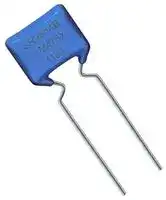
Illustrative purposes only

B72527G3200K
VARISTOR, 90V, Radial Leaded
⚠️ Reference pricing provided. In case of supply shortages, we will connect you with our trusted procurement partners to ensure your project's continuity.
- Manufacturer: EPCOS
- Product type: TVS Varistors
- Product Range: SHCV Series
- Varistor Type: Metal Oxide Varistor (MOV)
- Voltage Rating VAC: 20V
- Voltage Rating VDC: 26V
- Varistor Case Style: Radial Leaded
- Clamping Voltage Vc Max: 90V
- Peak Energy (10/1000uS): 700mJ
- Operating Temperature Max: 125°C
- Operating Temperature Min: -55°C
- Peak Surge Current @ 8/20µs: 200A
| Delivery and price | |
|---|---|
| Units per pack | 500 |
| Price | 0.609 € |
| Current stock | 1000+ |
| Lead time | 7 days |
Datasheet

## **Ceramic transient voltage suppressors**

Leaded transient voltage/RFI suppressors (SHCVs)

## **Series/Type:**

Date: August 2011

© EPCOS AG 2011. Reproduction, publication and dissemination of this publication, enclosures hereto and the information contained therein without EPCOS' prior express consent is prohibited.

**Leaded transient voltage/RFI suppressors (SHCVs) SHCV series**

## **EPCOS type designation system for leaded transient voltage / RFI suppressors**

|SR||1||S||14||B||M||474||X||G|
|---|---|---|---|---|---|---|---|---|---|---|---|---|---|---|---|---|
||||||||||||||||||
|**SR**�**Leaded,**<br>**SHCV series**|||||||||||||||||
||||||||||||||||||
|**EIA case sizes of u**<br>6�12 x 06 / 3.2 x<br>1�18 x 12 / 4.5 x<br>2�22 x 20 / 5.7 x||**sed chips:**<br>1.6 mm<br>3.2 mm<br>5.0 mm|||||||||||||||
||||||||||||||||||
|**Varistor voltage to**<br>K�±10%<br>S�Special toleran||**lerance:**<br>ce|||||||||||||||
||||||||||||||||||
|**Maximum RMS operating voltage (VRMS):**<br>14�14 V|||||||||||||||||
||||||||||||||||||
|**Special varistor voltage tolerance:**<br>B�Special tolerance|||||||||||||||||
||||||||||||||||||
|**Capacitance tolerance:**<br>M�±20%|||||||||||||||||
||||||||||||||||||
|**Capacitance value:**<br>474�47�104 pF�0.47 µF|||||||||||||||||
||||||||||||||||||
|**Capacitor ceramic:**<br>X�X7R|||||||||||||||||
||||||||||||||||||
|**Taping mode:**<br>G�Taped version<br>��Bulk|||||||||||||||||


Please read _Cautions and warnings_ and _Important notes_ at the end of this document.

Page 2 of 29

## **Leaded transient voltage/RFI suppressors (SHCVs) SHCV series**

## **Features**

RFI noise suppression and transient overvoltage protection integrated in a single component

Reliable protection against automotive transients such as load dump and jump start (for SR1 and SR2 types)

High capacitance (up to 4.7 µF)

Low clamping voltage RoHS-compatible Suitable for lead-free soldering PSpice simulation models available

## **Applications**

RFI noise suppression and transient overvoltage protection on DC lines of small motors, windscreen wipers, window lifters, mirrors, central locking, memory seat, sunroof

## **Design**

Combination of multilayer RF filter capacitor and multilayer varistor

Coating: flame-retardant to UL 94 V0, epoxy resin

Terminals: tinned iron wire, RoHS-compatible

## **V/I characteristics and derating curves**

V/I and derating curves are attached to the data sheet. The curves are sorted by VRMS and then by case size, which is included in the type designation.

## **General technical data**

Maximum RMS operating voltage VRMS,max 14 ... 35 V Maximum DC operating voltage VDC,max 16 ... 45 V Maximum surge current (8/20 µs) Isurge,max 100 ... 1200 A Maximum load dump energy (10 pulses) WLD 1.5 ... 12 J Maximum jump start voltage (5 min) Vjump 24.5 ... 26 V Maximum clamping voltage (8/20 µs) Vclamp,max 38 ... 90 V Nominal capacitance (1 kHz, 0.5 V) Cnom 220 ... 4700 nF Insulation resistance Rins ≥ 10 M Ω Response time tresp < 25 ns Operating temperature Top 55/+125 ° C Storage temperature LCT/UCT 55/+150 ° C Please read _Cautions and warnings_ and Page 3 of 29 _Important notes_ ~~[I]~~ at the end of this document.

**Leaded transient voltage/RFI suppressors (SHCVs) SHCV series**

## **Temperature derating**

Climatic category: �55/+125 ° C

Please read _Cautions and warnings_ and _Important notes_ at the end of this document.

Page 4 of 29

## **Leaded transient voltage/RFI suppressors (SHCVs) SHCV series**

## **Electrical specifications and ordering codes**

**Maximum ratings (Top,max = 125** ° **C)**

|**Maximum ratings (**|**Top,max = 125**°**C)**|||||||
|---|---|---|---|---|---|---|---|
|Type|Ordering code|VRMS,max<br>V|VDC,max<br>V|Isurge,max<br>(8/20 µs)<br>A|Wmax<br>(2 ms)<br>mJ|WLD<br>(10<br>pulses)<br>J|Pdiss,max<br>mW|
|SR1S14BM105X<br>SR1S14BM155X<br>SR1S14BM474X<br>SR2S14BM155X<br>SR2S14BM474X<br>SR2S14BM475X<br>SR6K14M224X<br>SR1K20M105X<br>SR1K20M155X<br>SR1K20M225X<br>SR1K20M474X<br>SR2K20M105X<br>SR2K20M474X<br>SR6K20M105X<br>SR6K35M105X<br>SR6K35M474X|B72587G3140S200<br>B72587H3140S200<br>B72587E3140S200<br>B72547H3140S200<br>B72547E3140S200<br>B72547L3140S200<br>B72527C3140K000<br>B72587G3200K000<br>B72587H3200K000<br>B72587J3200K000<br>B72587E3200K000<br>B72547G3200K000<br>B72547E3200K000<br>B72527G3200K000<br>B72527G3350K000<br>B72527E3350K000|14<br>14<br>14<br>14<br>14<br>14<br>14<br>20<br>20<br>20<br>20<br>20<br>20<br>20<br>35<br>35|16<br>16<br>16<br>16<br>16<br>16<br>18<br>26<br>26<br>26<br>26<br>26<br>26<br>26<br>45<br>45|800<br>800<br>800<br>1200<br>1200<br>1200<br>200<br>800<br>800<br>800<br>800<br>1200<br>1200<br>200<br>100<br>100|2400<br>2400<br>2400<br>5800<br>5800<br>5800<br>500<br>3000<br>3000<br>3000<br>3000<br>7800<br>7800<br>700<br>400<br>400|6<br>6<br>6<br>12<br>12<br>12<br>1.5<br>6<br>6<br>6<br>6<br>12<br>12<br>1.5<br>1.5<br>1.5|15<br>15<br>15<br>30<br>30<br>30<br>8<br>15<br>15<br>15<br>15<br>30<br>30<br>8<br>8<br>8|


**Characteristics (TA = 25** ° **C)**

|Type|VV<br>(1 mA)<br>V|∆VV<br>%|Vjump<br>(5 min)<br>V|Vclamp,max<br>V|Iclamp<br>(8/20 µs)<br>A|<br>Cnom<br>(1 kHz, 0.5 V)<br>nF|∆Cnom<br>%|
|---|---|---|---|---|---|---|---|
|SR1S14BM105X<br>SR1S14BM155X<br>SR1S14BM474X<br>SR2S14BM155X<br>SR2S14BM474X<br>SR2S14BM475X<br>SR6K14M224X<br>SR1K20M105X<br>SR1K20M155X<br>SR1K20M225X<br>SR1K20M474X<br>SR2K20M105X<br>SR2K20M474X<br>SR6K20M105X<br>SR6K35M105X<br>SR6K35M474X|22<br>22<br>22<br>22<br>22<br>22<br>22<br>33<br>33<br>33<br>33<br>33<br>33<br>33<br>56<br>56|+23/�0<br>+23/�0<br>+23/�0<br>+23/�0<br>+23/�0<br>+23/�0<br>±10<br>±10<br>±10<br>±10<br>±10<br>±10<br>±10<br>±10<br>±10<br>±10|24.5<br>24.5<br>24.5<br>24.5<br>24.5<br>24.5<br>-<br>26<br>26<br>26<br>26<br>26<br>26<br>-<br>-<br>-|40<br>40<br>40<br>40<br>40<br>40<br>38<br>58<br>58<br>58<br>58<br>58<br>58<br>54<br>90<br>90|5<br>5<br>5<br>10<br>10<br>10<br>1<br>5<br>5<br>5<br>5<br>10<br>10<br>1<br>1<br>1|1000<br>1500<br>470<br>1500<br>470<br>4700<br>220<br>1000<br>1500<br>2200<br>470<br>1000<br>470<br>1000<br>1000<br>470|±20<br>±20<br>±20<br>±20<br>±20<br>±20<br>±20<br>±20<br>±20<br>±20<br>±20<br>±20<br>±20<br>±20<br>±20<br>±20|


Please read _Cautions and warnings_ and _Important notes_ at the end of this document.

Page 5 of 29

## **Leaded transient voltage/RFI suppressors (SHCVs) SHCV series**

## **Dimensional drawing**

**==> picture [59 x 103] intentionally omitted <==**

**==> picture [99 x 55] intentionally omitted <==**

## Dimensions in mm

|Dimensions in mm||||
|---|---|---|---|
|Type<br>SHCV|wmax|hmax|smax|
|SR1 ... 474X|7.3|7.8|3.7|
|SR1 ... 105X|7.3|7.8|3.7|
|SR1 ... 155X|7.3|7.8|3.7|
|SR1 ... 225X|7.3|7.8|4.1|
|SR2 ... 474X|7.8|9.0|3.6|
|SR2 ... 105X|7.8|9.0|4.1|
|SR2 ... 155X|7.8|9.0|4.1|
|SR2 ... 475X|7.8|9.0|4.1|
|SR6 ...|6.0|7.5|4.5|


## **Delivery mode**

|**Designation**|**Taping mode**|**Ordering code, last two digits**|
|---|---|---|
||Bulk|B725*******00**|
|G|Taped on reel|B725*******51**|
|GA|Taped in AMMOpack|B725*******54**|
|M14|Lead length 14 mm|B725*******33**|


Standard delivery mode for SHCV types is bulk. Taped versions on reel, AMMO pack and special lead length available upon request.

For further information on taping please contact EPCOS.

Packing units for:

|ype|Pieces|
|---|---|
|SR6|2000|
|SR1 / SR2|1000|


Please read _Cautions and warnings_ and _Important notes_ at the end of this document.

Page 6 of 29

**Leaded transient voltage/RFI suppressors (SHCVs) SHCV series**

## **Typical characteristics**

Capacitance change ∆ C/C25 versus temperature T

**==> picture [157 x 183] intentionally omitted <==**

## **Note:**

The capacitance and the dissipation factor shall meet the specified values 1000 hours after the last heat treatment above the curie temperature.

Please read _Cautions and warnings_ and _Important notes_ at the end of this document.

Page 7 of 29

**Leaded transient voltage/RFI suppressors (SHCVs) SHCV series**

## **V/I characteristics**

SR1S14B*

SR2S14B*

Please read _Cautions and warnings_ and _Important notes_ at the end of this document.

Page 8 of 29

**Leaded transient voltage/RFI suppressors (SHCVs) SHCV series**

## **V/I characteristics**

SR6K14*

SR1K20*

Please read _Cautions and warnings_ and _Important notes_ at the end of this document.

Page 9 of 29

**Leaded transient voltage/RFI suppressors (SHCVs) SHCV series**

## **V/I characteristics**

SR2K20*

SR6K20*

Please read _Cautions and warnings_ and _Important notes_ at the end of this document.

Page 10 of 29

**Leaded transient voltage/RFI suppressors (SHCVs) SHCV series**

## **V/I characteristics**

SR6K35*

Please read _Cautions and warnings_ and _Important notes_ at the end of this document.

Page 11 of 29

**Leaded transient voltage/RFI suppressors (SHCVs) SHCV series**

## **Derating curves**

Maximum surge current Isurge,max = f (tr, pulse train) For explanation of the derating curves refer to "General technical information", chapter 2.7.2

## SHCV-SR1 ...

SHCV-SR2 ...

Please read _Cautions and warnings_ and Page 12 of 29 _Important notes_ at the end of this document.

**Leaded transient voltage/RFI suppressors (SHCVs) SHCV series**

## **Derating curves**

Maximum surge current Isurge,max = f (tr, pulse train) For explanation of the derating curves refer to "General technical information", chapter 2.7.2

## SR6K14 , SR6K20

SR6K35 ...

Please read _Cautions and warnings_ and Page 13 of 29 _Important notes_ at the end of this document.

**Leaded transient voltage/RFI suppressors (SHCVs) SHCV series**

## **Soldering directions**

## **1 Terminations**

## **1.1 Nickel barrier termination**

The nickel barrier layer of the silver/nickel/tin termination prevents leaching of the silver base metallization layer. This allows great flexibility in the selection of soldering parameters. The tin prevents the nickel layer from oxidizing and thus ensures better wetting by the solder. The nickel barrier termination is suitable for all commonly-used soldering methods.

**==> picture [232 x 139] intentionally omitted <==**

Multilayer CTVS: Structure of nickel barrier termination

## **1.2 Silver-palladium termination**

Silver-palladium terminations are used for the large case sizes 1812 and 2220 and for chips intended for conductive adhesion. This metallization improves the resistance of large chips to thermal shock.

In case of conductive adhesion, the silver-palladium metallization reduces susceptibility to corrosion. Silver-palladium termination can be used for smaller case sizes (only chip) for hybrid applications as well. The silver-palladium termination is not approved for lead-free soldering.

**==> picture [178 x 84] intentionally omitted <==**

Multilayer varistor: Structure of silver-palladium termination

Please read _Cautions and warnings_ and _Important notes_ at the end of this document.

Page 14 of 29

**Leaded transient voltage/RFI suppressors (SHCVs) SHCV series**

## **1.3 Silver-platinum termination**

Silver-platinum terminations are mainly used for the large case sizes 1812 and 2220. The silverplatinum termination is approved for reflow soldering, SnPb soldering and lead-free soldering with a silver containing solder paste. In case of SnPb soldering, a solder paste Sn62Pb36Ag2 is recommended. For lead-free reflow soldering, a solder paste SAC, e.g. Sn95.5Ag3.8Cu0.7, is recommended.

**==> picture [178 x 85] intentionally omitted <==**

Multilayer varistor: Structure of silver-platinum termination

## **2 Recommended soldering temperature profiles**

## **2.1 Reflow soldering temperature profile**

**Recommended temperature characteristic for reflow soldering following JEDEC J-STD-020D**

**==> picture [135 x 87] intentionally omitted <==**

Please read _Cautions and warnings_ and _Important notes_ at the end of this document.

Page 15 of 29

## **Leaded transient voltage/RFI suppressors (SHCVs) SHCV series**

|**Profile feature**|**Sn-Pb eutectic assembly**|**Pb-free assembly**|
|---|---|---|
|Preheat and soak<br>- Temperature min<br>Tsmin<br>- Temperature max<br>Tsmax<br>- Time<br>tsmint|100°C<br>150°C<br>o tsmax<br>60 ... 120 s|150°C<br>200°C<br>60 ... 180 s|
|Average ramp-uprate<br>Tsmax|to Tp<br>3°C/ s max.|3°C/ s max.|
|Liquidous temperature<br>TL<br>Time at liquidous<br>tL|183°C<br>60 ... 150 s|217°C<br>60 ... 150 s|
|Peakpackage bodytemperature<br>Tp1)|220°C ... 235°C2)|245°C ... 260°C2)|
|Time (tP)3) within 5°C of specified<br>classification temperature(Tc)|20 s3)|30 s3)|
|Average ramp-down rate<br>Tpto|Tsmax<br>6°C/ s max.|6°C/ s max.|
|Time 25°C topeak temperature|maximum 6 min|maximum 8 min|


1) Tolerance for peak profile temperature (TP) is defined as a supplier minimum and a user maximum.

2) Depending on package thickness. For details please refer to JEDEC J-STD-020D.

3) Tolerance for time at peak profile temperature (tP) is defined as a supplier minimum and a user maximum.

**Note:** All temperatures refer to topside of the package, measured on the package body surface. Number of reflow cycles: 3

## **2.2 Wave soldering temperature profile**

Temperature characteristics at component terminal with dual-wave soldering

**==> picture [301 x 158] intentionally omitted <==**

Please read _Cautions and warnings_ and _Important notes_ at the end of this document.

Page 16 of 29

**Leaded transient voltage/RFI suppressors (SHCVs) SHCV series**

## **2.3 Lead-free soldering processes**

EPCOS multilayer CTVS with AgNiSn termination are designed for the requirements of lead-free soldering processes only.

Soldering temperature profiles to JEDEC J-STD-020D, IEC 60068-2-58 and ZVEI recommendations.

## **3 Recommended soldering methods - type-specific releases by EPCOS**

## **3.1 Overview**

|||Reflow soldering|Reflow soldering|Wave soldering|Wave soldering|
|---|---|---|---|---|---|
|Type|Case size|SnPb|Lead-free|SnPb|Lead-free|
|CT... / CD...|0201/ 0402|Approved|Approved|No|No|
|CT... / CD...|0603 ... 2220|Approved|Approved|Approved|Approved|
|CN...|0603 ... 2220|Approved|No|Approved|No|
|CN...K2|1812, 2220|Approved|Approved|No|No|
|Arrays|0405 ... 1012|Approved|Approved|No|No|
|ESD/EMI filters|0405, 0508|Approved|Approved|No|No|
|CU|3225, 4032|Approved|Approved|Approved|Approved|
|SHCV|-|No|No|Approved|Approved|


## **3.2 Nickel barrier and AgPt terminated multilayer CTVS**

All EPCOS MLVs with nickel barrier and AgPt termination are suitable and fully qualiyfied for leadfree soldering. The nickel barrier layer is 100% matte tin-plated.

## **3.3 Silver-palladium terminated MLVs**

AgPd-terminated MLVs are mainly designed for conductive adhesion technology on hybrid material. Additionally MLVs with AgPd termination are suitable for reflow and wave soldering with SnPb solder.

## **Note:**

Lead-free soldering is not approved for MLVs with AgPd termination.

## **3.4 Silver-platinum terminated MLVs**

The silver-platinum termination is approved for reflow soldering, SnPb soldering and lead-free with a silver containing solder paste. In case of SnPb soldering, a solder paste Sn62Pb36Ag2 is recommended. For lead-free reflow soldering, a solder paste SAC, e.g. Sn95.5Ag3.8Cu0.7, is recommended.

Please read _Cautions and warnings_ and _Important notes_ at the end of this document.

Page 17 of 29

**Leaded transient voltage/RFI suppressors (SHCVs) SHCV series**

## **3.5 Tinned copper alloy**

All EPCOS CU types with tinned termination are approved for lead-free and SnPb soldering.

## **3.6 Tinned iron wire**

All EPCOS SHCV types with tinned termination are approved for lead-free and SnPb soldering.

## **4 Solder joint profiles / solder quantity**

## **4.1 Nickel barrier termination**

If the meniscus height is too low, that means the solder quantity is too low, the solder joint may break, i.e. the component becomes detached from the joint. This problem is sometimes interpreted as leaching of the external terminations.

If the solder meniscus is too high, i.e. the solder quantity is too large, the vise effect may occur. As the solder cools down, the solder contracts in the direction of the component. If there is too much solder on the component, it has no leeway to evade the stress and may break, as in a vise.

The figures below show good and poor solder joints for dual-wave and infrared soldering.

## **4.1.1 Solder joint profiles for nickel barrier termination - dual-wave soldering**

**==> picture [121 x 67] intentionally omitted <==**

**==> picture [129 x 80] intentionally omitted <==**

Good and poor solder joints caused by amount of solder in dual-wave soldering.

## **4.1.2 Solder joint profiles for nickel barrier termination / silver-palladium / silver-platinum termination - reflow soldering**

**==> picture [152 x 70] intentionally omitted <==**

**==> picture [129 x 84] intentionally omitted <==**

Please read _Cautions and warnings_ and _Important notes_ at the end of this document.

Page 18 of 29

## **Leaded transient voltage/RFI suppressors (SHCVs) SHCV series**

**==> picture [128 x 66] intentionally omitted <==**

**==> picture [140 x 63] intentionally omitted <==**

Good and poor solder joints caused by amount of solder in reflow soldering.

## **5 Conductive adhesion**

**==> picture [229 x 91] intentionally omitted <==**

Attaching surface-mounted devices (SMDs) with electrically conductive adhesives is a commercially attractive method of component connection to supplement or even replace conventional soldering methods.

Electrically conductive adhesives consist of a non-conductive plastic (epoxy resin, polyimide or silicon) in which electrically conductive metal particles (gold, silver, palladium, nickel, etc) are embedded. Electrical conduction is effected by contact between the metal particles.

Adhesion is particularly suitable for meeting the demands of hybrid technology. The adhesives can be deposited ready for production requirements by screen printing, stamping or by dispensers. As shown in the following table, conductive adhesion involves two work operations fewer than soldering.

|than soldering.|||
|---|---|---|
|**Reflow soldering**|**Wave soldering**|**Conductive adhesion**|
|Screen-print solderpaste|Apply glue dot|Screen-print conductive adhesive|
|Mount SMD|Mount SMD|Mount SMD|
|Predrysolderpaste|Cureglue|Cure adhesive|
|Reflow soldering|Wave soldering|Inspect|
|Wash|Wash||
|Inspect|Inspect||


Please read _Cautions and warnings_ and _Important notes_ at the end of this document.

Page 19 of 29

**Leaded transient voltage/RFI suppressors (SHCVs) SHCV series**

A further advantage of adhesion is that the components are subjected to virtually no temperature shock at all. The curing temperatures of the adhesives are between 120 ° C and 180 ° C, typical curing times are between 30 minutes and one hour.

The bending strength of glued chips is, in comparison with that of soldered chips, higher by a factor of at least 2, as is to be expected due to the elasticity of the glued joints.

The lower conductivity of conductive adhesive may lead to higher contact resistance and thus result in electrical data different to those of soldered components. Users must pay special attention to this in RF applications.

## **6 Solderability tests**

|Test|Standard|Test conditions<br>Sn-Pb soldering|Test conditions<br>Pb-free soldering|Criteria/ test results|
|---|---|---|---|---|
|Wettability|IEC<br>60068-2-58|Immersion in<br>60/40 SnPb solder<br>using non-activated<br>flux at 215±3°C<br>for 3±0.3 s|Immersion in<br>Sn96.5Ag3.0Cu0.5<br>solder using non- or<br>low activated flux<br>at 245±5°C<br>for 3±0.3 s|Covering of 95% of<br>end termination,<br>checked by visual<br>inspection|
|Leaching<br>resistance|IEC<br>60068-2-58|Immersion in<br>60/40 SnPb<br>solder using<br>mildly activated flux<br>without preheating<br>at 260±5°C<br>for 10±1 s|Immersion in<br>Sn96.5Ag3.0Cu0.5<br>solder using non- or<br>low activated flux<br>without preheating<br>at 255±5°C<br>for 10±1 s|No leaching of<br>contacts|
|Thermal shock<br>(solder shock)||Dip soldering at<br>300°C/5 s|Dip soldering at<br>300°C/5 s|No deterioration of<br>electrical parameters.<br>Capacitance change:<br>≤±15%|
|Tests of resistance<br>to soldering heat<br>for SMDs|IEC<br>60068-2-58|Immersion in<br>60/40 SnPb for 10 s<br>at 260°C|Immersion in<br>Sn96.5Ag3.0Cu0.5<br>for 10 s at 260°C|Change of varistor<br>voltage:<br>≤±5%|
|Tests of resistance<br>to soldering heat<br>for radial leaded<br>components<br>(SHCV)|IEC<br>60068-2-20|Immersion<br>of leads in<br>60/40 SnPb<br>for 10 s at 260°C|Immersion<br>of leads in<br>Sn96.5Ag3.0Cu0.5<br>for 10 s at 260°C|Change of varistor<br>voltage:≤±5%<br>Change of<br>capacitance X7R:<br>≤�5/+10%|


Please read _Cautions and warnings_ and _Important notes_ at the end of this document.

Page 20 of 29

**Leaded transient voltage/RFI suppressors (SHCVs) SHCV series**

## **Note: Leaching of the termination**

Effective area at the termination might be lost if the soldering temperature and/or immersion time are not kept within the recommended conditions. Leaching of the outer electrode should not exceed 25% of the chip end area (full length of the edge A-B-C-D) and 25% of the length A-B, shown below as mounted on substrate.

As a single chip

As mounted on substrate

## **7 Notes for proper soldering**

## **7.1 Preheating and cooling**

**==> picture [5 x 5] intentionally omitted <==**

According to JEDEC J-STD-020D. Please refer to chapter 2.

## **7.2 Repair / rework**

Manual soldering with a soldering iron must be avoided, hot-air methods are recommended for rework purposes.

## **7.3 Cleaning**

All environmentally compatible agents are suitable for cleaning. Select the appropriate cleaning solution according to the type of flux used. The temperature difference between the components and cleaning liquid must not be greater than 100 ° C. Ultrasonic cleaning should be carried out with the utmost caution. Too high ultrasonic power can impair the adhesive strength of the metallized surfaces.

## **7.4 Solder paste printing (reflow soldering)**

An excessive application of solder paste results in too high a solder fillet, thus making the chip more susceptible to mechanical and thermal stress. Too little solder paste reduces the adhesive strength on the outer electrodes and thus weakens the bonding to the PCB. The solder should be applied smoothly to the end surface.

Please read _Cautions and warnings_ and _Important notes_ at the end of this document.

Page 21 of 29

**Leaded transient voltage/RFI suppressors (SHCVs) SHCV series**

## **7.5 Adhesive application**

Thin or insufficient adhesive causes chips to loosen or become disconnected during curing. Low viscosity of the adhesive causes chips to slip after mounting. It is advised to consult the manufacturer of the adhesive on proper usage and amounts of adhesive to use.

## **7.6 Selection of flux**

Used flux should have less than or equal to 0.1 wt % of halogenated content, since flux residue after soldering could lead to corrosion of the termination and/or increased leakage current on the surface of the component. Strong acidic flux must not be used. The amount of flux applied should be carefully controlled, since an excess may generate flux gas, which in turn is detrimental to solderability.

## **7.7 Storage of CTVSs**

Solderability is guaranteed for one year from date of delivery for multilayer varistors, CeraDiodes and ESD/EMI filters (half a year for chips with AgPd and AgPt terminations) and two years for SHCV and CU components, provided that components are stored in their original packages. Storage temperature: �25 ° C to +45 ° C Relative humidity: ≤ 75% annual average, ≤ 95% on 30 days a year

The solderability of the external electrodes may deteriorate if SMDs and leaded components are stored where they are exposed to high humidity, dust or harmful gas (hydrogen chloride, sulfurous acid gas or hydrogen sulfide).

Do not store SMDs and leaded components where they are exposed to heat or direct sunlight. Otherwise the packing material may be deformed or SMDs/ leaded components may stick together, causing problems during mounting.

After opening the factory seals, such as polyvinyl-sealed packages, it is recommended to use the SMDs or leaded components as soon as possible.

## **7.8 Placement of components on circuit board**

Especially in the case of dual-wave soldering, it is of advantage to place the components on the board before soldering in that way that their two terminals do not enter the solder bath at different times.

Ideally, both terminals should be wetted simultaneously.

## **7.9 Soldering cautions**

**==> picture [5 x 5] intentionally omitted <==**

**==> picture [5 x 5] intentionally omitted <==**

**==> picture [5 x 5] intentionally omitted <==**

An excessively long soldering time or high soldering temperature results in leaching of the outer electrodes, causing poor adhesion and a change of electrical properties of the varistor due to the loss of contact between electrodes and termination. Wave soldering must not be applied for MLVs designated for reflow soldering only. Keep the recommended down-cooling rate.

Please read _Cautions and warnings_ and _Important notes_ at the end of this document.

Page 22 of 29

**Leaded transient voltage/RFI suppressors (SHCVs) SHCV series**

## **7.10 Standards**

CECC 00802 IEC 60068-2-58 IEC 60068-2-20 JEDEC J-STD-020D

Please read _Cautions and warnings_ and _Important notes_ at the end of this document.

Page 23 of 29

## **Leaded transient voltage/RFI suppressors (SHCVs) SHCV series**

|**Symbols and**|**terms**|
|---|---|
|Symbol|Term|
|Cline,typ<br>Cmax<br>Cmin<br>Cnom<br>∆Cnom<br>Ctyp<br>fcut-off,min<br>I<br>Iclamp<br>Ileak<br>Ileak,typ<br>IPP<br>Isurge,max<br>LCT<br>Ltyp<br>Pdiss,max<br>PPP<br>Rins<br>Rmin<br>RS<br>TA<br>Top<br>Tstg<br>tr<br>tresp<br>UCT<br>V<br>VBR,min<br>Vclamp,max<br>VDC,max<br>VESD,air<br>VESD,contact<br>Vjump|Typical capacitance per line<br>Maximum capacitance<br>Minimum capacitance<br>Nominal capacitance<br>Tolerance of nominal capacitance<br>Typical capacitance<br>Minimum cut-off frequency<br>Current<br>Clamping current<br>Leakage current<br>Typical leakage current<br>Peak pulse current<br>Maximum surge current (also termed peak current)<br>Lower category temperature<br>Typical inductance<br>Maximum power dissipation<br>Peak pulse power<br>Insulation resistance<br>Minimum resistance<br>Resistance per line<br>Ambient temperature<br>Operating temperature<br>Storage temperature<br>Duration of equivalent rectangular wave<br>Response time<br>Upper category temperature<br>Voltage<br>Minimum breakdown voltage<br>Maximum clamping voltage<br>Maximum DC operating voltage (also termed working voltage)<br>Air discharge ESD capability<br>Contact discharge ESD capability<br>Maximumjumpstart voltage|


Please read _Cautions and warnings_ and _Important notes_ at the end of this document.

Page 24 of 29

## **Leaded transient voltage/RFI suppressors (SHCVs) SHCV series**

|VRMS,max<br>VV<br>VV,min<br>VV,max<br>∆VV<br>WLD<br>Wmax<br>αtyp<br>�*�|Maximum AC operating voltage, root-mean-square value<br>Varistor voltage (also termed breakdown voltage)<br>Minimum varistor voltage<br>Maximum varistor voltage<br>Tolerance of varistor voltage<br>Maximum load dump<br>Maximum energy absorption (also termed transient energy)<br>Typical insertion loss<br>Lead spacing<br>Maximumpossible application conditions|
|---|---|


All dimensions are given in mm. The commas used in numerical values denote decimal points.

Please read _Cautions and warnings_ and _Important notes_ at the end of this document.

Page 25 of 29

**Leaded transient voltage/RFI suppressors (SHCVs) SHCV series**

## **Cautions and warnings**

## **General**

Some parts of this publication contain statements about the suitability of our ceramic transient voltage suppressor (CTVS) components (multilayer varistors (MLVs), CeraDiodes, ESD/EMI filters, SMD disk varistors (CU types), leaded transient voltage/ RFI suppressors (SHCV types)) for certain areas of application, including recommendations about incorporation/design-in of these products into customer applications. The statements are based on our knowledge of typical requirements often made of our CTVS devices in the particular areas. We nevertheless expressly point out that such statements cannot be regarded as binding statements about the suitability of our CTVS components for a particular customer application. As a rule, EPCOS is either unfamiliar with individual customer applications or less familiar with them than the customers themselves. For these reasons, it is always incumbent on the customer to check and decide whether the CTVS devices with the properties described in the product specification are suitable for use in a particular customer application.

**==> picture [5 x 5] intentionally omitted <==**

**==> picture [5 x 5] intentionally omitted <==**

**==> picture [5 x 5] intentionally omitted <==**

- Do not use EPCOS CTVS components for purposes not identified in our specifications, application notes and data books.

- Ensure the suitability of a CTVS in particular by testing it for reliability during design-in. Always evaluate a CTVS component under worst-case conditions.

- Pay special attention to the reliability of CTVS devices intended for use in safety-critical applications (e.g. medical equipment, automotive, spacecraft, nuclear power plant).

## **Design notes**

**==> picture [5 x 5] intentionally omitted <==**

**==> picture [5 x 5] intentionally omitted <==**

**==> picture [5 x 5] intentionally omitted <==**

**==> picture [5 x 5] intentionally omitted <==**

**==> picture [5 x 5] intentionally omitted <==**

**==> picture [5 x 5] intentionally omitted <==**

Always connect a CTVS in parallel with the electronic circuit to be protected.

- Consider maximum rated power dissipation if a CTVS has insufficient time to cool down between a number of pulses occurring within a specified isolated time period. Ensure that electrical characteristics do not degrade.

- Consider derating at higher operating temperatures. Choose the highest voltage class compatible with derating at higher temperatures.

- Surge currents beyond specified values will puncture a CTVS. In extreme cases a CTVS will burst.

- If steep surge current edges are to be expected, make sure your design is as low-inductance as possible.

- In some cases the malfunctioning of passive electronic components or failure before the end of their service life cannot be completely ruled out in the current state of the art, even if they are operated as specified. In applications requiring a very high level of operational safety and especially when the malfunction or failure of a passive electronic component could endanger human life or health (e.g. in accident prevention, life-saving systems, or automotive battery line applications such as clamp 30), ensure by suitable design of the application or other measures (e.g. installation of protective circuitry or redundancy) that no injury or damage is sustained by third parties in the event of such a malfunction or failure. Only use CTVS components from the automotive series in safety-relevant applications.

Please read _Cautions and warnings_ and _Important notes_ at the end of this document.

Page 26 of 29

## **Leaded transient voltage/RFI suppressors (SHCVs) SHCV series**

**==> picture [5 x 5] intentionally omitted <==**

- Specified values only apply to CTVS components that have not been subject to prior electrical, mechanical or thermal damage. The use of CTVS devices in line-to-ground applications is therefore not advisable, and it is only allowed together with safety countermeasures like thermal fuses.

## **Storage**

**==> picture [5 x 5] intentionally omitted <==**

**==> picture [5 x 5] intentionally omitted <==**

**==> picture [5 x 5] intentionally omitted <==**

**==> picture [5 x 5] intentionally omitted <==**

**==> picture [5 x 5] intentionally omitted <==**

**==> picture [5 x 5] intentionally omitted <==**

**==> picture [5 x 5] intentionally omitted <==**

- Only store CTVS in their original packaging. Do not open the package before storage. Storage conditions in original packaging: temperature �25 to +45 ° C, relative humidity ≤ 75% annual average, maximum 95%, dew precipitation is inadmissible.

- Do not store CTVS devices where they are exposed to heat or direct sunlight. Otherwise the packaging material may be deformed or CTVS may stick together, causing problems during mounting.

- Avoid contamination of the CTVS surface during storage, handling and processing. Avoid storing CTVS devices in harmful environments where they are exposed to corrosive gases for example (SOx, Cl).

- Use CTVS as soon as possible after opening factory seals such as polyvinyl-sealed packages. Solder CTVS components after shipment from EPCOS within the time specified:

- CTVS with Ni barrier termination, 12 months

- CTVS with AgPd and AgPt termination, 6 months

- SHCV and CU series, 24 months

## **Handling**

**==> picture [5 x 5] intentionally omitted <==**

**==> picture [5 x 5] intentionally omitted <==**

**==> picture [5 x 5] intentionally omitted <==**

- Do not drop CTVS components and allow them to be chipped. Do not touch CTVS with your bare hands - gloves are recommended. Avoid contamination of the CTVS surface during handling.

## **Mounting**

**==> picture [5 x 5] intentionally omitted <==**

**==> picture [5 x 5] intentionally omitted <==**

**==> picture [5 x 5] intentionally omitted <==**

**==> picture [5 x 5] intentionally omitted <==**

**==> picture [5 x 5] intentionally omitted <==**

**==> picture [5 x 5] intentionally omitted <==**

- When CTVS devices are encapsulated with sealing material or overmolded with plastic material, electrical characteristics might be degraded and the life time reduced. Make sure an electrode is not scratched before, during or after the mounting process.

- Make sure contacts and housings used for assembly with CTVS components are clean before mounting.

- The surface temperature of an operating CTVS can be higher. Ensure that adjacent components are placed at a sufficient distance from a CTVS to allow proper cooling. Avoid contamination of the CTVS surface during processing.

- Multilayer varistors (MLVs) with AgPd termination are not approved for lead-free soldering.

## **Soldering**

**==> picture [5 x 5] intentionally omitted <==**

**==> picture [5 x 5] intentionally omitted <==**

**==> picture [5 x 5] intentionally omitted <==**

**==> picture [5 x 5] intentionally omitted <==**

- Complete removal of flux is recommended to avoid surface contamination that can result in an instable and/or high leakage current.

- Use resin-type or non-activated flux.

- Bear in mind that insufficient preheating may cause ceramic cracks.

- Rapid cooling by dipping in solvent is not recommended, otherwise a component may crack.

Please read _Cautions and warnings_ and _Important notes_ at the end of this document.

Page 27 of 29

**Leaded transient voltage/RFI suppressors (SHCVs) SHCV series**

## **Conductive adhesive gluing**

**==> picture [5 x 5] intentionally omitted <==**

Only multilayer varistors (MLVs) with an AgPd termination are approved for conductive adhesive gluing.

## **Operation**

**==> picture [5 x 5] intentionally omitted <==**

**==> picture [5 x 5] intentionally omitted <==**

**==> picture [5 x 5] intentionally omitted <==**

**==> picture [5 x 5] intentionally omitted <==**

**==> picture [5 x 5] intentionally omitted <==**

**==> picture [5 x 5] intentionally omitted <==**

Use CTVS only within the specified operating temperature range.

- Use CTVS only within specified voltage and current ranges.

- Environmental conditions must not harm a CTVS. Only use them in normal atmospheric conditions. Reducing the atmosphere (e.g. hydrogen or nitrogen atmosphere) is prohibited. Prevent a CTVS from contacting liquids and solvents. Make sure that no water enters a CTVS (e.g. through plug terminals).

Avoid dewing and condensation.

- EPCOS CTVS components are mainly designed for encased applications. Under all circumstances avoid exposure to:

- direct sunlight

- rain or condensation

- steam, saline spray

- corrosive gases

- atmosphere with reduced oxygen content

**==> picture [5 x 5] intentionally omitted <==**

**==> picture [5 x 5] intentionally omitted <==**

- EPCOS CTVS devices are not suitable for switching applications or voltage stabilization where static power dissipation is required.

- Multilayer varistors (MLVs) are designed for ESD protection and transient suppression. CeraDiodes are designed for ESD protection only, ESD/EMI filters are designed for ESD and EMI protection only.

This listing does not claim to be complete, but merely reflects the experience of EPCOS AG.

Please read _Cautions and warnings_ and _Important notes_ at the end of this document.

Page 28 of 29

## **Important notes**

The following applies to all products named in this publication:

1. Some parts of this publication contain **statements about the suitability of our products for certain areas of application** . These statements are based on our knowledge of typical requirements that are often placed on our products in the areas of application concerned. We nevertheless expressly point out **that such statements cannot be regarded as binding statements about the suitability of our products for a particular customer application** . As a rule, EPCOS is either unfamiliar with individual customer applications or less familiar with them than the customers themselves. For these reasons, it is always ultimately incumbent on the customer to check and decide whether an EPCOS product with the properties described in the product specification is suitable for use in a particular customer application.

2. We also point out that **in individual cases, a malfunction of electronic components or failure before the end of their usual service life cannot be completely ruled out in the current state of the art, even if they are operated as specified** . In customer applications requiring a very high level of operational safety and especially in customer applications in which the malfunction or failure of an electronic component could endanger human life or health (e.g. in accident prevention or lifesaving systems), it must therefore be ensured by means of suitable design of the customer application or other action taken by the customer (e.g. installation of protective circuitry or redundancy) that no injury or damage is sustained by third parties in the event of malfunction or failure of an electronic component.

3. **The warnings, cautions and product-specific notes must be observed.**

4. In order to satisfy certain technical requirements, **some of the products described in this publication may contain substances subject to restrictions in certain jurisdictions (e.g. because they are classed as hazardous)** . Useful information on this will be found in our Material Data Sheets on the Internet (www.epcos.com/material). Should you have any more detailed questions, please contact our sales offices.

5. We constantly strive to improve our products. Consequently, **the products described in this publication may change from time to time** . The same is true of the corresponding product specifications. Please check therefore to what extent product descriptions and specifications contained in this publication are still applicable before or when you place an order. We also **reserve the right to discontinue production and delivery of products** . Consequently, we cannot guarantee that all products named in this publication will always be available. The aforementioned does not apply in the case of individual agreements deviating from the foregoing for customer-specific products.

6. Unless otherwise agreed in individual contracts, **all orders are subject to the current version of the "General Terms of Delivery for Products and Services in the Electrical Industry" published by the German Electrical and Electronics Industry Association (ZVEI)** .

7. The trade names EPCOS, BAOKE, Alu-X, CeraDiode, CSMP, CSSP, CTVS, DeltaCap, DigiSiMic, DSSP, FormFit, MiniBlue, MiniCell, MKK, MKD, MLSC, MotorCap, PCC, PhaseCap, PhaseCube, PhaseMod, PhiCap, SIFERRIT, SIFI, SIKOREL, SilverCap, SIMDAD, SiMic, SIMID, SineFormer, SIOV, SIP5D, SIP5K, ThermoFuse, WindCap are **trademarks registered or pending** in Europe and in other countries. Further information will be found on the Internet at www.epcos.com/trademarks.

Page 29 of 29
Updated at February 9, 2023
About Novapart
Novapart is a B2B electronic component broker specialising in stock shortages and cost reduction. We source hard-to-find parts and identify compliant alternatives across a catalogue of 410,000+ components from 500+ manufacturers.
Learn more →Stock Shortage Specialist
When a component is unavailable, discontinued or has an unacceptable lead time, we tap into our network of vetted European and Asian distributors to source what you need — without compromising on quality or traceability.
Request a quote →Compliant Alternatives
We identify pin-to-pin, electrically equivalent substitutes that meet the same certifications (RoHS, AEC-Q100, REACH) as your original specification — validated against datasheets, not just part numbers. Often at a lower cost.
BOM Analysis service →