
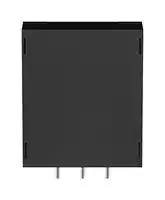


B72225T4271K101
TVS Varistor, 275 V, 350 V, AdvanceD ETFV25, 710 V, Radial Leaded, Metal Oxide Varistor (MOV)
- Manufacturer: TDK
- Product type: TVS Varistors
- SVHC: No SVHC (15-Jan-2018)
- Product Range: AdvanceD ETFV25
- Varistor Type: Metal Oxide Varistor (MOV)
- Voltage Rating VAC: 275V
- Voltage Rating VDC: 350V
- Varistor Case Style: Radial Leaded
- Clamping Voltage Vc Max: 710V
- Peak Energy (10/1000uS): -
- Operating Temperature Max: 85°C
- Operating Temperature Min: -40°C
- Peak Surge Current @ 8/20µs: 20kA
- Automotive Qualification Standard: -
| Delivery and price | |
|---|---|
| Units per pack | 2500 |
| Price | 1.38 € |
| Current stock | 10+ |
| Lead time | 30 days |

**==> picture [195 x 50] intentionally omitted <==**

## **SIOV metal oxide varistors**

Housed (ThermoFuse) varistors, AdvanceD series

**Series/Type: ETFV25** Date: January 2018

© EPCOS AG 2018. Reproduction, publication and dissemination of this publication, enclosures hereto and the information contained therein without EPCOS' prior express consent is prohibited.

EPCOS AG is a TDK Group Company.

**Housed varistors ThermoFuse varistors, ETFV25 series**

**ETFV25**

## **Construction**

**==> picture [5 x 5] intentionally omitted <==**

**==> picture [5 x 5] intentionally omitted <==**

**==> picture [5 x 5] intentionally omitted <==**

**==> picture [5 x 5] intentionally omitted <==**

Round varistor element, leaded Coating: epoxy resin, flame-retardant to UL 94 V-0 Terminals: tinned copper wire, metal compound wire Housing: thermoplastic, flame-retardant to UL 94 V-0

## **Features**

**==> picture [5 x 5] intentionally omitted <==**

**==> picture [5 x 5] intentionally omitted <==**

**==> picture [5 x 5] intentionally omitted <==**

Wide operating voltage range 115 … 420 VRMS Self-protected under abnormal overvoltage conditions Very high surge current ratings of 20 kA

## **Approvals**

**==> picture [5 x 5] intentionally omitted <==**

**==> picture [5 x 5] intentionally omitted <==**

**==> picture [5 x 5] intentionally omitted <==**

UL IEC VDE

## **Applications**

**==> picture [5 x 5] intentionally omitted <==**

**==> picture [5 x 5] intentionally omitted <==**

**==> picture [5 x 5] intentionally omitted <==**

**==> picture [5 x 5] intentionally omitted <==**

Air conditioner, refrigerator, TV, etc. Power meter, inverter, telecom equipment, etc. Transient voltage surge suppressors (TVSS) Solar inverter

## **Delivery mode**

**==> picture [5 x 5] intentionally omitted <==**

Bulk (standard)

## **Typical applications**

**==> picture [188 x 91] intentionally omitted <==**

## **General technical data**

|limatic category<br>to IEC 60068-1<br>perating temperature<br>to IEC 61051<br>torage temperature<br>lectric strength<br>to IEC 61051<br>sulation resistance<br>to IEC 61051|40/85/56<br>�40 ... + 85<br>�40 ... + 85<br>≥2.5<br>≥100|°C<br>°C<br>kVRMS<br>MΩ|
|---|---|---|


Please read _Cautions and warnings_ and _Important notes_ at the end of this document.

Page 2 of 15

**Housed varistors ETFV25 ThermoFuse varistors, ETFV25 series**

## **Electrical specifications and ordering codes Maximum ratings (TA = 85** ° **C)**

|**Maximum ratings (T**|**A = 85**°**C)**|||||||
|---|---|---|---|---|---|---|---|
|Ordering code|Type<br>(untaped)<br>SIOV-|VRMS<br>V|VDC<br>V|imax 1)<br>(8/20 µs)<br>A|In2)<br>(8/20 µs)<br>15 times<br>A|Wmax<br>(2 ms)<br>J|<br>Pmax<br>W|
|B72225T4111K101<br>B72225T4131K101<br>B72225T4141K101<br>B72225T4151K101<br>B72225T4171K101<br>B72225T4211K101<br>B72225T4231K101<br>B72225T4251K101<br>B72225T4271K101<br>B72225T4301K101<br>B72225T4321K101<br>B72225T4351K101<br>B72225T4381K101<br>B72225T4421K101|ETFV25K115E4<br>ETFV25K130E4<br>ETFV25K140E4<br>ETFV25K150E4<br>ETFV25K175E4<br>ETFV25K210E4<br>ETFV25K230E4<br>ETFV25K250E4<br>ETFV25K275E4<br>ETFV25K300E4<br>ETFV25K320E4<br>ETFV25K350E4<br>ETFV25K385E4<br>ETFV25K420E4|115<br>130<br>140<br>150<br>175<br>210<br>230<br>250<br>275<br>300<br>320<br>350<br>385<br>420|150<br>170<br>180<br>200<br>225<br>270<br>300<br>320<br>350<br>385<br>420<br>460<br>505<br>560|20000<br>20000<br>20000<br>20000<br>20000<br>20000<br>20000<br>20000<br>20000<br>20000<br>20000<br>20000<br>20000<br>20000|10000<br>10000<br>10000<br>10000<br>10000<br>10000<br>10000<br>10000<br>10000<br>10000<br>10000<br>10000<br>10000<br>10000|170<br>185<br>195<br>215<br>245<br>290<br>315<br>345<br>375<br>410<br>445<br>495<br>600<br>700|1.0<br>1.0<br>1.0<br>1.0<br>1.0<br>1.0<br>1.0<br>1.0<br>1.0<br>1.0<br>1.0<br>1.0<br>1.0<br>1.0|


**Characteristics (TA = 25** ° **C)**

|Ordering code|Type<br>(untaped)<br>SIOV-|Vv<br>(1 mA)<br>V|∆Vv<br>(1 mA)<br>%|vc,max<br>(ic)<br>V|ic<br>A|Ctyp<br>(1 kHz)<br>pF|
|---|---|---|---|---|---|---|
|B72225T4111K101<br>B72225T4131K101<br>B72225T4141K101<br>B72225T4151K101<br>B72225T4171K101<br>B72225T4211K101<br>B72225T4231K101<br>B72225T4251K101<br>B72225T4271K101<br>B72225T4301K101<br>B72225T4321K101<br>B72225T4351K101<br>B72225T4381K101<br>B72225T4421K101|ETFV25K115E4<br>ETFV25K130E4<br>ETFV25K140E4<br>ETFV25K150E4<br>ETFV25K175E4<br>ETFV25K210E4<br>ETFV25K230E4<br>ETFV25K250E4<br>ETFV25K275E4<br>ETFV25K300E4<br>ETFV25K320E4<br>ETFV25K350E4<br>ETFV25K385E4<br>ETFV25K420E4|180<br>205<br>220<br>240<br>270<br>330<br>360<br>390<br>430<br>470<br>510<br>560<br>620<br>680|±10<br>±10<br>±10<br>±10<br>±10<br>±10<br>±10<br>±10<br>±10<br>±10<br>±10<br>±10<br>±10<br>±10|300<br>340<br>360<br>395<br>455<br>545<br>595<br>650<br>710<br>775<br>840<br>910<br>1025<br>1120|150<br>150<br>150<br>150<br>150<br>150<br>150<br>150<br>150<br>150<br>150<br>150<br>150<br>150|2280<br>2010<br>1860<br>1740<br>1500<br>1245<br>1140<br>1050<br>945<br>870<br>810<br>750<br>675<br>630|


> 1) Note: Thermal fuse may form open circuit after 1 impulse @ 20 kA, 8/20 µs test. 2) Note: Nominal discharge current In according to UL 1449, 4[th] edition.

Please read _Cautions and warnings_ and _Important notes_ at the end of this document.

Page 3 of 15

**ETFV25**

**==> picture [44 x 41] intentionally omitted <==**

**Housed varistors ThermoFuse varistors, ETFV25 series**

## **Dimensional drawings**

**==> picture [73 x 134] intentionally omitted <==**

**==> picture [43 x 96] intentionally omitted <==**

## **Weight**

|**Weight**|||
|---|---|---|
|Nominal diameter<br>mm|VRMS<br>V|Weight<br>g|
|25|115 ... 420|9.9 ... 18.6|


## **Lead configuration**

**==> picture [48 x 84] intentionally omitted <==**

Please read _Cautions and warnings_ and _Important notes_ at the end of this document.

Page 4 of 15

|**Housed varistors**|**ETFV25**|
|---|---|
|**ThermoFuse varistors, ETFV25 series**||


|**Reliability data**|||
|---|---|---|
|Test|Test methods/conditions|Requirement|
|Varistor voltage|The voltage between two terminals with<br>the specified measuring current applied<br>is called VV (1 mADC@ 0.2 ... 2 s).|To meet the specified value|
|Clamping voltage|The maximum voltage between two<br>terminals with the specified standard<br>impulse current(8/20µs)applied.|To meet the specified value|
|Endurance at upper<br>category temperature|1000 h at UCT<br>After having continuously applied the<br>maximum allowable AC voltage at UCT<br>±2°C for 1000 h, the specimen shall be<br>stored at room temperature and normal<br>humidity for 1 to 2 h.<br>Thereafter, the change of VVshall be<br>measured.||∆V/V (1 mA)|≤10%|
|Surge current derating,<br>8/20µs|10 surge currents (8/20µs), unipolar,<br>interval 30 s, amplitude corresponding<br>to derating curve for 10 impulses at<br>20µs||∆V/V (1 mA)|≤10%<br>(measured in direction of<br>surge current)<br>No visible damage|
|Surge current derating,<br>2 ms|10 surge currents (2 ms), unipolar,<br>interval 120 s, amplitude corresponding<br>to derating curve for 10 impulses at<br>2 ms||∆V/V (1 mA)|≤10%<br>(measured in direction of<br>surge current)<br>No visible damage|
|Electric strength|IEC 61051-1, test 4.9.2<br>Metal balls method, 2500 VRMS, 60 s<br>The varistor is placed in a container<br>holding 1.6±0.2 mm diameter metal<br>balls such that only the terminations of<br>the varistor are protruding.<br>The specified voltage shall be applied<br>between both terminals of the specimen<br>connected together and the electrode<br>inserted between the metal balls.|No breakdown|


Please read _Cautions and warnings_ and _Important notes_ at the end of this document.

Page 5 of 15

**==> picture [44 x 41] intentionally omitted <==**

|**Housed varistors**|**ETFV25**|
|---|---|
|**ThermoFuse varistors, ETFV25 series**||


|Test|Test methods/conditions|Requirement|
|---|---|---|
|Climatic sequence|The specimen shall be subjected to:<br>a) dry heat at UCT, 16 h, IEC<br>60068-2-2, test Ba<br>b) damp heat, 1st cycle:<br>55°C, 93% r. H., 24 h, IEC<br>60068-2-30, test Db<br>c) cold, LCT, 2 h, IEC 60068-2-1, test<br>Aa<br>d) damp heat, additional 5 cycles:<br>55°C/25°C, 93% r. H., 24 h/cycle,<br>IEC 60068-2-30, test Db.<br>Then the specimen shall be stored at<br>room temperature and normal humidity<br>for 1 to 2 h.<br>Thereafter, the change of VVshall be<br>measured. Thereafter, insulation resis-<br>tance Rinsshall be measured at V = 500<br>V.||∆V/V (1 mA)|≤10%<br>Rins≥100 MΩ|
|Rapid change of<br>temperature|IEC 60068-2-14, test Na, LCT/UCT,<br>dwell time 30 min, 5 cycles||∆V/V (1 mA)|≤5%<br>No visible damage|
|Damp heat, steady state|IEC 60068-2-78, test Ca<br>The specimen shall be subjected to<br>40±2°C, 90 to 95% r. H. for 56 days<br>without load / with 10% of the maxi-<br>mum continuous DC operating voltage<br>VDC. Then stored at room temperature<br>and normal humidity for 1 to 2 h.<br>Thereafter, the change of VVshall be<br>measured. Thereafter, insulation resis-<br>tance Rinsshall be measured at V = 500<br>V(insulated varistors only).||∆V/V (1 mA)|≤10%<br>Rins≥100 MΩ|


Please read _Cautions and warnings_ and _Important notes_ at the end of this document.

Page 6 of 15

|||**ETFV25**|||
|---|---|---|---|---|
|**Housed varistors**||**ETFV25**|||
|**ThermoFuse varistors, ETFV25 series**|||||
||||||
||||||
||||||
|Test|Test methods/conditions|Requirement|||
|Solderability|IEC 60068-2-20, test Ta,<br>method 1 with modified conditions for<br>lead-free solder alloys: 245°C, 3 s:<br>After dipping the terminals to a depth of<br>approximately 3 mm from the body in a<br>soldering bath of 245°C for 3 s, the<br>terminals shall be visually examined.|The inspection shall be<br>carried out under adequate<br>light with normal eyesight or<br>with the assistance of a<br>magnifier capable of giving<br>a magnification of 4 to<br>10 times. The dipped<br>surface shall be covered<br>with a smooth and bright<br>solder coating with no more<br>than small amounts of<br>scattered imperfections<br>such as pinholes or<br>un-wetted or de-wetted<br>areas. These imperfections<br>shall not be concentrated in<br>one area.|||
|Resistance to soldering<br>heat|IEC 60068-2-20, test Tb, method 1A,<br>260°C, 10 s:<br>Each lead shall be dipped into a solder<br>bath having a temperature of 260±5°C<br>to a point 2.0 to 2.5 mm from the body<br>of the specimen, be held there for<br>10±1 s and then be stored at room<br>temperature and normal humidity for<br>1 to 2 h.<br>The change of VVshall be measured<br>and the specimen shall be visually<br>examined.||∆V/V (1 mA)|≤5%<br>No visible damage|||
|Tensile strength|IEC 60068-2-21, test Ua1<br>After gradually applying the force<br>specified below and keeping the unit<br>fixed for 10 s, the terminal shall be<br>visually examined for any damage.<br>Force for wire diameter:<br>0.6 mm = 10 N<br>0.8 mm = 10 N<br>1.0 mm = 20 N||∆V/V (1 mA)|≤5%<br>No break of solder joint,<br>no wire break|||


Please read _Cautions and warnings_ and _Important notes_ at the end of this document.

Page 7 of 15

**Housed varistors ThermoFuse varistors, ETFV25 series**

**ETFV25**

**==> picture [44 x 41] intentionally omitted <==**

|Test|Test methods/conditions|Requirement|
|---|---|---|
|Vibration|IEC 60068-2-6, test Fc, method B4<br>Frequency range:<br>Amplitude:<br>Duration:<br>Pulse:<br>10 … 55 Hz<br>0.75 mm or 98 m/s2<br>6 h (3 · 2 h)<br>sine wave<br>After repeatedly applying a single<br>harmonic vibration according to the<br>table above.<br>The change of VVshall be measured<br>and the specimen shall be visually<br>examined.||∆V/V (1 mA)|≤5%<br>No visible damage|
|Bump|IEC 60068-2-29, test Eb<br>Pulse duration:<br>Max. acceleration:<br>Number of bumps:<br>Pulse:<br>6 ms<br>400 m/s2<br>4000<br>half sine||∆V/V (1 mA)|≤5%<br>No visible damage|
|Fire hazard|IEC 60695-11-5 (needle flame test)<br>Severity: vertical 10 s|5 s max.|


Please read _Cautions and warnings_ and _Important notes_ at the end of this document.

Page 8 of 15

|**Housed varistors**|**ETFV25**|
|---|---|
|**ThermoFuse varistors, ETFV25 series**||


|Test|Test methods/conditions|Test methods/conditions|Requirement|en<br>g<br>r<br>e<br>g<br> <br>.<br>s<br> <br>|
|---|---|---|---|---|
|Abnormal overvoltage test|The device is designed to meet the<br>limited current abnormal overvoltage<br>condition, outlined in section 39.4 of UL<br>1449, 4th edition.<br>Detailed test voltage applied onto the<br>device for different types as in the<br>following table:<br>Type<br>Device<br>rating<br>V<br>Test<br>voltage<br>V<br>ETFV25K115E4<br>115<br>240<br>ETFV25K130E4<br>130<br>260<br>ETFV25K140E4<br>140<br>280<br>ETFV25K150E4<br>150<br>300<br>ETFV25K175E4<br>175<br>350<br>ETFV25K210E4<br>210<br>420<br>ETFV25K230E4<br>230<br>415<br>ETFV25K250E4<br>250<br>500<br>ETFV25K275E4<br>275<br>480<br>ETFV25K300E4<br>300<br>600<br>ETFV25K320E4<br>320<br>600<br>ETFV25K350E4<br>350<br>600<br>ETFV25K385E4<br>385<br>600<br>ETFV25K420E4<br>420<br>600||Any of these phenomena<br>shall not be observed, or<br>this specimen will be judged<br>as failed part:<br>1.<br>Emission of flame, molt<br>metal, glowing or flamin<br>particles through any<br>openings (pre-existed o<br>created as a result of th<br>test) in the product.<br>2.<br>Charring, glowing, or<br>flaming of the supportin<br>surface, tissue paper, or<br>cheesecloth.<br>3.<br>Ignition of the enclosure<br>4.<br>Creation of any opening<br>in the enclosure that<br>result in accessibility of<br>live parts, when<br>evaluated in accordance<br>with accessibility of live<br>parts test in section 58.2<br>of UL1449, 4th edition.||
||Type|Device<br>rating<br>V|||
||ETFV25K115E4|115|||
||ETFV25K130E4|130|||
||ETFV25K140E4|140|||
||ETFV25K150E4|150|||
||ETFV25K175E4|175|||
||ETFV25K210E4|210|||
||ETFV25K230E4|230|||
||ETFV25K250E4|250|||
||ETFV25K275E4|275|||
||ETFV25K300E4|300|||
||ETFV25K320E4|320|||
||ETFV25K350E4|350|||
||ETFV25K385E4|385|||
||ETFV25K420E4|420|||
||||||


## **Note:**

UCT = Upper category temperature LCT = Lower category temperature Rins = Insulation resistance

Please read _Cautions and warnings_ and _Important notes_ at the end of this document.

Page 9 of 15

**Housed varistors ThermoFuse varistors, ETFV25 series**

**ETFV25**

**==> picture [44 x 41] intentionally omitted <==**

## **v/i characteristics**

v = f (i) for explanation of the characteristics refer to "General technical information", chapter 1.6.3 A = Leakage current, B = Protection level } for worst-case varistor tolerances

**SIOV-ETFV25 ... E4**

## **Derating curves**

Maximum surge current imax = f (tr, pulse train) For explanation of the derating curves refer to "General technical information", section 1.8.1

**SIOV-ETFV25 ... E4**

Please read _Cautions and warnings_ and _Important notes_ at the end of this document.

Page 10 of 15

|**Housed varistors**|**ETFV25**|
|---|---|
|**ThermoFuse varistors, ETFV25 series**||


## **Cautions and warnings**

## **General**

1. EPCOS metal oxide varistors are designed for specific applications and should not be used for purposes not identified in our specifications, application notes and data books unless otherwise agreed with EPCOS during the design-in-phase.

2. Ensure suitability of SIOVs through reliability testing during the design-in phase. SIOVs should be evaluated taking into consideration worst-case conditions.

3. For applications of SIOVs in line-to-ground circuits based on various international and local standards there are restrictions existing or additional safety measures required.

## **Storage**

1. Store SIOVs only in original packaging. Do not open the package prior to processing.

2. Recommended storage conditions in original packaging: Storage temperature: �25 ° C ... +45 ° C, Relative humidity: <75% annual average, <95% on maximum 30 days a year.

Dew precipitation: is to be avoided.

3. Avoid contamination of an SIOV's during storage, handling and processing.

4. Avoid storage of SIOVs in harmful environments that can affect the function during long-term operation (examples given under operation precautions).

5. The SIOV type series should be soldered after shipment from EPCOS within the time specified:

SIOV-S, -Q, -LS, -B, -SNF 24 months ETFV/ T series, -CU 12 months.

## **Handling**

1. SIOVs must not be dropped.

2. Components must not be touched with bare hands. Gloves are recommended.

3. Avoid contamination of the surface of SIOV electrodes during handling, be careful of the sharp edge of SIOV electrodes.

## **Soldering (where applicable)**

1. Use rosin-type flux or non-activated flux.

2. Insufficient preheating may cause ceramic cracks.

3. Rapid cooling by dipping in solvent is not recommended.

4. Complete removal of flux is recommended.

5. Temperatures of all preheat stages and the solder bath must be strictly controlled especially for T series (T14 and T20).

Please read _Cautions and warnings_ and _Important notes_ at the end of this document.

Page 11 of 15

**==> picture [44 x 41] intentionally omitted <==**

|**Housed varistors**|**ETFV25**|
|---|---|
|**ThermoFuse varistors, ETFV25 series**||


## **Mounting**

1. Potting, sealing or adhesive compounds can produce chemical reactions in the SIOV ceramic that will degrade the component’s electrical characteristics.

2. Overloading SIOVs may result in ruptured packages and expulsion of hot materials. For this reason SIOVs should be physically shielded from adjacent components.

## **Operation**

1. Use SIOVs only within the specified temperature operating range.

2. Use SIOVs only within the specified voltage and current ranges.

3. Environmental conditions must not harm SIOVs. Use SIOVs only in normal atmospheric conditions. Avoid use in deoxidizing gases (chlorine gas, hydrogen sulfide gas, ammonia gas, sulfuric acid gas etc), corrosive agents, humid or salty conditions.Contact with any liquids and solvents should be prevented.

## **Display of ordering codes for EPCOS products**

The ordering code for one and the same EPCOS product can be represented differently in data sheets, data books, other publications, on the EPCOS website, or in order-related documents such as shipping notes, order confirmations and product labels. **The varying representations of the ordering codes are due to different processes employed and do not affect the**

**specifications of the respective products** . Detailed information can be found on the Internet under www.epcos.com/orderingcodes

Please read _Cautions and warnings_ and _Important notes_ at the end of this document.

Page 12 of 15

|**Housed varistors**|**ETFV25**|
|---|---|
|**ThermoFuse varistors, ETFV25 series**||


## **Symbols and terms**

|**Symbols and**|**terms**|
|---|---|
|Symbol|Term|
|C<br>Ctyp<br>i<br>ic<br>Ileak<br>imax<br>Imax<br>In<br>LCT<br>Ltyp<br>Pmax<br>Rins<br>Rmin<br>TA<br>tr<br>UCT<br>v<br>Vclamp<br>vc, max<br>VDC<br>Vjump<br>vmax<br>Vop<br>VRMS<br>VRMS, op, max<br>Vsurge<br>VV<br>∆VV<br>WLD<br>Wmax|Capacitance<br>Typical capacitance<br>Current<br>Current at which Vc, maxis measured<br>Leakage current<br>Maximum surge current (also termed peak current)<br>Maximum discharge current<br>Nominal discharge current to UL 1449<br>Lower category temperature<br>Typical inductance<br>Maximum average power dissipation<br>Insulation resistance<br>Minimum resistance<br>Ambient temperature<br>Duration of equivalent rectangular wave<br>Upper category temperature<br>Voltage<br>Clamping voltage<br>Maximum clamping voltage at specified current ic<br>DC operating voltage<br>Maximum jump start voltage<br>Maximum voltage<br>Operating voltage<br>AC operating voltage, root-mean-square value<br>Root-mean-square value of max. DC operating voltage incl. ripple current<br>Super imposed surge voltage<br>Varistor voltage<br>Tolerance of varistor voltage<br>Maximum load dump<br>Maximum energy absorption<br>Lead spacing|


All dimensions are given in mm.

The commas used in numerical values denote decimal points.

Please read _Cautions and warnings_ and _Important notes_ at the end of this document.

Page 13 of 15

## ~~ke~~ **Important notes**

The following applies to all products named in this publication:

1. Some parts of this publication contain **statements about the suitability of our products for certain areas of application** . These statements are based on our knowledge of typical requirements that are often placed on our products in the areas of application concerned. We nevertheless expressly point out **that such statements cannot be regarded as binding statements about the suitability of our products for a particular customer application.** As a rule we are either unfamiliar with individual customer applications or less familiar with them than the customers themselves. For these reasons, it is always ultimately incumbent on the customer to check and decide whether a product with the properties described in the product specification is suitable for use in a particular customer application.

2. We also point out that **in individual cases, a malfunction of electronic components or failure before the end of their usual service life cannot be completely ruled out in the current state of the art, even if they are operated as specified.** In customer applications requiring a very high level of operational safety and especially in customer applications in which the malfunction or failure of an electronic component could endanger human life or health (e.g. in accident prevention or life-saving systems), it must therefore be ensured by means of suitable design of the customer application or other action taken by the customer (e.g. installation of protective circuitry or redundancy) that no injury or damage is sustained by third parties in the event of malfunction or failure of an electronic component.

3. **The warnings, cautions and product-specific notes must be observed.**

4. In order to satisfy certain technical requirements, **some of the products described in this publication may contain substances subject to restrictions in certain jurisdictions (e.g. because they are classed as hazardous)** . Useful information on this will be found in our Material Data Sheets on the Internet (www.tdk-electronics.tdk.com/material). Should you have any more detailed questions, please contact our sales offices.

5. We constantly strive to improve our products. Consequently, **the products described in this publication may change from time to time** . The same is true of the corresponding product specifications. Please check therefore to what extent product descriptions and specifications contained in this publication are still applicable before or when you place an order.

We also **reserve the right to discontinue production and delivery of products** . Consequently, we cannot guarantee that all products named in this publication will always be available. The aforementioned does not apply in the case of individual agreements deviating from the foregoing for customer-specific products.

6. Unless otherwise agreed in individual contracts, **all orders are subject to our General Terms and Conditions of Supply.**

7. **Our manufacturing sites serving the automotive business apply the IATF 16949 standard.** The IATF certifications confirm our compliance with requirements regarding the quality management system in the automotive industry. Referring to customer requirements and customer specific requirements (“CSR”) TDK always has and will continue to have the policy of respecting individual agreements. Even if IATF 16949 may appear to support the acceptance of unilateral requirements, we hereby like to emphasize that **only requirements mutually agreed upon can and will be implemented in our Quality Management System.** For clarification purposes we like to point out that obligations from IATF 16949 shall only become legally binding if individually agreed upon.

Page 14 of 15

## ~~ke~~ **Important notes**

8. The trade names EPCOS, CeraCharge, CeraDiode, CeraLink, CeraPad, CeraPlas, CSMP, CTVS, DeltaCap, DigiSiMic, ExoCore, FilterCap, FormFit, LeaXield, MiniBlue, MiniCell, MKD, MKK, MotorCap, PCC, PhaseCap, PhaseCube, PhaseMod, PhiCap, PowerHap, PQSine, PQvar, SIFERRIT, SIFI, SIKOREL, SilverCap, SIMDAD, SiMic, SIMID, SineFormer, SIOV, ThermoFuse, WindCap are **trademarks registered or pending** in Europe and in other countries. Further information will be found on the Internet at www.tdk-electronics.tdk.com/trademarks.

Release 2018-10

Page 15 of 15
Updated at April 23, 2026
TDK Corporation is a globally recognized leader in electronic components and magnetic materials. Founded in 1935 to commercialize ferrites, the Tokyo-based company has evolved into a comprehensive manufacturer of high-performance passive components, sensors, and power electronics. TDK’s advanced materials technology serves as the foundation for its extensive portfolio, driving innovation across automotive, industrial, consumer electronics, and communication technologies. Our selection of TDK components heavily features their industry-leading passive components, with a primary focus on magnetics. TDK excels in manufacturing reliable inductive solutions, offering a vast array of power inductors and RF inductors optimized for demanding power management and high-frequency applications. Furthermore, their expertise in electromagnetic compatibility is showcased through a comprehensive range of EMC and RFI suppression products. This includes common mode chokes, power line filters, and specialized shielding materials designed to ensure superior signal integrity in complex designs. Beyond inductors and filtering components, TDK provides robust circuit protection and sensing solutions essential for modern engineering. The portfolio includes precision temperature sensing and compensation NTC thermistors, alongside TVS varistors and inrush current limiting components that safeguard sensitive electronics. Complemented by fixed value inductors, supercapacitors, and charging coils, TDK's versatile product offering delivers the reliability and performance required for sophisticated circuit design.
About Novapart
Novapart is a B2B electronic component broker specialising in stock shortages and cost reduction. We source hard-to-find parts and identify compliant alternatives across a catalogue of 410,000+ components from 500+ manufacturers.
Learn more →Stock Shortage Specialist
When a component is unavailable, discontinued or has an unacceptable lead time, we tap into our network of vetted European and Asian distributors to source what you need — without compromising on quality or traceability.
Request a quote →Compliant Alternatives
We identify pin-to-pin, electrically equivalent substitutes that meet the same certifications (RoHS, AEC-Q100, REACH) as your original specification — validated against datasheets, not just part numbers. Often at a lower cost.
BOM Analysis service →