
Image not available
Illustrative purposes only

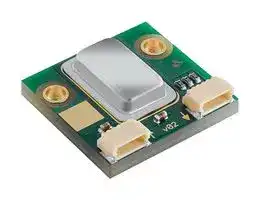
B58621V2712B537
Pressure Sensor, 100 mbar, SPI, Gauge, 5.5 V, 3 mA
⚠️ Reference pricing provided. In case of supply shortages, we will connect you with our trusted procurement partners to ensure your project's continuity.
- Manufacturer: EPCOS
- Product type: Pressure Transducers
- Product Range: AVR Series
- Sensor Output: SPI
- Supply Current: 3mA
- Voltage Rating: 5.5V
- Operating Pressure Max: 100mbar
- Pressure Measurement Type: Gauge
| Delivery and price | |
|---|---|
| Units per pack | 10 |
| Price | 61.31 € |
| Current stock | 10+ |
| Lead time | 7 days |
Datasheet

## **Pressure sensors** ## Pressure transmitter with SPI output **Series/Type: AVR 0.100 KA D4 Z14E L ST B537 Ordering code: B58621V2712B537** Date: 2020-05-26 Version: 2 > TDK Electronics AG 2020. Reproduction, publication and dissemination of this publication, enclosures hereto and the information contained therein without TDK Electronics' prior express consent is prohibited. **B58621V2712B537** ## **Pressure sensors** ## **Pressure transmitter with SPI output AVR 0.100 KA D4 Z14E L ST B537** ## **Applications** - Differential pressure measurement - Gauge pressure measurement ## **Features** - Piezoresistive MEMS technology - Measured media (Port A): Air, non-aggressive gases (gas humidity 0 ... 100% r.h.). Unsuitable for substances reacting with glass, silicon, gold, epoxy glue or silicone glue. - Measured media (Port B): Air, non-aggressive gases (gas humidity 0 ... 85% r.h., without dew) Unsuitable for substances reacting with glass, silicon, gold, aluminum, nickel, epoxy glue, silicone glue or silicone gel. - Digital SPI output proportional to pressure: 10 ... 90% of digital output range (14 bit) - Integrated temperature measurement - RoHS-compatible - Alternative pressure ranges on request - Integrated temperature measurement on request - Alternative configuration of SPI output on request - I²C output on request ## **Dimensional drawings** ## All dimensions in mm TPS PRS T PD 2020-05-26 Please read _Cautions and warnings_ and _Important notes_ at the end of this document. Page 2 of 8 ## **Pressure sensors B58621V2712B537 Pressure transmitter with SPI output AVR 0.100 KA D4 Z14E L ST B537** ## **Technical data** ## **Absolute maximum ratings** |**Parameter**<br>**Symbol**<br>**Conditions**<br>**Min.**<br>**Typ.**<br>**Max.**<br>**Unit**<br>~~a~~| |---| |**Temperature ranges**<br>Storage temperature range<br>Tst<br>1)<br>–30<br>+70<br>°C<br>Operating temperature range<br>Ta<br>2)<br>–20<br>+70<br>°C<br>~~pn~~<br>~~aGe~~| |Compensated temperature range<br>Tc<br>3)<br>–20<br>+70<br>°C<br>**Pressure ranges**<br>Rated pressure range<br>pr<br>Gauge pressure, port A4)<br>–5<br>100<br>mbar<br>~~Ge~~<br>~~pC~~<br>~~ee~~| |Overpressure<br>pov<br>Gauge pressure, port A5)<br>–1000<br>1000<br>mbar<br>Gauge pressure, port B5)<br>–1000<br>1000<br>~~ae~~<br>~~ee~~| |**Supply voltage /-current**<br>~~pn~~| |Supply voltage<br>VCC<br>6)<br>2.7<br>5.5<br>V<br>~~Ge~~| |Supply current<br>ICC<br>3<br>10<br>mA<br>~~a~~<br>~~G~~| || |**Parameter**<br>**Symbol**<br>**Conditions**<br>**Min.**<br>**Typ.**<br>**Max.**<br>**Unit**<br>~~eG GD~~| |**Output signal @ Ta = 25 °C, VCC = 5 V**<br>~~fp~~| |Digital output range<br>0<br>16384<br>digit<br>~~Ge~~| |Output @ pr,min<br>Dpr,min<br>@ 25°C<br>1638<br>digit<br>OffsetIF)<br>DA0<br>@ 25°C7)<br>2262<br>digit<br>Signal span(FullScale)<br>DFS<br>@ 25°C8)<br>13107<br>digit<br>Offset error<br>E0LTS<br>@ 25°C9)<br>0.2<br>1<br>% FS<br>Nonlinearity<br>L<br>@ 25°C10)<br>0.15<br>0.5<br>% FS<br>Characteristic curve error<br>Ec<br>@ Ta=–20 …70 °C3) 11)<br>0.25<br>0.75<br>% FS<br>~~a~~<br>~~G~~<br>~~eG~~<br>~~**G**e CO~~<br>~~a~~<br>~~Ge~~<br>~~G~~<br>~~po~~<br>~~GG~~<br>~~OO~~<br>~~Ge~~| |Total error (E0LTS+ Ec)<br>Etotal<br>@ Ta=–20 …70 °C3) 12)<br>0.45<br>1.75<br>% FS<br>~~a~~<br>~~D~~| || |**Configuration, digital interface**| |System clock frequency<br>13)<br>4 MHz| |Update period<br>13)<br>0.5 ms| |Communication type<br>13)<br>SPI| |Sensor connection check<br>13)<br>inactive| |Sensor short check<br>13)<br>inactive| |I2C-adress<br>13)<br>0 x 20| TPS PRS T PD 2020-05-26 Please read _Cautions and warnings_ and _Important notes_ at the end of this document. Page 3 of 8 ## ~~ee~~ **Pressure sensors B58621V2712B537 Pressure transmitter with SPI output AVR 0.100 KA D4 Z14E L ST B537** |**Anti-aliasing filter**|**Anti-aliasing filter**|**Anti-aliasing filter**|**Anti-aliasing filter**|**Anti-aliasing filter**| |---|---|---|---|---| |Attenuation reference||3Hz|0|dB| |Attenuation||30Hz|81.5|dB| |Attenuation||200Hz|328|dB| ## **Characteristics** ## **Materials in contact tot he measured media** - Gloptop material based on epoxy - Silicone adhesive - Silicone gel - Glass - Silicon - Aluminium - Nickel - ENIG surface on pcb TPS PRS T PD 2020-05-26 Please read _Cautions and warnings_ and _Important notes_ at the end of this document. Page 4 of 8 ## **Pressure sensors** ## **Pressure transmitter with SPI output** ## **B58621V2712B537 AVR 0.100 KA D4 Z14E L ST B537** ## **Symbols and terms** ## **1) Storage temperature range Tst** A storage of the pressure sensor within the temperature range Tst,min up to Tst,max and without applied pressure and supply voltage will not affect the performance of the pressure sensor. ## **2) Operating temperature range Ta** An operation of the pressure sensor within the temperature range Ta,min up to Ta,max will not affect the performance of the pressure sensor. ## **3) Compensated temperature range TC** While operating the pressure sensor within the temperature range Tc,min up to Tc,max, the deviation of the output signal from the values at 25 °C will not exceed the temperature coefficients. Out of the compensated temperature range, the deviations may increase. ## **4) Rated pressure pr** Within the rated pressure range pr,min up to pr,max the signal output characteristic corresponds to this specification. ## **5) Over pressure pOV** Pressure cycles within the pressure range 0 up to pov will not affect the performance of the pressure sensor. ## **6) Supply voltage VCC** VCC,max is the maximum permissible supply voltage, which can be applied without damages. VCC,min is the minimum required supply voltage, which has to be applied for normal operation. ## **7) Offset DA0** The offset DA0 is the signal output DA (p = 0). ## **8) Signal span (Full Scale)** DFS = FS = DA (pr,max) – DA (pr,min) ## **9) Offset error E0LTS** Sum of temperature hysteresis and all non systematic offset changes. The temperature hysteresis is the change of offset, starting from the value at 25 °C after a temperature change and return to 25 °C. Determined during temperature cycles in operating temperature range (cycles with 1 K/min). ## **10) Non-linearity L (including pressure hysteresis)** The non-linearity is the deviation of the real sensor characteristic ICC = f(p) from the ideal straight line. It can be approximated by a polynomial of second order, with the maximum at px = pr / 2. The equation to calculate the non-linearity is: ## **11) Characteristic curve error Ec** Within the compensated temperature range Tc,min up to Tc,max the error of characteristic curve Ec is the maximum deviation to the ideal characteristic curve, including non-linearity, calibration tolerances as well as temperature errors of offset and span. Out of the compensated temperature range, the deviations may increase. ## **12) Total error Etotal = E0LTS + Ec** Sum of Offset error and characteristic curve error. The offset error E0LTS is a parallel translation of the whole tolerance zone of the characteristic curve error. A periodic (to be defined by the user) offset correction at a defined pressure (e.g. zero) may considerably improve the measurement accuracy. ## **13) Functional description** For detailed description of the SPI digital interface see the data sheet “ZSC31014_iLite_datasheet_rev1.51“. (Provided by ZMDi) ## **IF) Significant characteristic** Internal function relevant significant characteristic TPS PRS T PD 2020-05-26 Please read _Cautions and warnings_ and _Important notes_ at the end of this document. Page 5 of 8 ~~LT~~ **Pressure sensors B58621V2712B537 Pressure transmitter with SPI output AVR 0.100 KA D4 Z14E L ST B537** ## **Cautions and warnings** ## **Storage** The pressure sensors should be stored in their original packaging. They should not be placed in harmful environments such as corrosive gases nor exposed to heat or direct sunlight, which may cause deformations. Similar effects may result from extreme storage temperatures and climatic conditions. Avoid storing the pressure sensors in an environment where condensation may form or in a location exposed to corrosive gases, which will adversely affect their performance. ## **Soldering** The thermal capacity of the pressure sensor is normally low, so measurements should be taken to minimize the effects of external heat. High temperatures may lead to damage or changes in characteristics. A no-clean flux should normally be used. Flux removal processes are not recommended. Avoid rapid cooling due to dipping in solvent. Note that the output signal may change if pressure is applied to the terminals during soldering. ## **Operation** Media compatibility with the pressure sensors must be ensured to prevent their failure (see page 2). The use of inappropriate media can cause damage and malfunction. Never use them in atmospheres containing explosive liquids or gases. Ensure pressure equalization to the environment, if relative pressure sensors are used. Avoid operating the pressure sensors in an environment where condensation may form or in a location exposed to corrosive gases. These environments adversely affect performance of the sensors. If the operating pressure is not within the rated pressure range, it may change the output characteristics. Do not exceed the rated overpressure, it may damage the pressure sensor. Do not exceed the maximum rated supply voltage, it may damage the pressure sensor. Do not exceed the rated storage temperature range, it may damage the pressure sensor. Temperature variations in both the ambient conditions and the media (liquid or gas) can affect the accuracy of the output signal from the pressure sensors. Check the operating temperature range and thermal error specification of the pressure sensors to determine their suitability for the application. Connections must be wired in accordance with the terminal assignment specified in this publication. Care should be taken as reversed pin connections can damage the pressure sensors or degrade their performance. Contact between the pressure sensor terminals and metals or other materials may cause errors in the output characteristics. This listing does not claim to be complete, but merely reflects the experience of TDK Sensors AG & Co. KG. ## **Display of ordering codes for TDK Electronics products** The ordering code for one and the same product can be represented differently in data sheets, data books, other publications, on the company website, or in order-related documents such as shipping notes, order confirmations and product labels. **The varying representations of the ordering codes are due to different processes employed and do not affect the specifications of the respective products** . Detailed information can be found on the Internet under www.tdk-electronics.tdk.com/orderingcodes. TPS PRS T PD 2020-05-26 Please read _Cautions and warnings_ and _Important notes_ at the end of this document. Page 6 of 8 ~~LT~~ **Important notes** The following applies to all products named in this publication: 1. Some parts of this publication contain **statements about the suitability of our products for certain areas of application** . These statements are based on our knowledge of typical requirements that are often placed on our products in the areas of application concerned. We nevertheless expressly point out **that such statements cannot be regarded as binding statements about the suitability of our products for a particular customer application.** As a rule we are either unfamiliar with individual customer applications or less familiar with them than the customers themselves. For these reasons, it is always ultimately incumbent on the customer to check and decide whether a product with the properties described in the product specification is suitable for use in a particular customer application. 2. We also point out that **in individual cases, a malfunction of electronic components or failure before the end of their usual service life cannot be completely ruled out in the current state of the art, even if they are operated as specified.** In customer applications requiring a very high level of operational safety and especially in customer applications in which the malfunction or failure of an electronic component could endanger human life or health (e.g. in accident prevention or life-saving systems), it must therefore be ensured by means of suitable design of the customer application or other action taken by the customer (e.g. installation of protective circuitry or redundancy) that no injury or damage is sustained by third parties in the event of malfunction or failure of an electronic component. 3. **The warnings, cautions and product-specific notes must be observed.** 4. In order to satisfy certain technical requirements, **some of the products described in this publication may contain substances subject to restrictions in certain jurisdictions (e.g. because they are classed as hazardous)** . Useful information on this will be found in our Material Data Sheets on the Internet (www.tdk-electronics.tdk.com/material). Should you have any more detailed questions, please contact our sales offices. 5. We constantly strive to improve our products. Consequently, **the products described in this publication may change from time to time** . The same is true of the corresponding product specifications. Please check therefore to what extent product descriptions and specifications contained in this publication are still applicable before or when you place an order. We also **reserve the right to discontinue production and delivery of products** . Consequently, we cannot guarantee that all products named in this publication will always be available. The aforementioned does not apply in the case of individual agreements deviating from the foregoing for customer-specific products. 6. Unless otherwise agreed in individual contracts, **all orders are subject to our General Terms and Conditions of Supply.** 7. **Our manufacturing sites serving the automotive business apply the IATF 16949 standard.** The IATF certifications confirm our compliance with requirements regarding the quality management system in the automotive industry. Referring to customer requirements and customer specific requirements (“CSR”) TDK always has and will continue to have the policy of respecting individual agreements. Even if IATF 16949 may appear to support the acceptance of unilateral requirements, we hereby like to emphasize that **only requirements mutually agreed upon can and will be implemented in our Quality Management System.** For clarification purposes we like to point out that obligations from IATF 16949 shall only become legally binding if individually agreed upon. Page 7 of 8 ~~LT~~ **Important notes** 8. The trade names EPCOS, CeraCharge, CeraDiode, CeraLink, CeraPad, CeraPlas, CSMP, CTVS, DeltaCap, DigiSiMic, ExoCore, FilterCap, FormFit, LeaXield, MiniBlue, MiniCell, MKD, MKK, ModCap, MotorCap, PCC, PhaseCap, PhaseCube, PhaseMod, PhiCap, PowerHap, PQSine, PQvar, SIFERRIT, SIFI, SIKOREL, SilverCap, SIMDAD, SiMic, SIMID, SineFormer, SIOV, ThermoFuse, WindCap, XieldCap are **trademarks registered or pending** in Europe and in other countries. Further information will be found on the Internet at www.tdkelectronics.tdk.com/trademarks. ## Release 2020-05 Page 8 of 8
Updated at February 9, 2023
About Novapart
Novapart is a B2B electronic component broker specialising in stock shortages and cost reduction. We source hard-to-find parts and identify compliant alternatives across a catalogue of 410,000+ components from 500+ manufacturers.
Learn more →Stock Shortage Specialist
When a component is unavailable, discontinued or has an unacceptable lead time, we tap into our network of vetted European and Asian distributors to source what you need — without compromising on quality or traceability.
Request a quote →Compliant Alternatives
We identify pin-to-pin, electrically equivalent substitutes that meet the same certifications (RoHS, AEC-Q100, REACH) as your original specification — validated against datasheets, not just part numbers. Often at a lower cost.
BOM Analysis service →