
Image not available
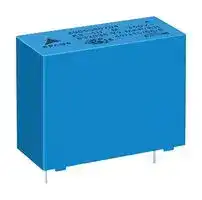
Illustrative purposes only

B32033A4274M000
Safety Capacitor, Metallized PP, Radial Box - 2 Pin, 0.27 µF, ± 20%, Y2, Through Hole
⚠️ Reference pricing provided. In case of supply shortages, we will connect you with our trusted procurement partners to ensure your project's continuity.
- Manufacturer: EPCOS
- Product type: Noise Suppression & Safety Capacitors
- Capacitance: 0.27µF
- Series Name: B32033
- Lead Spacing: 22.5mm
- dv/dt Rating: 500V/µs
- Product Range: B32033
- Qualification: AEC-Q200
- Dielectric Type: Metallized PP
- Humidity Rating: GRADE III (Test Condition B)
- Voltage Rating Y: 350VAC
- Suppression Class: Y2
- Capacitor Mounting: Through Hole
- Capacitor Terminals: Radial Leaded
- Capacitance Tolerance: ± 20%
- Capacitor Case / Package: Radial Box - 2 Pin
- Operating Temperature Max: 110°C
- Operating Temperature Min: -40°C
| Delivery and price | |
|---|---|
| Units per pack | 5200 |
| Price | 1.02 € |
| Current stock | 10+ |
| Lead time | 30 days |
Datasheet

**==> picture [156 x 48] intentionally omitted <==**

## **Film Capacitors**

## EMI Suppression Capacitors (MKP)

**Series/Type: B32032 ... B32036** Date: July 2018

© EPCOS AG 2018. Reproduction, publication and dissemination of this publication, enclosures hereto and the information contained therein without EPCOS' prior express consent is prohibited.

EPCOS AG is a TDK Group Company.

**EMI suppression capacitors (MKP) Y2 / 350 V AC**

**B32032 ... B32036**

## **Typical applications**

## **Dimensional drawing**

   - Y2 class for interference suppression "Line to ground" applications

   - Severe Ambient conditions

- ~~=~~ Automotive

## **Climatic**

- = Max. operating temperature: 110 °C 1 ~~i~~ — ~~=~~ Climatic category (IEC 60068-1:2013): 40/110/56

## **Construction**

- Dielectric: polypropylene (MKP) Plastic case (UL 94 V-0)

Epoxy resin sealing (UL 94 V-0)

## **Features**

- THB Grade IIIb[1)]

- Small dimensions

- Good self-healing properties

Dimensions in mm

|Lead spacing<br>±0.4<br>Lé||Lead<br>diameter<br>d1±0.05|Type|
|---|---|---|
|15 ... 27.5|0.8|B32032 ... B32034|
|37.5|1.0|B32036|


- High voltage capability

- RoHS-compatible

- Halogen-free capacitors available on request

## **Marking example (position of marks may vary):**

- AEC-Q200D compliant

## **Terminals**

Parallel wire leads, lead-free tinned Special lead lengths available on request

## **Marking**

Manufacturer's logo, lot number, date code, rated capacitance (coded), capacitance tolerance (code letter), rated AC voltage (IEC), series number, sub-class (Y2), dielectric code (MKP), climatic category, passive flammability category, approvals.

## **Delivery mode**

Bulk (untaped) Taped (Ammo pack or reel) For taping details, refer to chapter "Taping and packing"

1) Certification ongoing and pending acc. to IEC60384-14AMD1:2016

Please read _Cautions and warnings_ and _Important notes_ at the end of this document.

Page 2 of 24

**B32032 ... B32036 Y2 / 350 V AC**

**==> picture [37 x 42] intentionally omitted <==**

## **Approvals**

|**Approvals**|||
|---|---|---|
|Appr. marks|Standards|Certificate|
||EN 60384-14:2014 / IEC 60384-14:2013|ENEC-01642 (approved by UL Demko)|
||UL 60384-14:2014 / CSA E60384-14:2013|E97863|


## **Overview of available types**

|Lead spacing|15 mm|22.5 mm|27.5 mm|37.5 mm|
|---|---|---|---|---|
|Type|B32032|B32033|B32034|B32036|
|CR (μF)|||||
|0.0047|||||
|0.0056|||||
|0.0068|||||
|0.0082|||||
|0.010|||||
|0.015|||||
|0.018|||||
|0.022|||||
|0.027|||||
|0.033|||||
|0.039|||||
|0.047|||||
|0.056|||||
|0.068|||||
|0.082|||||
|0.10|||||
|0.12|||||
|0.15|||||
|0.18|||||
|0.22|||||
|0.27|||||
|0.33|||||
|0.39|||||
|0.47|||||
|0.56|||||
|0.68|||||
|0.82|||||
|1.0|||||
|1.2|||||


Please read _Cautions and warnings_ and _Important notes_ at the end of this document.

Page 3 of 24

**B32032 ... B32036**

**==> picture [36 x 42] intentionally omitted <==**

## **Y2 / 350 V AC**

## **Ordering codes and packing units**

|Lead<br>spacing<br>mm|CR<br>μF|Max. dimensions<br>w×h×l<br>mm|Ordering code<br>(composition see<br>below)|Ammo pack<br>pcs./MOQ|Reel<br>pcs./MOQ|Untaped<br>pcs./MOQ|
|---|---|---|---|---|---|---|
|15|0.0047<br>0.0056<br>0.0068<br>0.0082<br>0.010<br>0.015<br>0.018<br>0.022<br>0.027<br>0.033<br>0.039<br>0.039<br>0.047<br>0.056<br>0.056<br>0.068|5.0×10.5×18.0<br>5.0×10.5×18.0<br>5.0×10.5×18.0<br>5.0×10.5×18.0<br>5.0×10.5×18.0<br>6.0×11.0×18.0<br>7.0×12.5×18.0<br>7.0×12.5×18.0<br>8.0×14.0×18.0<br>8.0×14.0×18.0<br>8.5×14.5×18.0<br>9.0×17.5×18.0<br>9.0×17.5×18.0<br>9.0×17.5×18.0<br>11.0×18.5×18.0<br>11.0×18.5×18.0|B32032A4472+***<br>B32032A4562+***<br>B32032A4682+***<br>B32032A4822+***<br>B32032A4103+***<br>B32032A4153+***<br>B32032A4183+***<br>B32032A4223+***<br>B32032A4273+***<br>B32032A4333+***<br>B32032A4393M***<br>B32032B4393K***<br>B32032A4473+***<br>B32032A4563M***<br>B32032B4563K***<br>B32032A4683+***|4680<br>4680<br>4680<br>4680<br>4680<br>3840<br>3320<br>3320<br>2920<br>2920<br>2720<br>2560<br>2560<br>2560<br>�<br>�|5200<br>5200<br>5200<br>5200<br>5200<br>4400<br>3600<br>3600<br>3000<br>3000<br>2800<br>2800<br>2800<br>2800<br>2200<br>2200|4000<br>4000<br>4000<br>4000<br>4000<br>4000<br>4000<br>4000<br>2000<br>2000<br>2000<br>2000<br>2000<br>2000<br>1200<br>1200|


MOQ = Minimum Order Quantity, consisting of 4 packing units. Further intermediate capacitance values on request.

## **Composition of ordering code**

- + = Capacitance tolerance code:

   - M = ±20%

   - K = ±10%

- *** = Packaging code:

   - 289 = Straight terminals, Ammo pack

   - 189 = Straight terminals, Reel

   - 003 = Straight terminals, untaped

      - (lead length 3.2 ±0.3 mm)

   - 000 = Straight terminals, untaped (lead length 6 �1 mm)

Please read _Cautions and warnings_ and _Important notes_ at the end of this document.

Page 4 of 24

**B32032 ... B32036 Y2 / 350 V AC**

**==> picture [37 x 42] intentionally omitted <==**

## **Ordering codes and packing units**

|Lead<br>spacing<br>mm|CR<br>μF|Max. dimensions<br>w×h×l<br>mm|Ordering code<br>(composition see<br>below)|Ammo pack<br>pcs./MOQ|Reel<br>pcs./MOQ|Untaped<br>pcs./MOQ|
|---|---|---|---|---|---|---|
|22.5|0.033<br>0.047<br>0.056<br>0.068<br>0.082<br>0.082<br>0.10<br>0.10<br>0.12<br>0.12<br>0.15<br>0.15<br>0.18<br>0.18<br>0.22<br>0.27<br>0.33<br>0.39|6.0×15.0×26.5<br>7.0×16.0×26.5<br>7.0×16.0×26.5<br>8.5×16.5×26.5<br>8.5×16.5×26.5<br>10.5×16.5×26.5<br>10.5×16.5×26.5<br>10.5×18.5×26.5<br>10.5×18.5×26.5<br>10.5×20.5×26.5<br>11.0×20.5×26.5<br>12.0×22.0×26.5<br>12.0×22.0×26.5<br>14.5×29.5×26.5<br>14.5×29.5×26.5<br>14.5×29.5×26.5<br>15.5×33.5×26.5<br>15.5×33.5×26.5|B32033A4333+***<br>B32033A4473+***<br>B32033A4563+***<br>B32033A4683+***<br>B32033A4823M***<br>B32033B4823K***<br>B32033A4104M***<br>B32033B4104K***<br>B32033A4124M***<br>B32033B4124+***<br>B32033A4154M***<br>B32033B4154K***<br>B32033A4184M***<br>B32033B4184K***<br>B32033A4224+***<br>B32033A4274+***<br>B32033B4334+***<br>B32033A4394+***|2720<br>2320<br>2320<br>1920<br>1920<br>1560<br>1560<br>1560<br>1560<br>�<br>�<br>�<br>�<br>�<br>�<br>�<br>�<br>�|2800<br>2400<br>2400<br>2000<br>2000<br>1600<br>1600<br>1600<br>1600<br>�<br>�<br>�<br>�<br>�<br>�<br>�<br>�<br>�|2880<br>2520<br>2520<br>2040<br>2040<br>2160<br>2160<br>2160<br>2160<br>2160<br>2160<br>1800<br>1800<br>2160<br>2160<br>2160<br>1120<br>1120|


MOQ = Minimum Order Quantity, consisting of 4 packing units. Further intermediate capacitance values on request.

## **Composition of ordering code**

- + = Capacitance tolerance code:

   - M = ±20%

   - K = ±10%

- *** = Packaging code:

   - 289 = Straight terminals, Ammo pack

   - 189 = Straight terminals, Reel

   - 003 = Straight terminals, untaped (lead length 3.2 ±0.3 mm)

   - 000 = Straight terminals, untaped (lead length 6 �1 mm)

Please read _Cautions and warnings_ and _Important notes_ at the end of this document.

Page 5 of 24

**B32032 ... B32036**

**==> picture [36 x 42] intentionally omitted <==**

## **Y2 / 350 V AC**

## **Ordering codes and packing units**

|Lead<br>spacing<br>mm|CR<br>μF|Max. dimensions<br>w×h×l<br>mm|Ordering code<br>(composition see<br>below)|Ammo pack<br>pcs./MOQ|Reel<br>pcs./MOQ|Untaped<br>pcs./MOQ|
|---|---|---|---|---|---|---|
|27.5|0.10<br>0.15<br>0.15<br>0.18<br>0.22<br>0.27<br>0.33<br>0.33<br>0.39<br>0.39<br>0.47<br>0.47<br>0.56<br>0.68<br>0.82<br>1.0|11.0×19.0×31.5<br>11.0×19.0×31.5<br>11.0×21.0×31.5<br>11.0×21.0×31.5<br>13.5×23.0×31.5<br>15.0×24.5×31.5<br>16.0×32.0×31.5<br>18.0×27.5×31.5<br>16.0×32.0×31.5<br>18.0×27.5×31.5<br>16.0×32.0×31.5<br>18.0×33.0×31.5<br>21.0×31.0×31.5<br>22.0×36.5×31.5<br>22.0×48.0×31.5<br>22.0×48.0×31.5|B32034A4104+***<br>B32034A4154M***<br>B32034B4154K***<br>B32034A4184+***<br>B32034B4224+***<br>B32034A4274+***<br>B32034B4334+***<br>B32034C4334+***<br>B32034A4394M***<br>B32034B4394+***<br>B32034A4474M***<br>B32034C4474K***<br>B32034C4564+***<br>B32034A4684+***<br>B32034B4824K***<br>B32034A4105+***|�<br>�<br>�<br>�<br>�<br>�<br>�<br>�<br>�<br>�<br>�<br>�<br>�<br>�<br>�<br>�|1400<br>1400<br>1400<br>1400<br>1000<br>�<br>�<br>�<br>�<br>�<br>�<br>�<br>�<br>�<br>�<br>�|1280<br>1280<br>1280<br>1280<br>1040<br>960<br>880<br>800<br>880<br>800<br>880<br>800<br>720<br>640<br>640<br>640|
|37.5|0.27<br>0.33<br>0.39<br>0.47<br>0.56<br>0.68<br>0.82<br>0.82<br>1.0<br>1.2|12.0×22.0×42.0<br>14.0×25.0×42.0<br>14.0×25.0×42.0<br>16.0×28.5×42.0<br>16.0×28.5×42.0<br>17.0×32.0×42.0<br>18.0×32.5×42.0<br>20.0×39.5×42.0<br>20.0×39.5×42.0<br>28.0×42.5×42.0|B32036A4274+***<br>B32036B4334K***<br>B32036A4394+***<br>B32036A4474+***<br>B32036A4564+***<br>B32036A4684+***<br>B32036A4824M***<br>B32036B4824K***<br>B32036A4105+***<br>B32036A4125+***|�<br>�<br>�<br>�<br>�<br>�<br>�<br>�<br>�<br>�|�<br>�<br>�<br>�<br>�<br>�<br>�<br>�<br>�<br>�|1620<br>1380<br>1380<br>800<br>800<br>720<br>720<br>640<br>640<br>440|


MOQ = Minimum Order Quantity, consisting of 4 packing units. Further intermediate capacitance values on request.

## **Composition of ordering code**

- + = Capacitance tolerance code:

   - M = ±20%

   - K = ±10%

- *** = Packaging code:

   - 289 = Straight terminals, Ammo pack

   - 189 = Straight terminals, Reel

   - 003 = Straight terminals, untaped (lead length 3.2 ±0.3 mm)

   - 000 = Straight terminals, untaped (lead length 6 �1 mm)

Please read _Cautions and warnings_ and _Important notes_ at the end of this document.

Page 6 of 24

**B32032 ... B32036 Y2 / 350 V AC**

**==> picture [37 x 42] intentionally omitted <==**

## **Ordering code example**

|**B**<br>Compo-<br>nents class|**3203**<br>Series|**3**<br>Lead spacing<br>(mm)|**A**<br>Dimension code|**4**<br>Rated voltage|**154**<br>Rated<br>capacitance|**M**<br>Capacitance<br>tolerance|
|---|---|---|---|---|---|---|
|Passive<br>compo-<br>nents|Y2 MKP|2 = 15.0<br>3 = 22.5<br>4 = 27.5<br>6 = 37.5|See table<br>"Ordering codes<br>and packing units"|4 = 350 V AC|154 =<br>15�104 pF<br>= 150 nF|K =±10%<br>M =±20%<br>+ = K or M|


## **Technical data**

° Reference standard:UL / IEC 60384-14:2013 / AMD1:2016. All data given at T = 20 C, unless otherwise specified.

|otherwise specified.|||
|---|---|---|
|Rated AC voltage VAC<br>(IEC 60384-14:2013)|350 V AC (50/60 Hz)||
|Rated DC voltage VDC|1000 V DC||
|Max. operating temperature Top<br>(Top= TA+ Tself-heating)|+110°C||
|DC test voltage for 2 seconds|4200 V (C≤0.33μF)<br>4000 V(C > 0.33 μF), 2 s||
|AC test voltage(type test)|2000 VRMS, 60 s||
|_The repetition of this DC voltage test may damage the capacitor. Special care must be taken in_<br>_case of use several capacitors in aparallel configuration(refer to section "Parallel configuration)._|||
|Dissipation factor tanδat 1 kHz<br>(upper limit)|1�10-3||
|Insulation resistance Rinsor<br>time constantτ= CR�Rinsat 100 V DC,<br>rel. humidity≤65% and for 60 s<br>(minimum as-delivered values)|CR≤0.33 μF|CR> 0.33 μF|
||100 000 MΩ|30 000 s|
|Passive flammability category|B||
|Capacitance tolerances<br>(measured at 1 kHz)|±10% (K),±20% (M)||
|Grade III high robustness<br>under high humidity<br>Test B:|T = +85°C±2°C<br>Relative humidity: 85%±2%<br>VR= 350 V AC, 50/60 Hz<br>Test duration: 1000 hours||
|Criteria for passing after<br>biased damp heat test|Capacitance change (ΔC/C)<br>Dissipation factor change (Δtanδ)<br>Insulation resistance Rins<br>≤10%<br>< 0.005<br>> 50% of initial limit<br>Mechanical criteria: not applicable||


Please read _Cautions and warnings_ and _Important notes_ at the end of this document.

Page 7 of 24

**==> picture [36 x 42] intentionally omitted <==**

**B32032 ... B32036**

**Y2 / 350 V AC**

## **Pulse handling capability**

"dV/dt" represents the maximum permissible voltage change per unit of time for non-sinusoidal voltages, expressed in V/μs.

"k0" represents the maximum permissible pulse characteristic of the waveform applied to the capacitor, expressed in V[2] /μs.

## _Note:_

_The values of dV/dt and k0 provided below must not be exceeded in order to avoid damaging the capacitor. These parameters are given for isolated pulses in such a way that the heat generated by one pulse will be completely dissipated before applying the next pulse. For a train of pulses, please refer to the curves of permissible AC voltage-current versus frequency_

## **dV/dt and k0 values**

|**dV/dt and k0 values**|||||
|---|---|---|---|---|
|Lead spacing|15 mm|22.5 mm|27.5 mm|37.5 mm|
|dV/dt in V/μs|600|500|400|300|
|k0in V2/μs|508 000|423 000|338 000|254 000|


## **Impedance Z versus frequency f**

(typical values)

**==> picture [52 x 140] intentionally omitted <==**

Please read _Cautions and warnings_ and _Important notes_ at the end of this document.

Page 8 of 24

**B32032 ... B32036 Y2 / 350 V AC**

**==> picture [37 x 42] intentionally omitted <==**

## **Parallel configuration**

Only capacitors of the same capacitance may be connected in parallel and the maximum DC test voltage must be reduced as a function of the total parallel capacitance value. The diagram below shows a typical trend of maximum allowed voltage versus total parallel capacitance. (Cut off current 10 mA, rise time ≤ 1000 V/s, dwell time ≤ 2s, maximum allowed parallel connected capacitor 8 pcs).

B3203* DC test voltage as function of total parallel capacitance (μF):

**==> picture [35 x 106] intentionally omitted <==**

**==> picture [153 x 12] intentionally omitted <==**

**----- Start of picture text -----**<br>
Total parallel capacitance (μF)<br>**----- End of picture text -----**<br>


Please read _Cautions and warnings_ and _Important notes_ at the end of this document.

Page 9 of 24

**B32032 ... B32036 Y2 / 350 V AC**

**==> picture [36 x 42] intentionally omitted <==**

**Permissible current IRMS versus frequency (for sinusoidal waveform, TA** ≤ **90** ° **C and** Δ **ESR <100% from receipt condition)**

Lead spacing 15 mm

Lead spacing 22.5 mm

**==> picture [62 x 39] intentionally omitted <==**

Lead spacing 27.5 mm Lead spacing 37.5 mm

**==> picture [61 x 39] intentionally omitted <==**

**==> picture [62 x 39] intentionally omitted <==**

Please read _Cautions and warnings_ and _Important notes_ at the end of this document.

Page 10 of 24

**B32032 ... B32036 Y2 / 350 V AC**

**==> picture [37 x 42] intentionally omitted <==**

## **Testing and Standards**

|**Test**|**Reference**|**Conditions of test**|**Conditions of test**|**Performance requirements**|
|---|---|---|---|---|
|Electrical<br>parameters|IEC<br>60384-14:2013/<br>AMD1:2016|Voltage proof<br>�Between terminals:<br>1500 V AC, 1 min<br>�Terminals and enclosure:<br>2 VR+ 1500 V AC<br>Special voltage proof<br>�Between terminals:<br>2000 V AC ,1min<br>Insulation resistance, Rins<br>Capacitance, C<br>Dissipation factor, tanδ||Within specified limits|
|Robustness<br>of termina-<br>tions|IEC<br>60068-2-21:2006|Tensile strength (test Ua1)<br>Wire diameter<br>Tensile<br>force||Capacitance and tanδ<br>within specified limits|
|||0.5 < d1≤0.8 mm<br>0.8 < d1≤1.25 mm|10 N<br>20 N||
|Resistance to<br>soldering<br>heat|IEC<br>60068-2-20:2008,<br>test Tb,<br>method 1A|Solder bath temperature at<br>260±5°C, immersion for<br>10 seconds||ΔC/C0≤5%<br>tanδwithin specified limits|
|Vibration|IEC<br>60384-14:2013/<br>AMD1:2016|Test FC: vibration sinusoidal<br>Displacement: 0.75 mm<br>Accleration: 98 m/s2<br>Frequency: 10 Hz ... 500 Hz<br>Test duration: 3 orthogonal axes,<br>2 hours each axe||No visible damage|
|Bump|IEC<br>60384-14:2013/<br>AMD1:2016|Test Eb: Total 4000 bumps with<br>400 m/s2 mounted on PCB<br>6 ms duration||No visible damage<br>�ΔC/C0�≤5%<br>tanδwithin specified limits|
|Damp heat,<br>steady state|IEC<br>60384-14:2013/<br>AMD1:2016|40°C / 93% RH / 56 days||No visible damage<br>�ΔC/C0�≤5%<br>�Δtanδ�≤0.008 for C≤1μF<br>�Δtanδ�≤0.005 for C >1μF<br>Voltage proof<br>Rins≥50% of initial limit|


Please read _Cautions and warnings_ and _Important notes_ at the end of this document.

Page 11 of 24

**==> picture [36 x 42] intentionally omitted <==**

**B32032 ... B32036 Y2 / 350 V AC**

|**Test**|**Reference**|**Conditions of test**|**Performance requirements**|
|---|---|---|---|
|Grade III<br>High<br>robustness<br>under high<br>humidity<br>Test B:|IEC<br>60384-14:2013/<br>AMD1:2016|85°C / 85% RH / 1000 hours /<br>350 V AC, 50 Hz|�ΔC/C0�≤10%<br>�Δtanδ�≤0.005<br>Rins≥50% of initial limit|
|Biased<br>humidity test|AEC-Q200D|40°C / 93% RH / 1000 hours /<br>350 V AC, 50 Hz|�ΔC/C0�≤10%<br>�Δtanδ�≤0.005<br>Rins≥50% of initial limit|
|Temperature<br>cycling|AEC-Q200D|TA= lower category temperature<br>TB= upper category temperature<br>1000 cycles, duration t = 30 min|No visible damage<br>�ΔC/C0�≤5%<br>tanδwithin specified limits|
|Climatic<br>sequence|IEC<br>60384-14:2013/<br>AMD1:2016|Dry heat Tb / 16 h<br>Damp heat cyclic, 1st cycle<br>+55°C / 24 h / 95% ... 100% RH<br>Cold Ta / 2 h<br>Damp heat cyclic, 5 cycles<br>+55°C / 24 h / 95% ... 100% RH|No visible damage<br>�ΔC/C0�≤5%<br>�Δtanδ�≤0.008 for C≤1μF<br>�Δtanδ�≤0.005 for C >1μF<br>Voltage proof<br>Rins≥50% of initial limit|
|Impulse test<br>endurance|IEC<br>60384-14:2013/<br>AMD1:2016|3 impulses<br>110°C / 1.7 VR/ 1000 hours,<br>1000 VRMSfor 0.1 s every hour|No visible damage<br>�ΔC/C0�≤10%<br>�Δtanδ�≤0.008 for C≤1μF<br>�Δtanδ�≤0.005 for C > 1μF<br>Voltage proof<br>Rins≥50% of initial limit|
|Passive<br>flammability|IEC<br>60384-14:2013/<br>AMD1:2016|Flame applied for a period of<br>time depending on capacitor<br>volume|B|
|Active<br>flammability|IEC<br>60384-14:2013/<br>AMD1:2016|20 discharges at 5 kV + AC|The cheesecloth shall not<br>burn with a flame|


Please read _Cautions and warnings_ and _Important notes_ at the end of this document.

Page 12 of 24

**B32032 ... B32036 Y2 / 350 V AC**

**==> picture [37 x 42] intentionally omitted <==**

## **Mounting guidelines**

## **1 Soldering**

## **1.1 Solderability of leads**

The solderability of terminal leads is tested to IEC 60068-2-20:2008, test Ta, method 1.

Before a solderability test is carried out, terminals are subjected to accelerated ageing (to IEC 60068-2-2:2007, test Ba: 4 h exposure to dry heat at 155 °C). Since the ageing temperature is far higher than the upper category temperature of the capacitors, the terminal wires should be cut off from the capacitor before the ageing procedure to prevent the solderability being impaired by the products of any capacitor decomposition that might occur.

|Solder bath temperature|235±5°C|
|---|---|
|Solderingtime|2.0±0.5 s|
|Immersion depth|2.0 +0/�0.5 mm from capacitor bodyor seating plane|
|Evaluation criteria:<br>Visual inspection|Wetting of wire surface by new solder≥90%,<br>free-flowingsolder|


## **1.2 Resistance to soldering heat**

Resistance to soldering heat is tested to IEC 60068-2-20:2008, test Tb, method 1. Conditions:

|Series|Solder bath temperature|Solderingtime|
|---|---|---|
|MKT<br>boxed (except 2.5×6.5×7.2 mm)<br>coated<br>uncoated(lead spacing>10 mm)|260±5°C|10±1 s|
|MFP<br>MKP<br>(lead spacing>7.5 mm)|||
|MKT<br>boxed(case 2.5×6.5×7.2 mm)||5±1 s|
|MKP<br>MKT<br>(lead spacing≤7.5 mm)<br>uncoated (lead spacing≤10 mm)<br>insulated (B32559)||<4 s<br>recommended soldering<br>profile for MKT uncoated<br>(lead spacing≤10 mm) and<br>insulated(B32559)|


Please read _Cautions and warnings_ and _Important notes_ at the end of this document.

Page 13 of 24

**B32032 ... B32036 Y2 / 350 V AC**

**==> picture [483 x 130] intentionally omitted <==**

**----- Start of picture text -----**<br>
|||||
|---|---|---|---|
|Immersion depth|2.0 +0/|0.5 mm from capacitor body or seating|plane|
|Shield|Heat-absorbing board, (1.5 ±0.5) mm thick, between|
|capacitor body and liquid solder|
|Evaluation criteria:|
|Visual inspection|No visible damage|
|2% for MKT/MKP/MFP|
|ΔC/C0|5% for EMI suppression capacitors|
|tan δ|As specified in sectional specification|

**----- End of picture text -----**<br>


## **1.3 General notes on soldering**

Permissible heat exposure loads on film capacitors are primarily characterized by the upper category temperature Tmax. Long exposure to temperatures above this type-related temperature limit can lead to changes in the plastic dielectric and thus change irreversibly a capacitor's electrical characteristics. For short exposures (as in practical soldering processes) the heat load (and thus the possible effects on a capacitor) will also depend on other factors like:

- Pre-heating temperature and time

- Forced cooling immediately after soldering

- Terminal characteristics:

- diameter, length, thermal resistance, special configurations (e.g. crimping)

- Height of capacitor above solder bath

- Shadowing by neighboring components

- Additional heating due to heat dissipation by neighboring components

- Use of solder-resist coatings

Please read _Cautions and warnings_ and _Important notes_ at the end of this document.

Page 14 of 24

**B32032 ... B32036 Y2 / 350 V AC**

**==> picture [37 x 42] intentionally omitted <==**

The overheating associated with some of these factors can usually be reduced by suitable countermeasures. For example, if a pre-heating step cannot be avoided, an additional or reinforced cooling process may possibly have to be included.

## **EPCOS recommendations**

As a reference, the recommended wave soldering profile for our film capacitors is as follows:

**==> picture [95 x 42] intentionally omitted <==**

**==> picture [297 x 177] intentionally omitted <==**

Please read _Cautions and warnings_ and _Important notes_ at the end of this document.

Page 15 of 24

## **B32032 ... B32036** ~~es~~ **Y2 / 350 V AC**

Body temperature should follow the description below:

- MKP capacitor

During pre-heating: Tp ≤110 °C

During soldering: Ts ≤120 °C, ts ≤45 s

- MKT capacitor

During pre-heating: Tp ≤125 °C

During soldering: Ts ≤160 °C, ts ≤45 s

When SMD components are used together with leaded ones, the film capacitors should not pass into the SMD adhesive curing oven. The leaded components should be assembled after the SMD curing step.

Leaded film capacitors are not suitable for reflow soldering.

In order to ensure proper conditions for manual or selective soldering, the body temperature of the capacitor (Ts) must be ≤120 °C.

One recommended condition for manual soldering is that the tip of the soldering iron should be <360 °C and the soldering contact time should be no longer than 3 seconds.

For uncoated MKT capacitors with lead spacings ≤10 mm (B32560/B32561) the following measures are recommended:

pre-heating to not more than 110 °C in the preheater phase

- rapid cooling after soldering

Please refer to EPCOS Film Capacitor Data Book in case more details are needed.

## **Application note**

A Y capacitor to be connected between AC lines and the Frame Ground (FG) has an effect of emitting common mode current to the FG.Leak current corresponding in frequency and voltage to the AC power supply flows in the Y capacitor.

As the capacity of a Y capacitor grows, leak current also increases. This can cause electric shock. Therefore, UL and other safety standards restrict the capacity so that the amount of leak current does not exceed a certain level. Usually, two Y capacitors are used, as shown in Figure below. As AC lines are connected with capacitors, they are effective in reducing differential mode noises. In particular, they are effective for high frequency ranges of 8 to 10 MHz.

Example of EMI suppression, typical application:

Please read _Cautions and warnings_ and _Important notes_ at the end of this document.

Page 16 of 24

**B32032 ... B32036 Y2 / 350 V AC**

**==> picture [37 x 42] intentionally omitted <==**

Please read _Cautions and warnings_ and _Important notes_ at the end of this document.

Page 17 of 24

**B32032 ... B32036**

**==> picture [36 x 42] intentionally omitted <==**

**Y2 / 350 V AC**

## **Cautions and warnings**

**==> picture [7 x 7] intentionally omitted <==**

**==> picture [7 x 7] intentionally omitted <==**

**==> picture [7 x 7] intentionally omitted <==**

**==> picture [7 x 7] intentionally omitted <==**

**==> picture [7 x 7] intentionally omitted <==**

**==> picture [7 x 7] intentionally omitted <==**

**==> picture [7 x 7] intentionally omitted <==**

**==> picture [7 x 7] intentionally omitted <==**

**==> picture [7 x 7] intentionally omitted <==**

**==> picture [7 x 7] intentionally omitted <==**

**==> picture [7 x 7] intentionally omitted <==**

**==> picture [7 x 7] intentionally omitted <==**

- Do not exceed the upper category temperature (UCT). Do not apply any mechanical stress to the capacitor terminals. Avoid any compressive, tensile or flexural stress.

- Do not move the capacitor after it has been soldered to the PC board. Do not pick up the PC board by the soldered capacitor.

- Do not place the capacitor on a PC board whose PTH hole spacing differs from the specified lead spacing.

- Do not exceed the specified time or temperature limits during soldering. Avoid external energy inputs, such as fire or electricity. Avoid overload of the capacitors.

- Consult us if application is with severe temperature and humidity condition.

- There are no serviceable or repairable parts inside the capacitor. Opening the capacitor or any attempts to open or repair the capacitor will void the warranty and liability of EPCOS. Please note that the standards referred to in this publication may have been revised in the meantime.

The table below summarizes the safety instructions that must always be observed. A detailed description can be found in the relevant sections of the chapters "General technical information" and "Mounting guidelines".

|Topic|Safety information|Reference chapter<br>"General technical<br>information"|
|---|---|---|
|Storage<br>conditions|Make sure that capacitors are stored within the specified<br>range of time, temperature and humidityconditions.|4.5<br>"Storage conditions"|
|Flammability|Avoid external energy, such as fire or electricity (passive<br>flammability), avoid overload of the capacitors (active<br>flammability)and consider the flammabilityof materials.|5.3<br>"Flammability"|
|Resistance to<br>vibration|Do not exceed the tested ability to withstand vibration.<br>The capacitors are tested to IEC 60068-2-6:2007.<br>EPCOS offers film capacitors specially designed for<br>operation under more severe vibration regimes such as<br>those found in automotive applications. Consult our<br>catalog"Film Capacitors for Automotive Electronics".|5.2<br>"Resistance to<br>vibration"|
||||
|Topic|Safety information|Reference chapter<br>"Mounting guidelines"|
|Soldering|Do not exceed the specified time or temperature limits<br>duringsoldering.|1 "Soldering"|
|Cleaning|Use onlysuitable solvents for cleaningcapacitors.|2 "Cleaning"|


Please read _Cautions and warnings_ and _Important notes_ at the end of this document.

Page 18 of 24

|**B32032 ... B32036**|**B32032 ... B32036**|
|---|---|
|**Y2 / 350 V AC**|**Y2 / 350 V AC**|


|Topic|Safety information|Reference chapter<br>"Mounting guidelines"|
|---|---|---|
|Embedding of<br>capacitors in<br>finished<br>assemblies|When embedding finished circuit assemblies in plastic<br>resins, chemical and thermal influences must be taken<br>into account.<br>Caution: Consult us first, if you also wish to embed other<br>uncoated component types!|3 "Embedding of<br>capacitors in finished<br>assemblies"|


## **Design of EMI Capacitors**

EPCOS EMI capacitors use polypropylene (PP) film metalized with a thin layer of Zinc (Zn). The following key points have made this design suitable to IEC/UL testing, holding a minimum size.

- Overvoltage AC capability with very high temperature Endurance test of IEC 60384-14:2013 (4th edition) / UL 60384-14:2014 (2[nd] edition) must be performed at 1.25 × VR at maximum temperature, during 1000 hours, with a capacitance drift less than 10%.

Higher breakdown voltage withstanding if compared to other film metallizations, like Aluminum. IEC 60384-14:2013 (4[th] edition) / UL 60384-14:2014 (2[nd] edition) establishes high voltage tests performed at 4.3 × VR 1 minute, impulse testing at 2500 V for C = 1 μF and active flammability tests.

Damp heat steady state: 40 ° C/ 93% RH / 56 days. (without voltage or current load)

## **Effect of humidity on capacitance stability**

Long contact of a film capacitor with humidity can produce irreversible effects. Direct contact with liquid water or excess exposure to high ambient humidity or dew will eventually remove the film metallization and thus destroy the capacitor. Plastic boxed capacitors must be properly tested in the final application at the worst expected conditions of temperature and humidity in order to check if any parameter drift may provoke a circuit malfunction.

In case of penetration of humidity through the film, the layer of Zinc can be degraded, specially under AC operation (change of polarity), accelerated by the temperature, provoking an increment of the serial resistance of the electrode and eventually a reduction of the capacitance value. For DC operation, the parameter drift is much less.

Plastic boxes and resins can not protect 100% against humidity. Metal enclosures, resin potting or coatings or similar measures by customers in their applications will offer additional protection against humidity penetration.

## **Display of ordering codes for EPCOS products**

The ordering code for one and the same product can be represented differently in data sheets, data books, other publications and the website of EPCOS, or in order-related documents such as shipping notes, order confirmations and product labels. **The varying representations of the ordering codes are due to different processes employed and do not affect the specifications of the respective products** . Detailed information can be found on the Internet under www.epcos.com/orderingcodes.

Please read _Cautions and warnings_ and _Important notes_ at the end of this document.

Page 19 of 24

**B32032 ... B32036 Y2 / 350 V AC**

**==> picture [36 x 42] intentionally omitted <==**

## **Symbols and terms**

|Symbol|English|German|
|---|---|---|
|α<br>αC<br>A<br>βC<br>C<br>CR<br>ΔC<br>ΔC/C<br>ΔC/CR<br>dt<br>Δt<br>ΔT<br>Δtanδ<br>ΔV<br>dV/dt<br>ΔV/Δt<br>E<br>ESL<br>ESR<br>f<br>f1<br>f2<br>fr<br>FD<br>FT<br>i<br>IC|Heat transfer coefficient<br>Temperature coefficient of capacitance<br>Capacitor surface area<br>Humidity coefficient of capacitance<br>Capacitance<br>Rated capacitance<br>Absolute capacitance change<br>Relative capacitance change (relative<br>deviation of actual value)<br>Capacitance tolerance (relative deviation<br>from rated capacitance)<br>Time differential<br>Time interval<br>Absolute temperature change<br>(self-heating)<br>Absolute change of dissipation factor<br>Absolute voltage change<br>Time differential of voltage function (rate<br>of voltage rise)<br>Voltage change per time interval<br>Activation energy for diffusion<br>Self-inductance<br>Equivalent series resistance<br>Frequency<br>Frequency limit for reducing permissible<br>AC voltage due to thermal limits<br>Frequency limit for reducing permissible<br>AC voltage due to current limit<br>Resonant frequency<br>Thermal acceleration factor for diffusion<br>Derating factor<br>Current (peak)<br>Category current (max. continuous<br>current)|Wärmeübergangszahl<br>Temperaturkoeffizient der Kapazität<br>Kondensatoroberfläche<br>Feuchtekoeffizient der Kapazität<br>Kapazität<br>Nennkapazität<br>Absolute Kapazitätsänderung<br>Relative Kapazitätsänderung (relative<br>Abweichung vom Ist-Wert)<br>Kapazitätstoleranz (relative Abweichung<br>vom Nennwert)<br>Differentielle Zeit<br>Zeitintervall<br>Absolute Temperaturänderung<br>(Selbsterwärmung)<br>Absolute Änderung des Verlustfaktors<br>Absolute Spannungsänderung<br>Differentielle Spannungsänderung<br>(Spannungsflankensteilheit)<br>Spannungsänderung pro Zeitintervall<br>Aktivierungsenergie zur Diffusion<br>Eigeninduktivität<br>Ersatz-Serienwiderstand<br>Frequenz<br>Grenzfrequenz für thermisch bedingte<br>Reduzierung der zulässigen<br>Wechselspannung<br>Grenzfrequenz für strombedingte<br>Reduzierung der zulässigen<br>Wechselspannung<br>Resonanzfrequenz<br>Therm. Beschleunigungsfaktor zur<br>Diffusion<br>Deratingfaktor<br>Stromspitze<br>Kategoriestrom (max. Dauerstrom)|


Please read _Cautions and warnings_ and _Important notes_ at the end of this document.

Page 20 of 24

## **B32032 ... B32036 Y2 / 350 V AC**

**==> picture [37 x 42] intentionally omitted <==**

|Symbol|English|German|
|---|---|---|
|IRMS<br>iz<br>k0<br>LS<br>λ<br>λ0<br>λtest<br>Pdiss<br>Pgen<br>Q<br>ρ<br>R<br>R<br>Ri<br>Rins<br>RP<br>RS<br>S<br>t<br>T<br>τ<br>tanδ<br>tanδD<br>tanδP<br>tanδS<br>TA<br>Tmax<br>Tmin<br>tOL<br>Top<br>TR<br>Tref<br>tSL|(Sinusoidal) alternating current,<br>root-mean-square value<br>Capacitance drift<br>Pulse characteristic<br>Series inductance<br>Failure rate<br>Constant failure rate during useful<br>service life<br>Failure rate, determined by tests<br>Dissipated power<br>Generated power<br>Heat energy<br>Density of water vapor in air<br>Universal molar constant for gases<br>Ohmic resistance of discharge circuit<br>Internal resistance<br>Insulation resistance<br>Parallel resistance<br>Series resistance<br>severity (humidity test)<br>Time<br>Temperature<br>Time constant<br>Dissipation factor<br>Dielectric component of dissipation<br>factor<br>Parallel component of dissipation factor<br>Series component of dissipation factor<br>Temperature of the air surrounding the<br>component<br>Upper category temperature<br>Lower category temperature<br>Operating life at operating temperature<br>and voltage<br>Operating temperature, TA+ΔT<br>Rated temperature<br>Reference temperature<br>Reference service life|(Sinusförmiger) Wechselstrom<br>Inkonstanz der Kapazität<br>Impulskennwert<br>Serieninduktivität<br>Ausfallrate<br>Konstante Ausfallrate in der<br>Nutzungsphase<br>Experimentell ermittelte Ausfallrate<br>Abgegebene Verlustleistung<br>Erzeugte Verlustleistung<br>Wärmeenergie<br>Dichte von Wasserdampf in Luft<br>Allg. Molarkonstante für Gas<br>Ohmscher Widerstand des<br>Entladekreises<br>Innenwiderstand<br>Isolationswiderstand<br>Parallelwiderstand<br>Serienwiderstand<br>Schärfegrad (Feuchtetest)<br>Zeit<br>Temperatur<br>Zeitkonstante<br>Verlustfaktor<br>Dielektrischer Anteil des Verlustfaktors<br>Parallelanteil des Verlfustfaktors<br>Serienanteil des Verlustfaktors<br>Temperatur der Luft, die das Bauteil<br>umgibt<br>Obere Kategorietemperatur<br>Untere Kategorietemperatur<br>Betriebszeit bei Betriebstemperatur und<br>-spannung<br>Beriebstemperatur, TA+ΔT<br>Nenntemperatur<br>Referenztemperatur<br>Referenz-Lebensdauer|


Please read _Cautions and warnings_ and _Important notes_ at the end of this document.

Page 21 of 24

**==> picture [36 x 42] intentionally omitted <==**

**B32032 ... B32036 Y2 / 350 V AC**

|Symbol|English|German|
|---|---|---|
|VAC<br>VC<br>VC,RMS<br>VCD<br>Vch<br>VDC<br>VFB<br>Vi<br>Vo<br>Vop<br>Vp<br>Vpp<br>VR<br>R<br>VRMS<br>VSC<br>Vsn<br>Z|AC voltage<br>Category voltage<br>Category AC voltage<br>Corona-discharge onset voltage<br>Charging voltage<br>DC voltage<br>Fly-back capacitor voltage<br>Input voltage<br>Output voltage<br>Operating voltage<br>Peak pulse voltage<br>Peak-to-peak voltage Impedance<br>Rated voltage<br>Amplitude of rated AC voltage<br>(Sinusoidal) alternating voltage,<br>root-mean-square value<br>S-correction voltage<br>Snubber capacitor voltage<br>Impedance<br>Lead spacing|Wechselspannung<br>Kategoriespannung<br>(Sinusförmige)<br>Kategorie-Wechselspannung<br>Teilentlade-Einsatzspannung<br>Ladespannung<br>Gleichspannung<br>Spannung (Flyback)<br>Eingangsspannung<br>Ausgangssspannung<br>Betriebsspannung<br>Impuls-Spitzenspannung<br>Spannungshub<br>Nennspannung<br>Amplitude der Nenn-Wechselspannung<br>(Sinusförmige) Wechselspannung<br>Spannung bei Anwendung "S-correction"<br>Spannung bei Anwendung<br>"Beschaltung"<br>Scheinwiderstand<br>Rastermaß|


Please read _Cautions and warnings_ and _Important notes_ at the end of this document.

Page 22 of 24

## **Important notes**

The following applies to all products named in this publication:

1. Some parts of this publication contain **statements about the suitability of our products for certain areas of application** . These statements are based on our knowledge of typical requirements that are often placed on our products in the areas of application concerned. We nevertheless expressly point out **that such statements cannot be regarded as binding statements about the suitability of our products for a particular customer application** . As a rule, EPCOS is either unfamiliar with individual customer applications or less familiar with them than the customers themselves. For these reasons, it is always ultimately incumbent on the customer to check and decide whether an EPCOS product with the properties described in the product specification is suitable for use in a particular customer application.

2. We also point out that **in individual cases, a malfunction of electronic components or failure before the end of their usual service life cannot be completely ruled out in the current state of the art, even if they are operated as specified** . In customer applications requiring a very high level of operational safety and especially in customer applications in which the malfunction or failure of an electronic component could endanger human life or health (e.g. in accident prevention or lifesaving systems), it must therefore be ensured by means of suitable design of the customer application or other action taken by the customer (e.g. installation of protective circuitry or redundancy) that no injury or damage is sustained by third parties in the event of malfunction or failure of an electronic component.

3. **The warnings, cautions and product-specific notes must be observed.**

4. In order to satisfy certain technical requirements, **some of the products described in this publication may contain substances subject to restrictions in certain jurisdictions (e.g. because they are classed as hazardous)** . Useful information on this will be found in our Material Data Sheets on the Internet (www.epcos.com/material). Should you have any more detailed questions, please contact our sales offices.

5. We constantly strive to improve our products. Consequently, **the products described in this publication may change from time to time** . The same is true of the corresponding product specifications. Please check therefore to what extent product descriptions and specifications contained in this publication are still applicable before or when you place an order. We also **reserve the right to discontinue production and delivery of products** . Consequently, we cannot guarantee that all products named in this publication will always be available. The aforementioned does not apply in the case of individual agreements deviating from the foregoing for customer-specific products.

6. Unless otherwise agreed in individual contracts, **all orders are subject to the current version of the "General Terms of Delivery for Products and Services in the Electrical Industry" published by the German Electrical and Electronics Industry Association (ZVEI)** .

Page 23 of 24

## **Important notes**

7. **Our manufacturing sites serving the automotive business apply the IATF 16949 standard.** The IATF certifications confirm our compliance with requirements regarding the quality management system in the automotive industry. Referring to customer requirements and customer specific requirements (“CSR”) TDK always has and will continue to have the policy of respecting individual agreements. Even if IATF 16949 may appear to support the acceptance of unilateral requirements, we hereby like to emphasize that **only requirements mutually agreed upon can and will be implemented in our Quality Management System.** For clarification purposes we like to point out that obligations from IATF 16949 shall only become legally binding if individually agreed upon.

8. The trade names EPCOS, CeraCharge, CeraDiode, CeraLink, CeraPad, CeraPlas, CSMP, CTVS, DeltaCap, DigiSiMic, ExoCore, FilterCap, FormFit, LeaXield, MiniBlue, MiniCell, MKD, MKK, MotorCap, PCC, PhaseCap, PhaseCube, PhaseMod, PhiCap, PowerHap, PQSine, PQvar, SIFERRIT, SIFI, SIKOREL, SilverCap, SIMDAD, SiMic, SIMID, SineFormer, SIOV, ThermoFuse, WindCap are **trademarks registered or pending** in Europe and in other countries. Further information will be found on the Internet at www.epcos.com/trademarks.

Release 2018-06

Page 24 of 24
Updated at February 9, 2023
About Novapart
Novapart is a B2B electronic component broker specialising in stock shortages and cost reduction. We source hard-to-find parts and identify compliant alternatives across a catalogue of 410,000+ components from 500+ manufacturers.
Learn more →Stock Shortage Specialist
When a component is unavailable, discontinued or has an unacceptable lead time, we tap into our network of vetted European and Asian distributors to source what you need — without compromising on quality or traceability.
Request a quote →Compliant Alternatives
We identify pin-to-pin, electrically equivalent substitutes that meet the same certifications (RoHS, AEC-Q100, REACH) as your original specification — validated against datasheets, not just part numbers. Often at a lower cost.
BOM Analysis service →