
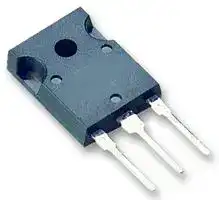


AUIRGP4063D
IGBT, 100 A, 1.6 V, 330 W, 600 V, TO-247AC, 3 Pins
- Manufacturer: INFINEON
- Product type: Single IGBTs
- No. of Pins: 3Pins
- Power Dissipation: 330W
- Transistor Mounting: Through Hole
- Transistor Case Style: TO-247AC
- Operating Temperature Max: 175°C
- Continuous Collector Current: 100A
- Collector Emitter Voltage Max: 600V
- Automotive Qualification Standard: AEC-Q101
- Collector Emitter Saturation Voltage: 1.6V
| Delivery and price | |
|---|---|
| Units per pack | 1 |
| Price | 12.57 € |
| Current stock | 10+ |
| Lead time | 30 days |

**����������� �������������**
_**AUTOMOTIVE GRADE**_
**==> picture [103 x 44] intentionally omitted <==**
## _**INSULATED GATE BIPOLAR TRANSISTOR WITH ULTRAFAST SOFT RECOVERY DIODE**_
**==> picture [268 x 138] intentionally omitted <==**
**----- Start of picture text -----**<br>
C<br>VCES = 600V<br>IC = 60A, TC = 100°C<br>G tSC 5μs, TJ(max) = 175°C<br>E VCE(on) typ. = 1.6V<br>n-channel<br>**----- End of picture text -----**<br>
## _**Features**_
- Low VCE (ON) Trench IGBT Technology
- Low switching losses
- Maximum Junction temperature 175 °C
- 5 μS short circuit SOA
- Square RBSOA
- 100% of the parts tested for 4X rated current (ILM)
- Positive VCE (ON) Temperature co-efficient
- Ultra fast soft Recovery Co-Pak Diode
- Tight parameter distribution
**==> picture [211 x 113] intentionally omitted <==**
**----- Start of picture text -----**<br>
C C<br>[E]<br>G [C] G [C E]<br>TO-247AC TO-247AD<br>AUIRGP4063D AUIRGP4063D-E<br>**----- End of picture text -----**<br>
- Lead Free Package
## _**Benefits**_
- High Efficiency in a wide range of applications
- Suitable for a wide range of switching frequencies due to Low VCE (ON) and Low Switching losses
- Rugged transient Performance for increased reliability
- Excellent Current sharing in parallel operation
|**_G_**|**_C_**|**_E_**|
|---|---|---|
|Gate|Collector|Emitter|
- Low EMI
|**_Base part number_**|**_Package Type_**|**_Standard Pack_**|**_Standard Pack_**|**_Orderable Part Number_**|
|---|---|---|---|---|
|||**_Form_**|**_Quantity_**||
|AUIRGP4063D|TO-247|Tube|25|AUIRGP4063D|
|AUIRGP4063D-E|TO-247|Tube|25|AUIRGP4063D-E|
## _**Absolute Maximum Ratings**_
Stresses beyond those listed under “Absolute Maximum Ratings” may cause permanent damage to the device. These are stress ratings only; and functional operation of the device at these or any other condition beyond those indicated in the specifications is not implied. Exposure to absolutemaximum-rated conditions for extended periods may affect device reliability. The thermal resistance and power dissipation ratings are measured under board mounted and still air conditions. Ambient temperature (TA) is 25°C, unless otherwise specified.
||**_Parameter_**|**_Max._**|**_Units_**|
|---|---|---|---|
|VCES|Collector-to-Emitter Voltage|600|V|
|IC@ TC= 25°C|Continuous Collector Current|100<br>60<br>144<br>192<br>82<br>50<br>192|A|
|IC@ TC= 100°C|Continuous Collector Current|||
|ICM|Pulse Collector Current,VGE= 15V|||
|ILM|Clamped Inductive Load Current,VGE= 20V�|||
|IF@ TC= 25°C|Diode Continous Forward Current|||
|IF@ TC= 100°C|Diode Continous Forward Current|||
|IFM|Diode Maximum Forward Current�|||
|VGE|Continuous Gate-to-Emitter Voltage|±20<br>±30|V|
||Transient Gate-to-Emitter Voltage|||
|PD@ TC= 25°C|Maximum Power Dissipation|330<br>170|W|
|PD@ TC= 100°C|Maximum Power Dissipation|||
|TJ<br>TSTG|Operating Junction and<br>Storage Temperature Range|-55 to +175<br>300 (0.063 in. (1.6mm) from case)|°C|
||Soldering Temperature, for 10 sec.|||
||Mounting Torque, 6-32 or M3 Screw|10 lbf·in (1.1 N·m)||
�������������������������������������������������������������������������������������������������������������������������������������
�
## �������������
## _**Thermal Resistance**_
|||**_Parameter_**|**_Parameter_**|**_Parameter_**|**_Parameter_**|**_Parameter_**|**_Min._**|**_Typ._**|**_Max._**|**_Units_**|**_Units_**|
|---|---|---|---|---|---|---|---|---|---|---|---|
|RJC(IGBT)||Thermal Resistance Junction-to-Case-(each IGBT)|||||–––|–––|0.45|°C/W||
|RJC(Diode)||Thermal Resistance Junction-to-Case-(each Diode)|||||–––|–––|0.92|||
|RCS||Thermal Resistance,Case-to-Sink(flat, greased surface)|||||–––|0.24|–––|||
|RJA||Thermal Resistance,Junction-to-Ambient(typical socket mount)|||||–––|80|–––|||
|**_Electrical Characteristics @ TJ = 25°C(unless otherwise specified)_**||||||||||||
||**_Parameter_**||**_Min._**|**_Typ._**|**_Max. _**|**_Units _**|**_Conditions_**||||**R ef .F i g**|
|V(BR)CES|Collector-to-E mitter B reakdown Voltage||600|—|—|V|VGE= 0V,IC= 150μA�||||CT 6|
|V(BR)CES/TJ|T emperature Coeff. of B reakdown Voltage||—|0.30|—|V/°C|VGE= 0V,IC= 1mA(25°C-175°C)||||CT 6|
|VCE(on)|Collector-to-Emitter Saturation Voltage||—|1.6|1.9|V|IC= 48A,VGE= 15V,TJ= 25°C||||5,6,7<br>9,10,11|
||||—|1.9|—||IC= 48A,VGE= 15V,TJ= 150°C|||||
||||—|2.0|—||IC= 48A,VGE= 15V,TJ= 175°C|||||
|VGE(th)|Gate Threshold Voltage||4.0|—|6.5|V|VCE= VGE,IC= 1.4mA||||9, 10,<br>11, 12|
|VGE(th)/T J|Threshold Voltage temp. coefficient||—|-21|—|mV/°C|VCE= VGE,IC= 1.0mA(25°C - 175°C)|||||
|gfe|Forward Transconductance||—|32|—|S|VCE= 50V,IC= 48A,PW = 80μs|||||
|ICES|Collector-to-Emitter Leakage Current||—|1.0|150|μA|VGE= 0V,VCE= 600V|||||
||||—|450|1000||VGE= 0V,VCE= 600V,TJ= 175°C|||||
|VFM|Diode Forward Voltage Drop||—|1.95|2.91|V|IF= 48A||||8|
||||—|1.45|—||IF= 48A,TJ= 175°C|||||
|IGES|Gate-to-Emitter Leakage Current||—|—|±100|nA|VGE= ±20V|||||
## _**Switching Characteristics @ TJ = 25°C (unless otherwise specified)**_
||**_Parameter_**|**_Min._**|**_Typ._**|**_Max. _**|**_Units_**|**_Conditions_**|**R ef .F i g**|
|---|---|---|---|---|---|---|---|
|Qg|Total Gate Charge(turn-on)|—|95|140|nC|IC= 48A<br>VGE= 15V<br>VCC= 400V|24<br>CT 1|
|Qge|Gate-to-Emitter Charge(turn-on)|—|28|42||||
|Qgc|Gate-to-Collector Charge(turn-on)|—|35|53||||
|Eon|Turn-On SwitchingLoss|—|625|1141|μJ|IC= 48A, VCC= 400V, VGE= 15V<br>RG= 10, L = 200μH, LS= 150nH, TJ= 25°C<br>E nergy los s es include tail & diode revers e recovery|CT 4|
|Eoff|Turn-Off SwitchingLoss|—|1275|1481||||
|Etotal|Total SwitchingLoss|—|1900|2622||||
|td(on)|Turn-On delaytime|—|60|78|<br>ns|IC= 48A, VCC= 400V, VGE= 15V<br>RG= 10, L = 200μH, LS= 150nH, TJ= 25°C|CT 4|
|tr|Rise time|—|40|56||||
|td(off)|Turn-Off delaytime|—|145|176||||
|tf|Fall time|—|35|46||||
|Eon|Turn-On SwitchingLoss|—|1625|—|<br>μJ|IC= 48A, VCC= 400V, VGE=15V<br>RG=10, L=200μH, LS=150nH, TJ= 175°C�<br>E nergy los s es include tail & diode revers e recovery|13, 15<br>�CT 4<br>WF1, WF2|
|Eoff|Turn-Off SwitchingLoss|—|1585|—||||
|Etotal|Total SwitchingLoss|—|3210|—||||
|td(on)|Turn-On delaytime|—|55|—|<br>ns|IC= 48A, VCC= 400V, VGE= 15V<br>RG= 10, L = 200μH, LS= 150nH<br>TJ= 175°C|14, 16<br>CT 4<br>WF 1<br>WF2|
|tr|Rise time|—|45|—||||
|td(off)|Turn-Off delaytime|—|165|—||||
|tf|Fall time|—|45|—||||
|Cies|Input Capacitance|—|3025|—|pF|VGE= 0V<br>VCC= 30V<br>f = 1.0Mhz|23|
|Coes|Output Capacitance|—|245|—||||
|Cres|Reverse Transfer Capacitance|—|90|—||||
|RBSOA|Reverse Bias Safe Operating Area|FULL SQUARE||||TJ= 175°C, IC= 192A<br>VCC= 480V, Vp =600V<br>Rg= 10,VGE= +15V to 0V|4<br>CT 2|
|SCSOA|Short Circuit Safe Operating Area|5|—|—|μs|VCC= 400V, Vp =600V<br>Rg= 10,VGE= +15V to 0V|22, CT 3<br>WF4|
|Erec|Reverse RecoveryEnergyof the Diode|—|845|—|μJ|TJ= 175°C<br>VCC= 400V, IF= 48A<br>VGE= 15V,Rg= 10,L =200μH,Ls= 150nH|17, 18, 19<br>20, 21<br>WF3|
|trr|Diode Reverse RecoveryTime|—|115|—|ns|||
|Irr|Peak Reverse RecoveryCurrent|—|40|—|A|||
_**Notes:**_
- VCC = 80% (VCES), VGE = 20V, L = 200μH, RG = 10.
- This is only applied to TO-247AC package.
- Pulse width limited by max. junction temperature.
- Refer to AN-1086 for guidelines for measuring V(BR)CES safely.
��������������������������������������������������������������������������������������������������������������������������������������
�
**==> picture [206 x 666] intentionally omitted <==**
**----- Start of picture text -----**<br>
100<br>80 Sa<br>60 CENCE<br>40<br>20<br>0<br>25 50 75 100 125 150 175<br> TC, Case Temperature (°C)<br>Fig. 1 - Maximum DC Collector Current vs.<br>Case Temperature<br>1000<br>100 10μsec<br>100μsec<br>10 ZTE NOT 1msec SE<br>po esp AS DC sd<br>1<br>Tc = 25°C<br>Tj = 175°C<br>Single Pulse<br>ci Corl<br>0.1<br>1 10 100 1000<br>VCE (V)<br>Fig. 3 - Forward SOA<br>TC = 25°C, TJ 175°C; VGE =15V<br>200<br>180 | | Net TT<br>160 || VGE = 18V<br>VGE = 15V<br>140 || PAR VGE = 12V<br>120 | Ty Je| VGE = 10V<br>VGE = 8.0V<br>a)<br>100<br>80 |) aoeTTT<br>60 |<br>40 |reff|| [7Y {[||<br>20<br>0 [AL t [| [ |<br>0 2 4 6 8 10<br> VCE (V)<br>ICE (A)<br>IC (A)<br>IC, Collector Current (A)<br>**----- End of picture text -----**<br>
_**Fig. 5**_ - Typ. IGBT Output Characteristics TJ = -40°C; tp = 80μs
**==> picture [206 x 666] intentionally omitted <==**
**----- Start of picture text -----**<br>
400<br>300<br>200<br>100<br>0<br>25 50 75 100 125 150 175<br> TC (°C)<br>Fig. 2 - Power Dissipation vs. Case<br>Temperature<br>1000<br>100<br>eeese<br>10 ell<br>ee el<br>1<br>10 100 1000<br>VCE (V)<br>Fig. 4 - Reverse Bias SOA<br>TJ = 175°C; VGE =15V<br>200<br>180 |[7]<br>160<br>[ VGE = 18V JT |<br>140 || (Abe<t VGE = 15V TT<br>s[f7 VGE = 12V<br>120 | |FAN VGE = 10V<br>100 | > VGE = 8.0V<br>80 ia eea,<br>60 eee<br>4020 |e/aff ||/|ee|<br>0 |[yifi ft| [| [{ |<br>0 2 4 6 8 10<br> VCE (V)<br>ICE (A)<br>IC (A)<br>Ptot (W)<br>**----- End of picture text -----**<br>
_**Fig. 6**_ - Typ. IGBT Output Characteristics TJ = 25°C; tp = 80μs
**==> picture [198 x 198] intentionally omitted <==**
**----- Start of picture text -----**<br>
200<br>180 VGE = 18V Lf /| | |<br>VGE = 15V<br>160 VGE = 12V<br>VGE = 10V<br>140<br>VGE = 8.0V<br>120<br>100<br>80 a / eee<br>60 | I~ProN_N | |<br>40<br>| OY | iN<br>200 |\7A| | | | |<br>0 2 4 6 8 10<br> VCE (V)<br>ICE (A)<br>**----- End of picture text -----**<br>
_**Fig. 7**_ - Typ. IGBT Output Characteristics TJ = 175°C; tp = 80μs
**==> picture [196 x 193] intentionally omitted <==**
**----- Start of picture text -----**<br>
200180 7ae<br>160<br>140<br>-40°c<br>120 25°C<br>175°C<br>100<br>80 ai. aa<br>60 ae ae<br>40<br>a2)/<br>20<br>0 |He”|<br>0.0 1.0 2.0 3.0 4.0<br> VF (V)<br>IF (A)<br>**----- End of picture text -----**<br>
_**Fig. 8**_ - Typ. Diode Forward Characteristics tp = 80μs
**==> picture [469 x 423] intentionally omitted <==**
**----- Start of picture text -----**<br>
2018 PFaTE 2018 i<br>1614 a 1614 i<br>12 aia I CE = 24A 12 | [tt] I CE = 24A<br>10 CTE ICE = 48A 10 | ICE = 48A<br>8 mes I CE = 96A 8 |ie I CE = 96A<br>6 anise 6 |iEol<br>4 a 4 EIE<br>2 en a 2 aae<br>0 i aeee ee 0 PLASeee<br>5 10 15 20 5 10 15 20<br> VGE (V) VGE (V)<br>Fig. 9 - Typical VCE vs. VGE Fig. 10 - Typical VCE vs. VGE<br>TJ = -40°C TJ = 25°C<br>2018 PF tt yf 200180 PF<br>T = 25°C<br>J<br>16 Pett 160 T = 175°C ZF<br>J<br>14 a it 140 po<br>12 Pe I CE = 24A 120 PF t/<br>10 | tt ICE = 48A 100 a e/a<br>8 | td I CE = 96A 80 FT CY<br>6 | trib 60 Ae<br>42 aPQ| eiee ee 4020 ai,e/aee (ee Ae<br>0 ee 0 |EOP<br>5 10 15 20 0 5 10 15<br> VGE (V) VGE (V)<br>VCE (V)<br>VCE (V) VCE (V)<br>ICE (A)<br>**----- End of picture text -----**<br>
_**Fig. 11**_ - Typical VCE vs. VGE TJ = 175°C
_**Fig. 12**_ - Typ. Transfer Characteristics VCE = 50V; tp = 10μs
**==> picture [484 x 656] intentionally omitted <==**
**----- Start of picture text -----**<br>
6000 1000<br>5000<br>pf EOFF Pt<br>4000 ee td OFF ft tf<br>3000 EON 100<br>tdON<br>2000 fe PIE<br>—f ye tF<br>t R<br>1000 Ff a==_=<br>7% |eeore f |<br>0 10<br>0 50 100 150 0 20 40 60 80 100<br>IC (A)<br>IC (A)<br>Fig. 13 - Typ. Energy Loss vs. IC Fig. 14 - Typ. Switching Time vs. ICC<br> = 175°C; L = 200μH; VCE = 400V, RG = 10; VGE = 15VCE = 400V, RG = 10; VGE = 15V= 400V, RG = 10; VGE = 15VG = 10; VGE = 15V= 10; VGE = 15V; VGE = 15V; VGE = 15VGE = 15V= 15V TJ = 175°C; L = 200μH; VCE = 400V, RG = 10; VGE J = 175°C; L = 200μH; VCE = 400V, RG = 10; VGE = 175°C; L = 200μH; VCE = 400V, RG = 10; VGE CE = 400V, RG = 10; VGE = 400V, RG = 10; VGE G = 10; VGE = 10; VGE ; VGE ; VGE GE = 15V<br>5000 1000<br>4500 TT 77 td OFF oT<br>EOFF<br>4000 ave a<br>EON tR<br>3500<br>Pf AT tdON<br>3000 100<br>2500 | Ld tF<br>2000 Ane e eeT<br>1500 PP | |<br>1000 PTT fT lr 10 e e ee e e ee<br>0 25 50 75 100 125 0 25 50 75 100 125<br>Rg () RG ()<br>Fig. 15 - Typ. Energy Loss vs. RG<br> = 175°C; L = 200μH; VCE = 400V, ICE = 48A; VGE = 15VCE = 400V, ICE = 48A; VGE = 15V= 400V, ICE = 48A; VGE = 15VCE = 48A; VGE = 15V= 48A; VGE = 15VGE = 15V= 15V Fig. 16 - Typ. Switching Time vs. RGG<br>TJ = 175°C; L = 200μH; VCE = 400V, ICE = 48A; VGE J = 175°C; L = 200μH; VCE = 400V, ICE = 48A; VGE = 175°C; L = 200μH; VCE = 400V, ICE = 48A; VGE CE = 400V, ICE = 48A; VGE = 400V, ICE = 48A; VGE CE = 48A; VGE = 48A; VGE GE = 15V<br>45 45<br>40 |te|r| hl<br>40<br>RG = 10<br>35 we<br>35<br>30 PF | | tf KL<br>25 | R G = 22 30<br>20 |[| R G = 47 25<br>ee<br>15 es _]) ++ —<br>RG = 100 20<br>a a ee<br>10<br>Ff 15<br>50 Ff ft| fT 10<br>0 20 40 60 80 100 0 25 50 75 100 125<br>IF (A) RG (<br>Swiching Time (ns)<br>IRR (A) IRR (A)<br>Energy (μJ)<br>Swiching Time (ns)<br>Energy (μJ)<br>**----- End of picture text -----**<br>
_**Fig. 14**_ - Typ. Switching Time vs. ICC TJ = 175°C; L = 200μH; VCE = 400V, RG = 10; VGE J = 175°C; L = 200μH; VCE = 400V, RG = 10; VGE = 175°C; L = 200μH; VCE = 400V, RG = 10; VGE CE = 400V, RG = 10; VGE = 400V, RG = 10; VGE G = 10; VGE = 10; VGE ; VGE ; VGE GE = 15V
TJ = 175°C; L = 200μH; VCE = 400V, RG = 10; VGE = 15VCE = 400V, RG = 10; VGE = 15V= 400V, RG = 10; VGE = 15VG = 10; VGE = 15V= 10; VGE = 15V; VGE = 15V; VGE = 15VGE = 15V= 15V
_**Fig. 16**_ - Typ. Switching Time vs. RGG TJ = 175°C; L = 200μH; VCE = 400V, ICE = 48A; VGE J = 175°C; L = 200μH; VCE = 400V, ICE = 48A; VGE = 175°C; L = 200μH; VCE = 400V, ICE = 48A; VGE CE = 400V, ICE = 48A; VGE = 400V, ICE = 48A; VGE CE = 48A; VGE = 48A; VGE GE = 15V
TJ = 175°C; L = 200μH; VCE = 400V, ICE = 48A; VGE = 15VCE = 400V, ICE = 48A; VGE = 15V= 400V, ICE = 48A; VGE = 15VCE = 48A; VGE = 15V= 48A; VGE = 15VGE = 15V= 15V
_**Fig. 17**_ - Typ. Diode IRR vs. IF TJ = 175°C
_**Fig. 18**_ - Typ. Diode IRR vs. RG TJ = 175°C
**==> picture [203 x 193] intentionally omitted <==**
**----- Start of picture text -----**<br>
45<br>40<br>Pt ty<br>|<br>35 | [fe<br>|<br>30<br>| | yi<br>2520 |7tYetff<br>A<br>15 [| [ fl<br>{|<br>10 | ft ft<br>0 200 400 600 800 1000<br>diF /dt (A/μs)<br>IRR (A)<br>**----- End of picture text -----**<br>
_**Fig. 19**_ - Typ. Diode IRR vs. diF/dt VCC = 400V; VGE = 15V; IF = 48A; TJ = 175°C
**==> picture [205 x 420] intentionally omitted <==**
**----- Start of picture text -----**<br>
900<br>800 [fy RG = 10<br>700<br>600 pt R G = 22<br>500 pet<br>400 R G = 47<br>eA<br>300<br>200 RG = 100<br>100 I<br>es<br>0<br>0 20 40 60 80 100<br>IF (A)<br>Fig. 21 - Typ. Diode ERR vs. IF<br>TJ = 175°C<br>10000<br>Cies<br>S2a=2<br>—S— os<br>1000<br>Aff |<br>Coes<br>100<br>_ S|<br>Cres<br>——<br>10 es<br>0 20 40 60 80 100<br>VCE (V)<br>Energy (μJ)<br>Capacitance (pF)<br>**----- End of picture text -----**<br>
_**Fig. 23**_ - Typ. Capacitance vs. VCE VGE= 0V; f = 1MHz
**==> picture [220 x 191] intentionally omitted <==**
**----- Start of picture text -----**<br>
4000<br>3500<br>96A<br>3000<br>48A 10<br>2500<br>100<br> 22<br> 47<br>2000<br>24A<br>1500<br>1000<br>0 500 1000 1500<br>diF /dt (A/μs)<br>QRR (μC)<br>**----- End of picture text -----**<br>
_**Fig. 20**_ - Typ. Diode QRR vs. diF/dt VCC = 400V; VGE = 15V; TJ = 175°C
**==> picture [234 x 448] intentionally omitted <==**
**----- Start of picture text -----**<br>
18 400<br>16 [| py 350<br>14 300<br>ane<br>12 IVY] | 250<br>10 EAE \/ 200<br>8 150<br>6 100<br>P| [N\) |<br>4 || Ri 50<br>8 10 12 14 16 18<br>VGE (V)<br>Fig. 22 - VGE vs. Short Circuit Time<br>VCC = 400V; TC = 25°C<br>16<br>14 "TT VCES = 300V Wy<br>VCES = 400V<br>12 || Y |<br>10 | Ge<br>8<br>6<br>42 AVe<br>(A<br>0 a<br>0 25 50 75 100<br>Q G, Total Gate Charge (nC)<br>Fig. 24 - Typical Gate Charge vs. VGE<br> ICE = 48A; L = 600μH<br>Time (μs)<br>VGE, Gate-to-Emitter Voltage (V)<br>Current (A)<br>**----- End of picture text -----**<br>
**==> picture [442 x 533] intentionally omitted <==**
**----- Start of picture text -----**<br>
1<br>a ee eee ee eee ee eee ee eee<br>D = 0.50 poo eT HHT<br>0.1 ee 0.20 aon al |<br>rr 0.10 EE EE<br>0.05<br>—_— 0.02 ee aaa ee eee Lee R1 R1 R2 R2 R3R3 Ri (°C/W) i (sec)<br>0.01 Be: 0.01 ee J J C 0.0872 0.000114 ill<br>eeteeetee ee 11 2 2 3 3 —_ 0.1599 0.001520 1Han|<br>|_| 7 SINGLE PULSE Se ee Ci= T iRi T i rid 0.2020 0.020330 [1]<br>0.001 wai ( THERMAL RESPONSE ) Py Ci iRi<br>PEE Notes:<br>a ee a ee ee ee ee eee ee mean<br>1. Duty Factor D = t1/t2<br>2. Peak Tj = P dm x Zthjc + Tc<br>0.0001 FEFEAEee<br>1E-006 1E-005 0.0001 0.001 0.01 0.1 1<br>t1 , Rectangular Pulse Duration (sec)<br>Fig 25. Maximum Transient Thermal Impedance, Junction-to-Case (IGBT)<br>10<br>en,ee ee ee ee ee<br>1 || |<br>D = 0.50<br>|| 0.20 ee ee Me ee<br>0.1 "| 0.10 er<br>0.01 | | 0.050.010.02 BE ee es 0 J nanan J R1R1 ean R2R2 eee R3R 3 C 0.2774 0.000908 Ri (°C/W) i (sec) Ly<br>creer 11 2 2 33 — 0.3896 0.003869 il<br>i es Ci= Ci iRi iRi | 0.2540 0.030195 cH<br>0.001 Pat SINGLE PULSE A<br>( THERMAL RESPONSE ) Notes:<br>1. Duty Factor D = t1/t2<br>2. Peak Tj = P dm x Zthjc + Tc<br>0.0001 FeetUa{| TE SEcrTT EEC §S EsBipELL tt THEI<br>1E-006 1E-005 0.0001 0.001 0.01 0.1 1<br>t1 , Rectangular Pulse Duration (sec)<br>Thermal Response ( Z thJC )<br>Thermal Response ( Z thJC )<br>**----- End of picture text -----**<br>
_**Fig. 26.**_ Maximum Transient Thermal Impedance, Junction-to-Case (DIODE)
**==> picture [231 x 50] intentionally omitted <==**
**----- Start of picture text -----**<br>
L<br>VCC<br>DUT<br>0<br>1K<br>**----- End of picture text -----**<br>
_**Fig.C.T.1**_ - Gate Charge Circuit (turn-off)
**==> picture [86 x 52] intentionally omitted <==**
**----- Start of picture text -----**<br>
4x<br>DC 360V<br>DUT<br>**----- End of picture text -----**<br>
_**Fig.C.T.3**_ - S.C. SOA Circuit
**==> picture [206 x 138] intentionally omitted <==**
**----- Start of picture text -----**<br>
VCC<br>R =<br>ICM<br>DUT<br>VCC<br>Rg<br>**----- End of picture text -----**<br>
_**Fig.C.T.5**_ - Resistive Load Circuit
**==> picture [192 x 90] intentionally omitted <==**
**----- Start of picture text -----**<br>
L<br>000<br>D><br>80 V<br>DUT<br>480V<br>Rg<br>**----- End of picture text -----**<br>
_**Fig.C.T.2**_ - RBSOA Circuit
**==> picture [219 x 109] intentionally omitted <==**
**----- Start of picture text -----**<br>
diode clamp /<br>DU T<br>L<br>-<br>- 5V<br>DU T /<br>D RIVER VCC<br>Rg |<br>**----- End of picture text -----**<br>
_**Fig.C.T.4**_ - Switching Loss Circuit
**==> picture [225 x 183] intentionally omitted <==**
**----- Start of picture text -----**<br>
C force<br>400μH<br>D1 10K<br>C sense<br>G force DUT 0.0075μ<br>E sense<br>E force<br>**----- End of picture text -----**<br>
_**Fig.C.T.6**_ - BVCES Filter Circuit
**==> picture [202 x 262] intentionally omitted <==**
**----- Start of picture text -----**<br>
700 140<br>600 a 120<br>ff<br>500 100<br>400 80<br>tf<br>300 60<br>90% ICE<br>200 40<br>5% VCE<br>100 20<br>tp 5% ICE<br>0 0<br>an<br>EOFF Loss<br>-100 -20<br>-0.40 0.10 0.60 1.10<br>Time(μs)<br> (V)<br>CE<br>V<br>**----- End of picture text -----**<br>
_**Fig. WF1**_ - Typ. Turn-off Loss Waveform @ TJ = 175°C using Fig. CT.4
**==> picture [179 x 253] intentionally omitted <==**
**----- Start of picture text -----**<br>
60<br>50 Se<br>—<br>40<br>QRR<br>30<br> \eee<br>20 tRR<br>10 ple<br>0<br>-10 10%<br>Peak<br>Peak<br>-20 I RR I RR<br>-30 OV/<br>cE<br>-40<br>-0.15 -0.05 0.05 0.15 0.25<br>time (μS)<br> (A)<br>IRR<br>**----- End of picture text -----**<br>
_**Fig. WF3**_ - Typ. Diode Recovery Waveform @ TJ = 175°C using Fig. CT.4
**==> picture [202 x 265] intentionally omitted <==**
**----- Start of picture text -----**<br>
600 120<br>oe<br>500 100<br>t r<br>400 80<br>TEST<br>300 CURRE 60<br>90% test<br>200 40<br>10% test<br>100 20<br>5% VCE<br>Wy<br>0 0<br>oe.<br>EON<br>-100 -20<br>6.20 6.40 6.60 6.80 7.00<br>Time (μs)<br> (V)<br>CE<br>V<br>**----- End of picture text -----**<br>
_**Fig. WF2**_ - Typ. Turn-on Loss Waveform @ TJ = 175°C using Fig. CT.4
**==> picture [207 x 286] intentionally omitted <==**
**----- Start of picture text -----**<br>
600 600<br>500 500<br>ICE<br>VCE<br>400 400<br>300 300<br>200 200<br>100 100<br>0 0<br>-100 -100<br>-5.00 0.00 5.00 10.00<br>time (μS)<br>Fig. WF4 - Typ. S.C. Waveform<br>@ TJ = 25°C using Fig. CT.3<br> (V) (A)<br>VCE ICE<br>**----- End of picture text -----**<br>
TO-247AC package is not recommended for Surface Mount Application.
TO-247AD package is not recommended for Surface Mount Application.
## _**† Qualification Information**_
|Automotive||
|---|---|
|(per AEC-Q101)|†|
|**_Qualification Informationlification Informationcation Informationtion Informationon Informationn Informationormationrmationationtiononn_**<br>**_†_**|**_Qualification Informationlification Informationcation Informationtion Informationon Informationn Informationormationrmationationtiononn_**<br>**_†_**|||
|---|---|---|---|
|**_Qualification Level_**||Automotive<br>(per AEC-Q101)<br>†||
|||Comments: This part number(s) passed Automotive qualification.<br>IR’s Industrial and Consumer qualification level is granted by<br>extension of the higher Automotive level.||
|**_Moisture Sensitivity Level_**||TO-247AC|N/A|
|||TO-247AD|N/A|
|**_ESD_**|Machine Model|Class M4 (±425V)<br>††<br>(per AEC-Q101-002)||
||Human Body Model|Class H2 (±4000V)<br>††<br>(per AEC-Q101-001)||
||Charged Device Model|Class C5 (±1125V)<br>††<br>(per AEC-Q101-005)||
|**_RoHS Compliant_**||Yes||
y[IN] wD ~~Té4R~~
~~| AUIRGP4063D/E |~~
IMPORTANT NOTICE
Unless specifically designated for the automotive market, International Rectifier Corporation and its subsidiaries (IR) reserve the right to make corrections, modifications, enhancements, improvements, and other changes to its products and services at any time and to discontinue any product or services without notice. Part numbers designated with the “AU” prefix follow automotive industry and / or customer specific requirements with regards to product discontinuance and process change notification. All products are sold subject to IR’s terms and conditions of sale supplied at the time of order acknowledgment. IR warrants performance of its hardware products to the specifications applicable at the time of sale in accordance with IR’s standard warranty. Testing and other quality control techniques are used to the extent IR deems necessary to support this warranty. Except where mandated by government requirements, testing of all parameters of each product is not necessarily performed.
IR assumes no liability for applications assistance or customer product design. Customers are responsible for their products and applications using IR components. To minimize the risks with customer products and applications, customers should provide adequate design and operating safeguards.
Reproduction of IR information in IR data books or data sheets is permissible only if reproduction is without alteration and is accompanied by all associated warranties, conditions, limitations, and notices. Reproduction of this information with alterations is an unfair and deceptive business practice. IR is not responsible or liable for such altered documentation. Information of third parties may be subject to additional restrictions. Resale of IR products or serviced with statements different from or beyond the parameters stated by IR for that product or service voids all express and any implied warranties for the associated IR product or service and is an unfair and deceptive business practice. IR is not responsible or liable for any such statements.
IR products are not designed, intended, or authorized for use as components in systems intended for surgical implant into the body, or in other applications intended to support or sustain life, or in any other application in which the failure of the IR product could create a situation where personal injury or death may occur. Should Buyer purchase or use IR products for any such unintended or unauthorized application, Buyer shall indemnify and hold International Rectifier and its officers, employees, subsidiaries, affiliates, and distributors harmless against all claims, costs, damages, and expenses, and reasonable attorney fees arising out of, directly or indirectly, any claim of personal injury or death associated with such unintended or unauthorized use, even if such claim alleges that IR was negligent regarding the design or manufacture of the product.
IR products are neither designed nor intended for use in military/aerospace applications or environments unless the IR products are specifically designated by IR as military-grade or “enhanced plastic.” Only products designated by IR as military-grade meet military specifications. Buyers acknowledge and agree that any such use of IR products which IR has not designated as military-grade is solely at the Buyer’s risk, and that they are solely responsible for compliance with all legal and regulatory requirements in connection with such use.
IR products are neither designed nor intended for use in automotive applications or environments unless the specific IR products are designated by IR as compliant with ISO/TS 16949 requirements and bear a part number including the designation “AU”. Buyers acknowledge and agree that, if they use any non-designated products in automotive applications, IR will not be responsible for any failure to meet such requirements.
For technical support, please contact IR’s Technical Assistance Center http://www. irf.com/technical-info/
WORLD HEADQUARTERS:
233 Kansas St., El Segundo, California 90245 Tel: (310) 252-7105
www.irf.com © 2013 International Rectifier
July 12, 2013
Updated at February 9, 2023
Infineon Technologies is a globally recognized leader in semiconductor solutions, renowned for driving innovation in power management, energy efficiency, and modern mobility. With a strong legacy of engineering excellence, the company provides highly reliable components designed to meet the rigorous demands of industrial, automotive, and advanced commercial applications. The core of our Infineon portfolio is centered on their industry-leading discrete semiconductors. We offer an extensive selection of single and dual MOSFETs, alongside a robust range of single IGBTs and advanced IGBT modules. These flagship power transistors are essential for high-efficiency power conversion and motor control, providing engineers with superior thermal performance and minimized switching losses. Beyond advanced field-effect transistors, the selection includes a comprehensive array of diodes and rectifiers, heavily featuring Schottky diodes, as well as fast-recovery and RF/PIN diodes. This power foundation is further supported by bipolar transistors, intelligent power modules, and thyristor SCR modules, delivering the critical building blocks required for complex power system designs. To support broader system integration, the portfolio also encompasses specialized solutions such as solid-state relays, AC/DC LED driver ICs, and Bluetooth communications modules. From high-power industrial rectifiers to wireless connectivity adapters, Infineon equips designers with the precision components needed to build efficient, scalable, and fully connected electronic systems.
About Novapart
Novapart is a B2B electronic component broker specialising in stock shortages and cost reduction. We source hard-to-find parts and identify compliant alternatives across a catalogue of 410,000+ components from 500+ manufacturers.
Learn more →Stock Shortage Specialist
When a component is unavailable, discontinued or has an unacceptable lead time, we tap into our network of vetted European and Asian distributors to source what you need — without compromising on quality or traceability.
Request a quote →Compliant Alternatives
We identify pin-to-pin, electrically equivalent substitutes that meet the same certifications (RoHS, AEC-Q100, REACH) as your original specification — validated against datasheets, not just part numbers. Often at a lower cost.
BOM Analysis service →