
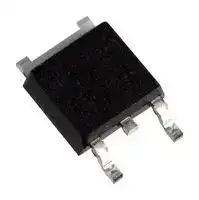


AUIRFR8403
Power MOSFET, N Channel, 40 V, 100 A, 0.0024 ohm, TO-252AA, Surface Mount
- Manufacturer: INFINEON
- Product type: Single MOSFETs
- No. of Pins: 3Pins
- Channel Type: N Channel
- Qualification: AEC-Q101
- Power Dissipation: 99W
- Transistor Mounting: Surface Mount
- Transistor Polarity: N Channel
- Power Dissipation Pd: 99W
- Rds(on) Test Voltage: 10V
- On Resistance Rds(on): 0.0024ohm
- Transistor Case Style: TO-252AA
- Drain Source Voltage Vds: 40V
- Operating Temperature Max: 175°C
- Continuous Drain Current Id: 100A
- Drain Source On State Resistance: 0.0024ohm
- Automotive Qualification Standard: AEC-Q101
- Gate Source Threshold Voltage Max: 3V
| Delivery and price | |
|---|---|
| Units per pack | 100 |
| Price | 0.592 € |
| Current stock | 10+ |
| Lead time | 30 days |

## HEXFET ® Power MOSFET

## **Features**

Advanced Process Technology New Ultra Low On-Resistance 175°C Operating Temperature Fast Switching Repetitive Avalanche Allowed up to Tjmax Lead-Free, RoHS Compliant Automotive Qualified *

||||HEXFET|HEXFET|HEXFET<br>Power MOSFET<br>®|Power MOSFET|
|---|---|---|---|---|---|---|
|||D||**VDSS**||**40V**|
|||||**RDS(on)   typ.**|**typ.**|**2.4m**Ω|
||||||||
|||||**max.**|**max.**|**3.1m**Ω|
|G||||**ID (Silicon Limited**|**Silicon Limited)**|**127A**|
|||S||**ID (Package Limited)**||**100A**|


## **Description**

Specifically designed for Automotive applications, this HEXFET® Power MOSFET utilizes the latest processing techniques to achieve extremely low on-resistance per silicon area. Additional features of this design are a 175°C junction operating temperature, fast switching speed and improved repetitive avalanche rating. These features combine to make this design an extremely efficient and reliable device for use in Automotive applications and wide variety of other applications.

|extremely low on-resistance per silicon area. Additional features of|extremely low on-resistance per silicon area. Additional features of|extremely low on-resistance per silicon area. Additional features of||||D||||
|---|---|---|---|---|---|---|---|---|---|
|extremely low on-resistance per silicon area. Additional features of|extremely low on-resistance per silicon area. Additional features of|extremely low on-resistance per silicon area. Additional features of||||D||D||
|this design are a 175°C junction operating temperature, fast switching|this design are a 175°C junction operating temperature, fast switching|this design are a 175°C junction operating temperature, fast switching||||||||
|speed and improved repetitive avalanche rating. These features|speed and improved repetitive avalanche rating. These features|||||||||
|combine to make this design an extremely efficient and reliable device||||||||||
|**Applications**<br>for use in Automotive applications and wide variety of other applications.||for use in Automotive applications and wide variety of other applications.|||||S<br>G|S<br>D<br>G<br>+||
|Electric Power Steering (EPS)|||||||D-Pak|I-Pak||
|Battery Switch||||||AUIRFR8403||AUIRFU8403||
|Start/Stop Micro Hybrid<br>Heavy Loads||||**G**|||**D**|**S**||
|DC-DC Converter||||Gate|||Drain<br>Source|||
|**Ordering Information**||||||||||
|**Base part number**|**Package Type**|**Standard Pack**|||||**Complete Part Number**|||
|||**Form**||**Quantity**||||||
|AUIRFR8403|DPak|Tube||75||||AUIRFR8403||
|||Tape and Reel||2000||||AUIRFR8403TR||
|||Tape and Reel Left||3000||||AUIRFR8403TRL||
|||Tape and Reel Right||3000||||AUIRFR8403TRR||
|AUIRFU8403|IPak|Tube||75||||AUIRFU8403||


## **Applications**

## **Ordering Information**

## **Absolute Maximum Ratings**

Stresses beyond those listed under “Absolute Maximum Ratings” may cause permanent damage to the device.   These are stress ratings only; and functional operation of the device at these or any other condition beyond those indicated in the specifications is not implied. Exposure to absolute-maximum-rated conditions for extended periods may affect device reliability. The thermal resistance and power dissipation ratings are measured under board mounted and still air conditions. Ambient temperature (TA) is 25°C, unless otherwise specified.

|**Symbol**<br>**Parameter**<br>**Units**<br>**Max.**|
|---|
|ID@ TC= 25°C<br>ID@ TC= 100°C<br>ID@ TC= 25°C<br>Continuous Drain Current,VGS@ 10V(Package Limited)<br>IDM<br>Pulsed Drain Current<br>Continuous Drain Current,VGS@ 10V(Silicon Limited)<br>Continuous Drain Current,VGS@ 10V(Silicon Limited)<br>A<br>127<br>90<br>520<br>100<br>~~fe~~<br>~~**e**e~~<br>~~sO~~<br>~~e~~|
|PD@TC= 25°C<br>Maximum Power Dissipation<br>W<br>Linear DeratingFactor<br>W/°C<br>VGS<br>Gate-to-Source Voltage<br>V<br>TJ<br>Operating Junction and<br>TSTG<br>Storage Temperature Range<br>SolderingTemperature,for 10 seconds(1.6mm from case)<br>99<br>°C<br>300<br>-55  to + 175<br>± 20<br>0.66<br>~~I~~<br>~~ee~~<br>~~ef~~<br>~~pp~~|
|**Avalanche Characteristics**|
|EAS (Thermally limited)<br>Single Pulse Avalanche Energy<br>EAS (tested)<br>Single Pulse Avalanche EnergyTested Value<br>IAR<br>Avalanche Current<br>A<br>EAR<br>Repetitive Avalanche Energy<br>mJ<br>**Thermal Resistance**<br>mJ<br>114<br>See Fig. 14, 15, 24a, 24b<br>148<br>~~eS~~<br>~~en~~<br>~~oe~~<br>~~a~~<br>~~|~~|
|**Symbol**<br>**Parameter**<br>**Typ.**<br>**Max.**<br>**Units**<br>RθJC<br>Junction-to-Case<br>–––<br>1.52<br>RθJA<br>Junction-to-Ambient(PCB Mount)<br>–––<br>50<br>RθJA<br>Junction-to-Ambient<br>–––<br>110<br>°C/W<br>~~es~~<br>~~©~~<br>~~SG~~<br>~~a~~<br>~~es~~|


HEXFET[®] is a registered trademark of International Rectifier.

***** Qualification standards can be found at http://www.irf.com/

## **������������**

**Static @ TJ = 25°C (unless otherwise specified)**

|**Symbol**|**Parameter**|**Min. **|**Typ. **|**Max. **|**Units**|**Conditions**|
|---|---|---|---|---|---|---|
|V(BR)DSS|Drain-to-Source Breakdown Voltage|40|–––|–––|V|VGS= 0V,ID= 250μA|
|ΔV(BR)DSS/ΔTJ|Breakdown Voltage Temp. Coefficient|–––|0.03|–––|V/°C|Reference to 25°C,ID= 5mA�|
|RDS(on)|Static Drain-to-Source On-Resistance|–––|2.4|3.1|mΩ|VGS= 10V,ID= 76A�|
|VGS(th)|Gate Threshold Voltage|2.2|3.0|3.9|V|VDS= VGS,ID= 100μA|
|IDSS|Drain-to-Source Leakage Current|–––|–––|1.0|μA|VDS= 40V,VGS= 0V|
|||–––|–––|150||VDS= 40V,VGS= 0V,TJ= 125°C|
|IGSS|Gate-to-Source Forward Leakage|–––|–––|100|nA|VGS= 20V|
||Gate-to-Source Reverse Leakage|–––|–––|-100||VGS= -20V|
|RG|Internal Gate Resistance|–––|1.5|–––|Ω||
|**Dynamic @**|**TJ = 25°C(unless otherwise specified)**||||||
|**Symbol**|**Parameter**|**Min. **|**Typ. **|**Max. **|**Units**|**Conditions**|
|gfs|Forward Transconductance|283|–––|–––|S|VDS= 10V,ID= 76A|
|Qg|Total Gate Charge|–––|66|99|nC|ID= 76A<br>VDS=20V<br>VGS= 10V�|
|Qgs|Gate-to-Source Charge|–––|18|–––|||
|Qgd|Gate-to-Drain("Miller")Charge|–––|22|–––|||
|Qsync|Total Gate Charge Sync.(Qg-Qgd)|–––|44|–––||ID= 76A,VDS=0V,VGS= 10V|
|td(on)|Turn-On DelayTime|–––|10|–––|ns|VGS= 10V�<br>ID= 76A<br>RG= 2.7Ω<br>VDD= 26V|
|tr|Rise Time|–––|32|–––|||
|td(off)|Turn-Off DelayTime|–––|31|–––|||
|tf|Fall Time|–––|23|–––|||
|Ciss|Input Capacitance|–––|3171|–––|pF|VGS= 0V<br>VDS= 25V<br>ƒ= 1.0 MHz,See Fig. 5|
|Coss|Output Capacitance|–––|477|–––|||
|Crss|Reverse Transfer Capacitance|–––|331|–––|||
|Cosseff.(ER)|Effective Output Capacitance(EnergyRelated)|–––|573|–––||VGS= 0V,VDS= 0V to 32V�,See Fig. 11|
|Cosseff.(TR)|Effective Output Capacitance(Time Related)|–––|681|–––||VGS= 0V,VDS= 0V to 32V�|
|**Diode Characteristics**|||||||
|**Symbol**|**Parameter**|**Min. **|**Typ. **|**Max. **|**Units**|**Conditions**|
|IS|Continuous Source Current<br>(Body Diode)|–––|–––|127�|A<br>|S<br>D<br>G<br>integral reverse<br>p-n junction diode.<br>MOSFET symbol<br>showing  the|
|ISM|Pulsed Source Current<br>(Body Diode)��|–––|–––|520�|||
|VSD|<br>Diode Forward Voltage|–––|0.9|1.3|V|TJ= 25°C,IS= 76A,VGS= 0V�<br>|
|dv/dt|Peak Diode Recovery �|–––|5.1|–––|V/ns|TJ= 175°C,IS= 76A,VDS= 40V|
|trr|Reverse Recovery Time|–––|25|–––|ns|TJ= 25°C<br>VR= 34V,<br>TJ= 125°C<br>IF= 76A<br>TJ= 25°C<br>di/dt = 100A/μs�<br>TJ= 125°C<br>TJ= 25°C|
|||–––|26|–––|||
|Qrr|Reverse Recovery Charge|–––|20|–––|nC||
|||–––|21|–––|||
|IRRM|Reverse RecoveryCurrent|–––|1.2|–––|A||


## **������**

- Calculated continuous current based on maximum allowable junction temperature. Bond wire current limit is 100A by source

- bonding technology. Note that  current limitations arising from heating

- of the device leads may occur with some lead mounting arrangements. (Refer to AN-1140)

- Repetitive rating;  pulse width limited by max. junction temperature.

- Limited by TJmax, starting TJ = 25°C, L = 0.039mH, RG = 50 Ω , IAS = 76A, VGS =10V. Part not recommended for use  above this value.

   - Coss eff. (TR) is a fixed capacitance that gives the same charging time as Coss while VDS is rising from 0 to 80% VDSS.

   - Coss eff. (ER) is a fixed capacitance that gives the same energy as Coss while VDS is rising from 0 to 80% VDSS.

   - When mounted on 1" square PCB (FR-4 or G-10 Material). For recommended footprint and soldering techniques refer to application note #AN-994.

   - R θ is measured at TJ approximately 90°C.

   - Pulse drain current is limited by source bonding technology.

- ISD ≤ 76A, di/dt ≤ 1255A/μs, VDD ≤ V(BR)DSS, TJ ≤ 175°C.

- Pulse width ≤ 400μs; duty cycle ≤ 2%.

���� ����������� ������������������������������

��������������

## **������������**

**==> picture [211 x 438] intentionally omitted <==**

**----- Start of picture text -----**<br>
1000<br>VGS<br>TOP           15V<br>10V<br>7.0V<br>100 6.0V<br>5.5V<br>5.0V<br>4.5V<br>BOTTOM 4.3V<br>10<br>1<br>4.3V ≤ 60μs PULSE WIDTH<br>Tj = 25°C<br>0.1<br>0.1 1 10 100<br>VDS, Drain-to-Source Voltage (V)<br>Fig 1.   Typical Output Characteristics<br>1000<br>T = 175°C<br>J<br>100<br>T = 25°C<br>10 J<br>1<br>VDS = 10V<br>≤ 60μs PULSE WIDTH<br>0.1<br>2 3 4 5 6 7 8<br>VGS, Gate-to-Source Voltage (V)<br>ID, Drain-to-Source Current (A)<br>ID, Drain-to-Source Current (A)<br>**----- End of picture text -----**<br>


**Fig 3.** Typical Transfer Characteristics

**==> picture [215 x 203] intentionally omitted <==**

**----- Start of picture text -----**<br>
100000<br>VGS   = 0V,       f = 1 MHZ<br>Ciss   = C gs + Cgd,  C ds SHORTED<br>C  = C<br>rss   gd<br>C = C + C<br>oss   ds  gd<br>10000<br>Ciss<br>C<br>1000 oss<br>Crss<br>100<br>0.1 1 10 100<br>VDS, Drain-to-Source Voltage (V)<br>C, Capacitance (pF)<br>**----- End of picture text -----**<br>


**Fig 5.** Typical Capacitance vs. Drain-to-Source Voltage

**==> picture [214 x 662] intentionally omitted <==**

**----- Start of picture text -----**<br>
1000<br>VGS<br>TOP           15V<br>10V<br>7.0V<br>6.0V<br>5.5V<br>100 5.0V<br>4.5V<br>BOTTOM 4.3V<br>10 4.3V<br>≤ 60μs PULSE WIDTH<br>Tj = 175°C<br>1<br>0.1 1 10 100<br>VDS, Drain-to-Source Voltage (V)<br>Fig 2.   Typical Output Characteristics<br>2.0<br>ID = 76A<br>VGS = 10V<br>1.6<br>1.2<br>0.8<br>0.4<br>-60 -20 20 60 100 140 180<br>TJ , Junction Temperature (°C)<br>Fig 4.   Normalized On-Resistance vs. Temperature<br>14.0<br>ID = 76A<br>12.0<br>VDS= 32V<br>10.0 V DS = 20V<br>8.0<br>6.0<br>4.0<br>2.0<br>0.0<br>0 10 20 30 40 50 60 70 80 90<br> QG,  Total Gate Charge (nC)<br>ID, Drain-to-Source Current (A)<br>VGS, Gate-to-Source Voltage (V)<br>RDS(on) , Drain-to-Source On Resistance                        (Normalized)<br>**----- End of picture text -----**<br>


**Fig 4.** Normalized On-Resistance vs. Temperature

**Fig 6.** Typical Gate Charge vs. Gate-to-Source Voltage

���� ����������� ������������������������������

��������������

## **������������**

**==> picture [213 x 226] intentionally omitted <==**

**----- Start of picture text -----**<br>
1000<br>T J  = 175°C<br>100<br>TJ = 25°C<br>10<br>1<br>V GS  = 0V<br>0.1<br>0.2 0.4 0.6 0.8 1.0 1.2 1.4 1.6<br>VSD, Source-to-Drain Voltage (V)<br>Fig 7.   Typical Source-Drain Diode<br>Forward Voltage<br>ISD, Reverse Drain Current (A)<br>**----- End of picture text -----**<br>


**==> picture [208 x 198] intentionally omitted <==**

**----- Start of picture text -----**<br>
10000<br>OPERATION IN THIS AREA<br>LIMITED BY RDS(on)<br>1000<br>100 100 μsec<br>1msec<br>10<br>10msec<br>1<br>DC<br>Tc = 25°C<br>0.1 Tj = 175°C<br>Single Pulse<br>0.01<br>0.1 1 10 100<br>VDS, Drain-to-Source Voltage (V)<br>ID,  Drain-to-Source Current (A)<br>**----- End of picture text -----**<br>


**Fig 8.** Maximum Safe Operating Area

**==> picture [498 x 441] intentionally omitted <==**

**----- Start of picture text -----**<br>
140 50<br>Id = 5.0mA<br>Limited By  Package 49<br>120<br>48<br>100 47<br>46<br>80<br>45<br>60<br>44<br>40 43<br>42<br>20<br>41<br>0 40<br>25 50 75 100 125 150 175 -60 -20 20 60 100 140 180<br> TC , Case Temperature (°C) TJ , Temperature ( °C )<br>Fig 9.   Maximum Drain Current vs. Fig 10.   Drain-to-Source Breakdown Voltage<br>Case Temperature<br>0.5 500<br>ID<br>0.4<br>TOP           13A<br>0.4 400                    24A<br>BOTTOM    76A<br>0.3<br>300<br>0.3<br>0.2<br>200<br>0.2<br>0.1<br>100<br>0.1<br>0.0 0<br>-5 0 5 10 15 20 25 30 35 40 45 25 50 75 100 125 150 175<br>Starting TJ , Junction Temperature (°C)<br>VDS, Drain-to-Source Voltage (V)<br>ID,  Drain Current (A)<br>Energy (μJ)<br>EAS , Single Pulse Avalanche Energy (mJ)<br>V(BR)DSS, Drain-to-Source Breakdown Voltage (V)<br>**----- End of picture text -----**<br>


**==> picture [212 x 201] intentionally omitted <==**

**----- Start of picture text -----**<br>
140<br>Limited By  Package<br>120<br>100<br>80<br>60<br>40<br>20<br>0<br>25 50 75 100 125 150 175<br> TC , Case Temperature (°C)<br>ID,  Drain Current (A)<br>**----- End of picture text -----**<br>


**Fig 10.** Drain-to-Source Breakdown Voltage

**Fig 11.** Typical COSS Stored Energy

**Fig 12.** Maximum Avalanche Energy vs. DrainCurrent

���� ����������� ������������������������������

��������������

## **������������**

**==> picture [448 x 672] intentionally omitted <==**

**----- Start of picture text -----**<br>
10<br>1<br>D = 0.50<br>0.20<br>0.10<br>0.1 0.05<br>0.02<br>0.01<br>0.01<br>SINGLE PULSE<br>Notes:<br>( THERMAL RESPONSE )<br>1. Duty Factor D = t1/t2<br>2. Peak Tj = P dm x Zthjc + Tc<br>0.001<br>1E-006 1E-005 0.0001 0.001 0.01 0.1<br>t1 , Rectangular Pulse Duration (sec)<br>Fig 13.   Maximum Effective Transient Thermal Impedance, Junction-to-Case<br>1000<br>Duty Cycle = Single Pulse<br>Allowed avalanche Current vs avalanche<br>100 pulsewidth, tav, assuming  Δ Tj  = 150°C and<br>Tstart =25°C (Single Pulse)<br>0.01<br>10 0.05<br>0.10<br>1<br>Allowed avalanche Current vs avalanche<br>pulsewidth, tav, assuming  ΔΤ j = 25°C and<br>Tstart = 150°C.<br>0.1<br>1.0E-06 1.0E-05 1.0E-04 1.0E-03 1.0E-02 1.0E-01<br>tav (sec)<br>Fig 14.   Typical Avalanche Current vs.Pulsewidth<br>120 Notes on Repetitive Avalanche Curves , Figures 14, 15<br>TOP          Single Pulse                 (For further info, see AN-1005 at www.irf.com)<br>BOTTOM   1.0% Duty Cycle 1. Avalanche failures assumption:<br>100 I D  = 76A<br>excess of Tjmax. This is validated for every part type.jmax. This is validated for every part type.. This is validated for every part type.<br>2. Safe operation in Avalanche is allowed as long asTjmaxjmax is not exceeded.<br>80<br>4. PD (ave) = Average power dissipation per single avalanche pulse.D (ave) = Average power dissipation per single avalanche pulse.= Average power dissipation per single avalanche pulse.<br>60 during avalanche).<br>6. Iav = Allowable avalanche current.<br>7.  Δ T = Allowable rise in junction temperature, not to exceed = Allowable rise in junction temperature, not to exceedAllowable rise in junction temperature, not to exceed Tjmax (assumed as<br>40<br>25°C in Figure 14, 15).<br>tav = Average time in avalanche.<br>20 D = Duty cycle in avalanche =  tav ·f<br>ZthJC(D, tav) = Transient thermal resistance, see Figures 13)thJC(D, tav) = Transient thermal resistance, see Figures 13)(D, tav) = Transient thermal resistance, see Figures 13)av) = Transient thermal resistance, see Figures 13)) = Transient thermal resistance, see Figures 13)<br>0 PD (ave) = 1/2 ( 1.3·BV·Iav) = � T/ ZthJC<br>25 50 75 100 125 150 175 Iav = 2 � T/ [1.3·BV·Zth]<br>Starting TJ , Junction Temperature (°C) EAS (AR) = PD (ave)·tav<br>EAR , Avalanche Energy (mJ)<br>Avalanche Current (A)<br>Thermal Response ( Z thJC ) °C/W<br>**----- End of picture text -----**<br>


- Purely a thermal phenomenon and failure occurs at a temperature far in excess of Tjmax. This is validated for every part type.jmax. This is validated for every part type.. This is validated for every part type.

2. Safe operation in Avalanche is allowed as long asTjmaxjmax is not exceeded.

3. Equation below based on circuit and waveforms shown in Figures 24a, 24b.

4. PD (ave) = Average power dissipation per single avalanche pulse.D (ave) = Average power dissipation per single avalanche pulse.= Average power dissipation per single avalanche pulse.

5. BV = Rated breakdown voltage (1.3 factor accounts for voltage increase during avalanche).

7. Δ T = Allowable rise in junction temperature, not to exceed = Allowable rise in junction temperature, not to exceedAllowable rise in junction temperature, not to exceed Tjmax (assumed as 25°C in Figure 14, 15).

- ZthJC(D, tav) = Transient thermal resistance, see Figures 13)thJC(D, tav) = Transient thermal resistance, see Figures 13)(D, tav) = Transient thermal resistance, see Figures 13)av) = Transient thermal resistance, see Figures 13)) = Transient thermal resistance, see Figures 13)

**Fig 15.** Maximum Avalanche Energy vs. Temperature

���� ����������� ������������������������������

��������������

**==> picture [205 x 207] intentionally omitted <==**

**----- Start of picture text -----**<br>
8.0<br>ID = 76A<br>6.0<br>|<br>T = 125°C<br>N J<br>4.0<br>==ET<br>a LT<br>=<br>2.0<br>T = 25°C<br>J<br>0.0<br>4 6 8 10 12 14 16 18 20<br>VGS, Gate -to -Source Voltage  (V)<br>)  Ω<br>RDS(on),  Drain-to -Source On Resistance (m<br>**----- End of picture text -----**<br>


**Fig 16.** On-Resistance vs. Gate Voltage

**==> picture [211 x 200] intentionally omitted <==**

**----- Start of picture text -----**<br>
6<br>IF = 51A<br>5 V R  = 34V des<br>TJ = 25°C<br>4 T J  = 125°C Rew , rd<br>3<br>S| |_|<br>lA ( | |<br>2<br>1 Z|<br>4a<br>0<br>“| tf} ft<br>0 200 400 600 800 1000<br>diF /dt (A/μs)<br>IRRM (A)<br>**----- End of picture text -----**<br>


**==> picture [210 x 201] intentionally omitted <==**

**----- Start of picture text -----**<br>
6<br>IF = 76A<br>5 V R  = 34V<br>TJ = 25°C<br>4 T J  = 125°C o of "<br>3 Bea<br>2 Leer |<br>1<br>0<br>0 200 400 600 800 1000<br>diF /dt (A/μs)<br>IRRM (A)<br>**----- End of picture text -----**<br>


**==> picture [209 x 201] intentionally omitted <==**

**----- Start of picture text -----**<br>
4.5<br>4.0<br>3.5<br>ENSa nn SSE<br>3.0<br>USSU<br>2.5 | PARA EL<br>ID = 100μA<br>2.0 ID = 250ID = 1.0mAμA VALI.ZAEXNGi<br>ID = 1.0A<br>TOON<br>1.5<br>1.0<br>-75 -25 25 75 125 175 225<br>TJ , Temperature ( °C )<br>VGS(th), Gate threshold Voltage (V)<br>**----- End of picture text -----**<br>


**Fig 17.** Threshold Voltage vs. Temperature

**==> picture [216 x 200] intentionally omitted <==**

**----- Start of picture text -----**<br>
90<br>IF = 51A<br>80<br>VR = 34V |<br>T  = 25°C<br>70 J<br>TJ = 125°C p |te|<br>60<br>50 2)<br>|nea|tA<br>40 P| [TAL] “|9<br>30<br>Ze"<br>20<br>10<br>AT TT<br>0 200 400 600 800 1000<br>diF /dt (A/μs)<br>QRR (nC)<br>**----- End of picture text -----**<br>


**==> picture [217 x 201] intentionally omitted <==**

**----- Start of picture text -----**<br>
80<br>IF = 76A<br>VR = 34V<br>T  = 25°C<br>60 J<br>ae<br>TJ = 125°C<br>| by<br>40 i<br>20<br>0<br>0 200 400 600 800 1000<br>diF /dt (A/μs)<br>QRR (nC)<br>**----- End of picture text -----**<br>


**==> picture [208 x 201] intentionally omitted <==**

**----- Start of picture text -----**<br>
10.0<br>VGS = 5.5V<br>VGS = 6.0V<br>| | fe VGS = 7.0V<br>8.0<br>| VGS = 8.0V<br>VGS = 10V<br>ILA<br>6.0 | 4<br>LW<br>4.0<br>|<br>SE<br>2.0<br>LET<br>0.0<br>0 100 200 300 400 500<br>ID, Drain Current (A)<br>) Ω<br>RDS(on),  Drain-to -Source On Resistance (m<br>**----- End of picture text -----**<br>


**Fig 22.** Typical On-Resistance vs. Drain Current

**==> picture [413 x 345] intentionally omitted <==**

**----- Start of picture text -----**<br>
Driver Gate Drive<br>P.W.<br>D.U.T + { $ P.W. $ Period — — D = —— Period<br>) [©)] Circuit    •  Low LayoutStray ConsiderationsInduct ] V | t GS=10<br> •<br>-  •   Low Leakage Inductance 2) D.U.T. ISD Waveform<br>+<br>Reverse<br>Recovery Body Diode Forward<br>- - ® + Current r Current di/dt AN<br>ar [1] CurrentTransformer ©) D.U.T. VDS Waveform Diode Recoverydv/dt ‘ '<br>00 we VDD<br>•  Re-Applied<br>Re •   Driver same type as D.U.T. + Voltage Body Diode  Forward Drop iv<br>(A •   vidt controlled by Rg Vp p -<br>•<br>D.U.T. - Device Under Test e s ee<br>Ripple  ≤ 5% ISD<br>Isp controlled by Duty Factor "D" @)<br>* Vos = 5V for Logic Level Devices<br>Fig 23. eak Diode Recovery dv/dt Test Circuit or N-Channel<br>HEXFET ® ower MOSFETs<br>V(BR)DSS<br>15V ~— tp -><br>VDS L DRIVER<br>RG D.U.T +<br>- [V][DD]<br>IAS A<br>x 2V0VGS Jt<br>tp 0.01 WAY Ω IAS —<br>**----- End of picture text -----**<br>


**Fig 24a.** Unclamped Inductive Test Circuit

**Fig 24b.** Unclamped Inductive Waveforms

**==> picture [129 x 58] intentionally omitted <==**

**----- Start of picture text -----**<br>
+<br>-<br> 1<br> 0.1 %<br>**----- End of picture text -----**<br>


**==> picture [163 x 11] intentionally omitted <==**

**----- Start of picture text -----**<br>
Fig 25a.   Switching Time Test Circuit<br>**----- End of picture text -----**<br>


**==> picture [187 x 132] intentionally omitted <==**

**----- Start of picture text -----**<br>
Current Regulator<br>Same Type as D.U.T.<br>| ! 12V .2 μ F 50K Ω |<br>! i .3 μ F | J +<br>D.U.T. -VDS<br>VGS<br>3mA<br>IG ID<br>Current Sampling Resistors<br>**----- End of picture text -----**<br>


**Fig 26a.** Gate Charge Test Circuit

**==> picture [192 x 141] intentionally omitted <==**

**----- Start of picture text -----**<br>
VDS<br>90%<br>I<br>10%<br>[\_<br>VGS l v l > | p l<br>td(on) tr td(off) tf<br>Fig 25b.   Switching Time Waveforms<br>**----- End of picture text -----**<br>


**==> picture [162 x 131] intentionally omitted <==**

**----- Start of picture text -----**<br>
Id<br>Vds<br>fl Vgs<br>i<br>Vgs(th)<br>Qgs1 Qgs2 Qgd Qgodr<br>**----- End of picture text -----**<br>


**Fig 26b.** Gate Charge Waveform

[é4RS|

AUIRFR/U8403

## D-Pak (TO-252AA) Package Outline

Dimensions are shown in millimeters (inches)

**==> picture [534 x 584] intentionally omitted <==**

**----- Start of picture text -----**<br>
NOT ES :<br>1 ,- DIM E NSIONING A ND T OL E R A NCING P E R A SM E Y14.5 M- 1994<br>2 .- DIM E NSION A R E S H OWN IN IN CHE S [MILLIM E T ER S].<br>E A al Ay LE AD DIMENSIO N UNCONTROL LED I N L 5.<br>3A A D I M EN SION D 1, E1, L3 & b 3 ESTA BL IS H A M I NI MU M M OUNT ING SU R FAC E FOR T HERMAL P AD.<br>| (SO OO ) - 5,- SECTIO N C-C DIM EN SION S AP P LY T O THE FLAT SECTION OF THE LEAD BETWEEN .005 AND 0.10<br>a 3s  AN 7 4 [0. 13 AND 0.25] FROM TH E LEAD TIP.<br>B) otv A i 2 DS I D MEE. N SION T HE S ED DIM& E NSIONSDO NO TA R INE CLM UDEAE SURM OLED D A T FL T AHESH .OUMT O MOSLD T F L AE SX H TR ES MH ALE SL O NF O T H E XCPLE ASE DTI.005C BODY[0 . 13] PER<br>i DA Eva ZX DIM E NSION b1 é& ct A PPLI E D TO B A S E M ETA L ONLY.<br>ram la a Ay D A TUM A & B TO B E D E T E RMIN E D A T D A TUM PL A N E H.<br>a je ee 2| ’ - \ H 9,- OUTLINE CONFORMS TO JEDEC OUTLINE TO — 252AA.<br>A s f t i \ , | Ss<br>me | J L 2x b eran "= c rom MY DIMENSIONS ce)N<br>2.18 2.39 .086 094<br>At l = 0.13 - .005<br>lg ; = a ; l LEAD TIP wu b2b3b1» | || 0.76 0 4.95.6564 | || 0. 1145.4687 9 || || 030 . 195o0 25  |||| .045.0.215.o 1 3 5 || 74<br>c 0.46 0.61 .018 024<br>c2 0.46 0.89 .018 .035<br>c a us e = j AA c1} 0.41 | 0.56 |} .016 | .022 | 7<br>PLAN E+ aa 9 game D | 5.97 | 6.22 235 | .245 6 LEAD ASSIGNMENTS<br>[ A po} sai} - 205 | = 4<br>o FED [m6] - [cw] EE1 || 6.354.32 | 6 .7- 3 | } .250.170 | . 26- 5 | 64 aHEXEET<br>H | 9.40 | 10.41 |] .370 | .410 2 .— DR AI N<br>L | 1.40 | 1.78 | | .055 | .070 3 a es<br>THE RM A L P A D<br>ri L2<br>oO u34] | 0 .8- 9 || 1.271.02 || . 03- 5 || 050.o40 | 4 meIGBT & kCoPAKorn<br>< VG ad o} o | 10 o | 10 2 .- CO LLE CTOR<br>| DAA T o > L5 1.14 1,52 .045 .060 3 1. -— G AT E<br>~~ T ol o 15" Oo 15" 3 .- EMIT TER<br>(| W (| (DATUM A) SECTI()ON C-C. o2| 25 35° 25 35° 4.- COLLECTOR<br>V IE W A-A<br>D-Pak (TO-252AA) Part Marking Information<br>Part Number AUIRFR8403<br>| Date Code<br>IRLogo ray Y= Year<br>sR YWWA WW= Work Week<br>A= Automotive, Lead Free<br>Lot Code<br>**----- End of picture text -----**<br>


Note: For the most current drawing please refer to IR website at http://www.1rf.com/package/

| 9 | www.irf.com © 2013 International Rectifier

April 25, 2013

~~| AUIRFR/U8403 |~~

**==> picture [52 x 28] intentionally omitted <==**

**----- Start of picture text -----**<br>
Té4R<br>**----- End of picture text -----**<br>


**==> picture [399 x 14] intentionally omitted <==**

**----- Start of picture text -----**<br>
l-Pak (TO-251AA) Package Outline ( Dimensions are shown in millimeters (inches)<br>**----- End of picture text -----**<br>


**==> picture [498 x 316] intentionally omitted <==**

**----- Start of picture text -----**<br>
A<br>E c2<br>O 1 DIM E NSIONING A ND TOL E R A NCING P ER A SM E Y14.5 M ~ 1994.<br>i [ia] 04 [S[B .010 0.075)O]CIATB] | A NOTES:<br>—— i— "| 32 DIMDIM EE NSIONSNSION DAR&E &S HODOWNNO I T N INCLUDMILLIM EET ERSMOLD [ I NF CL HEA SS H.]. MOLD F L A S H S HA LL NOT E XC EE D<br>O D S EATIcl NG E0 .X 0 T 05 R E" M E( S0.1O 27F )T HEPE RPL SIA SDTI E. C THEBODY.SE DIMENSIONS ARE MEASURED AT THE OUTERMOST<br>1 2 3 PLAN E 4 THE RM AL P A D CON T OUR OPTION WIT HI N DIM E NSION b4, L2, Ef & Dt.<br>ut L3 SII 5 LEA D DIMENSION UNCONTR OL LED IN L 3.<br>a /\ DI ME NSION b1, b3 AP PLY TO B A S E M ETAL ONLY.<br>T OUTLIN E CON F ORMS TO J E D E C OUTLIN E TO -2 51 AA,<br>L 8 CONTROLLING DIM E NSION : INC HES .<br>8 |||8 LEAD ASSIGNMENTS<br>[e[oo1o (0.25) @lclAle} 2 c A 2.18 2.39 0.086 094 2 ,— DR AI N<br>A t 0.89 1.14 0.035 0.045 3 . SOURC E<br>oe b 0.64 0.89 0.025 0.035 4,~ DRAIN<br>bl 0.64 0.79 0.025 0.031 4<br>Z\ b3b2 0.760.76 1,041.14 0.0300.030 0.0450.041<br>—1 b4 5.00 5.46 0.195 0.215 4<br>Cc 0.46 0.61 0.018 0.024<br>al 0.41 0.56 0.016 0.022<br>CP ) D1 /\ c2D 0465.97 0.866.22 0.0180.235 0.0350.245 34<br>(b, b2) ot 5,21 - 0,205 - 4<br>UL ii K KY e1 E 6.354,32 6 .7 - 3 0.2500.170 0. 2 -65 au44<br>wo \V/ ct ‘<br>[ B55IN Z ulL 81 91 . 89 9.602.29 0. 075,350 0. 0938 0<br>b1, b3 12 0.89 1,27 0.035 0.050 4<br>, 13 14 1.52 0.045, 0.060 5<br>SECTION AA ot o 15 Oo 1S<br>_VIEW AA<br>**----- End of picture text -----**<br>


**==> picture [457 x 199] intentionally omitted <==**

**----- Start of picture text -----**<br>
|-Pak (TO-251AA) Part Marking Information<br>Part Number AUIRFU8403<br>| Date Code<br>IR Logo ray Y= Year<br>a4 YWWA WW= Work Week<br>A= Automotive, Lead Free<br>Lot Code<br>**----- End of picture text -----**<br>


Note: For the most current drawing please refer to IR website at http://www.1rf.com/package/ | 10 | www.irf.com © 2013 International Rectifier

April 25, 2013

**==> picture [485 x 123] intentionally omitted <==**

**----- Start of picture text -----**<br>
TR TRR TRL<br>OOOO > © : oo Oo 9<br>16.3 ( .641 ) 16.3 ( .641 )<br>15.7 ( .619 ) 15.7 ( .619 )<br>12.1 ( .476 ) 8.1 ( .318 )<br>FEED DIRECTION FEED DIRECTION<br>11.9 ( .469 ) 7.9 ( .312 )<br>**----- End of picture text -----**<br>


NOTES :

1.  CONTROLLING DIMENSION : MILLIMETER.

2.  ALL DIMENSIONS ARE SHOWN IN MILLIMETERS ( INCHES ).

3.  OUTLINE CONFORMS TO EIA-481 & EIA-541.

**==> picture [332 x 210] intentionally omitted <==**

**----- Start of picture text -----**<br>
  13 INCH<br>v, OS or /<br>16 mm<br>**----- End of picture text -----**<br>


NOTES :

1. OUTLINE CONFORMS TO EIA-481.

## **Qualification Information[†]**

|**Qualification Information[†]**|**Qualification Information[†]**|||
|---|---|---|---|
|**Qualification Level**||Automotive<br>(per AEC-Q101)||
|||Comments:<br>This part number(s)<br>passed Automotive<br>qualification. IR’s Industrial and Consumer qualification<br>level is granted by extension of the higher Automotive<br>level.||
|**Moisture Sensitivity Level**||3L-D-PAK|MSL1|
|||I-PAK|N/A|
|**ESD**|Machine Model|Class M2 (+/- 200)<br>††<br>AEC-Q101-002||
||Human Body Model|Class H1C (+/- 2000)<br>††<br>AEC-Q101-001||
||Charged Device<br>Model|Class C5 (+/- 2000)<br>††<br>AEC-Q101-005||
|**RoHS Compliant**||Yes||


## **������������**

## **����������������**

Unless specifically designated for the automotive market, International Rectifier Corporation and its subsidiaries (IR) reserve the right to make corrections, modifications, enhancements, improvements, and other changes to its products and services at any time and to discontinue any product or services without notice. Part numbers designated with the “AU” prefix follow automotive industry and / or customer specific requirements with regards to product discontinuance and process change notification. All products are sold subject to IR’s terms and conditions of sale supplied at the time of order acknowledgment.

IR warrants performance of its hardware products to the specifications applicable at the time of sale in accordance with IR’s standard warranty.  Testing and other quality control techniques are used to the extent IR deems necessary to support this warranty. Except where mandated by government requirements, testing of all parameters of each product is not necessarily performed.

IR assumes no liability for applications assistance or customer product design. Customers are responsible for their products and applications using IR components. To minimize the risks with customer products and applications, customers should provide adequate design and operating safeguards.

Reproduction of IR information in IR data books or data sheets is permissible only if reproduction is without alteration and is accompanied by all associated warranties, conditions, limitations, and notices.  Reproduction of this information with alterations is an unfair and deceptive business practice.  IR is not responsible or liable for such altered documentation.  Information of third parties may be subject to additional restrictions.

Resale of IR products or serviced with statements different from or beyond the parameters stated by IR for that product or service voids all express and any implied warranties for the associated IR product or service and is an unfair and deceptive business practice.  IR is not responsible or liable for any such statements.

IR products are not designed, intended, or authorized for use as components in systems intended for surgical implant into the body, or in other applications intended to support or sustain life, or in any other application in which the failure of the IR product could create a situation where personal injury or death may occur.  Should Buyer purchase or use IR products for any such unintended or unauthorized application, Buyer shall indemnify and hold International Rectifier and its officers, employees, subsidiaries, affiliates, and distributors harmless against all claims, costs, damages, and expenses, and reasonable attorney fees arising out of, directly or indirectly, any claim of personal injury or death associated with such unintended or unauthorized use, even if such claim alleges that IR was negligent regarding the design or manufacture of the product.

Only products certified as military grade by the Defense Logistics Agency (DLA) of the US Department of Defense, are designed and manufactured to meet DLA military specifications required by certain military, aerospace or other applications. Buyers acknowledge and agree that any use of IR products not certified by DLA as military-grade, in applications requiring military grade products, is solely at the Buyer’s own risk and that they are solely responsible for compliance with all legal and regulatory requirements in connection with such use.

IR products are neither designed nor intended for use in automotive applications or environments unless the specific IR products are designated by IR as compliant with ISO/TS 16949 requirements and bear a part number including the designation “AU”. Buyers acknowledge and agree that, if they use any non-designated products in automotive applications, IR will not be responsible for any failure to meet such requirements.

For technical support, please contact IR’s Technical Assistance Center

http://www.irf.com/technical-info/

## **WORLD HEADQUARTERS:**

101 N. Sepulveda Blvd., El Segundo, California 90245

Tel: (310) 252-7105

����� ����������� ������������������������������

��������������
Updated at February 9, 2023
Infineon Technologies is a globally recognized leader in semiconductor solutions, renowned for driving innovation in power management, energy efficiency, and modern mobility. With a strong legacy of engineering excellence, the company provides highly reliable components designed to meet the rigorous demands of industrial, automotive, and advanced commercial applications. The core of our Infineon portfolio is centered on their industry-leading discrete semiconductors. We offer an extensive selection of single and dual MOSFETs, alongside a robust range of single IGBTs and advanced IGBT modules. These flagship power transistors are essential for high-efficiency power conversion and motor control, providing engineers with superior thermal performance and minimized switching losses. Beyond advanced field-effect transistors, the selection includes a comprehensive array of diodes and rectifiers, heavily featuring Schottky diodes, as well as fast-recovery and RF/PIN diodes. This power foundation is further supported by bipolar transistors, intelligent power modules, and thyristor SCR modules, delivering the critical building blocks required for complex power system designs. To support broader system integration, the portfolio also encompasses specialized solutions such as solid-state relays, AC/DC LED driver ICs, and Bluetooth communications modules. From high-power industrial rectifiers to wireless connectivity adapters, Infineon equips designers with the precision components needed to build efficient, scalable, and fully connected electronic systems.
About Novapart
Novapart is a B2B electronic component broker specialising in stock shortages and cost reduction. We source hard-to-find parts and identify compliant alternatives across a catalogue of 410,000+ components from 500+ manufacturers.
Learn more →Stock Shortage Specialist
When a component is unavailable, discontinued or has an unacceptable lead time, we tap into our network of vetted European and Asian distributors to source what you need — without compromising on quality or traceability.
Request a quote →Compliant Alternatives
We identify pin-to-pin, electrically equivalent substitutes that meet the same certifications (RoHS, AEC-Q100, REACH) as your original specification — validated against datasheets, not just part numbers. Often at a lower cost.
BOM Analysis service →