
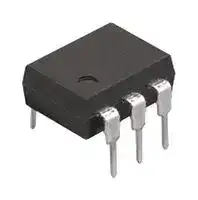


AQV210HL
MOSFET Relay, SPST-NO (1 Form A), AC / DC, 350 V, 130 mA, DIP-6, Through Hole
- Manufacturer: PANASONIC
- Product type: MOSFET Solid State Relays
- SVHC: To Be Advised
- Load Type: AC / DC
- Contact Form: SPST-NO (1 Form A)
- Load Current: 130mA
- Product Range: PhotoMOS AQV Series
- Relay Mounting: Through Hole
- Relay Terminals: PC Pin
- Load Voltage Max: 350V
- Isolation Voltage: 5kV
- Forward Current If: 50mA
- I/O Capacitance Typ: 0.8pF
- Contact Configuration: SPST-NO
- On State Resistance Max: 25ohm
- MOSFET Relay Package Style: DIP-6
- Off State Leakage Current Max: 1µA
| Delivery and price | |
|---|---|
| Units per pack | 50 |
| Price | 2.31 € |
| Current stock | 10+ |
| Lead time | 30 days |

AQV21 ~~0HL~~ **TESTING**

## **GU (General Use) Type 1-Channel (Form A)** PhotoMOS **Current Limit Function** RELAYS **6-Pin Type**

**==> picture [149 x 159] intentionally omitted <==**

**----- Start of picture text -----**<br>
.3468.8±±0.05.002 6.4.252±0.05±.002<br>3.6±0.2<br>.142±.008<br>eS .3468.8±±0.05.002 6.4.252±0.05±.002<br>3.9±0.2<br>.154±.008<br>Re<br>mm inch<br>1 6<br>2 5<br>3 4<br>2g<br>**----- End of picture text -----**<br>


**==> picture [31 x 7] intentionally omitted <==**

**----- Start of picture text -----**<br>
mm inch<br>**----- End of picture text -----**<br>


## **FEATURES**

## **1. Current Limit Function**

the current limit function has been realized. It keeps an output current at a constant value when the current reaches a specified current limit value.

## **2. Enhancing the capability of surge resistance between output terminals**

The current limit function controls the ON time surge current to enhance the capability of surge resistance between output terminals.

## **3. Reinforced insulation 5,000 V type**

More than 0.4 mm internal insulation distance between inputs and outputs. Conforms to EN41003, EN60950 (reinforced insulation).

## **4. Compact 6-pin DIP size**

The device comes in a compact  (W)6.4 × (L)8.8 × (H) 3.9mm (W).252 × (L).346 × (H).154inch, 6-pin DIP size

**5. Controls low-level analog signals** PhotoMOS relays feature extremely low closed-circuit offset voltage to enable control of low-level analog signals without distortion.

## **6. High sensitivity, low ON resistance**

**7. Low-level off state leakage current**

## a **TYPICAL APPLICATIONS**

• Telephone equipment

- Modem

## **TYPES**

|||||||Part No.|Part No.||||
|---|---|---|---|---|---|---|---|---|---|---|
|Type|I/O isolation<br>voltage|Output rating*<br>Load<br>voltage|Output rating*<br>Load<br>current|Through hole<br>terminal<br>Tube packing style||Surface-mount terminal<br>Tape and reel packing style<br>Picked from the<br>1/2/3-pin side<br>Picked from the<br>4/5/6-pin side|||Packing quantity<br>Tube|Packing quantity<br>Tape and reel|
||||||||||1 tube contains||
|AC/DC<br>type|Reinforced<br>5,000 V|350 V|130 mA|AQV210HL|AQV210HLA||AQV210HLAX|AQV210HLAZ|50 pcs.<br>1 batch contains|1,000 pcs.|
||||||||||500 pcs.||


*Indicate the peak AC and DC values.

Note: For space reasons, the package type indicator “X” and “Z” are omitted from the seal.

## **RATING**

|Item<br>a|Item<br>a|Symbol<br>a|AQV210HL(A)|Remarks|
|---|---|---|---|---|
|LED forward current<br>es||I<br>F<br>es|50 mA<br>es||
|LED reverse voltage<br>es||V<br>R<br>es|3 V<br>es||
|Peak forward current<br>es||I<br>FP<br>es|1 A<br>es|f = 100 Hz, Duty factor = 0.1%|
|Power dissipation<br>es||P<br>in<br>es|75 mW<br>es||
|Load voltage (peak AC)<br>es||V<br>L<br>es|350 V<br>es||
|Continuous load current<br>es||I<br>L<br>es|0.13 A<br>es||
|Power dissipation<br>es||P<br>out<br>es|500 mW<br>es||
|Total power dissipation<br>a||P<br>T<br>a|550 mW||
|I/O isolatiom voltage<br>a<br>es||V<br>iso<br>a<br>es|5,000 V AC||
|Temperature|Operating<br>es<br>esee|T<br>opr<br>es<br>ee|–40<br>°<br>C to +85<br>°<br>C–40<br>°<br>F to +185<br>°<br>F|Non-condensing at low temperatures|
||Storage<br>es <br>esee|T<br>stg<br> es<br>ee|–40<br>°<br>C to +100<br>°<br>C–40<br>°<br>F to +212<br>°<br>F||


107

## AQV210HL

## 2. Electrical characteristics (Ambient temperature: 25°C 77°F)

||Item||Symbol|AQV210HL(A)|Condition|
|---|---|---|---|---|---|
|Input|LED operate<br>current|Typical|I<br>Fon|1.6 mA|I<br>L<br>= Max.|
|||Maximum||3.0 mA||
||LED turn off<br>current|Minimum|I<br>Foff|0.4 mA|I<br>L<br>= Max.|
|||Typical||1.5 mA||
||LED dropout<br>voltage|Minimum|V<br>F|1.14 (1.25 V at I<br>F<br>= 50mA)|I<br>F<br>= 5 mA|
|||Typical||1.5 V||
|Output|On resistance|Typical|R<br>on|20<br>Ω|I<br>F<br>= 5 mA<br>I<br>L<br>= Max.<br>Within 1 s on time|
|||Maximum||25<br>Ω||
||Off state leakage<br>current|Maximum|I<br>Leak|1<br>µ<br>A|I<br>F<br>= 0<br>V<br>L<br>= Max.|
||Current limit|Typical|—|180 mA|I<br>F<br>= 5 mA|
|Transfer<br>characteristics|Turn on time*|Typical|T<br>on|0.8 ms|I<br>F<br>= 5 mA<br>I<br>L<br>= Max.|
|||Maximum||2.0 ms||
||Turn off time*|Typical|T<br>off|0.05 ms|I<br>F<br>= 5 mA<br>I<br>L<br>= Max.|
|||Maximum||1.0 ms||
||I/O capacitance|Typical|C<br>iso|0.8 pF|f = 1 MHz<br>V<br>B<br>= 0|
|||Maximum||1.5 pF||
||Initial I/O isolation<br>resistance|Minimum|R<br>iso|1,000 M<br>Ω|500 V DC|


Note: Recommendable LED forward current IF= 5 to 10 mA.

For type of connection, see Page 31.

*Turn on/Turn off time

**==> picture [186 x 97] intentionally omitted <==**

**----- Start of picture text -----**<br>
Input<br>90%<br>Output 10%<br>Ton Toff<br>**----- End of picture text -----**<br>


I **For Dimensions, see Page 27.** I **For Schematic and Wiring Diagrams, see Page 31.** I **For Cautions for Use, see Page 36.**

## **REFERENCE DATA**

1. Load current vs. ambient temperature characteristics

Allowable ambient temperature: –40°C to +85°C –40°F to +185°F

2. On resistance vs. ambient temperature characteristics

Measured portion: between terminals 4 and 6; LED current: 5 mA; Load voltage: Max. (DC) Continuous load current: Max.(DC)

3. Turn on time vs. ambient temperature characteristics

LED current: 5 mA; Load voltage: Max.(DC); Continuous load current: Max.(DC)

**==> picture [498 x 134] intentionally omitted <==**

**----- Start of picture text -----**<br>
200 50 2.5<br>40 2<br>150<br>30 1.5<br>100<br>20 1<br>50<br>10 0.5<br>0 0 0<br>–40 –20 0 20 40 60 80 85 100 –40 –20 0 20 40 60 80 85 –40 –20 0 20 40 60 8085<br>Ambient temperature, °C Ambient temperature, °C Ambient temperature, °C<br>Ω<br>Load current, mA On resistance,  Turn on time, ms<br>**----- End of picture text -----**<br>


108

AQV210HL

## 4. Turn off time vs. ambient temperature characteristics

## 6. LED turn off current vs. ambient temperature characteristics

## 5. LED operate current vs. ambient temperature characteristics

**==> picture [528 x 335] intentionally omitted <==**

**----- Start of picture text -----**<br>
LED current: 5 mA; Load voltage: Max.(DC); Load voltage: Max.(DC); Load voltage: Max.(DC);<br>Continuous load current: Max.(DC) Continuous load current: Max.(DC) Continuous load current: Max.(DC)<br>0.25 5 5<br>0.2 4 4<br>0.15 3 3<br>0.1 2 2<br>0.05 1 1<br>0 0 0<br>–40 –20 0 20 40 60 80 85 –40 –20 0 20 40 60 80 85 –40 –20 0 20 40 60 80 85<br>Ambient temperature, °C Ambient temperature, °C Ambient temperature, °C<br>7. LED dropout voltage vs. ambient tempera- 8. Voltage vs. current characteristics of output  9. Off state leakage current<br>ture characteristicsLED current: 5 to 50 mALED current: 5 to 50 mA at MOS portionMeasured portion: between terminals 4 and 6;Measured portion: between terminals 4 and 6; Measured portion: between terminals 4 and 6;Ambient temperature: 25°C 77°FAmbient temperature: 25°C 77°F°C 77°FC 77°F 77°F°FF<br>Ambient temperature: 25°C 77°F°C 77°FC 77°F77°F°FF<br>1.5 140<br>120 10 [[–3]]<br>1.4 100<br>80<br>60<br>1.3 40 10 [[–6]]<br>20<br>1.2 –5 –4 –3 –2 –1<br>1 2 3 4 5<br>1.1 50mA30mA20mA30mA20mA20mA –20–40–40 Voltage, V 10 [[–9]]<br>10mA –60<br>5mA –80<br>1.0 –100<br>–120 10 [[–12]]<br>0 –40 –20 0 20 40 60 80 85 –140 0 20 40 60 80 100<br>Ambient temperature, °C°CC Load voltage, V<br>Turn off time, ms<br>LED operate current, mA<br>LED turn off current, mA<br>Current, mA<br>LED dropout voltage, V<br>Off state leakage current, A<br>**----- End of picture text -----**<br>


**==> picture [528 x 354] intentionally omitted <==**

**----- Start of picture text -----**<br>
ture characteristicsLED current: 5 to 50 mALED current: 5 to 50 mA at MOS portionMeasured portion: between terminals 4 and 6;Measured portion: between terminals 4 and 6; Measured portion: between terminals 4 and 6;Ambient temperature: 25°C 77°FAmbient temperature: 25°C 77°F°C 77°FC 77°F 77°F°FF<br>Ambient temperature: 25°C 77°F°C 77°FC 77°F77°F°FF<br>1.5 140<br>120 10 [[–3]]<br>1.4 100<br>80<br>60<br>1.3 40 10 [[–6]]<br>20<br>1.2 –5 –4 –3 –2 –1<br>1 2 3 4 5<br>1.1 50mA30mA20mA30mA20mA20mA –20–40–40 Voltage, V 10 [[–9]]<br>10mA –60<br>5mA –80<br>1.0 –100<br>–120 10 [[–12]]<br>0 –40 –20 0 20 40 60 80 85 –140 0 20 40 60 80 100<br>Ambient temperature, °C°CC Load voltage, V<br>10. LED forward current vs. turn on time char- 11. LED forward current vs. turn off time char- 12. Applied voltage vs. output capacitance<br>acteristics acteristics characteristics<br>Measured portion: between terminals 4 and 6; Measured portion: between terminals 4 and 6; Measured portion: between terminals 4 and 6;<br>Load voltage: Max.(DC); Continuous load current:  Load voltage: Max.(DC); Continuous load current:  Frequency: 1 MHz; Ambient temperature: 25°C 77°F<br>Max.(DC); Ambient temperature: 25°C 77°F Max.(DC); Ambient temperature: 25°C 77°F<br>3 0.2 50<br>2.5 40<br>0.15<br>2<br>30<br>1.5 0.1<br>20<br>1<br>0.05<br>10<br>0.5<br>0 0 0<br>0 10 20 30 40 50 60 0 10 20 30 40 50 60 0 10 20 30 40 50<br>LED forward current, mA LED forward current, mA Applied voltage, V<br>Current, mA<br>LED dropout voltage, V<br>Off state leakage current, A<br>Turn on time, ms Turn off time, ms<br>Output capacitance, pF<br>**----- End of picture text -----**<br>


## **What is current limit**

When a load current reaches the specified output control current, a current limit function works against the load current to keep the current a constant value. The current limit circuit built into the PhotoMOS relay thus controls the instantaneous load current to effectively ensure circuit safety.

This safety feature protects circuits down-

stream of the PhotoMOS relay against over-current.

But, if the current-limiting feature is used longer than the specified time, the PhotoMOS relay can be destroyed.  Therefore, set the output loss to the max. rate or less. • Comparison of output voltage and output current characteristics

## V-I Characteristics

**==> picture [120 x 83] intentionally omitted <==**

**----- Start of picture text -----**<br>
Output voltage<br>Output current<br>**----- End of picture text -----**<br>


All Rights Reserved, © Copyright Matsushita Electric Works, Ltd.109 **Go To Online Catalog**

5/7/2001
Updated at June 6, 2026
Panasonic Industry is a global leader in the design and manufacture of high-quality electronic components. Renowned for a commitment to continuous innovation, the company provides the essential building blocks that empower modern engineering. From industrial automation to consumer electronics, Panasonic's components are trusted worldwide for their outstanding reliability, efficiency, and long-term performance. The extensive portfolio is anchored by a massive selection of passive components, featuring an industry-leading range of aluminium electrolytic, film, and polymer capacitors. Alongside these advanced capacitance solutions, engineers rely on Panasonic's robust power inductors and a highly versatile array of electromechanical devices, including solid-state, power, and signal relays engineered to excel in demanding environments. Beyond core passives and switching solutions, the offering encompasses critical circuit protection devices such as TVS varistors and NTC thermistors, as well as sophisticated thermal management materials. Panasonic also delivers precision light and motion sensors, highly reliable batteries, and advanced Bluetooth and WLAN connectivity modules, providing a comprehensive ecosystem of components to support next-generation technological design.
About Novapart
Novapart is a B2B electronic component broker specialising in stock shortages and cost reduction. We source hard-to-find parts and identify compliant alternatives across a catalogue of 410,000+ components from 500+ manufacturers.
Learn more →Stock Shortage Specialist
When a component is unavailable, discontinued or has an unacceptable lead time, we tap into our network of vetted European and Asian distributors to source what you need — without compromising on quality or traceability.
Request a quote →Compliant Alternatives
We identify pin-to-pin, electrically equivalent substitutes that meet the same certifications (RoHS, AEC-Q100, REACH) as your original specification — validated against datasheets, not just part numbers. Often at a lower cost.
BOM Analysis service →