
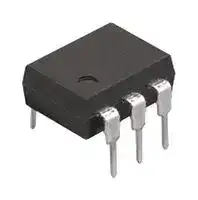


AQV210E
MOSFET Relay, SPST-NO (1 Form A), AC / DC, 350 V, 130 mA, DIP-6, Through Hole
- Manufacturer: PANASONIC
- Product type: MOSFET Solid State Relays
- SVHC: To Be Advised
- Load Type: AC / DC
- Contact Form: SPST-NO (1 Form A)
- Load Current: 130mA
- Product Range: PhotoMOS AQV Series
- Relay Mounting: Through Hole
- Relay Terminals: PC Pin
- Load Voltage Max: 350V
- Isolation Voltage: 1.5kV
- Forward Current If: 50mA
- I/O Capacitance Typ: 0.8pF
- Contact Configuration: SPST-NO
- On State Resistance Max: 35ohm
- MOSFET Relay Package Style: DIP-6
- Off State Leakage Current Max: 1µA
| Delivery and price | |
|---|---|
| Units per pack | 50 |
| Price | 2.01 € |
| Current stock | 25+ |
| Lead time | 30 days |

**==> picture [40 x 7] intentionally omitted <==**

**----- Start of picture text -----**<br>
Standard type:<br>**----- End of picture text -----**<br>


**==> picture [45 x 7] intentionally omitted <==**

**----- Start of picture text -----**<br>
Reinforced type:<br>**----- End of picture text -----**<br>


## **DIP6-pin type, reinforced insulation available**

## GE 1 Form A (AQV21❍E, AQV21❍EH)

**==> picture [134 x 149] intentionally omitted <==**

**----- Start of picture text -----**<br>
6.4<br>8.8 .252<br>.346<br>3.9<br>.154<br>.3468.8 6.4.252<br>3.6<br>.142<br>e@e@<br>mm inch<br>1 6<br>2 5<br>3 4<br>**----- End of picture text -----**<br>


**==> picture [32 x 7] intentionally omitted <==**

**----- Start of picture text -----**<br>
mm inch<br>**----- End of picture text -----**<br>


## **FEATURES**

## **1. Reinforced insulation of I/O isolation voltage 5,000V (Reinforced insulation type)**

## **2. Controls low-level analog signals**

- PhotoMOS feature extremely low closedcircuit offset voltage to enable control of low-level analog signals without distortion.

## **3. Stable on-resistance**

**4. Low-level off state leakage current of max. 1** μ **A**

## **TYPICAL APPLICATIONS**

- High-speed inspection machines

- Telephone equipment

- Data communication equipment

- Computers

## **RoHS compliant** [

## **TYPES**

||I/O isolation|Output rating*|Output rating*|Package|Part No.<br>Through hole<br>terminal<br>Surface-mount terminal|Part No.<br>Through hole<br>terminal<br>Surface-mount terminal|Part No.<br>Through hole<br>terminal<br>Surface-mount terminal|Part No.<br>Through hole<br>terminal<br>Surface-mount terminal|Packing quantity|Packing quantity|
|---|---|---|---|---|---|---|---|---|---|---|
||||||Through hole<br>terminal||||||
|||Load<br>voltage|Load<br>current||Tube packing style||Tape and reelpackingstyle<br>Picked from the<br>1/2/3-pin side<br>Picked from the<br>4/5/6-pin side||Tube|Tape and reel|
||||||||Picked from the<br>1/2/3-pin side||||
|AC/DC<br>dual use|Standard<br>1,500 V AC|350 V|130 mA|DIP6-pin|AQV210E|AQV210EA|AQV210EAX|AQV210EAZ<br>1 batch contains:<br>AQV214EAZ<br>AQV210EHAZ<br>AQV214EHAZ|1 tube contains:<br>50 pcs.<br>1 batch contains:<br>500 pcs.|1,000 pcs.|
|||400 V|120 mA||AQV214E|AQV214EA|AQV214EAX||||
||Reinforced<br>5,000 V|350 V|130 mA||AQV210EH|AQV210EHA|AQV210EHAX||||
|||400 V|120 mA||AQV214EH|AQV214EHA|AQV214EHAX||||


*Indicate the peak AC and DC values.

Note: The surface mount terminal shape indicator “A” and the packing style indicator “X” or “Z” are not marked on the device.

## **RATING**

1. Absolute maximum ratings (Ambient temperature: 25°C 77°F)

|Item<br>~~—ff~~<br>~~——~~|Item<br>~~—ff~~<br>~~——~~|Item<br>~~—ff~~<br>~~——~~|Sym-<br>bol<br>~~ff~~<br>~~————————~~|Type of<br>connec-<br>tion<br>~~fffp~~<br>~~——————~~|AQV210E(A)<br>~~fpot~~<br>~~——————~~|AQV214E(A)<br>~~otff~~<br>~~——————~~|AQV210EH(A)<br>~~ff~~<br>~~——————~~|AQV214EH(A)<br>~~ff~~<br>~~——————~~|Remarks|
|---|---|---|---|---|---|---|---|---|---|
|Input<br>~~—~~<br>~~ee~~<br>~~——~~<br>~~ee~~|LED forward current<br>~~—ff~~<br>~~ee~~<br>~~——~~||IF<br>~~ff~~<br>~~eee~~<br>~~————————~~|~~ff fp~~<br>~~eee ~~<br>~~——————~~<br>~~ee~~|50 mA<br>~~fpot~~<br>~~PO~~<br>~~——————~~|||||
||LED reverse voltage<br>~~— ff~~<br>~~ee~~<br>~~——~~||VR<br>~~ff~~<br>~~eee~~<br>~~————————~~||5 V<br>~~fp ot~~<br>~~PO~~<br>~~——————~~|||||
||Peak forward current<br>~~ee ~~<br>~~——~~||IFP<br> ~~eee~~<br>~~————————~~||1 A<br> ~~PO~~<br>~~——————~~||||f = 100 Hz, Dutyfactor = 0.1%|
||Power dissipation<br>~~——~~<br>~~ee~~||Pin<br>~~————————~~<br>~~ee~~||75 mW<br>~~——————~~<br>~~a~~|||||
|Output<br>~~——~~<br>~~ee~~<br>~~|~~<br>~~|~~|Load voltage(peak AC)<br>~~——~~<br>~~ee~~||VL<br>~~————————~~<br>~~ee~~||350 V<br>~~——————~~<br>~~a~~|400 V<br>~~——————~~|350 V<br>~~——————~~|400 V<br>~~——————~~||
||Continuous load current<br>~~——~~<br>~~ee ~~<br>~~|~~<br>~~|~~||IL<br>~~————————~~<br> ~~ee~~<br>~~|~~<br>~~|~~|A<br>~~——————~~<br>~~ee~~<br>~~**a**~~|0.13 A<br>~~——————~~<br>~~a~~|0.12 A<br>~~——————~~|0.13 A<br>~~——————~~|0.12 A<br>~~——————~~|A connection: Peak AC, DC<br>B, C connection: DC|
|||||B<br>~~**a**~~|0.15 A|0.13 A|0.15 A|0.13 A||
|||||C<br>~~**a**~~<br>~~|~~|0.17 A<br>~~|~~<br>~~1~~|0.15 A<br>~~ft~~|0.17 A<br>~~ft~~|0.15 A||
||Peak load current<br>~~|~~||Ipeak<br>~~|~~|~~|~~<br>~~SS ~~\<br>~~| ~~|0.4 A<br>~~|~~<br>~~1~~|0.3 A<br>~~ft~~|0.4 A<br>~~ft~~|0.3 A|A connection: 100 ms (1 shot),<br>VL=DC|
||Power dissipation<br>~~|~~<br>~~|~~||Pout<br>~~|~~<br>~~SS~~<br>||500 mW<br>~~|~~<br>~~1~~<br>~~ft~~<br>|||||
|Totalpower dissipation<br>~~|~~<br>~~|~~|||PT<br>~~|~~<br>~~SS~~<br>||550 mW<br>~~|~~<br>~~1~~<br>~~ft~~<br>|||||
|I/O isolation voltage<br>~~|~~|||Viso<br>~~SS~~<br>||1,500 V AC<br>||5,000 V AC<br>|||
|Temperature limits<br>~~|~~<br>~~ee~~||Operating<br>~~| |~~<br>~~ee~~|Topr<br>~~SS~~<br>~~|~~||–40°C to +85°C–40°F to +185°F<br> ~~PO~~<br>~~pT~~||||Non-condensingat low temp.|
|||Storage<br>~~| ~~<br>~~ee~~|Tstg<br>~~SS~~<br>||–40°C to +100°C–40°F to +212°F<br><br>~~pT~~|||||


ASCTB125E  201404-T

–1–

GE 1 Form A (AQV21❍E, AQV21❍EH)

## 2. Electrical characteristics (Ambient temperature: 25°C 77°F)

||Item||Symbol|Type of<br>connec-<br>tion|AQV210E(A)|AQV214E(A)|AQV210EH(A)|AQV214EH(A)|Condition|
|---|---|---|---|---|---|---|---|---|---|
|Input|LED operate current|Typical|IFon|—|1.1 mA||1.6 mA||IL= Max.|
|||Maximum|||3 mA|||||
||LED turn off current|Minimum|IFoff|—|0.3 mA||0.4 mA||IL= Max.|
|||Typical|||1.0 mA||1.5 mA|||
||LED dropout voltage|Typical|VF|—|1.25 V(1.14 V at IF= 5 mA)||||IF= 50 mA|
|||Maximum|||1.5 V|||||
|Output|On resistance|Typical|Ron|A|23Ω|30Ω|23Ω|30Ω|IF= 5 mA<br>IL= Max.<br>Within 1 s on time|
|||Maximum|||35Ω|50Ω|35Ω|50Ω||
|||Typical|Ron|B|11.5Ω|22.5Ω|11.5Ω|22.5Ω|IF= 5 mA<br>IL= Max.<br>Within 1 s on time|
|||Maximum|||17.5Ω|25Ω|17.5Ω|25Ω||
|||Typical|Ron|C|6.0Ω|11.3Ω|6.0Ω|11.3Ω|IF= 5 mA<br>IL= Max.<br>Within 1 s on time|
|||Maximum|||8.8Ω|12.5Ω|8.8Ω|12.5Ω||
||Off state leakage<br>current|Maximum|ILeak|—|1μA||||IF= 0 mA<br>VL= Max.|
|Transfer<br>characteristics|Turn on time*|Typical|Ton|—|0.5 ms||0.7 ms||IF= 5 mA<br>lL= Max.|
|||Maximum|||2.0 ms|||||
||Turn off time*|Typical|Toff|—|0.05 ms||||IF= 5 mA<br>IL= Max.|
|||Maximum|||1.0 ms|||||
||I/O capacitance|Typical|Ciso|—|0.8pF||||f = 1 MHz<br>VB= 0 V|
|||Maximum|||1.5pF|||||
||Initial I/O isolation<br>resistance|Minimum|Riso|—|1,000 MΩ||||500 V DC|


*Turn on/Turn off time

**==> picture [176 x 85] intentionally omitted <==**

**----- Start of picture text -----**<br>
Input<br>90%<br>Output 10%<br>Ton Toff<br>**----- End of picture text -----**<br>


## **RECOMMENDED OPERATING CONDITIONS**

Please obey the following conditions to ensure proper device operation and resetting.

|Item|Symbol|Recommended value|Unit|
|---|---|---|---|
|Input LED current|IF|Standard type: 5<br>Reinforced type: 5 to 10|mA|


## ■ **These products are not designed for automotive use.**

**If you are considering to use these products for automotive applications, please contact your local Panasonic Corporation technical representative.**

ASCTB125E  201404-T

–2–

GE 1 Form A (AQV21❍E, AQV21❍EH)

## **REFERENCE DATA**

## 2. On-resistance vs. ambient temperature characteristics

## 1. Load current vs. ambient temperature characteristics

## 3. Turn on time vs. ambient temperature characteristics

Allowable ambient temperature: –40°C to +85°C –40°F to +185°F

Measured portion: between terminals 4 and 6; LED current: 5 mA; Load voltage: Max. (DC); Continuous load current: Max. (DC)

LED current: 5 mA; Load voltage: Max. (DC); Continuous load current: Max. (DC)

## Type of connection:A

**==> picture [528 x 499] intentionally omitted <==**

**----- Start of picture text -----**<br>
140 50 2.0<br>AQV210E (H)<br>120 AQV214E (H) AQV214E (H)<br>40 1.6 AQV210EH, AQV214EH<br>100<br>80 30 AQV210E (H) 1.2<br>60<br>20 0.8 AQV210E<br>40<br>10 0.4 AQV214E<br>20<br>0 0 0<br>–40 –20 0 20 40 60 8085 100 –40 –20 0 20 40 60 80 85 –40 –20 0 20 40 60 8085<br>Ambient temperature, °C Ambient temperature, °C Ambient temperature, °C<br>4. Turn off time vs. ambient temperature  5. LED operate current vs. ambient  6. LED turn off current vs. ambient temperature<br>characteristics temperature characteristics characteristics<br>LED current: 5 mA; Load voltage: Max. (DC); Load voltage: Max. (DC); Load voltage: Max. (DC);<br>Continuous load current: Max. (DC) Continuous load current: Max. (DC) Continuous load current: Max. (DC)<br>0.4 5 5<br>4 4<br>0.3<br>3 3<br>AQV210EH, AQV214EH AQV210EH, AQV214EH<br>0.2<br>2 2<br>0.1 AQV210EH, AQV214EHAQV214E 1 AQV210E,AQV214E 1 AQV210E,AQV214E<br>AQV210E<br>0 0 0<br>–40 –20 0 20 40 60 8085 –40 –20 0 20 40 60 8085 –40 –20 0 20 40 60 8085<br>Ambient temperature, °C Ambient temperature, °C Ambient temperature, °C<br>7. LED dropout voltage vs. ambient  8. Current vs. voltage characteristics of output  9. Off state leakage current vs. load voltage<br>temperature characteristics at MOS portion characteristics<br>Sample: All types Measured portion: between terminals 4 and 6; Measured portion: between terminals 4 and 6;<br>LED current: 5 to 50 mA Ambient temperature: 25°C 77°F Ambient temperature: 25°C 77°F<br>1.5 140<br>120 AQV210E(H) 10–3<br>1.4 100<br>80<br>60<br>1.3 40 AQV214E(H) 10–6<br>20<br>1.2 –5 –4 –3 –2 –1<br>1.1 10mA50mA 20mA 30mA –20–40–60 1 Voltage, V2 3 4 5 10–9 AQV214E(H)<br>5mA –80 AQV210E(H)<br>1.0<br>–100–120 10–12<br>0 –140<br>-40 -20 0 20 40 60 8085 0 20 40 60 80 100<br>Ambient temperature, °C Load voltage, V<br>Ω<br>Load current, mA<br>On resistance,  Turn on time, ms<br>Turn off time, ms LED operate current, mA LED turn off current, mA<br>Current, mA<br>LED dropout voltage, V<br>Off state leakage current, A<br>**----- End of picture text -----**<br>


## 6. LED turn off current vs. ambient temperature characteristics

ASCTB125E  201404-T

–3–

GE 1 Form A (AQV21❍E, AQV21❍EH)

## 10-(1). Turn on time vs. LED forward current characteristics

Measured portion: between terminals 4 and 6; Load voltage: Max. (DC); Continuous load current: Max. (DC); Ambient temperature: 25°C 77°F

## 10-(2). Turn on time vs. LED forward current characteristics

Measured portion: between terminals 4 and 6; Load voltage: Max. (DC); Continuous load current: Max. (DC); Ambient temperature: 25°C 77°F

## 11-(1). Turn off time vs. LED forward current characteristics

Measured portion: between terminals 4 and 6; Load voltage: Max. (DC); Continuous load current: Max. (DC); Ambient temperature: 25°C 77°F

**==> picture [528 x 317] intentionally omitted <==**

**----- Start of picture text -----**<br>
1.4 2.5 0.10<br>AQV210E<br>1.2<br>2.0 0.08<br>1.0<br>0.8 1.5 0.06 AQV214E<br>AQV214E<br>0.6 1.0 0.04<br>AQV210E<br>0.4<br>0.5 0.02<br>0.2 AQV210EH, AQV214EH<br>0 0 0<br>10 20 30 40 50 60 10 20 30 40 50 60 10 20 30 40 50<br>LED forward current, mA LED forward current, mA LED forward current, mA<br>11-(2). Turn off time vs. LED forward current  12. Output capacitance vs. applied voltage<br>characteristics characteristics<br>Measured portion: between terminals 4 and 6; Measured portion: between terminals 4 and 6;<br>Load voltage: Max. (DC); Continuous load current:  Frequency: 1 MHz;<br>Max. (DC); Ambient temperature: 25°C 77°F Ambient temperature: 25°C 77°F<br>0.25 50<br>0.20 40<br>0.15 30<br>0.10 20<br>AQV210EH, AQV214EH<br>0.05 10<br>0 0<br>10 20 30 40 50 0 10 20 30 40 50<br>LED forward current, mA Applied voltage, V<br>Turn on time, ms Turn on time, ms Turn off time, ms<br>Turn off time, ms Output capacitance, pF<br>**----- End of picture text -----**<br>


ASCTB125E  201404-T

–4–
Updated at June 6, 2026
Panasonic Industry is a global leader in the design and manufacture of high-quality electronic components. Renowned for a commitment to continuous innovation, the company provides the essential building blocks that empower modern engineering. From industrial automation to consumer electronics, Panasonic's components are trusted worldwide for their outstanding reliability, efficiency, and long-term performance. The extensive portfolio is anchored by a massive selection of passive components, featuring an industry-leading range of aluminium electrolytic, film, and polymer capacitors. Alongside these advanced capacitance solutions, engineers rely on Panasonic's robust power inductors and a highly versatile array of electromechanical devices, including solid-state, power, and signal relays engineered to excel in demanding environments. Beyond core passives and switching solutions, the offering encompasses critical circuit protection devices such as TVS varistors and NTC thermistors, as well as sophisticated thermal management materials. Panasonic also delivers precision light and motion sensors, highly reliable batteries, and advanced Bluetooth and WLAN connectivity modules, providing a comprehensive ecosystem of components to support next-generation technological design.
About Novapart
Novapart is a B2B electronic component broker specialising in stock shortages and cost reduction. We source hard-to-find parts and identify compliant alternatives across a catalogue of 410,000+ components from 500+ manufacturers.
Learn more →Stock Shortage Specialist
When a component is unavailable, discontinued or has an unacceptable lead time, we tap into our network of vetted European and Asian distributors to source what you need — without compromising on quality or traceability.
Request a quote →Compliant Alternatives
We identify pin-to-pin, electrically equivalent substitutes that meet the same certifications (RoHS, AEC-Q100, REACH) as your original specification — validated against datasheets, not just part numbers. Often at a lower cost.
BOM Analysis service →