
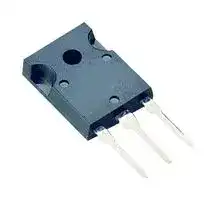


APT100GN120B2G
IGBT, 245 A, 960 W, 1.2 kV, 3 Pins
- Manufacturer: MICROCHIP
- Product type: Single IGBTs
- MSL: MSL 3 - 168 hours
- SVHC: No SVHC (04-Feb-2026)
- No. of Pins: 3Pins
- Product Range: -
- Power Dissipation: 960W
- Transistor Mounting: Through Hole
- Transistor Case Style: -
- Operating Temperature Max: 150°C
- Continuous Collector Current: 245A
- Collector Emitter Voltage Max: 1.2kV
- Collector Emitter Saturation Voltage: -
| Delivery and price | |
|---|---|
| Units per pack | 25 |
| Price | 23.67 € |
| Current stock | 10+ |
| Lead time | 30 days |

**TYPICAL PERFORMANCE CURVES**

~~_—______~~ **1200VAPT100GN120B2 APT100GN120B2 APT100GN120B2G***

***G Denotes RoHS Compliant, Pb Free Terminal Finish.**

Utilizing the latest Field Stop and Trench Gate technologies, these IGBT's have ultra low VCE(ON) and are ideal for low frequency applications that require absolute minimum conduction loss.  Easy paralleling is a result of very tight parameter distribution and a slightly positive VCE(ON) temperature coeffi cient.  A built-in gate resistor ensures extremely reliable operation, even in the event of a short circuit fault.  Low gate charge simplifi es gate drive design and minimizes losses.

- **1200V Field Stop**

- **Trench Gate: Low V CE(on)**

- **Easy Paralleling**

- **Integrated Gate Resistor: Low EMI, High Reliability**

**==> picture [53 x 143] intentionally omitted <==**

**----- Start of picture text -----**<br>
T-Max ® ®<br>G<br>C<br>E<br>C<br>G<br>E<br>**----- End of picture text -----**<br>


## **Applications: Welding, Inductive Heating, Solar Inverters, SMPS, Motor drives, UPS**

## **MAXIMUM RATINGS**

All Ratings:  TC = 25°C unless otherwise specifi ed.

|**Symbol**|**Parameter**|**APT100GN120B2**|**UNIT**|
|---|---|---|---|
|VCES|Collector-Emitter Voltage|1200|Volts|
|VGE|Gate-Emitter Voltage|±30||
|IC1|Continuous Collector Current @ TC= 25°C8|245|Amps|
|IC2|Continuous Collector Current @ TC= 110°C8|100||
|ICM|Pulsed Collector Current1|300||
|SSOA|Switching Safe Operating Area @ TJ= 150°C|300A @ 1200V||
|PD|Total Power Dissipation|960|Watts|
|TJ,TSTG|Operating and Storage Junction Temperature Range|-55 to 150|°C|
|TL|Max. Lead Temp. for Soldering: 0.063" from Case for 10 Sec.|300||


## **STATIC ELECTRICAL CHARACTERISTICS**

|**Symbol**|**Characteristic / Test Conditions**|**MIN**|**TYP**|**MAX**|**Units**|
|---|---|---|---|---|---|
|V(BR)CES|Collector-Emitter Breakdown Voltage   (VGE= 0V, IC= 4mA)<br>|1200|||Volts|
|VGE(TH)|Gate Threshold Voltage    (VCE= VGE, IC= 4mA, Tj= 25°C)|5.0|5.8|6.5||
|VCE(ON)|Collector-Emitter On Voltage   (VGE= 15V, IC= 100A, Tj= 25°C)|1.4|1.7|2.1||
||Collector-Emitter On Voltage   (VGE= 15V, IC= 100A, Tj= 125°C)||2.0|||
|ICES|Collector Cut-off Current   (VCE= 1200V, VGE= 0V, Tj= 25°C)2|||100|µA|
||Collector Cut-off Current   (VCE= 1200V, VGE= 0V, Tj= 125°C)2|||TBD||
|IGES|Gate-Emitter Leakage Current   (VGE= ±20V)|||600|nA|
|RG(int)|Integrated Gate Resistor||7.5||Ω|


**CAUTION:** These Devices are Sensitive to Electrostatic Discharge. Proper Handling Procedures Should Be Followed.

## **DYNAMIC CHARACTERISTICS**

**APT100GN120B2**

|**Symbol**|**Characteristic**|**Test Conditions**|**MIN**|**TYP**|**MAX**|**UNIT**|
|---|---|---|---|---|---|---|
|Cies|Input Capacitance|**Capacitance**<br>VGE= 0V,  VCE= 25V<br>f = 1 MHz||6500||pF|
|Coes|Output Capacitance|||365|||
|Cres|Reverse Transfer Capacitance|||280|||
|VGEP|Gate-to-Emitter Plateau Voltage|Gate Charge<br>VGE= 15V<br>VCE= 600V<br>IC= 100A||9.5||V|
|Qg|Total Gate Charge3|||540||nC|
|Qge|Gate-Emitter Charge|||50|||
|Qgc|Gate-Collector ("Miller") Charge|||295|||
|SSOA|Switching Safe Operating Area|TJ= 150°C, RG= 4.3Ω7,VGE=<br>15V,  L = 100µH,VCE= 1200V|<br>300|||A|
|td(on)|Turn-on DelayTime|**Inductive Switching (25°C)**<br>VCC= 800V<br>VGE= 15V<br>IC= 100A<br>RG= 1.0Ω7<br>TJ= +25°C||50||ns|
|tr|Current Rise Time|||50|||
|td(off)|Turn-off DelayTime|||615|||
|tf|Current Fall Time|||105|||
|Eon1|Turn-on SwitchingEnergy 4|||11||mJ|
|Eon2|Turn-on SwitchingEnergy (Diode) 5|||15|||
|Eoff|Turn-off SwitchingEnergy 6|||9.5|||
|td(on)|Turn-on Delay Time|**Inductive Switching (125°C)**<br>VCC= 800V<br>VGE= 15V<br>IC= 100A<br>RG= 1.0Ω7<br>TJ= +125°C||50||ns|
|tr|Current Rise Time|||50|||
|td(off)|Turn-off Delay Time|||725|||
|tf|Current Fall Time|||210|||
|Eon1|Turn-on Switching Energy4 4|||12||mJ|
|Eon2|Turn-on Switching Energy (Diode)55|||22|||
|Eoff|Turn-off Switching Energy66|||14|||


## **THERMAL AND MECHANICAL CHARACTERISTICS**

|**Symbol**|**Characteristic**|**MIN**|**TYP**|**MAX**|**UNIT**|
|---|---|---|---|---|---|
|RθJC|Junction to Case**(IGBT)**|||.13|°C/W|
|RθJC|Junction to Case**(DIODE)**|||N/A||
|WT|Package Weight||6.1||gm|


- 1 Repetitive Rating: Pulse width limited by maximum junction temperature.

- 2 For Combi devices, Ices includes both IGBT and FRED leakages

- 3 See MIL-STD-750 Method 3471.

- 4 Eon1 is the clamped inductive turn-on energy of the IGBT only, without the effect of a commutating diode reverse recovery current adding to the IGBT turn-on loss. Tested in inductive switching test circuit shown in fi gure 21, but with a Silicon Carbide diode.

- 5 Eon2 is the clamped inductive turn-on energy that includes a commutating diode reverse recovery current in the IGBT turn-on switching loss. (See Figures 21, 22.)

- 6 Eoff is the clamped inductive turn-off energy measured in accordance with JEDEC standard JESD24-1.  (See Figures 21, 23.)

- 7 RG is external gate resistance, not including RG(int) nor gate driver impedance.  (MIC4452)

- 8 Continuous Current limited by package lead temperature.

**Microsemi reserves the right to change, without notice, the specifi cations and information contained herein.**

**APT100GN120B2**

## **TYPICAL PERFORMANCE CURVES**

**==> picture [204 x 707] intentionally omitted <==**

**----- Start of picture text -----**<br>
300<br>VGE = 15V<br>250 TJ = -55°C<br>TJ = 25°C<br>200<br>TJ = 125°C<br>150<br>TJ = 175°C<br>100<br>50<br>0<br>0  1.0  2.0  3.0  4.0  5.0<br>VCE, COLLECTOR-TO-EMITTER VOLTAGE (V)<br>FIGURE 1,  Output  Characteristics(TJ = 25°C)<br>300<br>250µs PULSE<br>TEST<0.5 % DUTY CYCLE TJ = 150°C<br>250<br>TJ = 125°C<br>200<br>TJ = 25°C<br>150<br>TJ = -55°C<br>100<br>50<br>0<br>0  2  4  6  8  10  12  14<br>VGE,  GATE-TO-EMITTER  VOLTAGE (V)<br>FIGURE 3,  Transfer  Characteristics<br>3.5<br>TJ = 25°C.<br>    250µs PULSE TEST<br>3.0  <0.5 % DUTY CYCLE<br>I = 200A<br>C<br>2.5<br>2.0 I C  = 100A<br>I = 50A<br>C<br>1.5<br>1.0<br>0.5<br>0<br>8  10  12  14  16<br>VGE, GATE-TO-EMITTER VOLTAGE (V)<br>FIGURE 5,  On  State Voltage vs Gate-to- Emitter Voltage<br>1.15<br>1.10<br>1.05<br>1.00<br>0.95<br>0.90<br>0.85<br>0.80<br>0.75<br>0.70<br>-50 -25  0  25  50  75 100 125 150<br>TJ, JUNCTION TEMPERATURE (°C)<br>FIGURE 7, Threshold Voltage  vs. Junction Temperature<br>, COLLECTOR CURRENT (A)<br>IC<br>, COLLECTOR  CURRENT (A)<br>IC<br>, COLLECTOR-TO-EMITTER  VOLTAGE (V)<br>CE<br>V<br>,  THRESHOLD VOLTAGE   (NORMALIZED)<br>GS(TH)<br>V<br>**----- End of picture text -----**<br>


**==> picture [197 x 706] intentionally omitted <==**

**----- Start of picture text -----**<br>
300<br>15V<br>13V<br>250<br>12V<br>200<br>11V<br>150<br>10V<br>100 9V<br>8V<br>50<br>7V<br>0<br>0  5  10  15  20  25  30<br>VCE, COLLECTOR-TO-EMITTER VOLTAGE (V)<br>FIGURE 2,  Output  Characteristics (TJ = 125°C)<br>16<br>IC = 100A<br>14 TJ = 25°C<br>V = 240V<br>CE<br>12<br>V = 600V<br>CE<br>10<br>V = 960V<br>CE<br>8<br>6<br>4<br>2<br>0<br>0  100  200  300  400  500  600<br>  GATE  CHARGE (nC)<br>FIGURE 4, Gate  Charge<br>3.5<br>3<br>I = 200A<br>C<br>2.5<br>2 I C  = 100A<br>1.5<br>I = 50A<br>C<br>1<br>0.5 250µs PULSE TEST   V GE  = 15V.<br><0.5 % DUTY CYCLE<br>0<br>-50 -25  0  25  50  75  100 125 150<br>TJ, Junction Temperature (°C)<br>FIGURE 6, On State Voltage vs Junction Temperature<br>350<br>300<br>250<br>200<br>Lead Temperature<br>150 Limited<br>100<br>50<br>0<br>-50  -25  0  25  50  75 100 125 150<br>TC, CASE TEMPERATURE (°C)<br>FIGURE 8, DC Collector Current vs Case Temperature<br>, COLLECTOR CURRENT (A)<br>IC<br>, GATE-TO-EMITTER VOLTAGE (V)<br>GE<br>V<br>, COLLECTOR-TO-EMITTER VOLTAGE (V)<br>CE<br>V<br>DC  COLLECTOR  CURRENT(A)<br>IC,<br>**----- End of picture text -----**<br>


**APT100GN120B2**

**==> picture [209 x 706] intentionally omitted <==**

**----- Start of picture text -----**<br>
60<br>V = 15V<br>GE<br>50<br>40<br>30<br>20<br>10 VTJCE= 25°C= 800V ,  or 125°C<br>RG = 1.0Ω<br>L = 100µH<br>0<br>10  40  70  100  130  160  190  220<br>ICE, COLLECTOR  TO  EMITTER  CURRENT (A)<br>FIGURE 9, Turn-On Delay Time vs Collector Current<br>250<br>RG = 1.0Ω, L = 100µH, VCE = 800V<br>200<br>150<br>100<br>50<br> TJ = 25 or 125°C,VGE = 15V<br>0<br>10  40  70  100  130  160  190  220<br>ICE, COLLECTOR  TO  EMITTER  CURRENT (A)<br>FIGURE 11,  Current Rise Time vs Collector Current<br>80,000 VCE = 800V<br>VGE = +15V<br>RG = 1.0Ω<br>60,000<br>TJ = 125°C<br>40,000<br>20,000<br>TJ = 25°C<br>0<br>10  40  70  100  130  160  190  220<br>ICE, COLLECTOR TO EMITTER CURRENT (A)<br>FIGURE 13, Turn-On Energy Loss vs Collector Current<br>100,000 VVCEGE = 800V = +15V Eon2,200A<br>TJ = 125°C<br>80,000<br>60,000<br>40,000<br>E 200A<br>off,<br>E 100A<br>on2,<br>20,000 E 100A<br>off,<br>E 50A<br>on2,<br>0 Eoff,50A<br>0  5  10  15  20<br>RG, GATE  RESISTANCE (OHMS)<br>FIGURE 15, Switching Energy Losses  vs. Gate Resistance<br>, TURN-ON DELAY TIME (ns)<br>td(ON)<br>RISE TIME (ns)<br>tr,<br>, TURN ON ENERGY LOSS (µJ)<br>ON2<br>E<br>                   SWITCHING  ENERGY  LOSSES (µJ)<br>**----- End of picture text -----**<br>


**==> picture [216 x 706] intentionally omitted <==**

**----- Start of picture text -----**<br>
1000<br>800<br>600<br> VGE =15V,TJ=125°C<br> VGE =15V,TJ=25°C<br>400<br>200<br>VCE = 800V<br>RG = 1.0Ω<br>L = 100µH<br>0<br>10  40  70  100  130  160  190  220<br>ICE, COLLECTOR  TO  EMITTER  CURRENT (A)<br>FIGURE 10, Turn-Off Delay Time vs Collector Current<br>250<br>200<br>TJ = 125°C, VGE = 15V<br>150<br>100<br>TJ = 25°C, VGE = 15V<br>50<br>RG = 1.0Ω, L = 100µH, VCE = 800V<br>0<br>10  40  70  100  130  160  190  220<br>ICE, COLLECTOR  TO  EMITTER  CURRENT (A)<br>FIGURE 12,  Current Fall Time vs Collector Current<br>30,000 VCE = 800V<br>VGE = +15V<br>25,000 RG = 1.0Ω<br>TJ = 125°C<br>20,000<br>15,000<br>10,000<br>5000<br>TJ = 25°C<br>0<br>10  40  70  100  130  160  190  220<br>ICE, COLLECTOR TO EMITTER CURRENT (A)<br>FIGURE  14,  Turn Off Energy Loss vs Collector Current<br>80,000<br>VCE = 800V<br>VGE = +15V<br>RG = 1.0Ω Eon2,200A<br>60,000<br>40,000<br>E 200A<br>off, E 100A<br>20,000 on2,<br>E 100A E 50A<br>off, on2,<br>0 Eoff,50A<br>0  25  50  75  100  125<br>TJ, JUNCTION TEMPERATURE (°C)<br>FIGURE 16, Switching Energy Losses  vs Junction Temperature<br>, TURN-OFF DELAY TIME (ns)<br>(OFF)<br>td<br>FALL TIME (ns)<br>tf,<br>, TURN  OFF  ENERGY  LOSS (µJ)<br>OFF<br>E<br> SWITCHING  ENERGY LOSSES (µJ)<br>**----- End of picture text -----**<br>


**APT100GN120B2**

## **TYPICAL PERFORMANCE CURVES**

**==> picture [201 x 172] intentionally omitted <==**

**----- Start of picture text -----**<br>
10,000<br>Cies<br>5,000<br>1,000<br>500<br>Coes<br>Cres<br>100<br>0  10  20  30  40  50<br>VCE, COLLECTOR-TO-EMITTER VOLTAGE (VOLTS)<br>Figure 17, Capacitance  vs  Collector-To-Emitter  Voltage<br>F)<br>P<br>C, CAPACITANCE  (<br>**----- End of picture text -----**<br>


**==> picture [189 x 171] intentionally omitted <==**

**----- Start of picture text -----**<br>
350<br>300<br>250<br>200<br>150<br>100<br>50<br>0<br>0  200  400  600  800 1000 1200 1400<br>VCE, COLLECTOR TO EMITTER VOLTAGE<br>Figure 18,Minimim Switching Safe Operating Area<br>, COLLECTOR  CURRENT (A)<br>IC<br>**----- End of picture text -----**<br>


**==> picture [437 x 181] intentionally omitted <==**

**----- Start of picture text -----**<br>
0.14<br>0.12 D = 0.9<br>0.10 0.7<br>0.08 0.5<br>0.06 0.3 Note:<br>t1<br>0.04 0.1 SINGLE PULSE<br>t2<br>0.05<br>0.02 Duty Factor D =   t1 /t2<br>Peak TJ = PDM x ZθJC + TC<br>0<br>10 [-5] 10 [-4 ] 10 [-3 ] 10 [-2] 10 [-1] 1.0<br>RECTANGULAR PULSE DURATION (SECONDS)<br>Figure 19a, Maximum Effective Transient Thermal Impedance, Junction-To-Case vs Pulse Duration<br>DM<br>P<br>, THERMAL IMPEDANCE (°C/W)<br>JC<br>θ<br>Z<br>**----- End of picture text -----**<br>


**==> picture [530 x 173] intentionally omitted <==**

**----- Start of picture text -----**<br>
50<br>40<br>TJ (°C) TC (°C) 30 Fmax = min (fmax, f max2)<br>       0.05<br>0.0273 0.0558 0.0467 20 fmax1     t =  d(on) + tr + td(off) + tf<br>Dissipated Power P  - P<br>     (Watts) 0.00088 0.0233 0.649 10 T TJC =  125  =  75° ° C C fmax2 = E on2diss + E cond off<br>D = 50 %<br>impedances: Case to sink,sink to ambient, etc. Set to ZEXT are the external thermal 0 VRCEG = 1.0 =  800VΩ Pdiss = [T] R [ J]  θ [ - T] JC [ C]<br>zero when modeling only  20 40 60  80 100 120 140 160 180 200<br>the case to junction.<br>          IC, COLLECTOR CURRENT (A)<br>FIGURE 19b,  TRANSIENT  THERMAL IMPEDANCE  MODEL Figure 20, Operating  Frequency  vs Collector  Current<br>EXT<br>Z<br>, OPERATING FREQUENCY (kHz)<br>MAX<br>F<br>**----- End of picture text -----**<br>


**APT100GN120B2**

**==> picture [184 x 118] intentionally omitted <==**

**----- Start of picture text -----**<br>
APT100DQ120<br>VCC IC VCE<br>A<br>D.U.T.<br>**----- End of picture text -----**<br>


**Figure 21, Inductive Switching Test Circuit**

**==> picture [214 x 157] intentionally omitted <==**

**----- Start of picture text -----**<br>
Gate Voltage<br>10% al| |ri @:40V22.17mMVVsM1 Area<br>TJ = 125°C<br>t<br>d(on)<br>tr<br>Collector Current<br>90%<br>5%<br>5% 10%<br>Collector Voltage<br>Switching Energy<br>Mpe ne<br>500V C 44h2 «50.010.0 Va2_ M 100ns Chi f 340mV 30 Sep 2005<br>Math1 250kVV 100nsV 10:08:25“se<br>Figure 22, Turn-on Switching Waveforms and Defi nitions<br>**----- End of picture text -----**<br>


**==> picture [214 x 132] intentionally omitted <==**

**----- Start of picture text -----**<br>
90% A: 972ns<br>@:0Vv<br>M1 Area<br>29) Gate Voltage T 14.67mVVs J = 125°C<br>t<br>d(off)<br>90%<br>Collector Voltage<br>tf<br>10%<br>0<br>Collector Current<br>Switching Energy<br>M ew<br>**----- End of picture text -----**<br>


**Figure 23, Turn-off Switching Waveforms and Defi nitions**

## **T-MAX[®] (B2) Package Outline**

**==> picture [298 x 252] intentionally omitted <==**

**----- Start of picture text -----**<br>
e1 SAC: Tin, Silver, Copper<br>4.69 (.185)<br>5.31 (.209) <— 15.49 (.610) ><br>1.49 (.059) 16.26 (.640)<br>oi 2.49 (.098) Y<br>5.38 (.212)<br>6.20 (.244)<br>20.80 (.819)<br>21.46 (.845)<br>4.50 (.177) Max. 2.87 (.113)<br>3.12 (.123)<br>0.40 (.016) 1.65 (.065)<br>0.79 (.031) 19.81 (.780) 2.13 (.084)<br>20.32 (.800) Gate<br>1.01 (.040)<br>1.40 (.055)<br>Collector<br>Emitter<br>2.21 (.087)<br>m t ie 2.59 (.102) r 5.45 (.215) BSC e as<br>2-Plcs.<br>Dimensions in Millimeters and (Inches)<br>Collector<br>**----- End of picture text -----**<br>


Microsemi’s products are covered by one or more of U.S.patents 4,895,810  5,045,903  5,089,434  5,182,234  5,019,522 5,262,336  6,503,786 5,256,583  4,748,103  5,283,202  5,231,474  5,434,095  5,528,058 and foreign patents.  US and Foreign patents pending.  All Rights Reserved.
Updated at April 16, 2026
Microchip Technology Inc. is a leading global provider of smart, connected, and secure embedded control solutions. Known for enabling engineers to design with confidence, the company delivers a comprehensive product portfolio that reduces total system costs and accelerates time to market across the industrial, automotive, communications, and computing sectors. Our extensive selection of Microchip components highlights the manufacturer's strength in both discrete semiconductors and advanced wireless connectivity. We carry a robust lineup of highly efficient single MOSFETs and Schottky diodes tailored for demanding power management and switching applications. Alongside these essential discretes, engineers can source a wide array of ready-to-use networking modules, prominently featuring Bluetooth and WLAN adapters that streamline the development of modern IoT and connected devices. Rounding out the offering is a diverse range of Microchip integrated circuits and specialized components. This includes versatile I/O expanders for simplified system integration, precision timing solutions such as MEMS oscillators and pulse generators, as well as AC/DC LED driver ICs and sub-2.4GHz RF transceivers. Backed by Microchip's renowned commitment to exceptional quality and reliable performance, these components provide scalable, dependable building blocks for complex electronic designs.
About Novapart
Novapart is a B2B electronic component broker specialising in stock shortages and cost reduction. We source hard-to-find parts and identify compliant alternatives across a catalogue of 410,000+ components from 500+ manufacturers.
Learn more →Stock Shortage Specialist
When a component is unavailable, discontinued or has an unacceptable lead time, we tap into our network of vetted European and Asian distributors to source what you need — without compromising on quality or traceability.
Request a quote →Compliant Alternatives
We identify pin-to-pin, electrically equivalent substitutes that meet the same certifications (RoHS, AEC-Q100, REACH) as your original specification — validated against datasheets, not just part numbers. Often at a lower cost.
BOM Analysis service →