
Image not available
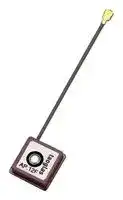
Illustrative purposes only

AP.12F.07.0045A
Patch Antenna, 1.57542GHz, 2 VSWR, -5dBi Gain, 50ohm, Right Hand Circular Polarisation,
⚠️ Reference pricing provided. In case of supply shortages, we will connect you with our trusted procurement partners to ensure your project's continuity.
- Manufacturer: TAOGLAS
- Product type:
- Antenna Type:Patch; Frequency Min:-; Frequency Max:1.57542GHz; Antenna Mounting:I-Pex Connector; Gain:-5dBi; VSWR:2; Input Power:-; Input Impedance:50ohm; Antenna Polarisation:Right Han
- Gain: -5dBi
- SVHC: To Be Advised
- VSWR: 2
- Input Power: -
- Antenna Type: Patch
- Frequency Max: 1.57542GHz
- Frequency Min: -
- Product Range: -
- Input Impedance: 50ohm
- Antenna Mounting: I-Pex Connector
- Antenna Polarisation: Right Hand Circular
| Delivery and price | |
|---|---|
| Units per pack | 120 |
| Price | 7.22 € |
| Current stock | 10+ |
| Lead time | 30 days |
Datasheet

**==> picture [137 x 39] intentionally omitted <==** **----- Start of picture text -----**<br> g antenna solutions<br>**----- End of picture text -----**<br> ## **SPECIFICATION** - Part No. : AP.12F.07.0045A - Product Name - : 12mm Two Stage 25dB GPS/GALILEO Active Patch Antenna Module with front-end Saw Filter Features - : 13.4*13.4*6mm (Ground Plane) - 45mm Ø1.13 cable IPEX MHFI (U.FL) 28dB LNA - Wide Input Voltage 1.8V to 5.5V - Low Power Consumption - RoHS compliant SPE-11-8-094/D/SS Page 1 of 8 ## gitaoglas ## **1. Introduction** The AP.12F has been designed specifically for embedded (inside device) integration with GPS/GALILEO receiver modules where there is a GSM transmitter nearby and risk of interference and saturation. The AP.12F combines a 12*12*3.5mm advanced low profile ceramic patch antenna with a two stage LNA and a front-end SAW filter with ultra thin coaxial cable. Only 5.6mm in height, this Taoglas active antenna module utilises XtremeGain™ technology for the highest industry sensitivity. The AP.12F consists of 2 functional blocks – the LNA and also the patch antenna. The AP.12F has a SAW filter on the front of it. The main use of the AP.12F would be for small devices where the GSM transmitter is close to the GPS/GALILEO antenna, it helps avoid burn-out of the LNA or the module due to interference from the GSM transmitter at out band frequencies. SPE-11-8-094/D/SS Page 2 of 8 **==> picture [138 x 43] intentionally omitted <==** **----- Start of picture text -----**<br> gitaoglasantenna solutions<br>**----- End of picture text -----**<br> ## **2. Specification** |ELECTRICAL|ELECTRICAL|ELECTRICAL|ELECTRICAL| |---|---|---|---| |Frequency|1575.42 ± 1.023MHz||| |Gain @ Zenith|-5 dBic Typ. @ Zenith||| |Gain (with LNA)|At 3V: 234dBi@90||| |Impedance|50Ω||| |Polarization|RHCP||| |Axial Ratio<br>~~|~~|4.0dB max.@Zenith<br>~~|_~~||| |Input Voltage<br>~~|~~|Min. 1.8V Typ 3.0V Max. 5.5V<br>~~|~~||| |LNA|||| |Frequency|1575.42 ± 1.023MHz||| |Outer Band Attenuation|F0=1575.42MHz||| ||F0<br>30MHz 8dB min.<br>~~O~~||| ||F0<br>50MHz 20dB min.<br>~~O~~||| ||F0<br>100MHz 25dB min.<br>~~O~~||| |Output Impedance|50Ω||| |Output VSWR|2.0 Max||| |Pout at 1dB Gain<br>Compression point|Typ. 11dBm||| ||Min. 5dBm||| |LNA Gain, Power Consumption and Noise Figure|||| |Voltage|LNA Gain (Typ)|Power Consumption(mA) Typ|Noise Figure Typ| |Min. 1.8V|20dB|4mA|2.0dB| |Typ. 3.0V|28dB|9mA|2.0dB| |Max. 5.5V|29dB|20mA|2.0dB| |Input Voltage|Min. 1.8V|Typ. 3.0V|Max. 5.5V| |MECHANICAL<br>~~Lo~~|||| |Dimension|12mm x 12mm x 3.5mm||| |RF Cable|Coaxial Cable Ø1.13 ± 0.1mm, length 45 ± 2.5mm||| |Connector|IPEX MHFI (U.FL)||| |ENVIRONMENTAL|||| |Operation Temperature|-40°C to + 85°C||| |Storage Temperature|-40°C to + 85°C||| |Relative Humidity|40% to 95%||| SPE-11-8-094/D/SS Page 3 of 8 ## **2.1. LNA Gain and Out Band Rejection @3.0V** ## **2.2. LNA Noise Figure @3.0V** SPE-11-8-094/D/SS Page 4 of 8 ## g antenna solutions ## **3. Radiation Patterns** ## XY Plane ## XZ Plane ## YZ Plane SPE-11-8-094/D/SS Page 5 of 8 **==> picture [107 x 10] intentionally omitted <==** **----- Start of picture text -----**<br> antenna solutions<br>**----- End of picture text -----**<br> ## **4. Plugs Usage and Precautions** ## **4.1. Mating / Un-mating** - (1) To disconnect connectors, insert the end portion of I-PEX under the connector flanges and pull off vertically, in the direction of the connector mating axis. (2) To mate the connectors, the mating axes of both connectors must be aligned and the connectors can be mated. The "click" will confirm fully mated connection. Do not attempt to insert on an extreme angle. ## **4.2. Pull forces on the cable after connectors are mated** After the connectors are mating, do not apply a load to the cable in excess of the values indicated in the diagram below. SPE-11-8-094/D/SS Page 6 of 8 ## **5. Technical Drawing** SPE-11-8-094/D/SS Page 7 of 8 ## **6. Packaging** Taoglas makes no warranties based on the accuracy or completeness of the contents of this document and reserves the right to make changes to specifications and product descriptions at any time without notice. Taoglas reserves all rights to this document and the information contained herein. Reproduction, use or disclosure to third parties without express permission is strictly prohibited. Copyright © Taoglas Ltd. SPE-11-8-094/D/SS Page 8 of 8
Updated at June 9, 2026
About Novapart
Novapart is a B2B electronic component broker specialising in stock shortages and cost reduction. We source hard-to-find parts and identify compliant alternatives across a catalogue of 410,000+ components from 500+ manufacturers.
Learn more →Stock Shortage Specialist
When a component is unavailable, discontinued or has an unacceptable lead time, we tap into our network of vetted European and Asian distributors to source what you need — without compromising on quality or traceability.
Request a quote →Compliant Alternatives
We identify pin-to-pin, electrically equivalent substitutes that meet the same certifications (RoHS, AEC-Q100, REACH) as your original specification — validated against datasheets, not just part numbers. Often at a lower cost.
BOM Analysis service →