
Image not available
Illustrative purposes only

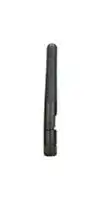
ANT-DB1-LCD-RPS
RF Antenna, 5.725 to 5.875GHz, 2.92dBi, WiFi / Bluetooth / Zigbee, 50ohm, Linear, RP SMA Connector
⚠️ Reference pricing provided. In case of supply shortages, we will connect you with our trusted procurement partners to ensure your project's continuity.
- Manufacturer: TE CONNECTIVITY - LINX
- Product type:
- Gain: 2.92dBi
- SVHC: Lead (21-Jan-2025)
- VSWR: 2
- Input Power: 10W
- Antenna Type: WiFi / Bluetooth / Zigbee
- Frequency Max: 5.875GHz
- Frequency Min: 5.725GHz
- Product Range: LCD Series
- Input Impedance: 50ohm
- Antenna Mounting: RP SMA Connector
- Antenna Polarisation: Linear
| Delivery and price | |
|---|---|
| Units per pack | 250 |
| Price | 4.56 € |
| Current stock | 200+ |
| Lead time | 30 days |
Datasheet

## **ANT-DB1-LCD-ccc Data Sheet**

## Product Description

The Linx LCD Dipole Antenna is a superior solution for users searching for best-in-class performance for WLAN devices using Dual-Band WiFi (802.11ac, 802.11n, 802.11ax) or U-NII applications.

With a compact package and low price, the LCD’s high peak gain and superior efficiency make it an excellent option for high volume, cost sensitive applications.

Dipole design means that no additional ground plane is required.

## Features

- Excellent performance

- Dual-band

- Very low VSWR

- Omni-directional pattern

- Tilt and swivel base

- Standard SMA or Part 15 compliant RP-SMA connector

## Ordering Information

ANT-DB1-LCD-RPS (with RP-SMA connector) ANT-DB1-LCD-SMA (with SMA connector)

|Recommended Frequency<br>Range|2.4GHz WIFI|U-NII|5.8GHz WIFI/ U-NII-3 Band|
|---|---|---|---|
||2.4 – 2.5GHz|5.125 – 5.725GHz|5.725 – 5.875GHz|
|VSWR|<2:1|<2:1|<2:1|
|Peak Gain (max in the band)|2.8dBi|4.5dBi|2.92dBi|
|Average Gain (typical)|–0.6dBi|–1.5dBi|–2.2dBi|
|Efficiency (typical)|85%|70%|65%|
|Polarization|Linear|||
|Radiation|Omni-Directional|||
|Max Power|10W|||
|Wavelength|1/2-wave|||
|Impedance|50-ohms|||
|Connection|SMA Plug (Male) or RPS (Reverse Polarity Male)|||
|Weight|7.4g (0.26oz.)|||
|Operating Temperature Range|–40°C to +80°C|||
|Measurements taken on a 100 x 100mm ground plane, mounted on the edge, bent 90°.||||


Revised 10/18/2018

– **1** –

## Product Dimensions

**==> picture [239 x 364] intentionally omitted <==**

**----- Start of picture text -----**<br>
Ø7.8 mm<br>(0.31 in)<br>83.1mm 57.0mm<br>(3.27 in) (2.24 in)<br>Ø9.4 mm<br>(0.37 in)<br>5.5 mm<br>(0.22 in) 30.6 mm<br>(1.20 in)<br>Ø10.0 mm<br>(0.39 in)<br>**----- End of picture text -----**<br>


ANT-DB1-LCD-ccc Data Sheet

**– 2** –

## Dipole antennas, ground planes and additional orientations

Since it is not always possible to provide an adequate ground plane, dipole antennas like the LCD are designed with a built-in ground plane, so an external ground plane is not required for the antenna to radiate properly.

Linx knows how our customers most frequently use our antennas in theirs designs, typically mounted to enclosures, conductive or non-conductive, so we tested our LCD antenna in 2 different configurations: straight, without ground (free space), and edge of a ground plane bent at 90°.

Straight, without ground Bent 90°, on edge of ground Linx tested the LCD dipole antenna to ensure excellent radiation behavior and minimize the risk to the customer when implementing a new design, regardless of complexity.

the Bent 90°, on edge of ground, with minimal difference, as shown below.

ANT-DB1-LCD-ccc Data Sheet

– **3** –

Antenna straight on non-conductive surface/ Free space

## VSWR

**==> picture [413 x 415] intentionally omitted <==**

**----- Start of picture text -----**<br>
7 56.3<br>6 | yo 51.0<br>5 ee 44.4<br>4 \ ee i 36.0<br>3 \ oo 25.0<br>i ony VK |<br>2 11.1<br>Nip UN<br>1 php 0<br>NS<br>2 2.5 3 3.5 4 4.5 5 5.5 6<br>Frequency [GHz]<br>0<br>-5 ee<br>ee ee<br>-10 N/a<br>-15 enee<br>-20 0<br>-25 |ee|<br>-30<br>| ee<br>-35<br>ee |eee|<br>2 2.5 3 3.5 4 4.5 5 5.5 6<br>Frequency (GHz)<br>2.4 2.5 5.125 5.725 5.875<br>VSWR<br>Refelcted Power (%)<br>2.4 2.5 5.125 5.725 5.875<br>S11/ Return Loss (dB)<br>**----- End of picture text -----**<br>


## Return Loss

ANT-DB1-LCD-ccc Data Sheet

**– 4** –

Peak Gain

**==> picture [378 x 407] intentionally omitted <==**

**----- Start of picture text -----**<br>
10<br>9<br>8<br>7<br>6<br>5<br>4<br>3<br>2<br>1<br>0<br>2 2.5 3 3.5 4 4.5 5 5.5 6<br>Frequency (GHz)<br>0<br>-1<br>-2<br>-3<br>-4<br>2 2.5 3 3.5 4 4.5 5 5.5 6<br>Frequency (GHz)<br>2.4 2.5 5.125 5.725 5.875<br>Peak Gain (dBi)<br>2.4 2.5 5.125 5.725 5.875<br>Average Gain (dBi)<br>**----- End of picture text -----**<br>


**==> picture [71 x 12] intentionally omitted <==**

**----- Start of picture text -----**<br>
Average Gain<br>**----- End of picture text -----**<br>


## �������������������

**==> picture [377 x 192] intentionally omitted <==**

**----- Start of picture text -----**<br>
100<br>90<br>80<br>70<br>60<br>50<br>40<br>30<br>20<br>10<br>0<br>2 2.5 3 3.5 4 4.5 5 5.5 6<br>Frequency (GHz)<br>2.4 2.5 5.125 5.725 5.875<br>Radiation Efficiency (%)<br>**----- End of picture text -----**<br>


**==> picture [72 x 46] intentionally omitted <==**

ANT-DB1-LCD-ccc Data Sheet

– **5** –

## Antenna straight on non-conductive surface/ Free space

XZ-Plane Gain

YZ-Plane Gain

XY-Plane Gain

## 2400 - 2500MHz

**==> picture [466 x 157] intentionally omitted <==**

**----- Start of picture text -----**<br>
340 350 10.00 0 10 20 340 350 10.00 0 10 20 340 350 10.00 0 10 20<br>330 5.00 30 330 5.00 30 330 5.00 30<br>320 -5.000.00 40 320 -5.000.00 40 320 -5.000.00 40<br>310 -10.00 50 310 -10.00 50 310 -10.00 50<br>-15.00 -15.00 -15.00<br>300 -20.00 60 300 -20.00 60 300 -20.00 60<br>-25.00 -25.00 -25.00<br>290 -30.00 70 290 -30.00 70 290 -30.00 70<br>-35.00 -35.00 -35.00<br>280 -40.00 80 280 -40.00 80 280 -40.00 80<br>-45.00 -45.00 -45.00<br>270 -50.00 90 270 -50.00 90 270 -50.00 90<br>260 100 260 100 260 100<br>250 110 250 110 250 110<br>240 120 240 120 240 120<br>230 130 230 130 230 130<br>220 140 220 140 220 140<br>210 150 210 150 210 150<br>200 190 180 170 160 200 190 180 170 160 200 190 180 170 160 2400MHz2450MHz<br>XZ-Plane Gain YZ-Plane Gain XY-Plane Gain 2500MHz<br>**----- End of picture text -----**<br>


## 5720 - 5880MHz

**==> picture [467 x 157] intentionally omitted <==**

**----- Start of picture text -----**<br>
340 350 5.00 0 10 20 340 350 5.00 0 10 20 340 350 5.00 0 10 20<br>330 0.00 30 330 0.00 30 330 0.00 30<br>320 -5.00 40 320 -5.00 40 320 -5.00 40<br>-10.00 -10.00 -10.00<br>310 -15.00 50 310 -15.00 50 310 -15.00 50<br>300 -20.00 60 300 -20.00 60 300 -20.00 60<br>-25.00 -25.00 -25.00<br>290 -30.00 70 290 -30.00 70 290 -30.00 70<br>-35.00 -35.00 -35.00<br>280 -40.00 80 280 -40.00 80 280 -40.00 80<br>-45.00 -45.00 -45.00<br>270 -50.00 90 270 -50.00 90 270 -50.00 90<br>260 100 260 100 260 100<br>250 110 250 110 250 110<br>240 120 240 120 240 120<br>230 130 230 130 230 130<br>220 140 220 140 220 140<br>210 150 210 150 210 150<br>200 190 180 170 160 200 190 180 170 160 200 190 180 170 160 5720MHz5800MHz<br>XZ-Plane Gain YZ-Plane Gain XY-Plane Gain 5880MHz<br>**----- End of picture text -----**<br>


ANT-DB1-LCD-ccc Data Sheet

**– 6** –

Edge of the Ground Plane, Bent 90°

## VSWR

**==> picture [414 x 415] intentionally omitted <==**

**----- Start of picture text -----**<br>
7 56.3<br>6 ee 51.0<br>|<br>5 eee 44.4<br>4 36.0<br>aA Po<br>3 25.0<br>\ pee NL<br>2 11.1<br>Vee COUN<br>1 aA 0<br>2 2.5 3 3.5 4 4.5 5 5.5 6<br>Frequency [GHz]<br>0<br>-5<br>-10 ee\NT|es| i<br>-15 a<br>-20 |<br>-25 |<br>-30 i|ee<br>-35 | ee<br>ee es|© 0<br>2 2.5 3 3.5 4 4.5 5 5.5 6<br>Frequency (GHz)<br>2.4 2.5 5.125 5.725 5.875<br>VSWR<br>Refelcted Power (%)<br>2.4 2.5 5.125 5.725 5.875<br>S11/ Return Loss (dB)<br>**----- End of picture text -----**<br>


## Return Loss

ANT-DB1-LCD-ccc Data Sheet

– **7** –

## Peak Gain

**==> picture [380 x 410] intentionally omitted <==**

**----- Start of picture text -----**<br>
5<br>4<br>3<br>2<br>1<br>0<br>2 2.5 3 3.5 4 4.5 5 5.5 6<br>Frequency (GHz)<br>0<br>-2<br>-4<br>-6<br>2 2.5 3 3.5 4 4.5 5 5.5 6<br>Frequency (GHz)<br>2.4 2.5 5.125 5.725 5.875<br>Peak Gain (dBi)<br>2.4 2.5 5.125 5.725 5.875<br>Average Gain (dBi)<br>**----- End of picture text -----**<br>


**==> picture [71 x 12] intentionally omitted <==**

**----- Start of picture text -----**<br>
Average Gain<br>**----- End of picture text -----**<br>


## �������������������

**==> picture [376 x 192] intentionally omitted <==**

**----- Start of picture text -----**<br>
100<br>90<br>80<br>70<br>60<br>50<br>40<br>30<br>20<br>10<br>0<br>2 2.5 3 3.5 4 4.5 5 5.5 6<br>Frequency (GHz)<br>2.4 2.5 5.125 5.725 5.875<br>Radiation Efficiency (%)<br>**----- End of picture text -----**<br>


**==> picture [73 x 54] intentionally omitted <==**

ANT-DB1-LCD-ccc Data Sheet

**– 8** –

## Gain Plots - Edge of Plane, Bent 90°

**==> picture [368 x 7] intentionally omitted <==**

**----- Start of picture text -----**<br>
XZ-Plane Gain YZ-Plane Gain XY-Plane Gain<br>**----- End of picture text -----**<br>


## 2400 - 2500MHz

**==> picture [466 x 157] intentionally omitted <==**

**----- Start of picture text -----**<br>
340 350 5.00 0 10 20 340 350 5.00 0 10 20 340 350 5.00 0 10 20<br>330 0.00 30 330 0.00 30 330 0.00 30<br>320 -5.00 40 320 -5.00 40 320 -5.00 40<br>-10.00 -10.00 -10.00<br>310 -15.00 50 310 -15.00 50 310 -15.00 50<br>300 -20.00 60 300 -20.00 60 300 -20.00 60<br>-25.00 -25.00 -25.00<br>290 -30.00 70 290 -30.00 70 290 -30.00 70<br>-35.00 -35.00 -35.00<br>280 -40.00 80 280 -40.00 80 280 -40.00 80<br>-45.00 -45.00 -45.00<br>270 -50.00 90 270 -50.00 90 270 -50.00 90<br>260 100 260 100 260 100<br>250 110 250 110 250 110<br>240 120 240 120 240 120<br>230 130 230 130 230 130<br>220 140 220 140 220 140<br>210 150 210 150 210 150<br>200 190 180 170 160 200 190 180 170 160 200 190 180 170 160 2400MHz2450MHz<br>XZ-Plane Gain YZ-Plane Gain XY-Plane Gain 2500MHz<br>**----- End of picture text -----**<br>


## 5720 - 5880MHz

**==> picture [467 x 165] intentionally omitted <==**

**----- Start of picture text -----**<br>
340 350 5.00 0 10 20 340 350 5.00 0 10 20 340 350 5.00 0 10 20<br>330 0.00 30 330 0.00 30 330 0.00 30<br>320 -5.00 40 320 -5.00 40 320 -5.00 40<br>-10.00 -10.00 -10.00<br>310 -15.00 50 310 -15.00 50 310 -15.00 50<br>300 -20.00 60 300 -20.00 60 300 -20.00 60<br>-25.00 -25.00 -25.00<br>290 -30.00 70 290 -30.00 70 290 -30.00 70<br>-35.00 -35.00 -35.00<br>280 -40.00 80 280 -40.00 80 280 -40.00 80<br>-45.00 -45.00 -45.00<br>270 -50.00 90 270 -50.00 90 270 -50.00 90<br>260 100 260 100 260 100<br>250 110 250 110 250 110<br>240 120 240 120 240 120<br>230 130 230 130 230 130<br>220 140 220 140 220 140<br>210 150 210 150 210 150<br>200 190 180 170 160 200 190 180 170 160 200 190 180 170 160 5720MHz5800MHz<br>XZ-Plane Gain YZ-Plane Gain XY-Plane Gain 5880MHz<br>= |<br>**----- End of picture text -----**<br>


ANT-DB1-LCD-ccc Data Sheet

– **9** –

Performance in the U-NII Band - Antenna straight on non-conductive surface/ Free space

**==> picture [50 x 7] intentionally omitted <==**

**----- Start of picture text -----**<br>
XZ-Plane Gain<br>**----- End of picture text -----**<br>


**==> picture [209 x 7] intentionally omitted <==**

**----- Start of picture text -----**<br>
YZ-Plane Gain XY-Plane Gain<br>**----- End of picture text -----**<br>


## 5120 - 5720MHz

**==> picture [468 x 405] intentionally omitted <==**

**----- Start of picture text -----**<br>
340 350 5.00 0 10 20 340 350 5.00 0 10 20 340 350 5.00 0 10 20<br>330 0.00 30 330 0.00 30 330 0.00 30<br>320 -5.00 40 320 -5.00 40 320 -5.00 40<br>-10.00 -10.00 -10.00<br>310 -15.00 50 310 -15.00 50 310 -15.00 50<br>300 -20.00 60 300 -20.00 60 300 -20.00 60<br>-25.00 -25.00 -25.00<br>290 -30.00 70 290 -30.00 70 290 -30.00 70<br>-35.00 -35.00 -35.00<br>280 -40.00 80 280 -40.00 80 280 -40.00 80<br>-45.00 -45.00 -45.00<br>270 -50.00 90 270 -50.00 90 270 -50.00 90<br>260 100 260 100 260 100<br>250 110 250 110 250 110<br>240 120 240 120 240 120<br>230 130 230 130 230 130<br>220 140 220 140 220 140<br>210 150 210 150 210 150<br>200 190 180 170 160 200 190 180 170 160 200 190 180 170 160 5120MHz5420MHz<br>XZ-Plane Gain YZ-Plane Gain XY-Plane Gain ~ El 5720MHz<br>VSWR<br>7 56.3<br>6 51.0<br>5 44.4<br>4 36.0<br>3 25.0<br>2 11.1<br>1 0<br>5 5.1 5.2 5.3 5.4 5.5 5.6 5.7 5.8 5.9 6<br>Frequency [GHz]<br>5.125 5.725 5.875<br>VSWR<br>Refelcted Power (%)<br>**----- End of picture text -----**<br>


ANT-DB1-LCD-ccc Data Sheet

**– 10** –

Performance in the U-NII Band - Edge of the Ground Plane, Bent 90°

**==> picture [368 x 7] intentionally omitted <==**

**----- Start of picture text -----**<br>
XZ-Plane Gain YZ-Plane Gain XY-Plane Gain<br>**----- End of picture text -----**<br>


## 5120 - 5720MHz

**==> picture [467 x 405] intentionally omitted <==**

**----- Start of picture text -----**<br>
340 350 5.00 0 10 20 340 350 5.00 0 10 20 340 350 5.00 0 10 20<br>330 0.00 30 330 0.00 30 330 0.00 30<br>320 -5.00 40 320 -5.00 40 320 -5.00 40<br>-10.00 -10.00 -10.00<br>310 -15.00 50 310 -15.00 50 310 -15.00 50<br>300 -20.00 60 300 -20.00 60 300 -20.00 60<br>-25.00 -25.00 -25.00<br>290 -30.00 70 290 -30.00 70 290 -30.00 70<br>-35.00 -35.00 -35.00<br>280 -40.00 80 280 -40.00 80 280 -40.00 80<br>-45.00 -45.00 -45.00<br>270 -50.00 90 270 -50.00 90 270 -50.00 90<br>260 100 260 100 260 100<br>250 110 250 110 250 110<br>240 120 240 120 240 120<br>230 130 230 130 230 130<br>220 140 220 140 220 140<br>210 150 210 150 210 150<br>200 190 180 170 160 200 190 180 170 160 200 190 180 170 160 5120MHz5420MHz<br>XZ-Plane Gain YZ-Plane Gain XY-Plane Gain 5720MHz<br>VSWR<br>7 56.3<br>6 fee 51.0<br>5 a 44.4<br>4 |OOSae 36.0<br>3 |OS 25.0<br>2 11.1<br>1 ———— s—aECCCO 0<br>5 5.1 5.2 5.3 5.4 5.5 5.6 5.7 5.8 5.9 6<br>Frequency [GHz]<br>5.125 5.725 5.875<br>VSWR<br>Refelcted Power (%)<br>**----- End of picture text -----**<br>


## VSWR

ANT-DB1-LCD-ccc Data Sheet

– **11** –

## Matching Network

Linx tests all our antennas in ideal scenarios where effects from conductive surfaces, non-conductive surfaces or human proximity issues are eliminated. As a designer, you do not have much control over the environment your product will be used in.

Linx has always worked closely with our customers, and we know what the primary concerns and pitfalls are for designers and how to prepare for them. Whether you are designing for a monopole or a dipole antenna, or an external or even an embedded surface mount antenna, the most common question is, “Why isn’t my design working?”, and frequently it turns out the design needed a matching network.

As your product design progresses, the chances for proximity effect increases as other components are added. Some components can act like ground planes, if they have large conductive surface areas, and can cause interference. This interference is called proximity effect, which can cause a downward shift in the center frequency of the circuit, depending on how strong the effects are. Proximity effect is commonly caused by components like pc boards, batteries, motors, sensors, actuators and even non-conductive enclosures like radomes. Interference can also occur from human proximity, like when using a hand-held mobile device.

Although our dipole antennas have been designed to minimize these effects, we strongly recommend the use of a matching network, so you can ensure that you retain optimum signal levels. A matching network is a circuit that balances the impedance and ensures there is minimum reflected energy coming back from the antenna. This enables the integrator to optimize the performance in a specific band or to level performance across all bands. The most common matching network design is called a Pi circuit, placed between the antenna and the radio; it is a simple circuit of two capacitors to ground on either side of a series inductor.

**==> picture [187 x 69] intentionally omitted <==**

**==> picture [114 x 9] intentionally omitted <==**

**----- Start of picture text -----**<br>
GND GND<br>**----- End of picture text -----**<br>


**==> picture [189 x 133] intentionally omitted <==**

The values can be selected to electrically tune the antenna. It does take test equipment, such as a network analyzer, to get this right though. Often a design ends up having little or no proximity effect, eliminating the need to retune the matching section. In these cases, the matching section can have a zero ohm resistor in place of the Inductor, leaving the other two shunt components un-populated.

The values of the matching components are determined experimentally on the product’s board. Since there are many variables that play into the antenna’s final performance, it is very difficult to predict what it will do on any specific design. It is best to design in the matching network, see what the antenna does on the prototype and then dial the performance in with the network components. Not all of the components may be needed on a particular design, so they do not need to be populated in production; but it is a good idea to have the component pads on the board in case they are needed. The components should be placed close to the antenna connection. The component pads should be placed on the 50-ohm line between the radio and the antenna.

Linx Technologies offers a service to help customers tune our antennas to their circuit boards. Please contact Linx for more details.

**==> picture [61 x 46] intentionally omitted <==**

ANT-DB1-LCD-ccc Data Sheet

**– 12** –

## About Gain Plots

The true measure of the effectiveness of an antenna in any given application is determined by the gain and radiation pattern measurement. For antennas gain is typically measured relative to a perfect (isotropic) radiator having the same source power as the antenna under test, the units of gain in this case will be decibels isotropic (dBi). The radiation pattern is a graphical representation of signal strength measured at fixed distance from the antenna.

Gain when applied to antennas is a measure of how the antenna radiates and focuses energy into free space. Much like a flashlight focuses light from a bulb in a specific direction, antennas focus RF energy into specific directions. Gain in this sense refers to an increase in energy in one direction over others.

It should also be understood that gain is not “free”, gain above 0dBi in one direction means that there must be less gain in another direction. Pictorially this can be pictured as shown in the figures to the right. The orange pattern represents the radiation pattern for a perfect dipole antenna, which is shaped like a donut. The pattern for an omnidirectional antenna with gain is shown in blue. The gain antenna is able to work with a device located further from the center along the axis of the pattern, but not with devices closer to the center when they are off the axis – the donut has been squished.

Gain is also related to the overall physical size of the antenna, as well as surrounding materials. As the geometry of the antenna is reduced below the effective wavelength (considered an electrically small antenna) the gain decreases. Also, the relative distance between an electrically small antenna and its associated ground impacts antenna gain.

## What is VSWR?

The Voltage Standing Wave Ratio (VSWR) is a measurement of how well an antenna is matched to a source impedance, typically 50-ohms. It is calculated by measuring the voltage wave that is headed toward the load versus the voltage wave that is reflected back from the load. A perfect match has a VSWR of 1:1. The higher the first number, the worse the match, and the more inefficient the system. Since a perfect match cannot ever be obtained, some benchmark for performance needs to be set. In the case of antenna VSWR, this is usually 2:1. At this point, 88.9% of the energy sent to the antenna by the transmitter is radiated into free space and 11.1% is either reflected back into the source or lost as heat on the structure of the antenna. In the other direction, 88.9% of the energy recovered by the antenna is transferred into the receiver. As a side note, since the “:1” is always implied, many data sheets will remove it and just display the first number.

## How to Read a VSWR Graph

VSWR is usually displayed graphically versus frequency. The lowest point on the graph is the antenna’s operational center frequency. In most cases, this is different than the designed center frequency due to fabrication tolerances. The VSWR at that point denotes how close to 50-ohms the antenna gets. Linx specifies the recommended bandwidth as the range where the typical antenna VSWR is less than 2:1.

Copyright © 2018 Linx Technologies

159 Ort Lane, Merlin, OR 97532 Phone: +1 541 471 6256 Fax: +1 541 471 6251 www.linxtechnologies.com

ANT-DB1-LCD-ccc Data Sheet

– **13** –

## **TE  TECHNICAL SUPPORT CENTER**

USA: +1 (800) 522-6752 Canada: +1 (905) 475-6222 Mexico: +52 (0) 55-1106-0800 Latin/S. America: +54 (0) 11-4733-2200 Germany: +49 (0) 6251-133-1999 UK: +44 (0) 800-267666 France: +33 (0) 1-3420-8686 Netherlands: +31 (0) 73-6246-999 China: +86 (0) 400-820-6015

## **te.com**

TE Connectivity, TE, TE connectivity (logo), Linx and Linx Technologies are trademarks owned or licensed by the TE Connectivity Ltd. family of companies. All other logos, products and/or company names referred to herein might be trademarks of their respective owners.

The information given herein, including drawings, illustrations and schematics which are intended for illustration purposes only, is believed to be reliable. However, TE Connectivity makes no warranties as to its accuracy or completeness and disclaims any liability in connection with its use. TE Connectivity‘s obligations shall only be as set forth in TE Connectivity‘s Standard Terms and Conditions of Sale for this product and in no case will TE Connectivity be liable for any incidental, indirect or consequential damages arising out of the sale, resale, use or misuse of the product. Users of TE Connectivity products should make their own evaluation to determine the suitability of each such product for the specific application.

TE Connectivity warrants to the original end user customer of its products that its products are free from defects in material and workmanship. Subject to conditions and limitations TE Connectivity will, at its option, either repair or replace any part of its products that prove defective because of improper workmanship or materials. This limited warranty is in force for the useful lifetime of the original end product into which the TE Connectivity product is installed. Useful lifetime of the original end product may vary but is not warrantied to exceed one (1) year from the original date of the end product purchase.

©2023 TE Connectivity. All Rights Reserved.

**==> picture [527 x 72] intentionally omitted <==**
Updated at June 9, 2026
About Novapart
Novapart is a B2B electronic component broker specialising in stock shortages and cost reduction. We source hard-to-find parts and identify compliant alternatives across a catalogue of 410,000+ components from 500+ manufacturers.
Learn more →Stock Shortage Specialist
When a component is unavailable, discontinued or has an unacceptable lead time, we tap into our network of vetted European and Asian distributors to source what you need — without compromising on quality or traceability.
Request a quote →Compliant Alternatives
We identify pin-to-pin, electrically equivalent substitutes that meet the same certifications (RoHS, AEC-Q100, REACH) as your original specification — validated against datasheets, not just part numbers. Often at a lower cost.
BOM Analysis service →