
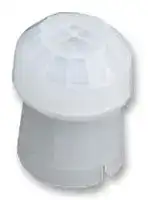


AMN32112J
PIR Sensor, NaPiOn, White, Digital, PCB, 2 m, Standard, 91 °, 91 °, Slight Motion, White
- Manufacturer: PANASONIC
- Product type: PIR Motion Sensors
- Sensing Range Max:2m; Supply Voltage Min:3VDC; Supply Voltage Max:6VDC; Beam Angle:91°; Response Time:-; Product Range:AMN 2,3,4 Series; SVHC:No SVHC (07-Jul-2017); Sensing Range:0m to
- SVHC: 4,4'-isopropylidenediphenol (17-Jan-2023)
- Lens Type: Slight Motion
- Beam Angle: 91°
- Lens Colour: White
- Product Range: AMN 2,3,4 Series
- Qualification: -
- Sensing Range Max: 2m
- Detection Distance: 2m
- Supply Voltage Max: 6VDC
- Supply Voltage Min: 3VDC
- Detection Sensitivity: Standard
- No. of Detection Zones: 104Zones
- Current Consumption Typ: 170µA
- Detection Area (Vertical): 91°
- Detection Area (Horizontal): 91°
| Delivery and price | |
|---|---|
| Units per pack | 250 |
| Price | 11.2 € |
| Current stock | 10+ |
| Lead time | 30 days |

## **MOTION SENSOR (PASSIVE INFRARED TYPE)**

## MP MOTION SENSOR ‘ ’

Standard type Slight motion detection type

Spot type 10 m detection type

## **What is passive infrared type?**

This sensor detects changes in infrared radiation which occur when there is movement by a person (or object) which is different in temperature from the surroundings.

Q As this sensor detects temperature differences, it is well suited to detecting the motion of people by their body temperature. W Wide sensing area.

**==> picture [99 x 73] intentionally omitted <==**

**----- Start of picture text -----**<br>
Sensor<br>Infrared<br>radiation<br>Temperature difference radiationInfrared<br>Movement<br>**----- End of picture text -----**<br>


**RoHS Directive compatibility information http://www.mew.co.jp/ac/e/environment/**

## **FEATURES**

## **1. The world’s smallest* with a built-in amplifier**

Extremely compact. Ideal for use in miniaturized devices.

(*Based on our investigation as of November, 2006)

## **2. Dual lens colors (white and black) are available**

With an ultrasmall design and dual lens colors (white and black), it is

inconspicuous, allowing the user to select either white or black to match the

equipment color. This provides greater flexibility in equipment design.

## **3. Both digital output and analog output (with adjustable sensitivity) are available.**

## **4. Built-in amplifier for easy use**

Has a built-in amplifier, and can be connected directly to a microcomputer.

- **Block diagram of the digital output circuit**

**==> picture [164 x 91] intentionally omitted <==**

**----- Start of picture text -----**<br>
TO5 metal package<br>(9.8mm × 9mm .386inch × .354inch dia.)<br>Infrared<br>radiation Single-chip<br>IC Stabilized<br>power Vdd<br>supply<br>Multi lens Amplifiercircuit Comparatoroutputcircuit OutputGnd<br>Quad type<br>PIR element<br>Optical filter<br>**----- End of picture text -----**<br>


- **Block diagram of the analog output circuit**

**==> picture [49 x 6] intentionally omitted <==**

**----- Start of picture text -----**<br>
TO5 metal package<br>**----- End of picture text -----**<br>


(9.8mm × 9mm .386inch × .354inch dia.)

**==> picture [164 x 74] intentionally omitted <==**

**----- Start of picture text -----**<br>
Infrared<br>radiation Single-chip<br>IC Stabilized<br>power Vdd<br>supply<br>Amplifier Output<br>Multi lens circuit Gnd<br>Quad type<br>PIR element<br>Optical filter<br>**----- End of picture text -----**<br>


## **5. Detects even slight motion of a**

## **person**

With our sensor, even slight motions made by people will be detected easily.

- **Fine motion detection capability within approximately 2 meters of sensor.** Standard type:

Detects movement of approximately

30cm 11.811inch.

Slight motion detection type: Detects movement of approximately 20cm 7.874inch.

## **6. Noise withstanding capability**

Circuitry is contained in a TO5 metal package, providing at least twice the noise withstanding capability as conventional type.

**• Comparison example of noise**

**withstanding capability** Distance at which motion sensor is not affected by cellular phone noise Conventional type Min. 1 to 2m 3.281 to 6.562ft MP Motion Sensor Min. 1 to 2cm .394 to .787inch _—— **7. A low current consumption type (46**

## **µA) has also been added to the lineup.**

A type that keeps current consumption to 46 µA (less than 30% compared to predecessor) is now available. Ideal for battery driven devices.

*Digital output type only.

## **8. A more economically priced digital output type (ST type) has been launched.**

## **APPLICATIONS**

## **1. Home appliances**

Useful for saving energy in air conditioner, television, personal computer, or ventilator and air purifier

**2. Amusement machine market** Useful for saving energy and for automated guidance in theme parks and large video games

## **3. Equipment in service market**

Useful for automated guidance, automated announcements and energy saving in vending machines, ATMs, etc.

## **4. Lighting market**

Automated on/off controls, etc. for lamps, desk lamps, indoor lights, halls, stairway lights, etc.

**ORDERING INFORMATION AMN** 1 Output 2: Analog output 4: Low current consumption 3: Digital output (ST type) (digital output) Detection performance 1: Standard detection type 3: Spot detection type 2: Slight motion detection type 4: 10m detection type Feature 1: PC board mounting type Operating voltage 1: 5V DC 2: 3V DC Lens color 1: Black 2: White ——]] **MP MOTION SENSOR ‘NaPiOn’** ASCT1B324E ’06.12 **New**

http://www.mew.co.jp/ac/e/

MP Motion Sensor (AMN2, 3, 4)

## **PRODUCT TYPES**

## **1. Digital output**

|**1. Digital output**||||||||
|---|---|---|---|---|---|---|---|
|Rated operating<br>voltage|Detection performance||Ambient<br>temperature|Lens color|Part No.|Packing<br>Inner|quantity<br>Outer|
|||Standard||Black|AMN31111|||
||Standard detection|||White|AMN31112|||
||type|Low current||Black|AMN41121|||
|||consumption||White|AMN41122|||
|||Standard||Black|AMN32111|||
||Slight motion|||White|AMN32112|||
|3 to 6 V DC|detection type|Low current||Black|AMN42121|||
|2.2 to 3 V DC<br>(Low current<br>consumption type)|Spot detection type|consumption<br>Standard<br>Low current|–20 to +60°C<br>–4 to +140°F|White<br>Black<br>White<br>Black|AMN42122<br>AMN33111<br>AMN33112<br>AMN43121|50 pcs.|1,000 pcs.|
|||consumption||White|AMN43122|||
|||Standard||Black|AMN34111|||
|||||White|AMN34112|||
||10m detection type|Low current||Black|AMN44121|||
|||consumption||White|AMN44122|||
|**2. Analog output**||||||||
|Rated operating<br>voltage|Detection performance||Ambient<br>temperature|Lens color|Part No.|Packing<br>Inner|quantity<br>Outer|
||Standard detection type|||Black<br>White|AMN21111<br>AMN21112|||
|4.5 to 5.5 V DC|Slight motion detection type<br>Spot detection type||–20 to +60°C<br>–4 to +140°F|Black<br>White<br>Black<br>White|AMN22111<br>AMN22112<br>AMN23111<br>AMN23112|50 pcs.|1,000 pcs.|
|||||Black|AMN24111|||
||10m detection type|||White|AMN24112|||


## **PERFORMANCE**

## **1. Detection performance**

||Items|Standard<br>detection type|Slight motion<br>detection type|Spot detection<br>type|10m detection<br>type|Conditions of objects to be detected|
|---|---|---|---|---|---|---|
|Rated detection distance<br>*Remark 1||5m16.404ft<br>(Max.)|2m6.562ft<br>(Max.)|5m16.404ft<br>(Max.)|10m32.808ft<br>(Max.)|1. Detectable difference in temperature between the target and<br>background for the spot type is more than 4°C39.2°F.<br>2. Movement speed|
|||||||1) Digital output type (ST type)|
||Horizontal<br>*Remark 2|100°|91°|38°|110°|• Standard detection type/Spot detection type/<br>10m detection type: 0.8 to 1.2 m/s|
|||||||• Slight motion detection type: 0.5 m/s|
|Detection<br>range|Vertical<br>*Remark 2|82°|91°|22°|93°|2) Analog output and low current consumption types<br>• Standard detection type/Spot detection type/<br>10m detection type: 0.5 to 1.5 m/s|
|||||||• Slight motion detection type: 0.3 to 1.0 m/s|
||Detection zone<br>*Remark 3|64 zones|104 zones|24 zones|80 zones|3. Detection object = human body (size is 700mm×250mm<br> 27.559inch×9.843inch, but for the slight motion detection|
|||||||type the size is 200mm×200mm7.874inch×7.874inch)|


- *Remarks 1. Depending on the difference in temperature between the background and detection target and the speed at which the target moves, these sensors may be capable of detection beyond the detection distances stated above. Nevertheless, they should be used within the prescribed detection distances. For further details, refer to the detection range diagram on page 4.

- *Remarks 2.

Vertical Vertical Horizontal Horizontal Cut out Cut out (Standard detection/ (Spot detection type/ Slight motion detection type) 10 m detection type) *Remarks 3. Regarding of detection zone, please refer to “DETECTION PERFORMANCE” on page 4.

## **2. Rating** (Measuring condition: ambient temp. = 25°C 77°F) (Common to All types)

|Items|Specifed value|Remarks|
|---|---|---|
|Power supply voltage|–0.3 to 7 V DC||
|Usable ambient temperature|–20 to 60°C–4 to +140°F|No freezing and condensing at low temperature.|
|Storage temperature|–20 to 70°C–4 to +158°F||


2

MP Motion Sensor (AMN2, 3, 4)

**3. Electrical characteristics** (Measuring condition: ambient temp. = 25°C 77°F; operating voltage = 5V) (Common to All types) 1) Digital output

|1) Digital output|||||||
|---|---|---|---|---|---|---|
|Items||Symbol|Standard type|Specifed value<br>Low current consumption type||Measured conditions|
||Minimum||3.0 V DC||2.2 V DC||
|Rated operating voltage|Typical|Vdd|—||—||
||Maximum||6.0 V DC||3.0 V DC||
|Rated consumption current<br>(Standby)*Remark|Typical<br>Maximum|Iw|170 µA<br>300 µA||46 µA<br>60 µA|Iout = 0|
|Output<br>(when detecting)<br>Current<br>Voltage|Maximum<br>Minimum<br>Maximum|Iout<br>Vout|100 µA<br>Vdd –0.5<br>—||100 µA<br>Vdd –0.5<br>—|Vout7Vdd–0.5<br>Open when not detecting|
|Circuit stability time|Typical<br>Maximum|Twu|7 s<br>30 s||7 s<br>30 s||


Remark: The current which is consumed during detection consists of the standby consumed current plus the output current.

## 2) Analog output

|2) Analog output|||||
|---|---|---|---|---|
|Items||Symbol|Specifed value|Measured conditions|
|Rated operating voltage|Minimum<br>Maximum|Vdd|4.5 V DC<br>5.5 V DC||
|Rated consumption current|Typical<br>Maximum|Iw|0.17 mA<br>0.3 mA|Iout = 0|
|Output current|Maximum|Iout|50 µA||
||Minimum||0 V||
|Output voltage|Typical|Vout|2.5 V||
||Maximum||Vdd||
|Output offset average voltage|Minimum<br>Typical<br>Maximum|Voff|2.3 V<br>2.5 V<br>2.7 V|Steady-state output voltage<br>when not detecting|
|Steady-state noise|Typical<br>Maximum|Vn|155 m Vp-p<br>300 m Vp-p||
|Circuit stability time|Maximum|Twu|45 s||


Note: To set to the same detection performance as the digital type, set the output voltage to the offset voltage (2.5V) ±0.45V (i.e. 2.95V or more and 2.05V or less).

## **[Timing chart]**

## 1) Digital output

**==> picture [242 x 136] intentionally omitted <==**

**----- Start of picture text -----**<br>
ON<br>Power supply<br>OFF<br>Detect<br>Detection state<br>Not<br>detect<br>ON<br>Sensor output<br>OFF<br>Circuit stability time<br>**----- End of picture text -----**<br>


Remark:

Circuit stability time: 30s max.

While the circuitry is stabilizing after the power is turned on, the sensor output is not fixed in the “on” state or “off” state. This is true regardless of whether or not the sensor has detected anything.

## 2) Analog output

**==> picture [267 x 144] intentionally omitted <==**

**----- Start of picture text -----**<br>
Vdd<br>Power supply<br>GND<br>Detect<br>Detection state<br>(Comparator Not<br>decision output) detect Body<br>movement<br>Vdd Threshold voltage 1<br>Output waveform (comparator)<br>V out Voff V h V n<br>GND<br>V l<br>Circuit stability time<br>Threshold voltage 2<br>(comparator)<br>**----- End of picture text -----**<br>


Remark:

Circuit stability time: 45s max. While the circuitry is stabilizing after the power is turned on, the sensor output is not fixed in the “on” state or “off” state. This is true regardless of whether or not the sensor has detected anything.

3

MP Motion Sensor (AMN2, 3, 4)

## **DETECTION PERFORMANCE**

## 1. Standard detection type

**==> picture [188 x 258] intentionally omitted <==**

**----- Start of picture text -----**<br>
TOP VIEW<br>5m X<br>16.404ft<br>50°<br>2.5m<br>8.202ft<br>0°<br>2.5m<br>8.202ft<br>50°<br>5m<br>16.404ft<br>X-Y cross section<br>**----- End of picture text -----**<br>


**==> picture [219 x 158] intentionally omitted <==**

**----- Start of picture text -----**<br>
Y Detection zone<br>3m<br>9.843ft<br>2<br>6.562<br>1<br>3.281<br>(Max. 5.66m)<br>(Max. 18.570ft)<br>X<br>4m 3 2 1 1 2 3 4m<br>13.123ft 9.843 6.562 3.281 3.281 6.562 9.843 13.123ft<br>1<br>3.281<br>2<br>6.562<br>3m<br>9.843ft<br>(Max. 7.42m)<br>(Max. 24.344ft)<br>**----- End of picture text -----**<br>


## 2. Slight motion detection type

**==> picture [155 x 196] intentionally omitted <==**

**----- Start of picture text -----**<br>
Y<br>2.5m<br>8.202ft<br>46°<br>2<br>6.562<br>1.5<br>4.921<br>1<br>3.281<br>0.5<br>1.640<br>0 1m3.281ft 2m6.562ft 0°<br>–0.5<br>–1.640<br>–1<br>–3.281<br>–1.5<br>–4.921<br>–2<br>–6.562<br>–2.5m 46°<br>–8.202ft 1m 2m<br>3.281ft 6.562ft<br>**----- End of picture text -----**<br>


**==> picture [191 x 242] intentionally omitted <==**

**----- Start of picture text -----**<br>
SIDE VIEW<br>5m Y<br>16.404ft<br>41°<br>2.5m<br>8.202ft<br>0°<br>2.5m<br>8.202ft<br>41°<br>5m<br>16.404ft<br>**----- End of picture text -----**<br>


Remarks:

1. The X-Y cross-sectional diagram shows the detection area.

2. The differences in the detection zone patterns are indicative of the projections of the 16 lenses with single focal point and with five optical axes. An object whose temperature differs from the background temperature and which crosses inside the detection zone will be detected.

**==> picture [218 x 233] intentionally omitted <==**

**----- Start of picture text -----**<br>
X-Y cross section<br>Y<br>2.5m8.202ft Detection zone<br>2<br>6.562<br>1.5<br>4.921<br>1<br>3.281<br>0.5<br>1.640<br>X<br>–2.5m –2 –1.5 –1 –0.5 0.5 1 1.5 2 2.5m<br>–8.202ft –6.562 –4.921 –3.281 –1.640 1.640 3.281 4.921 6.562 8.202ft<br>–0.5<br>–1.640<br>–1<br>–3.281<br>–1.5<br>–4.921<br>–2<br>–6.562<br>–2.5m<br>–8.202ft<br>(Max. 5m dia.)<br>(Max. 16.404ft dia.)<br>**----- End of picture text -----**<br>


Remarks:

1. The X-Y cross-sectional diagram shows the detection area.

2. The differences in the detection zone patterns are indicative of the projections of the 26 lenses with single focal point and with three optical axes. An object whose

temperature differs from the background temperature and which crosses inside the detection zone will be detected.

4

MP Motion Sensor (AMN2, 3, 4)

## 3. Spot detection type

## X-Y cross section

**==> picture [519 x 137] intentionally omitted <==**

**----- Start of picture text -----**<br>
X-Y cross section<br>TOP VIEW SIDE VIEW<br>X Y Y<br>2.5 2.5 1m<br>8.202 19° 8.202 3.281ft<br>4.1011.25 4.1011.25 11° 1.6400.5<br>0 2.58.202 5m16.404ft 0° 0 2.58.202 5m16.404ft 0° 1m 0.5 0.5 1m X (Max. 1.4m)(Max. 4.593ft)<br>3.281ft 1.640 1.640 3.281ft<br>1.25 1.25 11° 0.5<br>4.101 4.101 1.640<br>19°<br>8.202ft2.5m 2m 5m 8.202ft2.5m 2m 5m 3.281ft1m<br>5.562ft 16.404ft 5.562ft 16.404ft (Max. 2m)<br>(Max. 6.562ft)<br>**----- End of picture text -----**<br>


Remarks: 1. The X-Y cross-sectional diagram shows the detection area. 2. The differences in the detection zone patterns are indicative of the projections of the 6 lenses with single focal point and with two optical axes. An object whose temperature differs from the background temperature and which crosses inside the detection zone will be detected.

## 4. 10m detection type

**==> picture [463 x 430] intentionally omitted <==**

**----- Start of picture text -----**<br>
TOP VIEW TOP VIEW<br>10m X 10m X<br>32.808ft 32.808ft<br>5m 5m<br>16.404ft 16.404ft<br>5m 5m<br>16.404ft 16.404ft<br>55° 55°<br>10m 10m<br>32.808ft 32.808ft<br>X-Y cross section<br>Y Detection zone<br>(15.9m 52.165ft)<br>6m<br>19.685ft<br>4<br>13.123<br>2<br>6.562<br>Remarks:<br>X 1. The X-Y cross-sectional diagram shows the detection area.<br>10m 8 6 4 2 2 4 6 8 10m 2.<br>32.808ft 26.247 19.685 13.123 6.562 6.562 13.123 19.685 26.247 32.808ft<br>2<br>6.562<br>the detection zone will be detected.<br>13.1234 (12.3m 40.354ft)<br>6m<br>19.685ft<br>**----- End of picture text -----**<br>


2. The differences in the detection zone patterns are indicative of the projections of the 20 lenses with single focal point and with five optical axes. An object whose temperature differs from the background temperature and which crosses inside the detection zone will be detected.

## 5. Notes regarding the detection zone

**==> picture [119 x 89] intentionally omitted <==**

**----- Start of picture text -----**<br>
Target<br>Detection zone<br>**----- End of picture text -----**<br>


The detection zone has the polarity shown in the diagram on the right. When targets enter both the + and – zones with the same timing, the signals are cancelled each other, thus in this case there is a possibility that the object cannot be detected at the maximum specified detection distance.

5

MP Motion Sensor (AMN2, 3, 4)

## **HOW TO USE**

## 1. Wiring diagram

- 1) Digital output

**==> picture [242 x 92] intentionally omitted <==**

**----- Start of picture text -----**<br>
Sensor Vdd<br>+<br>GND Load<br>+<br>Out<br>Iout: Max.100 µA<br>**----- End of picture text -----**<br>


Vdd: Input power source (DC) GND: GND Out: Output (Comparator)

## 2) Analog output

**==> picture [239 x 84] intentionally omitted <==**

**----- Start of picture text -----**<br>
Sensor Vdd<br>GND<br>Microcomputer,<br>OP Out<br>AMP A/D converter<br>etc.<br>**----- End of picture text -----**<br>


## 2. Timer circuit example

## 1) Digital output

**==> picture [246 x 189] intentionally omitted <==**

**----- Start of picture text -----**<br>
5V<br>Input voltage 10 µ + REG 47 µ + (5VDC) Vdd<br>0.1 µ 0.1 µ 0.1 µ<br>GND<br>47k 10k Connection<br>Relay 10 µ + 0.1 µ to motionsensor<br>The transistorturns on when 3 1029 16 1 Out<br>the sensor  13 11<br>detects R 0.1 µ<br>something 74HC<br>123 etc. 15<br>C<br>14 GND<br>8<br>Select a transistor<br>to match the relay Timer IC Timer time = RXC<br>**----- End of picture text -----**<br>


- Note: This is the reference circuit which drives the MP motion sensor.  Install a noise filter for applications requiring enhanced detection reliability and noise withstanding capability. Differences in the specifications of electronic components to which the units are connected sometimes affect their correct operation; please check the units’ performance and reliability for each application.

## 3. Installation

Install the sensor so that people will be entering from the X or Y direction shown below. If persons approch the sensor from the Z direction, detection distance will be shortened.

## 2) Analog output

**==> picture [247 x 208] intentionally omitted <==**

**----- Start of picture text -----**<br>
Input voltage 10 µ + 5VREG 47 µ + (5VDC) Vdd<br>0.1 µ 0.1 µ 0.1 µ<br>GND<br>47k 10k Connection<br>Relay to motion<br>10 µ + 0.1 µ sensor<br>The transistor 3 29 16 1<br>turns on whenthe sensor  13 1011 Out<br>detects R 0.1 µ<br>74HC<br>something 123 etc.15 Window<br>C comparator<br>14<br>8<br>Select a<br>transistor GND<br>to match  Timer IC Timer time = RXC<br>the relay<br>**----- End of picture text -----**<br>


- Note: This circuit is a sample of a drive circuit for the MP Motion Sensor. Its noise resistance and long-term reliability are not considered or investigated. To improve the detection reliability and noise resistance of the circuit, consider adding a noise filter.

Matsushita Electric Works, Ltd. accepts no responsibility for damages resulting from the use of this circuit.

**==> picture [161 x 122] intentionally omitted <==**

**----- Start of picture text -----**<br>
X direction ❍<br>Y direction ❍<br>Z<br>Z direction ∆<br>X direction ❍<br>**----- End of picture text -----**<br>


6

MP Motion Sensor (AMN2, 3, 4)

## **DIMENSIONS**

mm inch  General tolerance ±0.5 ±.020

1. Standard detection type

Recommended PC board pattern

**==> picture [106 x 123] intentionally omitted <==**

**----- Start of picture text -----**<br>
9.5 dia.<br>Molding gate .374 dia.<br>Notes 3)<br>14.5<br>11 .571<br>.433<br>0.45 [±][0.05]  dia.<br>.018 [±][.002]  dia. 4.5 .177<br>11 dia.<br>.433 dia.<br>OUT GND<br>P.C.D. 5.08 [±][0.2]  dia.<br>.200 [±][.008]  dia.<br>Vdd<br>**----- End of picture text -----**<br>


**==> picture [38 x 9] intentionally omitted <==**

**----- Start of picture text -----**<br>
45°±4° 45°±4°<br>**----- End of picture text -----**<br>


**==> picture [141 x 108] intentionally omitted <==**

**----- Start of picture text -----**<br>
.394      dia.10     dia.+0.2+.00800<br>Sensing area<br>Note 2)<br>11.0 3.5<br>.433 .138<br>Note 1)<br>45°<br>45° 3-0.65     dia.<br>3-.026      dia.+0.10<br>+.0040<br>5.08.200±±0.1.004 dia. dia.<br>**----- End of picture text -----**<br>


- Notes: 1. In order to ensure proper detection, install it with the lens exposed at least 3.5mm .138inch.

   2. As for panel mounting hole, tapering or making a large size hole should be done.

   3. The height dimension does not include the remaining molding gate.

## 2. Slight motion detection type

**==> picture [115 x 151] intentionally omitted <==**

**----- Start of picture text -----**<br>
12.7 dia.<br>.500 dia.<br>11.9 dia.<br>Molding gate - .469 dia. 7.4 dia.<br>.291 dia. Note 3)<br>15.2<br>.598<br>12.8<br>.504<br>8.9<br>.350<br>0.45 [±][0.05]  dia.<br>.018 [±][.002]  dia. 4.5 .177<br>11 dia.<br>.433 dia.<br>OUT GND<br>P.C.D. 5.08 [±][0.2]  dia.<br>.200 [±][.008]  dia.<br>Vdd<br>45°±4° 45°±4°<br>**----- End of picture text -----**<br>


**==> picture [148 x 129] intentionally omitted <==**

**----- Start of picture text -----**<br>
Recommended PC board pattern<br>.488      dia.12.4     dia.+.008+0.200 Sensing area<br>Note 2) Y Mss“,<br>: 2.4<br>12.8 .094<br>.504<br>Note 1)<br>45°<br>45° 3-0.65     dia.<br>3-.026      dia.+0.10<br>+.0040<br>5.08.200±±0.1.004 dia. dia.<br>**----- End of picture text -----**<br>


- Notes: 1. In order to ensure proper detection, install it with the lens exposed at least 2.4mm .094inch.

   2. As for panel mounting hole, tapering or making a large size hole should be done.

   3. The height dimension does not include the remaining molding gate.

## 3. Spot detection type

4. 10m detection type

Recommended PC board pattern

## Recommended PC board pattern

**==> picture [501 x 230] intentionally omitted <==**

**----- Start of picture text -----**<br>
.3709.4 +0.2-0+.008-0 dia.dia. Note 1) .70517.9+.008-0+0.2-0 dia.dia. Note 2)<br>Molding gate .350 dia.8.9 dia. Note 2)<br>12.9<br>17.4 dia. .508<br>.685 dia.<br>17.0 dia.<br>15.1.594 Moldinggate .670 dia. Note 3)<br>0.45±0.05dia. 4.5<br>.018±.002dia. .177<br>11 18.53.730<br>A .433 t | 8.6<br>.339<br>OUT GND < 0.45±0.05 dia. ax 4.5 te Sensing area<br>.018±.002 dia. .177<br>P.C.D. 5.08 ±0.2 dia. 11 dia.<br>Vdd .200 ±.008 dia. Tt)iin .433 dia. gs |<br>Note 1)<br>OUT GND<br>P.C.D. 5.08 ±0.2 dia.<br>Vdd .200 ±.008 dia.<br>1. As for panel mounting hole, tapering or making a large  Notes:<br>size hole should be done. 1. In order to ensure proper detection,<br>2. The height dimension does not include the remaining  install it with the lens exposed at least<br>5.6mm .220inch..220inch..<br>-0+0.1<br>-0+.004<br>3-0.65<br>3-.026 dia.<br>dia.<br>3-0.65<br>3-.026 dia.<br>dia.<br>-0+0.1<br>-0+.004<br>±4°<br>±4°<br>45°<br>45°<br>dia.<br>5.08 dia.<br>.200<br>dia.<br>5.08 dia.<br>.200<br>±0.1<br>±.004<br>±0.1<br>±.004<br>45°±4°<br>45°±4°<br>45°<br>45°<br>5.6<br>°45<br>°45<br>**----- End of picture text -----**<br>


- Notes: 1. As for panel mounting hole, tapering or making a large size hole should be done.

   1. In order to ensure proper detection, install it with the lens exposed at least 5.6mm .220inch..220inch..

2. The height dimension does not include the remaining molding gate.

2. As for panel mounting hole, tapering or making a large size hole should be done.

3. The height dimension does not include the remaining molding gate.

7

## MP Motion Sensor (AMN2, 3, 4)

## **NOTES**

## **1. Checkpoints relating to principle of operation**

MP motion sensors are passive infrared sensors which detect changes in the infrared rays. They may fail to detect successfully if a heat source other than a human being is detected or if there are no temperature changes in or movement of a heat source. Care must generally be taken in the following cases. The performance and reliability of the sensors must be checked out under conditions of actual use.

## **<1> Cases where a heat source other than a human being is detected.**

- 1) When a small animal enters the detection range.

2) When the sensor is directly exposed to sunlight, a vehicle’s headlights, an incandescent light or some other source of far infrared rays.

3) When the temperature inside the detection range has changed suddenly due to the entry of cold or warm air from an air-conditioning or heating unit, water vapor from a humidifier, etc.

## **<2> Cases where it is difficult to detect**

## **the heat source**

1) When an object made of glass, acrylic or other subject which far infrared rays have difficulty passing through is located between the sensor and what is to be detected.

2) When the heat source inside the detection range hardly moves or when it moves at high speed; for details on the movement speed, refer to the section on the performance ratings.

## **2. When the detection area becomes**

## **larger**

When the difference between the ambient temperature and body temperature is large (more than 20°C 68°F), detection may occur in isolated areas outside the specified detection range.

## **3. Other handling cautions**

1) Be careful not to allow dust or dirt to accumulate on the lens as this will adversely affect the detection sensitivity. 2) The lens is made of a soft material (polyethylene). Avoid applying a load or impact since this will deform or scratch the lens, making proper operation impossible and causing a deterioration in its performance.

3) The sensor may be damaged if it is exposed to static with a voltage exceeding ±200V. Therefore, do not touch its terminals directly, and exercise adequate care in the handling of the sensor.

4) When the leads are to be soldered, solder them by hand for less than 3 seconds at a temperature of less than 350°C 662°F at the tip of the soldering iron. Avoid using a solder bath since this will causing a deterioration in the sensor’s performance.

5) Do not attempt to clean the sensor. Cleaning fluid may enter inside the lens area causing a deterioration in performance.

6) When using the sensors with cables, it is recommended that cables which are shielded and as short as possible be used in order to safeguard against the effects of noise.

## **4. Ambient operating conditions**

1) Temperature: Refer to the absolute maximum ratings for the temperature of each individual sensor.

2) Humidity: 15% to 85% RH (No freezing nor condensation at low temperature) 3) Atmospheric pressure: 86 to 106 kPa 4) Because the humidity range differs depending on the ambient temperature, the humidity range indicated below should be used. Continuous operation of the switch is possible within this range, but continuous use near the limit of the range should be avoided.

This humidity range does not guarantee permanent performance.

**<MP Motion Sensor>** Humidity, %R.H. 85 Tolerance range (Avoid condensation (Avoid freezing when when used at used at temperatureslower than 0°C 32°F) temperatureshigher than 032°F) °C 15 –20 0 60 –4 +32 140 Temperature, °C °F

In general, degradation of electronic devices accelerates when they are operated under conditions of high temperature or high humidity. Before use, confirm the reliability of the sensors under the expected operating conditions.

5) When the sensor (especially for ST type) is used in noisy environments, connect a capacitor (approx. 1µF) across its power input terminals and sensor output terminals.

6) The sensors do not have a water-proof or dust-proof construction. Depending on the ambient operating conditions, some means of providing protection from water and dust and preventing the formation of ice and condensation must be provided prior to using the sensors. If a sensor is used with a cover installed, the initial detection performance specifications may not be able to be met. Confirm the operation under the actual operating conditions.

7) Take care to avoid exposing the sensors to heat, vibration or impact since malfunctioning may result.

## **5. Concerning external surge voltages**

Since the internal circuitry may be destroyed if an external surge voltages is supplied, provide an element which will absorb the surges. The levels of the voltage surges which the sensor can withstand is given below.

MP motion sensors: Within the supply voltage given in the absolute maximum ratings.

## **6. Concerning power supplysuperimposed noise**

Use a regulated power supply as the power supply. Otherwise, power supplysuperimposed noise may cause the sensors to malfunction. The levels of noise which the sensor can withstand is given below.

MP motion sensors: ±20 V (50ns, 1µs wide square waves)

## **7. Drop damage**

If the sensor is dropped, damage can occur resulting in incorrect operation. If dropped, be sure to do a visual check of the exterior for noticeable damage and check the operation characteristics for faulty operation.

## **8. Concerning the circuit sides**

Since the circuit sides given in this catalog are not protected in terms of circuit design, check out the performance and reliability of the circuits prior to using the sensors.

These materials are printed on ECF pulp. These materials are printed with earth-friendly vegetable-based (soybean oil) ink.

Matsushita Electric Works, Ltd.   Automation Controls Business Unit8 Head Office: 1048, Kadoma, Kadoma-shi, Osaka 571-8686, Japan Telephone: +81-6-6908-1050 Facsimile: +81-6-6908-5781

COPYRIGHT © 2006 All Rights Reserved Specifications are subject to change without notice. ASCT1B324E   200612-0YT
Updated at June 1, 2026
Panasonic Industry is a global leader in the design and manufacture of high-quality electronic components. Renowned for a commitment to continuous innovation, the company provides the essential building blocks that empower modern engineering. From industrial automation to consumer electronics, Panasonic's components are trusted worldwide for their outstanding reliability, efficiency, and long-term performance. The extensive portfolio is anchored by a massive selection of passive components, featuring an industry-leading range of aluminium electrolytic, film, and polymer capacitors. Alongside these advanced capacitance solutions, engineers rely on Panasonic's robust power inductors and a highly versatile array of electromechanical devices, including solid-state, power, and signal relays engineered to excel in demanding environments. Beyond core passives and switching solutions, the offering encompasses critical circuit protection devices such as TVS varistors and NTC thermistors, as well as sophisticated thermal management materials. Panasonic also delivers precision light and motion sensors, highly reliable batteries, and advanced Bluetooth and WLAN connectivity modules, providing a comprehensive ecosystem of components to support next-generation technological design.
About Novapart
Novapart is a B2B electronic component broker specialising in stock shortages and cost reduction. We source hard-to-find parts and identify compliant alternatives across a catalogue of 410,000+ components from 500+ manufacturers.
Learn more →Stock Shortage Specialist
When a component is unavailable, discontinued or has an unacceptable lead time, we tap into our network of vetted European and Asian distributors to source what you need — without compromising on quality or traceability.
Request a quote →Compliant Alternatives
We identify pin-to-pin, electrically equivalent substitutes that meet the same certifications (RoHS, AEC-Q100, REACH) as your original specification — validated against datasheets, not just part numbers. Often at a lower cost.
BOM Analysis service →