
Image not available
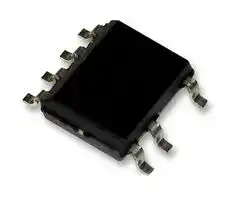
Illustrative purposes only

AL1698-20CS7-13
LED Driver, AC / DC, Buck-Boost, Flyback, 4 kHz, 85 V to 265 V, 2 A, 1 Output, 310 µA Operating
⚠️ Reference pricing provided. In case of supply shortages, we will connect you with our trusted procurement partners to ensure your project's continuity.
- Manufacturer: DIODES INC.
- Product type: AC / DC LED Driver ICs
- SVHC: No SVHC (27-Jun-2024)
- Topology: Buck-Boost, Flyback
- IC Mounting: Surface Mount
- No. of Pins: 7Pins
- Product Range: -
- Qualification: -
- No. of Outputs: 1Outputs
- Device Topology: Buck-Boost, Flyback
- LED Driver Type: -
- Driver Case Style: SOIC
- IC Case / Package: SOIC
- Input Voltage Max: 265V
- Input Voltage Min: 85V
- Output Current Max: 2A
- Output Voltage Max: -
- Switching Frequency: 4kHz
- Switching Frequency Typ: 4kHz
- Operating Temperature Max: 105°C
- Operating Temperature Min: -40°C
- Automotive Qualification Standard: -
| Delivery and price | |
|---|---|
| Units per pack | 5000 |
| Price | 0.274 € |
| Current stock | 1000+ |
| Lead time | 30 days |
Datasheet

**AL1698** rid **DIMMABLE LED DRIVER**
## **Description**
The AL1698 is a high performance, high power factor, high efficiency, and high current precision buck-boost and flyback dimmable LED driver for triac dimmable LED lamp applications. The AL1698 topology provides an accurate output current over wide line and load regulation. The wide switching frequency operates at Boundary Conduction Mode (BCM) to ease EMI/EMC design and testing, to meet the latest regulatory standards.
The AL1698 LED driver has a built-in high voltage JFET, which provides the system fast start-up time and enables users an easy and stable VCC supply design. The AL1698 also integrates a 600V/2A high voltage MOSFET. It can cover 230VAC triac dimmable applications with eliminating the external high voltage MOSFET and VCC startup resistors, which will reduce the system BOM cost. The AL1698 has the built-in thermal fold-back protection trigger point to automatically reduce output current. Other protection features enhance LED lighting system's safety and reliability.
## **Pin Assignments**
**==> picture [230 x 137] intentionally omitted <==**
**----- Start of picture text -----**<br>
(Top View)<br>VCC | 1 || 7 | D<br>RT | 2 |<br>COMP 3 6 CS<br>[| ||<br>GND [| 4 | 5 | ROVP<br> SO-7<br>**----- End of picture text -----**<br>
## **Applications**
- Mains Dimmable LED Lamps
- Offline LED Power Supply Driver
The AL1698 dimming curve is compliant with the NEMA SSL6 standard. The AL1698 applies to a wide range of dimmers, including leading edge and trailing edge dimmer, to achieve deep dimming down to 1%.
The AL1698 is available in SO-7 package.
## **Features**
- Tight Current Sense Tolerance : ± 3%
- Low Operation Current : 310µA
- Single Winding Inductor
- Wide Range of Dimmer Compatibility
- Integration of 600V/2A MOSFET
- Integration of HV JFET
- NEMA SSL6 Dimming Curve Compliant
- Internal Protections
- Under Voltage Lockout (UVLO)
- Leading-Edge Blanking (LEB)
- Cycle-By-Cycle Over Current Protection (OCP)
- Output Open/Short Protection (OVP/OSP)
- Thermal Foldback Protection (TFP) Over Temperature Protection (OTP)
- SO-7 Package
- **Totally Lead-Free & Fully RoHS Compliant (Notes 1 & 2)**
- **Halogen and Antimony Free. “Green” Device (Note 3** )
Notes: 1. No purposely added lead. Fully EU Directive 2002/95/EC (RoHS), 2011/65/EU (RoHS 2) & 2015/863/EU (RoHS 3) compliant.
2. See https://www.diodes.com/quality/lead-free/ for more information about Diodes Incorporated’s definitions of Halogen- and Antimony-free, "Green" and Lead-free.
3. Halogen- and Antimony-free "Green” products are defined as those which contain <900ppm bromine, <900ppm chlorine (<1500ppm total Br + Cl) and <1000ppm antimony compounds.
1 of 15 **www.diodes.com**
AL1698 Document number: DS42216 Rev. 1 - 2
September 2019 © Diodes Incorporated
**AL1698**
## **Typical Application Circuits**
**==> picture [511 x 231] intentionally omitted <==**
**----- Start of picture text -----**<br>
L1<br>C5<br>FR1 L2 R7 LEDS<br>+<br>AC<br>Input oe _<br>DB1 D1<br>R1<br>VCC 1 7 D<br>C1 C2 C3 RT 2<br>COMP CS<br>3 6<br>C4 R6 GND 4 5 ROVP<br>C6<br>R5<br>R3<br>nea<br>AL1698 Buck-Boost Application Circuit<br>U1 AL1698<br>**----- End of picture text -----**<br>
## **Pin Descriptions**
|**Pin Descriptionsptionstions**|||
|---|---|---|
|**Pin Number**|**Pin Name**|**Function**|
|1|VCC|Power SupplyVoltage|
|2|RT|Connect a Resistor to Set the System’s Maximum tON|
|3|COMP|Compensation for Current Control|
|4|GND|Ground|
|5|ROVP|Connect a Resistor to Set LED Open Protection Voltage|
|6|CS|Current Sensing|
|7|D|Drain of the Internal High Voltage MOSFET|
2 of 15 **www.diodes.com**
AL1698 Document number: DS42216 Rev. 1 - 2
September 2019 © Diodes Incorporated
**AL1698**
## **Functional Block Diagram**
**==> picture [469 x 322] intentionally omitted <==**
**----- Start of picture text -----**<br>
HV JFET<br>D<br>1 7<br>VCC<br>VCC<br>Clamp<br>STOP OFF<br>Fault VCC<br>Management UVLO Management<br>OTP OVP<br>VDD VREF<br>2 tONS Detection<br>RT Set tON_MAX [(ZCD) ]<br>tON_MAX VCC<br>Driver Supply<br>S Clamp<br>R<br>Q<br>3 6<br>COMP - Sample and Hold<br>- GM CS<br>STOPtON_MAX + + VREF<br>OCP +<br>- 1V<br>VREF_OVP<br>4 OVP 5<br>GND OVP ROVP<br>**----- End of picture text -----**<br>
AL1698 Block Diagram
3 of 15 **www.diodes.com**
AL1698 Document number: DS42216 Rev. 1 - 2
September 2019 © Diodes Incorporated
**AL1698**
**Absolute Maximum Ratings** (@TA = +25°C, unless otherwise specified.) (Note 4)
|**Symbol**<br>~~ee~~<br>~~ee~~|**Parameter**<br>~~Ge~~<br>~~GO~~|**Rating**<br>~~Ge~~<br>~~GO~~|**Unit**<br>~~Ge~~<br>~~GO~~|
|---|---|---|---|
|VCC<br>~~ee~~<br>~~ee~~<br>~~ee~~|Power Supply Voltage<br>~~Ge~~<br>~~GO~~<br>~~eG~~|18<br>~~Ge~~<br>~~GO~~<br>~~eG~~|V<br>~~Ge~~<br>~~GO~~<br>~~eG~~|
|VD<br>~~ee~~<br>~~ee~~<br>~~ee~~|Voltage on D Pin<br>~~GO~~<br>~~eG~~<br>~~ee~~|600<br>~~GO~~<br>~~eG~~|V<br>~~GO~~<br>~~eG~~|
|IDS<br>~~ee~~<br>~~ee~~<br>~~ee~~|Continuous Drain Current TC= +25°C<br>~~eG~~<br>~~ee~~<br>~~GO~~|2<br>~~eG~~<br>~~GO~~|A<br>~~eG~~<br>~~GO~~|
|VCS<br>~~ee~~<br>~~ee~~|Voltage on CS Pin<br>~~ee~~<br>~~GO~~|-0.3 to 7<br>~~GO~~|V<br>~~GO~~|
|VRT<br>~~ee~~<br>~~a ~~<br>~~ee~~|Voltage on RT Pin<br>~~GO~~<br> ~~eG~~<br>~~eG~~|-0.3 to 7<br>~~GO~~<br>~~eG~~<br>~~eG~~|V<br>~~GO~~<br>~~eG~~<br>~~eG~~|
|VROVP<br>~~ee~~|Voltage on ROVP Pin<br>~~eG~~|-0.3 to 7<br>~~eG~~|V<br>~~eG~~|
|TJ<br>~~ee~~<br>~~a ~~<br>~~ee~~|Operating Junction Temperature<br>~~eG~~<br> ~~eG~~|-40 to +150<br>~~eG~~<br>~~eG~~|°C<br>~~eG~~<br>~~eG~~|
|TSTG<br>~~ee~~<br>~~ee~~|Storage Temperature|-65 to +150|°C|
|TLEAD<br>~~ee~~<br>~~ee~~|Lead Temperature (Soldering, 10s)|+260|°C|
|PD<br>~~ee~~<br>~~a~~|Power Dissipation (TA= +50°C) (Note 5)|0.8|W|
|JA<br>~~a~~|Thermal Resistance(Junction to Ambient) (Note 5)|115|°C/W|
|JC<br>~~a ~~|Thermal Resistance(Junction to Case) (Note 5)<br> ~~eG~~|19<br>~~eG~~|°C/W<br>~~eG~~|
|—<br>~~1~~|ESD(Human BodyModel)<br>~~a~~<br>~~1~~|2,000<br>~~a~~|V<br>~~a~~<br>~~—~~|
||ESD(Charged-Device Model)<br>~~1~~|1,000|V<br>~~—~~|
5. Device mounted on 1"x1" FR-4 substrate PCB, 2oz copper, with minimum recommended pad layout.
## **Recommended Operating Conditions** (@TA = +25°C, unless otherwise specified.)
|**Symbol**|**Parameter**|**Min**|**Max**|**Unit**|
|---|---|---|---|---|
|TA|Ambient Temperature (Note 6)|-40|+105|°C|
|VCC|Operating VCCVoltage|7.3|VCC_CLAMP(Min)|(Min)<br>V|
Note: 6. The device may operate normally at +125°C ambient temperature under the condition not trigger temperature protection.
4 of 15 **www.diodes.com**
AL1698 Document number: DS42216 Rev. 1 - 2
September 2019 © Diodes Incorporated
**AL1698**
**Electrical Characteristics** (@TA = +25°C, unless otherwise specified.)
|**Symbol**<br>~~es~~|**Symbol**<br>~~es~~|**Parameter**<br>~~Rn~~|**Condition**<br>~~tt~~|**Min**<br>~~(OS~~|**Typ**<br>~~I~~|**Max**|**Unit**|
|---|---|---|---|---|---|---|---|
|**High Voltage Startup Current Source**<br>~~esRn tt~~<br>~~(OS I~~<br>~~ee~~<br>~~ee~~<br>~~ee~~<br>~~eeeeee~~||||||||
|IHV<br>~~ee~~<br>~~ee ee~~||High Voltage Supply Current<br>~~ee~~<br>~~ee~~|VCC= 8.8V;<br>VD= 100V<br>~~ee~~<br>~~ee~~|7<br>~~ee~~<br>~~ee~~|10.5<br>~~ee~~<br>~~ee~~|—<br>~~ee~~|mA|
|ILEAK<br>~~ee~~<br>~~ee ee~~||Leakage Current of Drain<br>~~ee~~<br>~~ee~~|VCC= 8.8V;<br>VD = 600V<br>~~ee~~<br>~~ee~~|—<br>~~ee ~~<br>~~ee~~|5<br> ~~ee ~~<br>~~ee~~|—<br> ~~ee~~|A|
|**UVLO**<br>~~ee ee~~<br>~~ee~~<br>~~ee ee~~<br>~~ee~~<br>~~oooooooTEoEE—E=Z_EEE~~||||||||
|VTH(ST)<br>~~ooo~~<br>~~eo~~||Startup Voltage<br>~~ooo~~<br>~~eo~~|—<br>~~ooooTEoEE—E=Z_~~<br>~~TT~~|7<br>~~ooooTEoEE—E=Z_~~<br>~~TT~~|8.8<br>~~ooooTEoEE—E=Z_EEE~~<br>~~TT~~|10<br>~~EEE~~<br>~~TT~~|V<br>~~EEE~~<br>~~TT~~|
|VOPR(MIN)<br>~~ooo~~<br>~~eo~~<br>~~SS~~||Minimum Operating Voltage<br>~~ooo ~~<br>~~eo~~|After Turn On<br> ~~ooooTEoEE—E=Z_~~<br>~~TT~~|5.5<br>~~ooooTEoEE—E=Z_~~<br>~~TT~~|7.1<br>~~ooooTEoEE—E=Z_EEE~~<br>~~TT~~|8.5<br>~~EEE~~<br>~~TT~~|V<br>~~EEE~~<br>~~TT~~|
|VCC_CLAMP<br>~~eo~~<br>~~SS~~||VCCClamp Voltage<br>~~eo~~|ICC= 1mA<br>~~TT~~|7.5<br>~~TT~~|9.5<br>~~TT~~|10.5<br>~~TT~~|V<br>~~TT~~|
|VCC_CHARGE<br>~~SS~~<br>~~ooo~~||VCCUVLO<br>~~ooo~~|—<br>~~ooo~~|3.5<br>~~ooo~~|4.2<br>~~ooo~~|5.5<br>~~ooo~~|V<br>~~ooo~~|
|**Standby Current**<br>~~Ce~~<br>~~ee~~<br>~~ee Gste~~||||||||
|ICC(OPR)<br>~~ee~~||Operating Current<br>~~ee Gs~~|Switching Frequency<br>at4kHz<br>~~Gs~~|—<br>~~te~~|310|—|µA|
|**Source Driver**<br>~~ee~~<br>~~ee Gs te~~<br>~~ee~~<br>~~esPsGeenen~~||||||||
|RDS(ON)_LV<br>~~ee~~||Internal Low Voltage MOSFET On-<br>State Resistance(Note 7)<br>~~es~~|—<br>~~Ps~~|—<br>~~Ge~~|1<br>~~en~~|—<br>~~en~~|Ω|
|**High Voltage and Super-Junction MOSFET**<br>~~ee~~<br>~~esPs Ge en en~~<br>~~rere~~||||||||
|RDS(ON)_HV<br>~~rere~~<br>~~SS~~||Drain-Source On-State Resistance<br>~~rere~~|—<br>~~rere~~|—<br>~~rere~~|4<br>~~rere~~|5.5<br>~~rere~~|Ω<br>~~rere~~|
|VDS<br>~~SS~~||Drain-Source Breakdown Voltage|(Note 9)|600|—|—|V|
|**RT Pin**<br>~~SS~~<br>~~reo~~||||||||
|VRT_REF<br>~~reo~~<br>~~ee~~||Reference Voltage of RT Pin<br>~~reo~~|—<br>~~reo~~|0.45<br>~~reo~~|0.5<br>~~reo~~|0.54<br>~~reo~~|V<br>~~reo~~|
|**Current Sense**<br>~~ee~~||||||||
|VCS_CLAMP<br>~~ee~~<br>~~ee~~||Current Sense Clamp Voltage<br>~~e~~|—<br>~~e~~~~**s**~~<br>~~n~~|0.9<br>~~**s**~~<br>~~ts~~|1<br>~~**s**~~|1.1<br>~~**s**~~|V<br>~~**s**~~|
|VREF<br>~~ee~~<br>~~ee~~||Internal Current Loop Control<br>Reference<br>~~e~~|—<br>~~e~~~~**s**~~<br>~~n~~|0.388<br>~~**s**~~<br>~~ts~~|0.4<br>~~**s**~~|0.412<br>~~**s**~~|V<br>~~**s**~~|
|tON_MIN<br>~~ee~~<br>~~eo~~<br>~~es~~||Minimum tON<br>~~e~~<br>~~eo~~<br>~~ee~~|—<br>~~e~~~~**s**~~<br>~~n~~<br>~~eo~~<br>~~es~~|—<br>~~**s**~~<br>~~ts~~<br>~~eo~~<br>~~es~~|610<br>~~**s**~~<br>~~eo~~|—<br>~~**s**~~<br>~~eo~~|ns<br>~~**s**~~<br>~~eo~~|
|tON_MAX<br>~~es~~||Maximum tON<br>~~ee~~|RT= 51kΩ,<br>VCOMP= 4V<br>~~es~~|4.1<br>~~es~~|5.5<br>~~EEE~~|7.6<br>~~EEE~~|µs<br>~~EEE~~|
|tOFF_MIN<br>~~es~~<br>~~TooToo~~||Minimum tOFF(Note 7)<br>~~ee~~<br>~~TooToo~~|—<br>~~es~~<br>~~TooToo~~|—<br>~~es~~<br>~~TooToo~~|4<br>~~TooToo~~<br>~~EEE~~<br>~~EEE~~|—<br>~~TooToo~~<br>~~EEE~~<br>~~EEE~~|µs<br>~~TooToo~~<br>~~EEE~~<br>~~EEE~~|
|tOFF_MAX<br>~~ooo~~||Maximum tOFF<br>~~ooo~~|—<br>~~ooo~~|—<br>~~ooo~~|313<br>~~EEE~~<br>~~ooo~~<br>~~EEE~~|—<br>~~EEE~~<br>~~ooo~~<br>~~EEE~~|µs<br>~~EEE~~<br>~~ooo~~<br>~~EEE~~|
|**ROVP Pin**<br>~~EEE~~<br>~~ees~~||||||||
|VROVP_REF<br>~~ees~~||Reference Voltage of ROVP Pin<br>~~ees~~|—<br>~~ees~~<br>~~eo~~|0.45<br>~~ees~~|0.5<br>~~ees~~<br>~~EEE~~|0.54<br>~~ees~~<br>~~EEE~~|V<br>~~ees~~<br>~~EEE~~|
|IROVP<br>~~ooo~~||ROVP Pin Current<br>~~ooo~~|ROVP Short to GND<br>~~ooo~~<br>~~eo~~|—<br>~~ooo~~|110<br>~~ooo~~<br>~~EEE~~|—<br>~~ooo~~<br>~~EEE~~|µA<br>~~ooo~~<br>~~EEE~~|
|**Error Amplifier**<br>~~eo~~<br>~~EEE~~<br>~~oo~~||||||||
|GM<br>~~a~~<br>~~oo~~<br>~~oo~~||GMTrans-Conductance<br>~~oo~~<br>~~oo~~|—<br>~~oo~~<br>~~ee~~<br>|—<br>~~oo~~<br>|25<br>~~oo~~<br>~~EEE~~<br>|—<br>~~oo~~<br>~~EEE~~<br>|µA/V<br>~~oo~~<br>~~EEE~~<br>|
|ISOURCE<br>~~ooo~~<br>~~oo~~||Amplifier Source Current<br>~~ooo~~<br>~~oo~~|VCS= 0V<br>~~ooo~~<br>~~ee~~<br>|—<br>~~ooo~~<br>|10<br>~~ooo~~<br>~~EEE~~<br>|—<br>~~ooo~~<br>~~EEE~~<br>|µA<br>~~ooo~~<br>~~EEE~~<br>|
|ISINK<br>~~oo~~||Amplifier Sink Current<br>~~oo ~~|VCS= 1V<br>~~ee~~<br> ~~oo~~|—<br>~~oo~~|15<br>~~EEE~~<br>~~oo~~|—<br>~~EEE~~<br>~~oo~~|µA<br>~~EEE~~<br>~~oo~~|
|**Thermal Foldback and Over Temperature Protection (OTP)**<br>~~ee~~<br>~~EEE~~<br>~~oo ~~<br>~~Ce~~<br>~~—~~<br>~~Oooo~~<br>~~E——T—*—c#_Ww_xWTEEZI~~||||||||
|TFOLD<br>~~—~~<br>~~Oooo~~<br>~~ee~~|Thermal Foldback (Note 7)<br>~~Oooo~~||—<br>~~Oooo~~|—<br>~~E——T—*—c#_Ww_xWTEEZI~~|+150<br>~~E——T—*—c#_Ww_xWTEEZI~~|—<br>~~E——T—*—c#_Ww_xWTEEZI~~|°C<br>~~E——T—*—c#_Ww_xWTEEZI~~|
|—<br>~~—~~<br>~~Oooo~~<br>~~ee~~|Thermal Shutdown (Notes 7 and 8)<br>~~Oooo~~||—<br>~~Oooo~~|—<br>~~E——T—*—c#_Ww_xWTEEZI~~|+170<br>~~E——T—*—c#_Ww_xWTEEZI~~|—<br>~~E——T—*—c#_Ww_xWTEEZI~~|°C<br>~~E——T—*—c#_Ww_xWTEEZI~~|
- Notes: 7. These parameters, although guaranteed by design, are not tested in production.
8. The device will latch off when OTP happens, recovered after power cycle and the device won’t operate normally at this temperature.
9. The drain-source voltage is 80% of VDS in the aging condition.
5 of 15 **www.diodes.com**
AL1698 Document number: DS42216 Rev. 1 - 2
September 2019 © Diodes Incorporated
**AL1698**
## **Performance Characteristics** (Note 10)
## **Startup Voltage vs. Ambient Temperature**
**==> picture [487 x 615] intentionally omitted <==**
**----- Start of picture text -----**<br>
Startup Voltage vs. Ambient Temperature VCS_REF vs. Ambient Temperature<br>11 450<br>440<br>10<br>YT] | [| | ft fd 430 Se<br>9 | | | | | | ff 420 esee<br>410<br>8<br>400<br>7 Pt te | ty td 390 oes<br>6 P| | | fo ff fd 380 ee<br>370<br>5 PT FT TT TET PF {| | | | ft ft ft |<br>360<br>4 fF] | tt ttf i 350 aTTSI<br>-40 -20 0 20 40 60 80 100 120 -40 -20 0 20 40 60 80 100 120<br>Ambient Temperature (oC) Ambient Temperature (oC)<br> Supply Current vs. Ambient Temperature Operating Current vs. Ambient Temperature<br>18 350<br>16 Ff | | [| tf ft td 340 ToT fT ht TT TT<br>14 i| 330<br>320<br>12<br>SS<br>310<br>10<br>ee 300 a<br>8<br>290<br>pj} | pt | ef Trt<br>6 ee ee ee ee 280 ee<br>4 270<br>2 Sees) 260 =A A<br>0 | | | | [| | | | | 250 ee<br>-40 -20 0 20 40 60 80 100 120 -40 -20 0 20 40 60 80 100 120<br>Ambient Temperature (oC) Ambient Temperature (oC)<br>VRT_REF vs. Ambient Temperature VROVP_REF vs. Ambient Temperature RT_REF vs. Ambient Temperature VROVP_REF vs. Ambient Temperature vs. Ambient Temperature VROVP_REF vs. Ambient Temperature ROVP_REF vs. Ambient Temperature vs. Ambient Temperature<br>600 600<br>580 TLL 580 TLL<br>560 Oe a 560 a<br>540 Os 540 a<br>520 Os 520<br>500 500<br>ee eee<br>480 a 480 ee<br>460 a 460 Oe<br>440 440<br>420 Se 420 a<br>400 Sn 400 Se<br>-40 -20 0 20 40 60 80 100 120 -40 -20 0 20 40 60 80 100 120<br>Ambient Temperature (oC) Ambient Temperature (oC)<br> (mV)<br>CS_REF<br>V<br>A)<br><br>Operating Current (<br> (mV)<br> (mV)<br>RT_REF<br>V ROVP_REF<br>V<br> (mA)<br>IJFET<br>Startup Voltage (V)<br>**----- End of picture text -----**<br>
**VRT_REF vs. Ambient Temperature VROVP_REF vs. Ambient Temperature RT_REF vs. Ambient Temperature VROVP_REF vs. Ambient Temperature vs. Ambient Temperature VROVP_REF vs. Ambient Temperature ROVP_REF vs. Ambient Temperature vs. Ambient Temperature**
Note: 10. These electrical characteristics are tested under DC condition. The ambient temperature is equal to the junction temperature of the device.
6 of 15 **www.diodes.com**
AL1698 Document number: DS42216 Rev. 1 - 2
September 2019 © Diodes Incorporated
**AL1698**
## **Functional Description and Application Information**
## **Operation**
The AL1698 is a single stage, single winding, high efficiency, and high power factor dimmable LED driver for triac dimmable LED lamp applications. The AL1698 integrates a high voltage JFET and a 600V/2A high voltage MOSFET, and it can cover 230VAC triac dimmable applications with eliminating external high voltage MOSFET and VCC startup resistors.
The AL1698 adopts source-driver technique to decrease the system operating current. It uses a novel method to detect the tOFF time which results in the removal for the need of an auxiliary winding. The AL1698 operates at Boundary Conduction Mode (BCM) which can ease EMI design and achieve high efficiency. High Power Factor (HPF) is achieved by using constant on-time mode. Coupled with a closed loop of constant current control, the AL1698 achieves good line and load regulation.
**==> picture [494 x 200] intentionally omitted <==**
**----- Start of picture text -----**<br>
L1<br>C5<br>FR1 L2 R7 LEDS<br>+<br>AC<br>Input<br>DB1 D1<br>R1<br>VCC 1 7 D<br>C1 C2 C3 RT 2<br>COMP CS<br>3 6<br>C4 R6 GND 4 5 ROVP<br>C6<br>R5<br>R3<br>nea<br>U1 AL1698<br>**----- End of picture text -----**<br>
AL1698 Buck-Boost Application Circuit
## **Startup and Supply Voltage**
Before startup, the VCC capacitor C4 is charged by internal HV JFET. When the start-up voltage is reached, the AL1698 starts switching.
The AL1698 has an internal VCC clamp voltage (typical 9.5V), which is limited by one internal active Zener diode.
When VCC voltage drops to below the VOPR(MIN), switching will be stopped. So the device can operate normally when the voltage on VCC pin is between VOPR(MIN) and VCC clamp voltage.
## **Protections**
## **Under Voltage Lockout (UVLO)**
When the voltage on the VCC pin drops below VCC_CHARGE, the IC stops switch. The IC can restart when the voltage on VCC exceeds the startup voltage (VTH(ST)).
## **Leading-Edge Blanking (LEB)**
To prevent false detection of the peak current of the inductor, a blanking time following switch-on is designed. When the internal switch turns on, a short current spike can occur because of the capacitive discharge of the voltages over the drain and source. It is disregarded during the LEB time (tON_MIN).
7 of 15 **www.diodes.com**
AL1698 Document number: DS42216 Rev. 1 - 2
September 2019 © Diodes Incorporated
**AL1698 Functional Description and Application Information** (continued) **Cycle-by-Cycle Over Current Protection (OCP)** The AL1698 has a built-in peak current detector. It is triggered when the voltage on CS pin reaches the peak level VCS_CLAMP. The R5 is connected to the CS pin to sense the current of the inductor. The maximum peak current (IPEAK(MAX)) of the inductor can be calculated as below: _I PEAK_ _MAX_ _VCS_ RCLAMP_ 5 …………………… (1) The detection circuit is activated after the LEB time. When the detection circuit senses the CS voltage higher than 1V, the IC will turn off the switching to limit the output current. It automatically provides protection for the maximum LED current during operation. A propagation delay exists between over current detection and actual source-switch off, so the actual peak current is a little higher than the OCP level set by the R5. **Over Voltage Protection and Output Open Protection (OVP)** The AL1698 has output open voltage protection when the LED is open, which can prevent the output voltage from increasing to a very high value. This feature can help the system designer to select a smaller volume capacitor. The output voltage is set by the external resistor R3 shown in Figure 1. When LED is open, the tOFF_OVP time can be calculated as: _tOFF_ OVP_ _VLOVP_ 2 _V_ R5 _CS_ ……………[ (2) ] Where, ~~;~~ — VOVP is the output open voltage.
VCS is the voltage on the CS pin when OVP happens.
The output voltage is set by R3, and R3 is calculated as: R3 ~ VROVP_ REF L2 …………… (3) 20 (2 2.25) CREF VOVP R5
Where, VROVP_REF is the internal ROVP pin 0.5V’s reference, CREF is the internal 8.07pF capacitor.
## **Output-Short Protection (OSP)**
When LED is shorted, the device cannot detect the tOFF time, and the device controls the system operation at 4kHz low frequency.
## **Thermal Foldback Protection (TFP)**
AL1698 has a Thermal Foldback Protection (TFP) function and adopts self-adaptive control method, which can prevent the system breaking down caused by high temperature. The overheating temperature is set at +150°C typical. When the junction temperature of the IC is higher than +150°C typical, the device will linearly decrease the internal reference voltage to decrease the output current. As a result of this feature, the device can control the system’s output power at high ambient temperature, to control the system heat quality. This enhances the safety of the system at high temperature.
8 of 15 **www.diodes.com**
AL1698 Document number: DS42216 Rev. 1 - 2
September 2019 © Diodes Incorporated
## **Functional Description and Application Information ption and Application Information tion and Application Information pplication Information lication Information** (continued) Thermal foldback waveform is shown below. Output Current 100% 50% TFOLDFOLD OTP Figure 1. Thermal Foldback Waveform **Over-Temperature Protection (OTP)** system’s AC source supply has been reset and powered up. **Design Parameters** i **Setting the Current Sense Resistor R5**
**==> picture [522 x 334] intentionally omitted <==**
**----- Start of picture text -----**<br>
AL1698<br>Functional Description and Application Information ption and Application Information tion and Application Information pplication Information lication Information (continued)<br>Thermal foldback waveform is shown below.<br>Output<br>Current<br>100%<br>50%<br>TFOLDFOLD OTP Junction Temperature/°C<br>Figure 1. Thermal Foldback Waveform<br>Over-Temperature Protection (OTP)<br>The AL1698 has Over Temperature Protection (OTP) function. When the junction temperature reach to +170°C typical, the IC will trigger an over-<br>temperature protection, which causes the device to shut down and latch up. Once OTP is triggered, the system needs to be resumed after the<br>system’s AC source supply has been reset and powered up.<br>Design Parameters<br>—<br>**----- End of picture text -----**<br>
The AL1698 adopts boundary conduction mode, the output current is calculated as below,
**==> picture [354 x 31] intentionally omitted <==**
Where,
IPEAK is the peak current of the inductance
tON is the internal MOSFET on time
tOFF is the freewheel diode D1 conduction time
tDELAY is typical 0.4µs
The AL1698 is a closed loop constant current control with the relationship between output current and current sense voltage follows this equation
**==> picture [353 x 30] intentionally omitted <==**
Where,
VREF is the internal reference, typical 0.4V.
R5 is the current sense resistor
So we can get the output current equation as below,
_IO_ MEAN_ = 12 _VRREF_ 5 …………………… (6) **Inductance Selection (L2)** In buck-boost structure, the peak current of the inductance can be calculated as below _I PEAK_ _R_ 5 0 sin( ) 2 2 _V_ _IN_ _VV_ REFINRMS_ RMS_ sin( sin( ) ) _Vo d_ …………………… (7)
## **Inductance Selection (L2)**
In buck-boost structure, the peak current of the inductance can be calculated as below
9 of 15 **www.diodes.com**
AL1698 Document number: DS42216 Rev. 1 - 2
September 2019 © Diodes Incorporated
**AL1698**
## **Functional Description and Application Information** (continued)
Where,
VIN_RMS is the input voltage’s RMS value
VO is the system output voltage
The AL1698 controls the system operating at boundary conduction mode which results in its operating frequency not being constant. To set the minimum switching frequency fMIN at the crest of the minimum AC input.
**==> picture [355 x 49] intentionally omitted <==**
_NL_ 2 _L_ 2 _I PEAK Ae_ _Bm_ …………………… (9)
Where,
Ae is the core effective area.
Bm is the maximum magnetic flux density.
## **tON_MAX Setting**
In order to get a good dimmer compatibility and a good dimming depth, the device sets a tON_MAX by one external resistor RT (R6). And the tON_MAX time has the below equation:
**==> picture [338 x 37] intentionally omitted <==**
Where
VRT_REF is the internal RT pin 0.5V’s reference.
CREF is the internal 1.5pF capacitor.
## **Dimming Control**
The AL1698 is a closed loop control device; the dimming function is realized by tON_MAX limited when dimmer is connected in. When the dimmer is at the largest conduction angle, the device still has the adjustability to control the output current constant before COMP voltage is adjusted to the maximum 4V, so for most of the dimmer, the output current is almost the same with the no dimmer condition at the largest conduction angle. If the conduction angle is decreased, the COMP pin voltage will continue to increase quickly till to the maximum level (typical 4V), the device will output tON_MAX to limit system’s output current. The tON_MAX is set by RT pin connected with one resistor, so the dimming depth can be adjusted by RT resistor (R6).
Before the AL1698 enters tON_MAX mode, it keeps the output current constant the same as no dimmer condition. When enter tON_MAX mode, we can get the following equation:
**==> picture [378 x 24] intentionally omitted <==**
From the buck-boost output current equation, we can get the output current when dimming:
**==> picture [373 x 56] intentionally omitted <==**
Where,
> is the dimmer conduction angle.
10 of 15 **www.diodes.com**
AL1698 Document number: DS42216 Rev. 1 - 2
September 2019 © Diodes Incorporated
**AL1698**
## **Functional Description and Application Information** (continued)
**==> picture [325 x 164] intentionally omitted <==**
**----- Start of picture text -----**<br>
Output<br>Current (%)<br>100<br>tON<tON_MAX<br>tON=tON_MAX<br>0<br>0 Critical Conduction 180<br>Conduction Angle<br>Angle<br> (deg)<br>**----- End of picture text -----**<br>
Figure 2. Dimming Curve
## **Dimmer Compatibility**
## **Passive Bleeder Design**
The passive bleeder is designed to supply latching and holding current to eliminate dimmer misfire and flicker.
**==> picture [278 x 82] intentionally omitted <==**
**----- Start of picture text -----**<br>
L1 Passive<br>Damping<br>Bleeder<br>FR1<br>L DB1 R1<br>C1<br>ae C2<br>N<br>**----- End of picture text -----**<br>
Figure 3. LED Driver Schematic with Passive Bleeder
The passive bleeder includes a capacitor (C2, in hundreds of nF) to provide latching current. A resistor (R1) is necessary to dampen the current spike. Because a large C2 will affect the PF, THD and efficiency, the value of the capacitor (C2) should be selected accordingly. Generally, 100nF/400V to 330nF/400V is recommended. R1 is used to limit the latching current. If R1 is too large, the latching current is not enough and the triac dimmer will misfire causing LED flicker. If R1 is too small, it will result in greater power dissipation. Generally speaking, a 200Ω to 2kΩ resistor is selected for R1.
## **Passive Damping Design**
FR1 is the damper for reducing the spike current caused by quick charging of C2 at firing. In General, FR1 is selected from 20Ω to 100Ω for low line like 120VAC application, and 51Ω to 200Ω for high line like 230VAC application.
11 of 15 **www.diodes.com**
AL1698 Document number: DS42216 Rev. 1 - 2
September 2019 © Diodes Incorporated
**AL1698 Ordering Information AL1698-X X X** – **13** Current Option MOSFET Voltage Package Packing 20 : 2.0A C : 600V S7 : SO-7 Tape & Reel **13” Tape and Reel Part Number Package Code Package Quantity Part Number Suffix** AL1698-20CS7-13 S7 SO-7 4000/Tape & Reel -13 **Marking Information SO-7 (Top View)** 7 6 5 YY : Year : 19, 20, 21~ WW : Week : 01~52; 52 Logo represents 52 and 53 week Marking ID **1698** – **20C** X : T~Z for CAT **YY WW X G** T=Sunday X=Thursday U=Monday Y=Friday V=Tuesday Z=Saturday W=Wednesday 1 2 3 4 G: Green Compound ~~[=]~~ AL1698 12 of 15 Document number: DS42216 Rev. 1 - 2 **www.diodes.com**
September 2019 © Diodes Incorporated
**AL1698**
## **Package Outline Dimensions** (All dimensions in mm(inch))
Please see http://www.diodes.com/package-outlines.html for the latest version.
## **(1) Package Type: SO-7**
**==> picture [333 x 270] intentionally omitted <==**
**----- Start of picture text -----**<br>
5.800(0.228)<br>1.350(0.053)<br>6.200(0.244) 1.750(0.069)<br>0.330(0.013 )<br>0.510(0.020 )<br>2.54(0.100)<br>TYP 4.700(0.185)<br>5.100(0.201)<br>1.270(0.050)<br>TYP<br>ae<br>0.080(0.003)<br>0.250(0.010)<br>ST 3.800(0.150) 1.250(0.049)<br>4.000(0.157) 1.500(0.059)<br>0.350(0.014)<br>TYP<br>45°<br>0.450(0.017) 0.150(0.006)<br>Option 1 0.800(0.031) 0.250(0.010)<br>Option 2<br>0 °<br>8 °<br>**----- End of picture text -----**<br>
Note: Eject hole, oriented hole and mold mark is optional.
13 of 15 **www.diodes.com**
AL1698 Document number: DS42216 Rev. 1 - 2
September 2019 © Diodes Incorporated
**AL1698**
## **Suggested Pad Layout**
Please see http://www.diodes.com/package-outlines.html for the latest version.
## **(1) Package Type: SO-7**
||||||E||||Z<br>G<br>E1<br>X<br>Y<br>~~il~~|Z<br>G<br>E1<br>X<br>Y<br>~~il~~|Z<br>G<br>E1<br>X<br>Y<br>~~il~~|Z<br>G<br>E1<br>X<br>Y<br>~~il~~|Z<br>G<br>E1<br>X<br>Y<br>~~il~~|||
|---|---|---|---|---|---|---|---|---|---|---|---|---|---|---|---|
|Dimensions|Z<br>(mm)/(inch)||G<br>(mm)/(inch)||||||X<br>(mm)/(inch)||||Y<br>(mm)/(inch)|E<br>(mm)/(inch)|E1<br>(mm)/(inch)|
|Value|6.900/0.272||3.900/0.154||||||0.650/0.026|0.650/0.026|||1.500/0.059|1.270/0.050|2.540/0.100|
14 of 15 **www.diodes.com**
AL1698 Document number: DS42216 Rev. 1 - 2
September 2019 © Diodes Incorporated
**AL1698 IMPORTANT NOTICE** DIODES INCORPORATED MAKES NO WARRANTY OF ANY KIND, EXPRESS OR IMPLIED, WITH REGARDS TO THIS DOCUMENT, INCLUDING, BUT NOT LIMITED TO, THE IMPLIED WARRANTIES OF MERCHANTABILITY AND FITNESS FOR A PARTICULAR PURPOSE (AND THEIR EQUIVALENTS UNDER THE LAWS OF ANY JURISDICTION). Diodes Incorporated and its subsidiaries reserve the right to make modifications, enhancements, improvements, corrections or other changes without further notice to this document and any product described herein. Diodes Incorporated does not assume any liability arising out of the application or use of this document or any product described herein; neither does Diodes Incorporated convey any license under its patent or trademark rights, nor the rights of others. Any Customer or user of this document or products described herein in such applications shall assume all risks of such use and will agree to hold Diodes Incorporated and all the companies whose products are represented on Diodes Incorporated website, harmless against all damages. Diodes Incorporated does not warrant or accept any liability whatsoever in respect of any products purchased through unauthorized sales channel. Should Customers purchase or use Diodes Incorporated products for any unintended or unauthorized application, Customers shall indemnify and hold Diodes Incorporated and its representatives harmless against all claims, damages, expenses, and attorney fees arising out of, directly or indirectly, any claim of personal injury or death associated with such unintended or unauthorized application. Products described herein may be covered by one or more United States, international or foreign patents pending. Product names and markings noted herein may also be covered by one or more United States, international or foreign trademarks. This document is written in English but may be translated into multiple languages for reference. Only the English version of this document is the final and determinative format released by Diodes Incorporated. **LIFE SUPPORT** Diodes Incorporated products are specifically not authorized for use as critical components in life support devices or systems without the express written approval of the Chief Executive Officer of Diodes Incorporated. As used herein: A. Life support devices or systems are devices or systems which: — 1. are intended to implant into the body, or 2. support or sustain life and whose failure to perform when properly used in accordance with instructions for use provided in the labeling can be reasonably expected to result in significant injury to the user. B. A critical component is any component in a life support device or system whose failure to perform can be reasonably expected to cause the failure of the life support device or to affect its safety or effectiveness. Customers represent that they have all necessary expertise in the safety and regulatory ramifications of their life support devices or systems, and acknowledge and agree that they are solely responsible for all legal, regulatory and safety-related requirements concerning their products and any use of Diodes Incorporated products in such safety-critical, life support devices or systems, notwithstanding any devices- or systems-related information or support that may be provided by Diodes Incorporated. Further, Customers must fully indemnify Diodes Incorporated and its representatives against any damages arising out of the use of Diodes Incorporated products in such safety-critical, life support devices or systems. Copyright © 2019, Diodes Incorporated **www.diodes.com**[i]
Customers represent that they have all necessary expertise in the safety and regulatory ramifications of their life support devices or systems, and acknowledge and agree that they are solely responsible for all legal, regulatory and safety-related requirements concerning their products and any use of Diodes Incorporated products in such safety-critical, life support devices or systems, notwithstanding any devices- or systems-related information or support that may be provided by Diodes Incorporated. Further, Customers must fully indemnify Diodes Incorporated and its representatives against any damages arising out of the use of Diodes Incorporated products in such safety-critical, life support devices or systems.
15 of 15 **www.diodes.com**
AL1698 Document number: DS42216 Rev. 1 - 2
September 2019 © Diodes Incorporated
Updated at April 29, 2026
About Novapart
Novapart is a B2B electronic component broker specialising in stock shortages and cost reduction. We source hard-to-find parts and identify compliant alternatives across a catalogue of 410,000+ components from 500+ manufacturers.
Learn more →Stock Shortage Specialist
When a component is unavailable, discontinued or has an unacceptable lead time, we tap into our network of vetted European and Asian distributors to source what you need — without compromising on quality or traceability.
Request a quote →Compliant Alternatives
We identify pin-to-pin, electrically equivalent substitutes that meet the same certifications (RoHS, AEC-Q100, REACH) as your original specification — validated against datasheets, not just part numbers. Often at a lower cost.
BOM Analysis service →