
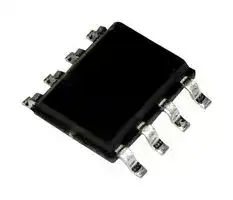
Image not available
Illustrative purposes only

AL1663RS-13
LED Driver, AC / DC, Buck-Boost, Flyback, Universal, 85 V to 305 V, 1 Output, -40 °C to 105 °C
⚠️ Reference pricing provided. In case of supply shortages, we will connect you with our trusted procurement partners to ensure your project's continuity.
- Manufacturer: DIODES INC.
- Product type: AC / DC LED Driver ICs
- Available until stocks are exhausted
- SVHC: No SVHC (15-Jan-2018)
- Topology: Buck-Boost, Flyback
- IC Mounting: Surface Mount
- No. of Pins: 8Pins
- Product Range: -
- Qualification: -
- No. of Outputs: 1Outputs
- Device Topology: Buck-Boost, Flyback
- LED Driver Type: Isolated
- Driver Case Style: SOIC
- IC Case / Package: SOIC
- Input Voltage Max: 305V
- Input Voltage Min: 85V
- Output Current Max: -
- Output Voltage Max: 20V
- Switching Frequency: -
- Switching Frequency Typ: 150kHz
- Operating Temperature Max: 105°C
- Operating Temperature Min: -40°C
- Automotive Qualification Standard: -
| Delivery and price | |
|---|---|
| Units per pack | 2500 |
| Price | 0.207 € |
| Current stock | 1000+ |
| Lead time | 30 days |
Datasheet

**AL1663/AL1663R**
## **UNIVERSAL FLYBACK AND BUCK-BOOST SINGLE STAGE DIMMABLE LED CONTROLLER**
## **Description**
The AL1663/AL1663R is a high performance single stage Flyback and Buck-boost controller, targeting dimmable LED lighting application. It is a primary side regulation (PSR) controller which can provide accurate constant current (CC) regulation without optocoupler and secondary control circuitry. It is operating at BCM mode and switching at the valley which results in good EMI and efficiency. With working in constant on time, the system achieves high PF and low total harmonic distortion (THD) under universal input voltage.
The AL1663/AL1663R can support multiple dimming modes. When a 0.3V to 2.4V DC signal is applied on APWM pin, the device will operate in analog dimming mode. When a digital signal is applied on APWM pin, the device works at PWM dimming mode. And for AL1663 When a digital signal is applied on PWMD pin and the APWM pin is connected with a hundreds of nF capacitor, the device will work in PWM-to-DC dimming mode.
The AL1663/AL1663R features low start-up current and low operation current. It integrates multiple protections including over voltage, short circuit, over current and over temperature protection.
## **Pin Assignments**
**==> picture [253 x 115] intentionally omitted <==**
**----- Start of picture text -----**<br>
(Top View)<br>APWM 1 8 FB NC 1 8 APWM<br>|__| = [| =<br>PWMD 2 7 VCC FB 2 7 COMP<br>[| [_|<br>COMP 3 6 OUT CS 3 6 VCC<br>[| LJ [_| =<br>CS 4 5 GND GND 4 5 OUT<br>[| | [| [|<br>AL1663 AL1663R<br>SO-8 SO-8<br>**----- End of picture text -----**<br>
## **Applications**
- General LED Lighting Driver with Dimming Function
- General Purpose Constant Current Source
- LED Backlighting Driver
- Smart LED Lighting
The AL1663/AL1663R is available in SO-8 package.
## **Features**
- Primary Side Regulation without Opto-coupler
- Valley Switching for Low Switching Loss Low Start-up Current High PF and Low THD High Efficiency Tight LED Current Variation Range Tight Output Open Voltage Variation Range
- Support both PWM Dimming and Analog Dimming
- Internal Protections
- Under Voltage Lock Out (UVLO)
- Output Over Voltage Protection (OVP)
- Output Short Protection (OSP) Over Current Protection (OCP) Thermal Fold-back Protection (TFP)
- Over Temperature Protection (OTP)
- Low System Cost
- Package: SO-8
- **Totally Lead-Free & Fully RoHS Compliant (Notes 1 & 2)**
- **Halogen and Antimony Free. “Green” Device (Note 3** )
- Notes: 1. No purposely added lead. Fully EU Directive 2002/95/EC (RoHS) & 2011/65/EU (RoHS 2) compliant.
2. See http://www.diodes.com/quality/lead_free.html for more information about Diodes Incorporated’s definitions of Halogen- and Antimony-free, "Green" and Lead-free.
3. Halogen- and Antimony-free "Green” products are defined as those which contain <900ppm bromine, <900ppm chlorine (<1500ppm total Br + Cl) and <1000ppm antimony compounds.
1 of 15 **www.diodes.com**
AL1663/AL1663R Document number: DS38466 Rev. 2 - 2
March 2017 © Diodes Incorporated
**AL1663/AL1663R**
## **Typical Applications Circuit**
**==> picture [475 x 667] intentionally omitted <==**
**----- Start of picture text -----**<br>
C7 R14<br>L1 T1<br>C1 C2 RTH R10 C5 D3 C6 + OUT<br>F1 1 ane<br>D2<br>AC VR1<br>Input hi© Aux R4 D1<br>DB1<br>Cvcc<br>R5 D4<br>VCC PWMD APWM<br>Q1<br>FB OUT<br>AL1663 R9<br>R6 COMP<br>Rcomp GND CS<br>U1<br>Ccomp RCS<br>|<br>AL1663 Flyback Application Circuit<br>L1<br>C1 C2 RTH T1 R11 C6 OUT<br>F1 ae<br>D3<br>AC<br>VR1<br>Input i meoO Aux R4 D1<br>DB1<br>Cvcc<br>R5 D4<br>VCC PWMD APWM<br>Q1<br>FB OUT<br>AL1663 R9<br>R6 COMP<br>! r Rcomp p GND CS .<br>Ccomp RCS<br>=<br>AL1663 Buck-Boost Application Circuit<br>C7 R14<br>L1 T1<br>C1 C2 RTH R10 ] C5 D3 C6 + OUT<br>F1 1at<br>D2<br>AC VR1<br>Input Li f Aux R4 D1<br>DB1<br>Cvcc<br>R5 D4<br>VCC NC APWM<br>Q1<br>FB OUT<br>AL1663R<br>R9<br>R6 COMP<br>Rcomp GND CS<br>U1<br>Ccomp RCS<br>que :<br>=<br>AL1663R Flyback Application Circuit<br>AL1663/AL1663R 2 of 15<br>Document number: DS38466 Rev. 2 - 2 www.diodes.com<br>+<br>**----- End of picture text -----**<br>
March 2017
© Diodes Incorporated
**AL1663/AL1663R**
## **Pin Descriptions**
|**Pin Descriptionsptionstions**|**Pin Descriptionsptionstions**|||
|---|---|---|---|
|**Pin Number**||**Pin Name**|**Function**|
|**AL1663**|**AL1663R**|||
|1|8|APWM|Analog dimming input pin or PWM signal input pin in PWM dimming mode|
|2|—|PWMD|PWMD signal input pin in PWM-to-DC dimming mode|
|—|1|NC|Not Connected|
|3|7|COMP|Loop compensation pin|
|4|3|CS|Current sense pin, connect this pin to the source of the primary switch|
|5|4|GND|Ground|
|6|5|OUT|Gate driver output|
|7|6|VCC|Supply voltage of gate driver and control circuits of the IC|
|8|2|FB|The feedback voltage sensing from the auxiliary winding|
**==> picture [464 x 438] intentionally omitted <==**
**----- Start of picture text -----**<br>
Functional Block Diagram<br>APWM VCC<br>1(8) 7(6)<br>Buffer<br>2 DIM VREF<br>PWMD<br>Control UVLO VREF<br>&Bias<br>OVP<br>6(5)<br>Driver OUT<br>8(2) Valley Logical<br>FB Control<br>Detector<br>OTP<br>TFP<br>1.2V<br>-<br>OCP TFP<br>+ Temperature<br>OTP Detector<br>4(3)<br>CS -<br>Gm<br>+<br>VREF<br>3(7) 5(4)<br>COMP GND<br>A(B)<br>A for AL1663<br>B for AL1663R<br>[ae]<br>AL1663/AL1663R 3 of 15<br>Document number: DS38466 Rev. 2 - 2 www.diodes.com<br>**----- End of picture text -----**<br>
March 2017 © Diodes Incorporated
**AL1663/AL1663R**
**Absolute Maximum Ratings** (@TA = +25°C, unless otherwise specified.) (Note 4)
|**Symbol**<br>~~es~~<br>~~es~~|**Parameter**|**Rating**|**Unit**|
|---|---|---|---|
|VCC<br>~~es~~<br>~~es~~<br>~~es~~|Power Supply Voltage|-0.3 to 30|V|
|VCS<br>~~es~~<br>~~es~~<br>~~es~~|Voltage at CS to GND|-0.3 to 7|V|
|VFB<br>~~es~~<br>~~es~~<br>~~es~~|FB Input|-0.3 to 7|V|
|VCOMP<br>~~es~~<br>~~es~~|Loop Compensation Pin|-0.3 to 7|V|
|VOUT<br>~~es~~<br>~~a~~|Driver Output Voltage|-0.3 to 20|V|
|VPWMD<br>~~a~~|Voltage at PWMD to GND|-0.3 to 7|V|
|VAPWM<br>~~a~~|Voltage at APWM to GND|-0.3 to 7|V|
|TJ<br>~~a~~|Operating Junction Temperature|-40 to +150|ºC|
|TSTG<br>~~a~~|Storage Temperature|-65 to +150|ºC|
|TLEAD<br>~~a~~|Lead Temperature (Soldering, 10 sec)|+300|ºC|
|PD<br>~~a~~|Power Dissipation at TA= +50ºC|0.65|W|
|θJA<br>~~a~~|Thermal Resistance (Junction to Ambient)|150|ºC/W|
|θJC<br>~~a~~<br>~~Se~~|Thermal Resistance (Junction to Case)<br>~~ee~~|23<br>~~ee~~|°C/W<br>~~ee~~|
|—<br><br>~~Se~~|ESD (Human Body Model)<br>~~ee~~|2000<br>~~ee~~|V<br>~~ee~~|
||CDM (Charged-Device Model)<br>~~ee~~|1000<br>~~ee~~|V<br>~~ee~~<br>~~—~~|
Note: 4. Stresses greater than those listed under “Absolute Maximum Ratings” may cause permanent damage to the device. These are stress ratings only, and functional operation of the device at these or any other conditions beyond those indicated under “Recommended Operating Conditions” is not implied. Exposure to “Absolute Maximum Ratings” for extended periods may affect device reliability. All voltages unless otherwise stated and measured with respect to GND.
## **Recommended Operating Conditions** (@TA = +25°C, unless otherwise specified.)
|**Symbol**|**Parameter**|**Min**|**Max**|**Unit**|
|---|---|---|---|---|
|TA|Ambient Temperature (Note 5)|-40|+105|°C|
Note: 5. The device may operate normally at +125°C ambient temperature under the condition not triggers temperature protection.
4 of 15 **www.diodes.com**
AL1663/AL1663R Document number: DS38466 Rev. 2 - 2
March 2017 © Diodes Incorporated
**AL1663/AL1663R**
## **Electrical Characteristics** (@TA = +25°C, unless otherwise specified.)
|**Symbol**<br>~~i~~<br>~~Cc~~|**Parameter**<br>~~fe~~<br>|**Condition**<br>~~fe~~|**Min**<br>~~fe~~|**Typ**<br>~~fe~~|**Max**<br>~~fe~~|**Unit**<br>~~fe~~|
|---|---|---|---|---|---|---|
|**UVLO Section**<br>~~Ccaes~~|||||||
|VCC_<br>TH<br>~~Cca~~<br>~~a~~|Startup Threshold Voltage<br>~~es~~<br>~~es~~|—|17|18.5|20|V|
|VOPR_<br>MIN<br>~~a ~~<br>~~a~~|Minimal Operating Voltage<br> ~~es~~<br>~~es~~|After Turn On|7|7.8|8.5|V|
|VCC_<br>OVP<br>~~a~~<br>~~a a~~|VCC OVP Voltage<br>~~es~~<br>~~a~~|—<br>~~ee~~|25<br>~~ee~~|27<br>~~ee~~|29.9<br>~~ee~~|V<br>~~ee~~|
|**Standby Current Section**<br>~~a~~<br>~~es~~|||||||
|IST<br>~~a~~<br>~~a~~|Startup Current<br>~~es~~<br>~~a~~|VCC= VCC_TH-0.5V, before start<br>up<br>~~ee~~|—<br>~~ee~~|0.8<br>~~ee~~|—|µA|
|ICC<br>~~a~~<br>~~a~~<br>~~**a**~~|Operating Current<br>~~es~~<br>~~a~~<br>~~es~~|FB, CS connect to GND, CGATE=<br>100pF<br>~~ee~~|—<br>~~ee~~|1<br>~~ee~~|—|mA|
|ICC_<br>OVP<br>~~a ~~<br>~~**a**~~|Shunt Current in OVP Mode<br> ~~a~~<br>~~es~~|VCC> VCC_OVP<br>~~ee~~|—<br>~~ee~~|5<br>~~ee~~|—|mA|
|**Drive Output Section**<br>~~**a**~~<br>~~es~~|||||||
|tR<br>~~a~~|Output Voltage Rise Time (Note 6)<br>~~a~~|CL= 1nF<br>~~a~~|—<br>~~a~~|90<br>~~a~~|—<br>~~a~~|ns<br>~~a~~|
|tF<br>~~Ge~~<br>~~a~~|Output Voltage Fall Time (Note 6)<br>~~Ge~~<br>~~es~~|CL= 1nF<br>~~Ge~~|—<br>~~Ge~~|30<br>~~Ge~~|—<br>~~Ge~~|ns<br>~~Ge~~|
|VOUT_<br>CLAMP<br>~~a~~|Output Clamp Voltage<br>~~es~~|VCC= 20V|13|14|15|V|
|tON_<br>MIN<br>~~a~~<br>~~a~~|Minimum On Time (Note 6)<br>~~es~~|—|—|400|—|ns|
|tON_<br>MAX<br>~~a~~<br><br>~~a~~|Maximum On Time<br>~~es~~<br>|—<br>~~ee~~<br>|—<br>~~ee~~<br>|22<br>~~ee~~<br>|—<br>|µs<br>|
|tOFF_<br>MAX<br>~~a ~~<br>~~a~~|Maximum Off Time<br> ~~es~~<br>|—<br>~~ee~~<br>|—<br>~~ee~~<br>|35<br>~~ee~~<br>|—<br>|µs<br>|
|tOFF_<br>MIN<br> <br>~~a a~~|Minimum Off Time<br> ~~es~~<br>~~a~~|—<br>~~ee~~<br>~~a~~|—<br>~~ee~~<br>~~a~~|2<br>~~ee~~<br>~~a~~|—<br>~~a~~|µs<br>~~a~~|
|fMAX<br>~~a~~|Maximum Frequency|—|—|150|—|kHz|
|**Internal CS reference**<br>~~co~~|||||||
|VREF<br>~~Ge~~|Internal Reference Voltage<br>~~Ge~~|—<br>~~Ge~~|0.291<br>~~Ge~~|0.3<br>~~Ge~~|0.309<br>~~Ge~~|V<br>~~Ge~~|
|VCS_<br>OCP<br>~~a~~|Primary Current Clamp Voltage<br>~~Rs~~|—<br>~~Rs~~|—<br>~~Rs~~|1.2<br>~~Rs~~|—<br>~~Rs~~|V<br>~~Rs~~|
|**Error Amplifier**<br>~~ce~~|||||||
|Gm<br>~~a~~|Trans-Conductance<br>~~es~~|—|—|16.7|—|µA/V|
|ISOURCE<br>~~a~~|Amplifier Source Current<br>~~es~~|—|—|10|—|µA|
|**Feedback Input Section**<br>~~es~~<br>~~a~~<br>~~es~~|||||||
|VFB_CV<br>~~a~~|FB CV Threshold<br>~~a~~<br>~~es~~|—<br>~~a~~|1.4<br>~~a~~|1.5<br>~~a~~|1.6<br>~~a~~|V<br>~~a~~|
|**APWM Section**<br>~~es~~<br>~~esGe~~|||||||
|VAPWM_<br>L<br>~~es~~|PWM Signal Low Threshold Voltage<br>~~Ge~~|—<br>~~Ge~~|—<br>~~Ge~~|—<br>~~Ge~~|0.3<br>~~Ge~~|V<br>~~Ge~~|
|VAPWM_<br>H<br>~~es~~<br>~~a~~|PWM Signal High Threshold Voltage<br>~~Ge~~|—<br>~~Ge~~|2.4<br>~~Ge~~|—<br>~~Ge~~|—<br>~~Ge~~|V<br>~~Ge~~|
|—<br>~~a~~|Linear Dimming Range on APWM<br>~~D~~|—<br>~~D~~|0.3|—|2.4|V|
|**PWMD Section**<br>~~ce~~|||||||
|VPWM_L<br>~~a~~|PWM Signal Low Threshold Voltage|—|—|—|0.4|V|
|VPWM_H<br>~~a~~<br>~~co~~|PWM Signal High Threshold Voltage<br>|—<br>|2<br>|—<br>|—<br>|V<br>|
|**Thermal Fold-back Section**<br>~~co~~|||||||
|TREG<br>~~coa ee~~|Overheating Temperature Regulation<br>(Note 6)<br>~~ee~~|—<br>~~ee~~|—<br>~~ee~~|+145<br>~~ee~~|—<br>~~ee~~|oC<br>~~ee~~|
|**Over Temperature Protection Section**<br>~~ce~~|||||||
|—<br>~~a~~|Shutdown Temperature (Notes 6, 7)|—|—|+165|—|oC|
Notes: 6. These parameters, although guaranteed by design, are not 100% tested in production.
7. The device will latch when OTP happens and the device won’t operate constantly at this temperature.
5 of 15
AL1663/AL1663R Document number: DS38466 Rev. 2 - 2
March 2017 © Diodes Incorporated
**www.diodes.com**
**AL1663/AL1663R**
## **Performance Characteristics** (Note 8)
**Startup Threshold Voltage vs. Ambient Temperature Minimum Operating Voltage vs. Ambient Temperature**
**==> picture [452 x 359] intentionally omitted <==**
**----- Start of picture text -----**<br>
20.0 8.0<br>19.5 Ae+t a4}e tft 7.8 PTELLE]ELLE]LE]<br>Eee eet 7.6 | | | |feyfey<br>19.0<br>7.4<br>ae re] | | |i | i<br>18.5<br>7.27.0-40-40<br>ee<br>18.0-40 es -20 0 20 40 60 80 100 120 7.0-40-40 FL -20 0 EEL 20 40 60 ELE 80 100 120<br>Ambient Temperature (oC) Ambient Temperature (oC)oC)C)<br> Operating Current vs. Ambient Temperature FB CV Threshold vs. Ambient Temperature<br>1.4 1.7<br>1.3 PE TEE E 1.6 PTT<br>1.2 1.5<br>{ttt eT EL<br>1.1 1.4<br>Pit Lert tt| P | eetTTEt<br>1.0 EAT ELLE 1.3 PTTEL EL<br>0.9-40 ZAGGGEREE| -20 0 20 40 60 80 100 120 1.2-40 FL -20 0 EELeT 20 40 60 E 80 LLy 100 120<br>Ambient Temperature (oC) Ambient Temperature (oC)<br> (V)<br>OPR_MIN<br>V<br>(mA)<br>ICC<br>(V)<br>CC_TH<br>V<br>(V)<br>FB_CV<br>V<br>**----- End of picture text -----**<br>
**==> picture [197 x 151] intentionally omitted <==**
**----- Start of picture text -----**<br>
8.0<br>7.8<br>PTELLE]ELLE]LE]<br>7.6 | | | |feyfey<br>7.4<br>re] | | |i | i<br>7.27.0-40-40 FL -20 0 EEL 20 40 60 ELE 80 100 120<br>Ambient Temperature (oC)oC)C)<br> (V)<br>OPR_MIN<br>V<br>**----- End of picture text -----**<br>
**Operating Current vs. Ambient Temperature FB CV Threshold vs. Ambient Temperature**
**Internal Reference Voltage vs. Ambient Temperature FB CV Threshold vs. VCC Voltage**
**==> picture [451 x 144] intentionally omitted <==**
**----- Start of picture text -----**<br>
312 1.8<br>308 Pt tt ttt 1.7 Tet<br>304 1.6<br>a f [| ft<br>300 1.5<br>pf | et | et | ttt<br>296 ome ee | 1.4 a<br>292 Pt tt tt tt 1.3 et<br>288-40 Pitt -20 0 20 40 TE] 60 80 | 100 120 1.2 Et 9 12 ft| 15 ct 18 ttEL 21 24 27<br>Ambient Temperature (oC) VCC Voltage(V)<br> (mV)<br>REF<br>V<br> (V)<br>FB_CV<br>V<br>**----- End of picture text -----**<br>
6 of 15 **www.diodes.com**
AL1663/AL1663R Document number: DS38466 Rev. 2 - 2
March 2017 © Diodes Incorporated
**AL1663/AL1663R**
## **Performance Characteristics** (Cont.)
## **Internal Reference Voltage vs. VCC Voltage**
**==> picture [201 x 151] intentionally omitted <==**
**----- Start of picture text -----**<br>
310<br>305<br>300<br>295<br>290<br>9 12 15 18 21 24 27<br>VCC Voltage(V)<br> (mV)<br>REF<br>V<br>**----- End of picture text -----**<br>
Note: 8. These electrical characteristics are tested under DC condition. The ambient temperature is equal to the junction temperature of the device.
## **Application Information**
The AL1663/AL1663R is a constant current high PF Flyback and Buck-boost controller with primary side regulation (PSR), targeting LED lighting applications. The device eliminates the opto-couplers or the secondary feedback circuits, which will help to cost down the whole system. High power factor is achieved by constant on time operation. In order to reduce the switching losses and improve EMI performance, quasi-resonant switching mode is applied. The AL1663/AL1663R integrates multiple protections including UVLO protection, VCC over voltage protection, output open voltage protection, over current protection, thermal fold-back protection and over temperature protection. The AL1663/AL1663R can support multiple dimming modes including analog dimming mode, PWM-to-DC dimming mode and PWM dimming.
**==> picture [366 x 362] intentionally omitted <==**
**----- Start of picture text -----**<br>
C7 R14<br>L1 T1<br>C1 C2 RTH R10 C5 D3 C6 + OUT<br>F1 1] ae<br>D2<br>AC VR1<br>Input hi c Aux R4 D1<br>DB1<br>Cvcc<br>R5 VCC PWMD APWM D4<br>Q1<br>FB OUT<br>AL1663 R9<br>R6 COMP<br>Rcomp GND CS<br>U1<br>Ccomp RCS<br>gue s :<br>lo<br>Figure 1. AL1663 Typical Flyback Application Schematic<br>C7 R14<br>L1 T1<br>R10 C5 D3 + OUT<br>C1 C2 RTH C6<br>F1<br>D2<br>AC VR1<br>Input © Aux R4 D1<br>DB1<br>Cvcc<br>R5 VCC NC APWM D4<br>h iert FB a OUT b a Q1<br>R6 COMP AL1663R R9<br>Rcomp GND CS<br>U1<br>Ccomp RCS<br>a<br>Figure 2. AL1663R Flyback Application Circuit<br>**----- End of picture text -----**<br>
7 of 15
AL1663/AL1663R Document number: DS38466 Rev. 2 - 2
March 2017 © Diodes Incorporated
**www.diodes.com**
**AL1663/AL1663R**
## **Application Information** (Cont.)
**Start-up**
After AC supply is powered on, the capacitor Cvcc across VCC and GND pin will be charged up by BUS voltage through a start-up resistor RTH. Once VCC reaches VCC_TH[, the internal blocks start to work. V] CC[ will be supplied by V] BUS[ until the auxiliary winding of Flyback transformer could ] supply enough energy to maintain VCC above VOPR_MIN[. If V] CC[ voltage is lower than V] OPR_MIN[ switch will be turned off. ]
After VCC exceeds VCC_TH[, the drive block won’t start to switch on/off signals until V] COMP[ is over the initial voltage V] COMP_ST[ which can be ] programmed by RCOMP. The formula is shown as below. Such design can program startup on time to reduce the startup time or reduce the output overshoot current.
**==> picture [152 x 12] intentionally omitted <==**
_
Where VCOMP_ST is the pre-charged voltage of COMP pin. RCOMP is shown as Figures 1 and 2.
Generally, a big capacitance of CCOMP is necessary to achieve high power factor and stabilize the system loop (1μF to 2μF is recommended). The pre-charged voltage in start-up procedure can be programmed by RCOMP.
## **Protections**
## **1. Output Open Protection (OVP)**
The output voltage is reflected by the voltage on transformer’s auxiliary winding. Both FB pin and VCC pin of IC integrate over voltage protection function. When there is a rapid line and load transient, the output voltage may exceed the regulated value. If VCC exceeds VCC_OVP[ or V] FB exceeds VFB_CV[, the over voltage protection will be triggered, switch will be turned off and V] CC[ will be discharged. Once V] CC[is below V] OPR_MIN[. ] the IC will shut down and be powered on again by BUS voltage through start up resistor.
Thus, output over voltage depends on the minimum voltage between both OVP protections’ limitation. It can be gotten by below formula.
**==> picture [252 x 33] intentionally omitted <==**
Where VOVP is the output over voltage setting; R5 and R6 that is shown as Figure 1 divide reflected voltage. NAUX is the turns of auxiliary wind; NS is turns of the secondary wind. VCC_OVP is OVP Voltage of VCC.
## **2. Output short protection (OSP)**
When the output is shorted, the output voltage is clamped to zero. The output voltage of the auxiliary winding, which is proportional to the output winding, will drop down too. Once VCC is below VOPR_MIN[, the IC will shut down and power on again by the BUS voltage through the start up ] resistor.
## **3. Over Current Protection (OCP)**
The AL1663/AL1663R has a build-in cycle by cycle over current protection of primary inductor current. When CS pin voltage reaches the voltage VCS_OCP, switch will be turned off until next switch period. The maximum peak current (IPEAK (MAX)) of the inductor can be calculated as below:
**==> picture [84 x 27] intentionally omitted <==**
Where VCS_OCP[ means primary current clamp voltage that is 1.2V. ]
RCS is current sense resistor which is shown as Figures 1 and 2.
## **4. Thermal Fold-back Protection (TFP)**
The AL1663/AL1663R has thermal fold-back function: it adopts self-adaptive control method which can prevent the system from breaking down caused by over temperature. The overheating temperature is set at +145°C. When the temperature of the IC is higher than this point; the device will decrease the voltage reference of the CS linearly till OTP happens. By this way, the device can limit system’s input power at high ambient temperature, preventing system’s temperature increases further.
8 of 15 **www.diodes.com**
AL1663/AL1663R Document number: DS38466 Rev. 2 - 2
March 2017 © Diodes Incorporated
**AL1663/AL1663R**
## **Application Information** (Cont.)
## **5. Over Temperature Protection (OTP)**
The AL1663/AL1663R has build-in over temperature protection (OTP) function. When the temperature goes up to +165°C, the over temperature protection will be triggered, which leads to a latch mode protection. When OTP happens, the system need to be powered off and on again to restart.
## **Output Constant-current Control**
According to the definition of mean output current, the mean output current can be obtained as below.
**==> picture [137 x 30] intentionally omitted <==**
Where IO_MEAN is the mean output current; ISP is secondary peak current of transformer;
ONS is discharge time of secondary side of transformer; tSW is the switch period.
According to the principle of AL1663/AL1663R close loop control, the voltage of RCS will be sampled when switch is turned off and the value will be held until discharge time tONS is over. It can be described by following formula:
**==> picture [134 x 30] intentionally omitted <==**
Where IP is primary peak current of transformer; RCS is current sense resistor which is shown as Figures 1 and 2. tONS is discharge time of secondary side of transformer; tSW is the switch period. VREF is internal reference voltage that is equal to 0.3V. The peak current at secondary side has following relationship with primary side peak current, if the effect of the leakage inductor is neglected.
**==> picture [61 x 13] intentionally omitted <==**
Where NPS is the turns ratio of Flyback transformer (NPS=1 for Buck-boost); IP is the primary peak current of the transformer.
According to these above formulas, the mean output current can be induced finally by below expressions.
**==> picture [94 x 28] intentionally omitted <==**
Where IO_MEAN is the mean output current; RCS is current sense resistor which is shown as Figures 1 and 2;
VREF is internal reference voltage that is equal to 0.3V; NPS is the turns ratio of Flyback transformer (NPS=1 for Buck-boost); Therefore, the constant output current control can be realized with appropriate parameter design.
## **PF and THD compensation circuit**
For normal application, AL1663/AL1663R can provide high PF and low THD. But there is a phase difference between input current and input voltage especially at high input voltage, thus PF and THD may not be the best situation. The below circuit can optimize this situation by reducing the phase difference. VBUS is connected to the voltage point after rectifier. In normal application resistor RN1 is usually a several hundred kΩ resistor, RN2 is a hundred Ω resistor, CN1 is a several µF capacitor. PF and THD can be improved by debugging these components.
**==> picture [97 x 80] intentionally omitted <==**
**----- Start of picture text -----**<br>
VBUS<br>RN1 Ccomp COMP<br>CN1 RN2<br>Rcomp<br>an<br>**----- End of picture text -----**<br>
Figure 3. PF and THD Optimization Circuit
9 of 15
AL1663/AL1663R Document number: DS38466 Rev. 2 - 2
March 2017 © Diodes Incorporated
**www.diodes.com**
**AL1663/AL1663R**
## **Application Information** (Cont.)
## **Dimming Mode**
The AL1663 can support three dimming modes: analog dimming, PWM-to-DC dimming and PWM dimming. The AL1663R can support two dimming modes: analog dimming and PWM dimming.
## **1. Analog Dimming Mode**
In analog dimming mode, the dimming signal is added to APWM pin directly to realize dimming function. The setting circuit is shown as Figure 4. A capacitance of hundreds nF is recommended for CAPWM. When VAPWM is higher than 2.4V, the driver will output 100% of rated current; when the voltage VAPWM is in the range from 0.3 to 2.4V, the output current will change linearly with the voltage VAPWM. When VAPWM is lower than 0.3V, switch will be turned off and the output current drops to zero. The dimming curve is shown as Figure 5 and the dimming range is from 12% to 100%.
**==> picture [119 x 48] intentionally omitted <==**
**----- Start of picture text -----**<br>
0.3-2.4V<br>Dimming Signal<br>L APWMAL1663/AL1663R<br>C<br>APWM<br>**----- End of picture text -----**<br>
**==> picture [133 x 92] intentionally omitted <==**
**----- Start of picture text -----**<br>
100<br>80<br>60<br>SO<br>40<br>Pe<br>20<br>00.0 AIC 0.5 1.0 1.5 2.0 2.5 3.0<br>VAPMW (V)<br>Output Current Percent (%)<br>**----- End of picture text -----**<br>
Figure 4. Analog Dimming Setting Circuit Figure 5. Analog Dimming Curve
## **2. PWM-to-DC Dimming Mode**
In PWM-to-DC dimming mode, PWM dimming signal is added to PWMD pin. The setting circuit is shown as below Figure 6. A capacitance of hundreds nF is recommended for CAPWM. The duty cycle of the dimming signal DDIM is reflected by the voltage on APWM pin VAPWM.
**==> picture [98 x 13] intentionally omitted <==**
Where DDIM is duty of PWM signal; VAPWM is the voltage of APWM pin.
**==> picture [522 x 107] intentionally omitted <==**
**----- Start of picture text -----**<br>
Thus the output current will change with the duty cycle of dimming signal DDIM. For example, the dimming curve is shown as Figure 7. The<br>dimming range is 12% to 100%. 100<br>APWM 80<br>R<br>60<br>AL1663<br>4020<br>PWMD<br>20 rt.<br>“ anne |T_TT_T<br>a reSi e<br>C<br>APWM<br>Output Current Percent (%)<br>**----- End of picture text -----**<br>
**==> picture [139 x 280] intentionally omitted <==**
**----- Start of picture text -----**<br>
100<br>80<br>60<br>4020 rt.<br>|T_TT_T<br>00 SireSi 20 40 60 e 80 100<br>PWM Duty (%)<br>100<br>80<br>60<br>40<br>20<br>00 20 40 60 80 100<br>PWM Duty (%)<br>Output Current Percentage (%)<br>Output Current Percent (%)<br>**----- End of picture text -----**<br>
Figure 6. PWM to DC Dimming Setting Circuit Figure 7. PWM to DC Dimming Curve (PWM Frequency is 500Hz)
## **3. PWM Dimming Mode**
In PWM dimming mode, dimming signal will be added to APWM pin .The setting circuit is shown as Figure 8. The output current is chopped by the dimming signal directly. The logic high level of the dimming signal needs to be higher 2.4V while the logic low level is lower than 0.3V. Switch is turned off at logic low level. The dimming curve is shown as Figure 9. The dimming range can be 100 to 1% with 1kHz frequency of PWM signal.
**==> picture [127 x 34] intentionally omitted <==**
**----- Start of picture text -----**<br>
PWM Dimming Signal<br>APWM<br>AL1663/AL1663R<br>**----- End of picture text -----**<br>
Figure 8. PWM Dimming Setting Circuit Figure 9. PWM Dimming Curve (PWM Frequency is 1 KHz)
10 of 15 **www.diodes.com**
AL1663/AL1663R Document number: DS38466 Rev. 2 - 2
March 2017
© Diodes Incorporated
**AL1663/AL1663R**
## **Application Information** (Cont.)
## **Operation Parameters Design**
## **Setting the Current Sense Resistor RCS**
The current sense resistance can be calculated as following:
**==> picture [78 x 30] intentionally omitted <==**
Where IO_MEAN is the mean output current; RCS is current sense resistor which is shown as Figures 1 and 2;
VREF is internal reference voltage that is equal to 0.3V; NPS is the turns ratio of Flyback transformer (NPS=1 for Buck-boost).
## **Setting Transformer Selection (T1)**
NPS is limited by the electrical stress of the switch MOSFET, can be calculated by below formula.
**==> picture [208 x 35] intentionally omitted <==**
Where VMOS_(BR)DS is the breakdown voltage of the switch MOSFET. VIN_MAX is the max rated input voltage. ∆VS is the overshoot voltage clamped by RCD snobbier during OFF time. VO is the output voltage. VD_F[ is the forward voltage of secondary diode. N] PS[ is the turns ratio of ] Flyback transformer (NPS=1 for Buck-boost);
For boundary conduction mode and constant on time method, the peak current of primary inductance can be calculated as below.
**==> picture [183 x 48] intentionally omitted <==**
Where VIN_RMS[ is the rate input voltage; I] P[ is the primary inductance current. N] PS[ is the turns ratio of Flyback transformer (N] PS[=1 for Buck-boost); ] IO_MEAN is the mean output current; VO is the output voltage.
The switching frequency is not constant for AL1663/AL1663R due to boundary conduction mode. To set the minimum switching frequency fMIN at the crest of the minimum AC input, primary inductance can be obtained by below formula.
**==> picture [138 x 29] intentionally omitted <==**
Where VIN_RMS[ is the rate input voltage; I] P[ is the primary inductance current. N] PS[ is the turns ratio of Flyback transformer (N] PS[=1 for Buck-boost); ]
IO_MEAN is the mean output current; VO is the output voltage; fMIN is the minimum switching frequency at the crest of the minimum AC input.
According to the Faraday’s Law, the winding number of the inductance can be calculated by:
**==> picture [50 x 66] intentionally omitted <==**
Where,
Ae is the core effective area.
Bm is the maximum magnetic flux density.
11 of 15 **www.diodes.com**
AL1663/AL1663R Document number: DS38466 Rev. 2 - 2
March 2017 © Diodes Incorporated
**AL1663/AL1663R**
## **Ordering Information**
**AL1663X X - X** Product Name Product Version Package Packing Black : AL1663 S : SO-8 13 : 13" Tape & Reel R : AL1663R
|**Part Number**|**Package Code**|**Package**|**13” Tape and Reel**|**13” Tape and Reel**|
|---|---|---|---|---|
||||**Quantity**|**Part Number Suffix**|
|AL1663S-13|S|SO-8|4000/Tape & Reel|-13|
|AL1663RS-13|S|SO-8|4000/Tape & Reel|-13|
## **Marking Information**
**(Top View)**
oo 8 7 6 5 Logo YY : Year : 13, 14, 15~ Part Number **AL1663** WW : Week : 01~52; 52 represents 52 and 53 week **YY WW X X** X X : Internal Code 1 2 3 4 ~~—~~ **(Top View)** noo 8 7 6 5 Logo YY : Year : 13, 14, 15~ Part Number **AL1663R** WW : Week : 01~52; 52 represents 52 and 53 week **YY WW X X** X X : Internal Code 1 2 3 4 otro
12 of 15 **www.diodes.com**
AL1663/AL1663R Document number: DS38466 Rev. 2 - 2
March 2017 © Diodes Incorporated
**AL1663/AL1663R** fe
## **Package Outline Dimensions** (All dimensions in mm.)
## **(1) Package Type: SO-8**
**==> picture [434 x 424] intentionally omitted <==**
**----- Start of picture text -----**<br>
4.700(0.185) 0.320(0.013)<br>5.100(0.201) 1.350(0.053) TYP<br>1.750(0.069)<br>ale<br>pe ° [ s n<br>7 9 0.600(0.024)<br>0.725(0.029) 5.800(0.228)<br>1.270(0.050) 6.200(0.244)<br>TYP<br>0.100(0.004)<br>0.300(0.012)<br>Option 1<br>/ a e d La<br>1.000(0.039)<br>TYP 3.800(0.150)<br>4.000(0.157)<br>Option 1<br>s, LS \ : ' bo ~- = 8 t/<br>0.150(0.006) 1 °<br>0.300(0.012) 0.250(0.010) 7 °<br>0.510(0.020)<br>0.450(0.017)<br>0.820(0.032)<br>Option 2 0.350(0.014)<br>TYP<br>20:1<br>0 °<br>8 °<br>D<br>D<br>R0.150(0.006)<br>8 °<br>8 °<br>7 °~ 9<br>~<br>°<br>°<br>R0.150(0.006)<br>**----- End of picture text -----**<br>
Note: Eject hole, oriented hole and mold mark is optional.
13 of 15 **www.diodes.com**
AL1663/AL1663R Document number: DS38466 Rev. 2 - 2
March 2017 © Diodes Incorporated
**AL1663/AL1663R**
## **Suggested Pad Layout**
## **(1) Package Type: SO-8**
|Grid<br>placement<br>courtyard|||||E<br>X<br>| <br>~~mee~~|E<br>X<br>| <br>~~mee~~|E<br>X<br>| <br>~~mee~~|E<br>X<br>| <br>~~mee~~|E<br>X<br>| <br>~~mee~~|E<br>X<br>| <br>~~mee~~|Z<br>G<br>Y<br> ~~|~~|Z<br>G<br>Y<br> ~~|~~|Z<br>G<br>Y<br> ~~|~~||
|---|---|---|---|---|---|---|---|---|---|---|---|---|---|---|
|Dimensions<br>Z<br>(mm)/(inch)|||||G<br>(mm)/(inch)|||||X<br>(mm)/(inch)|||Y<br>(mm)/(inch)|E<br>(mm)/(inch)|
|Value<br>6.900/0.272|||||3.900/0.154|||||0.650/0.026|||1.500/0.059|1.270/0.050|
14 of 15 **www.diodes.com**
AL1663/AL1663R Document number: DS38466 Rev. 2 - 2
March 2017 © Diodes Incorporated
**AL1663/AL1663R**
## **IMPORTANT NOTICE**
DIODES INCORPORATED MAKES NO WARRANTY OF ANY KIND, EXPRESS OR IMPLIED, WITH REGARDS TO THIS DOCUMENT, INCLUDING, BUT NOT LIMITED TO, THE IMPLIED WARRANTIES OF MERCHANTABILITY AND FITNESS FOR A PARTICULAR PURPOSE (AND THEIR EQUIVALENTS UNDER THE LAWS OF ANY JURISDICTION).
Diodes Incorporated and its subsidiaries reserve the right to make modifications, enhancements, improvements, corrections or other changes without further notice to this document and any product described herein. Diodes Incorporated does not assume any liability arising out of the application or use of this document or any product described herein; neither does Diodes Incorporated convey any license under its patent or trademark rights, nor the rights of others. Any Customer or user of this document or products described herein in such applications shall assume all risks of such use and will agree to hold Diodes Incorporated and all the companies whose products are represented on Diodes Incorporated website, harmless against all damages.
Diodes Incorporated does not warrant or accept any liability whatsoever in respect of any products purchased through unauthorized sales channel. Should Customers purchase or use Diodes Incorporated products for any unintended or unauthorized application, Customers shall indemnify and hold Diodes Incorporated and its representatives harmless against all claims, damages, expenses, and attorney fees arising out of, directly or indirectly, any claim of personal injury or death associated with such unintended or unauthorized application.
Products described herein may be covered by one or more United States, international or foreign patents pending. Product names and markings noted herein may also be covered by one or more United States, international or foreign trademarks.
This document is written in English but may be translated into multiple languages for reference. Only the English version of this document is the final and determinative format released by Diodes Incorporated.
## **LIFE SUPPORT**
Diodes Incorporated products are specifically not authorized for use as critical components in life support devices or systems without the express written approval of the Chief Executive Officer of Diodes Incorporated. As used herein:
- A. Life support devices or systems are devices or systems which:
1. are intended to implant into the body, or
2. support or sustain life and whose failure to perform when properly used in accordance with instructions for use provided in the labeling can be reasonably expected to result in significant injury to the user.
B. A critical component is any component in a life support device or system whose failure to perform can be reasonably expected to cause the failure of the life support device or to affect its safety or effectiveness.
Customers represent that they have all necessary expertise in the safety and regulatory ramifications of their life support devices or systems, and acknowledge and agree that they are solely responsible for all legal, regulatory and safety-related requirements concerning their products and any use of Diodes Incorporated products in such safety-critical, life support devices or systems, notwithstanding any devices- or systems-related information or support that may be provided by Diodes Incorporated. Further, Customers must fully indemnify Diodes Incorporated and its representatives against any damages arising out of the use of Diodes Incorporated products in such safety-critical, life support devices or systems.
Copyright © 2017, Diodes Incorporated
**www.diodes.com**
15 of 15 **www.diodes.com**
AL1663/AL1663R Document number: DS38466 Rev. 2 - 2
March 2017 © Diodes Incorporated
Updated at April 29, 2026
About Novapart
Novapart is a B2B electronic component broker specialising in stock shortages and cost reduction. We source hard-to-find parts and identify compliant alternatives across a catalogue of 410,000+ components from 500+ manufacturers.
Learn more →Stock Shortage Specialist
When a component is unavailable, discontinued or has an unacceptable lead time, we tap into our network of vetted European and Asian distributors to source what you need — without compromising on quality or traceability.
Request a quote →Compliant Alternatives
We identify pin-to-pin, electrically equivalent substitutes that meet the same certifications (RoHS, AEC-Q100, REACH) as your original specification — validated against datasheets, not just part numbers. Often at a lower cost.
BOM Analysis service →