
Image not available
Illustrative purposes only

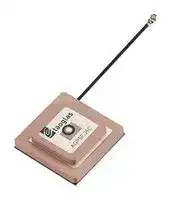
AGPSF.36C.07.0100C
Antenna, Patch, 1.57542 GHz, 3.57 dBi, Right Hand Circular, UFL Connector
⚠️ Reference pricing provided. In case of supply shortages, we will connect you with our trusted procurement partners to ensure your project's continuity.
- Manufacturer: TAOGLAS
- Product type:
- Gain: 3.57dBi
- SVHC: To Be Advised
- VSWR: -
- Input Power: -
- Antenna Type: Patch
- Frequency Max: 1.57542GHz
- Frequency Min: -
- Product Range: AGPSF.36C Series
- Input Impedance: 50ohm
- Antenna Mounting: UFL Connector
- Antenna Polarisation: Right Hand Circular
| Delivery and price | |
|---|---|
| Units per pack | 50 |
| Price | 36.18 € |
| Current stock | 25+ |
| Lead time | 30 days |
Datasheet

+)OD QD a Y) (DO +) © i=)

RoHS and REACH Compliant

|1.|Introduction|3|
|---|---|---|
|2.|Specifications|4|
|3.|Antenna Characteristics|6|
|4.|Radiation Patterns|18|
|5.|Field Test Results|20|
|6.|Mechanical Drawing|21|
|7.|Packaging|22|
|8.|Application Note|23|
||Changelog|24|


Taoglas makes no warranties based on the accuracy or completeness of the contents of this document and reserves the right to make changes to specifications and product descriptions at any time without notice. Taoglas reserves all rights to this document and the information contained herein. Reproduction, use or disclosure to third parties without express permission is strictly prohibited.

www.taoglas.com 2

SPE-18-8-105-G

## 1. Introduction

The Taoglas AGPSF.36C, with Taoglas Sure Technology, is an active, embedded stacked patch, GPS antenna supporting both L1 and L2 bands. It is a high performance, economical solution for the highest accuracy centimeter-level tracking applications.

Typical applications include:

- UAVs and Robotics

- E-Mobility and E-Scooters

- Precision Agriculture

- Navigation

This compact antenna exhibits excellent radiation patterns on both L1 and L2 bands and with a low noise figure to preserve signal quality helps minimize time to first fix. It also features excellent out-of-band rejection to prevent out-of-band signals from overdriving or damaging its LNAs.

The AGPSF.36C features very tight Phase Centre Offset (PSO) at just ±2cm at the L1 Band and ±5cm at the L2. The precision of antenna phase center directly affects the accuracy of GNSS positioning systems and can ensure that the accuracy of the receiver really is cm level. See section 3.1.2 for more information and results.

This antenna has been tuned and tested on a 70 X 70 mm ground plane, working at GPS L1, 1575.42 MHz and L2, 1227.6MHz, with a 2 stage LNA ensuring good signal strength. It can operate with an input voltage ranging from 1.8 to 5 volts.

Cables and connectors are customizable. Patch antennas can also be tuned to customer-specific device environments, subject to NRE and MOQ. Contact your regional Taoglas customer support team to request these services or additional support to integrate and test this antenna’s performance in your device.

www.taoglas.com 3

SPE-18-8-105-G

## **2.** Specifications

|**GNSS Frequency Bands Covered**|**GNSS Frequency Bands Covered**|**GNSS Frequency Bands Covered**|**GNSS Frequency Bands Covered**|**GNSS Frequency Bands Covered**|**GNSS Frequency Bands Covered**|**GNSS Frequency Bands Covered**|
|---|---|---|---|---|---|---|
|**GPS**|L1|L2|L5||||
||▓|▓|□||||
|**GLONASS**|G1|G2|G3||||
||□|□|□||||
|**Galileo**|E1|E5a|E5b|E6|||
||▓|□|▓|□|||
|**BeiDou**|B1|B2a|B2b|B3|||
||□|□|□|□|||
|**QZSS**<br>**(Regional)**|L1|L2C|L5|L6|||
||▓|▓|□|□|||
|**IRNSS**<br>**(Regional)**|L5||||||
||□||||||
|**SBAS**|L1/E1/B1|L5/B2a/E5a|G1|G2|G3||
||▓|□|▓|□|□||


◼ GNSS Frequency Bands Covered. □ GNSS Frequency Bands Not Covered.

*SBAS systems: WASS(L1/L5), EGNOSS(E1/E5a), SDCM(G1/G2/G3), SNAS(B1,B2a), GAGAN(L1/L5), QZSS(L1/L5), KAZZ(L1/L5).

## GNSS Bands and Constellations

www.taoglas.com 4

SPE-18-8-105-G

## **GPS L1 & L2 Antenna**

|**GPS L1 & L2 Antenna**|**GPS L1 & L2 Antenna**|**GPS L1 & L2 Antenna**|**GPS L1 & L2 Antenna**|**GPS L1 & L2 Antenna**|**GPS L1 & L2 Antenna**|**GPS L1 & L2 Antenna**|
|---|---|---|---|---|---|---|
|||**GPS L1**|||**GPS L2**||
|**Center Frequency**||**1575.42MHz**|||**1226.7MHz**||
|Return loss (dB)||<-10|||<-10||
|Efficiency (%)||68.74|||64.16||
|Peak Gain (dBi)||3.57|||2.73||
|Axial Ratio at Zenith||<1.5dB|||<5dB||
|Group Delay||12|||20||
|PCO (cm)||5|||4.5||
|PCV (cm)||0.07|||4.5||
|Impedance||50 Ω|||||
|Polarization||RHCP|||||
|*Tested on 70x70 cm ground plane|||||||
|**LNA and Filter Electrical Properties**|||||||
|||**GPS L1 :1575.42±1.023 MHz**|||||
|**Center Frequency**|||||||
|||**GPS L2:1226.7±1.023MHz**|||||
||||||||
|||+2dBm Typ. (1575.42MHz)|||||
|Pout 1dB gain Compression point|||||||
|||-2dBm Typ. (1226.7MHz)|||||
||||||||
|Output Impedance||50 Ohm|||||
|Return loss (dB)||<-10 dB|||||
|**LNA Gain, Power Consumption and Noise Figure**|||||||
|||1.8V (Min)||3V (Typ.)||5.5V (Max)|
|LNA Gain|L2|20dB||20dB||20dB|
||L1|21dB.||21dB||21dB|
|Noise Figure|L1|2.6dB||2.6dB||2.6dB|
||L2|3.0dB||3.0dB||3.0dB|
|Current Consumption||16mA||16mA||16mA|
|||100MHz~1180MHz        40dB|||||
|Outer Band Attenuation||1280MHz~1520MHz     30dB|||||
|||1620MHz~6000MHz      45dB|||||
|**Mechanical**|||||||
|Dimensions|||35x35x11mm||||
|Cable|||Coaxial Cable Ø1.37, length 100mm||||
|Connector|||IPEX MHFI (U.FL)||||
|Weight|||32g||||
|**Environmental**|||||||
|Operation Temperature|||-40°C to 85°C||||
|Storage Temperature|||-40°C to 85°C||||
|Humidity|||Non-condensing 40°C 95% RH||||
|RoHS Compliant|||Yes||||
|REACH Compliant|||Yes||||


www.taoglas.com

SPE-18-8-105-G

5

## **3.** Antenna Characteristics

## **3.1** Block Diagram (Active Antenna)

## **3.2** Phase Centre Offset

The antenna reference point (ARP) is defined as the intersection of antenna’s vertical axis of symmetry with the bottom of the antenna. The antenna reference point is typically the point on the center-line of the antenna at the mounting surface. Above the antenna reference point is the mechanical antenna phase center, this is the physical point on the surface of the antenna element where the antenna phase is located. The actual antenna phase center are points in space, typically above the mechanical antenna phase center.

The precision of antenna phase center directly affects accuracy of GNSS positioning systems. Single-band and dual-band RTK GNSS receiver systems depend on Phase Centre Offset (PCO) correction input at the receiver to improve accuracy of the receiver to cm level. Thus PCO data is required for GPS post processing at the receiver in real time or at a later stage using post processing software once data has been transferred to a PC.

By using the carrier phase data of L1 and L2 signals, cm level precision is possible with PCO correction. Single-band and dual-band RTK systems depend on PCO correction input at the receiver to improve accuracy of the receiver to cm level.

www.taoglas.com 6

SPE-18-8-105-G

## **AGPSF.36C.07.0100C L1 Phase Centre Offset Measurements**

www.taoglas.com 7

SPE-18-8-105-G

**AGPSF.36C.07.0100C L2 Phase Centre Offset Measurement**

In addition to phase center location, the residual error is the mean of the difference between actual observed phase center and the predicted values. The smaller the residual error (typically less than 2 degrees) the better accuracy of the antenna due to good phase stability.

www.taoglas.com 8

SPE-18-8-105-G

**AGPSF.36C.07.0100C L1 Residual Error**

**AGPSF.36C.07.0100A L2 Residual Error**

www.taoglas.com 9

SPE-18-8-105-G

## **3.3** Return Loss (Passive antenna)

## **L1 1575MHz**

**L2 1227MHz**

www.taoglas.com 10

SPE-18-8-105-G

## **3.4** Efficiency (Passive antenna)

## **3.5** Average Gain (Passive antenna)

www.taoglas.com 11

SPE-18-8-105-G

## **3.6** Peak Gain (Passive antenna)

www.taoglas.com 12

SPE-18-8-105-G

## **3.7** Axial Ratio Pattern (Zenith is at 0°)

## **YZ plane**

## **L1 1575MHz**

## **L2 1227MHz**

www.taoglas.com

SPE-18-8-105-G

13

## **XZ plane**

## **L1 1575MHz**

## **L2 1227MHz**

www.taoglas.com 14

SPE-18-8-105-G

**3.8** LNA Gain and Noise Figure (Active antenna)

**==> picture [49 x 7] intentionally omitted <==**

**----- Start of picture text -----**<br>
L1 1575MHz<br>**----- End of picture text -----**<br>


**==> picture [49 x 7] intentionally omitted <==**

**----- Start of picture text -----**<br>
L2 1227MHz<br>**----- End of picture text -----**<br>


www.taoglas.com 15

SPE-18-8-105-G

## **3.9** S12 Wide Band Plot

## **L1 1575MHz**

## **L2 1227MHz**

**==> picture [30 x 7] intentionally omitted <==**

**----- Start of picture text -----**<br>
000 (Me)<br>**----- End of picture text -----**<br>


www.taoglas.com

SPE-18-8-105-G

16

## **3.10** Noise Figure

## **L1 1575MHz**

**L2 1227MHz**

www.taoglas.com

SPE-18-8-105-G

17

## **4.** Radiation Patterns

**4.**

## **4.1** Test Setup | ff

Antenna Radiation Pattern Measurement (Passive Antenna)

www.taoglas.com 18

SPE-18-8-105-G

## **4.2** 3D and 2D Radiation Patterns

**L1 1575.42MHz L2 1227.6MHz**

XY Plane XZ Plane YZ Plane ~~ee~~ ee ee

**==> picture [405 x 74] intentionally omitted <==**

**----- Start of picture text -----**<br>
X  Z  Z<br>Y  X  Y<br>**----- End of picture text -----**<br>


www.taoglas.com 19

SPE-18-8-105-G

## **5.** Field Test Results

## **4.**

## **5.1** Rooftop test

In this section Taoglas will present the field test result for AGPSF36C antenna. The test was performed when the antenna was mounted on a static rooftop test set up in an open sky environment for at least 6 hours.

Taoglas will show the field test results using the following receiver:

## **1. U-blox ZED-F9P**

## Receiver features:

- Multi-band GNSS: 184-channel GPS L1C/A L2C, Galileo: E1B/C E5b, QZSS: L1C/A L2C

- Multi ‑ band RTK with fast convergence times and reliable performance

- Nav. update rate RTK up to 20 Hz

- Position accuracy = RTK 0.01 m + 1 ppm CEP

|**Positioning Accuracy Table(2D Accuracy)**<br>~~ee~~|**Positioning Accuracy Table(2D Accuracy)**<br>~~ee~~|**Positioning Accuracy Table(2D Accuracy)**<br>~~ee~~|**Positioning Accuracy Table(2D Accuracy)**<br>~~ee~~|**Positioning Accuracy Table(2D Accuracy)**<br>~~ee~~|**Positioning Accuracy Table(2D Accuracy)**<br>~~ee~~|
|---|---|---|---|---|---|
|**Test**<br>**Condition**<br>~~ee~~|**Correction**<br>**Service**<br>~~ee~~|**CEP (50%)**<br>~~ee~~|**DRMS (68%)**<br>~~ee~~|**2DRMS (95-98.2%)**<br>~~ee~~|**TTFF (sec)**<br>~~ee~~|
|**Free**<br>**Space**|RTK DISABLED|72.19 cm|86.48 cm|172.97 cm|21.4|
||RTK ENABLED|1.52 cm|1.87 cm|3.74 cm|21.4|


**==> picture [180 x 141] intentionally omitted <==**

**----- Start of picture text -----**<br>
RTK Availability<br>Free Space<br>No RTK<br>| Float<br>| Fixed<br>**----- End of picture text -----**<br>


www.taoglas.com 20

SPE-18-8-105-G

## **6.** Mechanical Drawing (Units: mm)

www.taoglas.com 21

SPE-18-8-105-G

## **7.** Packaging

www.taoglas.com 22

SPE-18-8-105-G

## **8.** Application Note

## Using Diplexers with an Active Dual-band Antenna

If your application requires separate L1 and L2 inputs—separate L1 and L2 receiver inputs, for example— then Taoglas diplexers may be used to interface between an active dual-band antenna and these separate inputs. Taoglas offers two GNSS diplexers, the DXP.01.A and DXP.02.A. The DXP.02.A add support for L5 signals (among others). These diplexers offer a unique off-the-shelf option for splitting the GNSS signals with minimal loss while improving out-of-band rejection. See the Taoglas website for further details on these components.

Figure 1 - Taoglas DXP.01.A

Figure 2 - Taoglas DXP.02.A

Since these components do not pass DC signals, particular attention needs to be paid when using an active antenna. Figure 3 provides a simplified schematic of what is required.

The key features are:

- DC blocks need to be included between the diplexer matching networks and the other subsystems. This helps protect the diplexer and prevent any unintended interactions between the matching network and DC voltages. A typical DC block for GNSS systems is a 22 pF C0G ceramic capacitor.

- A separate Bias-T is required on the antenna side of the diplexer. Many receivers include these Bias-T networks internally, but these will be blocked by the diplexer (and DC blocks). A typical RF choke component for GNSS systems is a 39nH wire-wound inductor, though this should be reviewed during design time.

Figure 3 - Schematic

Finally, make sure to following the matching network and layout recommendations for the diplexer in their respective datasheets.

www.taoglas.com

SPE-18-8-105-G

23

**==> picture [497 x 675] intentionally omitted <==**

**----- Start of picture text -----**<br>
Changelog for the datasheet<br>SPE-18-8-105 - AGPSF.36C.07.0100C<br>Revision: G (Current Version)<br>Date: 2021-08-01<br>Changes: Updated Mechanical Drawing<br>Changes Made by: Gary West<br>Previous Revisions<br>Revision: F (Current Version) Revision: A (Original First Release)<br>Date: 2020-06-02  Date: 2018-09-26<br>Changes: Field test section added   Notes:  Initial Release<br>Changes Made by: Victor Pinazo  Author: Jack Conroy<br>Revision: E<br>Date: 2020-03-05<br>Changes: Update RTK Data<br>Changes Made by: Jack Conroy<br>Revision: D<br>Date: 2019-12-08<br>Changes: Added GNSS Frequency Bands Matrix and RTK<br>Test Data<br>Changes Made by: Yu Kai Yeung<br>Revision: C (Current Version)<br>Date: 2018-11-23<br>Changes: Updated product from AGPSF.36C.07.0100A to<br>AGPSF.36C.07.0100C version<br>Changes Made by: Jack Conroy<br>Revision: B<br>Date: 2018-09-28<br>Changes: Updated Block Diagram<br>Changes Made by: Russell Meyler<br>**----- End of picture text -----**<br>


www.taoglas.com 24

SPE-18-8-105-G

www.taoglas.com

www.taoglas.com                  © Taoglas

SPE-18-8-105-G

25
Updated at June 9, 2026
About Novapart
Novapart is a B2B electronic component broker specialising in stock shortages and cost reduction. We source hard-to-find parts and identify compliant alternatives across a catalogue of 410,000+ components from 500+ manufacturers.
Learn more →Stock Shortage Specialist
When a component is unavailable, discontinued or has an unacceptable lead time, we tap into our network of vetted European and Asian distributors to source what you need — without compromising on quality or traceability.
Request a quote →Compliant Alternatives
We identify pin-to-pin, electrically equivalent substitutes that meet the same certifications (RoHS, AEC-Q100, REACH) as your original specification — validated against datasheets, not just part numbers. Often at a lower cost.
BOM Analysis service →