
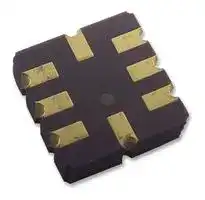


ADXL213AE
MEMS Accelerometer, ± 1.2g, X, Y, PWM, LCC, 8 Pins, 30%/g
- Manufacturer: ANALOG DEVICES
- Product type: MEMS Accelerometers
- SVHC: Lead (04-Feb-2026)
- No. of Pins: 8Pins
- Sensing Axis: X, Y
- Product Range: -
- Qualification: -
- Sensitivity Max: 33%/g
- Sensitivity Min: 27%/g
- Sensitivity Typ: 30%/g
- Output Interface: PWM
- Sensor Case Style: LCC
- MEMS Sensor Output: Digital
- Supply Voltage Max: 6V
- Supply Voltage Min: 3V
- Sensor Case / Package: LCC
- Operating Temperature Max: 85°C
- Operating Temperature Min: -40°C
- Sensing Range - Accelerometer: ± 1.2g
| Delivery and price | |
|---|---|
| Units per pack | 100 |
| Price | 28.71 € |
| Current stock | 10+ |
| Lead time | 30 days |

**Low Cost ±1.2 Dual** _**g**_ **Axis Accelerometer**

**==> picture [159 x 45] intentionally omitted <==**

## **ADXL213**

## **FEATURES**

**Dual axis accelerometer on a single IC chip 5 mm × 5 mm × 2 mm LCC package 1 m** _**g**_ **resolution at 60 Hz**

**Low power: 700 μA at VS = 5 V (typical) High zero** _**g**_ **bias stability**

**High sensitivity accuracy Pulse width modulated digital outputs X and Y axes aligned to within 0.1° (typical) BW adjustment with a single capacitor Single-supply operation 3500** _**g**_ **shock survival**

**Qualified for automotive applications**

## **APPLICATIONS**

**Automotive tilt alarms Data projectors Navigation Platform stabilization/leveling Alarms and motion detectors High accuracy, 2-axis tilt sensing**

## **GENERAL DESCRIPTION**

The ADXL213 is a low cost, low power, complete dual axis accelerometer with signal conditioned, duty cycle modulated outputs, all on a single monolithic IC. The ADXL213 measures acceleration with a full-scale range of ±1.2 _g_ (typical). The ADXL213 can measure both dynamic acceleration (e.g., vibration) and static acceleration (e.g., gravity).

The outputs are digital signals whose duty cycles (ratio of pulse width to period) are proportional to acceleration (30%/ _g_ ). The duty cycle outputs can be directly measured by a microcontroller without an A/D converter or glue logic.

Innovative design techniques are used to ensure high zero _g_ bias stability (typically better than 0.25 m _g_ /°C), as well as tight sensitivity stability (typically better than 50 ppm/°C).

The typical noise floor is 160 μg/√Hz, allowing signals below 1 m _g_ (0.06° of inclination) to be resolved in tilt sensing applications using narrow bandwidths (<60 Hz).

The user selects the bandwidth of the accelerometer using capacitors CX and CY at the XFILT and YFILT pins. Bandwidths of 0.5 Hz to 250 Hz may be selected to suit the application.

The ADXL213 is available in a 5 mm × 5 mm × 2 mm, 8-pad hermetic LCC package.

## **FUNCTIONAL BLOCK DIAGRAM**

**==> picture [278 x 202] intentionally omitted <==**

**----- Start of picture text -----**<br>
+VS<br>CY<br>+VS YFILT<br>ADXL213<br>OUTPUT 32k Ω<br>CDC AC AMP YOUT<br>DEMOD DCM<br>AMP<br>OUTPUT<br>SENSOR AMP 32k Ω XOUT<br>COM ST XFILT T2<br>CX RSET<br> T2<br> T1<br>A( g ) = (T1/T2 – 0.5)/30%<br>0 g  = 50% DUTY CYCLE<br>T2(s) = RSET/125M Ω 04742-0-001<br>**----- End of picture text -----**<br>


_Figure 1._

**Rev. A Information furnished by Analog Devices is believed to be accurate and reliable. However, no responsibility is assumed by Analog Devices for its use, nor for any infringements of patents or other rights of third parties that may result from its use. Specifications subject to change without notice. No license is granted by implication or otherwise under any patent or patent rights of Analog Devices. Trademarks and registered trademarks are the property of their respective owners.**

**One Technology Way, P.O. Box 9106, Norwood, MA 02062-9106, U.S.A. Tel: 781.329.4700 www.analog.com Fax: 781.326.8703© 2004–2010 Analog Devices, Inc. All rights reserved.**

## **ADXL213**

## **TABLE OF CONTENTS**

Revision History ............................................................................... 2 Specifications ..................................................................................... 3 Absolute Maximum Ratings ............................................................ 4 Typical Performance Characteristics ............................................. 5 Theory of Operation ........................................................................ 8 Performance ........................................................................................... 8 Applications ....................................................................................... 9 Power Supply Decoupling .................................................................... 9 Setting the Bandwidth Using CX and CY ........................................... 9 Self Test .................................................................................................... 9

Design Trade-Offs for Selecting Filter Characteristics: The Noise/BW Trade-Off............................................................................. 9

Using the ADXL213 with Operating Voltages Other than 5 V .. 10 Using the ADXL213 as a Dual-Axis Tilt Sensor ............................ 10 Pin Configurations and Functional Descriptions ...................... 11 Outline Dimensions ....................................................................... 12 ESD Caution ......................................................................................... 12 Ordering Guide .................................................................................... 12 Automotive Products .......................................................................... 12

## **REVISION HISTORY**

## **8/10—Rev. 0 to Rev. A**

Added Automotive line to Features Section ................................. 1 Updated Outline Dimensions ....................................................... 12 Changes to Ordering Guide .......................................................... 12 Added Automotive Products Section .......................................... 12

## **4/04—Revision 0: Initial Version**

Rev. A | Page 2 of 12

**ADXL213**

## **SPECIFICATIONS**

TA = –40°C to +85°C, VS = 5 V, CX = CY = 0.1 μF, Acceleration = 0 _g_ , unless otherwise noted. All minimum and maximum specifications are guaranteed. Typical specifications are not guaranteed.

**Table 1.**

|**Table 1.**||||
|---|---|---|---|
|**Parameter**|**Conditions**|**Min**<br>**Typ**<br>**Max**|**Unit**|
|SENSOR INPUT<br>Measurement Range1<br>Nonlinearity<br>Package Alignment Error<br>Alignment Error<br>Cross Axis Sensitivity|Each axis<br>% of full scale<br>X sensor to Y sensor|±1.2<br>±0.5<br>±1<br>±0.1<br>±2|_g_<br>%<br>Degrees<br>Degrees<br>%|
|SENSITIVITY (Ratiometric)2<br>Sensitivity at XOUT, YOUT<br>SensitivityChange due to Temperature3|Each axis<br>VS= 5 V<br>VS= 5 V|27<br>30<br>33<br>±0.3|%/_g_<br>%|
|ZERO_g_BIAS LEVEL (Ratiometric)<br>0_g_Voltage at XOUT, YOUT<br>Initial 0_g_Output Deviation from Ideal<br>0_g_Offset vs. Temperature|Each axis<br>VS= 5 V<br>VS= 5 V, 25°C|±50<br>±2<br>±0.25|%<br>%<br>m_g_/°C|
|NOISE PERFORMANCE<br>Noise Density|@25°C|160|μ_g_/√Hz<br>rms|
|FREQUENCY RESPONSE4<br>CX, CYRange5<br>RFILTTolerance<br>Sensor Resonant Frequency||0.002<br>4.7<br>22<br>32<br>42<br>5.5|μF<br>kΩ<br>kHz|
|SELF TEST6<br>Logic Input Low<br>Logic Input High<br>ST Input Resistance to Ground<br>Output Change at XOUT, YOUT|Self test 0 to 1|1<br>4<br>30<br>50<br>23|V<br>V<br>kΩ<br>%|
|PWM Output<br>FSET<br>T2 Drift versus Temperature|RSET= 125 kΩ|1<br>±0.3|kHz<br>%|
|POWER SUPPLY<br>Operating Voltage Range<br>Quiescent Supply Current<br>Turn-On Time7||3<br>6<br>0.7<br>1.1<br>20|V<br>mA<br>ms|


1 Guaranteed by measurement of initial offset and sensitivity.

> 2 Sensitivity varies with VS. At VS = 3 V, sensitivity is typically 28%/ _g_ .

3 Defined as the output change from ambient-to-maximum temperature or ambient-to-minimum temperature.

4 Actual frequency response controlled by user-supplied external capacitor (CX, CY).

5 Bandwidth = 1/(2 × π × 32 kΩ × C). For CX, CY = 0.002 μF, Bandwidth = 2500 Hz. For CX, CY = 4.7 μF, Bandwidth = 1 Hz. Minimum/maximum values are not tested.

6 Self-test response changes with VS. At VS = 3 V, self-test output is typically 8%.

7 Larger values of CX, CY increase turn-on time. Turn-on time is approximately 160 × CX or CY + 4 ms, where CX, CY are in μF.

Rev. A | Page 3 of 12

## **ADXL213**

## **ABSOLUTE MAXIMUM RATINGS**

## **Table 2. ADXL213 Stress Ratings**

|**Table 2. ADXL213 Stress Ratings **||
|---|---|
|**Parameter**|**Rating**|
|Acceleration (Any Axis, Unpowered)<br>Acceleration (Any Axis, Powered)<br>Drop Test (Concrete Surface)<br>VS<br>All Other Pins<br>Output Short-Circuit Duration<br>(Any Pin to Common)<br>Operating Temperature Range<br>Storage Temperature|3,500_g_<br>3,500_g_<br>1.2 m<br>–0.3 V to +7.0 V<br>(COM – 0.3 V) to<br>(VS+ 0.3 V)<br>Indefinite<br>–55°C to +125°C<br>–65°C to +150°C|


## **Table 3. Package Characteristics**

|**Package Type **|**θJA**|**θJC**|**Device Weight**|
|---|---|---|---|
|8-Lead CLCC|120°C/W|20°C/W|<1.0gram|


Stresses above those listed under Absolute Maximum Ratings may cause permanent damage to the device. This is a stress rating only; functional operation of the device at these or any other conditions above those indicated in the operational section of this specification is not implied. Exposure to absolute maximum rating conditions for extended periods may affect device reliability.

|**TEMPERATURE**<br>**TP**<br>**TL**||||||03757-0-002<br><br>**CRITICAL ZONE**<br>**TL TO TP**<br>**N**|03757-0-002<br><br>**CRITICAL ZONE**<br>**TL TO TP**<br>**N**|
|---|---|---|---|---|---|---|---|
|||||**tP**||**TL TO TP**<br>**N**||
||**RA**<br><br>||**MP-UP**||**tL**|||
||**TSMAX**<br>|||||||
|||||||||
||**TSMIN**|||||||
|||**tS**<br>**PREHEAT**||||||
|||||**RAMP-D**|**OW**|||
|||||||||
|||**t25°C TO PEA**||||||
||||<br>**TIME**|||||
|**Profile Feature**||||||**Condition**||
|||||**Sn63/Pb37**|||**Pb Free**|
|Average RampRate (TLto TP)||||3°C/second max||||
|Preheat<br>•<br>Minimum Temperature (TSMIN)<br>•<br>Minimum Temperature (TSMAX)<br>•<br>Time (TSMINto TSMAX) (tS)||||100°C<br>150°C<br>60–120 seconds|||150°C<br>200°C<br>60–150 seconds|
|TSMAXto TL<br>•<br>Ramp-UpRate||||3°C/second||||
|Time Maintained above Liquidous (TL)<br>•<br>Liquidous Temperature (TL)<br>•<br>Time (tL)||||183°C<br>60–150 seconds|||217°C<br>60–150 seconds|
|Peak Temperature (TP)||||240°C +0°C/–5°C|||260°C +0°C/–5°C|
|Time within 5°C of Actual Peak Temperature (tP)||||10–30 seconds|||20–40 seconds|
|Ramp-Down Rate||||6°C/second max||||
|Time 25°C to Peak Temperature||||6 minutes max|||8 minutes max|


_Figure 2. Recommended Soldering Profile_

Rev. A | Page 4 of 12

**ADXL213**

## **TYPICAL PERFORMANCE CHARACTERISTICS**

**(VS = 5 V for all graphs, unless otherwise noted.)**

**==> picture [213 x 173] intentionally omitted <==**

**----- Start of picture text -----**<br>
25.0<br>20.0<br>15.0<br>10.0<br>5.0<br>0<br>DUTY CYCLE OUTPUT (%)<br>PERCENT OF POPULATION (%)<br>04742-0-002<br>43 44 45 46 47 48 49 50 51 52 53 54 55 56 57<br>**----- End of picture text -----**<br>


_Figure 3. X Axis Zero g Bias Deviation from Ideal at 25°C_

**==> picture [213 x 402] intentionally omitted <==**

**----- Start of picture text -----**<br>
30.0<br>25.0<br>20.0<br>15.0<br>10.0<br>5.0<br>0<br>TEMPCO (m g /°C)<br>Figure 4. X Axis Zero g Bias Tempco<br>30.0<br>25.0<br>20.0<br>15.0<br>10.0<br>5.0<br>0<br>DUTY CYCLE OUTPUT (% per  g )<br>Figure 5. X Axis Sensitivity at 25°C<br>PERCENT OF POPULATION (%)<br>04742-0-003<br>–1.0 –0.9 –0.8 –0.7 –0.6 –0.5 –0.4 –0.3 –0.2 –0.1 0 0.1 0.2 0.3 0.4 0.5 0.6 0.7 0.8 0.9 1.0<br>PERCENT OF POPULATION (%)<br>04742-0-004<br>28.0 28.4 28.8 29.2 29.6 30.0 30.4 30.8 31.2 31.6 32.0<br>**----- End of picture text -----**<br>


**==> picture [213 x 173] intentionally omitted <==**

**----- Start of picture text -----**<br>
25.0<br>20.0<br>15.0<br>10.0<br>5.0<br>0<br>DUTY CYCLE OUTPUT (%)<br>PERCENT OF POPULATION (%)<br>04742-0-005<br>43 44 45 46 47 48 49 50 51 52 53 54 55 56 57<br>**----- End of picture text -----**<br>


_Figure 6. Y Axis Zero g Bias Deviation from Ideal at 25°C_

**==> picture [213 x 402] intentionally omitted <==**

**----- Start of picture text -----**<br>
40.0<br>35.0<br>30.0<br>25.0<br>20.0<br>15.0<br>10.0<br>5.0<br>0<br>TEMPCO (m g /°C)<br>Figure 7. Y Axis Zero g Bias Tempco<br>30.0<br>25.0<br>20.0<br>15.0<br>10.0<br>5.0<br>0<br>DUTY CYCLE OUTPUT (% per  g )<br>Figure 8. Y Axis Sensitivity at 25°C<br>PERCENT OF POPULATION (%)<br>04742-0-006<br>–1.0 –0.9 –0.8 –0.7 –0.6 –0.5 –0.4 –0.3 –0.2 –0.1 0 0.1 0.2 0.3 0.4 0.5 0.6 0.7 0.8 0.9 1.0<br>PERCENT OF POPULATION (%)<br>04742-0-007<br>28.0 28.4 28.8 29.2 29.6 30.0 30.4 30.8 31.2 31.6 32.0<br>**----- End of picture text -----**<br>


Rev. A | Page 5 of 12

## **ADXL213**

**==> picture [213 x 166] intentionally omitted <==**

**----- Start of picture text -----**<br>
54.0<br>53.5<br>53.0<br>52.5<br>52.0<br>51.5<br>51.0<br>50.5<br>50.0<br>49.5<br>49.0<br>48.5<br>48.0<br>47.5<br>47.0<br>46.5<br>46.0<br>TEMPERATURE (°C)<br>DUTY CYCLE (%)<br>04742-0-008<br>–40 –30 –20 –10 0 10 20 30 40 50 60 70 80 90<br>**----- End of picture text -----**<br>


_Figure 9. Zero g Bias vs. Temperature – Parts Soldered to PCB_

**==> picture [213 x 387] intentionally omitted <==**

**----- Start of picture text -----**<br>
40.0<br>35.0<br>30.0<br>25.0<br>20.0<br>15.0<br>10.0<br>5.0<br>0<br>NOISE DENSITY ( μ g √ Hz)<br>Figure 10. X Axis Noise Density at 25°C<br>40<br>35<br>30<br>25<br>20<br>15<br>10<br>5<br>0<br>PERCENT SENSITIVITY (%)<br>PERCENT OF POPULATION (%)<br>04742-0-009<br>100 110 120 130 140 150 160 170 180 190 200 210 220 230 240 250<br>PERCENT OF POPULATION (%)<br>03757-0-005<br>–5.0 –4.0 –3.0 –2.0 –1.0 0 1.0 2.0 3.0 4.0 5.0<br>**----- End of picture text -----**<br>


_Figure 11. Z vs. X Cross-Axis Sensitivity_

**==> picture [213 x 591] intentionally omitted <==**

**----- Start of picture text -----**<br>
31.50<br>31.25<br>31.00<br>30.75<br>30.50<br>30.25<br>30.00<br>29.75<br>29.50<br>29.25<br>29.00<br>28.75<br>28.50<br>TEMPERATURE (°C)<br>Figure 12. Sensitivity vs. Temperature – Parts Soldered to PCB<br>40.0<br>35.0<br>30.0<br>25.0<br>20.0<br>15.0<br>10.0<br>5.0<br>0<br>NOISE DENSITY ( μ g √ Hz)<br>Figure 13. Y Axis Noise Density at 25°C<br>40<br>35<br>30<br>25<br>20<br>15<br>10<br>5<br>0<br>PERCENT SENSITIVITY (%)<br>) g<br>SENSITIVITY (%/<br>04742-0-010<br>–50 –40 –30 –20 –10 0 10 20 30 40 50 60 70 80 90<br>PERCENT OF POPULATION (%)<br>04742-0-011<br>100 110 120 130 140 150 160 170 180 190 200 210 220 230 240 250<br>PERCENT OF POPULATION (%)<br>03757-0-006<br>–5.0 –4.0 –3.0 –2.0 –1.0 0 1.0 2.0 3.0 4.0 5.0<br>**----- End of picture text -----**<br>


_Figure 14. Z vs. Y Cross-Axis Sensitivity_

Rev. A | Page 6 of 12

**ADXL213**

**==> picture [213 x 600] intentionally omitted <==**

**----- Start of picture text -----**<br>
0.90.8 Pf TF<br>VS = 5V<br>0.7<br>0.6<br>0.5<br>es<br>VS = 3V<br>0.4<br>0.3 pS| | | |<br>–50 0 50 100 150<br>TEMPERATURE (°C)<br>Figure 15. Supply Current vs. Temperature<br>16.0<br>14.0 THU<br>12.0<br>BATTAATUORTOQHH (“THSQHUOHIE<br>10.0 BTATOTOTONEWENG) OU-TAOHUEEE<br>8.0 TOVEEARATAS") | /AKNHOTE<br>6.0 CerPECCLECCT<br>4.0 mvenanennanal AN ILL<br>2.0<br>0 rTTATTATET |||)pl40008iat<br>DELTA IN DUTY CYCLE (%)<br>Figure 16. X Axis Self Test Response at 25°C<br>26 i<br>25<br>24 LH<br>Se<br>23 | EEE<br>22 core<br>21<br>20 LEE  EEL EL ELL EL<br>TEMPERATURE (°C)<br>CURRENT (mA)<br>03757-0-020<br>PERCENT OF POPULATION (%)<br>04742-0-012<br>–31 –30 –29 –28 –27 –26 –25 –24 –23 –22 –21 –20 –19 –18<br>SELF TEST OUTPUT (%)<br>04742-0-013<br>–50 –40 –30 –20 –10 0 10 20 30 40 50 60 70 80 90<br>**----- End of picture text -----**<br>


_Figure 17. Self Test Response vs. Temperature_

**==> picture [237 x 389] intentionally omitted <==**

**----- Start of picture text -----**<br>
100<br>90 5V<br>PLT ELE ELE LETTE<br>80<br>70 3V<br>60<br>50<br>40<br>30 PCA) ECC Ceo<br>20<br>10<br>0 F EELCCC HeCoE CoccoFEEL<br>μ A<br>Figure 18. Supply Current at 25°C<br>16.0<br>14.0 TO<br>12.0<br>STATENOTOEOEG OT"UAUEUNE<br>10.0 STOTOOHOWOWOWON)OHNWOWENE<br>8.0 OHOHUNOOENOWEH | 0QENENE<br>6.0<br>4.0 HHOANGEOHIVEN)|\)() |ANVAOR<br>2.0<br>0 HHA r HVOORHNOOT;))ET |) AUTONiiHl<br>DELTA IN DUTY CYCLE (%)<br>PERCENT OF POPULATION (%)<br>03757-0-018<br>200 300 400 500 600 700 800 900 1000<br>PERCENT OF POPULATION (%)<br>04742-0-014<br>–31 –30 –29 –28 –27 –26 –25 –24 –23 –22 –21 –20 –19 –18<br>**----- End of picture text -----**<br>


_Figure 19. Y Axis Self Test Response at 25°C_

**==> picture [5 x 25] intentionally omitted <==**

**----- Start of picture text -----**<br>
03757-0-009<br>**----- End of picture text -----**<br>


_Figure 20. Turn-On Time – CX, CY = 0.1 μF, Time Scale = 2 ms/div_

Rev. A | Page 7 of 12

## **ADXL213**

## **THEORY OF OPERATION**

**==> picture [236 x 192] intentionally omitted <==**

**----- Start of picture text -----**<br>
PIN 8<br>XOUT = 80%<br>YOUT = 50%<br>PIN 8 TOP VIEW PIN 8<br>XOUT = 50% (Not to Scale) XOUT = 50%<br>YOUT = 20% YOUT = 80%<br>XOUT = 50%<br>YOUT = 50%<br>PIN 8<br>XOUT = 20%<br>YOUT = 50%<br>EARTH'S SURFACE<br>04742-0-015<br>**----- End of picture text -----**<br>


_Figure 21. Output Response vs. Orientation_

The ADXL213 is a complete dual axis acceleration measurement system on a single monolithic IC. It contains a polysilicon surface-micromachined sensor and signal conditioning circuitry to implement an open-loop acceleration measurement architecture. The output signals are duty cycle modulated digital signals proportional to acceleration. The ADXL213 is capable of measuring both positive and negative accelerations to ±1.2 _g_ . The accelerometer can measure static acceleration forces such as gravity, allowing the ADXL213 to be used as a tilt sensor.

The sensor is a surface-micromachined polysilicon structure built on top of the silicon wafer. Polysilicon springs suspend the structure over the surface of the wafer and provide a resistance against acceleration forces. Deflection of the structure is measured using a differential capacitor that consists of independent fixed plates and plates attached to the moving mass. The fixed plates are driven by 180° out-of-phase square waves. Acceleration deflects the beam and unbalances the differential capacitor, resulting in an output square wave whose amplitude is proportional to acceleration. Phase sensitive demodulation techniques are then used to rectify the signal and determine the direction of the acceleration.

The output of the demodulator is amplified and brought offchip through a 32 kΩ resistor. At this point, the user can set the signal bandwidth of the device by adding a capacitor. This filtering improves measurement resolution and helps prevent aliasing.

After being low-pass filtered, the duty cycle modulator converts the analog signals to duty cycle modulated outputs that can be read by a counter. A single resistor (RSET) sets the period for a complete cycle. A 0 _g_ acceleration produces a 50% nominal duty cycle. The acceleration can be determined by measuring the length of the positive pulse width ( _t1_ ) and the period ( _t2_ ). The nominal transfer function of the ADXL213 is

_Acceleration_ = (( _t1_ / _t2_ ) – _Zero g Bias_ )/ _Sensitivity_

Where in the case of the ADXL213

_Zero g Bias_ = 50% _nominal Sensitivity_ = 30%/ _g nominal t2_ = _RSET_ /125 MΩ

## **PERFORMANCE**

Rather than using additional temperature compensation circuitry, innovative design techniques have been used to ensure that high performance is built in. As a result, there is essentially no quantization error or nonmonotonic behavior, and temperature hysteresis is very low (typically less than 10 m _g_ over the –40°C to +85°C temperature range).

Figure 9 shows the zero _g_ output performance of eight parts (X and Y axis) over a –40°C to +85°C temperature range.

Figure 12 demonstrates the typical sensitivity shift over temperature for VS = 5 V. Sensitivity stability is optimized for VS = 5 V, but is still very good over the specified range; it is typically better than ±2% over temperature at VS = 3 V.

Rev. A | Page 8 of 12

**ADXL213**

## **APPLICATIONS**

## **POWER SUPPLY DECOUPLING**

For most applications, a single 0.1 μF capacitor, CDC, adequately decouples the accelerometer from noise on the power supply. However, in some cases, particularly where noise is present at the 140 kHz internal clock frequency (or any harmonic thereof), noise on the supply may cause interference on the ADXL213’s output. If additional decoupling is needed, a 100 Ω (or smaller) resistor or ferrite beads may be inserted in the supply line of the ADXL213. Additionally, a larger bulk bypass capacitor (in the range of 1 μF to 22 μF) may be added in parallel to CDC.

## **SETTING THE BANDWIDTH USING CX AND CY**

The ADXL213 has provisions for bandlimiting the XOUT and YOUT pins. Capacitors must be added at these pins to implement low-pass filtering for antialiasing and noise reduction. The equation for the –3 dB bandwidth is

**==> picture [113 x 9] intentionally omitted <==**

or more simply,

**==> picture [67 x 9] intentionally omitted <==**

The tolerance of the internal resistor (RFILT) can vary typically as much as ±25% of its nominal value (32 kΩ); thus, the bandwidth varies accordingly. A minimum capacitance of 2000 pF for CX and CY is required in all cases.

## **DESIGN TRADE-OFFS FOR SELECTING FILTER CHARACTERISTICS: THE NOISE/BW TRADE-OFF**

The accelerometer bandwidth selected ultimately determines the measurement resolution (smallest detectable acceleration). Filtering can be used to lower the noise floor, which improves the resolution of the accelerometer. Resolution is dependent on the analog filter bandwidth at XFILT and YFILT.

The output of the ADXL213 has a typical bandwidth of 2.5 kHz. The user must filter the signal at this point to limit aliasing errors. The analog bandwidth must be no more than one-fifth the PWM frequency to minimize aliasing. The analog bandwidth may be further decreased to reduce noise and improve resolution.

The ADXL213 noise has the characteristics of white Gaussian noise, which contributes equally at all frequencies and is described in terms of μ _g_ /√Hz (i.e., the noise is proportional to the square root of the accelerometer’s bandwidth). The user should limit bandwidth to the lowest frequency needed by the application in order to maximize the resolution and dynamic range of the accelerometer.

With the single pole roll-off characteristic, the typical noise of the ADXL213 is determined by

_rmsNoise_ = (160 μ _g_ / Hz ) × ( _BW_ × 6.1 )

At 100 Hz the noise is

**Table 4. Filter Capacitor Selection, CX and CY**

|**Bandwidth (Hz)**|**Capacitor (μF)**|
|---|---|
|1<br>10<br>50<br>100<br>200<br>500|4.7<br>0.47<br>0.10<br>0.05<br>0.027<br>0.01|


## **SELF TEST**

The ST pin controls the self-test feature. When this pin is set to VS, an electrostatic force is exerted on the beam of the accelerometer. The resulting movement of the beam allows the user to test if the accelerometer is functional. The typical change in output is 750 m _g_ (corresponding to 23%). This pin may be left open circuit, or may be connected to common in normal use.

**==> picture [178 x 11] intentionally omitted <==**

Often, the peak value of the noise is desired. Peak-to-peak noise can only be estimated by statistical methods. Table 5 is useful for estimating the probabilities of exceeding various peak values, given the rms value.

**Table 5. Estimation of Peak-to-Peak Noise**

|**Peak-to-Peak Value**|**% of Time that Noise Will Exceed**<br>**Nominal Peak-to-Peak Value**|
|---|---|
|2 × RMS<br>4 × RMS<br>6 × RMS<br>8 × RMS|32<br>4.6<br>0.27<br>0.006|


The ST pin should never be exposed to voltages greater than VS + 0.3 V. If the system design is such that this condition cannot be guaranteed (i.e., multiple supply voltages present), a low VF clamping diode between ST and VS is recommended.

Rev. A | Page 9 of 12

## **ADXL213**

Peak-to-peak noise values give the best estimate of the uncertainty in a single measurement. Table 6 gives the typical noise output of the ADXL213 for various CX and CY values.

**Table 6. Filter Capacitor Selection (CX, CY)**

|**Bandwidth(Hz)**|**CX, CY**<br>**(μF)**|**RMS Noise**<br>**(m****_g_) **|**Peak-to-Peak Noise**<br>**Estimate (m****_g_) **|
|---|---|---|---|
|10<br>50<br>100<br>500|0.47<br>0.1<br>0.047<br>0.01|0.64<br>1.4<br>2<br>4.5|3.8<br>8.6<br>12<br>27.2|


## **USING THE ADXL213 WITH OPERATING VOLTAGES OTHER THAN 5 V**

The ADXL213 is tested and specified at VS = 5 V; however, it can be powered with VS as low as 3 V or as high as 6 V. Some perfor-mance parameters will change as the supply voltage is varied.

The ADXL213 output varies proportionally to supply voltage. At VS = 3 V, the output sensitivity is typically 28%/ _g_ .

The zero _g_ bias output is ratiometric, so the zero _g_ output is nominally equal to 50% at all supply voltages.

The output noise also varies with supply voltage. At VS = 3 V, the noise density is typically 200 μ _g_ /√Hz.

Self-test response in _g_ is roughly proportional to the square of the supply voltage. So at VS = 3 V, the self-test response is equivalent to approximately 270 m _g_ (typical), or 8%.

## **USING THE ADXL213 AS A DUAL-AXIS TILT SENSOR**

One of the most popular applications of the ADXL213 is tilt measurement. An accelerometer uses the force of gravity as an input vector to determine the orientation of an object in space.

An accelerometer is most sensitive to tilt when its sensitive axis is perpendicular to the force of gravity, i.e., parallel to the earth’s surface. At this orientation, its sensitivity to changes in tilt is highest. When the accelerometer is oriented on axis to gravity, i.e., near its +1 _g_ or –1 _g_ reading, the change in output acceleration per degree of tilt is negligible. When the accelerometer is perpendicular to gravity, its output changes nearly 17.5 m _g_ per degree of tilt. At 45°, its output changes at only 12.2 m _g_ per degree and resolution declines.

## _**Dual-Axis Tilt Sensor: Converting Acceleration to Tilt**_

When the accelerometer is oriented so both its X and Y axes are parallel to the earth’s surface, it can be used as a 2-axis tilt sensor with a roll axis and a pitch axis. Once the output signal from the accelerometer has been converted to an acceleration that varies between –1 _g_ and +1 _g_ , the output tilt in degrees is calculated as follows:

**==> picture [91 x 31] intentionally omitted <==**

Be sure to account for overranges. It is possible for the accelerometers to output a signal greater than ±1 _g_ due to vibration, shock, or other accelerations.

The supply current decreases as the supply voltage decreases. Typical current consumption at VDD = 3 V is 450 μA.

Rev. A | Page 10 of 12

**ADXL213**

## **PIN CONFIGURATIONS AND FUNCTIONAL DESCRIPTIONS**

**==> picture [91 x 93] intentionally omitted <==**

**----- Start of picture text -----**<br>
ADXL213E<br>TOP VIEW<br>(Not to Scale)<br>VS<br>8<br>ST 1 7 XFILT<br>T2 2 6 YFILT<br>COM 3 5 XOUT<br>4<br>YOUT 04742-0-016<br>**----- End of picture text -----**<br>


_Figure 22. ADXL213 8-Lead CLCC_

**Table 7. ADXL213 8-Lead CLCC Pin Function Descriptions**

|**Pin No.**|**Mnemonic**|**Description**|
|---|---|---|
|1<br>2<br>3<br>4<br>5<br>6<br>7<br>8|ST<br>T2<br>COM<br>YOUT<br>XOUT<br>YFILT<br>XFILT<br>VS|Self Test<br>RSETResistor to Common<br>Common<br>Y Channel Output<br>X Channel Output<br>Y Channel Filter Pin<br>X Channel Filter Pin<br>3 V to 6 V|


Rev. A | Page 11 of 12

## **ADXL213**

## **OUTLINE DIMENSIONS**

**==> picture [315 x 148] intentionally omitted <==**

**----- Start of picture text -----**<br>
0.031 (PLATING OPTION 1,<br>0.025 SEE DETAIL AFOR OPTION 2)<br>0.208 0.094 0.055 0.019 0.030<br>0.197 SQ 0.22 0.078 0.050 0.020 DIA<br>0.188 0.15 0.062 0.045 0.010<br>0.08<br>(R 4 PLCS) 7 1<br>0.183 0.108<br>0.177 SQ 0.075 REF 0.100<br>0.171 R 0.008 0.092<br>(8 PLCS) 5 3<br>R 0.008 TOP VIEW 0.010 BOTTOM VIEW<br>0.006<br>(4 PLCS) 0.082<br>0.002 0.070 0.019 SQ<br>0.058<br>DETAIL A<br>(OPTION 2)<br>**----- End of picture text -----**<br>


**==> picture [4 x 18] intentionally omitted <==**

**----- Start of picture text -----**<br>
111808-C<br>**----- End of picture text -----**<br>


_Figure 23. 8-Terminal Ceramic Leadless Chip Carrier [LCC] (E-8-1) Dimensions shown in inches_

## **ESD CAUTION**

ESD (electrostatic discharge) sensitive device. Electrostatic charges as high as 4000 V readily accumulate on the human body and test equipment and can discharge without detection. Although this product features proprietary ESD protection circuitry, permanent damage may occur on devices subjected to high energy electrostatic discharges. Therefore, proper ESD precautions are recommended to avoid performance degradation or loss of functionality.

**==> picture [94 x 39] intentionally omitted <==**

## **ORDERING GUIDE**

|**ORDERING GUIDE**||||||
|---|---|---|---|---|---|
|**Models1, 2, 3**|**Number**<br>**of Axes**|**Specified**<br>**Voltage (V)**|**Temperature**<br>**Range **|**Package Description**|**Package**<br>**Option**|
|ADXL213AE<br>ADXL213AE–REEL<br>ADXL213WAEZA<br>ADXL213WAEZA-REEL<br>ADXL213EB|1<br>1<br>1<br>1|5<br>5<br>5<br>5|–40°C to +85°C<br>–40°C to +85°C<br>–40°C to +85°C<br>–40°C to +85°C|8-Lead Ceramic Leadless Chip Carrier [LCC]<br>8-Lead Ceramic Leadless Chip Carrier [LCC]<br>8-Lead Ceramic Leadless Chip Carrier [LCC]<br>8-Lead Ceramic Leadless Chip Carrier [LCC]<br>Evaluation Board|E-8-1<br>E-8-1<br>E-8-1<br>E-8-1|


1 Z = RoHS Compliant Part.

2 The ADXL213AE and ADXL213AE-REEL models include a Lead Finish—Gold over Nickel over Tungsten.

3 W = Qualified for Automotive Applications.

## **AUTOMOTIVE PRODUCTS**

The ADXL213W models are available with controlled manufacturing to support the quality and reliability requirements of automotive applications. Note that these automotive models may have specifications that differ from the commercial models; therefore, designers should review the Specifications section of this data sheet carefully. Only the automotive grade products shown are available for use in automotive applications. Contact your local Analog Devices account representative for specific product ordering information and to obtain the specific Automotive Reliability reports for these models.

**© 2004–2010 Analog Devices, Inc. All rights reserved. Trademarks and registered trademarks are the property of their respective owners.**

**D04742–0–8/10(A)**

Rev. A | Page 12 of 12
Updated at April 28, 2026
Since its inception in 1965, Analog Devices has established itself as a global leader in the design and manufacturing of high-performance analog, mixed-signal, and digital signal processing (DSP) integrated circuits. The company is renowned for solving complex engineering challenges by providing critical technologies that seamlessly convert real-world phenomena into precise electrical signals for the industrial, automotive, communications, and consumer markets. Within its extensive portfolio, Analog Devices provides highly reliable clock, timing, and frequency management solutions, featuring a comprehensive array of precision timers, oscillators, and pulse generators. Complementing this core lineup is a robust offering of driver and interface ICs, particularly high-performance I/O expanders that enable seamless connectivity and streamline complex electronic system architectures. Beyond these foundational integrated circuits, Analog Devices leads the industry in sensor innovation, delivering advanced MEMS accelerometers and integrated MEMS modules designed for exceptional precision in motion sensing. To support complete hardware designs, the company's specialized offerings also encompass discrete bipolar transistors, sub-2.4GHz RF transceivers, temperature-compensated oscillators, and dedicated power management components such as DC/DC converters and LED driver ICs.
About Novapart
Novapart is a B2B electronic component broker specialising in stock shortages and cost reduction. We source hard-to-find parts and identify compliant alternatives across a catalogue of 410,000+ components from 500+ manufacturers.
Learn more →Stock Shortage Specialist
When a component is unavailable, discontinued or has an unacceptable lead time, we tap into our network of vetted European and Asian distributors to source what you need — without compromising on quality or traceability.
Request a quote →Compliant Alternatives
We identify pin-to-pin, electrically equivalent substitutes that meet the same certifications (RoHS, AEC-Q100, REACH) as your original specification — validated against datasheets, not just part numbers. Often at a lower cost.
BOM Analysis service →