
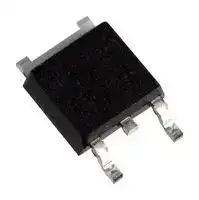


ACST210-8BTR
Triac, 800 V, 2 A, TO-252 (DPAK), 1.1 V, 8 A, 10 mA
- Manufacturer: STMICROELECTRONICS
- Product type:
- Peak Repetitive Off-State Voltage, Vdrm:800V; On State RMS Current IT(rms):2A; Triac Case Style:TO-252; Gate Trigger Current Max (QI), Igt:10mA; Gate Trigger Voltage Max Vgt:1.1V; Peak Gate Power
- MSL: MSL 1 - Unlimited
- SVHC: No SVHC (25-Jun-2025)
- No. of Pins: 3Pins
- Product Range: ACST2
- Triac Case Style: TO-252 (DPAK)
- Thyristor Mounting: Surface Mount
- Holding Current Max: 10mA
- On State RMS Current: 2A
- Peak On State Voltage: 2V
- Gate Trigger Voltage Max: 1.1V
- Operating Temperature Max: 125°C
- Peak Non Repetitive Surge Current: 8A
- Peak Repetitive Off State Voltage: 800V
| Delivery and price | |
|---|---|
| Units per pack | 1000 |
| Price | 0.274 € |
| Current stock | 1000+ |
| Lead time | 30 days |

## **ACST2**

## Overvoltage protected AC switch

**Datasheet** - **production data**

## **Description**

**==> picture [204 x 68] intentionally omitted <==**

**----- Start of picture text -----**<br>
OUT<br>COM<br>DPAK G<br>G TO-220FPAB OUT<br>COM<br>**----- End of picture text -----**<br>


## **Features**

- Triac with overvoltage crowbar technology

- High noise immunity: static dV/dt > 500 V/µs

- TO-220FPAB insulated package:

   - complies with UL standards (File ref: E81734)

   - Insulation voltage : 2000 VRMS

## **Benefits**

- Enables equipment to meet IEC 61000-4-5

- High off-state reliability with planar technology

- Needs no external overvoltage protection

- Reduces component count

- Interfaces directly with the micro-controller

- High immunity against fast transients described in IEC 61000-4-4 standards

## **Applications**

The ACST2 series belongs to the ACS/ACST power switch family.This high performance device is suited to home appliances or industrial systems and drives loads up to 2 A.

This ACST2 switch embeds a Triac structure with a high voltage clamping device to absorb the inductive turn-off energy and withstand line transients such as those described in the IEC 61000-4-5 standards. The component needs a low gate current to be activated (IGT < 10 mA) and still shows a high electrical noise immunity complying with IEC standards such as IEC 61000-4-4 (fast transient burst test).

## **Figure 1. Functional diagram**

**==> picture [65 x 101] intentionally omitted <==**

**----- Start of picture text -----**<br>
OUT<br>G<br>COM<br>**----- End of picture text -----**<br>


## **Table 1. Device summary**

|**Symbol**|**Value**|**Unit**|
|---|---|---|
|IT(RMS)|2|A|
|VDRM/VRRM|800|V|
|IGT|10|mA|


- AC on/off static switching in appliances and industrial control systems

- Driving low power highly inductive loads like solenoid, pump, fan, and micro-motor

June 2017

DocID13304 Rev 5

1/14

This is information on a product in full production.

_www.st.com_

**Characteristics**

**ACST2**

## **1 Characteristics**

**Table 2. Absolute maximum ratings (limiting values)**

||**Table 2. Absolute maximum ratings (limiting values)**|**Table 2. Absolute maximum ratings (limiting values)**|**Table 2. Absolute maximum ratings (limiting values)**|||
|---|---|---|---|---|---|
|**Symbol**|**Parameter**|||**Value**|**Unit**|
|IT(RMS)|On-state rms current (full sine wave)|TO-220FPAB|Tc= 105 °C|2|A|
|||DPAK|Tc= 110 °C|||
|ITSM|Non repetitive surge peak on-state current<br>(full cycle sine wave, TJinitial = 25 °C)|F = 60 Hz|t = 16.7 ms|8.4|A|
|||F = 50 Hz|t = 20 ms|8.0||
|I²t|I²t Value for fusing|tp= 10 ms||0.5|A²s|
|dI/dt|Critical rate of rise of on-state current<br>IG= 2 x IGT, tr= 100 ns|F = 120 Hz|Tj = 125 °C|50|A/µs|
|VPP (1)|Non repetitive line peak mains voltage(1)||Tj = 25 °C|2|kV|
|PG(AV)|Average gate power dissipation||Tj = 125 °C|0.1|W|
|PGM|Peak gate power dissipation (tp= 20 µs)||Tj = 125 °C|10|W|
|IGM|Peak gate current (tp= 20 µs)||Tj = 125 °C|1.6|A|
|Tstg<br>Tj|Storage junction temperature range<br>Operating junction temperature range|||-40 to +150<br>-40 to +125|°C|
|Tl|Maximum lead soldering temperature during 10 s (at 3 mm from plastic case)|||260|°C|
|VINS(RMS)|Insulation RMS voltage (60 seconds)||TO-220FPAB|2000|V|


1. According to test described in IEC 61000-4-5 standard and _Figure 17_

**Table 3. Electrical characteristics (Tj = 25 °C, unless otherwise specified)**

|**Symbol**|**Test conditions**|**Quadrant**||**Value**|**Unit**|
|---|---|---|---|---|---|
|IGT<br>(1)|VOUT= 12 V, RL= 33Ω|I - II - III|MAX|10|mA|
|VGT|VOUT= 12 V, RL= 33Ω|I - II - III|MAX|1.1|V|
|VGD|VOUT= VDRM, RL= 3.3 kΩ,Tj= 125 °C|I - II - III|MIN|0.2|V|
|IH (2)|IOUT= 100 mA||MAX|10|mA|
|IL|IG= 1.2 x IGT|I - III|MAX|25|mA|
|||II|MAX|35||
|dV/dt(2)|VOUT= 67% VDRMgate open, Tj= 125 °C||MIN|500|V/µs|
|(dI/dt)c(2)|(dV/dt)c = 15 V/µs, Tj= 125 °C||MIN|0.5|A/ms|
|VCL|ICL= 0.1 mA, tp= 1 ms, Tj= 25 °C||MIN|850|V|


1. Minimum IGT is guaranteed at 5% of IGT max

2. For both polarities of OUT pin referenced to COM pin

2/14

DocID13304 Rev 5

**ACST2**

**Characteristics**

**Table 4. Static electrical characteristics**

|**Symbol**|**Test conditions**|||**Value**|**Unit**|
|---|---|---|---|---|---|
|VTM<br>(1)|ITM= 2.8 A, tp= 500 µs|Tj= 25 °C|MAX|2|V|
|VTO<br>(1)|Threshold voltage|Tj= 125 °C|MAX|0.9|V|
|RD<br>(1)|Dynamic resistance|Tj= 125 °C|MAX|250|mΩ|
|IDRM<br>IRRM|VOUT= VDRM/ VRRM|Tj= 25 °C|MAX|10|µA|
|||Tj= 125 °C||0.5|mA|


1. For both polarities of OUT pin referenced to COM pin

**Table 5. Thermal resistances**

||**Table 5. Thermal resistances**|**Table 5. Thermal resistances**||||
|---|---|---|---|---|---|
|**Symbol**|**Parameter**|||**Value**<br>|**Unit**|
|Rth(j-c)|Junction to case (AC)||DPAK|4.5<br>°<br>7<br>60<br>70|C/W|
||||TO-220FPAB|||
|Rth(j-a)|Junction to ambient|SCU (1)= 0.5 cm²|TO-220FPAB|||
||||DPAK|||


1. SCU = copper surface under tab

**Figure 2. Maximum power dissipation versus on-state RMS current (full cycle)**

**==> picture [207 x 135] intentionally omitted <==**

**----- Start of picture text -----**<br>
P(W)<br>2.8<br>α=180 °<br>2.4<br>2.0<br>1.6<br>1.2<br>0.8<br>180°<br>0.4<br>I T(RMS) (A)<br>0.0<br>0.0 0.2 0.4 0.6 0.8 1.0 1.2 1.4 1.6 1.8 2.0<br>**----- End of picture text -----**<br>


**Figure 3. On-state RMS current versus case temperature**

**==> picture [207 x 131] intentionally omitted <==**

**----- Start of picture text -----**<br>
IT(RMS)(A)<br>2.4<br>2.2 DPAK<br>2.0<br>1.8<br>TO-220FPAB<br>1.6<br>1.4<br>1.2<br>1.0<br>0.8<br>0.6<br>0.4 α=180 °<br>0.2 T C (°C)<br>0.0<br>0 25 50 75 100 125<br>**----- End of picture text -----**<br>


DocID13304 Rev 5

3/14

**Characteristics**

**ACST2**

**Figure 4. On-state RMS current versus ambient temperature**

**Figure 5. Relative variation of thermal impedance versus pulse duration TO-220FPAB**

**==> picture [437 x 329] intentionally omitted <==**

**----- Start of picture text -----**<br>
1.8 IT(RMS)(A) 1.00 K=[Zth/Rth]<br>α =180 °<br>1.6 Printed circuit board FR4Natural convection oe Z th(j-c) Le2eet | al<br>1.4 we S CU =0.5 cm² |<br>+ —_+—_}_}—_ + 4 catEHH. AERZA E HR<br>1.2 ee LR TTI ETT PETITE TAT ETT TUTTI<br>1.0 a a, DG GG wa Zth(j-a) Y<br>0.10<br>0.8 K+} +} _ ~]+—_ + +_ + ESS8<br>0.6 eea SC Os FECHAa aHerre EEF<br>0.4 A CS OQ LEIA<br>a EAI ETT TEI TIE<br>0.20.0 rerseeee a|| a T amb (°C) forers ee UN ee 0.01 Se wa +t tP(s) TO-220FPAB<br>0 25 50 75 100 125 1.0E-04 1.0E-03 1.0E-02 1.0E-01 1.0E+00 1.0E+01 1.0E+02 1.0E+03<br>Figure 6. Relative variation of thermal  Figure 7. Relative variation of gate trigger,<br>impedance versus pulse duration DPAK  holding and latching current versus junction<br>temperature (typical value)perature (typical value)erature (typical value)(typical value)typical value)ypical value)ical value))<br>1.0E+00 | K=[Z A OD th/Rth] 8 a 0| | 2.8 IGT , I H, I L [T J ] / IGT , I H, I L [T j=25 °C]<br>CTTEEr EH erEeaEH EEREVATEE 2.6 eeNl a SS A CC OC OO<br>2.4 I GT<br>ce Z th(j-c) 2.2 ——————<br>a tHe) | 2.0 SSS<br>ETI VETTE TATE y ATTMall ANTI TET 1.8 A[OReeNCeeCOG CGee<br>1.6 I L & I H<br>1.0E-01 Zth(j-a) Mia 1.4 [ Ney<br>A SR aeR oo<br>a 1.2 Po<br>LPT Ti eer) [IN<br>COP TT err TT 1.0 See ae Renee [Enea nee ea EEEE REET EEE<br>Ce Cr Me rer Cer CE EC CTT 0.8 ee<br>TT 0.6 ee e ee<br>ee TT TT TT 0.4 ee<br>al TTI EET ETTINE-ETAIMTTANTI DPAK TETT 0.2 ee aOe<br>1.0E-02 SO a tP(s) 0.0 aGOaeeeaeS CGSCeee |eeeCG T j (°C) aa OG<br>1.0E-04 1.0E-03 1.0E-02 1.0E-01 1.0E+00 1.0E+01 1.0E+02 1.0E+03 -40 -30 -20 -10 0 10 20 30 40 50 60 70 80 90 100 110 120 130<br>**----- End of picture text -----**<br>


**Figure 7. Relative variation of gate trigger, holding and latching current versus junction temperature (typical value)perature (typical value)erature (typical value)(typical value)typical value)ypical value)ical value))**

**Figure 8. Relative variation of static dV/dt versus junction temperature**

**Figure 9. Relative variation of critical rate of decrease of main current versus reapplied dV/dt (typical values)**

4/14

DocID13304 Rev 5

**ACST2**

**Characteristics**

**Figure 10. Relative variation of critical rate of decrease of main current versus junction temperature**

**Figure 11. Surge peak on-state current versus number of cycles**

**==> picture [425 x 132] intentionally omitted <==**

**----- Start of picture text -----**<br>
[Tj] / (dVat), [T;=125 °C] 9 I TSM(A)<br>a oJ J<br>a| 8<br>a<br>a 7 eea aee t=20ms J)iM<br>WONTa 6 poee =ee | TNon j initial=25repetitive ET ° C PTTTT One cycle iMHt<br>5<br>4<br>eeee I— PS HHHHHH<br>esee<S 32 Es TR Cepet=110itiv°Ce t+} tt + HHH<br>e eS oea DPAK eeeee:<br>re ee —_ or 1 po ee<br>Number of cycles<br>tr) SO| 0 reaa<br>1 10 100 1000<br>**----- End of picture text -----**<br>


**Figure 13. On-state characteristics (maximum values)**

**Figure 12. Non repetitive surge peak on-state current for a sinusoidal pulse with width tp < 10 ms and corresponding value**

**==> picture [438 x 315] intentionally omitted <==**

**----- Start of picture text -----**<br>
100.0 ITS M(A), I2t (A2s) 1.E+01 ITM(A)<br>er T j initial=25 °C a A C—O<br>a a a a a OO<br>I TSM<br>10.0 oSAS 1.E+00 PtPSee Tj=125 °C tt tr ATT Tj=25 °C CO Py Pe pe<br>Po) a 9 GG OOO GO<br>a a ee eee<br>1.0 | 1.E-01 PLP<br>ee Oe ee rrtsetststtetlttrtertetrttlltTSd TJ max. :<br>sinusoidal pulse VTO= 0.90 V<br>with width tP < 10 ms tP(ms) VTM(V) RD= 250 mΩ<br>0.1 1.E-02<br>EE Rt PEFERECEE EEE<br>0.01 0.10 1.00 10.00 0.0 0.5 1.0 1.5 2.0 2.5 3.0 3.5 4.0 4.5 5.0<br>Figure 14. Thermal resistance junction to  Figure 15. Relative variation of clamping<br>ambient versus copper surface under tab DPAKpper surface under tab DPAKer surface under tab DPAK voltage VCL versus junction temperature<br>P|Rminco™™)tT [| | fT ft ft ft tT ft ft ft yt yt 1.20 VCL [Tj] / VCL [Tj=25 °C]<br>1.15<br> ee ee eee OO<br>| i it | | | | ft PP yp Pt<br>a| | | | | | | ft | | tT | tt 1.10 pittptt iettttpetyeeet teeettep peeee |<br>PX tT ty te 1.05 eeee<br>MJ tT] ti ttt tt tt tt ee<br>| {| wt ft PP 1.00 Ppt ey | pert Py ty<br>| eSSee ee<br>attt ttt | tt ft tt et tt 0.95 LiePooTee ee eee Leet<br>or »ecu= 35H 0.90 OG<br>Po Sou(crr?) a Pi} | yyy Tj(°C) PT Ty tT Tt<br>>  LETT Tt Pt 0.85 LEE EET PETE TET<br>-40 -20 0 20 40 60 80 100 120 140<br>**----- End of picture text -----**<br>


**Figure 14. Thermal resistance junction to ambient versus copper surface under tab DPAKpper surface under tab DPAKer surface under tab DPAK**

DocID13304 Rev 5

5/14

**ACST2**

**Application information**

## **2 Application information**

## **2.1 Typical application description**

The ACST2 device has been designed to switch on and off highly inductive or resistive loads such as pump, valve, fan, or bulb lamp. Thanks to its high sensitivity (IGT max = 10 mA), the ACST2 can be driven directly by logic level circuits through a resistor as shown on the typical application diagram. Thanks to its thermal and turn-off commutation performances, the ACST2 switch can drive, without any additional snubber, an inductive load up to 2 A.

## **Figure 16. AC induction motor control – typical diagram**

**==> picture [143 x 145] intentionally omitted <==**

**----- Start of picture text -----**<br>
Line<br>L<br>AC LOAD<br>AC Mains R<br>ACST2<br>Rg<br>MCU<br>Power supply<br>**----- End of picture text -----**<br>


## **2.2 AC line transient voltage ruggedness**

In comparison with standard Triacs, which are not robust against surge voltage, the ACST2 is self-protected against over-voltage, specified by the new parameter VCL. In addition, the ACST2 is a sensitive device (IGT = 10 mA), but provides a high noise immunity level against fast transients. The ACST2 switch can safely withstand AC line transient voltages either by clamping the low energy spikes, such as inductive spikes at switch off, or by switching to the on state (for less than 10 ms) to dissipate higher energy shocks through the load. This safety feature works even with high turn-on current ramp up.

The test circuit of _Figure 17_ represents the ACST2 application, and is used to stress the ACST switch according to the IEC 61000-4-5 standard conditions. With the additional effect of the load which is limiting the current, the ACST switch withstands the voltage spikes up to 2 kV on top of the peak line voltage. The protection is based on an overvoltage crowbar technology. The ACST2 folds back safely to the on state as shown in _Figure 18_ . The ACST2 recovers its blocking voltage capability after the surge and the next zero current crossing. Such a non repetitive test can be done at least 10 times on each AC line voltage polarity.

6/14

DocID13304 Rev 5

**ACST2**

**Application information**

**==> picture [396 x 21] intentionally omitted <==**

**----- Start of picture text -----**<br>
Figure 17. Overvoltage ruggedness test circuit for resistive and inductive loads for<br>IEC 61000-4-5 standards<br>**----- End of picture text -----**<br>


**==> picture [385 x 203] intentionally omitted <==**

**----- Start of picture text -----**<br>
R = 20 Ω , L = 10 µH, VPP = 2 kV<br>Surge generator<br>2kV surge<br>Rgene<br>Model of the load<br>Filtering unit<br>R L<br>ACST210-8x<br>AC Mains<br>Rg<br>**----- End of picture text -----**<br>


**Figure 18. Typical current and voltage waveforms across the ACST2 during IEC 61000-4-5 standard test**

**==> picture [220 x 166] intentionally omitted <==**

**----- Start of picture text -----**<br>
V peak= V CL<br>1.2/50 µs voltage surge<br>V<br>0<br>8/20 µs current surge<br>I<br>0<br>**----- End of picture text -----**<br>


## **2.3 Electrical noise immunity**

The ACST2 is a sensitive device (IGT = 10 mA) and can be controlled directly though a simple resistor by a logic level circuit, and still provides a high electrical noise immunity. The intrinsic immunity of the ACST2 is shown by the specified dV/dt equal to 500 V/µs @ 125 °C. This immunity level is 5 to 10 times higher than the immunity provided by an equivalent standard technology Triac with the same sensitivity. In other words, the ACST2 is sensitive, but has an immunity usually available only for non-sensitive device (IGT higher than 35 mA).

DocID13304 Rev 5

7/14

**ACST2**

**Package information**

## **3 Package information**

- Epoxy meets UL94, V0

- Recommended torque (TO-220FPAB): 0.4 to 0.6 N·m

In order to meet environmental requirements, ST offers these devices in different grades of ECOPACK[®] packages, depending on their level of environmental compliance. ECOPACK[®] specifications, grade definitions and product status are available at: www.st.com. ECOPACK[®] is an ST trademark.

## **3.1 TO-220FPAB package information**

## **Figure 19. TO-220FPAB package outline**

**==> picture [286 x 339] intentionally omitted <==**

**----- Start of picture text -----**<br>
A<br>H B<br>Dia<br>L6<br>L2 L7<br>L3<br>L5<br>D<br>F1<br>L4<br>F2<br>F<br>E<br>G1<br>G<br>**----- End of picture text -----**<br>


8/14

DocID13304 Rev 5

**ACST2**

**Package information**

**Table 6. TO-220FPAB package mechanical data**

||**Table 6. TO-220FPABpackage mechanical data**|**Table 6. TO-220FPABpackage mechanical data**|**Table 6. TO-220FPABpackage mechanical data**|**Table 6. TO-220FPABpackage mechanical data**|**Table 6. TO-220FPABpackage mechanical data**|**Table 6. TO-220FPABpackage mechanical data**|
|---|---|---|---|---|---|---|
|**Ref.**|**Dimensions**||||||
||**Millimeters**|||**Inches**|||
||**Min.**|**Typ.**|**Max.**|**Min.**|**Typ.**|**Max.**|
|A|4.4||4.6|0.1730||0.1809|
|B|2.5||2.7|0.0983||0.1062|
|D|2.5||2.75|0.0983||0.1081|
|E|0.45||0.70|0.0177||0.0275|
|F|0.75||1|0.0295||0.0393|
|F1|1.15||1.70|0.0452||0.0669|
|F2|1.15||1.70|0.0452||0.0669|
|G|4.95||5.20|0.1947||0.2045|
|G1|2.4||2.7|0.0944||0.1062|
|H|10||10.4|0.3932||0.4090|
|L2||16|||0.6292||
|L3|28.6||30.6|1.1247||1.2033|
|L4|9.8||10.6|0.3854||0.4168|
|L5|2.9||3.6|0.1140||0.1416|
|L6|15.9||16.4|0.6252||0.6449|
|L7|9.00||9.30|0.3539||0.3657|
|Dia.|3.00||3.20|0.1180||0.1258|


DocID13304 Rev 5

9/14

**ACST2**

**Package information**

## **3.2 DPAK package information**

**Figure 20. DPAK package outline**

_Note: This package drawing may slightly differ from the physical package. However, all the specified dimensions are guaranteed._

10/14

DocID13304 Rev 5

**ACST2**

**Package information**

**Table 7. DPAK package mechanical data**

||**Table 7. DPAKpackage mechanical data**|**Table 7. DPAKpackage mechanical data**|**Table 7. DPAKpackage mechanical data**|**Table 7. DPAKpackage mechanical data**|**Table 7. DPAKpackage mechanical data**|**Table 7. DPAKpackage mechanical data**|
|---|---|---|---|---|---|---|
|**Ref.**|**Dimensions**||||||
||**Millimeters**|||**Inches**|||
||**Min.**|**Typ.**|**Max.**|**Min.**|**Typ.**|**Max.**|
|A|2.18||2.40|0.086||0.094|
|A1|0.90||1.10|0.035||0.043|
|A2|0.03||0.23|0.001||0.009|
|b|0.64||0.90|0.025||0.035|
|b4|4.95||5.46|0.195||0.215|
|c|0.46||0.61|0.018||0.024|
|c2|0.46||0.60|0.018||0.023|
|D|5.97||6.22|0.235||0.244|
|D1||5.1|||0.201||
|E|6.35||6.73|0.250||0.264|
|E1||4.32|||0.170||
|e||2.286|||0.09||
|e1||4.572|||0.18||
|H|9.35||10.40|0.368||0.409|
|L|1.00||1.78|0.039||0.070|
|L2|||1.27|||0.05|
|L4|0.60||1.02|0.023||0.040|
|V2|0°||8°|0°||8°|


## **Figure 21. Footprint (dimensions in mm)**

**==> picture [290 x 178] intentionally omitted <==**

**----- Start of picture text -----**<br>
6.7 3.0 3.0<br>A<br>5.094<br>6.7<br>B<br>1.6<br>The device must be positioned within<br>0.05 A B<br>**----- End of picture text -----**<br>


DocID13304 Rev 5

11/14

**Ordering information**

**ACST2**

## **4 Ordering information**

## **Figure 22. Ordering information scheme**

**==> picture [308 x 255] intentionally omitted <==**

**----- Start of picture text -----**<br>
ACS  T  2  10 -  8    B TR<br>AC switch<br>Topology<br>T = Triac<br>On-state rms current<br>2 = 2 A<br>Sensitivity<br>10 = 10 mA<br>Voltage<br>8 = 800 V<br>Package<br>FP = TO-220FPAB<br>B = DPAK<br>Delivery mode<br>TR = Tape and reel (DPAK)<br>Blank = Tube (TO-220FPAB, DPAK)<br>**----- End of picture text -----**<br>


**Table 8. Ordering information**

|**Order code**|**Marking**|**Package**|**Weight**|**Base Qty**|**Packing mode**|
|---|---|---|---|---|---|
|ACST210-8FP|ACST2108|TO-220FPAB|2.4g|50|Tube|
|ACST210-8B||DPAK|0.3g|50|Tube|
|ACST210-8BTR||DPAK|0.3g|2500|Tape and Reel|


12/14

DocID13304 Rev 5

**ACST2**

**Revision history**

## **5 Revision history**

**Table 9. Document revision history**

|||**Table 9. Document revision history**|
|---|---|---|
|**Date**|**Revision**|**Changes**|
|01-Mar-2007|1|Initial release.|
|13-Apr-2010|2|Updated ECOPACK statement. Reformatted for consistency with other<br>datasheets in this product class.|
|01-Jul-2010|3|Updated Figure 22.|
|24-May-2014|4|Updated DPAK package information and reformatted to current standard.|
|14-Jun-2017|5|Updated features in cover page and_Table 2_.<br>Updated_Figure 8_,_Figure 9_,_Figure 10_,_Figure 14_and_Section 3_.<br>Minor text changes.|


DocID13304 Rev 5

13/14

**ACST2**

## **IMPORTANT NOTICE – PLEASE READ CAREFULLY**

STMicroelectronics NV and its subsidiaries (“ST”) reserve the right to make changes, corrections, enhancements, modifications, and improvements to ST products and/or to this document at any time without notice. Purchasers should obtain the latest relevant information on ST products before placing orders. ST products are sold pursuant to ST’s terms and conditions of sale in place at the time of order acknowledgement.

Purchasers are solely responsible for the choice, selection, and use of ST products and ST assumes no liability for application assistance or the design of Purchasers’ products.

No license, express or implied, to any intellectual property right is granted by ST herein.

Resale of ST products with provisions different from the information set forth herein shall void any warranty granted by ST for such product. ST and the ST logo are trademarks of ST. All other product or service names are the property of their respective owners. Information in this document supersedes and replaces information previously supplied in any prior versions of this document.

© 2017 STMicroelectronics – All rights reserved

14/14

DocID13304 Rev 5
Updated at June 10, 2026
STMicroelectronics is a global leader in the semiconductor industry, recognized for developing highly integrated, energy-efficient solutions that power modern electronics. With a strong focus on innovation, ST provides a comprehensive portfolio of microelectronics that address the demanding requirements of industrial, automotive, communications, and consumer applications. Our extensive selection of STMicroelectronics components is built around a robust lineup of discrete semiconductors and circuit protection devices. We offer a wide variety of single MOSFETs, Schottky diodes, and fast and ultrafast recovery rectifier diodes, designed to deliver exceptional efficiency and thermal performance in power management and conversion systems. For robust circuit protection, our inventory features hundreds of transient voltage suppressors and TVS diodes that safeguard sensitive electronic components against destructive voltage spikes. In addition to core power discretes like TRIACs, SCRs, bipolar transistors, and single IGBTs, our STMicroelectronics range includes specialized integrated passive filters and MEMS sensors. Furthermore, ST offers advanced integrated passive devices, such as baluns and RF filters, which utilize high-quality monolithic RF IPD processes on glass or high-resistance silicon substrates. These components provide competitive cost structures, reduced power losses, and simplified RFIC-to-antenna matching, ensuring optimal system performance and delivering the reliability required for next-generation wireless and power designs.
About Novapart
Novapart is a B2B electronic component broker specialising in stock shortages and cost reduction. We source hard-to-find parts and identify compliant alternatives across a catalogue of 410,000+ components from 500+ manufacturers.
Learn more →Stock Shortage Specialist
When a component is unavailable, discontinued or has an unacceptable lead time, we tap into our network of vetted European and Asian distributors to source what you need — without compromising on quality or traceability.
Request a quote →Compliant Alternatives
We identify pin-to-pin, electrically equivalent substitutes that meet the same certifications (RoHS, AEC-Q100, REACH) as your original specification — validated against datasheets, not just part numbers. Often at a lower cost.
BOM Analysis service →