
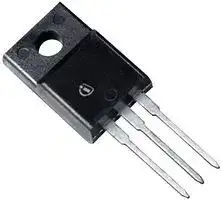


ACST1235-8FP
Triac, 800 V, 12 A, TO-220FPAB, 1 V, 100 A, 30 mA
- Manufacturer: STMICROELECTRONICS
- Product type:
- Peak Repetitive Off-State Voltage, Vdrm:800V; On State RMS Current IT(rms):12A; Triac Case Style:TO-220FPAB; Gate Trigger Current Max (QI), Igt:35mA; Gate Trigger Voltage Max Vgt:1V; Peak
- MSL: -
- SVHC: No SVHC (25-Jun-2025)
- No. of Pins: 3Pins
- Product Range: -
- Triac Case Style: TO-220FPAB
- Thyristor Mounting: Through Hole
- Holding Current Max: 30mA
- On State RMS Current: 12A
- Peak On State Voltage: 1.5V
- Gate Trigger Voltage Max: 1V
- Operating Temperature Max: 150°C
- Peak Non Repetitive Surge Current: 100A
- Peak Repetitive Off State Voltage: 800V
| Delivery and price | |
|---|---|
| Units per pack | 5000 |
| Price | 0.611 € |
| Current stock | 200+ |
| Lead time | 30 days |

## **ACST1235-8FP**

## Overvoltage protected AC switch

## − **Datasheet production data**

## **Description**

**==> picture [213 x 159] intentionally omitted <==**

**----- Start of picture text -----**<br>
G<br>OUT<br>COM<br>TO-220FPAB<br>(ACST1235-8FP)<br>L<br>**----- End of picture text -----**<br>


The ACST1235-8FP belongs to the ACS™/ ACST power switch family built with A.S.D.[®] (application specific discrete) technology. This high performance device is suited to home appliances or industrial systems and drives loads up to 12 A. **G** This ACST1235-8FP switch embeds a Triac **OUT** structure and a high voltage clamping device able **COM** to absorb the inductive turn-off energy and **TO-220FPAB** withstand line transients such as those described **(ACST1235-8FP)** in the IEC 61000-4-5 standard. It offers an extremely high static dV/dt immunity of 2 kV/μs minimum at 150 °C junction temperature.

## **Features**

ACST1235-8FP enables applications to be compliant with IEC 61000-4-4 and IEC 61000-4-5.

- 12 A medium current AC Switch

- Triac with self overvoltage protection

- High static immunity and dynamic commutation

- 800 V VDRM / VRRM

- High junction temperature: Tj = 150 °C max

- Complies with UL standards (File ref: E81734)

- TO-220FPAB-insulated package 1500VRMS

- ECOPACK[®] 2 and RoHs compliant component

## **Applications**

## **Figure 1. Functional diagram**

**==> picture [71 x 105] intentionally omitted <==**

**----- Start of picture text -----**<br>
OUT<br>G<br>COM<br>**----- End of picture text -----**<br>


Motor control for home appliances:

- Washing machine universal drum motors

- Compressor of fridge or air conditioner

**Table 1. Device summary**

|**Symbol**|**Value**|**VDRM/VRRM**|
|---|---|---|
|**IT(RMS)**|12|A|
|**IGT**|35|mA|
|**VDRM/VRRM**|800|V|


1/13

April 2014

DocID026033 Rev 1

This is information on a product in full production.

_www.st.com_

**Characteristics**

**ACST1235-8FP**

## **1 Characteristics**

**Table 2. Absolute ratings (limiting values)**

|**Symbol**|**Parameter**|**Test conditions**|**Test conditions**|**Value**|**Unit**|
|---|---|---|---|---|---|
|IT(RMS)|On-state rms current (full sine wave)|Tc= 97 °C||12|A|
|ITSM|Non repetitive surge peak on-state current<br>(Tjinitial = 25 °C)|tp= 16.7 ms||105|A|
|||tp= 20 ms||100||
|I2t|I2t value for fusing (full cycle sine wave)|tp= 10 ms||66|A²s|
|dI/dt|Critical rate of rise on-state current<br>IG= 2 x IGT,tr ≤100 ns|F = 60Hz|Tj= 150 °C|100|A/µs|
|VDRM/VRRM|Repetitive peak off-state voltage|Tj= 150 °C||800|V|
|VPP<br>(1)|Non repetitive line peak pulse voltage|Tj= 25 °C||2|kV|
|(dI/dt)BO<br>(1)|Non repetitive critical current rate of rise at breakover|Tj= 25 °C||150|A/µs|
|IGM|Peak gate current|tp= 20 µs|Tj= 150 °C|1|A|
|PGM|Peak gate power|tp= 20 µs|Tj= 150 °C|10|W|
|PG(AV)|Average gate power dissipation|Tj= 150 °C||0.1|W|
|Tstg|Storage junction temperature range|||-40 to +150|°C|
|Tj|Operating junction temperature range|||-40 to +150|°C|
|TL|Maximum lead temperature for soldering during 10 s|||260|°C|
|Vins(rms)|Insulation rms voltage (60 seconds)|||1.500|V|


1. according to test described by standard IEC 61000-4-5 (see _Figure 19_ )

**Table 3. Electrical characteristics**

|**Symbol**|**Test conditions**|**Quadrant**|**Tj**|**Value**|**Value**|**Unit**|
|---|---|---|---|---|---|---|
|IGT|VD= 12 V, RL = 33Ω|I - II - III|25 °C|MAX.|35|mA|
|||||MIN.|1.75||
|VGT|VD= 12 V, RL = 33Ω|I - II - III|25 °C|MAX.|1.0|V|
|VGD|VD= VDRM,RL = 3.3 kΩ|I - II - III|150 °C|MIN.|0.2|V|
|IH<br>(1)|IT= 500 mA, gate open||25 °C|MAX.|30|mA|
|IL|IG= 1.2 x IGT|I - II - III|25 °C|MAX.|40|mA|
|dV/dt(1)|VD= 67% VDRM/VRRM, gate open||125 °C|MIN.|4000|V/µs|
||||150 °C|MIN.|2000||
|(dI/dt)c(1)|Without snubber||125 °C|MIN.|12|A/ms|
||(dI/dt)c = 15 V/µs||150 °C|MIN.|6||
|VCL|ICL= 0.1 mA, tp= 1 ms|||MIN.|850|V|


1. For both polarities of OUT pin referenced to COM pin

2/13

DocID026033 Rev 1

**ACST1235-8FP**

**Characteristics**

**Table 4. Static characteristics**

|**Symbol**|**Test conditions**|**Val**|**ue**|**Unit**|
|---|---|---|---|---|
|VTM<br>(1)|ITM= 17 A, tp= 380 µs|Tj= 25 °C<br>MAX.|1.5|V|
|Vto<br>(1)|Threshold voltage|Tj= 150 °C<br>MAX.|0.9|V|
|Rd<br>(1)|Dynamic resistance|Tj= 150 °C<br>MAX.|38|mΩ|
|IDRM<br>IRRM|VOUT= VDRM/ VRRM|Tj= 25 °C<br>MAX.<br>Tj= 125 °C<br>Tj= 150 °C|1|µA|
||||500|µA|
||||1.2|mA|


1. For both polarities of OUT pin referenced to COM pin

**Table 5. Thermal characteristics**

||**Table 5. Thermal characteristics**|||
|---|---|---|---|
|**Symbol**|**Parameter**|**Value**|**Unit**|
|Rth(j-c)|Junction to case (AC)|3.5<br>|°C/W|
|Rth(j-a)|Junction to ambient (AC)|60<br>|°C/W|


**Figure 2. Maximum power dissipation versus rms on-state current (full cycle)**

**Figure 3. On-state rms current versus case temperature (full cycle)**

**==> picture [463 x 146] intentionally omitted <==**

**----- Start of picture text -----**<br>
16 P(W) IT(RMS)(A)<br>14<br>α = 180 °<br>14 α = 180 °<br>12<br>12<br>10<br>10<br>8<br>8<br>6<br>6<br>4 180 ° 4<br>α<br>2 2<br>IT(RMS)(A) α TC(°C)<br>0 0<br>0 2 4 6 8 10 12 0 25 50 75 100 125 150<br>**----- End of picture text -----**<br>


**Figure 4. On-state rms current versus ambient temperature (free air convection)**

**Figure 5. Relative variation of thermal impedance versus pulse duration**

**==> picture [463 x 146] intentionally omitted <==**

**----- Start of picture text -----**<br>
3.0 IT(RMS)(A) 1.0E+00K = [Zth/Rth] Zth(j- c)<br>α = 180 ° Z th(j-a)<br>2.5<br>2.0<br>1.5 1.0E-01<br>1.0<br>0.5<br>0.0 Ta(°C) 1.0E-02 tp(s)<br>0 25 50 75 100 125 150 1.0E-03 1.0E-02 1.0E-01 1.0E+00 1.0E+01 1.0E+02 1.0E+03<br>**----- End of picture text -----**<br>


3/13

DocID026033 Rev 1

**Characteristics**

**ACST1235-8FP**

**Figure 6. On-state characteristics (maximum values)**

**==> picture [187 x 131] intentionally omitted <==**

**----- Start of picture text -----**<br>
ITM(A)<br>100<br>V R to d T  = 38 m  = 0.9 V j max : Ω<br>10<br>T j = 150°C T j = 25°C<br>VTM(V)<br>1<br>0 1 2 3 4 5<br>**----- End of picture text -----**<br>


**Figure 7. Surge peak on-state current versus number of cycles**

**==> picture [210 x 138] intentionally omitted <==**

**----- Start of picture text -----**<br>
IH,IL[Tj] / IH,IL[Tj = 25 °C]<br>2.5<br>2.0<br>1.5<br>1.0 I L<br>IH<br>0.5<br>T j  (°C)<br>0.0<br>-50 -25 0 25 50 75 100 125 150<br>**----- End of picture text -----**<br>


**Figure 8. Non repetitive surge peak on-state current for a sinusoidal pulse with width tp < 10 ms, and corresponding value of I²t**

**==> picture [203 x 132] intentionally omitted <==**

**----- Start of picture text -----**<br>
ITSM(A), I t 2 (A s2 )<br>1000 Tj initial = 25 °C<br>dI/dt limitation: 100 A/μs ITSM<br>100<br>I²t<br>10<br>tp(ms)<br>1<br>0.01 0.10 1.00 10.00<br>**----- End of picture text -----**<br>


**Figure 9. Relative variation of gate trigger current and gate trigger voltage versus junction temperature (typical values)**

**==> picture [191 x 126] intentionally omitted <==**

**----- Start of picture text -----**<br>
IGT,VGT[Tj] / IGT,VGT[Tj = 25 °C]<br>3.0<br>IGT Q3<br>2.5<br>IGT Q1- Q2<br>2.0<br>1.5<br>1.0<br>0.5 VGT Q1- Q2 - Q3<br>T j  (°C)<br>0.0<br>-50 -25 0 25 50 75 100 125 150<br>**----- End of picture text -----**<br>


**Figure 10. Relative variation of holding current and latching current versus junction temperature (typical values)**

**Figure 11. Relative variation of critical rate of decrease of main current (dI/dt)c versus reapplied (dV/dt)c**

**==> picture [463 x 146] intentionally omitted <==**

**----- Start of picture text -----**<br>
IH,IL[Tj] / IH,IL[Tj = 25 °C] (dI/dt)c [ (dV/dt)c ] / Specified (dI/dt)c<br>2.5 3<br>Tj =150 °C<br>2.0<br>2<br>1.5<br>1.0 I L<br>1<br>IH<br>0.5<br>Tj (°C) (dV/dt)c (V/µs)<br>0.0 0<br>-50 -25 0 25 50 75 100 125 150 0.1 1.0 10.0 100.0<br>**----- End of picture text -----**<br>


4/13

DocID026033 Rev 1

**ACST1235-8FP**

**Characteristics**

**Figure 12. Relative variation of critical rate of decrease of main current versus junction temperature (typical values)**

## **Figure 13. Relative variation of static dV/dt immunity versus junction temperature**

**==> picture [463 x 146] intentionally omitted <==**

**----- Start of picture text -----**<br>
10 (dI/dt)C [Tj] / (dI/dt)c [Tj=150 °C] 4 dV/dt [T j ] /dV/dt [T j = 150°C]<br>9 Device exceeding VD = VR = 536 V<br>8 dV/dt = 5 kV/μs<br>3<br>7<br>6<br>5 2<br>4<br>3<br>1<br>2<br>1 Tj(°C)<br>Tj(°C) 0<br>0<br>25 50 75 100 125 150<br>25 50 75 100 125 150<br>**----- End of picture text -----**<br>


**Figure 14. Relative variation of leakage current versus junction temperature for different values of blocking voltage (typical values)**

**Figure 15. Relative variation of the maximum clamping voltage versus junction temperature (minimum values)**

**==> picture [463 x 165] intentionally omitted <==**

**----- Start of picture text -----**<br>
IDRM / IRRM[Tj;VDRM / VRRM] / IDRM / IRRM 1.10 VCL[T] / Vj CL[T = 25 °C]j<br>1.0E+00<br>VDRM=VRRM = 800 V<br>1.05<br>1.0E-01 VDRM=VRRM = 600 V<br>1.00<br>1.0E-02 VDRM=VRRM = 400 V 0.95<br>1.0E-03<br>0.90<br>Tj ( ° C) Tj(°C)<br>1.0E-04 0.85<br>25 50 75 100 125 150 -50 -25 0 25 50 75 100 125 150<br>**----- End of picture text -----**<br>


5/13

DocID026033 Rev 1

**ACST1235-8FP**

**Application information**

## **2 Application information**

## **2.1 Typical application description**

The ACST1235-8FP device has been designed to control medium power load, such as AC motors in home appliances. Thanks to its thermal and turn-off commutation performances, the ACST1235-8FP switch is able to drive an inductive load up to 12 A with no turn-off additional snubber. It also provides high thermal performances in static and transient modes such as the compressor inrush current or high torque operating conditions of an AC motor.

## **Figure 16. AC induction motor control - typical diagram**

**==> picture [319 x 259] intentionally omitted <==**

**----- Start of picture text -----**<br>
AC motor<br>AC induction<br>motor<br>AC mains<br>Phase shift capacitor +<br>protective air inductance<br>ACST ACST<br>Selection of the<br>rotor direction<br>Rg Rg<br>VCC<br>MCU<br>**----- End of picture text -----**<br>


6/13

DocID026033 Rev 1

**ACST1235-8FP**

**Application information**

**Figure 17. Universal drum motor control – typical diagram**

**==> picture [258 x 288] intentionally omitted <==**

**----- Start of picture text -----**<br>
Universal motor<br>12 V<br>AC mains Motor direction<br>setting<br>MCU<br>Speed motor ACST<br>regulation<br>Rg<br>VCC<br>MCU<br>**----- End of picture text -----**<br>


The ACST1235-8FP device is also very effective in controlling resistive loads.

**Figure 18. Resistive load control – typical diagram**

**==> picture [280 x 172] intentionally omitted <==**

**----- Start of picture text -----**<br>
Lamp or<br>resistance<br>OUT<br>Variable<br>resistor<br>AC mains Diac G<br>Capacitor COM<br>**----- End of picture text -----**<br>


7/13

DocID026033 Rev 1

**ACST1235-8FP**

**Application information**

## **2.2 AC line transient voltage ruggedness**

In comparison with standard Triac, which need additional protection components against surge voltage, the ACST1235-8FP is self-protected against overvoltage, specified by the new parameter VCL. The ACST1235-8FP switch can safely withstand AC line transient voltages either by clamping the low energy spikes, such as the inductive spikes at switchoff, or by switching to the on state (for less than 10 ms) to dissipate higher energy shocks through the load. This safety feature works even with high turn-on current ramp-up.

The test circuit of _Figure 19_ represents the ACST1235-8FP application, and is used to stress the ACST switch according to the IEC 61000-4-5 standard conditions. With the additional effect of the load which limits the current, the ACST switch withstands the voltage spikes up to 2 kV on top of the peak line voltage. The protection is based on an overvoltage crowbar technology. The ACST1235-8FP folds back safely to the on state as shown in _Figure 20_ . The ACST1235-8FP recovers its blocking voltage capability after the surge and the next zero crossing current. Such a non repetitive test can be done at least 10 times on each AC line voltage polarity.

**Figure 19. Overvoltage ruggedness test circuit for resistive and inductive loads for IEC 61000-4-5 standards**

**==> picture [318 x 237] intentionally omitted <==**

**----- Start of picture text -----**<br>
R = 11 Ω, L = 3 µH  V , PP = 2 kV<br>Rg = 62  Ω<br>2 kV surge<br>Rgene<br>Model of the load<br>Filtering unit R L<br>ACST<br>AC mains<br>Rg<br>**----- End of picture text -----**<br>


8/13

DocID026033 Rev 1

**ACST1235-8FP**

**Application information**

**Figure 20. Typical voltage and current waveforms across the ACST1235-8FP during IEC 61000-4-5 standard test**

**==> picture [238 x 194] intentionally omitted <==**

**----- Start of picture text -----**<br>
Vpeak<br>1.2/50 µs voltage surge<br>0<br>V I<br>peak= 180 A<br>8/20 µs current surge<br>I<br>0<br>(dl/dt)BO = 150 A/µs<br>**----- End of picture text -----**<br>


9/13

DocID026033 Rev 1

**ACST1235-8FP**

**Package information**

## **3 Package information**

- Lead-free package

- Recommended torque: 0.4 to 0.6 N·m

In order to meet environmental requirements, ST offers these devices in different grades of ECOPACK[®] packages, depending on their level of environmental compliance. ECOPACK[®] specifications, grade definitions and product status are available at: _www.st.com._ ECOPACK[®] is an ST trademark.

## **Figure 21. TO-220FPAB dimension definitions**

**==> picture [327 x 387] intentionally omitted <==**

**----- Start of picture text -----**<br>
A<br>H B<br>Dia<br>L6<br>L2 L7<br>L3<br>L5<br>D<br>F1<br>L4<br>F2<br>F<br>E<br>G1<br>G<br>**----- End of picture text -----**<br>


10/13

DocID026033 Rev 1

**ACST1235-8FP**

**Package information**

**Table 6. TO-220FPAB dimension values**

||**Table 6. TO-220FPAB dimension values**|**Table 6. TO-220FPAB dimension values**|**Table 6. TO-220FPAB dimension values**|**Table 6. TO-220FPAB dimension values**|
|---|---|---|---|---|
|**Ref.**|**Dimensions**||||
||**Millimeters**||**Inches**||
||**Min.**|**Max.**|**Min.**|**Max.**|
|A|4.4|4.6|0.173|0.181|
|B|2.5|2.7|0.098|0.106|
|D|2.5|2.75|0.098|0.108|
|E|0.45|0.70|0.018|0.027|
|F|0.75|1|0.030|0.039|
|F1|1.15|1.70|0.045|0.067|
|F2|1.15|1.70|0.045|0.067|
|G|4.95|5.20|0.195|0.205|
|G1|2.4|2.7|0.094|0.106|
|H|10|10.4|0.393|0.409|
|L2|16 Typ.||0.63 Typ.||
|L3|28.6|30.6|1.126|1.205|
|L4|9.8|10.6|0.386|0.417|
|L5|2.9|3.6|0.114|0.142|
|L6|15.9|16.4|0.626|0.646|
|L7|9.00|9.30|0.354|0.366|
|Dia.|3.00|3.20|0.118|0.126|


11/13

DocID026033 Rev 1

**Ordering information**

**ACST1235-8FP**

## **4 Ordering information**

## **Figure 22. Ordering information scheme**

**==> picture [296 x 207] intentionally omitted <==**

**----- Start of picture text -----**<br>
ACS  T 12  35 -  8 FP<br>Series<br>AC switch<br>Topology<br>T = Triac<br>On-state rms current<br>12 = 12 A<br>Sensitivity<br>35 = 35 mA<br>Voltage<br>8 = 800 V<br>Package<br>FP = TO-220FPAB<br>**----- End of picture text -----**<br>


**Table 7. Ordering information**

|**Order code**|**Marking**|**Package**|**Weight**|**Base qty**|**Packing mode**|
|---|---|---|---|---|---|
|ACST1235-8FP|ACST1235-8|TO-220FPAB|2.0 g|50|Tube|


## **5 Revision history**

**Table 8. Document revision history**

|**Date**|**Revision**|**Changes**|
|---|---|---|
|24-Apr-2014|1|First issue.|


12/13

DocID026033 Rev 1

**ACST1235-8FP**

## **Please Read Carefully:**

Information in this document is provided solely in connection with ST products. STMicroelectronics NV and its subsidiaries (“ST”) reserve the right to make changes, corrections, modifications or improvements, to this document, and the products and services described herein at any time, without notice.

All ST products are sold pursuant to ST’s terms and conditions of sale.

Purchasers are solely responsible for the choice, selection and use of the ST products and services described herein, and ST assumes no liability whatsoever relating to the choice, selection or use of the ST products and services described herein.

No license, express or implied, by estoppel or otherwise, to any intellectual property rights is granted under this document. If any part of this document refers to any third party products or services it shall not be deemed a license grant by ST for the use of such third party products or services, or any intellectual property contained therein or considered as a warranty covering the use in any manner whatsoever of such third party products or services or any intellectual property contained therein.

**UNLESS OTHERWISE SET FORTH IN ST’S TERMS AND CONDITIONS OF SALE ST DISCLAIMS ANY EXPRESS OR IMPLIED WARRANTY WITH RESPECT TO THE USE AND/OR SALE OF ST PRODUCTS INCLUDING WITHOUT LIMITATION IMPLIED WARRANTIES OF MERCHANTABILITY, FITNESS FOR A PARTICULAR PURPOSE (AND THEIR EQUIVALENTS UNDER THE LAWS OF ANY JURISDICTION), OR INFRINGEMENT OF ANY PATENT, COPYRIGHT OR OTHER INTELLECTUAL PROPERTY RIGHT.**

**ST PRODUCTS ARE NOT DESIGNED OR AUTHORIZED FOR USE IN: (A) SAFETY CRITICAL APPLICATIONS SUCH AS LIFE SUPPORTING, ACTIVE IMPLANTED DEVICES OR SYSTEMS WITH PRODUCT FUNCTIONAL SAFETY REQUIREMENTS; (B) AERONAUTIC APPLICATIONS; (C) AUTOMOTIVE APPLICATIONS OR ENVIRONMENTS, AND/OR (D) AEROSPACE APPLICATIONS OR ENVIRONMENTS. WHERE ST PRODUCTS ARE NOT DESIGNED FOR SUCH USE, THE PURCHASER SHALL USE PRODUCTS AT PURCHASER’S SOLE RISK, EVEN IF ST HAS BEEN INFORMED IN WRITING OF SUCH USAGE, UNLESS A PRODUCT IS EXPRESSLY DESIGNATED BY ST AS BEING INTENDED FOR “AUTOMOTIVE, AUTOMOTIVE SAFETY OR MEDICAL” INDUSTRY DOMAINS ACCORDING TO ST PRODUCT DESIGN SPECIFICATIONS. PRODUCTS FORMALLY ESCC, QML OR JAN QUALIFIED ARE DEEMED SUITABLE FOR USE IN AEROSPACE BY THE CORRESPONDING GOVERNMENTAL AGENCY.**

Resale of ST products with provisions different from the statements and/or technical features set forth in this document shall immediately void any warranty granted by ST for the ST product or service described herein and shall not create or extend in any manner whatsoever, any liability of ST.

ST and the ST logo are trademarks or registered trademarks of ST in various countries.

Information in this document supersedes and replaces all information previously supplied.

The ST logo is a registered trademark of STMicroelectronics. All other names are the property of their respective owners.

© 2014 STMicroelectronics - All rights reserved

## STMicroelectronics group of companies

Australia - Belgium - Brazil - Canada - China - Czech Republic - Finland - France - Germany - Hong Kong - India - Israel - Italy - Japan - Malaysia - Malta - Morocco - Philippines - Singapore - Spain - Sweden - Switzerland - United Kingdom - United States of America

**www.st.com**

13/13

DocID026033 Rev 1
Updated at April 26, 2026
STMicroelectronics is a global leader in the semiconductor industry, recognized for developing highly integrated, energy-efficient solutions that power modern electronics. With a strong focus on innovation, ST provides a comprehensive portfolio of microelectronics that address the demanding requirements of industrial, automotive, communications, and consumer applications. Our extensive selection of STMicroelectronics components is built around a robust lineup of discrete semiconductors and circuit protection devices. We offer a wide variety of single MOSFETs, Schottky diodes, and fast and ultrafast recovery rectifier diodes, designed to deliver exceptional efficiency and thermal performance in power management and conversion systems. For robust circuit protection, our inventory features hundreds of transient voltage suppressors and TVS diodes that safeguard sensitive electronic components against destructive voltage spikes. In addition to core power discretes like TRIACs, SCRs, bipolar transistors, and single IGBTs, our STMicroelectronics range includes specialized integrated passive filters and MEMS sensors. Furthermore, ST offers advanced integrated passive devices, such as baluns and RF filters, which utilize high-quality monolithic RF IPD processes on glass or high-resistance silicon substrates. These components provide competitive cost structures, reduced power losses, and simplified RFIC-to-antenna matching, ensuring optimal system performance and delivering the reliability required for next-generation wireless and power designs.
About Novapart
Novapart is a B2B electronic component broker specialising in stock shortages and cost reduction. We source hard-to-find parts and identify compliant alternatives across a catalogue of 410,000+ components from 500+ manufacturers.
Learn more →Stock Shortage Specialist
When a component is unavailable, discontinued or has an unacceptable lead time, we tap into our network of vetted European and Asian distributors to source what you need — without compromising on quality or traceability.
Request a quote →Compliant Alternatives
We identify pin-to-pin, electrically equivalent substitutes that meet the same certifications (RoHS, AEC-Q100, REACH) as your original specification — validated against datasheets, not just part numbers. Often at a lower cost.
BOM Analysis service →