
Image not available
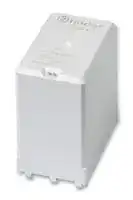
Illustrative purposes only

67.23.9.024.4300
General Purpose Relay, 67 Series, Power, 3PST-NO, 24 VDC, 50 A
⚠️ Reference pricing provided. In case of supply shortages, we will connect you with our trusted procurement partners to ensure your project's continuity.
- Manufacturer: FINDER
- Product type: Power Relays
- Contact Configuration:3PST-NO; Coil Voltage:24VDC; Contact Current:50A; Product Range:67 Series; Relay Mounting:Through Hole; Coil Type:-; Contact Voltage VAC:400VAC; Relay Terminals:Solder;
- SVHC: No SVHC (04-Feb-2026)
- Coil Type: -
- Coil Voltage: 24VDC
- Product Range: 67 Series
- Relay Mounting: Through Hole
- Coil Resistance: 340ohm
- Contact Current: 50A
- Relay Terminals: Solder
- Contact Material: Silver Tin Oxide
- Contact Voltage VAC: 400VAC
- Contact Voltage VDC: -
- Contact Configuration: 3PST-NO
| Delivery and price | |
|---|---|
| Units per pack | 20 |
| Price | 28.3 € |
| Current stock | 10+ |
| Lead time | 30 days |
Datasheet

**67 SERIES**

**A**

|**Printed circuit mount - 3 mm contact gap**<br>**50 A Power relay for photovoltaic inverters**<br>•2 and 3 pole versions (NO, double break<br>contacts)<br>•Contact gap ≥ 3 mm (according to VDE 0126-1-1,<br>EN 62109-1, EN 62109-2)<br>•DC coils, with only 170 mW holding power<br>•Reinforced insulation between coil and contacts<br>•1.5 mm gap between PCB and relay base<br>•Suitable for use at ambient temperatures up to<br>85 °C (with energy-saving coil energization) or<br>70 °C (with standard coil energization)<br>•Meets the EN 60335-1 requirements of<br>resistance to heat and fire (GWIT 775 °C and<br>GWFI 850 °C)<br>•Cadmium free contact materials:<br>- AgNi version (for applications where lower<br>contact resistance is needed)<br>- AgSnO2version (for applications where<br>higher inrush current values are expected)<br>For outline drawing see page 6<br>**Contact specification**<br>Contact configuration|**67.22-x300**<br>•2 NO<br>•Contact gap ≥ 3 mm<br>•PCB mount<br>.<br>||**67.22-x300**<br>•2 NO<br>•Contact gap ≥ 3 mm<br>•PCB mount<br>.<br>||**67.22-x300**<br>•2 NO<br>•Contact gap ≥ 3 mm<br>•PCB mount<br>.<br>||**67.23-x300**<br>•3 NO<br>•Contact gap ≥ 3 mm<br>•PCB mount<br>.|<br>||
|---|---|---|---|---|
||Copper side view<br>2 NO (DPST-NO)<br>A<br>14 —~_ 14<br>~~2~~<br>A2<br>21—~_ 24<br>> 4 258 4 189,<br>(~~3~~75 |<br>2<br>2.2|||Copper side view<br>3 NO (3PST-NO)<br>1 —~_<br>14<br>A<br>~~z~~ 21—~_ 24<br>et<br>oy<br>|<br>Lo, , 2~~56~~ ,, 189,<br>(375<br>~~2~~<br>2.2|
|Contact gap<br>mm|≥ 3|||≥ 3|
|Rated current/<br>Maximumpeak current(for 5 ms)<br>A|50/150|||50/150|
|Rated voltage/<br>Maximum switchingvoltage<br>V AC|400/690|||400/690|
|Rated load AC1/AC7a (per pole)<br>VA|20000|||20000|
|Rated load AC15 (per pole @ 230 V AC)<br>VA|2300|||2300|
|Single-phase motor rating (230 V AC)<br>kW|2.2|||2.2|
|Three-phase motor rating (480 V AC)<br>kW|—|||11|
|Breaking capacity DC1: 24/110/220 V<br>A|50/4/1|||50/4/1|
|Minimum switching load<br>mW (V/mA)|1000 (10/10)|||1000 (10/10)|
|Standard contact material<br>**Coil specification**<br>Nominal voltage (UN)<br>V DC|AgSnO2<br>AgSnO2<br>5 - 6 - 8 - 12 - 24 - 48 - 60 - 110||||
|Rated power<br>W|1.7|||1.7|
|Operating range (–40…+70)°C<br>DC|(0.90 …1.1)UN|||(0.90 …1.1)UN|
|Energy-saving mode (–40…+85)°C<br>Operating range for 1 s<br>Holding voltage range<br>DC<br>Minimum holding power<br>W|(0.95…2.5)UN|||(0.95…2.5)UN|
||(0.32…0.65)UN|||(0.32…0.65)UN|
||0.17|||0.17|
|Must drop-out voltage<br>DC<br>**Technical data**<br>Mechanical life<br>cycles|0.05 UN<br>1 · 106|||0.05 UN<br>1 · 106|
|Electrical life at rated load AC7a<br>cycles|30 · 103|||30 · 103|
|Operate/release time<br>ms|25/5|||25/5|
|Ambient temperature range<br>(energy-savingmode)<br>°C|–40…+70(–40…+85)|||–40…+70(–40…+85)|
|Environmental protection|RT II|||RT II|
|**Approvals**(according to type)|FAL|FAL|FAL®cAdusKe||


**1**

**67 SERIES**

## **Printed circuit mount - 5.2 mm contact gap 50 A Power relay for photovoltaic inverters**

**==> picture [51 x 7] intentionally omitted <==**

**----- Start of picture text -----**<br>
67.22-x500<br>**----- End of picture text -----**<br>


**==> picture [51 x 7] intentionally omitted <==**

**----- Start of picture text -----**<br>
67.23-x500<br>**----- End of picture text -----**<br>


- 2 and 3 pole versions (NO double break

- **A** contacts) • Contact gap ≥ 5.2 mm (according to VDE 0126-1-1, EN 62109-1, EN 62109-2)

   - Suitable for inverters with DC input up to 1500 V and AC output up to 690 V, installations up to 4000 m above sea level

   - DC coils, with only 170 mW holding power

   - Reinforced insulation between coil and contacts

   - 1.5 mm gap between PCB and relay base

   - Suitable for use at ambient temperatures up to 85 °C (with energy-saving coil energization) or 60 °C (with standard coil energization)

- 2 NO • 3 NO

- Contact gap ≥ 5.2 mm • Contact gap ≥ 5.2 mm

- PCB mount

   - PCB mount

- Meets the EN 60335-1 requirements of resistance to heat and fire (GWIT 775 °C and GWFI 850 °C)

- Cadmium free contact materials: - AgNi version (for applications where lower contact resistance is needed)

- AgSnO2 version (for applications where higher inrush current values are expected)

|For outline drawing see page 6||Copper side view|||Copper side view|
|---|---|---|---|---|---|
|**Contact specification**<br>Contact configuration||2 NO (DPST-NO)|||3 NO (3PST-NO)|
|Contact gap|mm|≥ 5.2|||≥ 5.2|
|Rated current/<br>Maximumpeak current(for 5 ms)|A|50/150|||50/150|
|Rated voltage/<br>Maximum switchingvoltage|V AC|400/690|||400/690|
|Rated load AC1/AC7a (per pole)|VA|20000|||20000|
|Rated load AC15 (per pole @ 230 V AC)<br>VA||2300|||2300|
|Single-phase motor rating (230 V AC)|kW|2.2|||2.2|
|Three-phase motor rating (480 V AC)|kW|—|||11|
|Breaking capacity DC1: 24/110/220|A|50/7/2|||50/7/2|
|Minimum switching load|mW (V/mA)|1000 (10/10)|||1000 (10/10)|
|Standard contact material<br>**Coil specification**||AgSnO2|||AgSnO2|
|Nominal voltage (UN)|V DC|5 - 6 - 8 - 12 - 24 - 48 - 60 - 110||||
|Rated power|W|2.7|||2.7|
|Operating range (–40…+60)°C|DC|(0.90 …1.1)UN|||(0.90 …1.1)UN|
|Energy-saving mode (–40…+85)°C<br>Operating range for 1 s||(0.95…2.5)UN|||(0.95…2.5)UN|
|Holding voltage range<br>DC||(0.25…0.5)UN|||(0.25…0.5)UN|
|Minimum holding power<br>W||0.17|||0.17|
|Must drop-out voltage<br>**Technical data**<br>Mechanical life|DC<br>cycles|0.05 UN<br>1 · 106|||0.05 UN<br>1 · 106|
|Electrical life at rated load AC7a|cycles|30 · 103|||30 · 103|
|Operate/release time|ms|30/4|||30/4|
|Ambient temperature range||||||
|(energy-savingmode)|°C|–40…+60(–40…+85)|||–40…+60(–40…+85)|
|Environmental protection||RT II|||RT II|
|**Approvals**(according to type)||FAL®|cAdus|®<br>cAdus|Ke|


**2**

**67 SERIES**

**A**

## **Ordering information**

Example:  67 series solar relay, single PCB terminals, 2 pole NO, ≥ 3 mm contact gap.

**==> picture [512 x 672] intentionally omitted <==**

**----- Start of picture text -----**<br>
A B C D<br>6 7 . 2 3 . 9 . 0 1 2 . 4 3 0 0<br>Series A: Contact material S =  Version suggested<br>1 = AgNi for 100 A switching,<br>Type<br>4 =  Standard AgSnO2 provided the<br>2 =  Single PCB terminals, 1.5 mm gap<br>3 contacts are<br>between PCB and relay base B: Contact circuit<br>connected in parallel<br>No. of poles 3 =  NO, ≥ 3 mm contact gap<br>(only 67.23…430xS)<br>2 =  2 pole 5 =  NO, ≥ 5.2 mm contact gap<br>3 =  3 pole D: Special versions<br>Coil version 0 =  Standard<br>9 =  DC 1 =  Wash tight (RT III)<br>Coil voltage C: Options<br>See coil specifications 0 =  None<br>Technical data<br>Insulation according to EN 61810-1<br>Nominal voltage of supply system  V AC 400/690 3-phase 400 1-phase 230/400<br>Rated insulation voltage  V AC 630 400 400<br>Pollution degree 3<br>Insulation between coil and contact set<br>Type of Insulation Reinforced<br>Overvoltage category III<br>Rated impulse voltage  kV (1.2/50 µs) 6<br>Dielectric strength  V AC 4000<br>Insulation between adjacent contacts<br>Type of Insulation Basic<br>Overvoltage category III<br>Rated impulse voltage  kV (1.2/50)µs 6<br>Dielectric strength  V AC 2500<br>Insulation between open contacts<br>Type of disconnection Micro-disconnection* Full-disconnection<br>Overvoltage category — III<br>Rated impulse voltage  kV (1.2/50)µs — 4<br>Dielectric strength  V AC 2500 (67.xx-x300)/3000 (67.xx-x500)<br>Conducted disturbance immunity<br>Burst (5…50)ns, 5 kHz, on A1 - A2 EN 61000-4-4 level 4 (4 kV)<br>Surge (1.2/50 µs) on A1 - A2 (differential mode) EN 61000-4-5 level 4 (4 kV)<br>Other data<br>Bounce time: NO   ms 2<br>Vibration resistance (10…150)Hz: NO  g 15<br>Shock resistance   g 35<br>Power lost to the environment without contact current  W 1.7 (67.xx-x300)/2.7 (67.xx-x500)<br>with rated current  W 8.5 (67.xx-x300)/9.5 (67.xx-x500)<br>Recommended distance between relays mounted on PCB  mm ≥ 20<br>Short circuit protection<br>Rated conditional short circuit current  kA 5<br>Back-up fuse for motor load  A 30 (delayed type)<br>**----- End of picture text -----**<br>


*  with overvoltage category II: Full-disconnection

**3**

**67 SERIES**

## **Contact specification**

**F 67 - Electrical life vs contact current (AC1/AC7a load)**

**A**

**==> picture [8 x 20] intentionally omitted <==**

**----- Start of picture text -----**<br>
Cycles<br>**----- End of picture text -----**<br>


## **H 67 - Maximum DC breaking capacity (67.xx-x300)**

**==> picture [193 x 172] intentionally omitted <==**

**----- Start of picture text -----**<br>
DC voltage (V)<br>DC breaking current (A)<br>**----- End of picture text -----**<br>


When switching a resistive (DC1) or inductive (DC13) load having voltage and current values under the corresponding curve, an electrical life of > 30000 cycles can be expected.

## **H 67 - Maximum DC breaking capacity (67.xx-x500)**

**==> picture [189 x 172] intentionally omitted <==**

**----- Start of picture text -----**<br>
DC voltage (V)<br>DC breaking current (A)<br>**----- End of picture text -----**<br>


When switching a resistive (DC1) or inductive (DC13) load having voltage and current values under the corresponding curve, an electrical life of > 30000 cycles can be expected.

## **Connection of contacts in parallel**

**==> picture [85 x 43] intentionally omitted <==**

Connecting in parallel the contacts, with appropriate dimensioning of tracks on PC board, allow the relays to carry and switch loads up to 100 A: - 100 A, with 67.23…4300S version - 80 A,  with 67.23…1300 version

**4**

**67 SERIES**

**A**

## **Coil specifications**

## **DC coil data, 67.xx-x300**

|Nominal<br>voltage<br>UN|Coil code|Operating range<br>(@ 70 °C max)<br>Umin<br>Umax|Operating range<br>(@ 70 °C max)<br>Umin<br>Umax|Holding<br>voltage<br>Uh|Resistance<br>R|Rated coil<br>consumption<br>Iat UN<br>IN|
|---|---|---|---|---|---|---|
|V||V|V|V|Ω|mA|
|5|**9**.005|4.5|5.5|1.6|14.7|340|
|6|**9**.006|5.4|6.6|1.9|21.5|279|
|8|**9**.008|7.2|8.8|2.6|37.6|213|
|12|**9**.012|10.8|13.2|3.8|85|141|
|24|**9**.024|21.6|26.4|7.7|340|71|
|48|**9**.048|43.2|52.8|15.4|1355|35|
|60|**9**.060|54|66|19.2|2120|28|
|110|**9**.110|99|121|35.2|7120|15|


## **DC coil data, 67.xx-x500**

|Nominal<br>voltage<br>UN|Coil code|Operating range<br>(@ 60 °C max)<br>Umin<br>Umax|Operating range<br>(@ 60 °C max)<br>Umin<br>Umax|Holding<br>voltage<br>Uh|Resistance<br>R|Rated coil<br>consumption<br>Iat UN<br>IN|
|---|---|---|---|---|---|---|
|V||V|V|V|Ω|mA|
|5|**9**.005|4.5|5.5|1.25|9.3|538|
|6|**9**.006|5.4|6.6|1.5|13.5|444|
|8|**9**.008|7.2|8.8|2|23.7|338|
|12|**9**.012|10.8|13.2|3|53.5|224|
|24|**9**.024|21.6|26.4|6|213|113|
|48|**9**.048|43.2|52.8|12|855|56|
|60|**9**.060|54|66|15|1335|45|
|110|**9**.110|99|121|27.5|4500|24|


## **R 67 - Operating range v ambient temperature, 67.xx-x300**

with standard (continuous) coil energization (–40…+70)°C

## **R 67 - Operating range v ambient temperature, 67.xx-x500**

with standard (continuous) coil energization (–40…+60)°C

**==> picture [511 x 139] intentionally omitted <==**

**1 -** Max. permitted coil voltage.

- **2 -** Min. pick-up voltage with coil at ambient temperature.

**1 -** Max. permitted coil voltage.

- **2 -** Min. pick-up voltage with coil at ambient temperature.

## **Energy saving mode**

In some applications, such as photovoltaic inverters, it may be necessary to minimize the overall relay power dissipation and to permit use at higher ambient temperature levels (up to 85 °C). This can be achieved by initially applying a coil voltage within the Energy saving mode Operating range (see diagram to the right) and then rapidly (< 1 s) reducing the coil voltage to a level within the Holding voltage range. The lower the Holding voltage, the lower is the continuous power dissipation of the coil (0.17 W minimum).

Coil voltages as high as 2.5 UN may be used, when necessary, to reduce the contact operate time.

## **R 67 - Operating range v ambient temperature, 67.xx-x300/x500**

in energy saving mode (–40…+85)°C

**==> picture [252 x 141] intentionally omitted <==**

**----- Start of picture text -----**<br>
Operating range for < 1 s<br>**----- End of picture text -----**<br>


**1 -** Max. permitted coil voltage.

- **2 -** Min. pick-up voltage with coil at ambient temperature.

**5**

**67 SERIES**

## **Outline drawings**

**==> picture [392 x 168] intentionally omitted <==**

**----- Start of picture text -----**<br>
Type 67.22 Type 67.23<br>A<br>**----- End of picture text -----**<br>


**6**
Updated at June 7, 2026
About Novapart
Novapart is a B2B electronic component broker specialising in stock shortages and cost reduction. We source hard-to-find parts and identify compliant alternatives across a catalogue of 410,000+ components from 500+ manufacturers.
Learn more →Stock Shortage Specialist
When a component is unavailable, discontinued or has an unacceptable lead time, we tap into our network of vetted European and Asian distributors to source what you need — without compromising on quality or traceability.
Request a quote →Compliant Alternatives
We identify pin-to-pin, electrically equivalent substitutes that meet the same certifications (RoHS, AEC-Q100, REACH) as your original specification — validated against datasheets, not just part numbers. Often at a lower cost.
BOM Analysis service →