
Image not available
Illustrative purposes only

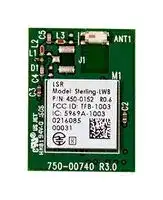
450-0152C
Wireless LAN Module, Bluetooth, 2.5 GHz, UART
⚠️ Reference pricing provided. In case of supply shortages, we will connect you with our trusted procurement partners to ensure your project's continuity.
- Manufacturer: EZURIO
- Product type:
- SVHC: To Be Advised
- Frequency RF: 2.5GHz
- Product Range: Sterling-LWB Series
- Module Interface: UART
- Module Applications: Security & Building Automation, Internet of Things / M2M Connectivity, Smart Gateways
| Delivery and price | |
|---|---|
| Units per pack | 100 |
| Price | 15.88 € |
| Current stock | 10+ |
| Lead time | 30 days |
Datasheet

A

_Version 7.2_

|**Version**<br>7.2<br>~~a~~|23 Sept 2019|**Date**<br>23 Sept 2019<br>~~es~~|**Notes**<br>Transitioned to Laird Connectivity<br>template; updated QDID#|**Contributors**<br>Ferdie Brillantes|**Approver**<br>Jay White|
|---|---|---|---|---|---|


https://www.lairdconnect.com/

**Americas** : +1-800-492-2320 **Europe** : +44-1628-858-940 **Hong Kong** : +852 2923 0610

2 © Copyright 2019 Laird. All Rights Reserved

|1|Scope .................................................................................................................................................................................. 4|
|---|---|
|2|Introduction .......................................................................................................................................................................... 4|
||2.1<br>General Description.................................................................................................................................................... 4|
|3|Module Variants ................................................................................................................................................................... 5|
|4|Functional features .............................................................................................................................................................. 6|
||4.1<br>WLAN Features .......................................................................................................................................................... 6|
||4.2<br>Bluetooth Features ..................................................................................................................................................... 6|
||4.3<br>Wireless Security System Features............................................................................................................................ 6|
|5|Ordering Information ............................................................................................................................................................ 6|
|6|Module Accessories ............................................................................................................................................................ 7|
|7|Applicable documents ......................................................................................................................................................... 8|
|8|Block Diagrams ................................................................................................................................................................... 8|
|9|Base SiP Module Footprint and Pin Definitions ................................................................................................................. 11|
|10|10<br>Base SiP Module Pin Descriptions .................................................................................................................................... 12|
|11|11<br>U.FL and Chip Antenna Module Footprint and Pin Definitions .......................................................................................... 17|
|12|12<br>U.FL and Chip Antenna Module Pin Descriptions .............................................................................................................. 18|
|13|13<br>Module Power States ........................................................................................................................................................ 19|
|14|14<br>U.FL and Chip Antenna Module Pin I/O States ................................................................................................................. 20|
|15|15<br>General Characteristics ..................................................................................................................................................... 22|
||15.2<br>WLAN Power Consumption ...................................................................................................................................... 23|
||15.3<br>Bluetooth Power Consumption ................................................................................................................................. 23|
||15.4<br>Power Supply Requirements .................................................................................................................................... 24|
||15.5<br>Calibration Current Profile ........................................................................................................................................ 24|
|16|16<br>Crystal Oscillator Requirements ........................................................................................................................................ 25|
|17|17<br>Control Signal Timing Diagrams ........................................................................................................................................ 26|
||17.1<br>WLAN RF Characteristics ........................................................................................................................................ 27|
||17.2<br>Bluetooth RF Characteristics .................................................................................................................................... 28|
|18|18<br>WLAN Host Interface ......................................................................................................................................................... 30|
||18.1<br>SDIO Interface ......................................................................................................................................................... 30|
|19|19<br>Bluetooth UART Host Interface ......................................................................................................................................... 31|
||19.1<br>Overview .................................................................................................................................................................. 31|
||19.2<br>Soldering Recommendations ................................................................................................................................... 31|
||19.3<br>Recommended Reflow Profile for Lead Free Solder ................................................................................................ 31|
|20|20<br>Wi-Fi MAC IDs/Bluetooth MAC IDs ................................................................................................................................... 32|
|21|21<br>Cleaning ............................................................................................................................................................................ 32|
|22|22<br>Optical Inspection .............................................................................................................................................................. 32|
|23|23<br>Rework .............................................................................................................................................................................. 32|
|24|24<br>Shipping, Handling, and Storage ....................................................................................................................................... 32|
|25|25<br>Agency Certifications ......................................................................................................................................................... 33|
||25.1<br>Agency Statements .................................................................................................................................................. 33|
||25.2<br>Europe ...................................................................................................................................................................... 37|
||25.3<br>Australia ................................................................................................................................................................... 37|
|26|26<br>Bluetooth SIG Qualification ............................................................................................................................................... 37|
|27|27<br>Additional Assistance ........................................................................................................................................................ 39|
|28|28<br>Mechanical Drawings ........................................................................................................................................................ 40|
||28.1<br>Base SiP Module Mechanical Data .......................................................................................................................... 40|
||28.2<br>Base SiP Module PCB Footprint .............................................................................................................................. 41|
||28.3<br>Base SiP Module Recommended Solder Stencil ..................................................................................................... 42|
||28.4<br>U.FL and Chip Antenna Mechanical Data ................................................................................................................ 43|
||28.5<br>U.FL and Chip Antenna PCB Footprint .................................................................................................................... 44|
|29|29<br>U.FL and Chip Antenna Tape and Reel Packaging ........................................................................................................... 45|
|30|30<br>Base SiP Module Tape and Reel Packaging ..................................................................................................................... 46|
|31|31<br>Device Markings ................................................................................................................................................................ 47|
||31.1<br>SiP Module ............................................................................................................................................................... 47|
||31.2<br>Antenna Option Modules .......................................................................................................................................... 49|
|32|32<br>Additional Assistance ........................................................................................................................................................ 52|


https://www.lairdconnect.com/

**Americas** : +1-800-492-2320 **Europe** : +44-1628-858-940 **Hong Kong** : +852 2923 0610

3

© Copyright 2019 Laird. All Rights Reserved

This document describes key hardware aspects of the Laird Connectivity Sterling-LWB™.

The Sterling-LWB is a high performance 2.4 GHz WLAN and Bluetooth combo module based on latest-generation silicon (Broadcom’s BCM4343W). With an industrial temperature rating, broad country certifications, and the availability of three different package styles, the Sterling-LWB provides significant flexibility to meet various end user application needs.

The on-module chip antenna package style for the Sterling-LWB eliminates complexity for design integration, simplifies manufacturing assembly with larger pin outs, and features an advanced chip antenna that offers greater resistance to de-tuning than typical trace or chip antennas.

The module includes the MAC, baseband, and radio to support WLAN applications and an independent, high-speed UART is provided for the Bluetooth host interface. In addition, the latest Linux and Android drivers are supported directly by Laird Connectivity and Broadcom.

- IEEE 802.11 b/g/n (single stream n)

- Typical WLAN Transmit Power:

      - +17.5 dBm, 11 Mbps, CCK (b)

   -

      - Security and building automation

      - ▪ Internet of Things/M2M connectivity ▪ Smart gateways

   - +14.0 dBm, 54 Mbps, OFDM (g)

   - +12.5 dBm, HT20 MCS7 (n)

- Typical WLAN Sensitivity:

   - -88 dBm, 8% PER,11 Mbps (b)

   - -75 dBm, 10% PER, 54 Mbps (g)

   - -72 dBm, 10% PER, MCS7 (n)

- Bluetooth v4.2 BR /DR/LE

- WLAN and Bluetooth coexistence

- Available in two footprint styles:

   - Easy to integrate: 15.5 mm x 21 mm

   - Miniature footprint: 10 mm x 10 mm

- Available with integrated chip antenna or U.FL connector for external antenna

- Operating voltage: 3.0V to 3.6V

- Operating temperature: -40[o] to +85[o] C

- Storage temperature: -40° to +125°C

- Compact design based on Broadcom BCM4343W SoC

- ▪ Worldwide acceptance: FCC (USA), IC (Canada), ETSI (Europe), Giteki (Japan), and RCM (AU/NZ)

- BT SIG QDID: 100864

- REACH and RoHS compliant

https://www.lairdconnect.com/

**Americas** : +1-800-492-2320 **Europe** : +44-1628-858-940 **Hong Kong** : +852 2923 0610

4 © Copyright 2019 Laird. All Rights Reserved

The LSR Sterling-LWB Module is available in three different versions.  Depending on the user’s antenna and footprint needs, there is a variant to suite most application requirements.  LSR recommends that for simplicity of both the host PCB design, as well as the manufacturing process, that either the Chip Antenna or RF Connector version of the modules be used in your design.

## ▪ **450-0159 - Base SiP module**

This module variant is supplied in a compact, 151 pin, 0.5 mm pitch LGA footprint.  Unlike the other module variants, it requires the addition of either an off-module antenna or RF connector, as well as the associated matching components. In order to benefit from the EMC certifications on the module, strictly following the layout in the module application guide is required.  This requires adherence to the PCB stack-up and layout around the antenna.  The footprint of this module may require additional care during reflow and PCB assembly.

_**Figure 1: Sterling-LWB base SiP module (450-0159)**_

## ▪

## **450-0148 – U.FL module**

This module variant integrates the 450-0159 Base SiP Module, a U.FL RF connector, and all associated RF matching components on a PCB.  This integrated approach not only provides a U.FL connector for connections to external antennas, but also simplifies and reduces the cost of the end users host board by simplifying the module PCB footprint.

_**Figure 2: Sterling-LWB U.FL module (450-0148)**_

https://www.lairdconnect.com/

**Americas** : +1-800-492-2320 **Europe** : +44-1628-858-940 **Hong Kong** : +852 2923 0610

5 © Copyright 2019 Laird. All Rights Reserved

- IEEE 802.11b/g/n 1x1 2.4 GHz Radio

   - Internal Power Amplifier (PA)

   - Internal Low Noise Amplifier(LNA)

   - Internal T/R Switch

   - Simultaneous BT/WLAN reception with a single antenna.

- Media Access Controller (MAC)

- Physical Layer (PHY)

- Baseband Processor

- Standards

   - IEEE 802.11b, 802.11g, 802.11n (single stream)

- Class 2 power amplifier with Class 2 capability

- HCI Interface using High Speed UART

- PCM for Audio Data

- Bluetooth v4.2 BR/DR/LE

▪ Supported modes: – Open (no security) – WMM-SA – WEP – WAPI – WPA Personal – AES (Hardware Accelerator) – WPA2 Personal – TKIP (host-computed) – WMM – CKIP (SW Support) – WMM-PS (U-APSD)

_**- Table 1: Orderable Sterling LWB part numbers**_

|**Order Number**|**Description**|
|---|---|
|450-0148C|Sterling-LWB U.FL module (Cut Tape)|
|450-0148R|Sterling-LWB U.FL module (Tape and Reel, SPQ=1000)|
|450-0152C|Sterling-LWB chip antenna module (Cut Tape)|
|450-0152R|Sterling-LWB chip antenna module (Tape and Reel, SPQ=1000)|
|450-0159C|Sterling-LWBbase SiP module (CutTape)|
|450-0159R|Sterling-LWB base SiP module (Tape and Reel, SPQ=1000)|
|450-0155|Sterling-LWBSDdevelopment board, U.FL|
|450-0156|Sterling-LWB SD development board, chip antenna|
|450-0173|Sterling-LWBdevelopment board,WICED|


https://www.lairdconnect.com/

**Americas** : +1-800-492-2320 **Europe** : +44-1628-858-940 **Hong Kong** : +852 2923 0610

6 © Copyright 2019 Laird. All Rights Reserved

_**Table 2: Module accessories**_

|**Order Number**||**Description**|
|---|---|---|
|001-0001||2.4 GHz dipole antenna<br>with reverse polarity SMA connector|
|080-0001||U.FL to reverse polarity SMA bulkhead<br>cable 105 mm|
|**001-0014**||2.4 GHz FlexPIFA antenna|
|**001-0015**||2.4 GHz FlexNotch antenna|
|001-0030||2.4 GHz Metal FlexPIFA antenna<br>with U.FL cable, 100 mm|
|7||**Americas**: +1-800-492-2320|
|© Copyright 2019 Laird. All Rights Reserved|© Copyright 2019 Laird. All Rights Reserved|© Copyright 2019 Laird. All Rights Reserved<br>**Europe**: +44-1628-858-940|


https://www.lairdconnect.com/

**Americas** : +1-800-492-2320 **Europe** : +44-1628-858-940 **Hong Kong** : +852 2923 0610

- Sterling-LWB Module User Guide (330-0192)

- Sterling-LWB SD Card User Guide (330-0245)

- Sterling-LWB i.MX6 UltraLite Eval Kit Linux Integration User Guide (330-0201)

- ▪ Sterling-LWB WICED Board User Guide (330-0234)

_**Figure 3: Sterling-LWB base SiP module block diagram**_

https://www.lairdconnect.com/

**Americas** : +1-800-492-2320 **Europe** : +44-1628-858-940 **Hong Kong** : +852 2923 0610

8 © Copyright 2019 Laird. All Rights Reserved

_**Figure 4: Sterling-LWB U.FL module block diagram**_

https://www.lairdconnect.com/

**Americas** : +1-800-492-2320 **Europe** : +44-1628-858-940 **Hong Kong** : +852 2923 0610

9 © Copyright 2019 Laird. All Rights Reserved

_**Figure 5: Sterling-LWB chip antenna module block diagram**_

https://www.lairdconnect.com/

**Americas** : +1-800-492-2320 **Europe** : +44-1628-858-940 **Hong Kong** : +852 2923 0610

10 © Copyright 2019 Laird. All Rights Reserved

Note that the following footprint and pin definition applies to the Sterling-LWB Base SiP Module (450-0159).  There are two module footprints depending on which variant of the module is being used, so it is important to make certain you are using the correct version on your design.

_**Figure 6: Sterling-LWB base SiP module pinout (top view)**_

https://www.lairdconnect.com/

**Americas** : +1-800-492-2320 **Europe** : +44-1628-858-940 **Hong Kong** : +852 2923 0610

11 © Copyright 2019 Laird. All Rights Reserved

## 10 BASE SIP MODULE PIN DESCRIPTIONS

_**- Table 3: Sterling LWB module pin descriptions**_

|**Module**<br>**Pin**|**Name**|**I/O Type**|**Description**|
|---|---|---|---|
|1|ANT|RF|RF TRANSMITTER OUTPUT AND RECEIVE INPUT|
|2|GND|GND|GROUND|
|3|VDD_3V3_WIFI_PA|PI|WI-FI PA POWER SUPPLY|
|4|VDD_3V3_WIFI_PA|PI|WIFI PA POWER SUPPLY|
|5|GND|GND|GROUND|
|6|NC|-|NO CONNECT (DO NOT CONNECT)|
|7|GND|GND|GROUND|
|8|NC|-|NO CONNECT (DO NOT CONNECT)|
|9|NC|-|NO CONNECT (DO NOT CONNECT)|
|10|GND|GND|GROUND|
|11|NC|-|NO CONNECT (DO NOT CONNECT)|
|12|NC|-|NO CONNECT (DO NOT CONNECT)|
|13|NC|-|NO CONNECT (DO NOT CONNECT)|
|14|NC|-|NO CONNECT (DO NOT CONNECT)|
|15|GND|GND|GROUND|
|16|NC|-|NO CONNECT (DO NOT CONNECT)|
|17|NC|-|NO CONNECT (DO NOT CONNECT)|
|18|GND|GND|GROUND|
|19|CLK_REQ|DO|EXTERNAL SYSTEM CLOCK REQUEST – USED WHEN THE SYSTEM<br>CLOCK IS NOT PROVIDED BY A DEDICATED CRYSTAL|
|20|BT_GPIO_3|DIO|WPT_INTb TO WIRELESS CHARGING PMU|
|21|NC|-|NO CONNECT (DO NOT CONNECT)|
|22|NC|-|NO CONNECT (DO NOT CONNECT)|
|23|GND|GND|GROUND|
|24|NC|-|NO CONNECT (DO NOT CONNECT)|
|25|GND|GND|GROUND|
|26|32K_PWM_IN|DI|EXTERNAL SLEEP CLOCK INPUT|
|27|GND|GND|GROUND|
|28|VDD3V3_WiFi_IO|PI|DC SUPPY FOR WIFI AND I/O|
|29|GND|GND|GROUND|
|30|NC|-|NO CONNECT (DO NOT CONNECT)|
|31|NC|-|NO CONNECT (DO NOT CONNECT)|
|32|NC|-|NO CONNECT (DO NOT CONNECT)|
|33|NC|-|NO CONNECT (DO NOT CONNECT)|
|34|GND|GND|GROUND|


https://www.lairdconnect.com/

**Americas** : +1-800-492-2320 **Europe** : +44-1628-858-940 **Hong Kong** : +852 2923 0610

12 © Copyright 2019 Laird. All Rights Reserved

|**Module**<br>**Pin**|**Name**|**I/O Type**|**Description**|
|---|---|---|---|
|35|NC|-|NO CONNECT (DO NOT CONNECT)|
|36|GND|GND|GROUND|
|37|NC|-|NO CONNECT (DO NOT CONNECT)|
|38|NC|-|NO CONNECT (DO NOT CONNECT)|
|39|GND|GND|GROUND|
|40|SDIO_D3|DIO|SDIO DATA LINE 3|
|41|GND|GND|GROUND|
|42|VDD3V3_WIFI|PI|WIFI POWER SUPPLY|
|43|VDD3V3_WIFI|PI|WIFI POWER SUPPLY|
|44|GND|GND|GROUND|
|45|NC|-|NO CONNECT (DO NOT CONNECT)|
|46|NC|-|NO CONNECT (DO NOT CONNECT)|
|47|GND|GND|GROUND|
|48|NC|-|NO CONNECT (DO NOT CONNECT)|
|49|GND|GND|GROUND|
|50|NC|-|NO CONNECT (DO NOT CONNECT)|
|51|GND|GND|GROUND|
|52|NC|-|NO CONNECT (DO NOT CONNECT)|
|53|NC|-|NO CONNECT (DO NOT CONNECT)|
|54|GND|GND|GROUND|
|55|BT_PCM_CLK|DIO|PCM CLOCK; CAN BE MASTER (OUTPUT) OR SLAVE (INPUT)|
|56|BT_DEV_WAKE|DIO|DEV_WAKE OR GENERAL-PURPOSE I/O SIGNAL|
|57|BT_HOST_WAKE|DO|HOST_WAKE OR GENERAL-PURPOSE I/O SIGNAL|
|58|GND|GND|GROUND|
|59|NC|-|NO CONNECT (DO NOT CONNECT)|
|60|GND|GND|GROUND|
|61|GND|GND|GROUND|
|62|NC|-|NO CONNECT (DO NOT CONNECT)|
|63|NC|-|NO CONNECT (DO NOT CONNECT)|
|64|GND|GND|GROUND|
|65|NC|-|NO CONNECT (DO NOT CONNECT)|
|66|GND|GND|GROUND|
|67|NC|-|NO CONNECT (DO NOT CONNECT)|
|68|NC|-|NO CONNECT (DO NOT CONNECT)|
|69|NC|-|NO CONNECT (DO NOT CONNECT)|
|70|GND|GND|GROUND|


https://www.lairdconnect.com/

**Americas** : +1-800-492-2320 **Europe** : +44-1628-858-940 **Hong Kong** : +852 2923 0610

13

© Copyright 2019 Laird. All Rights Reserved

|**Module**<br>**Pin**|**Name**|**I/O Type**|**Description**|
|---|---|---|---|
|71|GND|GND|GROUND|
|72|GND|GND|GROUND|
|73|GND|GND|GROUND|
|74|NC|-|NO CONNECT (DO NOT CONNECT)|
|75|NC|-|NO CONNECT (DO NOT CONNECT)|
|76|NC|-|NO CONNECT (DO NOT CONNECT)|
|77|GND|GND|GROUND|
|78|NC|-|NO CONNECT (DO NOT CONNECT)|
|79|NC|-|NO CONNECT (DO NOT CONNECT)|
|80|NC|-|NO CONNECT (DO NOT CONNECT)|
|81|NC|-|NO CONNECT (DO NOT CONNECT)|
|82|NC|-|NO CONNECT (DO NOT CONNECT)|
|83|NC|-|NO CONNECT (DO NOT CONNECT)|
|84|NC|-|NO CONNECT (DO NOT CONNECT)|
|85|NC|-|NO CONNECT (DO NOT CONNECT)|
|86|NC|-|NO CONNECT (DO NOT CONNECT)|
|87|NC|-|NO CONNECT (DO NOT CONNECT)|
|88|WL_REG_ON|DI|USED BY PMU TO POWER UP OR POWER DOWN THE INTERNAL<br>REGULATORS USED BY THE WLAN SECTION|
|89|WIFI_GPIO_1|DIO|PROGRAMMABLE GPIO PIN|
|90|NC|-|NO CONNECT (DO NOT CONNECT)|
|91|GND|GND|GROUND|
|92|NC|-|NO CONNECT (DO NOT CONNECT)|
|93|NC|-|NO CONNECT (DO NOT CONNECT)|
|94|GND|GND|GROUND|
|95|SDIO_D0|DIO|SDIO DATA LINE 0|
|96|SDIO_D1|DIO|SDIO DATA LINE 1|
|97|SDIO_D2|DIO|SDIO DATA LINE 2|
|98|SDIO_CMD|DIO|SDIO COMMAND LINE|
|99|GND|GND|GROUND|
|100|SDIO_CLK|DI|SDIO CLOCK INPUT|
|101|GND|GND|GROUND|
|102|NC|-|NO CONNECT (DO NOT CONNECT)|
|103|NC|-|NO CONNECT (DO NOT CONNECT)|
|104|NC|-|NO CONNECT (DO NOT CONNECT)|
|105|BT_I2S_CLK|DIO|I2S CLOCK; CAN BE MASTER (OUTPUT) OR SLAVE (INPUT)|
|106|NC|-|NO CONNECT (DO NOT CONNECT)|


https://www.lairdconnect.com/

**Americas** : +1-800-492-2320 **Europe** : +44-1628-858-940 **Hong Kong** : +852 2923 0610

14

© Copyright 2019 Laird. All Rights Reserved

|**Module**<br>**Pin**|**Name**|**I/O Type**|**Description**|
|---|---|---|---|
|107|NC|-|NO CONNECT (DO NOT CONNECT)|
|108|NC|-|NO CONNECT (DO NOT CONNECT)|
|109|BT_I2S_WS|DIO|I2S_WS; CAN BE MASTER (OUTPUT) OR SLAVE (INPUT)|
|110|BT_I2S_D0|DIO|I2S DATA OUTPUT|
|111|NC|-|NO CONNECT (DO NOT CONNECT)|
|112|GND|GND|GROUND|
|113|GND|GND|GROUND|
|114|GND|GND|GROUND|
|115|GND|GND|GROUND|
|116|GND|GND|GROUND|
|117|NC|-|NO CONNECT (DO NOT CONNECT)|
|118|NC|-|NO CONNECT (DO NOT CONNECT)|
|119|NC|-|NO CONNECT (DO NOT CONNECT)|
|120|GND|GND|GROUND|
|121|NC|-|NO CONNECT (DO NOT CONNECT)|
|122|NC|-|NO CONNECT (DO NOT CONNECT)|
|123|GND|GND|GROUND|
|124|WIFI_GPIO_4|DIO|PROGRAMMABLE GPIO PIN|
|125|NC|-|NO CONNECT (DO NOT CONNECT)|
|126|WIFI_GPIO_2|DIO|PROGRAMMABLE GPIO PIN|
|127|WIFI_GPIO_3|DIO|PROGRAMMABLE GPIO PIN|
|128|NC|-|NO CONNECT (DO NOT CONNECT)|
|129|BT_GPIO_4|DIO|BSC_SDA TO/FROM WIRELESS CHARGING PMU.|
|130|BT_GPIO_5|DIO|BSC_SCL FROM WIRELESS CHARGING PMU.|
|131|WIFI_GPIO_0|DIO|PROGRAMMABLE GPIO PIN.  THIS PIN BECOMES AN OUTPUT PIN<br>WHEN IT IS USED AS WLAN_HOST_WAKE/ OUT-OF-BAND SIGNAL.|
|132|GND|GND|GROUND|
|133|NC|-|NO CONNECT (DO NOT CONNECT)|
|134|GND|GND|GROUND|
|135|GND|GND|GROUND|
|136|BT_REG_ON|DI|USED BY PMU TO POWER UP OR POWER DOWN THE INTERNAL<br>REGULATORS USED BY THE BLUETOOTH SECTION|
|137|NC|-|NO CONNECT (DO NOT CONNECT)|
|138|BT_UART_RTS_L|DO|UART REQUEST-TO-SEND|
|139|BT_UART_CTS_L|DI|UART CLEAR-TO-SEND|
|140|BT_UART_TXD|DO|UART TRANSMIT OUTPUT|
|141|BT_UART_RXD|DI|UART RECEIVE INPUT|


https://www.lairdconnect.com/

**Americas** : +1-800-492-2320 **Europe** : +44-1628-858-940 **Hong Kong** : +852 2923 0610

15

© Copyright 2019 Laird. All Rights Reserved

|**Module**<br>**Pin**|**Name**|**I/O Type**|**Description**|
|---|---|---|---|
|142|NC|-|NO CONNECT (DO NOT CONNECT)|
|143|NC|-|NO CONNECT (DO NOT CONNECT)|
|144|BT_PCM_SYNC|DIO|PCM SYNC; CAN BE MASTER (OUTPUT) OR SLAVE (INPUT)|
|145|BT_PCM_OUT|DO|PCM DATA OUTPUT|
|146|BT_PCM_IN|DI|PCM DATA INPUT SENSING|
|147|NC|-|NO CONNECT (DO NOT CONNECT)|
|148|GND|GND|GROUND|
|149|GND|GND|GROUND|
|150|NC|-|NO CONNECT (DO NOT CONNECT)|
|151|GND|GND|GROUND|


**PI = Power Input, DI = Digital Input, DO = Digital Output, DIO = Bi-directional Digital Port, RF = Bi-directional RF Port, GND = Ground**

https://www.lairdconnect.com/

**Americas** : +1-800-492-2320 **Europe** : +44-1628-858-940 **Hong Kong** : +852 2923 0610

16 © Copyright 2019 Laird. All Rights Reserved

Note that the following footprint and pin definitions apply to the Sterling-LWB U.FL and Chip Antenna variants of the module (450-0148 and 450-0152).  There are two module footprints depending on which variant of the module is being used, so it is important to make certain you are using the correct version on your design.

_**Figure 7: Sterling-LWB U.FL and chip antenna module pinout (top view)**_

https://www.lairdconnect.com/

**Americas** : +1-800-492-2320 **Europe** : +44-1628-858-940 **Hong Kong** : +852 2923 0610

17 © Copyright 2019 Laird. All Rights Reserved

_**- Table 4: Sterling LWB U.FL and chip antenna module pin descriptions**_

|**Module**<br>**Pin**|**Name**|**I/O Type**|**Description**|
|---|---|---|---|
|1|GND|GND|GROUND|
|2|BT_PCM_SYNC|DIO|PCM SYNC; CAN BE MASTER (OUTPUT) OR SLAVE (INPUT)|
|3|BT_PCM_IN|DI|PCM DATA INPUT SENSING|
|4|BT_PCM_OUT|DO|PCM DATA OUTPUT|
|5|VDD_3V3|PI|WIFI AND BLUETOOTH POWER SUPPLY|
|6|GND|GND|GROUND|
|7|WIFI_GPIO_4|DIO|PROGRAMMABLE GPIO PIN|
|8|WIFI_GPIO_3|DIO|PROGRAMMABLE GPIO PIN|
|9|WIFI_GPIO_2|DIO|PROGRAMMABLE GPIO PIN|
|10|WIFI_GPIO_1|DIO|PROGRAMMABLE GPIO PIN|
|11|WIFI_GPIO_0|DIO|PROGRAMMABLE GPIO PIN.  THIS PIN BECOMES AN OUTPUT WHEN IT IS<br>USED AS WLAN_HOST_WAKE/ OUT-OF-BAND SIGNAL.|
|12|WL_REG_ON|DI|USED BY PMU TO POWER UP OR POWER DOWN THE INTERNAL<br>REGULATORS USED BY THE WLAN SECTION.|
|13|CLK_REQ|DO|EXTERNAL SYSTEM CLOCK REQUEST – USED WHEN THE<br>SYSTEM CLOCK IS NOT PROVIDED BY A DEDICATED CRYSTAL|
|14|GND|GND|GROUND|
|15|BT_GPIO_3|DIO|PROGRAMMABLE GPIO PIN|
|16|BT_GPIO_4|DIO|PROGRAMMABLE GPIO PIN|
|17|BT_GPIO_5|DIO|PROGRAMMABLE GPIO PIN|
|18|GND|GND|GROUND|
|19|32KHZ_OSC_IN|DI|EXTERNAL SLEEP CLOCK INPUT|
|20|VDD_VIO|PI|DC SUPPLY FOR I/O|
|21|BT_REG_ON|DI|USED BY PMU TO POWER UP OR POWER DOWN THE INTERNAL<br>REGULATORS USED BY THE BLUETOOTH SECTION.|
|22|SDIO_D0|DIO|SDIO DATA LINE 0|
|23|SDIO_D1|DIO|SDIO DATA LINE 1|
|24|GND|GND|GROUND|
|25|SDIO_D2|DIO|SDIO DATA LINE 2|
|26|SDIO_CMD|DIO|SDIO COMMAND LINE|
|27|SDIO_D3|DIO|SDIO DATA LINE 3|
|28|GND|GND|GROUND|
|29|SDIO_CLK|DIO|SDIO CLOCK LINE|
|30|GND|GND|GROUND|


https://www.lairdconnect.com/

**Americas** : +1-800-492-2320 **Europe** : +44-1628-858-940 **Hong Kong** : +852 2923 0610

18

© Copyright 2019 Laird. All Rights Reserved

|**Module**<br>**Pin**|**Name**|**I/O Type**|**Description**|
|---|---|---|---|
|31|BT_UART_RTS_L|DO|BT UART REQUEST-TO-SEND|
|32|BT_UART_CTS_L|DI|BT UART CLEAR-TO-SEND|
|33|BT_UART_TXD|DO|BT UART TRANSMIT OUTPUT|
|34|BT_UART_RXD|DI|BT UART RECEIVE INPUT|
|35|BT_I2S_CLK|DIO|I2S CLOCK; CAN BE MASTER (OUTPUT) OR SLAVE (INPUT)|
|36|BT_I2S_D0|DO|I2S DATA OUTPUT|
|37|BT_I2S_WS|DIO|I2S_WS; CAN BE MASTER (OUTPUT) OR SLAVE (INPUT)|
|38|BT_PCM_CLK|DIO|PCM CLOCK; CAN BE MASTER (OUTPUT) OR SLAVE (INPUT)|
|39|BT_DEV_WAKE|DIO|DEV_WAKE OR GENERAL-PURPOSE I/O SIGNAL|
|40|BT_HOST_WAKE|DO|HOST_WAKE OR GENERAL-PURPOSE I/O SIGNAL|
|41|GND|GND|GROUND|
|42|GND|GND|GROUND|
|43|GND|GND|GROUND|
|44|GND|GND|GROUND|
|45|GND|GND|GROUND|
|46|GND|GND|GROUND|
|47|GND|GND|GROUND|


**PI = Power Input, DI = Digital Input, DO = Digital Output, DIO = Bi-directional Digital Port, GND = Ground**

The Sterling-LWB WLAN power states are described as follows:

- **Active mode** – All WLAN blocks in the Sterling-LWB are powered up and fully functional with active carrier sensing and frame transmission and receiving. All required regulators are enabled and put in the most efficient mode based on the load current. Clock speeds are dynamically adjusted by the PMU sequencer.

- **Doze mode** – The radio, analog domains, and most of the linear regulators are powered down. The rest of the BCM4343W remains powered up in an IDLE state. All main clocks (PLL, crystal oscillator) are shut down to reduce active power to the minimum. The 32.768 kHz LPO clock is available only for the PMU sequencer. This condition is necessary to allow the PMU sequencer to wake up the chip and transition to Active mode. In Doze mode, the primary power consumed is due to leakage current.

- **Deep-sleep mode** – Most of the chip, including analog and digital domains, and most of the regulators are powered off. Logic states in the digital core are saved and preserved to retention memory in the always-on domain before the digital core is powered off. To avoid lengthy hardware re-initialization, the logic states in the digital core are restored to their pre-deep-sleep settings when a wake-up event is triggered by an external interrupt, a host resume through the SDIO bus, or by the PMU timers.

- **Power-down mode** – The BCM4343W is effectively powered off by shutting down all internal regulators. The chip is brought out of this mode by external logic re-enabling the internal regulators

https://www.lairdconnect.com/

**Americas** : +1-800-492-2320 **Europe** : +44-1628-858-940 **Hong Kong** : +852 2923 0610

19 © Copyright 2019 Laird. All Rights Reserved

## 14 U.FL AND CHIP ANTENNA MODULE PIN I/O STATES

||||||**Power**|**Out of Reset:****_(VDD_VIO is present)_**|**Out of Reset:****_(VDD_VIO is present)_**|**Out of Reset:****_(VDD_VIO is present)_**|**Out of Reset:****_(VDD_VIO is present)_**|**Out of Reset:****_(VDD_VIO is present)_**|
|---|---|---|---|---|---|---|---|---|---|---|
|**Pin**<br>**#**|**Name**|**Keeper**<br>**(b)**|**Active**<br>**Mode**|**Low Power**<br>**State/Sleep**<br>**_(All Power_**<br>**_Present)_**|**Down(c)**<br>**_WL_REG__**<br>**_ON =0_**<br>**_BT_REG_O_**<br>**_N = 0_**|**_WL_REG_ON_**<br>**_=1_**<br>**_BT_REG_ON_**<br>**_= any_**||**_WL_REG__**<br>**_ON =1_**<br>**_BT_REG__**<br>**_ON = 0_**||**_WL_REG_O_**<br>**_N =0_**<br>**_BT_REG_O_**<br>**_N = 1_**|
|2|BT_PCM_S<br>YNC|Y|Input No<br>Pull (d)|Input No Pull<br>(d)|High –Z No<br>Pull|-||Input,PD||Input,PD|
|3|BT_PCM_I<br>N|Y|Input No<br>Pull (d)|Input No Pull<br>(d)|High –Z No<br>Pull|-||Input,PD||Input,PD|
|4|BT_PCM_<br>OUT|Y|Input No<br>Pull (d)|Input No Pull<br>(d)|High –Z No<br>Pull|-||Input,PD||Input,PD|
|7|WIFI_GPIO<br>_4|Y|TBD|Active Mode|High –Z No<br>Pull (f)|Input,GCI<br>GPIO[1] PU||Active<br>Mode||Input,PU|
|8|WIFI_GPIO<br>_3|Y|TBD|Active Mode|High –Z No<br>Pull (f)|Input,GCI<br>GPIO[0] PU||Active<br>Mode||Input,PU|
|9|WIFI_GPIO<br>_2|Y|TBD|Active Mode|High –Z No<br>Pull (f)|Input,GCI<br>GPIO[7]<br>NoPull||Active<br>Mode||Input, Strap,<br>NoPull|
|10|WIFI_GPIO<br>_1|Y|TBD|Active Mode|High –Z No<br>Pull (f)|Input,PD||Active<br>Mode||Input, Strap,<br>PD|
|11|WIFI_GPIO<br>_0|Y|TBD|Active Mode|High –Z No<br>Pull (f)|Input,SDIO<br>OOB Int.<br>NoPull||Active<br>Mode||Input,NoPull|
|12|WL_REG_<br>ON|N|Input; PD<br>(pull-<br>down<br>can be<br>disabled)|Input; PD<br>(pull-down<br>can be<br>disabled)|Input; PD<br>(of 200K)|Input; PD<br>(200K)||Input; PD<br>(200K)||-|
|13|CLK_REQ|Y|Open<br>drain or<br>push-pull<br>(Active<br>high)|Open drain<br>or push-pull<br>(Active high)|PD|Open drain,<br>(Active high)||Open<br>drain,<br>(Active<br>high)||Open drain,<br>(Active high)|
|21|BT_REG_<br>ON|N|Input; PD<br>(pull-<br>down<br>can be<br>disabled)|Input; PD<br>(pull-down<br>can be<br>disabled)|Input; PD<br>(of 200K)|Input; PD<br>(200K)||Input; PD<br>(200K)||Input; PD<br>(200K)|
|22|SDIO_D0|N|SDIO<br>MODE ><br>No Pull|SDIO MODE<br>> No Pull|SDIO<br>MODE > No<br>Pull|SDIO MODE -<br>> Pull UP||SDIO<br>MODE ><br>No Pull||Input,PU|
|23|SDIO_D1|N|SDIO<br>MODE ><br>No Pull|SDIO MODE<br>> No Pull|SDIO<br>MODE > No<br>Pull|SDIO MODE -<br>> Pull UP||SDIO<br>MODE ><br>No Pull||Input,PU|
|25|SDIO_D2|N|SDIO<br>MODE ><br>No Pull|SDIO MODE<br>> No Pull|SDIO<br>MODE > No<br>Pull|SDIO MODE -<br>> Pull UP||SDIO<br>MODE ><br>No Pull||Input,PU|


https://www.lairdconnect.com/

**Americas** : +1-800-492-2320 **Europe** : +44-1628-858-940 **Hong Kong** : +852 2923 0610

20

© Copyright 2019 Laird. All Rights Reserved

||||||**Power**|**Out of Reset:****_(VDD_VIO is present)_**|**Out of Reset:****_(VDD_VIO is present)_**|**Out of Reset:****_(VDD_VIO is present)_**|**Out of Reset:****_(VDD_VIO is present)_**|**Out of Reset:****_(VDD_VIO is present)_**|
|---|---|---|---|---|---|---|---|---|---|---|
|**Pin**<br>**#**|**Name**|**Keeper**<br>**(b)**|**Active**<br>**Mode**|**Low Power**<br>**State/Sleep**<br>**_(All Power_**<br>**_Present)_**|**Down(c)**<br>**_WL_REG__**<br>**_ON =0_**<br>**_BT_REG_O_**<br>**_N = 0_**|**_WL_REG_ON_**<br>**_=1_**<br>**_BT_REG_ON_**<br>**_= any_**||**_WL_REG__**<br>**_ON =1_**<br>**_BT_REG__**<br>**_ON = 0_**||**_WL_REG_O_**<br>**_N =0_**<br>**_BT_REG_O_**<br>**_N = 1_**|
|26|SDIO_CMD|N|SDIO<br>MODE -><br>No Pull|SDIO MODE<br>-> No Pull|SDIO<br>MODE -><br>No Pull|SDIO MODE -<br>>Pull UP||SDIO<br>MODE -><br>No Pull||Input,PU|
|27|SDIO_D3|N|SDIO<br>MODE ><br>No Pull|SDIO MODE<br>> No Pull|SDIO<br>MODE > No<br>Pull|SDIO MODE -<br>> Pull UP||SDIO<br>MODE ><br>No Pull||Input,PU|
|29|SDIO_CLK|N|SDIO<br>MODE ><br>No Pull|SDIO MODE<br>> No Pull|SDIO<br>MODE > No<br>Pull|SDIO MODE -<br>> No Pull||SDIO<br>MODE ><br>No Pull||Input|
|31|BT_UART_<br>RTS_L|Y|Output:<br>No Pull|Output:<br>No Pull|High-Z, No<br>Pull|-||Input:PU||Output:NoPu<br>ll|
|32|BT_UART_<br>CTS_L|Y|Input:<br>NoPull|Input:No Pull|High-<br>Z,NoPull|-||Input:PU||Input:NoPull|
|33|BT_UART_<br>TXD|Y|Output:<br>No Pull|Output:No<br>Pull|High-<br>Z,NoPull|-||Input:PU||Output:NoPu<br>ll|
|34|BT_UART_<br>RXD|Y|Input:PU|Input:No Pull|High-<br>Z,NoPull|-||Input:PU||Input:NoPull|
|35|BT_I2S_CL<br>K|Y|Input:<br>No Pull<br>(e)|Input:<br>No Pull (e)|High-Z,<br>No Pull|-||Input,PD||Output: Drive<br>Low|
|36|BT_I2S_D0|Y|Input:<br>No Pull<br>(e)|Input:<br>No Pull (e)|High-Z,<br>No Pull|-||Input,PD||Input,PD|
|37|BT_I2S_W<br>S|Y|Input: No<br>Pull (e)|Input:<br>No Pull (e)|High-Z,<br>No Pull|-||Input,PD||Input,PD|
|38|BT_PCM_<br>CLK|Y|Input No<br>Pull(d)|Input No<br>Pull(d)|High –Z<br>NoPull|-||Input,PD||Input,PD|
|39|BT_DEV_<br>WAKE|Y|I/O:<br>PU,PD,<br>No Pull<br>(Program<br>mable)|I/O: PU,PD,<br>No Pull<br>(Programma<br>ble)|High-Z,<br>No Pull|-||Input,PD||Input,PD|
|40|BT_HOST_<br>WAKE|Y|I/O:<br>PU,PD,<br>No Pull<br>(Program<br>mable)|I/O: PU,PD,<br>No Pull<br>(Programma<br>ble)|High-Z,<br>No Pull|-||Input,PD||Output, Drive<br>Low|


The following notations are used:

- I: Input signal

- O: Output signal

- I/O: Input/Output signal

- PU = Pulled up

- PD = Pulled down

- No Pull = Neither pulled up nor pulled down

https://www.lairdconnect.com/

**Americas** : +1-800-492-2320 **Europe** : +44-1628-858-940 **Hong Kong** : +852 2923 0610

21

© Copyright 2019 Laird. All Rights Reserved

## **Notes:**

- a. PU = pulled up, PD = pulled down.

- b. N = pad has no keeper. Y = pad has a keeper. Keeper is always active except in the power-down state. If there is no keeper, and it is an input and there is NoPull, then the pad should be driven to prevent leakage due to floating pad, for example, SDIO_CLK.

- c. In the Power-down state (xx_REG_ON = 0): High-Z; NoPull => The pad is disabled because power is not supplied.

- d. Depending on whether the PCM interface is enabled and the configuration is master or slave mode, it can be either an output or input.

- e. Depending on whether the I2S interface is enabled, and configuration is master or slave mode, it can be either an input or output.

- f. The GPIO pull states for the active and low-power states are hardware defaults. They can all be subsequently programmed as a pull-up or pull-down.

- g. Strap state enables Serial Wire Debugging.

_**Table 5: General characteristics**_

**==> picture [323 x 132] intentionally omitted <==**

**----- Start of picture text -----**<br>
|||
|---|---|
|Characteristic|Description|
|Model Name|Sterling-LWB|
|Product Description|Wi-Fi and Bluetooth Wireless Module|
|Dimension (SiP Module)|10 mm x 10 mm x 1.2 mm (W*L*T)|
|Dimension (Antenna Option Module)|15.5 mm x 21 mm x 2 mm (W*L*T)|
|Operating temperature|-40°C to 85°C|
|Storage temperature|-40°C to 125°C|
|Weight|0.9 g ± 0.1g|

**----- End of picture text -----**<br>


## 15.1.2 DC Characteristics - General Purpose I/O

_**Table 6: DC characteristics general purpose I/O**_

**==> picture [486 x 147] intentionally omitted <==**

**----- Start of picture text -----**<br>
|||||||
|---|---|---|---|---|---|
|Parameter|Test Conditions|Min|Typical|Max|Unit|
|Logic input low, VIL|VDD_VIO = 1.8V|-|-|0.35x VDD_VIO|V|
|Logic input high, VIH|VDD_VIO = 1.8V|0.65x VDD_VIO|-|-|V|
|Logic output low, VOL|VDD_VIO = 1.8V 2mA|-|-|0.45|V|
|Logic output high, VOH|VDD_VIO = 1.8V 2mA|VDD_VIO-0.45|-|-|V|
|Logic input low, VIL|VDD_VIO = 3.3V|--|-|0.80|V|
|Logic input high, VIH|VDD_VIO = 3.3V|2.00|-|-|V|
|Logic output low, VOL|VDD_VIO = 3.3 2mA|-|-|0.40|V|
|Logic output high, VOH|VDD_VIO = 3.3 2mA|VDD_VIO-0.40|-|-|V|

**----- End of picture text -----**<br>


https://www.lairdconnect.com/

**Americas** : +1-800-492-2320 **Europe** : +44-1628-858-940 **Hong Kong** : +852 2923 0610

22

© Copyright 2019 Laird. All Rights Reserved

## 15.1.3 DC Characteristics - SDO Interface Pins

|**Parameter**|**Test Conditions**|**Min**|**Typical**|**Max**|**Unit**|
|---|---|---|---|---|---|
|Logic input low, VIL|VDD_VIO = 1.8V|-|-|0.58|V|
|Logic input high, VIH|VDD_VIO = 1.8V|1.27|-|-|V|
|Logic output low, VOL|VDD_VIO = 1.8V 2mA|-|-|0.45|V|
|Logic output high, VOH|VDD_VIO = 1.8V 2mA|1.4|-|-|V|
|Logic input low, VIL|VDD_VIO = 3.3V|0.625x VDD_VIO|-|-|V|
|Logic input high, VIH|VDD_VIO = 3.3V|-|-|0.25x VDD_VIO|V|
|Logic output low, VOL|VDD_VIO = 3.3 @ 2mA|-|-|0.125x VDD_VIO|V|
|Logic output high, VOH|VDD_VIO = 3.3 @ 2mA|0.75x VDD_VIO|-|-|V|


## 15.1.4 RF Characteristics

_**Table 7: RF characteristics**_

|**_Table 7: RF characteristics_**|||||
|---|---|---|---|---|
|**Parameter**|**Min**|**Typical**|**Max**|**Unit**|
|RF frequency range|2400||2500|MHz|
|RF data rate|1|802.11 b/g/n rates supported|65|Mbps|


## _**Table 8: WLAN Power Consumption**_

|**Parameter**|**Test Conditions**|**Min**|**Typical**|**Max**|**Unit**|
|---|---|---|---|---|---|
|Power Down Mode|Tamb= +25°C, VDD3V3 = VDD_VIO = 3.3V|-|4|-|uA|
|Sleep (idle, unassociated)|Tamb= +25°C, VDD3V3 = VDD_VIO = 3.3V|-|80|-|uA|
|IEEE Power Save DTIM 1|Tamb= +25°C, VDD3V3 = VDD_VIO = 3.3V|-|2|-|mA|
|11b TX Current|11 Mbps, Tamb= +25°C, 3.3V|-|290|-|mA|
|11g TX Current|6 Mbps, Tamb= +25°C, 3.3V|-|245|-|mA|
|11g TX Current|54 Mbps, Tamb= +25°C, 3.3V|-|215|-|mA|
|11n TX Current|MCS0, Tamb= +25°C, 3.3V|-|230|-|mA|
|11n TX Current|MCS7, Tamb= +25°C, 3.3V|-|200|-|mA|
|11b RX Current|11 Mbps, Tamb= +25°C, 3.3V|-|35|-|mA|
|11g RX Current|54 Mbps, Tamb= +25°C, 3.3V|-|35|-|mA|
|11n RX Current|MCS7, Tamb= +25°C, 3.3V|-|35|-|mA|


## _**Table 9: WLAN Power Consumption**_

|**Parameter**|**Test Conditions**|**Min**|**Typical**|**Max**|**Unit**|
|---|---|---|---|---|---|
|Power Down Mode|Tamb= +25°C, VDD3V3 = VDD_VIO = 3.3V|-|4|-|uA|
|GFSK TX Current|Constant Transmit, DH5, PRBS9 Tamb= +25°C, 3.3V|-|50|-|mA|


https://www.lairdconnect.com/

**Americas** : +1-800-492-2320 **Europe** : +44-1628-858-940 **Hong Kong** : +852 2923 0610

23

© Copyright 2019 Laird. All Rights Reserved

|**Parameter**|**Test Conditions**|**Min**|**Typical**|**Max**|**Unit**|
|---|---|---|---|---|---|
|EDR TX Current|Constant Transmit, 2DH5,3DH5, PRBS9 Tamb=<br>+25°C, 3.3V|-|43|-|mA|
|GFSK RX Current|Constant Receive, DH5 Tamb= +25°C, 3.3V|-|25|-|mA|
|EDR RX Current|Constant Receive, 2DH5, 3DH5 Tamb= +25°C, 3.3V|-|25|-|mA|
|BLE TX Current|Tamb= +25°C, 3.3V|-|44|-|mA|
|BLE RX Current|Tamb= +25°C, 3.3V|-|25|-|mA|


## 15.4 Power Supply Requirements

## _**Table 10: Power Supply Requirements**_

|**_Table 10: Power Supply Requirements_**|||||
|---|---|---|---|---|
|**Power Supply Requirements**|**Min**|**Typical**|**Max**|**Unit**|
|VDD_VIO|1.8|3.3|3.6|V|
|VDD_VIO Current|-|300|-|uA|
|VDD_3V3|3.0|3.3|3.6|V|
|VDD_3V3 Current|-|See Note*|-|mA|


* Note: See WLAN and Bluetooth Power Consumption Table for various steady-state operating values. This value is the typical peak current required for the Radio Transmitter Calibration Mode. See Current Waveform in Calibration Current Profile shown below.

Although the Max continuous supply current to the module is <300 mA, when providing power to the module, a power source capable of supplying 600 mA peak current for a duration of ~20 mSec is required by the module transmitter during calibration.

Module calibration occurs:

- When the Module is initially powered up.

- The module is reset.

- When the radio is initialized.

- Every two minutes after the radio is initialized.

**Note:** Radio calibration will not occur while the module is in modes Doze, Deep Sleep, Power Down or if the radio is not initialized.

Figure 8 shows the current profile of the Sterling-LWB module during calibration.  If current is limited to <600mA during this process, the module will fail to calibrate.

https://www.lairdconnect.com/

**Americas** : +1-800-492-2320 **Europe** : +44-1628-858-940 **Hong Kong** : +852 2923 0610

24 © Copyright 2019 Laird. All Rights Reserved

_**Figure 8: Module RF calibration current profile**_

## _**Table 11: Oscillator requirements**_

|FrequencyAccuracy|±200 ppm|
|---|---|
|Duty Cycle<br>~~Ge~~|30%- 70%<br>~~Ge~~|
|Input Signal Amplitude<br>~~Ge~~|200–3300mV, p-p<br>~~Ge~~|
|Signal Type<br>~~Ge~~<br>~~a~~|Square orSineWave<br>~~Ge~~<br>~~a~~|
|Clock Jitter<br>~~a~~<br>~~OOOO~~|<10,000 ppm<br>~~a~~<br>~~OOOO~~|


**Note** : A 32.768 KHz crystal is required in order for the module to be fully functional. The module does not boot without it.

https://www.lairdconnect.com/

**Americas** : +1-800-492-2320 **Europe** : +44-1628-858-940 **Hong Kong** : +852 2923 0610

25 © Copyright 2019 Laird. All Rights Reserved

_**Figure 9: WLAN = ON, Bluetooth = ON**_

_**Figure 10: WLAN = OFF, Bluetooth = OFF**_

_**Figure 11: WLAN = ON, Bluetooth = OFF**_

_**Figure 12: WLAN = OFF, Bluetooth = ON**_

**Note:** For both the WL_REG_ON and BT_REG_ON pins, there should be at least a 10-millisecond time delay between consecutive toggles (where both signals have been driven low). This allows time for the CBUCK regulator to discharge. If this delay is not followed, then there may be a VDDIO in-rush current on the order of 36 mA during the next PMU cold start.

https://www.lairdconnect.com/

**Americas** : +1-800-492-2320 **Europe** : +44-1628-858-940 **Hong Kong** : +852 2923 0610

26

© Copyright 2019 Laird. All Rights Reserved

## 17.1.1 WLAN Transmitter Characteristics (TA = +25°C, VCC = 3.3 V)

_**Table 12: WLAN transmitter RF characteristics**_

|**Parameter**|**Test Conditions**|**Min**|**Typ**|**Max**|**Unit**|
|---|---|---|---|---|---|
|1 Mbps DSSS (b) TX Output Power|1 Mbps BPSK 802.11(b) Mask Compliance<br>35% EVM RMS power over TX packet|-|17.5|-|dBm|
|2 Mbps DSSS (b) TX Output Power|2 Mbps QPSK 802.11(b) Mask Compliance<br>35% EVM RMS power over TX packet|-|17.5|-|dBm|
|5.5 Mbps DSSS (b) TX Output Power|5.5 Mbps QPSK 802.11(b) Mask Compliance<br>35% EVM RMS power over TX packet|-|17.5|-|dBm|
|11 Mbps DSSS (b) TX Output Power|11 Mbps CCK 802.11(b) Mask Compliance<br>35% EVM RMS power over TX packet|-|17.5|-|dBm|
|6 Mbps OFDM (g) TX Output Power|6 Mbps BPSK 802.11(g) Mask Compliance<br>-5 dB EVM RMS power over TX packet|-|14.0|-|dBm|
|9 Mbps OFDM (g) TX Output Power|9 Mbps BPSK 802.11(g) Mask Compliance<br>-8 dB EVM RMS power over TX packet|-|14.0|-|dBm|
|12 Mbps OFDM (g) TX Output Power|12 Mbps QPSK 802.11(g) Mask Compliance<br>-10 dB EVM RMS power over TX packet|-|14.0|-|dBm|
|18 Mbps OFDM (g) TX Output Power|18 Mbps QPSK 802.11(g) Mask Compliance<br>-13 dB EVM RMS power over TX packet|-|14.0|-|dBm|
|24 Mbps OFDM (g) TX Output Power|24 Mbps 16-QAM 802.11(g) Mask Compliance<br>-16 dB EVM RMS power over TX packet|-|14.0|-|dBm|
|36 Mbps OFDM (g) TX Output Power|36 Mbps 16-QAM 802.11(g) Mask Compliance<br>-19 dB EVM RMS power over TX packet|-|14.0|-|dBm|
|48 Mbps OFDM (g) TX Output Power|48 Mbps 64-QAM 802.11(g) Mask Compliance<br>-22 dB EVM RMS power over TX packet|-|14.0|-|dBm|
|54 Mbps OFDM (g) TX Output Power|54 Mbps 64-QAM 802.11(g) Mask Compliance<br>-25 dB EVM RMS power over TX packet|-|14.0|-|dBm|
|MCS0 OFDM (n) TX Output Power|6.5 Mbps BPSK 802.11(n) Mask Compliance<br>-5 dB EVM RMS power over TX packet|-|12.5|-|dBm|
|MCS1 OFDM (n) TX Output Power|13 Mbps QPSK 802.11(n) Mask Compliance<br>-10 dB EVM RMS power over TX packet|-|12.5|-|dBm|
|MCS2 OFDM (n) TX Output Power|19.5 Mbps QPSK 802.11(n) Mask Compliance<br>-13 dB EVM RMS power over TX packet|-|12.5|-|dBm|
|MCS3 OFDM (n) TX Output Power|26 Mbps 16-QAM 802.11(n) Mask Compliance<br>-16 dB EVM RMS power over TX packet|-|12.5|-|dBm|
|MCS4 OFDM (n) TX Output Power|39 Mbps 16-QAM 802.11(n) Mask Compliance<br>-19 dB EVM RMS power over TX packet|-|12.5|-|dBm|
|MCS5 OFDM (n) TX Output Power|52 Mbps 64-QAM 802.11(n) Mask Compliance<br>-22 dB EVM RMS power over TX packet|-|12.5|-|dBm|
||58.5 Mbps 64-QAM 802.11(n) Mask|||||
|MCS6 OFDM (n) TX Output Power|Compliance|-|12.5|-|dBm|
||-25 dB EVM RMS power over TX packet|||||
|MCS7 OFDM (n) TX Output Power|65 Mbps 64-QAM 802.11(n) Mask Compliance<br>-27 dB EVM RMS power over TX packet|-|12.5|-|dBm|


https://www.lairdconnect.com/

**Americas** : +1-800-492-2320 **Europe** : +44-1628-858-940 **Hong Kong** : +852 2923 0610

27

© Copyright 2019 Laird. All Rights Reserved

## 17.1.2 WLAN Receiver Characteristics

_**Table 13: WLAN receiver RF characteristics**_

|**_Table 13: WLAN receiver RF characteristics_**||||||
|---|---|---|---|---|---|
|**Parameter**|**Test Conditions**|**Min**|**Typ**|**Max**|**Unit**|
|1 Mbps DSSS (b) RX Sensitivity|8% PER|-|-94|-|dBm|
|2 Mbps DSSS (b) RX Sensitivity|8% PER|-|-93|-|dBm|
|5.5 Mbps DSSS (b) RX Sensitivity|8% PER|-|-91|-|dBm|
|11 Mbps DSSS (b) RX Sensitivity|8% PER|-|-88|-|dBm|
|||||||
|6 Mbps OFDM (g) RX Sensitivity|10% PER|-|-90|-|dBm|
|9 Mbps OFDM (g) RX Sensitivity|10% PER|-|-89|-|dBm|
|12 Mbps OFDM (g) RX Sensitivity|10% PER|-|-87|-|dBm|
|18 Mbps OFDM (g) RX Sensitivity|10% PER|-|-85|-|dBm|
|24 Mbps OFDM (g) RX Sensitivity|10% PER|-|-83|-|dBm|
|36 Mbps OFDM (g) RX Sensitivity|10% PER|-|-80|-|dBm|
|48 Mbps OFDM (g) RX Sensitivity|10% PER|-|-76|-|dBm|
|54 Mbps OFDM (g) RX Sensitivity|10% PER|-|-75|-|dBm|
|||||||
|MCS0 (6.5 Mbps) OFDM (n) RX Sensitivity|10% PER|-|-89|-|dBm|
|MCS1 (13 Mbps) OFDM (n) RX Sensitivity|10% PER|-|-86|-|dBm|
|MCS2 (19.5 Mbps) OFDM (n) RX Sensitivity|10% PER|-|-84|-|dBm|
|MCS3 26 Mbps OFDM (n) RX Sensitivity|10% PER|-|-82|-|dBm|
|MCS4 39 Mbps OFDM (n) RX Sensitivity|10% PER|-|-79|-|dBm|
|MCS5 52 Mbps OFDM (n) RX Sensitivity|10% PER|-|-75|-|dBm|
|MCS6 58.5 Mbps OFDM (n) RX Sensitivity|10% PER|-|-73|-|dBm|
|MCS7 65 Mbps OFDM (n) RX Sensitivity|10% PER|-|-72|-|dBm|
|||||||
|11b RX Overload Level|8% PER, 11 Mbps|-10|-|-|dBm|
|11g RX Overload Level|10% PER, 54 Mbps|-20|-|-|dBm|
|11n RX Overload Level|10% PER, MCS7|-20|-|-|dBm|


## 17.2.1 Bluetooth Transmitter GFSK & EDR Characteristics (TA=25°C, VBAT=3.3

_**Table 14: Bluetooth transmitter GFSK and EDR characteristics**_

|**Parameter**|**Test Conditions**||**Min**|**Typical**|**Max**|**Bluetooth Spec**<br>**Unit**||
|---|---|---|---|---|---|---|---|
|GFSK RF Output Power|||-|8.5|-|dBm||
|EDR RF Output Power|||-|4.0|-|dBm||
|https://www.lairdconnect.com/|||28|||**Americas**: +1-800-492-2320||
||© Copyright 2019 Laird. All Rights Reserved|© Copyright 2019 Laird. All Rights Reserved||||**Europe**: +44-1628-858-940||
|||||||**Hong Kong**: +852 2923 0610||


https://www.lairdconnect.com/

|**Parameter**|**Test Conditions**|**Min**|**Typical**|**Max**|**Bluetooth Spec**|**Unit**|
|---|---|---|---|---|---|---|
|Power Control Step Size||2|4|8|2-8|dB|
|EDR Relative Power||-4||1|-4/+1|dB|


## 17.2.2 Bluetooth Receiver GFSK & EDR Characteristics (TA=25°C, VBAT=3.3 V)

|**_Table 15: Bluetooth receiver GFSK and EDR characteristics_**|**_Table 15: Bluetooth receiver GFSK and EDR characteristics_**|**_Table 15: Bluetooth receiver GFSK and EDR characteristics_**|**_Table 15: Bluetooth receiver GFSK and EDR characteristics_**|||||
|---|---|---|---|---|---|---|---|
|**Parameter**|**Test Conditions**||**Min**|**Typical**|**Max**|**Bluetooth Spec**|**Unit**|
|GFSK Sensitivity|BER=0.1%||-|-90|-|-70|dBm|
|EDR 2 Mbps Sensitivity|BER=0.01%||-|-92|-|-70|dBm|
|EDR 3 Mbps Sensitivity|BER=0.01%||-|-87|-|-70|dBm|
|GFSK Maximum Input Level|BER=0.1%||-|-20|-|-20|dBm|
|EDR 2 Maximum Input Level|BER=0.01%||-|-20|-|-|dBm|
|EDR 3 Maximum Input Level|BER=0.01%||-|-20|-|-|dBm|


## 17.2.5 BLE Transmitter

_**Table 16: BLE transmitter characteristics**_

|**Parameter**|**Test Conditions**|**Min**|**Typical**|**Max**|**Bluetooth Spec**|**Unit**|
|---|---|---|---|---|---|---|
|GFSK RF Output Power||-|7.5|-||dBm|
|Power Control Step Size||2|4|8|2-8|dB|


## 17.2.4BLE Receiver Characteristics

_**Table 17: BLE receiver characteristics**_

|**Parameter**|**Test Conditions**|**Min**|**Typical**|**Max**|**Bluetooth Spec**|**Unit**|
|---|---|---|---|---|---|---|
|GFSK Sensitivity|PER = 30.8%|-|-94|-|-70|dBm|
|GMSK Maximum Input Level|PER = 30.8%|-|-20|-|-20|dBm|


https://www.lairdconnect.com/

**Americas** : +1-800-492-2320 **Europe** : +44-1628-858-940 **Hong Kong** : +852 2923 0610

29 © Copyright 2019 Laird. All Rights Reserved

## 18 WLAN HOST INTERFACE

The Sterling-LWB module WLAN section supports SDIO version 2.0. for both 1-bit (25 Mbps) and 4-bit modes (100 Mbps), as well as high speed 4-bit mode (50 MHz clocks—200 Mbps).

_**Figure 13: Signal connections to SDIO host (SD 4-bit mode)**_

**Note:** Pull-ups (10K to 100K) are required on data and CMD lines. This is required during all operating states by either external resistors or through pull-ups on the host device.

_**Figure 14: Signal connections to SDIO host (SD 1-bit mode)**_

**Note:** Pull-ups (10K to 100K) are required on data and CMD lines. This is required during all operating states by either external resistors or through pull-ups on the host device.

https://www.lairdconnect.com/

**Americas** : +1-800-492-2320 **Europe** : +44-1628-858-940 **Hong Kong** : +852 2923 0610

30 © Copyright 2019 Laird. All Rights Reserved

The Sterling-LWB uses a single UART for Bluetooth. The UART is a standard 4-wire interface (RX, TX, RTS, and CTS) with adjustable baud rates from 9600 bps to 4.0 Mbps. The interface features an automatic baud rate detection capability that returns a baud rate selection. The baud rate may be selected through a vendor-specific UART HCI command to a value other than the default rate of 115.2 kbps.

_**Figure 15: UART connection from Sterling-LWB to host**_

## 19.2 Soldering Recommendations

## 19.2.1 Reflow for Lead Free Solder Paste

- Optimal solder reflow profile depends on solder paste properties and should be optimized as part of an overall process development.

- It is important to provide a solder reflow profile that matches the solder paste supplier's recommendations.

- Temperature ranges beyond that of the solder paste supplier's recommendation could result in poor solderability.

- All solder paste suppliers recommend an ideal reflow profile to give the best solderability.

## 19.3 Recommended Reflow Profile for Lead Free Solder

_**Figure 16: Recommended soldering profile**_

**Note:** The quality of solder joints on the surface mount pads where they contact the host board should meet the appropriate IPC Specification.  See IPC-A-610-D Acceptability of Electronic Assemblies, section 8.2.1 “Bottom Only Terminations.”

https://www.lairdconnect.com/

**Americas** : +1-800-492-2320 **Europe** : +44-1628-858-940 **Hong Kong** : +852 2923 0610

31

© Copyright 2019 Laird. All Rights Reserved

## 20 WI-FI MAC IDS/BLUETOOTH MAC IDS

LSR has procured a block of IEEE MAC Address from the IEEE association.  The MAC addresses are six (6) bytes in length and the three (3) Most Significant Bytes (MSBs) are the OUI, which is used to identify the company to which the block of IEEE addresses was assigned.  LSR’s OUI is **00:25:CA** .

For the Sterling-LWB, the WiFi MAC ID and Bluetooth MAC ID is preprogrammed during production for each module.  The Bluetooth MAC ID is the WiFi MAC ID plus one.

## **Example:**

_**Table 18: Example MAC ID assignments**_

|||**Wi-Fi MAC ID**|**Bluetooth MAC ID**|
|---|---|---|---|
|**Module 1**|**Module 1**|00:25:CA:07:00:01|00:25:CA:07:00:02|
|**Module 2**|**Module 2**|00:25:CA:07:00:03|00:25:CA:07:00:04|
|**Module 3**|**Module 3**|00:25:CA:07:00:05|00:25:CA:07:00:06|
|**Module 4**|**Module 4**|00:25:CA:07:00:07|00:25:CA:07:00:08|


In general, cleaning the populated modules is strongly discouraged.  Residuals under the module cannot be easily removed with any cleaning process.

- Cleaning with water can lead to capillary effects where water is absorbed into the gap between the host board and the module.  The combination of soldering flux residuals and encapsulated water could lead to short circuits between neighboring pads.  Water could also damage any stickers or labels.

- Cleaning with alcohol or a similar organic solvent will likely flood soldering flux residuals into the RF shield, which is not accessible for post-washing inspection.  The solvent could also damage any stickers or labels.

- Ultrasonic cleaning could damage the module permanently.

After soldering the Module to the host board, consider optical inspection to check the following:

- Proper alignment and centering of the module over the pads.

- Proper solder joints on all pads.

- Excessive solder or contacts to neighboring pads, or vias.

## 23 REWORK

The Sterling-LWB module can be unsoldered from the host board if the Moisture Sensitivity Level (MSL) requirements are met as described in this datasheet.

Never attempt a rework on the module itself, e.g. replacing individual components.  Such actions terminate warranty coverage.

## 24 SHIPPING, HANDLING, AND STORAGE

## 24.1 Shipping

Bulk orders of the Sterling-LWB base module are delivered in reels of 2000. Bulk orders for the antenna option PCBAs are delivered in reels of 1000.

https://www.lairdconnect.com/

**Americas** : +1-800-492-2320 **Europe** : +44-1628-858-940 **Hong Kong** : +852 2923 0610

32

© Copyright 2019 Laird. All Rights Reserved

## 24.2 Handling

The Sterling-LWB modules contain a highly sensitive electronic circuitry.  Handling without proper ESD protection may damage the module permanently.

## 24.35 Moisture Sensitivity Level (MSL)

Per J-STD-020, devices rated as MSL 4 and not stored in a sealed bag with desiccant pack should be baked prior to use.

Devices are packaged in a Moisture Barrier Bag with a desiccant pack and Humidity Indicator Card (HIC).  Devices that will be subjected to reflow should reference the HIC and J-STD-033 to determine if baking is required.

If baking is required, refer to J-STD-033 for bake procedure.

## 24.4 Storage

Per J-STD-033, the shelf life of devices in a Moisture Barrier Bag is 12 months at <40C and <90% room humidity (RH).

Do not store in salty air or in an environment with a high concentration of corrosive gas, such as Cl2, H2S, NH3, SO2, or NOX. Do not store in direct sunlight.

The product should not be subject to excessive mechanical shock.

## 24.5 Repeated Reflow Soldering

Only a single reflow soldering process is encouraged for host boards.

## 25 AGENCY CERTIFICATIONS

FCC ID: TFB-1003, 15.247

IC ID: 5969A-1003, RSS 247

CE: Compliant to standards EN 60950-1, EN 300 328, and EN 301 489

Giteki: 209-J00212

RCM: Compliant to standards EN 300 328 V1.9.1, AS/NZS 4268: 2012-A1:2013, and EN 55022:2010/AC:2011

## 25.1 Agency Statements

This equipment has been tested and found to comply with the limits for a Class B digital device, pursuant to Part 15 of the FCC Rules. These limits are designed to provide reasonable protection against harmful interference in a residential installation. This equipment generates uses and can radiate radio frequency energy and, if not installed and used in accordance with the instructions, may cause harmful interference to radio communications. However, there is no guarantee that interference will not occur in a particular installation. If this equipment does cause harmful interference to radio or television reception, which can be determined by turning the equipment off and on, the user is encouraged to try to correct the interference by one of the following measures:

- Reorient or relocate the receiving antenna.

- Increase the separation between the equipment and receiver.

- Connect the equipment into an outlet on a circuit different from that to which the receiver is connected.

- Consult the dealer or an experienced radio/TV technician for help.

This device complies with Part 15 of the FCC Rules. Operation is subject to the following two conditions: (1) This device may not cause harmful interference, and (2) this device must accept any interference received, including interference that may cause undesired operation.

https://www.lairdconnect.com/

**Americas** : +1-800-492-2320 **Europe** : +44-1628-858-940 **Hong Kong** : +852 2923 0610

33

© Copyright 2019 Laird. All Rights Reserved

**FCC CAUTION** :  Any changes or modifications not expressly approved by the party responsible for compliance could void the user's authority to operate this equipment.

This Device complies with Industry Canada License-exempt RSS standard(s).  Operation is subject to the following two conditions: (1) this device may not cause interference, and (2) this device must accept any interference, including interference that may cause undesired operation of the device.

To reduce potential radio interference to other users, the antenna type and its gain should be so chosen that the equivalent isotropically radiated power (e.i.r.p.) is not more than that permitted for successful communication.

This device has been designed to operate with the antenna(s) listed below, and having a maximum gain of 2.0 dBi (LSR Dipole), 2.0 dBi (LSR FlexPIFA), 2.0 dBi (LSR FlexNotch), 2.0 dBi (LSR mFlexPIFA), and 1.5 dBi (Johanson Chip).  Antennas not included in this list or having a gain greater than 2.0 dBi, 2.0 dBi, 2.0 dBi, 2.0 dBi, and 1.5 dBi are strictly prohibited for use with this device.  The required antenna impedance is 50 ohms.

## **List of all Antennas Acceptable for use with the Transmitter**

- LSR 001-0001 center-fed 2.4 GHz dipole antenna and LSR 080-0001 U.FL to Reverse Polarity SMA connector cable.

- LSR 001-0014 2.4 GHz FlexPIFA antenna.

- LSR 001-0015 2.4 GHz FlexNotch antenna.

- LSR 001-0030 2.4 GHz Metal FlexPIFA (mFlexPIFA) antenna.

- Johanson Technology 2450AT18D0100 chip antenna.

Cet appareil est conforme avec Industrie Canada, exempts de licence standard RSS (s).  L'opération est soumise aux deux conditions suivantes: (1) cet appareil ne peut pas provoquer d'interférences et (2) cet appareil doit accepter toute interférence, y compris les interférences qui peuvent causer un mauvais fonctionnement de l'appareil.

Pour réduire le risque d'interférence aux autres utilisateurs, le type d'antenne et son gain doiventêtre choisis de manière que la puissance isotrope rayonnée équivalente (PIRE) ne dépasse pascelle permise pour une communication réussie.

Cet appareil a été conçu pour fonctionner avec l'antenne (s) ci-dessous, et ayant un gain maximum de 2,0 dBi (LSR Dipole), 2,0 dBi (LSR FlexPIFA), 2,0 dBi (LSR FlexNotch), 2,0 dBi (LSR mFlexPIFA), et 1,5 dBi (Johanson Chip).  Antennes pas inclus dans cette liste ou présentant un gain supérieure à 2,0 dBi, 2,0 dBi, 2,0 dBi, 2,0 dBi, et 1,5 dBi sont strictement interdits pour une utilisation avec cet appareil.  L'impédance d'antenne requise est de 50 ohms.

Liste de toutes les antennes acceptables pour une utilisation avec l'émetteur

- Antenne LSR 001-0001 2.4 GHz de centre-dipôle alimenté et LSR 080-0001 U.FL inverser câble connecteur SMA à polarité.

- LSR 001-0014 antenne FlexPIFA 2,4 GHz w/U.FL câble.

- LSR 001-0015 antenne FlexNotch 2,4 GHz w/U.FL câble.

- LSR 001-0030 antenne Métal FlexPIFA (mFlexPIFA) 2,4 GHz.

- Antenne de puce Johanson Technology 2450AT18D0100.

The Sterling-LWB Module has been certified for integration into products only by OEM integrators under the following conditions:

To comply with FCC and Industry Canada RF exposure limits for general population / uncontrolled exposure, the antenna must be installed to provide a separation distance of at least 29mm from all persons and operating in conjunction with any other antenna or transmitter, except in accordance with FCC multi-transmitter product procedures.

As long as the two conditions above are met, further transmitter testing will not be required.

However, the OEM integrator is still responsible for testing their end-product for any additional compliance requirements required with this module installed (for example, digital device emissions, PC peripheral requirements, etc.).

**IMPORTANT NOTE:** In the event that these conditions cannot be met (for certain configurations or co-location with another transmitter), then the FCC and Industry Canada authorizations are no longer considered valid and the FCC ID and IC Certification Number cannot be used on the final product. In these circumstances, the

https://www.lairdconnect.com/

**Americas** : +1-800-492-2320 **Europe** : +44-1628-858-940 **Hong Kong** : +852 2923 0610

34

© Copyright 2019 Laird. All Rights Reserved

OEM integrator will be responsible for re-evaluating the end product (including the transmitter) and obtaining a separate FCC and Industry Canada authorization.

Le module de Sterling-LWB a été certifié pour l'intégration dans des produits uniquement par des intégrateurs OEM dans les conditions suivantes:

Pour se conformer aux limites d'exposition aux RF de la FCC et d'Industrie Canada pour la population générale / exposition non contrôlée, l'antenne doit être installé pour fournir une distance de séparation d'au moins 29mm de toutes les personnes et fonctionnant conjointement avec une autre antenne ou émetteur, sauf en conformité avec la FCC procédures de produits multi- émetteurs.

Tant que les deux conditions précitées sont réunies, les tests de transmetteurs supplémentaires ne seront pas tenus. Toutefois, l'intégrateur OEM est toujours responsable de tester leur produit final pour toutes les exigences de conformité supplémentaires requis avec ce module installé (par exemple, les émissions appareil numérique, les exigences de périphériques PC, etc.)

**NOTE IMPORTANTE:** Dans le cas où ces conditions ne peuvent être satisfaites (pour certaines configurations ou de coimplantation avec un autre émetteur), puis la FCC et Industrie autorisations Canada ne sont plus considérés comme valides et l'ID de la FCC et IC numéro de certification ne peut pas être utilisé sur la produit final. Dans ces circonstances, l'intégrateur OEM sera chargé de réévaluer le produit final (y compris l'émetteur) et l'obtention d'un distincte de la FCC et Industrie Canada l'autorisation.

The Sterling-LWB module is labeled with its own FCC ID and IC Certification Number.  The FCC ID and IC certification numbers are not visible when the module is installed inside another device, as such the end device into which the module is installed must display a label referring to the enclosed module.  The final end product must be labeled in a visible area with the following:

## **“Contains Transmitter Module FCC ID: TFB-1003”**

## **“Contains Transmitter Module IC: 5969A-1003”**

## or

## **“Contains FCC ID: TFB-1003”**

## **“Contains IC: 5969A-1003”**

The OEM of the Sterling-LWB Module must only use the approved antenna(s) listed above, which have been certified with this module.

Le module de Sterling-LWB est étiqueté avec son propre ID de la FCC et IC numéro de certification.  L'ID de la FCC et IC numéros de certification ne sont pas visibles lorsque le module est installé à l'intérieur d'un autre appareil, comme par exemple le terminal dans lequel le module est installé doit afficher une etiquette faisant référence au module cijoint.  Le produit final doit être étiqueté dans un endroit visible par le suivant:

## **“Contient Module émetteur FCC ID: TFB-1003"**

## **“Contient Module émetteur IC: 5969A-1003"**

## ou

## **“Contient FCC ID: TFB-1003" “Contient IC: 5969A-1003"**

Les OEM du module Sterling-LWB ne doit utiliser l'antenne approuvée (s) ci-dessus, qui ont été certifiés avec ce module.

https://www.lairdconnect.com/

**Americas** : +1-800-492-2320 **Europe** : +44-1628-858-940 **Hong Kong** : +852 2923 0610

35 © Copyright 2019 Laird. All Rights Reserved

The OEM integrator should not to provide information to the end user regarding how to install or remove this RF module or change RF related parameters in the user manual of the end product.

## **The user manual for the end product must include the following information in a prominent location:**

To comply with FCC and Industry Canada RF exposure limits for general population / uncontrolled exposure, the antenna(s) used for this transmitter must be installed to provide a separation distance of at least 29mm from all persons and operating in conjunction with any other antenna or transmitter, except in accordance with FCC multi-transmitter product procedures.

Other user manual statements may apply.

L'intégrateur OEM ne devraient pas fournir des informations à l'utilisateur final sur la façon d'installer ou de supprimer ce module RF ou modifier les paramètres liés RF dans le manuel utilisateur du produit final.

## **Le manuel d'utilisation pour le produit final doit comporter les informations suivantes dans unendroit bien en vue:**

Pour se conformer aux limites d'exposition aux RF de la FCC et d'Industrie Canada pour la population générale / exposition non contrôlée, l'antenne(s) utilisée pour ce transmetteur doit être installé pour fournir une distance de séparation d'au moins 29mm de toutes les personnes et fonctionnant conjointement avec une autre antenne ou émetteur, sauf en conformité avec les procédures de produits multi- émetteur FCC.

Autres déclarations manuel de l'utilisateur peuvent s'appliquer.

https://www.lairdconnect.com/

**Americas** : +1-800-492-2320 **Europe** : +44-1628-858-940 **Hong Kong** : +852 2923 0610

36 © Copyright 2019 Laird. All Rights Reserved

## 25.2 Europe

This device has been tested and certified for use in the European Union.  See the Declaration of Conformity (DOC) for specifics.

If this device is used in a product, the OEM has responsibility to verify compliance of the final product to the EU standards.  A Declaration of Conformity must be issued and kept on file as described in the Radio and Telecommunications Terminal Equipment (R&TTE) Directive.

The ‘CE’ mark must be placed on the OEM product per the labeling requirements of the Directive.

This DOC can be downloaded from the LSR Website.

## 25.35 Australia

_**Table 19: AU/NZS certification**_

**Radiocommunications (Short Range Devices) Standard 2014 (Amnt 1:2015) Radiocommunications (Low Interference Potential Device)  Class License 2015**

AS/NZS 4268: 2012-A1:2013 EN 300328 V1.9.1 Report No.: 316052 (316051), Dated: 21 July 2016, LS Research

**Radiocommunications (Electromagnetic Compatibility) Standard 2008**

EN 55022 : 2010/AC :2011 Information Technology Equipment – Radio disturbance characteristics – Limits and methods measurement Report No. : TR 316051 B, dated : 6 July 2016, LS Research

**Radiocommunications (Electromagnetic Radiation – Human Exposure) Standard 2014**

Maximum Exposure Levels to Radio Frequency Fields – 3 KHz to 300 GHz (2002) RPS 3, ARPANSA Category B Exemption – Fixed Station Exemption, ARPANSA Schedule 5, General Public Exposure, <20mW Mean Power, Or no antenna near the body (>20cm from unaware user) and mean output power does not exceed Table 2 threshold for testing.

If this device is used in a product, the OEM has responsibility to verify compliance of the final end product to the Australia/New Zealand (RCM) Standards. All end-products require their own certification (SDoc). You will not be able to leverage the module certification and ship product into the country.

## 26 BLUETOOTH SIG QUALIFICATION

The Sterling-LWB module is listed on the Bluetooth SIG website as a qualified Controller Subsystem.

## _**Table 20: Sterling-LWB Declaration ID**_

|**Design Name**|**Owner**|**Declaration ID**|**Link to listing on the SIG website**|
|---|---|---|---|
|450-0159|Laird|D031500|Sterling-LWB 450-0159|
|450-0148|Laird|D031500|Sterling-LWB 450-0148|
|450-0152|Laird|D031500|Sterling-LWB 450-0152|


https://www.lairdconnect.com/

**Americas** : +1-800-492-2320 **Europe** : +44-1628-858-940 **Hong Kong** : +852 2923 0610

37

© Copyright 2019 Laird. All Rights Reserved

It is a mandatory requirement of the Bluetooth Special Interest Group (SIG) that every product implementing Bluetooth technology has a Declaration ID.  Every Bluetooth design is required to go through the qualification process, even when referencing a Bluetooth Design that already has its own Declaration ID.  The Qualification

Process requires each company to register as a member of the Bluetooth SIG – www.bluetooth.org

The following is a link to the Bluetooth Registration page: https://www.bluetooth.org/login/register/

For each Bluetooth Design it is necessary to purchase a Declaration ID.  This can be done before starting the new qualification, either through invoicing or credit card payment.  The fees for the Declaration ID will depend on your membership status, please refer to the following webpage:

https://www.bluetooth.org/en-us/test-qualification/qualification-overview/fees

For a detailed procedure of how to obtain a new Declaration ID for your design, please refer to the following SIG document, (login is required to views this document):

https://www.bluetooth.org/DocMan/handlers/DownloadDoc.ashx?doc_id=283698&vId=317486

## 26.2 Qualification Steps When Referencing a Laird Controller

To qualify your product when referencing a Laird Controller Subsystem design, follow these steps:

1. To start a listing, go to: https://www.bluetooth.org/tpg/QLI_SDoc.cfm

**Note:** A user name and password are required to access this site.

2. In step 1, select the option, New Listing and Reference a Qualified Design.

3. Enter 85005 in the Controller Subsystem table entry.

4. Enter your complimentary Host Subsystem and optional Profile Subsystem in the table entry.

5. Select your pre-paid Declaration ID from the drop down menu or go to the Purchase Declaration ID page.

**Note:** Unless the Declaration ID is pre-paid or purchased with a credit card, you cannot proceed until the SIG invoice is paid.

6. Once all the relevant sections of step 1 are finished, complete steps 2, 3, and 4 as described in the help document accessible from the site.

Your new design will be listed on the SIG website and you can print your Certificate and SDoC.

For further information please refer to the following training material:

https://www.bluetooth.org/en-us/test-qualification/qualification-overview/listing-process-updates

https://www.lairdconnect.com/

**Americas** : +1-800-492-2320 **Europe** : +44-1628-858-940 **Hong Kong** : +852 2923 0610

38 © Copyright 2019 Laird. All Rights Reserved

## 2/7 ADDITIONAL ASSISTANCE

Please contact your local sales representative or our support team for further assistance:

Laird Technologies Connectivity Products Business Unit Support Centre: http://ews-support.lairdtech.com

Email: wireless.support@lairdtech.com

Phone: Americas: +1-800-492-2320 Europe: +44-1628-858-940 Hong Kong: +852 2923 0610 Web: http://www.lairdtech.com/bluetooth

https://www.lairdconnect.com/

**Americas** : +1-800-492-2320 **Europe** : +44-1628-858-940 **Hong Kong** : +852 2923 0610

39 © Copyright 2019 Laird. All Rights Reserved

## 28 MECHANICAL DRAWINGS

_**Figure 17: Base SiP module mechanical dimensions**_

https://www.lairdconnect.com/

**Americas** : +1-800-492-2320 **Europe** : +44-1628-858-940 **Hong Kong** : +852 2923 0610

40 © Copyright 2019 Laird. All Rights Reserved

## 28.2 Base SiP Module PCB Footprint

_**Figure 18: Base SiP module footprint (Top View)**_

## **Note** :

Three Pad Sizes Solder Mask Type A - 0.524 x 0.524 mm Type B - 0.275 x 0.325 mm 0.35 x 0.40mm Type C - 2.7x 2.7mm 2.8 x 2.8 mm

https://www.lairdconnect.com/

**Americas** : +1-800-492-2320 **Europe** : +44-1628-858-940 **Hong Kong** : +852 2923 0610

41 © Copyright 2019 Laird. All Rights Reserved

## 28.5 Base SIP Module Recommended Solder Stencil

_**Figure 19: Base SiP module recommended solder stencil (Top View)**_

**Note** : Solder Mask and Paste Mask to be adjusted according to end user’s assembly process

https://www.lairdconnect.com/

**Americas** : +1-800-492-2320 **Europe** : +44-1628-858-940 **Hong Kong** : +852 2923 0610

42 © Copyright 2019 Laird. All Rights Reserved

## 28.4 U.FL and Chip Antenna Mechanical Data

**Figure 20 U.FL and Chip Antenna Mechanical Dimensions**

https://www.lairdconnect.com/

**Americas** : +1-800-492-2320 **Europe** : +44-1628-858-940 **Hong Kong** : +852 2923 0610

43 © Copyright 2019 Laird. All Rights Reserved

## 28.5 U.FL and Chip Antenna PCB Footprint

_**Figure 21 U.FL and chip antenna host PCB footprint**_

**Note** : All Pads .762 mm x .762 mm square. Solder mask and paste mask to be adjusted according to end users assembly process.

https://www.lairdconnect.com/

**Americas** : +1-800-492-2320 **Europe** : +44-1628-858-940 **Hong Kong** : +852 2923 0610

44 © Copyright 2019 Laird. All Rights Reserved

## 29 U.FL AND CHIP ANTENNA TAPE AND REEL PACKAGING

(Module must be in this orientation when feeding tape)

_**Figure 22 U.FL and Chip Antenna Modules Tape and Reel Specification**_

https://www.lairdconnect.com/

**Americas** : +1-800-492-2320 **Europe** : +44-1628-858-940 **Hong Kong** : +852 2923 0610

45 © Copyright 2019 Laird. All Rights Reserved

## 30 BASE SIP MODULE TAPE AND REEL PACKAGING

(Module must be in this **o** rientation when **f** eeding **t** ape)

_**Figure 23 Base SiP Module Tape and Reel Specification**_

https://www.lairdconnect.com/

**Americas** : +1-800-492-2320 **Europe** : +44-1628-858-940 **Hong Kong** : +852 2923 0610

46 © Copyright 2019 Laird. All Rights Reserved

## 31.1.1 Rev1 Devices

- Initial Release

The shield on the 450-0159 modules contains the following information:

- @ Pin 1 Indicator

- LSR

- MODEL:  STERLING-LWB

- Part Number and Revision:

   - P/N: 450-0159

   - R1 = Revision 1

- FCC ID:  TFB-1003

- IC:  5969A-1003

- SSYYWWD = Date Code (SS=Manufacturer, YY=Year, WW=Week, D=Day)

- XXXXX = Incremental Serial Number

- 2D Barcode Format is Data Matrix Standard

▪ Giteki Logo

- Giteki Symbol of Radio Certification: R in the Square Box

- XXX-YYYYYY = Giteki Certification Type Number: 209-J00212. 209 is the CAB ID assigned by the Minister of MIC. J00212 is the Certification Number assigned by the CAB.

https://www.lairdconnect.com/

**Americas** : +1-800-492-2320 **Europe** : +44-1628-858-940 **Hong Kong** : +852 2923 0610

47 © Copyright 2019 Laird. All Rights Reserved

## 31.1.2 Rev 2 Devices

- Added RCM (C-Tick) (Australia/New Zealand Certification) Logo

- Added TM (Trademark) Logo

The shield on the 450-0159 modules contains the following information:

- @ Pin 1 Indicator

- LSR

- MODEL:  STERLING-LWB

- Part Number and Revision:

   - P/N: 450-0159

   - R1 = Revision 1

- FCC ID:  TFB-1003

- IC:  5969A-1003

- SSYYWWD = Date Code (SS=Manufacturer, YY=Year, WW=Week, D=Day)

- XXXXX = Incremental Serial Number

- 2D Barcode Format is Data Matrix Standard

- S Giteki Logo

- Giteki Symbol of Radio Certification: R in the Square Box

- XXX-YYYYYY = Giteki Certification Type Number: 209-J00212. 209 is the CAB ID assigned by the Minister of MIC. J00212 is the Certification Number assigned by the CAB.

▪ RCM Logo (Australia/New Zealand Certification) ▪ TM = Trademark Logo

https://www.lairdconnect.com/

**Americas** : +1-800-492-2320 **Europe** : +44-1628-858-940 **Hong Kong** : +852 2923 0610

48 © Copyright 2019 Laird. All Rights Reserved

## 31.2 Antenna Option Modules

## 31.2.1 Rev1 Devices

- Initial Release

The shield on the 450-0148 & 450-0152 modules contains the following information:

- LSR

- M/N:  STERLING-LWB

- Part Number and Revision:

   - P/N: 450-0148 or 450-0152

   - R1 = Revision 1

- FCC ID:  TFB-1003

- IC:  5969A-1003

- SSYYWWD = Date Code (SS=Manufacturer, YY=Year, WW=Week, D=Day)

- XXXXX = Incremental Serial Number

- 2D Barcode Format is Data Matrix Standard

## 31.2.2 Rev 2 Devices

- Updated the label to include Giteki marking information.

https://www.lairdconnect.com/

**Americas** : +1-800-492-2320 **Europe** : +44-1628-858-940 **Hong Kong** : +852 2923 0610

49 © Copyright 2019 Laird. All Rights Reserved

The shield on the 450-0148 & 450-0152 modules contains the following information:

- LSR

- M/N:  STERLING-LWB

- Part Number and Revision:

   - P/N: 450-0148 or 450-0152

   - R2 = Revision 2

- FCC ID:  TFB-1003

- IC:  5969A-1003

- SSYYWWD = Date Code (SS=Manufacturer, YY=Year, WW=Week, D=Day)

- XXXXX = Incremental Serial Number

- 2D Barcode Format is Data Matrix Standard

▪ Giteki Logo

- Giteki Symbol of Radio Certification: R in the Square Box

- Giteki Certification Type Number: 209-J00212. 209 is the CAB ID assigned by the Minister of MIC. J00212 is the Certification Number assigned by the CAB.

## 31.2.3Rev 3 Devices

- Updated the label to include RCM (C-Tick) marking information.

The shield on the 450-0148 & 450-0152 modules contains the following information:

- LSR

- M/N:  STERLING-LWB

- Part Number and Revision:

   - P/N: 450-0148 or 450-0152

https://www.lairdconnect.com/

**Americas** : +1-800-492-2320 **Europe** : +44-1628-858-940 **Hong Kong** : +852 2923 0610

50 © Copyright 2019 Laird. All Rights Reserved

   - R3 = Revision 3

- FCC ID:  TFB-1003

- IC:  5969A-1003

- SSYYWWD = Date Code (SS=Manufacturer, YY=Year, WW=Week, D=Day)

- XXXXX = Incremental Serial Number

- 2D Barcode Format is Data Matrix Standard

- Giteki Logo

- Giteki Symbol of Radio Certification: R in the Square Box

- Giteki Certification Type Number: 209-J00212. 209 is the CAB ID assigned by the Minister of MIC. J00212 is the Certification Number assigned by the CAB.

- RCM Logo (Australia/New Zealand Certification)

- ▪ TM = Trademark Logo

## 31.2.4Rev 4 Devices

- Internal Update to MRP System

- All label information is the same as Rev 3

https://www.lairdconnect.com/

**Americas** : +1-800-492-2320 **Europe** : +44-1628-858-940 **Hong Kong** : +852 2923 0610

51 © Copyright 2019 Laird. All Rights Reserved

## 32 ADDITIONAL ASSISTANCE

Please contact your local sales representative or our support team for further assistance:

Laird Connectivity Support Centre:  support@lairdconnect.com Phone: Americas: +1-800-492-2320 Europe: +44-1628-858-940 Hong Kong: +852 2923 0610 Web: www.lairdconnect.com

https://www.lairdconnect.com/

**Americas** : +1-800-492-2320 **Europe** : +44-1628-858-940 **Hong Kong** : +852 2923 0610

52 © Copyright 2019 Laird. All Rights Reserved
Updated at April 25, 2026
About Novapart
Novapart is a B2B electronic component broker specialising in stock shortages and cost reduction. We source hard-to-find parts and identify compliant alternatives across a catalogue of 410,000+ components from 500+ manufacturers.
Learn more →Stock Shortage Specialist
When a component is unavailable, discontinued or has an unacceptable lead time, we tap into our network of vetted European and Asian distributors to source what you need — without compromising on quality or traceability.
Request a quote →Compliant Alternatives
We identify pin-to-pin, electrically equivalent substitutes that meet the same certifications (RoHS, AEC-Q100, REACH) as your original specification — validated against datasheets, not just part numbers. Often at a lower cost.
BOM Analysis service →