
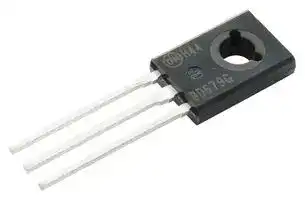


2N5190G
Bipolar (BJT) Single Transistor, NPN, 40 V, 4 A, 40 W, TO-225, Through Hole
- Manufacturer: ONSEMI
- Product type: Single Bipolar Junction Transistors - BJT
- Transistor Polarity:NPN; Collector Emitter Voltage V(br)ceo:40V; Transition Frequency ft:2MHz; Power Dissipation Pd:40W; DC Collector Current:4A; DC Current Gain hFE:10hFE; Transistor Ca
- MSL: -
- SVHC: Lead (25-Jun-2025)
- No. of Pins: 3Pins
- Product Range: -
- Qualification: -
- Power Dissipation: 40W
- Transistor Mounting: Through Hole
- Transistor Polarity: NPN
- Transition Frequency: 2MHz
- Transistor Case Style: TO-225
- DC Current Gain hFE Min: 10hFE
- Operating Temperature Max: 150°C
- Continuous Collector Current: 4A
- Collector Emitter Voltage Max: 40V
| Delivery and price | |
|---|---|
| Units per pack | 2000 |
| Price | 0.257 € |
| Current stock | 200+ |
| Lead time | 7 days |

## 2N5190G, 2N5191G, 2N5192G

## Silicon NPN Power Transistors

Silicon NPN power transistors are for use in power amplifier and switching circuits − excellent safe area limits. Complement to PNP 2N5194, 2N5195.

## **http://onsemi.com**

|switching circuits − excellent safe area limits. Complement to PNP<br>2N5194, 2N5195.|switching circuits − excellent safe area limits. Complement to PNP||**http://onsemi.com**||
|---|---|---|---|---|
||||**4.0 AMPERES**||
|**Features**|||**NPN SILICON**||
|• Epoxy Meets UL 94 V−0 @ 0.125 in.|||**POWER TRANSISTORS**||
|• These Devices are Pb−Free and are RoHS Compliant*|||**40, 60, 80 VOLTS − 40 WATTS**|**40, 60, 80 VOLTS − 40 WATTS**|
|**MAXIMUM RATINGS**|||COLLECTOR||
|**Rating**<br>**Symbol**<br>**Value**<br>**Unit**<br>Collector−Emitter Voltage<br>2N5190G<br>2N5191G<br>2N5192G<br>VCEO<br>40<br>60<br>80<br>Vdc<br>Collector−Base Voltage<br>2N5190G<br>2N5191G<br>2N5192G<br>VCBO<br>40<br>60<br>80<br>Vdc<br>Emitter−Base Voltage<br>VEBO<br>5.0<br>Vdc<br>Collector Current<br>IC<br>4.0<br>Adc<br>Base Current<br>IB<br>1.0<br>Adc<br>Total Device Dissipation<br>@ TC= 25°C<br>Derate above 25°C<br>PD<br>40<br>320<br>W<br>mW/°C<br>Operating and Storage Junction<br>Temperature Range<br>TJ, Tstg<br>–65 to +150<br>°C<br>ESD − Human Body Model<br>HBM<br>3B<br>V<br>ESD − Machine Model<br>MM<br>C<br>V<br>Stresses exceeding those listed in the Maximum Ratings table may damage the<br>device. If any of these limits are exceeded, device functionality should not be<br>assumed, damage may occur and reliability may be affected.<br>**MARKING DIAGRAM**<br>3<br>BASE<br>1<br>EMITTER<br>2, 4<br>**TO−225**<br>**CASE 77−09**<br>**STYLE 1**<br>1 2 3<br>YWW<br>2<br>N519xG<br>~~&)~~<br>~~ue~~|||||


## **THERMAL CHARACTERISTICS**

Y = Year WW = Work Week 2N519x = Device Code x = 0, 1, or 2 G = Pb−Free Package

|**THERMAL CHARACTERISTICS**||||Y||= Year|
|---|---|---|---|---|---|---|
|**Characteristic**|**Symbol**|**Max**|**Unit**|WW||= Work Week|
|Thermal Resistance, Junction−to−Case|R JC|3.12|°C/W|2N519x||= Device Code<br>x = 0, 1, or 2|
|||||G||= Pb−Free Package|
|||||**ORDERING INFORMATION**|||
|*For additional information on our Pb−Free strategy  and soldering details, please<br>download the ON Semiconductor Soldering and Mounting Techniques||*For additional information on our Pb−Free strategy  and soldering details, please<br>download the ON Semiconductor Soldering and Mounting Techniques||**Device**<br>**Package**<br>**Shipping**<br>2N5191G<br>TO−225<br>(Pb−Free)<br>500 Units/Box<br>2N5192G<br>TO−225<br>(Pb−Free)<br>500 Units/Box<br>2N5190G<br>TO−225<br>(Pb−Free)<br>500 Units/Box<br>~~===~~|||
|Reference Manual, SOLDERRM/D.|||||||
|©Semiconductor Components Industries, LLC, 2013|||**1**|||Publication Order Number:|


- *For additional information on our Pb−Free strategy  and soldering details, please download the ON Semiconductor Soldering and Mounting Techniques Reference Manual, SOLDERRM/D.

© Semiconductor Components Industries, LLC, 2013 **December, 2013 − Rev. 15**

**2N5191/D**

## **2N5190G, 2N5191G, 2N5192G**

## **ELECTRICAL CHARACTERISTICS*** (TC = 25 � C unless otherwise noted)

|**ELECTRICAL CHARACTERISTICS***(TC= 25�C unless otherwis|e noted)||||
|---|---|---|---|---|
|**Characteristic**|**Symbol**|**Min**|**Max**|**Unit**|
|**OFF CHARACTERISTICS**|||||
|Collector−Emitter Sustaining Voltage (Note 1)<br>(IC= 0.1 Adc, IB= 0)<br>2N5190G<br>2N5191G<br>2N5192G|VCEO(sus)|40<br>60<br>80|−<br>−<br>−|Vdc|
|Collector Cutoff Current<br>(VCE= 40 Vdc, IB= 0)<br>2N5190G<br>(VCE= 60 Vdc, IB= 0)<br>2N5191G<br>(VCE= 80 Vdc, IB= 0)<br>2N5192G|ICEO|−<br>−<br>−|1.0<br>1.0<br>1.0|mAdc|
|Collector Cutoff Current<br>(VCE= 40 Vdc, VEB(off)= 1.5 Vdc)<br>2N5190G<br>(VCE= 60 Vdc, VEB(off)= 1.5 Vdc)<br>2N5191G<br>(VCE= 80 Vdc, VEB(off)= 1.5 Vdc)<br>2N5192G<br>(VCE= 40 Vdc, VEB(off)= 1.5 Vdc, TC= 125�C)<br>2N5190G<br>(VCE= 60 Vdc, VEB(off)= 1.5 Vdc, TC= 125�C)<br>2N5191G<br>(VCE= 80 Vdc, VEB(off)= 1.5 Vdc, TC= 125�C)<br>2N5192G|ICEX|−<br>−<br>−<br>−<br>−<br>−|0.1<br>0.1<br>0.1<br>2.0<br>2.0<br>2.0|mAdc|
|Collector Cutoff Current<br>(VCB= 40 Vdc, IE= 0)<br>2N5190G<br>(VCB= 60 Vdc, IE= 0)<br>2N5191G<br>(VCB= 80 Vdc, IE= 0)<br>2N5192G|ICBO|−<br>−<br>−|0.1<br>0.1<br>0.1|mAdc|
|Emitter Cutoff Current<br>(VBE= 5.0 Vdc, IC= 0)|IEBO|−|1.0|mAdc|
|**ON CHARACTERISTICS**(Note 1)|||||
|DC Current Gain<br>(IC= 1.5 Adc, VCE= 2.0 Vdc)<br>2N5190G/2N5191G<br>2N5192G<br>(IC= 4.0 Adc, VCE= 2.0 Vdc)<br>2N5190G/2N5191G<br>2N5192G|hFE|25<br>20<br>10<br>7.0|100<br>80<br>−<br>−|−|
|Collector−Emitter Saturation Voltage<br>(IC= 1.5 Adc, IB= 0.15 Adc)<br>(IC= 4.0 Adc, IB= 1.0 Adc)|VCE(sat)|**−**<br>**−**|0.6<br>1.4|Vdc|
|Base−Emitter On Voltage<br>(IC= 1.5 Adc, VCE= 2.0 Vdc)|VBE(on)|−|1.2|Vdc|
|**DYNAMIC CHARACTERISTICS**|||||
|Current−Gain − Bandwidth Product<br>(IC= 1.0 Adc, VCE= 10 Vdc, f = 1.0 MHz)|fT|2.0|−|MHz|


Product parametric performance is indicated in the Electrical Characteristics for the listed test conditions, unless otherwise noted. Product performance may not be indicated by the Electrical Characteristics if operated under different conditions. *JEDEC Registered Data.

1. Pulse Test: Pulse Width ≤ 300 � s, Duty Cycle ≤ 2.0%.

**http://onsemi.com 2**

**2N5190G, 2N5191G, 2N5192G**

**==> picture [490 x 594] intentionally omitted <==**

**----- Start of picture text -----**<br>
10<br>7.0 TJ = 150°C V CE = 2.0 V<br>5.0 V CE  = 10 V<br>3.0<br>2.0<br>1.0<br>0.7 25°C -�55°C<br>0.5<br>0.3<br>0.2<br>0.1<br>0.004 0.007 0.01 0.02 0.03 0.05 0.1 0.2 0.3 0.5 1.0 2.0 3.0 4.0<br>IC, COLLECTOR CURRENT (AMP)<br>Figure 1. DC Current Gain<br>2.0<br>T J  = 25°C<br>1.6<br>1.2 I C  = 10 mA 100 mA 1.0 A 3.0 A<br>0.8<br>0.4<br>0<br>0.05 0.07 0.1 0.2 0.3 0.5 0.7 1.0 2.0 3.0 5.0 7.0 10 20 30 50 70 100 200 300 500<br>IB, BASE CURRENT (mA)<br>Figure 2. Collector Saturation Region<br>2.0 +�2.5<br>TJ = 25°C +�2.0 *APPLIES FOR IC/IB ≤ hFE�@�VCE� ��2.0�V<br>2<br>1.6 +�1.5 TJ = -�65°C to +150°C<br>+�1.0<br>1.2 +�0.5 *�V for VCE(sat)<br>0<br>0.8 -�0.5<br>VBE(sat) @ IC/IB = 10<br>VBE @ VCE = 2.0 V -�1.0<br>0.4 -�1.5 �V for VBE<br>VCE(sat) @ IC/IB = 10 -�2.0<br>0 -�2.5<br>0.005 0.01 0.02 0.03 0.05 0.1 0.2 0.3 0.5 1.0 2.0 3.0 4.0 0.005 0.01 0.02 0.03 0.05 0.1 0.2 0.3 0.5 1.0 2.0 3.0 4.0<br>IC, COLLECTOR CURRENT (AMP) IC, COLLECTOR CURRENT (AMP)<br>hFE, DC CURRENT GAIN (NORMALIZED)<br>VCE, COLLECTOR-EMITTER VOLTAGE (VOLTS)<br>C)°<br>V, TEMPERATURE COEFFICIENTS (mV/<br>θ<br>**----- End of picture text -----**<br>


**Figure 3. “On” Voltages**

**Figure 4. Temperature Coefficients**

**http://onsemi.com**

**3**

**2N5190G, 2N5191G, 2N5192G**

**==> picture [489 x 607] intentionally omitted <==**

**----- Start of picture text -----**<br>
10 [[3]] 10 [7]<br>VCE = 30 VCE = 30 V = 30 V IC = 10 x ICES VCE = 30 V<br>10 [[2]]<br>10 [6]<br>TJ = 150°CJ = 150°C = 150°C°CC<br>10 [[1]] IC ≈ ICES<br>10 [5]<br>10 [[0]] 100°C°CC IC = 2 x ICES<br>10 [4]<br>REVERSE FORWARD<br>10 [[-1]]<br>10 [[-�2]] 25°C°CC 10 [3] (TYPICAL ICES VALUES<br>OBTAINED FROM FIGURE 5)<br>ICESCES<br>10 [[-�3]] 10 [2]<br>-�0.4 -�0.3 -�0.2 -�0.1 0 +�0.1 +�0.2 +�0.3 +�0.4 +�0.5 +�0.6 20 40 60 80 100 120 140 160<br>VBE, BASE-EMITTER VOLTAGE (VOLTS)BE, BASE-EMITTER VOLTAGE (VOLTS), BASE-EMITTER VOLTAGE (VOLTS) TJ, JUNCTION TEMPERATURE (°C)<br>Figure 5. Collector Cut−Off Region Figure 6. Effects of Base−Emitter Resistance<br>300<br>TURN-ON PULSE VCC RC TJ = +�25°C<br>APPROX<br>200<br>+11 V Vin SCOPE<br>RB<br>Vin 0 Cjd�<<�Ceb<br>VEB(off) t1 -�4.0 V 100<br>t3 Ceb<br>APPROX+11 V t1 ≤ 7.0 ns Rto obtain desiredB and RC varied 70<br>100 < t2 < 500 �s current levels<br>Vin t3 < 15 ns 50 Ccb<br>t2 DUTY CYCLE ≈ 2.0% 30<br>APPROX -�9.0 V 0.1 0.2 0.3 0.5 1.0 2.0 3.0 5.0 10 20 30 40<br>TURN-OFF PULSE<br>VR, REVERSE VOLTAGE (VOLTS)<br>Figure 7. Switching Time Equivalent Test Circuit<br>Figure 8. Capacitance<br>2.0 2.0<br>IC/IB = 10 ts′<br>1.0 TJ = 25°C 1.0<br>0.7 tr @ VCC = 30 V 0.7 tf @ VCC = 30 V<br>0.5 0.5<br>0.3 tr @ VCC = 10 V 0.3 tf @ VCC = 10 V<br>0.2 0.2<br>0.1 0.1 IB1 = IB2<br>0.070.05 td @ VEB(off) = 2.0 V 0.070.05 tITCsJ′/I = t = 25B = 10s - 1/8 t°C f<br>0.03 0.03<br>0.02 0.02<br>0.05 0.07 0.1 0.2 0.3 0.5 0.7 1.0 2.0 3.0 4.0 0.05 0.07 0.1 0.2 0.3 0.5 0.7 1.0 2.0 3.0 4.0<br>IC, COLLECTOR CURRENT (AMP) IC, COLLECTOR CURRENT (AMP)<br>RBE, EXTERNAL BASE-EMITTER RESISTANCE (OHMS)<br>CAPACITANCE (pF)<br>μ<br>t, TIME (��s)<br>**----- End of picture text -----**<br>


**==> picture [230 x 174] intentionally omitted <==**

**----- Start of picture text -----**<br>
10 [[3]]<br>VCE = 30 VCE = 30 V = 30 V<br>10 [[2]]<br>TJ = 150°CJ = 150°C = 150°C°CC<br>10 [[1]]<br>10 [[0]] 100°C°CC<br>REVERSE FORWARD<br>10 [[-1]]<br>10 [[-�2]]<br>25°C°CC<br>ICESCES<br>10 [[-�3]]<br>-�0.4 -�0.3 -�0.2 -�0.1 0 +�0.1 +�0.2 +�0.3 +�0.4 +�0.5 +�0.6<br>VBE, BASE-EMITTER VOLTAGE (VOLTS)BE, BASE-EMITTER VOLTAGE (VOLTS), BASE-EMITTER VOLTAGE (VOLTS)<br>**----- End of picture text -----**<br>


**Figure 9. Turn−On Time**

**Figure 10. Turn−Off Time**

**http://onsemi.com**

**4**

**2N5190G, 2N5191G, 2N5192G**

**==> picture [491 x 384] intentionally omitted <==**

**----- Start of picture text -----**<br>
10 There are two limitations on the power handling ability of<br>100��s a transistor; average junction temperature and second<br>5.0 5.0�ms<br>1.0�ms breakdown. Safe operating area curves indicate IC − VCEC − VCE − VCECE<br>TJ = 150°C limits of the transistor that must be observed for reliable<br>2.0 dc operation; i.e., the transistor must not be subjected to greater<br>dissipation than the curves indicate.<br>1.0 The data of Figure 11 is based on TJ(pk) = 150�C; TC isJ(pk) = 150�C; TC is = 150�C; TC is�C; TC isC; TC isC is is<br>SECONDARY BREAKDOWN LIMIT variable depending on conditions. Second breakdown pulse<br>0.5 CURVES APPLY BELOW RATED VTHERMAL LIMIT AT TBONDING WIRE LIMITC = 25CEO°C limits are valid for duty cycles to 10% provided T≤ 150�C. At high case temperatures, thermal limitationsJ(pk)≤ 150�C. At high case temperatures, thermal limitationsJ(pk) 150�C. At high case temperatures, thermal limitationsJ(pk)�C. At high case temperatures, thermal limitationsJ(pk)C. At high case temperatures, thermal limitationsJ(pk)<br>0.2 2N5191 will reduce the power that can be handled to values less than<br>2N5192 the limitations imposed by second breakdown.<br>0.1<br>1.0 2.0 5.0 10 20 50 100<br>VCE, COLLECTOR-EMITTER VOLTAGE (VOLTS)<br>Figure 11. Rating and Thermal Data<br>Active−Region Safe Operating Area<br>1.0<br>0.7<br>D = 0.5<br>0.5 � JC(max)  = 3.12°C/W — 2N5190-92<br>0.3<br>0.2<br>0.2<br>0.1<br>0.1 0.05<br>0.07<br>0.02<br>0.05<br>0.03 0.01<br>SINGLE PULSE<br>0.02<br>0.010.01 0.02 0.03 0.05 0.1 0.2 0.3 0.5 1.0 2.0 3.0 5.0 10 20 50 100 200 500 1000<br>t, TIME OR PULSE WIDTH (ms)<br>IC, COLLECTOR CURRENT (AMP)<br>r(t), EFFECTIVE TRANSIENT<br>THERMAL RESISTANCE (NORMALIZED)<br>**----- End of picture text -----**<br>


There are two limitations on the power handling ability of a transistor; average junction temperature and second breakdown. Safe operating area curves indicate IC − VCEC − VCE − VCECE limits of the transistor that must be observed for reliable operation; i.e., the transistor must not be subjected to greater dissipation than the curves indicate.

The data of Figure 11 is based on TJ(pk) = 150�C; TC isJ(pk) = 150�C; TC is = 150�C; TC is�C; TC isC; TC isC is is variable depending on conditions. Second breakdown pulse J(pk) limits are valid for duty cycles to 10% provided T≤ 150�C. At high case temperatures, thermal limitationsJ(pk)≤ 150�C. At high case temperatures, thermal limitationsJ(pk) 150�C. At high case temperatures, thermal limitationsJ(pk)�C. At high case temperatures, thermal limitationsJ(pk)C. At high case temperatures, thermal limitationsJ(pk) will reduce the power that can be handled to values less than the limitations imposed by second breakdown.

**Figure 12. Thermal Response**

## **DESIGN NOTE: USE OF TRANSIENT THERMAL RESISTANCE DATA**

**==> picture [185 x 160] intentionally omitted <==**

**----- Start of picture text -----**<br>
t P<br>PP PP<br>t1<br>1/f<br>t1<br>DUTY CYCLE, D = t1 f - tP<br>PEAK PULSE POWER = PP<br>Figure A<br>**----- End of picture text -----**<br>


A train of periodical power pulses can be represented by the model shown in Figure A. Using the model and the device thermal response, the normalized effective transient thermal resistance of Figure 12 was calculated for various duty cycles.

To find �JC(t), multiply the value obtained from Figure 12 by the steady state value �JC.

Example:

The 2N5190 is dissipating 50 watts under the following conditions: t1 = 0.1 ms, tp = 0.5 ms. (D = 0.2).

Using Figure 12, at a pulse width of 0.1 ms and D = 0.2, the reading of r(t1, D) is 0.27.

The peak rise in function temperature is therefore:

� T = r(t) × PP × � JC = 0.27 × 50 × 3.12 = 42.2 � C

**http://onsemi.com**

**5**

**2N5190G, 2N5191G, 2N5192G**

**==> picture [472 x 435] intentionally omitted <==**

**----- Start of picture text -----**<br>
PACKAGE DIMENSIONS<br>TO−225<br>CASE 77−09<br>4 ISSUE AC<br>1 3<br>2 3 2 1<br>FRONT VIEW BACK VIEW<br>E NOTES:<br>1. DIMENSIONING AND TOLERANCING PER<br>A1 ASME Y14.5M, 1994.<br>2. CONTROLLING DIMENSION: MILLIMETERS.<br>Q A 3. NUMBER AND SHAPE OF LUGS OPTIONAL.<br>PIN 4 MILLIMETERS<br>BACKSIDE TAB DIM MIN MAX<br>A 2.40 3.00<br>A1 1.00 1.50<br>b 0.60 0.90<br>D b2 0.51 0.88<br>P c 0.39 0.63<br>D 10.60 11.10<br>E 7.40 7.80<br>1 2 3<br>e 2.04 2.54<br>L 14.50 16.63<br>L1 1.27 2.54<br>P 2.90 3.30<br>L1 Q 3.80 4.20<br>STYLE 1:<br>L PIN 1.2., 4. EMITTERCOLLECTOR<br>3. BASE<br>Trcial<br>2X b2<br>2X e<br>I b c a l<br>FRONT VIEW SIDE VIEW<br>**----- End of picture text -----**<br>


**ON Semiconductor** and          are registered trademarks of Semiconductor Components Industries, LLC (SCILLC).  SCILLC owns the rights to a number of patents, trademarks, copyrights, trade secrets, and other intellectual property. A listing of SCILLC’s product/patent coverage may be accessed at www.onsemi.com/site/pdf/Patent−Marking.pdf.  SCILLC reserves the right to make changes without further notice to any products herein.  SCILLC makes no warranty, representation or guarantee regarding the suitability of its products for any particular purpose, nor does SCILLC assume any liability arising out of the application or use of any product or circuit, and specifically disclaims any and all liability, including without limitation special, consequential or incidental damages.  “Typical” parameters which may be provided in SCILLC data sheets and/or specifications can and do vary in different applications and actual performance may vary over time.  All operating parameters, including “Typicals” must be validated for each customer application by customer’s technical experts.  SCILLC does not convey any license under its patent rights nor the rights of others.  SCILLC products are not designed, intended, or authorized for use as components in systems intended for surgical implant into the body, or other applications intended to support or sustain life, or for any other application in which the failure of the SCILLC product could create a situation where personal injury or death may occur.  Should Buyer purchase or use SCILLC products for any such unintended or unauthorized application, Buyer shall indemnify and hold SCILLC and its officers, employees, subsidiaries, affiliates, and distributors harmless against all claims, costs, damages, and expenses, and reasonable attorney fees arising out of, directly or indirectly, any claim of personal injury or death associated with such unintended or unauthorized use, even if such claim alleges that SCILLC was negligent regarding the design or manufacture of the part.  SCILLC is an Equal Opportunity/Affirmative Action Employer.  This literature is subject to all applicable copyright laws and is not for resale in any manner.

## **PUBLICATION ORDERING INFORMATION**

## **LITERATURE FULFILLMENT** :

Literature Distribution Center for ON Semiconductor P.O. Box 5163, Denver, Colorado 80217 USA **Phone** : 303−675−2175 or 800−344−3860 Toll Free USA/Canada **Fax** : 303−675−2176 or 800−344−3867 Toll Free USA/Canada **Email** : orderlit@onsemi.com

**N. American Technical Support** : 800−282−9855 Toll Free USA/Canada

**ON Semiconductor Website** : **www.onsemi.com**

**Europe, Middle East and Africa Technical Support: Order Literature** : http://www.onsemi.com/orderlit Phone: 421 33 790 2910 **Japan Customer Focus Center** For additional information, please contact your local Phone: 81−3−5817−1050 Sales Representative

**http://onsemi.com**

**2N5191/D**

**6**
Updated at March 22, 2026
onsemi is a premier global supplier of intelligent power and sensing technologies, driving disruptive innovations across the automotive, industrial, and cloud infrastructure markets. Recognized for their commitment to sustainability and reliable supply chains, the company accelerates advancements in vehicle electrification, industrial automation, and 5G networks by solving the industry's most complex design challenges. At the core of their portfolio is an industry-leading selection of discrete semiconductors. This extensive range features thousands of high-performance bipolar transistors, single and dual MOSFETs, and a comprehensive array of diodes, including Zener, Schottky, and fast-recovery rectifiers. Engineered for superior thermal performance and energy efficiency, these foundational components are critical for demanding power conversion, switching, and signal conditioning applications. Beyond essential discretes, onsemi provides a robust suite of advanced power management and circuit protection solutions. Their lineup includes intelligent power modules, single IGBTs, and transient voltage suppression (TVS) diodes designed to safeguard sensitive circuitry. Complimented by integrated passive filters, AC/DC LED driver ICs, and specialized sub-2.4GHz RF transceivers, onsemi equips engineers with the scalable, high-quality technologies needed to build a cleaner, smarter, and more connected world.
About Novapart
Novapart is a B2B electronic component broker specialising in stock shortages and cost reduction. We source hard-to-find parts and identify compliant alternatives across a catalogue of 410,000+ components from 500+ manufacturers.
Learn more →Stock Shortage Specialist
When a component is unavailable, discontinued or has an unacceptable lead time, we tap into our network of vetted European and Asian distributors to source what you need — without compromising on quality or traceability.
Request a quote →Compliant Alternatives
We identify pin-to-pin, electrically equivalent substitutes that meet the same certifications (RoHS, AEC-Q100, REACH) as your original specification — validated against datasheets, not just part numbers. Often at a lower cost.
BOM Analysis service →