
Image not available
Illustrative purposes only

0ZRS0500FF1A
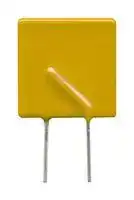
Resettable Fuse, PPTC, Radial Leaded, 0ZRS Series, 32 VDC, 5 A, 10 A, 9 s, Rectangular
⚠️ Reference pricing provided. In case of supply shortages, we will connect you with our trusted procurement partners to ensure your project's continuity.
- Manufacturer: BEL FUSE - CIRCUIT PROTECTION
- Product type: Radial Leaded PPTCs
- SVHC: To Be Advised
- Height: 24.1mm
- Length: 14mm
- Diameter: -
- Thickness: 3.8mm
- Fuse Shape: Rectangular
- Lead Spacing: 5.1mm
- Time to Trip: 9s
- Trip Current: 10A
- Product Range: 0ZRS Series
- Voltage Rating: 32VDC
- Holding Current: 5A
- Current Rating Max: 100A
- Thermistor Mounting: Through Hole
- Operating Temperature Max: 125°C
- Operating Temperature Min: -40°C
- Automotive Qualification Standard: AEC-Q200
| Delivery and price | |
|---|---|
| Units per pack | 1 |
| Price | 0.286 € |
| Current stock | 10+ |
| Lead time | 30 days |
Datasheet

0ZRS Series

## Radial Leaded PTC

0ZRS Series RoHS 2 Compliant

## **Product Features**

- Very Low resistance, Very High hold current, Solid state, Radial leaded product ideal for up to 32V and Operating temperatures up to 125 °C .

- AEC-Q Compliant

- Meets Bel automotive qualification*

- - Largely based on internal AEC-Q test plan

## **Operating (Hold Current) Range**

500mA - 10A

## **Maximum Voltage**

32V

## **Temperature Range**

- -40 °C to 125 °C

## **Agency Approval**

## **AEC-Q Compliant**

TUV (Std. EN/IEC 60738-1-1 and EN/IEC 60730-1, Cert. R50102187) UL Recognized Component (Std. UL1434, File E305051)

|~~===~~<br>~~ee~~<br>~~ee~~|Part Number<br>(Bulk)<br>~~===~~<br>~~ee~~<br>~~ee~~|Hold<br>Current<br>~~===~~<br>~~a~~<br>|Trip<br>Current<br>~~===~~<br>~~ee~~<br>|Rated<br>Voltage<br>~~===~~<br>~~ee~~<br>|Max<br>Current<br>~~===~~<br>~~ee~~<br>|Typical<br>Power<br>~~===~~<br>~~ee~~<br>|Max Time to Trip<br>~~===~~|Max Time to Trip<br>~~===~~|Resistance Tolerance<br>~~===~~|Resistance Tolerance<br>~~===~~|Agency Approvals<br>~~===~~|Agency Approvals<br>~~===~~|
|---|---|---|---|---|---|---|---|---|---|---|---|---|
||||||||Current<br>~~===~~<br>~~ee~~<br>|Time<br>~~===~~<br>~~ee~~<br>|Rmin<br>~~===~~<br>~~ee~~<br>|R1max<br>~~===~~<br>~~ee~~<br>|~~===~~<br>~~ee~~<br>~~es~~|~~===~~<br>~~Tv~~|
|||IH, A<br>~~===~~<br>~~a~~<br>~~ee~~<br>|IT, A<br>~~===~~<br>~~ee~~<br>~~ee~~|Vmax, Vdc<br>~~===~~<br>~~ee~~<br>~~ee ee~~|Imax, A<br>~~===~~<br>~~ee~~<br>~~ee~~|Pd, W<br>~~===~~<br>~~ee~~<br>~~ee~~|A<br>~~===~~<br>~~ee~~<br>~~ee~~|Sec<br>~~===~~<br>~~ee~~<br>~~ee ee~~|Ohms<br>~~===~~<br>~~ee~~<br>~~ee~~|Ohms<br>~~===~~<br>~~ee~~<br>~~es~~|||
|A 0ZRS0050FF1E<br>~~ee~~<br>~~ee~~<br>~~a~~|A 0ZRS0050FF1E<br>~~ee~~<br>~~ee~~|0.5<br>~~a~~<br>~~ee~~<br>~~ie~~|1.0<br>~~ee~~<br>~~ee~~<br>~~ee~~|32<br>~~ee~~<br>~~ee ee~~<br>~~ee~~|100<br>~~ee~~<br>~~ee~~<br>~~ee~~|0.9<br>~~ee~~<br>~~ee~~<br>~~res~~|2.5<br>~~ee~~<br>~~ee~~<br>~~es~~|3.0<br>~~ee~~<br>~~ee ee~~<br>~~es~~|0.3500<br>~~ee~~<br>~~ee~~<br>~~es~~|1.1000<br>~~ee~~<br>~~es~~|Y<br>~~ee~~<br>~~es~~|Y<br>~~Tv~~|
|B<br>~~ee~~<br>~~ee~~<br>~~a~~|0ZRS0070FF1E<br>~~ee ~~<br>~~ee~~ <br>~~ee~~|0.7<br>~~a~~<br> ~~ee~~<br> ~~ie~~<br>~~ee~~|1.4<br>~~ee ~~<br>~~ee~~<br>~~ee~~<br>~~ee~~|32<br> ~~ee~~<br>~~ee ee~~<br>~~ee~~<br>~~ee~~|100<br>~~ee~~<br>~~ee ~~<br>~~ee~~<br>~~ee~~|1.4<br>~~ee~~<br> ~~ee~~<br>~~res~~<br>~~er~~|3.5<br>~~ee~~<br>~~ee ~~<br>~~es~~<br>~~ee~~|3.2<br>~~ee~~<br> ~~ee ee~~<br>~~es~~<br>~~ee~~|0.2300<br>~~ee ~~<br>~~ee ~~<br>~~es~~<br>~~es~~|0.8000<br> ~~ee~~<br> ~~es ~~<br>~~es~~|Y<br>~~ee~~<br> ~~es~~<br>~~es~~|Y<br>~~Tv~~|
|C 0ZRS0100FF1E<br><br>~~a~~<br>~~ee~~|C 0ZRS0100FF1E<br> <br>~~ee~~<br>~~ee~~|1.0<br> ~~ie~~<br>~~ee~~<br>~~ie~~|1.9<br>~~ee~~<br>~~ee~~<br>~~es~~|32<br>~~ee ~~<br>~~ee~~<br>~~es~~|100<br> ~~ee ~~<br>~~ee~~<br>~~ee~~|1.4<br> ~~res~~<br>~~er~~<br>~~rs~~|5.0<br>~~es~~<br>~~ee~~<br>~~ee~~|6.2<br>~~es ~~<br>~~ee~~<br>~~ee~~|0.1500<br> ~~es~~<br>~~es~~<br>~~er~~|0.4300<br>~~es~~<br>~~es~~|Y<br>~~es~~<br>~~es~~|Y|
|D<br>~~ee~~|0ZRS0200FF1E<br>~~ee~~<br>~~ee~~|2.0<br>~~ee ~~<br>~~ie~~|4.0<br> ~~ee~~<br>~~es~~|32<br>~~ee ~~<br>~~es~~|100<br> ~~ee ~~<br>~~ee~~|2.2<br> ~~er ~~<br>~~rs~~|10.0<br> ~~ee~~<br>~~ee~~|5.5<br>~~ee ~~<br>~~ee~~|0.0650<br> ~~es~~<br>~~er~~|0.2500<br>~~es ~~<br>~~es~~|Y<br> ~~es~~<br>~~es~~|Y|
|E 0ZRS0300FF1A<br>~~ee~~<br>~~ee~~<br>~~ee~~|E 0ZRS0300FF1A<br>~~ee ~~<br>~~ee~~<br>~~ee~~|3.0<br> ~~ie ~~<br>~~ee~~<br>~~ee~~|6.0<br> ~~es~~<br>~~ee~~<br>~~ee~~|32<br>~~es ~~<br>~~es~~|100<br> ~~ee ~~<br>~~ee~~|3.2<br> ~~rs ~~<br>~~Qe~~<br>~~es~~|15.0<br> ~~ee~~<br>~~Qe~~<br>~~ee~~|5.0<br>~~ee ~~<br>~~Ge~~<br>~~re ee~~|0.0350<br> ~~er ~~<br>~~Ge~~<br>~~ee~~|0.1100<br> ~~es ~~<br>~~Ge~~|Y<br> ~~es~~|Y|
|F<br>~~ee~~<br>~~ee~~<br>~~Oe~~|0ZRS0500FF1A<br>~~ee ~~<br>~~ee~~<br>~~se~~|5.0<br> ~~ee~~<br>~~ee~~<br>~~se~~|10.0<br>~~ee~~<br>~~ee~~<br>~~ee~~|32<br>~~es~~<br>~~ee~~|100<br>~~ee~~<br>~~QQ~~|5.3<br>~~Qe~~<br>~~es~~<br>~~QQ~~|25.0<br>~~Qe~~<br>~~ee~~<br>~~ee~~|9.0<br>~~Ge~~<br>~~re ee~~<br>~~ee~~|0.0150<br>~~Ge~~<br>~~ee~~|0.0400<br>~~Ge~~|Y|Y|
|G 0ZRS0750FF1A<br>~~ee~~<br>~~Oe~~<br>~~i~~|G 0ZRS0750FF1A<br>~~ee ~~<br>~~se~~<br>~~i~~|7.5<br> ~~ee~~<br>~~se~~<br>~~i~~|15.0<br>~~ee ~~<br>~~ee~~<br>~~ee~~|32<br> ~~es ~~<br>~~ee~~<br>~~ee~~|100<br> ~~ee~~<br>~~QQ~~<br>~~ee~~|6.5<br>~~es ~~<br>~~QQ~~<br>~~ee~~|37.5<br> ~~ee ~~<br>~~ee~~<br>~~ee~~|13.0<br> ~~re ee~~<br>~~ee~~<br>~~ee~~|0.0074<br>~~ee~~<br>~~es es~~|0.0230<br>~~es~~|Y<br>~~es~~|Y|
|H<br>~~Oe~~<br>~~i~~|0ZRS1000FF1A<br>~~se~~<br>~~i~~|10.0<br>~~se ~~<br>~~i~~|20.0<br> ~~ee~~<br>~~ee~~|32<br>~~ee~~<br>~~ee~~|100<br>~~QQ~~<br>~~ee~~|7.0<br>~~QQ~~<br>~~ee~~|50.0<br>~~ee~~<br>~~ee~~|15.0<br>~~ee~~<br>~~ee~~|0.0060<br>~~es es~~|0.0160<br>~~es~~|Y<br>~~es~~|Y|


IH         Hold Current- The maximum current at which the device will not trip in still air at 23 °C . IT         Trip current- The minimum current at which the device will trip in still air at 23 °C . Vmax    Maximum voltage device can withstand at its rated current without suffering damage.

Imax     Maximum fault current device can withstand at rated voltage (Vmax) without damage. Pd        Typical power dissipated by device when in tripped state in 23 °C still air environment. Rmin     Minimum device resistance at 23 °C in initial un-soldered state .

R1max  Maximum device resistance at 23 °C , 1 hour after initial device trip, or after being soldered to PCB in end application.

re.gees bel SOLUTIONSPOWER &

Specifications subject to change without notice

**belfuse.com/circuit-protection**

**2** / **4**

## Type 0ZRS Series

**PTC’s – Basic Theory of Operation / “Tripped” Resistance Explanation**

A Bel PTC consists of a block of polymeric material containing conductive carbon granules which is sandwiched between two conductive metal plates.  When this polymer block reaches approximately 125C, either due to current passing through it via conductive chains of carbon particles or due to an external heat source; it swells volumetrically.  This expansion breaks apart a majority of the chains of carbon granules that run randomly between the two conductive plates.  This behavior results in a sharp increase in resistance across the two plates which all but eliminates current flow through the device, allowing just enough residual current flow to maintain the block’s internal temperature at 125C.  Once this “tripped” state current is cut off, the polymer brick cools and shrinks to its original size, thereby allowing its broken carbon chains to reestablish themselves and permit the part to return to its low resistance state.  Once cooled to room ambient, the PTC will once again exhibit a resistance less than its “R1max” rating.

At currents below the device IHOLD rating, AND at temperatures below 100C, the PTC maintains a resistance value below its R1 MAX rating.

The catalog data for each device specifies a "Typical Power" value. This is the power required to exactly match the heat lost by the tripped device to its ambient surroundings at 23C. By Ohm's Law, power can be stated as: W = E²/R. Thus the approximate resistance of a “Tripped” PTC can be determined by: R = E²/W, where "E" is the voltage appearing across the PTC (usually the supply's open circuit voltage), and "W" is the Typical Power value for the particular PTC.

Since the PPTC acts to maintain a constant internal temperature, its apparent resistance will change based upon applied voltage and, to a lesser degree, ambient conditions. Consider the following example.... A PTC with a Typical Power of 1 watt protecting a circuit using a 60V supply will demonstrate an apparent, tripped resistance "R" of:

R = 60²/1 = 3,600 ohms

This same tripped device when used to protect a 12V circuit would now present an apparent resistance of: R = 12²/1 = 144 ohms

The value for Typical Power is "typical" because any physical factors that affect heat loss (such as ambient temperature or air convection) will somewhat alter the level of power that the PTC needs to maintain its internal temperature. In short, PTCs do not exhibit a constant, quantifiable tripped resistance value.

## **Average Time Current Characteristic Curve at 23°C**

The Average Time Current Characteristic Curve and Temperature Rerating Curve are affected by a number of variables and these curves are provided for guidance only.

## t afees 4 POWER re: bel SOLUTIONS &

Specifications subject to change without notice

**Bel Fuse Inc.** +1 201.432.0463 206 Van Vorst Street Bel.US.CS@belf.com Jersey City, NJ 07302 USA **belfuse.com/circuit-protection**

© 2019 Bel Fuse, Inc.

Rev. 0ZRS Sep2019

**3** / **4**

## Type 0ZRS Series

## **Physical Specifications**

## Lead material:

0ZRS0050FF- 0ZRS0100FF Tin plated copper, 24 AWG. 0ZRS0200FF- 0ZRS0750FF Tin plated copper, 20 AWG

0ZRS1000FF Tin plated copper, 18 AWG. Soldering charactcristics MIL-STD-202, Method 208H. Insulating coating Flame retardant epoxy, meets UL-94V-0 requirement.

## **PTC Marking**

“bel” or “b”, , IH code and “RS”.

**Product Dimensions** All dimensions in mm.

|Part Number<br>~~P|~~<br>~~jE~~|Fig.<br>~~P|~~<br>~~jE~~|A<br>~~FA~~|B|C<br>~~SH~~|D<br>~~SH~~|E<br>~~SH~~|
|---|---|---|---|---|---|---|
|||Max<br>~~FA~~<br>~~jE~~<br>~~ALL~~|Max<br>~~jE~~<br>~~ALL~~|Typical<br>~~SH~~<br>~~jE~~<br>~~ALLEe~~|Min<br>~~SH~~<br>~~jE~~<br>~~Ee~~|Max<br>~~SH~~<br>~~jE~~|
|0ZRS0050FF<br>~~P|~~<br>~~jE~~<br>~~ee~~|1<br>~~P| ~~<br>~~jE~~<br>~~ee~~|7.4<br> ~~FA~~<br>~~jE~~<br>~~ALL~~<br>~~ee~~|12.7<br>~~jE~~<br>~~ALL~~<br>~~ee~~|5.1<br>~~SH~~<br>~~jE~~<br>~~ALLEe~~|7.6<br>~~SH~~<br>~~jE~~<br>~~Ee~~|3.3<br>~~SH~~<br>~~jE~~|
|0ZRS0070FF<br>~~jE~~<br>~~ee~~|2<br>~~jE~~<br>~~ee~~|6.9<br>~~jE~~<br>~~ALL~~<br>~~ee~~|10.8<br>~~jE~~<br>~~ALL~~<br>~~ee~~|5.1<br>~~jE~~<br>~~ALLEe~~|7.6<br>~~jE~~<br>~~Ee~~|3.0<br>~~jE~~|
|0ZRS0100FF<br> ~~jE~~<br>~~ee ~~<br>~~es~~|1<br>~~jE~~<br> ~~ee~~<br>~~ee~~|9.7<br>~~jE~~<br>~~ALL~~<br>~~ee ~~<br>~~ee~~|13.6<br>~~jE~~<br>~~ALL~~<br> ~~ee~~<br>~~ee~~|5.1<br>~~jE~~<br>~~ALL Ee~~|7.6<br>~~jE~~<br>~~Ee~~|3.0<br>~~jE~~|
|0ZRS0200FF<br>~~es~~|3<br>~~ee~~|9.5<br>~~ee~~|13.5<br>~~ee~~|5.1|7.6|3.0|
|0ZRS0300FF<br>~~es ~~|3<br> ~~ee~~|10.2<br>~~ee ~~|15.5<br> ~~ee~~|5.1|7.6|3.8|
|0ZRS0500FF|3|14.0|24.1|5.1|7.6|3.8|
|0ZRS0750FF|3|21.1|24.9|10.2|7.6|3.8|
|0ZRS1000FF|4|23.5|27.9|10.2|7.6|4.0|


## **Temperature Derating Table**

||Temperature Derating|Temperature Derating|Temperature Derating|Temperature Derating|Temperature Derating|Temperature Derating|Temperature Derating|Temperature Derating|Temperature Derating|Temperature Derating|Temperature Derating|
|---|---|---|---|---|---|---|---|---|---|---|---|
|**I Hold Value**|**-40**|**-20**|**0**|**23**|**30**|**40**|**50**|**60**|**70**|**85**|**125**|
|0ZRS|138%|127%|115%|100%|96%|90%|80%|70%|63%|53%|21%|


## **Thermal Derating Curve Cautionary Notes**

## Temperature Derating Curve

**==> picture [222 x 138] intentionally omitted <==**

**----- Start of picture text -----**<br>
160%<br>140% SERRE<br>120% PST<br>100% Pit [in] ET [ey] EE ET<br>80% BREE SSR<br>60% Pit TT ET TT PRT<br>40% PL tT TET TT ET TSTTTo<br>20% Pit TT ET TT Ey TT as<br>0% ERRERR<br>-40 -20 0 20 40 60 80 100 120<br>Temperature( ° C)<br>Percent of Hold and Trip Current<br>**----- End of picture text -----**<br>


1. Operation beyond the specified maximum ratings or improper use may result in damage and possible electrical arcing and/or flame.

2. These Polymer PTC (PPTC) devices are intended for protection against occasional overcurrent/overtemperature fault conditions and may not be suitable for use in applications where repeated and/or prolonged fault conditions are anticipated.

3. Avoid contact of PTC device with chemical solvent.  Prolonged contact may adversely impact the PTC performance.

4. These PTC devices may not be suitable for use in circuits with a large inductance, as the PTC trip can generate circuit voltage spikes above the PTC rated voltage.

5. These devices may be used in both DC and AC circuits provided that peak-to-peak line voltage when carrying AC does not exceed the PTC’s Vmax rating.   As PTCs are essentially thermal devices, the RMS value of AC current carried by a PTC will produce tripping parameters and times-to-trip similar to those of a DC voltage of the same magnitude.

6. If potting is mandated, avoid rigid potting compounds as they will encase the PTC and prevent it from volumetrically expanding to properly respond to a trip event.

## OeRe bel SOLUTIONSPOWER &

## Specifications subject to change without notice

**Bel Fuse Inc.** +1 201.432.0463 206 Van Vorst Street Bel.US.CS@belf.com Jersey City, NJ 07302 USA **belfuse.com/circuit-protection**

© 2019 Bel Fuse, Inc.

Rev. 0ZRS Sep2019

**4** / **4**

## Type 0ZRS Series

## **Environmental Specifications**

|Temperature cycling|JESD22 Method JA-104|
|---|---|
|Biased humidity|MIL-STD-202 Method 103|
|Operational life|MIL-STD-202 Method 108|
|Terminal strength|AEC-Q200-004|
|Resistance to solvents|MIL-STD-202 Method 215|
|Mechanical shock|MIL-STD-202 Method 213|
|Vibration|MIL-STD-202 Method 204|
|Resistance to soldering heat|MIL-STD-202 Method 210|
|Thermal shock|MIL-STD-202 Method 107|
|Solderability|ANSI/J-STD-002|


## **Soldering Parameters**

Lead-free Wave Soldering Profile

|Lead-free Wave Soldering Profile|Lead-free Wave Soldering Profile|
|---|---|
|Wave Solder Parameter||
|Average ramp-up rate|200°C/ second|
|Heating rate during preheat|typical 1 - 2°C/ second<br>Max 4°C/ second|
|Final preheat temperature|within 125°Cof soldering<br>temperature|
|Peak temperature Tp|260°C|
|Time within +0°C/ -5°Cof actual peak<br>temperature|10 seconds|
|Ramp-down rate|5°C/ second max.|


## **Standard Packaging                                      P/N Explanation and Ordering Information**

|Part Number|Bulk|Bulk|Reel/Tape|Reel/Tape|
|---|---|---|---|---|
||Pcs/Box|P/N Code|Pcs/Reel|P/N Code|
|0ZRS0050FF<br>-<br>0ZRS0070FF|3000|1E|2500|2D|
|0ZRS0100FF<br>-<br>0ZRS0200FF|3000|1E|1500|2B|
|0ZRS0300FF|1000|1A|1500|2B|
|0ZRS0500FF<br>-<br>0ZRS1000FF|1000|1A|N/A|N/A|


Specifications subject to change without notice

**Bel Fuse Inc.** 206 Van Vorst Street Jersey City, NJ 07302 USA

+1 201.432.0463 Bel.US.CS@belf.com **belfuse.com/circuit-protection**

© 2019 Bel Fuse, Inc.

Rev. 0ZRS Sep2019
Updated at April 27, 2026
About Novapart
Novapart is a B2B electronic component broker specialising in stock shortages and cost reduction. We source hard-to-find parts and identify compliant alternatives across a catalogue of 540,000+ components from 500+ manufacturers.
Learn more →Stock Shortage Specialist
When a component is unavailable, discontinued or has an unacceptable lead time, we tap into our network of vetted European and Asian distributors to source what you need — without compromising on quality or traceability.
Request a quote →Compliant Alternatives
We identify pin-to-pin, electrically equivalent substitutes that meet the same certifications (RoHS, AEC-Q100, REACH) as your original specification — validated against datasheets, not just part numbers. Often at a lower cost.
BOM Analysis service →